The 13-character Vehicle Identification Number stamped on every 1967-1969 Camaro is the single most important string of data on the car. Read it correctly and you know whether the drivetrain is numbers-matching, whether the body style is a coupe or convertible, and which plant built it. Misread it and you may pay a premium for a car that has been re-stamped or misrepresented. This guide walks through every position so you can decode a first-gen Camaro VIN with confidence.
Where to find the VIN on a first-gen Camaro
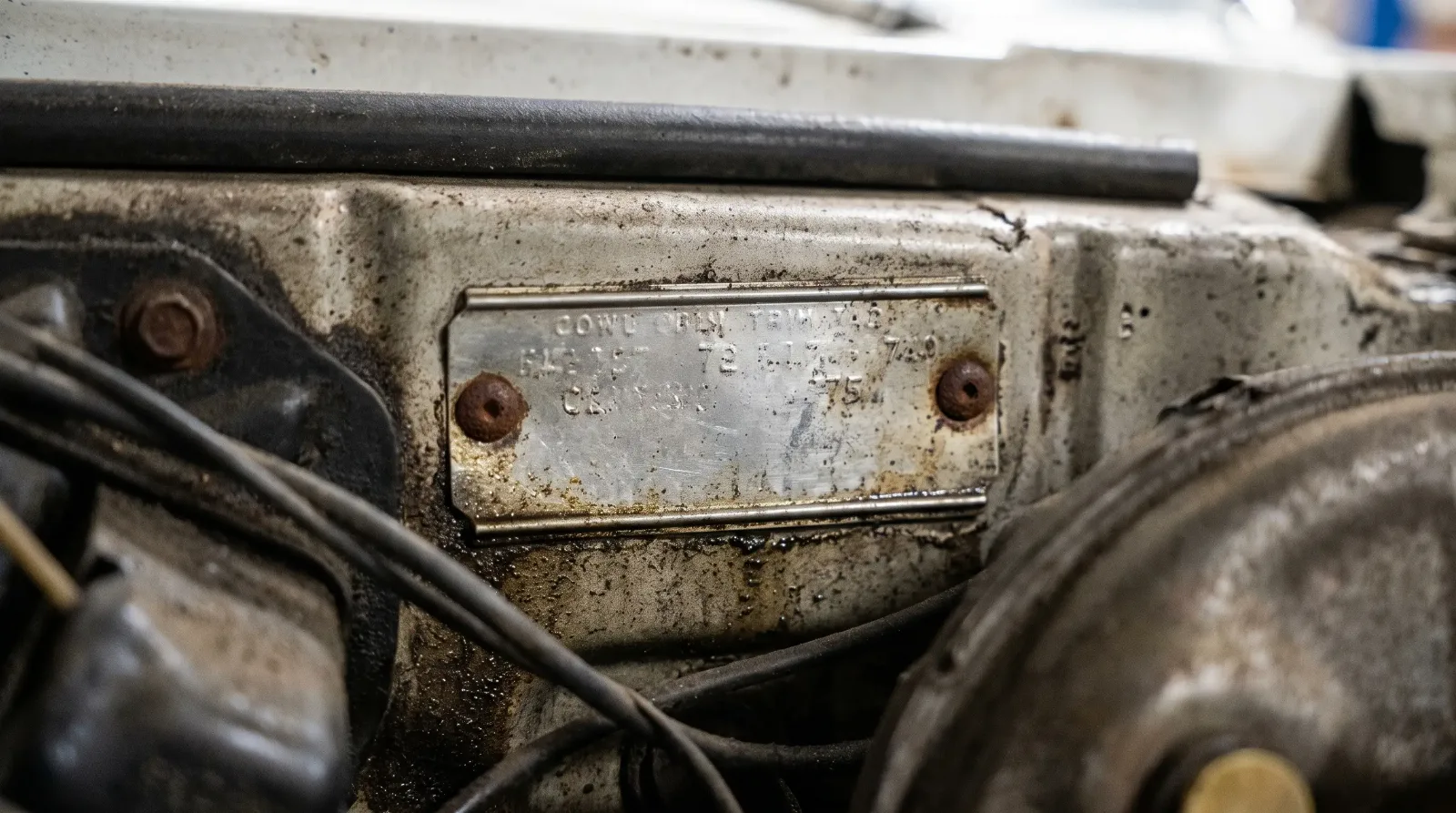
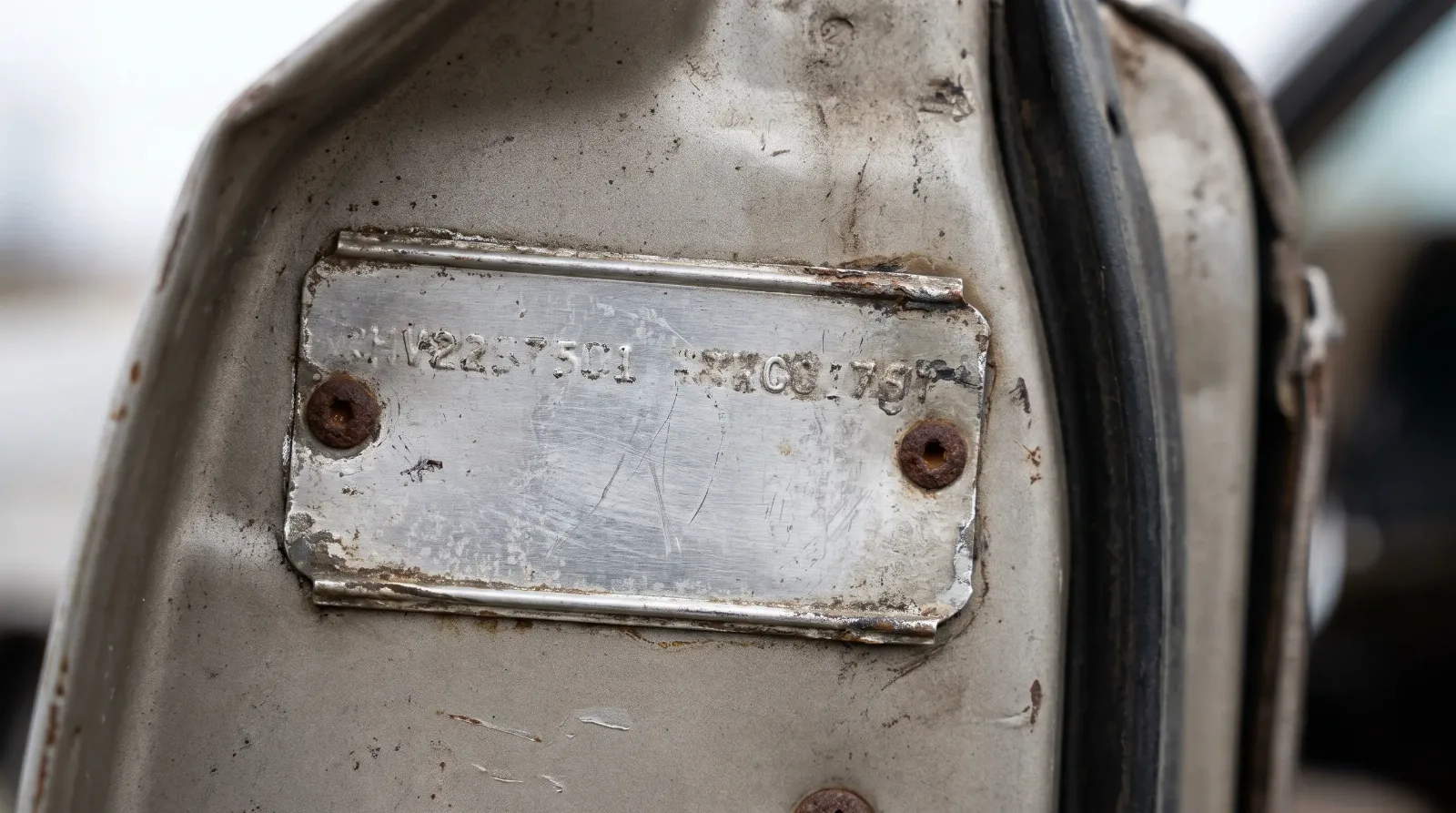
The primary VIN plate is riveted to the top of the dashboard on the driver side, visible through the windshield. On 1967 models the plate is aluminum; 1968 and 1969 cars use a thin steel plate. A matching partial VIN is stamped directly into the engine pad on the front face of the block, just below the cylinder head on the passenger side. If those two numbers do not agree in the positions that overlap, treat the discrepancy as a red flag. Additional partial VINs appear on the body door hinge pillar tag and, on convertibles, on the cowl brace stamping.
Before examining any other documentation, photograph the VIN plate and the block stamp in good light. Magnification matters: restamping leaves tool marks and spacing inconsistencies that are invisible in a casual glance. You can find more context on verifying documentation in our complete Camaro restoration guide.
Breaking down the 13 characters
The structure is consistent across 1967, 1968, and 1969 model years, though a few code values changed between years. Here is what each position means:
| Position(s) | What it encodes | Example values |
|---|---|---|
| 1 | Division (1 = Chevrolet) | 1 |
| 2-3 | Model line (24 = Camaro Sport Coupe, 67 = Camaro convertible) | 24 or 67 |
| 4 | Body style (always 3 for Camaro Sport Coupe, 7 for convertible) | 3 or 7 |
| 5 | Engine type only (6 = inline-six, V8 designations vary by year; the VIN does not encode specific displacement) | see notes below |
| 6 | Model year (7 = 1967, 8 = 1968, 9 = 1969) | 7, 8, or 9 |
| 7 | Assembly plant (N = Norwood Ohio, L = Los Angeles) | N or L |
| 8-13 | Sequential production number (the starting value differs by year: 1967 and 1968 cars began at 100001, while 1969 cars began at 500001 at both plants) | e.g. 100001 or 500001 and up |
Engine identification: the block suffix code, not the VIN
This is the single most misunderstood point in first-gen Camaro decoding: the 1967-1969 Camaro VIN does not contain a code for the specific engine. The VIN only distinguishes a six-cylinder car from a V8 car (carried in the model-line and body-style digits), not displacement or horsepower. To identify the actual engine, you read the two-letter engine suffix code stamped on the block pad ahead of the cylinder head. Common suffix-code applications for first-gen Camaros include:
- 230 / 250 cu in inline-six base engines
- 327 cu in V8, roughly 210 hp two-barrel (a common Powerglide application)
- 350 cu in V8, around 295 hp (the SS 350)
- 396 cu in V8, 325 hp (SS 396 base)
- 396 cu in V8, 375 hp (the solid-lifter L78)
Because the suffix code identifies the engine application by displacement, horsepower, and transmission pairing, cross-referencing it against the trim tag and the build sheet (if present) is the most reliable way to confirm a numbers-matching claim. A genuine L78 396 block is worth thousands of dollars in market value, so scrutinize the suffix stamp and the partial-VIN stamp carefully against published Chevrolet suffix-code tables.
Assembly plant codes and production sequences
Only two plants assembled first-gen Camaros: Norwood, Ohio (code N) and Van Nuys, California (code L). Norwood cars tend to have higher production volumes and are slightly more common. The six-digit sequence number following the plant code is unique to each plant, not global across both facilities. A Norwood car with sequence 123456 and a Van Nuys car with sequence 123456 are two different vehicles built roughly around the same production date, not the same unit.
Production sequence can help you estimate the approximate build date, which you then verify against the trim tag broadcast code. Sequences increment through the model year, so a very low number indicates an early-production car, which is significant for 1967 first-year cars that may carry proto-production features.
"I have looked at hundreds of VIN plates over the years. The single most reliable tell for a restamped plate is uneven character depth: legitimate GM stamps hit every character at the same pressure. If two or three digits look pressed harder than the rest, walk away."
— Tom Ramirez
Comparing the VIN to the engine pad stamp
The partial VIN stamped on the engine block covers the last eight characters: the engine code, model year, plant code, and the last six of the sequence. A numbers-matching engine will carry those characters plus an engine suffix code that identifies displacement, horsepower rating, and transmission pairing. The suffix is a separate stamp, not part of the VIN, but it must agree with the VIN engine code. Reference published Chevrolet engine suffix tables to confirm the suffix is period-correct for the application.
If the VIN shows a U (L78 396) but the block suffix indicates a low-compression two-barrel engine, the block has been swapped. The car is not numbers-matching regardless of what the seller claims. Continue your research with our next article on the Camaro trim tag and cowl tag, which adds a second layer of factory verification.
Sources and notes
Production figures, engine specifications, codes, and dates in this article are cross-referenced from established Camaro references, period documentation, and owner registries. Where sources differ, the most commonly cited value is used. Cost figures are indicative and vary by supplier, region, and condition.