
Pontiac Chieftain Buyer's Guide
The Pontiac Chieftain defined the brand's identity through one of the most turbulent decades in American automotive history — surviving the transition from straight-eight to V8 power, from Silver Streak styling to the new Strato-Streak era, and from postwar austerity to the chrome excess of the late 1950s.

Mike Sullivan here. The Pontiac Chieftain doesn't get the collector attention it deserves, and I think it comes down to positioning. Pontiac sat between Chevrolet and Oldsmobile in the General Motors hierarchy — not cheap enough to be ubiquitous, not expensive enough to be prestigious. But the Chieftain from 1955 through 1958 is a genuinely good car: the new Strato-Streak V8, the wide-body proportions, and a driving experience that outclasses what the price suggested. When Bunkie Knudsen arrived at Pontiac in 1956 and started the performance-first overhaul that would produce the GTO a decade later, the Chieftain was what he had to work with.
The pre-V8 Chieftains (1949–1954) are a different story — important to marque completists, good-looking cars, but powered by the inline-eight that Pontiac needed to replace. The real collector argument for the Chieftain starts in 1955.
The Silver Streak Era: 1949–1954
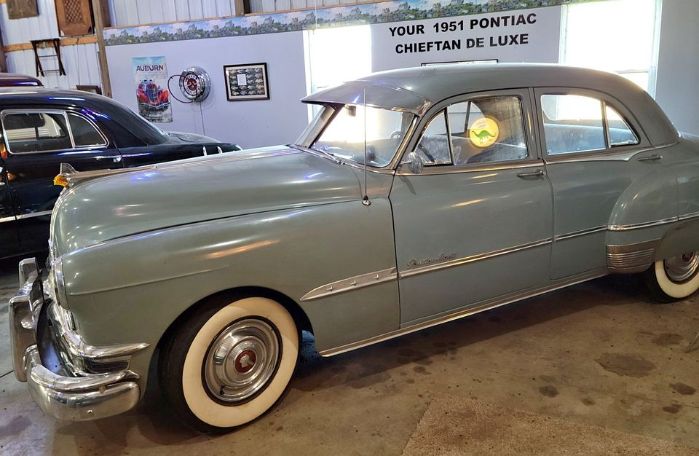
The Pontiac Chieftain launched in 1949 as the senior Pontiac model, positioned above the Streamliner and below the Star Chief (which arrived in 1954). The defining visual element was the "Silver Streak" styling — chrome strips running from the front hood to the rear of the car in a parallel pattern that Pontiac had used since 1935. By 1949, this was a dated design element that the competition had moved past, but Pontiac's loyal buyers expected it and the company kept it.
The 1949-1954 Chieftain used a straight-eight (249ci in 1949-1951, 268ci in 1952-1954) producing up to 127 horsepower. These are competent engines that represent the engineering standard of their era — reliable, torquey at low rpm, and well-understood by the shops that still work on them. The 1954 cars are the last straight-eight Chieftains and represent a design high point before the major 1955 redesign.
1949–1954 Body Styles
The Chieftain was available in a full range of body styles throughout this era: the two-door coupe, two-door hardtop (the "Catalina" nameplate applied to the hardtop in 1950), convertible, four-door sedan, and station wagon. The Catalina hardtop — pillarless, chrome-accented, visually dramatic — is the most sought-after body style from this era for collectors.
The V8 Revolution: 1955–1958
In 1955, General Motors introduced new V8 engines across most of its divisions simultaneously. Pontiac's "Strato-Streak" V8 was a 287ci overhead-valve design producing 173–200 horsepower — a massive improvement over the outgoing straight-eight and an engine that immediately transformed the Chieftain's driving character. Combined with a new body on the A-body platform shared with other GM mid-size cars, the 1955 Chieftain was a genuinely different car from its predecessor.
| Year | Engine | Output | Notes |
|---|---|---|---|
| 1955 | 287ci Strato-Streak V8 | 173–200 hp | First Pontiac V8; landmark year |
| 1956 | 316ci V8 | 192–227 hp | Displacement growth; Knudsen arrives |
| 1957 | 347ci V8 | 227–290 hp | Fuel injection option available |
| 1958 | 370ci V8 | 240–300 hp | Final Chieftain year; tri-power option |
The 1957–1958 Performance Chieftain
Knudsen's influence on the 1957 and 1958 Chieftains was direct. The Tri-Power carburetor option — three Rochester 2-barrel carburetors on a common intake manifold — became available on the 347ci V8 in 1957, producing 290 horsepower and transforming the Chieftain from a comfortable cruiser into a genuine performer. The 1957 Chieftain with the Tri-Power 347 is one of the most desirable pre-muscle-era Pontiacs.
The 1958 Chieftain was the last model year for the nameplate — Pontiac reorganized its lineup for 1959 and the Chieftain name was retired. The 1958 car used the 370ci V8 in a body that, like most 1958 GM products, had received the chrome-heavy treatment that characterized the year. These are visually distinctive cars that reward buyers who appreciate the late-1950s American excess at its most committed.
"The Chieftain is where Pontiac's performance story starts. Most people point to the GTO, and that's fair. But everything Knudsen did in 1956, 1957, and 1958 — the V8 growth, the Tri-Power, the wide-track philosophy — that was the foundation. When you drive a 1957 Chieftain with Tri-Power, you can feel what's coming."
— Mike Sullivan
Browse Pontiac Chieftain listings
What to Look For
On 1949–1954 straight-eight cars, inspect the frame rails and lower body sections — these are 70+ year old vehicles. The straight-eight engine is reliable but check for oil consumption and head gasket condition. On 1955–1958 V8 cars, inspect the rear quarter panels and lower front fenders for rust — standard salt-belt locations. The Tri-Power carburetor setup on 1957–1958 cars requires all three carburetors to be properly synchronized — a cold start and smooth progression to full throttle verifies basic function. Verify the Hydra-Matic transmission operates through all ranges without slipping. On Catalina hardtop body styles, inspect the door and roof structure for any flex or misalignment from body twist.Pre-Purchase Checklist
-
Rear Quarter Rust
Check rear quarter panels — primary rust location on all Chieftains in any climate. -
Lower Front Fenders
Probe where fender meets rocker panel — consistent rust point on all postwar Pontiacs. -
Straight-Eight Condition (1949–54)
Compression test on straight-eight — verify even cylinders and no oil consumption smoke. -
Tri-Power Sync (1957–58)
All three carburetors must idle and transition smoothly — rough running indicates sync issues. -
Hydra-Matic Function
Test all selector positions — smooth shifts with no slipping or harsh engagements. -
Hardtop Body Rigidity
On Catalina hardtops, check door gaps for even alignment — body twist from improper storage is common. -
Chrome Completeness (1958)
Inventory all exterior chrome on 1958 cars — replacement pieces are difficult to source correctly. -
V8 Date Codes (performance cars)
On Tri-Power cars, verify engine date codes match car production date — transplanted engines reduce value.
Common Issues
Rear quarter panel rust on salt-belt cars from any era. Lower front fender rust where the fender meets the rocker. Straight-eight oil consumption on high-mileage unrestored 1949–1954 examples. Hydra-Matic seal leaks and fluid contamination. Tri-Power carburetor synchronization issues — all three carbs must be properly tuned. 1958 chrome trim deterioration and difficult-to-source replacements. Hardtop body twist on cars stored improperly. Power window circuit failures on luxury-optioned cars.More Chieftain for sale
 Dealer
 United States
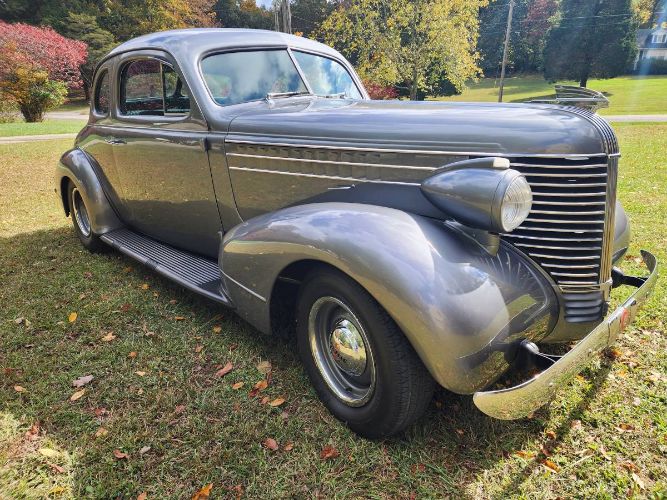
1938 Pontiac Chieftain
 Dealer
United States
Dealer
United States
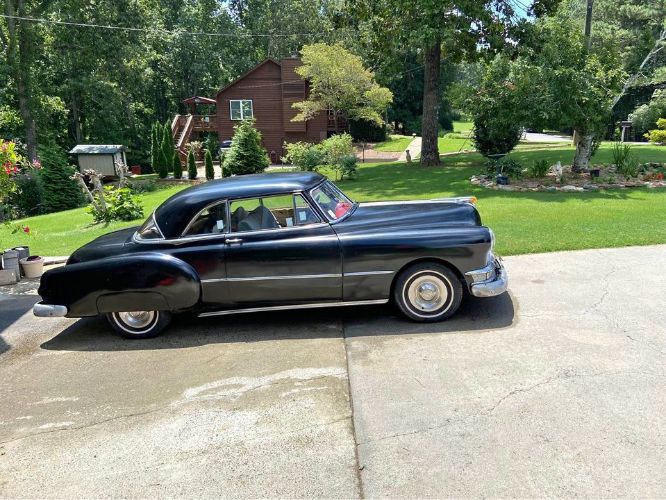
1950 Pontiac Chieftain
Pricing Guide
1949–1954 Chieftain straight-eight (sedan driver): $8,000–$18,000. 1949–1954 Chieftain Catalina hardtop: $14,000–$28,000. 1955 Chieftain V8 (first-year): $12,000–$25,000. 1956–1957 Chieftain V8 (sedan): $10,000–$22,000. 1957 Chieftain Tri-Power 347ci (documented): $22,000–$42,000. 1958 Chieftain Tri-Power (370ci): $18,000–$38,000. Convertibles in any year add 40–60% over equivalent hardtop prices.Fun Facts
The Pontiac Chieftain name was retired after 1958, the same year Bunkie Knudsen's performance program was beginning to produce results. Two years after the Chieftain ended, Pontiac introduced the Wide-Track design philosophy; four years later, the Tempest offered the GTO option that created the muscle car category. The Silver Streak chrome strips that defined early Pontiacs were such a long-running tradition (introduced in 1935) that Pontiac used them as a marketing identity even as they became styling anachronisms in the early 1950s — they were finally abandoned with the 1957 redesign.Frequently Asked Questions
Ready to find your Chieftain?
Browse 6+ active Pontiac Chieftain listings on Classic Cars Arena.
View Listings →