
Classic Volkswagen Bus Buyer's Guide (Type 2, 1950–1979)
The VW Bus is one of the most emotionally loaded vehicles in automotive history — and one of the most rust-prone. Knowing the difference between a restorable Bus and a money pit is the only skill that matters when buying one.

I've spent a lot of time around air-cooled Volkswagens, and the Bus is in a category by itself. It's simultaneously one of the most charismatic vehicles ever mass-produced and one of the most demanding to restore properly. The rust is structural, the parts are expensive, and the "project Bus" market is full of sellers who bought problems they can't solve and priced their optimism into the asking price. A solid Bus is genuinely rewarding to own and drive. A rust-compromised Bus is a decade-long commitment you may never finish. The buying decision is almost entirely about knowing which you're looking at.
History & Generations
The VW Type 2 Transporter launched in 1950, two years after Ben Pon's famous napkin sketch. Built on a shortened Beetle floorpan with the same air-cooled engine mounted in the rear, it was intended as a commercial delivery van. What it became was something far more culturally significant.
T1 (1950–1967): The Split-Window Era
The first-generation Bus is instantly recognizable by its split windshield — two flat glass panes meeting at a center divider. Early "Barndoor" models (1950–1953) have a large rear engine access panel and are the rarest and most valuable. Power came from the 1200cc or 1500cc air-cooled flat-four — modest, but adequate in a van weighing barely 2,000 pounds. The T1 "Samba" variant with 21- or 23-window panoramic glass and folding fabric sunroof is the most valuable VW Bus ever made — correct show examples have exceeded $200,000 at auction.
T2 (1968–1979): The Bay Window
The T2 replaced the split windshield with a single curved "bay window." More modern, more practical, and more spacious than the T1. Engines grew from 1600cc through 1700, 1800, and eventually 2000cc options. The T2 is the more usable daily-driver Bus with better parts availability. Production ended in 1979 for North America; Brazil continued through 2013.
Years to Target
- T1 1955–1967 (standard): Split window, air-cooled simplicity, highest visual appeal. Expect to pay for it.
- T2 1968–1971: Early T2 with 1600cc — best balance of T1 character and T2 practicality.
- T2 1972–1975: Larger engines, most common survivors, best parts availability.
- Avoid: Any Bus where the seller cannot show you bare metal in the critical structural areas.
What to Look For in Person
Rust assessment is the entire inspection on a VW Bus. The heater channels — structural sills running along the lower body — must be solid. Tap them with a knuckle along their full length. A metallic ring is solid; a dull thud or crunch indicates rust. Probing with a screwdriver is the only reliable test — if it goes in, walk away until structural repair cost is known.
The floor pans under seats and cargo area are secondary but important. Check the spare tire well in the front compartment. The area behind the rear wheels on the lower body seam is a universal rust initiation point on every T1 and T2. Check the battery tray area under the driver's seat for acid damage to floor structure.
For the engine: start from cold. The air-cooled flat-four should idle steadily. Listen for a persistent knock — the engines are robust but a spun bearing on a neglected example occurs. Check for oil leaks at the pushrod tube O-rings, which harden and weep with age. Valve adjustment is routine maintenance and makes a significant difference in how smoothly these run.
| Generation | Engine | Years (US) | Key Feature |
|---|---|---|---|
| T1 early | 1200cc flat-four, 36 hp | 1950–1955 | Barndoor / Split window |
| T1 standard | 1500cc flat-four, 42 hp | 1956–1967 | Split windshield |
| T2 early | 1600cc flat-four, 57 hp | 1968–1971 | Bay window |
| T2 late | 1700–2000cc flat-four | 1972–1979 | Larger engines, fuel injection option late |
"Every Bus I've inspected that turned out to be a money pit had the same tell: the seller knew the heater channels were bad and hoped I wouldn't check. I always check. Those channels are the spine of the car — once they're gone, you're looking at a full structural restoration, not a cosmetic project. It's not a deal at any price until you know what the metalwork will cost."
— Emily Chen
Market Outlook
The VW Bus market has moved sharply upward and shows no sign of retreating. T1 split-window Buses in driver condition start at $35,000–$55,000; show-quality examples reach $80,000–$120,000. Samba 23-window models have exceeded $200,000. T2 bay-window Buses: driver condition $18,000–$30,000; show quality $40,000–$65,000. Westfalia camper conversions add 20–35% at any condition level. Project Buses — running but rusty — routinely priced $12,000–$25,000, but restoration costs often exceed the finished value on compromised examples. Buy the best one you can afford.
Browse Volkswagen Bus listings
 Dealer
 United States
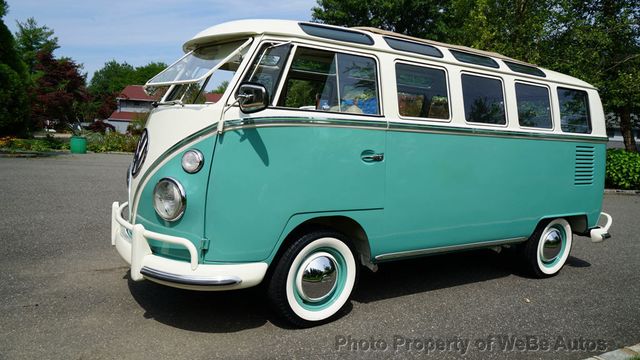
1964 Volkswagen Bus
 Dealer
United States
Dealer
United States
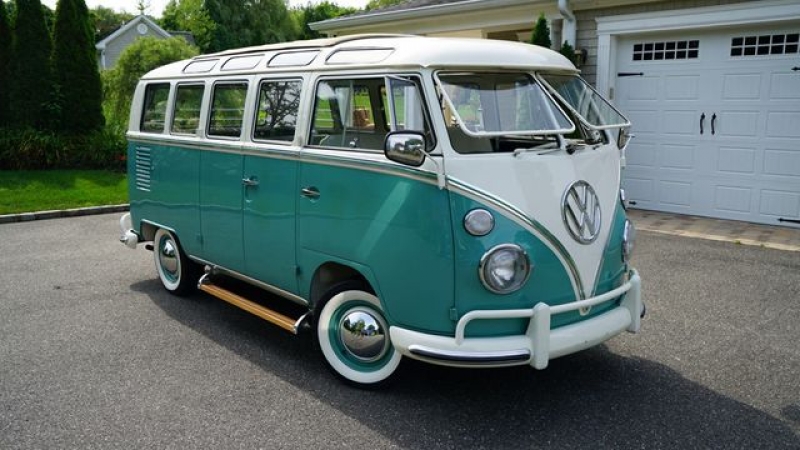
1964 Volkswagen Bus
What to Look For
Heater channels are the absolute first priority — tap and probe their full length on both sides. Dull sound or screwdriver penetration means structural repair before price can be agreed. Check battery tray under driver's seat for acid damage. Inspect spare tire well in front compartment for water and rust. Check lower body seam behind rear wheels — universal rust initiation. Verify heater box ducts are intact. Check all door sills and lower door corners. Engine: listen for valve noise (needs adjustment) vs. bearing knock (rebuild needed). Check pushrod tube O-rings for oil seepage. Verify windshield seal integrity on T1 cars — leaks cause A-pillar rust. On Westfalia models inspect pop-top mechanism and all seals.Pre-Purchase Checklist
-
Heater channel tap test
Tap full length of both sills — metallic ring = good, dull thud = rust inside -
Heater channel probe test
Probe with screwdriver — any penetration means structural repair required -
Battery tray inspection
Pull driver seat, inspect battery tray for acid damage and floor rust -
Spare tire well
Lift front floor and check spare well for water accumulation and rust -
Rear lower body seam
Inspect seam behind rear wheels on both sides for corrosion -
Pushrod tube O-rings
Check engine bay for oil seeping from pushrod tubes -
Engine cold start
Listen for valve noise vs. bearing knock — valve noise = adjustment, knock = rebuild -
Door sills and lower corners
Check all door gaps for evenness; inspect lower door corners for rust -
Windshield seal (T1)
Inspect split-windshield rubber seal — leaks cause A-pillar structural rust -
VIN verification
Confirm German manufacture vs. Brazilian-built if originality matters -
Westfalia pop-top
Test mechanism and inspect all seals for leaks if applicable -
Brake condition
Test braking force — stock drum brakes are marginal; verify recent service
Common Issues
Heater channel rust is the defining issue of every Bus restoration. The channels are structural — correct repair requires full channel replacement, which is labor-intensive even with reproduction parts. Floor pan rust accompanies heater channel corrosion universally. Pushrod tube O-rings harden and leak; valve clearances require periodic adjustment; the carburetor requires regular attention. Original braking system is marginal — drum-to-drum with fresh hardware is a worthwhile improvement. On T2 models the front beam axle is susceptible to wear at torsion bar adjustment points. The 6-volt system on early T1 and 12-volt positive ground on later cars both require attention to grounds and connections for reliable operation.More Bus for sale
 Dealer
United States
Dealer
United States
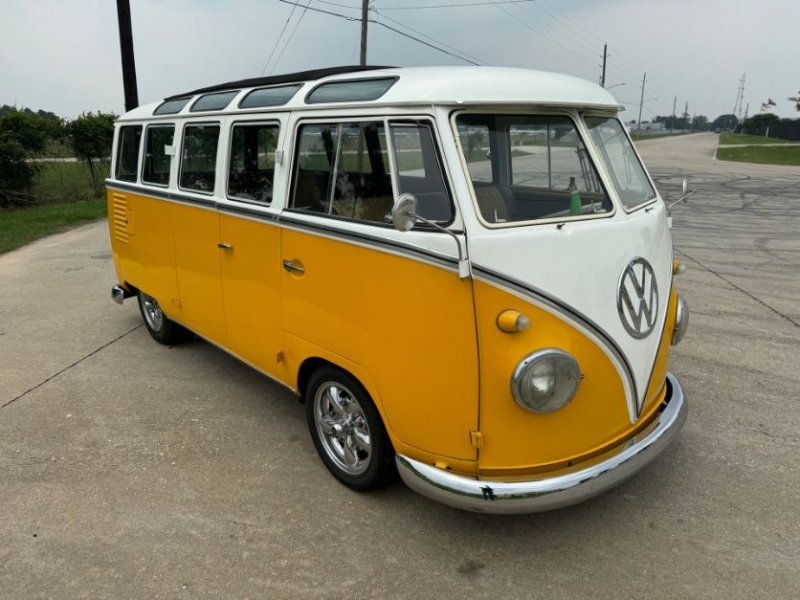
1956 Volkswagen Bus
 Dealer
United States
Dealer
United States
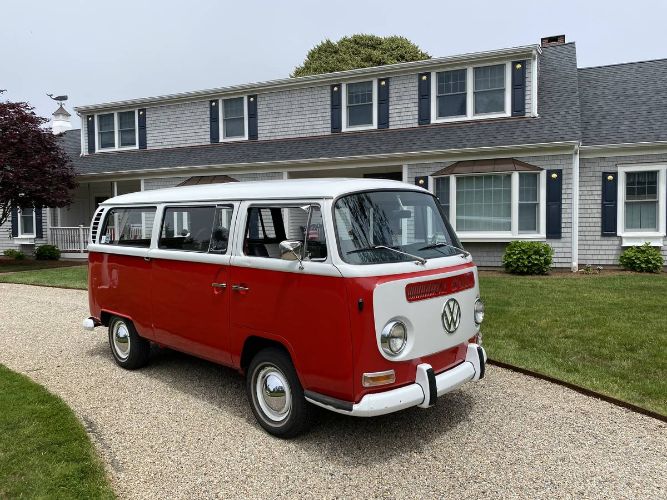
1969 Volkswagen Bus
Pricing Guide
T1 split-window driver: $35,000–$55,000; show quality: $80,000–$120,000; Samba 23-window: $120,000–$220,000+. T2 bay-window driver: $18,000–$30,000; show: $40,000–$65,000. Westfalia adds 20–35% at any condition. Project T2 Buses: $12,000–$25,000 — but heater channel restoration alone runs $15,000–$30,000 at a qualified shop. Never buy a project Bus without a detailed metalwork estimate first.Fun Facts
Ben Pon sketched the Bus concept on a hotel notepad in 1947 after seeing the VW factory's flatbed maintenance cart. The Bus became synonymous with the 1960s counterculture, appearing at Woodstock and countless civil rights marches. Production of the T2 continued in Brazil until 2013 — 63 years after launch. The final Brazilian "Last Edition" T2 sold out immediately upon announcement.Frequently Asked Questions
Ready to find your Bus?
Browse 6+ active Volkswagen Bus listings on Classic Cars Arena.
View Listings →