
Volkswagen Karmann Ghia Buyer's Guide
The Karmann Ghia is the proof that beautiful design and honest engineering are not mutually exclusive — a hand-built body by Ghia of Turin on the proven Beetle platform, producing the most elegant Volkswagen ever made and one of the most practical classics available today.

Emily Chen here. The Karmann Ghia is the car that convinced me the VW air-cooled platform was genuinely interesting, rather than just reliably dull. The Beetle underneath is the same car — flat-four air-cooled engine, torsion bar suspension, the same basic engineering that sold 21 million units — but the Ghia body transforms the experience. Not the performance, which remains modest in the extreme. The experience: the way the car looks, the way it sits, the craftsmanship visible in the panel fit, the sense that you're driving something that was made with care rather than just made.
Ghia designed the body; Karmann of Osnabrück hand-built it — hammering the complex curved panels over forms that couldn't be press-stamped at Volkswagen's production scale. The result is a car with panel surfaces that still reward close inspection 50 years later. That's a manufacturing accomplishment worth understanding.
The Collaboration That Created an Icon
In 1953, Volkswagen's head of sales, Carl Hahn, approached Ghia — the Turin coachbuilder that had been producing concepts for American and European manufacturers — with a brief for a sports-car-bodied Volkswagen. Ghia's designer Luigi Segre produced the design; VW approved it; Karmann of Osnabrück was contracted to build the bodies. The production car arrived in 1955 as the Type 14, universally known as the Karmann Ghia.
The engineering brief was deliberately conservative: use the Beetle platform exactly as it was, add no weight that wasn't necessary, change nothing that worked. The result was a car with exactly the same running gear as the Beetle — the same engine, same transmission, same suspension — in a dramatically more elegant body. The Karmann Ghia was not faster than a Beetle. It was more beautiful.
The Coupe and the Cabriolet
The Karmann Ghia was available as a coupe (1955–1974) and a convertible/cabriolet (1957–1974). The coupe is the more common car; the cabriolet is rarer, more valuable, and more visually dramatic with the top down. Both used the same body and running gear. The cabriolet's folding top was properly engineered — no plastic windows, a proper canvas top with adequate seal — and functions correctly on well-maintained examples.
Engine Evolution
| Years | Engine | Output | Notes |
|---|---|---|---|
| 1955–1959 | 1192cc flat-four | 36 hp | Original; modest but adequate |
| 1960–1965 | 1192cc flat-four | 40 hp | Minor improvements |
| 1966–1969 | 1493cc flat-four | 53 hp | Meaningful improvement; standard on late cars |
| 1970–1974 | 1584cc flat-four | 57–60 hp | Final spec; best performance of the range |
The performance numbers look modest by modern standards — 60 horsepower is a number we'd consider inadequate in almost any modern context. In the context of a car weighing under 1,800 lbs, these numbers produce adequate rather than exciting performance. What the engine delivers is its celebrated VW reliability: simple, air-cooled, mechanical fuel delivery, no complexity to age and fail. The flat-four in a properly maintained Karmann Ghia will outlast almost any contemporary water-cooled alternative.
Type 34 — The "Razor Edge" Ghia
In 1962, Volkswagen introduced a second Karmann Ghia body style — the larger Type 34, based on the Type 3 platform (the same used by the Volkswagen 1500/1600). This car is significantly rarer than the Type 14 — only about 42,498 were built across a production run ending in 1969. The Type 34 has a more angular, "razor edge" design compared to the rounded Type 14 curves. In the collector market, the Type 34 commands significant premiums; parts are considerably harder to source.
"What I document in every Karmann Ghia I inspect is the panel-to-panel fit at the door gaps and the rear quarter transitions. Karmann hand-formed these panels, and the fit tells you whether you're looking at a survivor or a car that's been poorly repaired at some point. The original fit was excellent. Crude re-paneling shows immediately under close inspection, and it devalues the car significantly."
— Emily Chen
Rust: The Main Enemy
Despite the hand-formed body panels, the Karmann Ghia's steel is vulnerable to the same rust processes as any other 1950s–1970s car. The floor pan is the primary concern — the same torsion bar suspension that supports the Beetle also creates channels that collect water. The rear quarter panels, the sills, and the front heater channels (which are structural) are the other rust locations. Any Karmann Ghia purchase requires a thorough underside inspection.
Browse Volkswagen Karmann Ghia listings
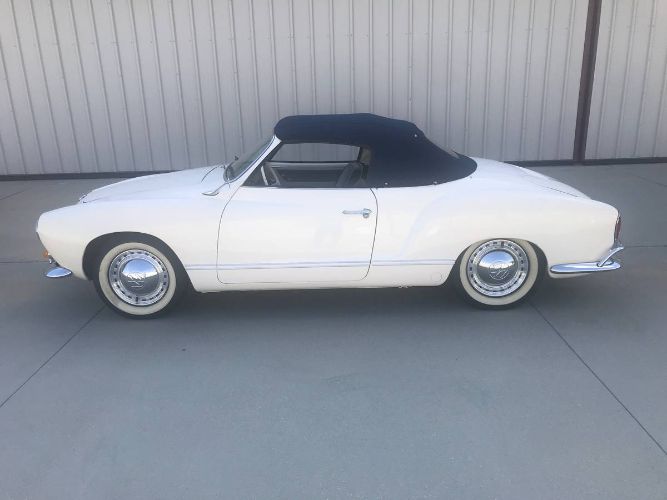 Dealer
 United States
1965 Volkswagen Karmann Ghia
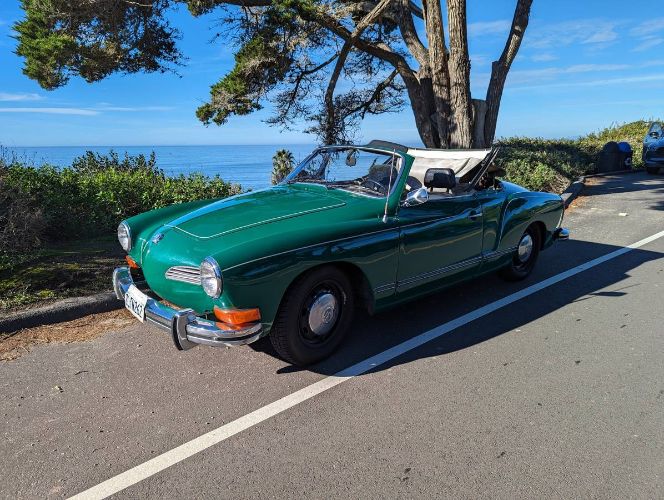 Dealer
United States
Dealer
United States
1974 Volkswagen Karmann Ghia
What to Look For
The floor pan is the primary structural inspection — inspect from underneath with a probe. The front heater channels (structural aluminum channels running along the bottom of the body) are the most critical: rust in these channels is expensive to repair correctly. The rear quarter panels rust where they meet the lower body. Sill areas at the door openings are the third location. Verify the air-cooled flat-four runs without excessive valve noise — the hydraulic lifter equivalent is absent here, and valve adjustment at specific intervals is required. On cabriolets, inspect the top mechanisms for function and the rear tub area for water intrusion damage from a poorly sealing top.Pre-Purchase Checklist
-
Floor Pan Rust
Inspect underside with a probe — floor pan rust is the most common structural issue. -
Heater Channel Condition
Probe the front heater channels running under the body sides — structural rust here is expensive. -
Rear Quarter Panels
Check where rear quarters meet the lower body — consistent rust point on all Karmann Ghias. -
Valve Noise
Listen for excessive valve clatter at idle — indicates overdue valve adjustment, a routine but essential service. -
Cabriolet Top Seal
On cabriolets, check rear tub and sills for water intrusion damage from top seal failures. -
Panel Fit Assessment
Examine door gaps and rear quarter transitions — crude panel alignment indicates prior accident repair. -
Engine Oil Condition
Check oil color and level — clean oil on a Karmann Ghia indicates recent service and attentive ownership. -
Electrical Function
Test all lights and the horn — Bosch electrical components age predictably and basic function is a maintenance indicator.
Common Issues
Floor pan rust — universal on cars without regular underside protection. Front heater channel rust — structural and expensive to repair correctly. Rear quarter panel rust at lower body join. Sill area deterioration. Valve adjustment neglect causing noisy top end — a straightforward but interval-specific maintenance item. Cabriolet top seal deterioration causing water intrusion and interior damage. Electrical system failures from Bosch components of the era. Type 34 parts availability challenges on the larger-platform variant.More Karmann Ghia for sale
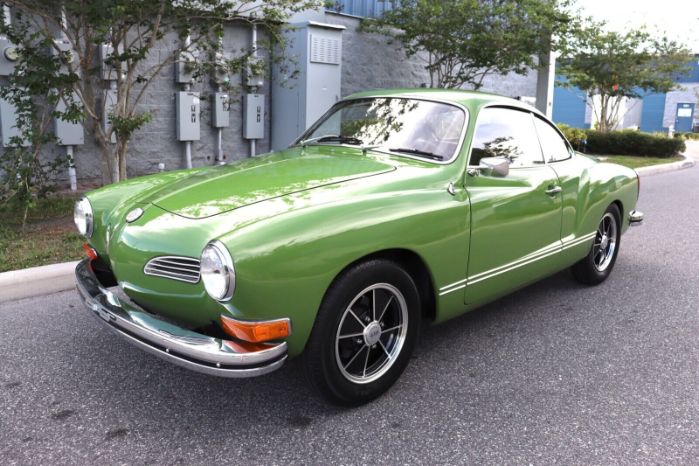 Dealer
United States
Dealer
United States
1972 Volkswagen Karmann Ghia
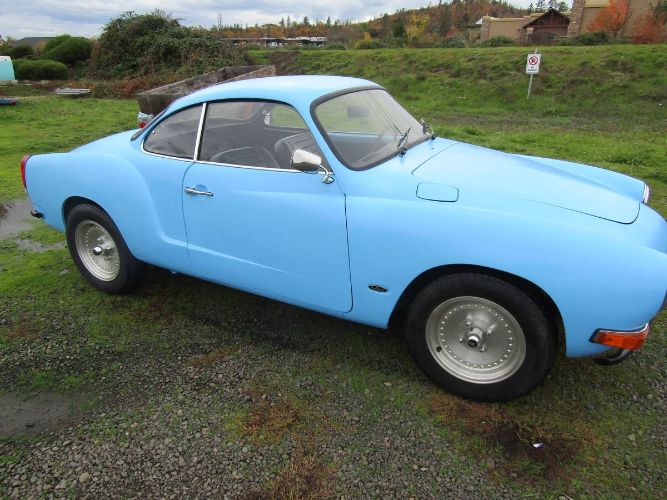 Dealer
United States
Dealer
United States
1973 Volkswagen Karmann Ghia
Pricing Guide
1955–1959 Karmann Ghia coupe (driver): $12,000–$22,000. 1960–1969 coupe: $10,000–$20,000. 1970–1974 coupe: $12,000–$24,000. Any year cabriolet: $22,000–$45,000. Type 34 coupe (1962–1969): $18,000–$40,000. Show-quality original cabriolets: $45,000–$70,000+. Rust-free California or Arizona cars command 30–50% premium over comparable eastern examples.Fun Facts
The Karmann Ghia was produced for 19 years — 1955 to 1974 — and over 362,000 coupes and 80,000 cabriolets were built. Despite this production volume, the hand-forming process meant that no two bodies were perfectly identical, and the panel quality on original-paint survivors still rewards close inspection. The car was never sold with a performance claim — Volkswagen's advertising emphasized its beauty rather than its speed, once running an ad that simply said: "It's ugly but it gets you there" over an image of the Ghia to illustrate the contrast.Frequently Asked Questions
Ready to find your Karmann Ghia?
Browse 6+ active Volkswagen Karmann Ghia listings on Classic Cars Arena.
View Listings →