
Volkswagen Super Beetle Buyer's Guide (1971–1979)
The Super Beetle is the most livable version of the air-cooled Beetle — MacPherson strut front suspension, a curved windshield from 1973, and a significantly larger front trunk. It's not the purist's choice, but it's a better car to actually use. The Cabriolet is the headline variant; a solid closed Super Beetle is one of the most accessible entries into air-cooled VW ownership.

I get asked often whether the Super Beetle or the standard Beetle is the better buy, and the answer depends entirely on what you want to do with it. The Super Beetle rides better, has more luggage space, and — from 1973 — a panoramic curved windshield that makes it feel substantially more modern. The standard Beetle is the purer, lighter, more original experience. For someone who wants to actually use an air-cooled VW on a regular basis and live with it, the Super Beetle is the more practical choice. For a purist who wants the definitive Beetle experience as Porsche intended it in the 1930s, the standard car wins. Both are legitimate. Know which you're buying.
What Makes It "Super"
Volkswagen introduced the Super Beetle (officially Type 1302 for 1971–1972 and Type 1303 from 1973) with two significant engineering changes over the standard Beetle:
- MacPherson strut front suspension: Replaced the standard Beetle's torsion bar/king pin front end with a coil spring/MacPherson strut arrangement, improving handling and ride quality meaningfully.
- Longer front hood (boot): The new front suspension packaging allowed a substantially larger front trunk — nearly double the standard Beetle's frunk capacity. Actual luggage can fit.
The 1303 variant, introduced for 1973, added a distinctively curved panoramic windshield (often compared to the Porsche 914's windshield) that gives the car a dramatically different front-end appearance from the standard Beetle's flat glass.
The Cabriolet
Karmann built the 1303 Cabriolet from 1975 through 1979 — the last open-air Beetle available in major markets. The Cabriolet uses the 1303 curved windshield body with a fully lined folding top and a reinforced body structure. It is the most desirable Super Beetle variant by a significant margin, with prices that can approach Karmann Ghia Cabriolet territory for the best examples.
The Air-Cooled 1600 Engine
Every Super Beetle was powered by the 1584 cc air-cooled flat-four in the rear, producing 60 horsepower in US specification (reduced from European ratings due to emissions equipment). The engine is legendarily durable in basic operation: change the oil regularly, adjust the valves on schedule, and keep the air filter clean, and a 1600 will run for decades without major intervention.
The critical maintenance items are: valve adjustment (every 3,000 miles on older cars, modern oils extend this), pushrod tube O-ring inspection (they harden with age and weep oil), and carburetor adjustment. The Solex/PICT carburetor on most US-market cars is simple but requires periodic attention to idle mixture and float height.
Rust Inspection
The Super Beetle shares the standard Beetle's rust vulnerability profile: heater channels first, floor pans second. The heater channels — running along the lower body sills — are structural members that carry load and stiffen the body. They rust from outside-in and from inside-out simultaneously, because road spray enters from below and condensation accumulates from the heater ducts above.
Tap the heater channels their full length on both sides. A metallic ring is solid; a dull thud indicates rust inside; a crunch or screwdriver penetration means structural repair is required before price can be discussed. Floor pans under both seats are secondary. The spare tire well in the front trunk is a water trap — remove the spare and probe the well floor.
| Variant | Years | Key Feature |
|---|---|---|
| Type 1302 | 1971–1972 | MacPherson strut, flat windshield |
| Type 1303 | 1973–1979 | Curved panoramic windshield |
| 1303 Cabriolet | 1975–1979 | Open top, Karmann body, highest value |
"What I tell buyers who are new to air-cooled VWs is this: the Super Beetle is a more sensible daily car than the standard Beetle, but it's more complicated to work on correctly. The MacPherson strut front end needs someone who actually knows it. The curved windshield is expensive to replace. These are manageable issues — not reasons to avoid the car — but they're reasons to have the car looked at by a VW specialist before you buy rather than after. The heater channels are still the first thing I check. They're structural, and on any Beetle or Super Beetle, they tell the whole story."
— Emily Chen
Pricing
Driver-quality 1303 Super Beetle coupe: $8,000–$14,000. Show quality: $16,000–$24,000. Cabriolet driver quality: $18,000–$28,000; show quality: $32,000–$48,000. The 1302 (1971–1972) trades slightly below equivalent 1303 prices due to the flat windshield. US-market Super Beetles are plentiful and parts support is excellent — prices are more accessible than the standard Beetle at equivalent condition levels, partly because collector demand is lower among purists.
Browse Volkswagen Super Beetle listings
 Dealer
 United States
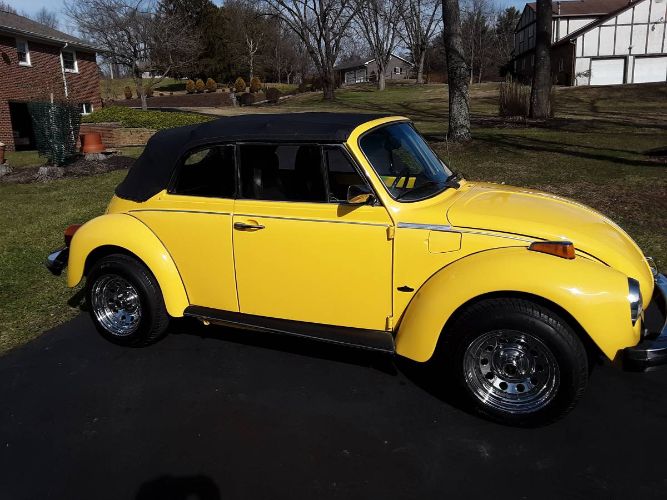
1975 Volkswagen Super Beetle
 Dealer
United States
Dealer
United States
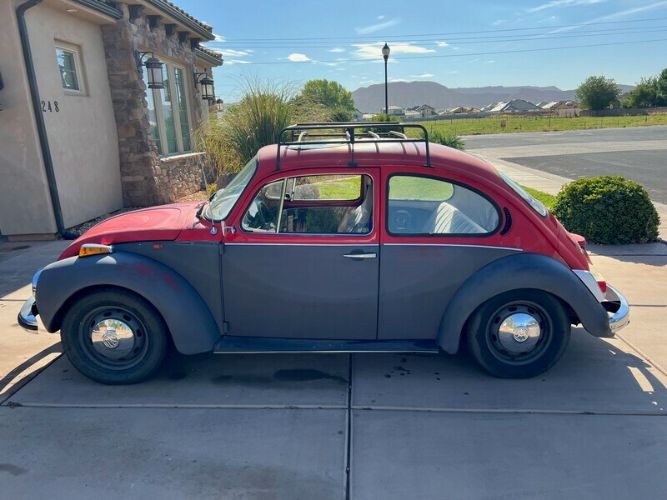
1973 Volkswagen Super Beetle
What to Look For
Heater channel tap and probe test — full length both sides, metallic ring = solid, dull thud = rust inside, screwdriver penetration = structural repair required. Floor pans under both seats. Spare tire well in front trunk — remove spare and probe well floor. On 1303 models: curved windshield condition — chips, cracks, and edge delamination are expensive to fix. MacPherson strut front end condition — check for worn strut mounts and correct geometry. Engine: start from cold, listen for valve noise (needs adjustment) vs. bearing knock (rebuild needed). Check pushrod tube areas for oil seepage. On Cabriolet: inspect all top seals, convertible top mechanism, and rear body corners for water intrusion rust.Pre-Purchase Checklist
-
Heater channel tap test
Tap full length both sides — metallic ring good, dull thud = rust inside -
Heater channel probe test
Probe with screwdriver — any penetration means structural repair required -
Floor pan inspection
Check under both seats for rust-through -
Spare tire well
Remove spare, probe front trunk floor well for water damage -
Curved windshield condition (1303)
Inspect for chips, cracks, and edge delamination — replacement is expensive -
Cold engine start
Start from cold — steady idle and no valve knock required -
Pushrod tube O-rings
Check engine case area for oil seepage at pushrod tubes -
MacPherson strut inspection
Check strut mount condition and front end geometry -
Cabriolet top and seals
On Cabriolet: test top mechanism and inspect all seals for deterioration -
Rear corner rust (Cabriolet)
On Cabriolet: inspect rear body corners inside and out for water intrusion rust
Common Issues
Heater channel rust is the primary structural issue — same as standard Beetle. Floor pan rust accompanies it universally on neglected examples. The curved 1303 windshield is expensive to replace ($400–$800+) and prone to edge delamination with age. MacPherson strut front suspension is more complex than the standard Beetle torsion bar system and requires specialist knowledge to service correctly. Pushrod tube O-ring hardening and oil seepage is universal on high-mileage engines. Valve clearance requires periodic adjustment — more frequently than many owners realize. Carburetor (Solex/PICT) requires periodic attention to float height and idle mixture. Cabriolet top seal deterioration causes water intrusion and body rust at rear corners.More Super Beetle for sale
 Dealer
United States
Dealer
United States
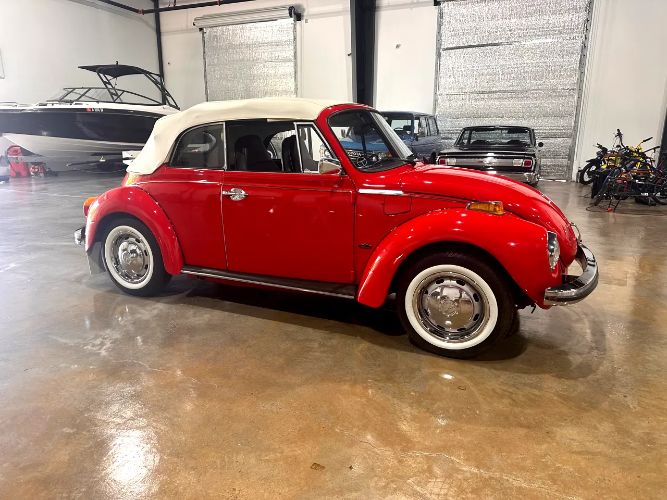
1973 Volkswagen Super Beetle
 Dealer
United States
Dealer
United States
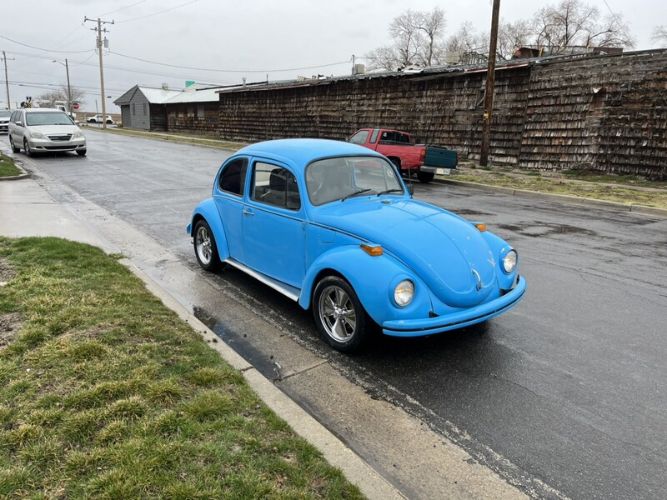
1972 Volkswagen Super Beetle
Pricing Guide
Driver-quality 1303 coupe: $8,000–$14,000. Show quality: $16,000–$24,000. Cabriolet driver: $18,000–$28,000; show: $32,000–$48,000. 1302 (flat windshield) trades slightly below 1303 prices. Super Beetles are priced below standard Beetles at equivalent condition among purist collectors, making them better value for a driver-focused buyer. Parts support is excellent through the VW air-cooled community.Fun Facts
The VW Beetle is the best-selling car model in history — over 21 million produced between 1938 and 2003. The Super Beetle's curved windshield was shared with the Porsche 914, both manufactured by Karmann. The final VW Beetle Cabriolet built in Osnabrück in January 1980 was presented to the Henry Ford Museum. In the United States, the Beetle remained the best-selling import car for most of the 1960s despite — or because of — its complete opposition to American automotive orthodoxy.Frequently Asked Questions
Ready to find your Super Beetle?
Browse 6+ active Volkswagen Super Beetle listings on Classic Cars Arena.
View Listings →