Classic Volkswagen Vanagon Buyer's Guide (T3, 1980–1991)
The Vanagon is not a Bus — it's a smarter, more capable vehicle that happens to carry the same counterculture credibility. The Syncro 4WD and Westfalia camper variants are the most sought-after configurations, and values have tripled in a decade.

People who haven't driven a Vanagon often assume it's just a newer Bus. It isn't. The T3 Vanagon is a fundamentally different vehicle — water-cooled from 1983 onward, wider track, more rigid body, dramatically better handling, and genuinely livable as a daily driver. The Westfalia camper conversion and the Syncro 4WD variant have built dedicated followings that have pushed prices to levels that would have seemed absurd a decade ago. The buying challenges are real — the early water-cooled engines have specific failure modes, and rust is still present — but a properly sorted Vanagon is one of the most genuinely useful and characterful vehicles in the classic segment.
History & Generations
Volkswagen introduced the T3 Vanagon for the 1980 model year as the replacement for the air-cooled T2 Bus. Wider, lower, and better handling than its predecessor, it was a more refined package. The first two years (1980–1982) retained an air-cooled 2.0-liter engine as a stopgap. The significant transition came in 1983 with the switch to water cooling.
1983–1985: Water-Cooled Arrives
In 1983 VW fitted the Vanagon with a water-cooled 1.9-liter four-cylinder mounted in the rear, solving the heating and emissions shortcomings of the air-cooled design. Power was modest (82 hp) but the engine ran cleaner and more reliably. The 1.9 has documented head gasket and oil cooler vulnerabilities that require careful inspection — these cars should be priced to reflect the likely need for cooling system service.
1986–1991: The 2.1-Liter and Syncro Era
The larger 2.1-liter engine introduced in 1986 improved power to 95 horsepower. More importantly, 1987 brought the Syncro — a permanent four-wheel-drive system developed with Steyr-Daimler-Puch that transformed the Vanagon into a genuinely capable off-road vehicle. Syncro Vanagons are now the most expensive configuration in the lineup, with clean examples regularly exceeding $50,000.
Years to Target
- 1987–1991 Syncro: Most desirable and valuable. Permanent 4WD, 2.1L engine, best build quality.
- 1987–1991 Westfalia: Best camper functionality with reliable 2.1L engine. Most sought-after among overlanders.
- 1986–1991 standard: 2.1L is meaningfully better than the 1.9 — prioritize these years for daily use.
- 1983–1985: Lower prices, but 1.9L engine requires careful cooling system inspection and should be priced accordingly.
- Avoid 1980–1982: Air-cooled transitional models with the worst driving dynamics of the generation.
What to Look For in Person
The Vanagon's most critical mechanical issue is the water-cooled engine's cooling system. Check the coolant reservoir when cold: it should be clear and free of oil contamination. Pull the oil dipstick: it should be clean oil, not milky emulsion. Either symptom indicates oil cooler failure — a repair that runs $800–$1,500 for the part alone, with significant labor. This is a common failure mode, and a car that shows these symptoms needs an immediate repair or a price reduction that accounts for the full job.
For rust: pull back every floor mat in both cab and cargo area. Floors rot from beneath in wet-climate cars and are often painted over or covered with new carpet. Check rockers, lower rear body corners, and the area under the pop-top seal on Westfalia models.
Drive it: it should pull strongly in all gears and hold highway speed without laboring. On Syncro models, engage 4WD and verify all modes including rear diff lock. The five-speed gearbox is generally robust — listen for grinding on engagement or a highway howl indicating bearing wear.
| Config | Engine | Drive | Years |
|---|---|---|---|
| Early (air-cooled) | 2.0L flat-four, 67 hp | 2WD | 1980–1982 |
| Standard | 1.9L water-cooled, 82 hp | 2WD | 1983–1985 |
| Standard | 2.1L water-cooled, 95 hp | 2WD | 1986–1991 |
| Syncro | 2.1L water-cooled, 95 hp | Permanent 4WD | 1987–1991 |
"The first thing I do on any Vanagon inspection is check the coolant reservoir and the dipstick. Thirty seconds, tells you everything about how the car was maintained. If either one looks contaminated, I factor in the oil cooler repair and everything downstream before I make an offer. A car priced as if the problem doesn't exist is a car the seller knows has a problem."
— Emily Chen
Market Outlook
Vanagon values have risen dramatically since 2015. Syncro Vanagons in good condition trade at $35,000–$60,000; exceptional examples exceed $70,000. Westfalia non-Syncro drivers trade at $18,000–$32,000; well-preserved show-condition Westies reach $40,000–$55,000. Westfalia Syncro (the holy grail): $55,000–$90,000+. Standard 2WD Vanagons: driver $10,000–$18,000; excellent $22,000–$32,000. Appreciation trend for Syncro and Westfalia remains strong; standard models are more stable.
Browse Volkswagen Vanagon listings
 Dealer
 United States
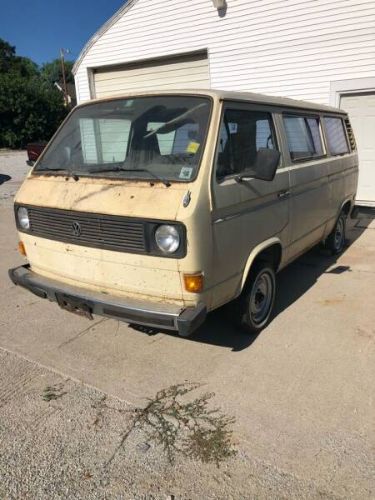
1981 Volkswagen Vanagon
 Dealer
United States
Dealer
United States
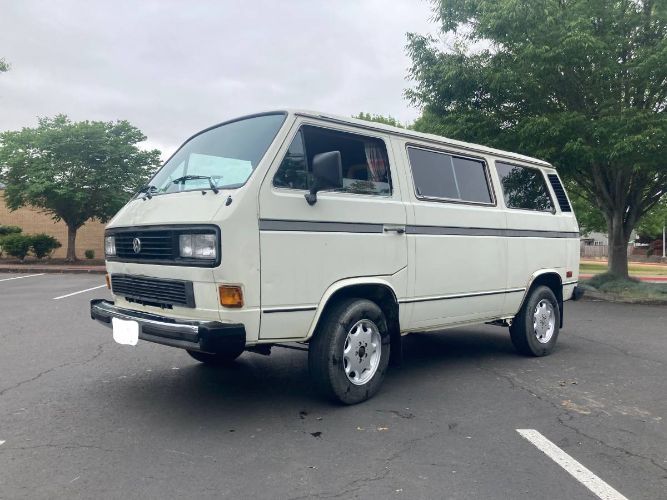
1986 Volkswagen Vanagon
What to Look For
Check coolant reservoir for oil contamination and oil dipstick for emulsification — oil cooler failure is common and expensive, deduct full repair cost from any car showing symptoms. Inspect all floor areas under mats, especially under front seats and rear cargo corners. Check lower rear body corners and rockers for rust. On Syncro, test all 4WD modes including rear diff lock — confirm functionality. On Westfalia, inventory all original furniture, refrigerator function, pop-top mechanism, and all seals. Test pop-top fabric for tears and leaks. Verify gearbox for clean shifts and absence of grinding. Monitor temperature on a 20-minute drive — must stabilize and hold. Check all door seals for integrity.Pre-Purchase Checklist
-
Oil cooler check
Coolant reservoir for oil (brown/milky) and dipstick for emulsification — immediate deal factor -
Floor rust inspection
Pull all mats — check under front seats and rear cargo corners for rust -
Cooling system
Verify thermostat, hose condition, coolant color — overheating kills these engines -
4WD function (Syncro)
Test all 4WD modes and rear diff lock engagement specifically -
Westfalia furniture inventory
Verify all original cabinets, refrigerator, stove, sink, and pop-top components -
Pop-top seal
Inspect fabric for tears and seal for leaks — leads to floor damage -
Lower rear body corners
Inspect for rust at lower rear corners and rocker panels -
Gearbox shifting
All gears should engage cleanly — grinding on 1st or reverse is synchro wear -
Temperature stability
Drive 20+ minutes — should stabilize and hold steady at operating temp -
Door seals
Check all door rubber — leaking seals cause floor rust -
Fuel system
Check for rough idle or stumbling — vacuum leaks or sensor issues -
CV joints (Syncro)
Listen for clicking on full lock turns — worn CV joints need replacement
Common Issues
Oil cooler failure on 1983+ engines is the most serious mechanical issue — cooler sits in the coolant circuit and when it fails, oil and coolant mix, leading to accelerated engine wear. The 1.9L is more prone than the 2.1L. Cooling system maintenance must be current. Floor rust from water intrusion is common in wet-climate cars. Pop-top seal leaks on Westfalia models cause floor rust if unaddressed. CV joints on Syncro models wear with off-road use and require periodic inspection. Fuel injection on later models can develop vacuum leaks causing rough running.More Vanagon for sale
 Dealer
United States
Dealer
United States
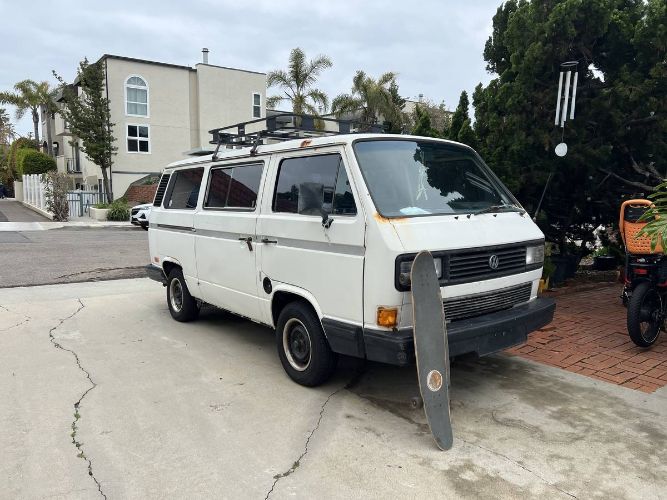
1988 Volkswagen Vanagon
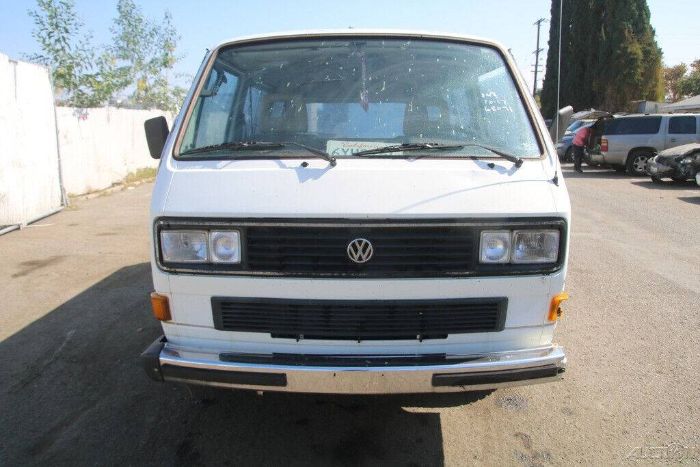 Dealer
United States
Dealer
United States
1986 Volkswagen Vanagon
Pricing Guide
Syncro: driver $35,000–$55,000; show $60,000–$80,000+. Westfalia non-Syncro: driver $18,000–$32,000; show $38,000–$55,000. Westfalia Syncro: $55,000–$90,000+. Standard 2WD: driver $10,000–$18,000; excellent $22,000–$32,000. Air-cooled 1980–1982: $8,000–$14,000 driver. Always deduct full cost of oil cooler replacement ($1,500–$2,500 all-in) from any car showing contamination symptoms. Westfalia completeness adds meaningful value — stripped or partial Westi worth considerably less.Fun Facts
Only about 9,000 Syncro Vanagons were ever produced for the North American market — making them genuinely rare. The Syncro's 4WD system was engineered by Steyr-Daimler-Puch, the same Austrian firm behind the Mercedes G-Wagen drivetrain. The Vanagon was sold in South Africa as the "Microbus" in updated form beyond European production end. The Westfalia camper layout was designed to convert from daily driver to self-contained camping unit with sleeping for four adults in under one minute.Frequently Asked Questions
Ready to find your Vanagon?
Browse 6+ active Volkswagen Vanagon listings on Classic Cars Arena.
View Listings →