
Volkswagen Westfalia Buyer's Guide
The Volkswagen Westfalia is the original van life vehicle — a factory-built camper that has spawned a devoted global following and price tags that would surprise anyone who remembers when these were just cheap old campervans.

Before Instagram, before hashtags, before "van life" became a lifestyle brand, there was the Volkswagen Westfalia — a purpose-built camper van that offered freedom, simplicity, and a connection to the road that no modern RV can replicate. Built by the Westfalia-Werke coachbuilding firm in Germany and sold through VW dealers worldwide, these campers have become some of the most sought-after classic vehicles on the planet.
Emily Chen here, and I've followed this market closely for years. What strikes me most about Westfalia buyers is how clear-eyed they are — they know these vans are mechanically demanding, they know the prices are eye-watering, and they buy anyway. Because there is genuinely nothing else like it.
A Brief History of the Westfalia Partnership
Westfalia-Werke began converting VW Transporters (Type 2) into campers in 1951, just two years after the original Bus entered production. The relationship between Volkswagen and Westfalia became semi-official — Westfalia conversions were sold through VW dealerships, came with factory warranties, and were engineered to a quality standard that aftermarket converters rarely matched. The partnership continued through the T1 (1950–1967), T2 (1968–1979), and T3 (1980–1991) generations.
Each generation has its devotees. T1 "Splitscreen" Westfalias are the rarest and most expensive, with pristine examples selling for six figures. T2 "Bay Window" campers from the late 1960s and 1970s are the sweet spot for most buyers — more practical than the T1, more charming than the T3, and available in sufficient numbers that finding one is possible. The T3 "Vanagon" Westfalia (1980–1991) is the most capable camping machine of the three, with proper insulation, a more ergonomic layout, and available 4WD through the Syncro package.
The Westfalia Interior: What Makes It Special
The genius of the Westfalia conversion is its use of space. A standard T2 Westfalia measures barely 14 feet long, yet contains a fold-out double bed, a two-burner propane cooktop, a small refrigerator (or cool box), a fold-out dining table, storage cabinets, and — in the pop-top versions — a second sleeping berth in the raised roof. Everything folds, stows, and converts with Germanic precision. The joinery is genuine wood veneer, not plastic trim, and the hardware is built to last.
The iconic pop-top — a hinged canvas roof section that raises to allow standing height inside — was available from the mid-1960s onward and became the signature feature. Pop-top Westfalias command a premium over hardtop examples, and rightly so: the ability to stand up inside a VW Bus transforms the experience completely.
Which Generation Is Right for You?
The T2 Bay Window (1968–1979) is where I'd focus most buyers' attention. The 1972–1979 examples are particularly well-sorted: the 1600cc or 1700cc air-cooled engine is adequate for the chassis, parts availability is excellent, and the interiors are at the peak of Westfalia's craftsmanship. These aren't fast vehicles — expect 65 mph as a comfortable cruise and 75 mph as an absolute maximum — but that's rather the point. A Westfalia rewards a slower pace.
The T3 Syncro (1987–1991) is worth serious consideration if you want an actual adventure vehicle. The water-cooled Wasserboxer engine (yes, it has cooling problems — more on that later), the option of 4WD, and the much more practical interior make these genuinely usable as daily-driver campers. Clean Syncros are increasingly rare and highly valued.
The Air-Cooled Advantage (and Its Limits)
The air-cooled engines of the T1 and T2 era are simpler, more reliable in cold weather, and infinitely easier to work on than the water-cooled Wasserboxer that arrived in the T3. There is no radiator to maintain, no coolant hoses to deteriorate, no head gasket failures from overheating. The main concerns are valve adjustment intervals (every 3,000 miles — most owners neglect this) and oil cooler integrity. A cracked oil cooler can cause coolant contamination, but the fix is straightforward if caught early.
The T3 Wasserboxer engine is notoriously prone to head gasket failures caused by engine overheating from coolant loss. The cooling system uses a thermostat positioned in a location that can trap air bubbles, causing localized overheating before the temperature gauge registers a problem. This is a known, documented issue — proper maintenance means checking coolant levels obsessively and understanding exactly how to bleed the system. Many T3 owners have addressed this with upgraded thermostats and careful bleeding procedures, but it remains the type's Achilles heel.
Buying Smart
Rust is the primary enemy, and Westfalias rust in specific ways: the lower body seams, the pop-top seals (which trap water if not maintained), the floor around the plumbing connections, and the front beam area. California cars are dramatically better than Midwest examples, but even California trucks develop rot in the hidden seams. Ask for a full underbody inspection on any example before purchasing.
Interior condition matters enormously for value. An original, unmodified Westfalia interior in good condition is worth thousands of dollars more than a van with a replaced or modified interior. The cabinetry uses specific wood veneers and hardware that was updated by generation — enthusiasts know the difference, and the market prices accordingly.
Browse Volkswagen Westfalia listings
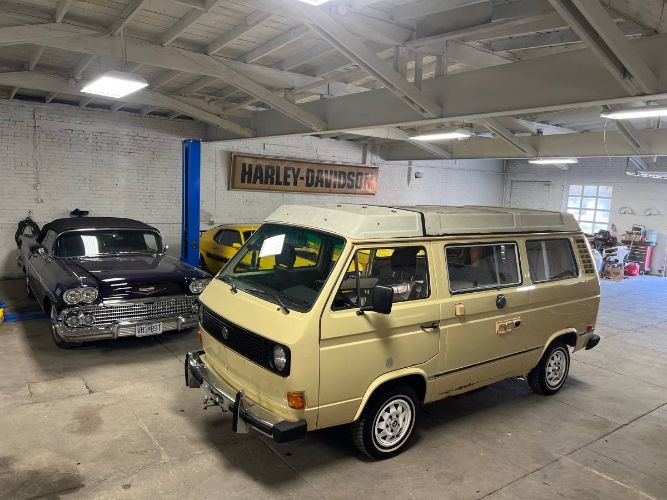 Dealer
 United States
1980 Volkswagen Westfalia
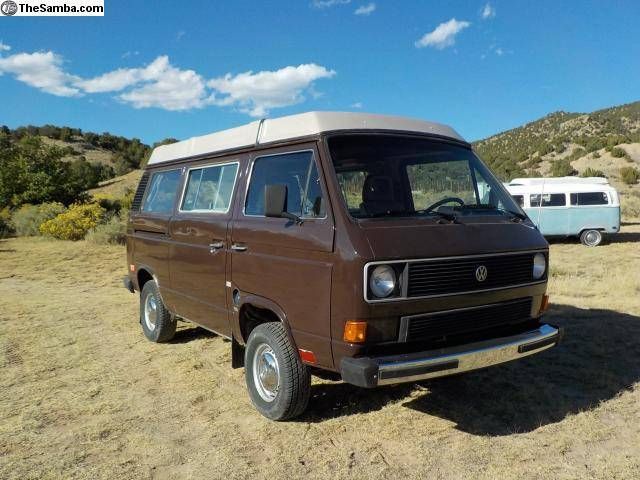 Dealer
United States
Dealer
United States
1985 Volkswagen Westfalia
What to Look For
Verify rust-free body seams, especially the lower sill areas and around the pop-top canvas seal. Check the floor thoroughly for soft spots from water ingress — the area around the sink plumbing is particularly vulnerable. Inspect the interior cabinetry for originality; replaced or modified interiors reduce value significantly. On T2 models, verify the oil cooler isn't cracked (check for milky oil). On T3 models, inspect the coolant system carefully — check for head gasket failure signs including white exhaust smoke, sweet-smelling coolant, and milky oil. Confirm the pop-top mechanism works smoothly and the canvas is intact.Pre-Purchase Checklist
-
Underbody Rust Inspection
Get the van on a lift and inspect every lower seam, floor pan, and sill for rust perforation. -
Pop-Top Canvas & Seals
Open and close the pop-top completely — check canvas condition, stitching, and seal integrity around the perimeter. -
Floor Condition
Press on the floor around the sink and refrigerator — soft spots indicate water damage and potential rot. -
Oil Cooler (T2)
Check the oil for milky discoloration indicating oil cooler cracks and coolant contamination. -
Cooling System (T3)
On Vanagon models, check coolant color, smell, and oil filler for white emulsification — head gasket failure signs. -
Valve Adjustment Record
Verify the air-cooled engine has been valve-adjusted within the last 3,000 miles — this is the most-neglected maintenance item. -
Propane System
Test burners and inspect propane hoses for cracks or brittleness — replace any hose older than 10 years regardless of appearance. -
Interior Originality
Confirm cabinetry is original to the build year — check hinges, latches, and veneer type against known reference photos. -
Electrical System
Test all lights, the cabin fan, and the auxiliary battery (if fitted) — amateur wiring is common in these vans. -
Engine Performance
Drive at highway speed — engine should pull steadily to 65 mph without overheating or misfiring.
Common Issues
Lower body seam and floor rust, especially around plumbing penetrations. Pop-top canvas deterioration from UV and water damage. Oil cooler cracks on air-cooled T2 engines (causes oil/coolant mixing). Wasserboxer head gasket failures on T3 models from cooling system air trapping. Valve clearance neglect on air-cooled engines (should be adjusted every 3,000 miles). Deteriorated pop-top seals allowing water into the roof lifting mechanism. Propane system leaks from aged hoses and fittings.Pricing Guide
T1 Splitscreen Westfalias: $30,000–$120,000+ depending on condition and pop-top configuration. T2 Bay Window Westfalias (1968–1979): $25,000–$65,000 for good drivers, $70,000–$100,000+ for show-quality examples. T3 Vanagon Westfalias (1980–1991): $18,000–$40,000 standard; $30,000–$60,000+ for clean Syncros. Pop-top adds $4,000–$10,000 over equivalent hardtop. California/Pacific NW examples command 20–35% premium over rust-belt trucks.Fun Facts
The Westfalia partnership with VW lasted from 1951 to 2003 — over 50 years of camper conversions. The iconic Westfalia "fridgebox" in early models didn't use electricity — it relied on the engine's heat to power an absorption-cycle cooler (the same technology as propane fridges). When VW introduced the T4 Eurovan in 1992, Westfalia briefly continued conversions, but the magic had faded. The T2 Bay Window is still manufactured in Brazil and Mexico with modern engines — parts compatibility makes classic maintenance easier than you'd expect.Frequently Asked Questions
Ready to find your Westfalia?
Browse 4+ active Volkswagen Westfalia listings on Classic Cars Arena.
View Listings →