
Classic Chevrolet C20 Buyer's Guide (1960–1987)
The C20 is the three-quarter-ton workhorse that buyers overlook in favor of the C10. Heavier axles, stronger payload, and lower prices make it the serious truck buyer's choice.

Most people shopping for a classic Chevy truck go straight to the C10 — the half-ton, the light hauler, the show truck. The C20 gets less attention, and that's exactly why it deserves yours. The three-quarter-ton platform was built for work: Dana 60 rear axle, heavier leaf springs, higher payload ratings, and a drivetrain overspecified for the loads most buyers actually put on it. Same cab, same styling generations, same engine options as the C10. The differences are entirely in the hardware underneath — and those differences are in your favor if you need a truck that can actually do truck things.
What Makes the C20 Different
The fundamental distinction between the C10 and C20 is in the axles and suspension. The C20 uses a heavier rear axle — typically a Dana 60 full-floating rear (and the corporate 14-bolt from 1973) — rated for significantly higher payloads. The leaf spring packs are stiffer and the brakes are larger to match. In practice, a C20 carries a full cord of firewood, a loaded horse trailer, or a flatbed of construction materials without squatting. An empty C20 rides stiffer than a C10 — that's the tradeoff. Most buyers who actually use their trucks consider it worth it.
The Three Generations
The C20 followed the same body generations as the C10: 1960–1966 first generation, 1967–1972 Action Line, and 1973–1987 Square Body. Values track 10–20% below equivalent C10 models in most eras — the C20's utilitarian reputation works against it in the show truck world and works in your favor at purchase. The 1967–1972 generation C20 is the sweet spot: same legendary body as the C10, stronger drivetrain, and prices that still reflect the C10's higher cultural status.
Years to Target
- 1967–1972: Best combination of iconic styling and strong drivetrain — same visual appeal as the C10 with heavier hardware.
- 1973–1987 Square Body: Most available, best parts, increasingly collectible. The 1981–1987 models with corporate 14-bolt axle are the strongest.
- 1960–1966: Rare and underappreciated — buy at first-gen pricing for a genuinely distinctive truck.
What to Look For in Person
Apply the same inspection protocol as the C/K umbrella guide — frame rails, cab corners, bed floor, engine, transmission. C20-specific additions: check the rear axle housing for cracks on high-mileage trucks (rare but worth checking), inspect the leaf spring packs for broken leaves and worn shackles, and verify the brake system is fully functional since C20 brakes work harder under load.
On trucks with towing history: check the frame at the receiver area for stress cracks, look at the transmission pan for discoloration indicating repeated heat, and check the driveshaft U-joints for wear from additional torque loads.
| Spec | C10 (half-ton) | C20 (3/4-ton) |
|---|---|---|
| Rear axle | GM 10-bolt semi-float | Dana 60 or GM 14-bolt full-float |
| Payload rating | ~1,000 lbs | ~1,750 lbs |
| Leaf spring rate | Standard | Heavy-duty (stiffer) |
| Brake drums | Standard diameter | Larger diameter |
| Engine options | Identical to C20 | Identical to C10 |
"I've always liked the C20 for one simple reason: the people who bought them originally bought them to work. That means they were maintained — because a truck that breaks down in the middle of a job is money lost. The worst-maintained trucks I've seen are the show pieces that got babied and never really ran. A C20 that was actually used is often in better mechanical shape than a C10 that was treated like a trophy."
— Robert Halloran
Market Outlook
The C20 trades at a consistent 10–20% discount to equivalent C10 models. A 1967–1972 driver-quality C20 brings $16,000–$26,000 vs. $22,000–$35,000 for an equivalent C10. Show-quality 1967–1972 C20 reaches $38,000–$58,000. Square Body C20 drivers at $14,000–$24,000; show at $32,000–$50,000. The discount is structural — the show truck market always prefers the lighter, more widely recognized C10 — but for buyers who want a serious truck at relative value, the C20 is the rational choice.
Browse Chevrolet C20 listings
 Dealer
 United States
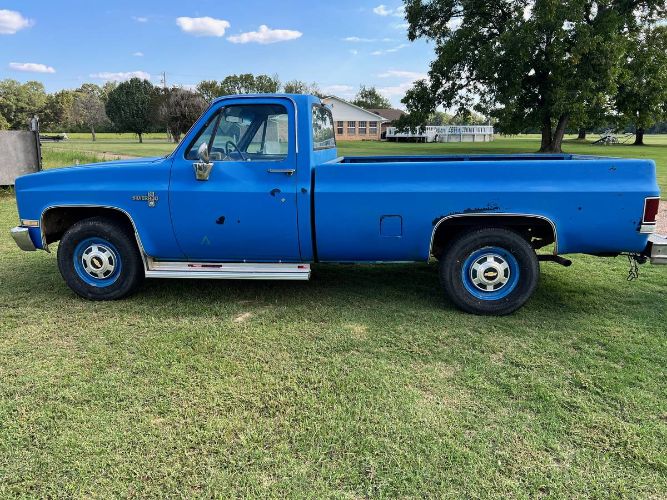
1986 Chevrolet C20
 Dealer
United States
Dealer
United States
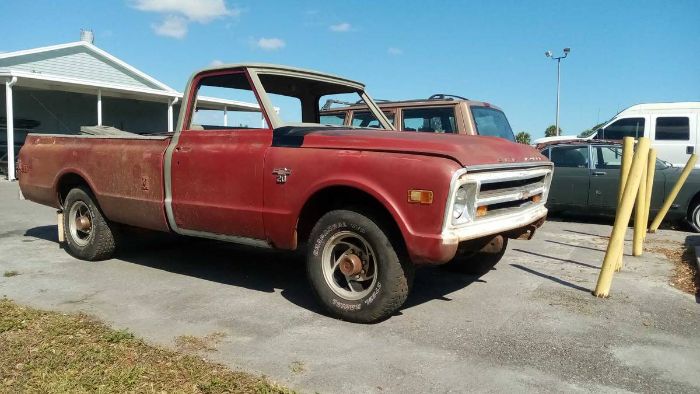
1969 Chevrolet C20
What to Look For
Apply full C/K frame, cab corner, and bed inspection. C20 specifics: identify rear axle type (Dana 60 or GM 14-bolt preferred over 12-bolt swap). Check leaf springs for broken leaves and worn shackles. On towing trucks: inspect frame at receiver for stress cracks; check transmission fluid for dark/burnt condition; inspect U-joints for wear. Verify brake system fully functional — larger drums must be in proper condition for safe loaded operation. Check wheel bearing condition on full-float axle — outer bearings require periodic service.Pre-Purchase Checklist
-
Rear axle identification
Identify Dana 60, GM 14-bolt full-float, or a lighter swap underneath -
Leaf spring condition
Check for broken leaves, worn shackle bushings, and proper arch height -
Towing stress inspection
Inspect frame at receiver hitch area for stress cracks or distortion -
Transmission fluid
Check fluid color and smell — dark/burnt indicates heat stress from towing history -
Driveshaft U-joints
Inspect for wear and play — towing loads accelerate wear -
Brake system
Verify full brake function — C20 drums must work properly under load -
Rear axle wheel bearings
Listen for rear axle growl changing with speed — bearing wear indicator -
Cab mounts (Square Body)
Check cab mount bushing condition for compression and cab-to-frame movement -
Frame rails full length
Probe frame rails at both kick-up sections for structural rust -
Cab corners
Tap and inspect lower door channel area for rust behind corner panels -
Bed floor
Assess original steel vs. replaced panels; check under the bed for frame rust -
Engine cold start
Listen for bearing or valve train noise; check oil condition on dipstick
Common Issues
Same issues as C10: cab corner rust, bed floor rust, frame kick-up corrosion, deferred mechanical service. C20-specific: leaf springs that have been overloaded over years will settle and lose arch — a flat spring pack means reduced capacity and poor ride, requiring rebuild or replacement. Full-floating axle wheel bearings require periodic repacking and can fail if neglected — growl from rear axle that changes with speed is a symptom. Brake drums on heavy-use trucks wear faster. Square Body cab mount bushings compress under years of load use — worn mounts allow cab-to-frame movement.More C20 for sale
 Dealer
United States
Dealer
United States
1979 Chevrolet C20
 Dealer
United States
Dealer
United States
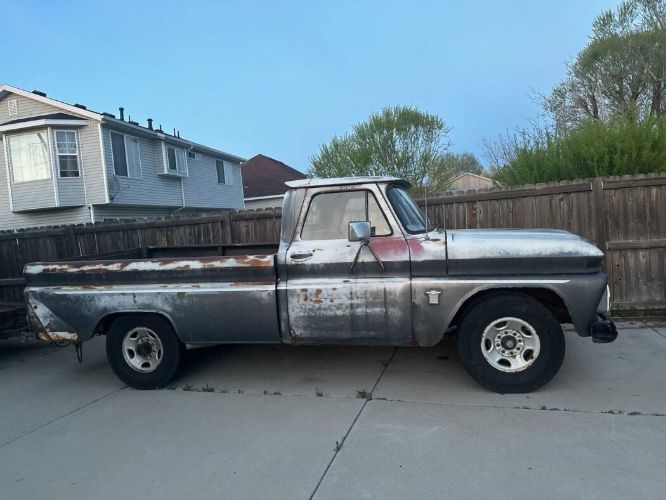
1964 Chevrolet C20
Pricing Guide
1967–1972 C20: driver $16,000–$26,000; show $38,000–$58,000. Square Body C20 (1973–1987): driver $14,000–$24,000; show $32,000–$50,000. First gen 1960–1966: $13,000–$22,000 driver. The 10–20% C20 discount vs. C10 is consistent — a reliable feature of the market representing real value for buyers who want the stronger truck.Fun Facts
The GM 14-bolt full-floating rear axle has been factory-fitted in various forms to trucks produced into the 2000s. The C20 designation was retired in 1987 when GM switched to the C2500 nomenclature. Heavy-duty fleet operators — moving companies, farms, contractors — routinely ran C20s to 300,000–400,000 miles with regular maintenance, a testament to the drivetrain's engineering margin.Frequently Asked Questions
Ready to find your C20?
Browse 6+ active Chevrolet C20 listings on Classic Cars Arena.
View Listings →