A shape with a nickname before it had a name
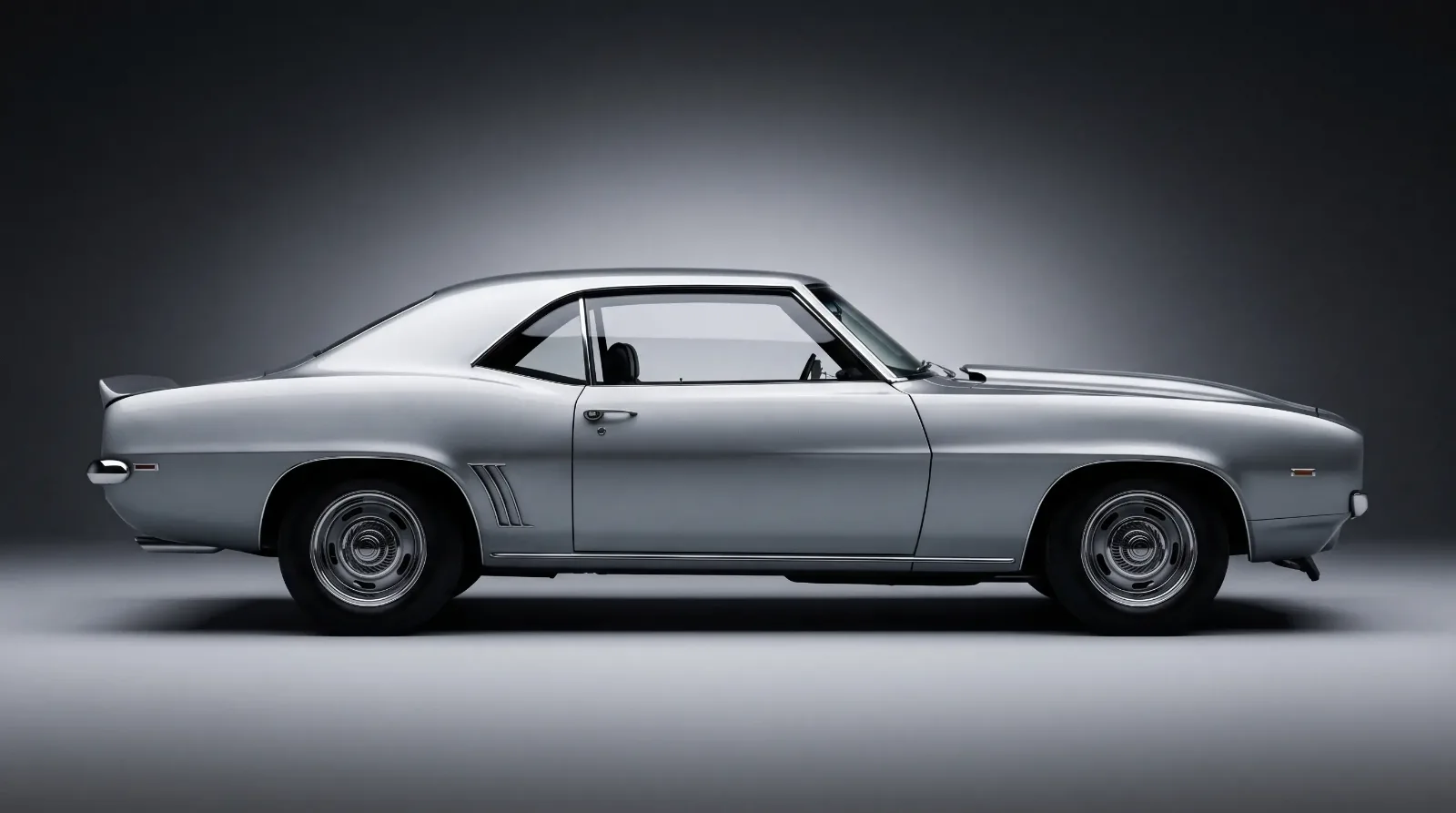
Inside GM Styling Studio in Warren, Michigan, the designers working on Project Panther in 1964 and 1965 were not working from a blank page. They were working from a philosophy. Studio head Bill Mitchell and chief designer Henry Haga had already internalized what the studio called the "coke-bottle" silhouette -- a body that widened at the front fenders and rear haunches while pinching inward at the doors, mimicking the profile of a classic Coca-Cola glass bottle. It was a technique that had appeared in European sports car design through the 1950s, and Mitchell wanted to formalize it as GM's signature for performance cars.
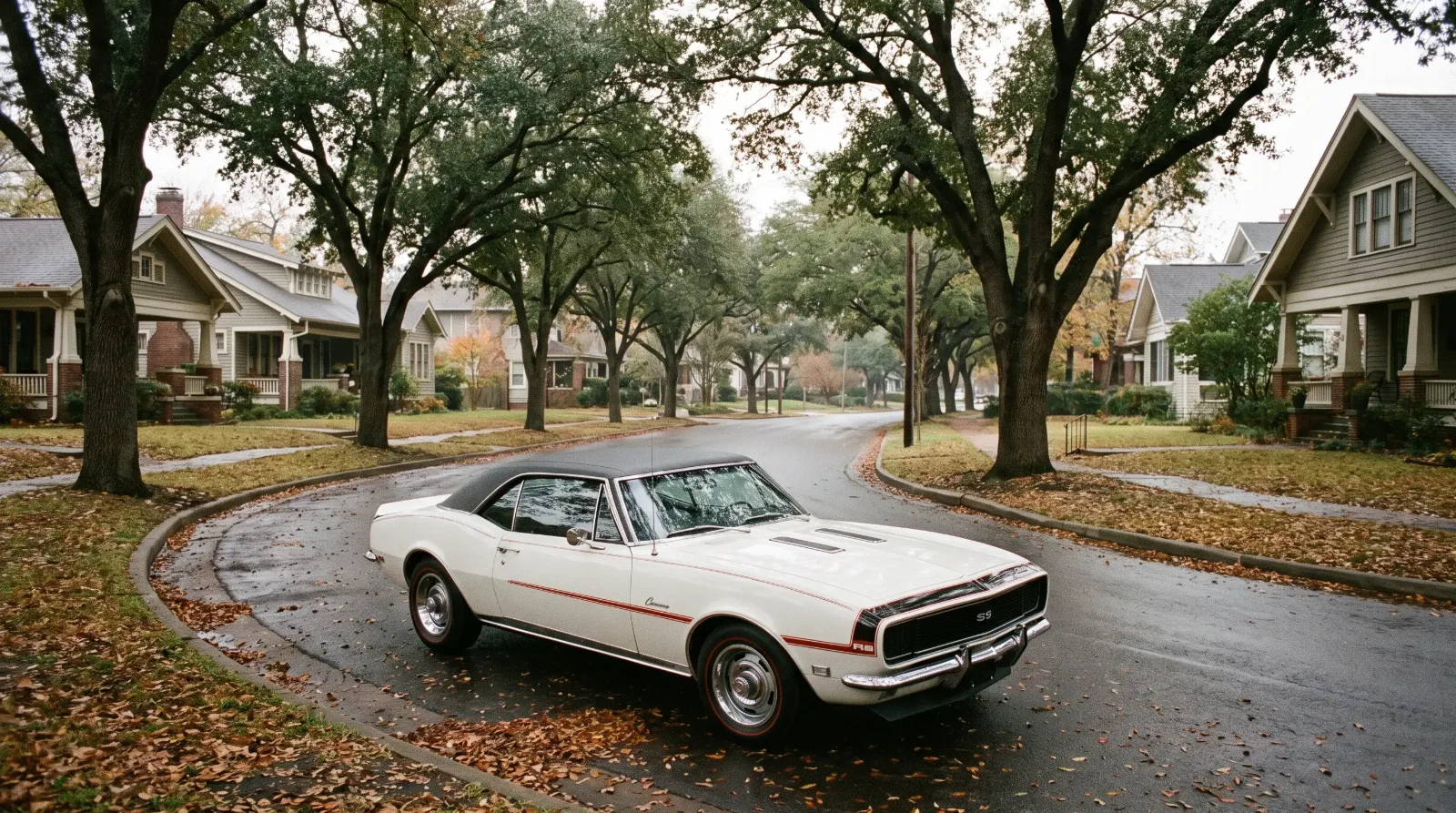
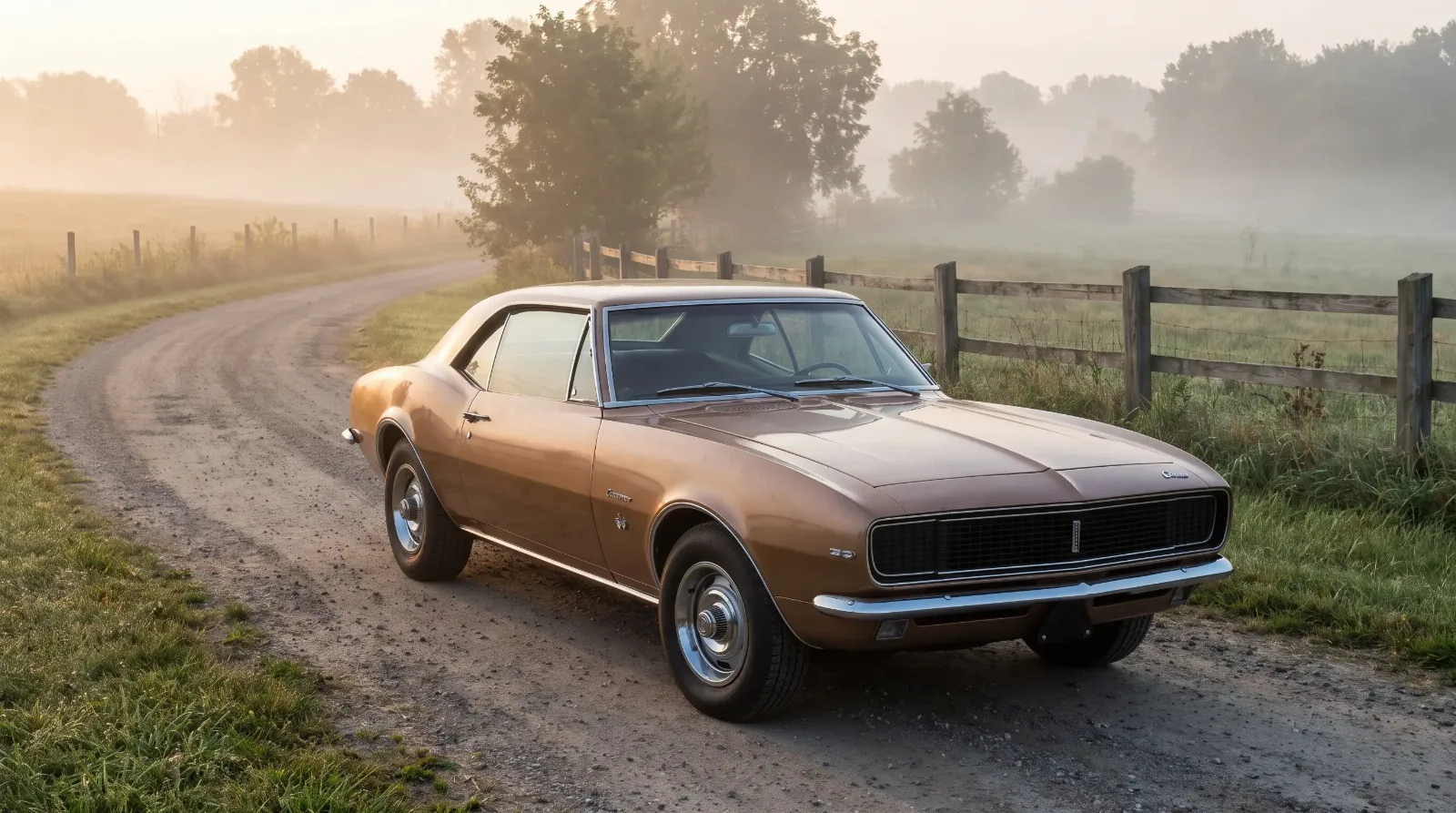
The Camaro was the clearest American expression of that idea when it arrived in September 1966. The front fenders kicked out assertively over the wheels. The doors dipped noticeably below the beltline, creating a tight waist. The rear quarter panels flared again over the back wheels. This gave the stationary car a sense of tension, a coiled posture that suggested motion before the engine started. Automotive journalists reached immediately for the Coca-Cola analogy, and it has stayed with the first-gen Camaro ever since.
The long hood, short deck proportion
Beyond the waist pinch, the first-gen Camaro followed the long-hood, short-deck proportion that was defining the pony car segment. The hood was long and the deck short, a deliberate proportion that visually dominated the car's profile. The deck lid behind the rear seat measured substantially shorter. This proportion served a practical engineering purpose -- it put the engine mass behind the front axle centerline, which improved weight distribution -- but it also created a visual hierarchy where the drivetrain was the dominant statement.
The 108-inch wheelbase matched the Mustang's 108-inch wheelbase (1967-68 Mustang). Overall length came in at 184.7 inches for the 1967 model, about two inches shorter than the Mustang fastback of the same year. The height was 51.4 inches -- low enough to read as a sports car from the side but practical enough for everyday use. Width at 72.5 inches gave the car a planted, wide-shouldered presence that the narrower Mustang did not quite match.
"What Haga understood was that Americans wanted a car that looked like it was doing something even when it was parked. The coke-bottle shape delivered that. You didn't need the SS badges or the hood stripes -- the body itself told the story."
-- Patrick Walsh
The 1969 restyle: sharper but same bones
When Chevrolet restyled the Camaro for 1969 without changing the underlying platform, the design team under Dave Holls sharpened every line that Haga's team had drawn. The front end grew wider and lower. The hood gained twin power-dome bulges that became instantly associated with SS cars. The character line along the lower body became a hard crease rather than the softer radius of 1967-68. The rear quarter panels took on a more pronounced muscular flare.
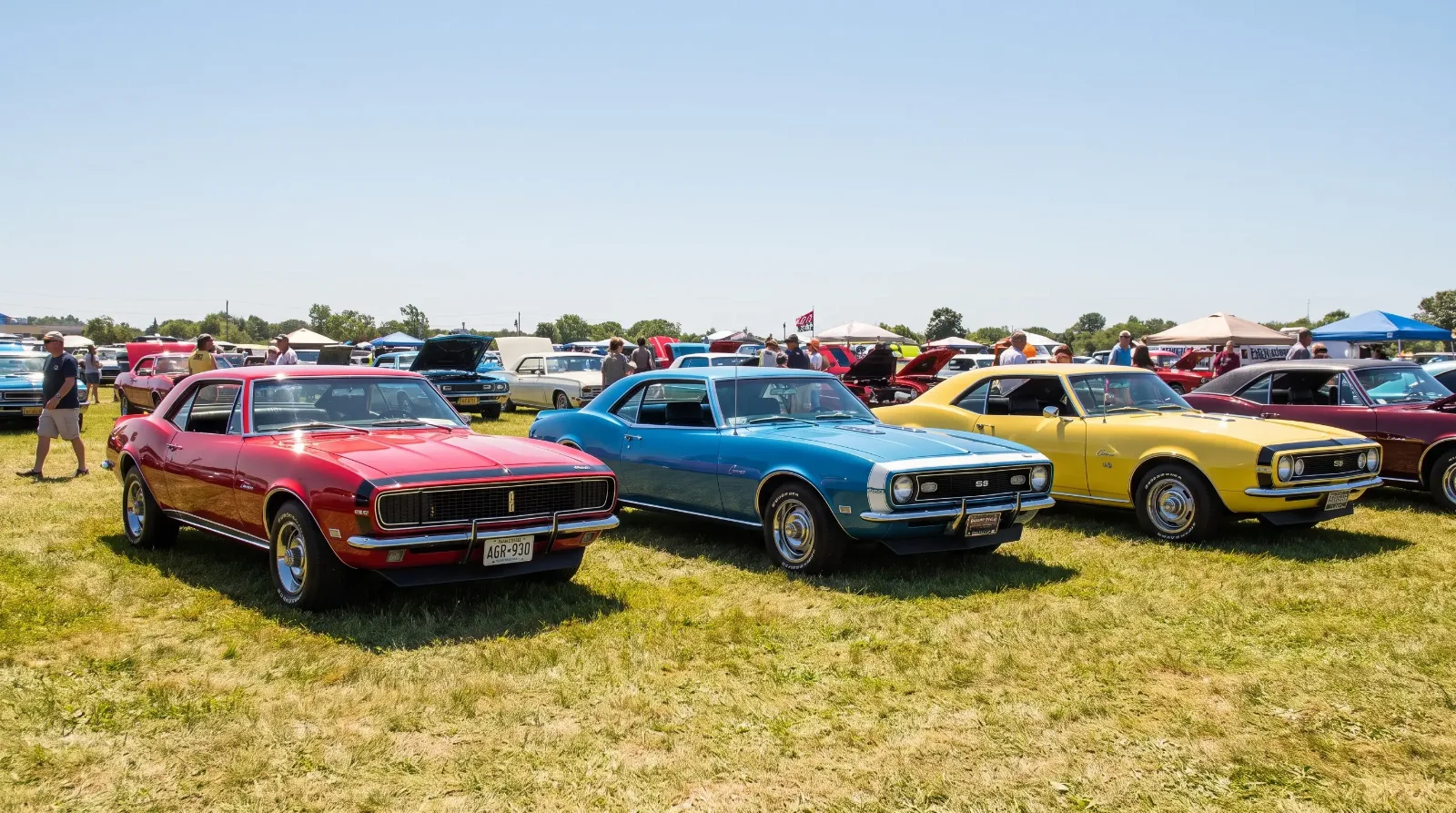
The result is that the 1969 reads as more aggressive than the 1967 despite sharing the same wheelbase and general profile. The coke-bottle waist is still there, but it is deeper and harder-edged. Many collectors consider the 1969 body the most accomplished design of the three years, which partially explains the premium that 1969 cars carry in the market today. The RS split-bumper front end of 1969 -- with the bumper divided by a center body-color section -- has become one of the most copied styling elements in Camaro tribute and restomod builds.
Interior design and the cockpit philosophy
The interior of the first-gen Camaro reflected a driver-focused cockpit philosophy that was relatively new to American production cars. The instrument panel wrapped slightly toward the driver, placing the main gauges closer to the driver's line of sight. The optional instrument cluster for the SS and Z/28 included a 7,000-rpm tachometer in a dedicated round pod, flanked by a 150-mph speedometer -- numbers that communicated aspiration as much as information.
Door panels in 1967 and 1968 used a two-tone design with a lower vinyl section and upper painted metal, divided by a chrome trim strip. The 1969 interior received a full redesign with more heavily textured vinyl, a revised console design for cars with center-mounted shifters, and a new instrument panel that dropped the slight horizontal curve of the earlier cars in favor of a cleaner horizontal layout. Bucket seats were standard across all years; bench seating was not available, reinforcing the Camaro's positioning as a personal rather than family car.
The design legacy in concrete numbers
The first-gen Camaro's proportions -- 108-inch wheelbase, long hood, fastback roofline -- set a template that Chevrolet returned to with the fourth generation (1993), fifth generation (2010), and sixth generation (2016) cars. Each of those revivals specifically referenced the 1967-69 proportions in press materials, which is an unusual admission in an industry that often pretends each new model is a clean break from the past.
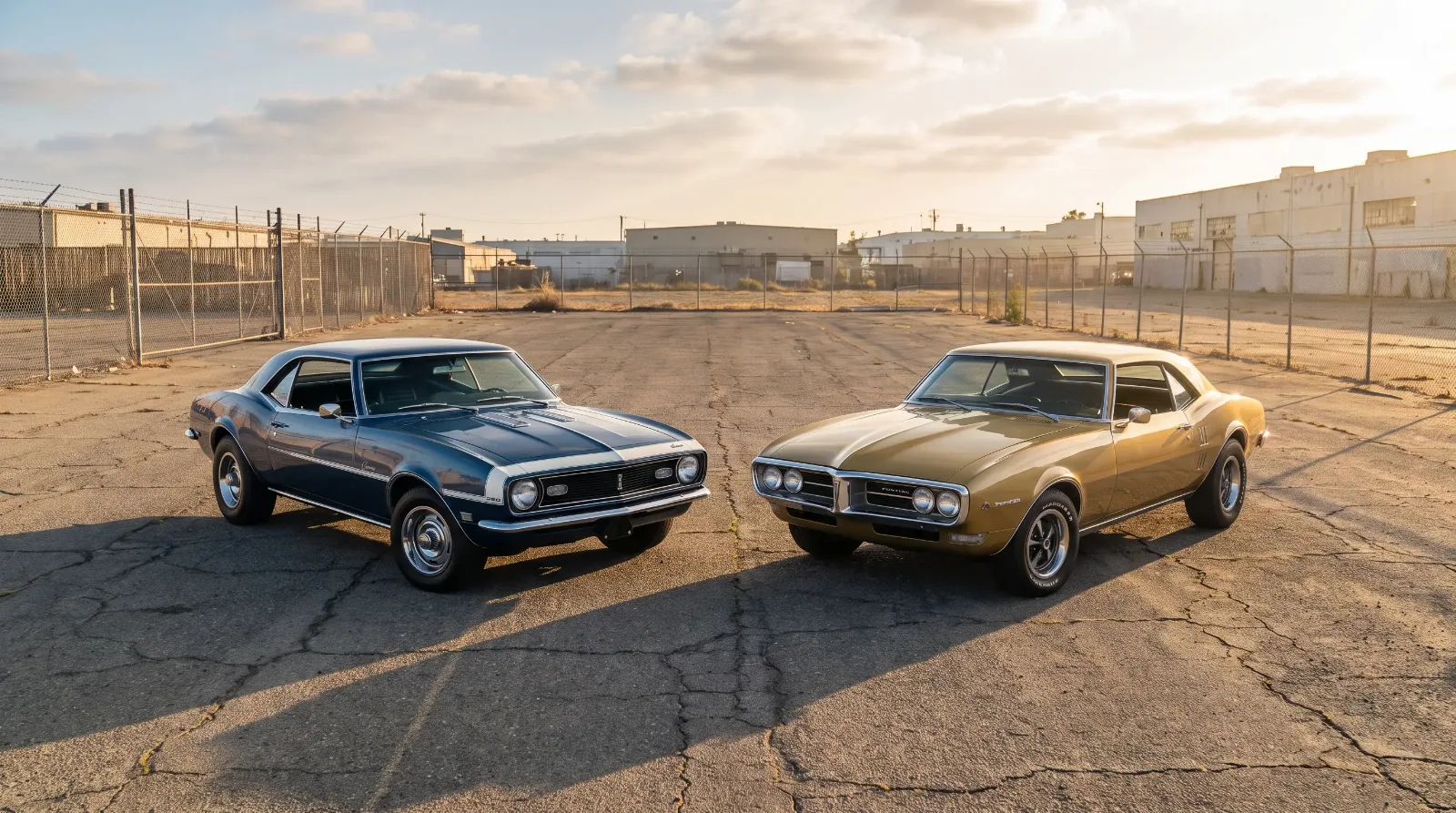
The shape also influenced adjacent designs. The Pontiac Firebird that shared the F-body platform, the AMC Javelin that entered the market in 1968, and even some European coupes of the early 1970s showed evidence of the coke-bottle discipline that Haga's team had codified. Read about the platform underneath this body -- and how it connected to Pontiac -- in the next article: the F-body platform the Camaro shared with the Firebird. And for a grounding in the full history of the generation, the first-generation Camaro editorial series at Classic Cars Arena covers all the major milestones.
Sources and notes
Production figures, engine specifications, codes, and dates in this article are cross-referenced from established Camaro references, period documentation, and owner registries. Where sources differ, the most commonly cited value is used. Cost figures are indicative and vary by supplier, region, and condition.