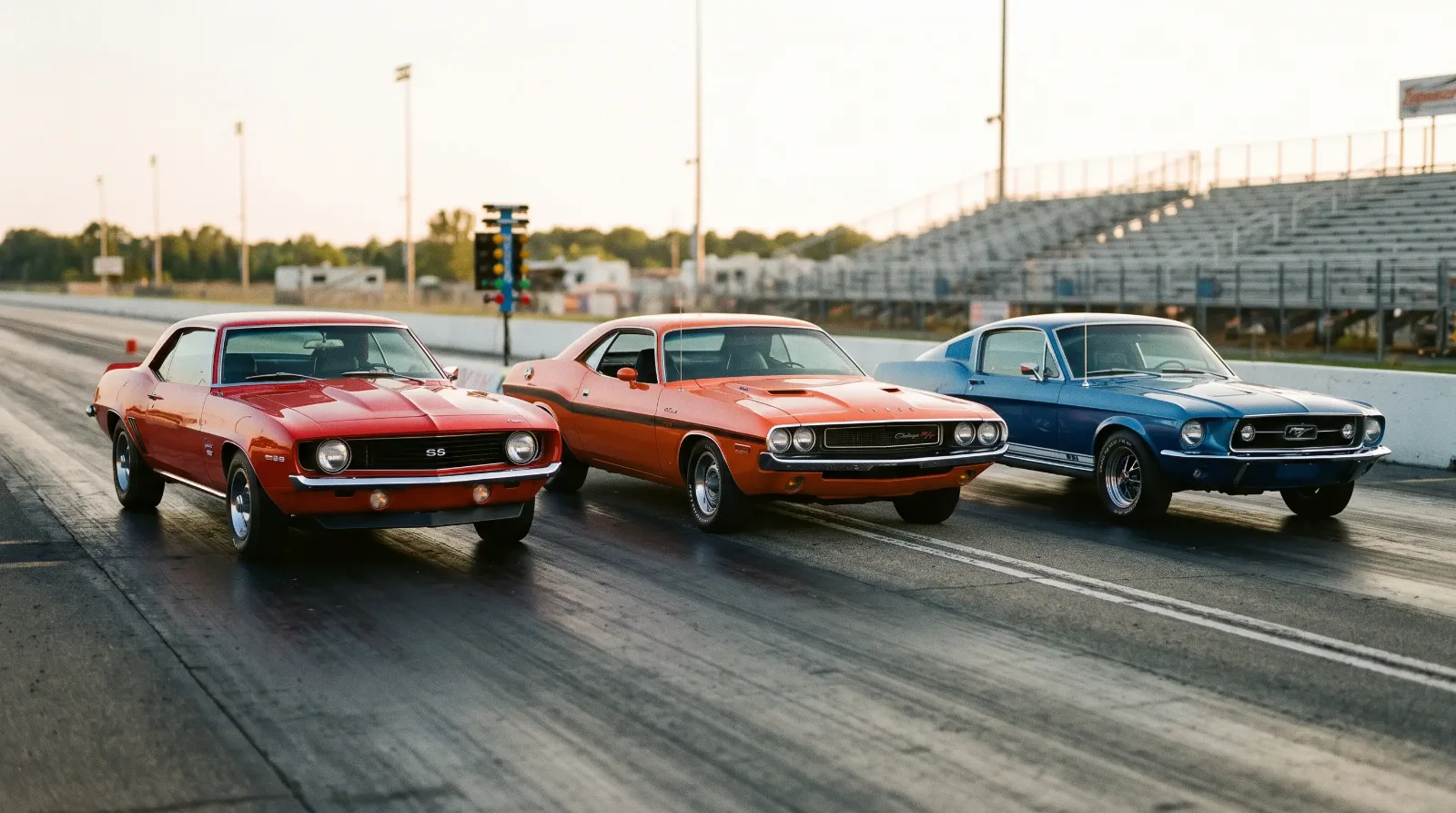
Three brands, one fight, zero clear winners
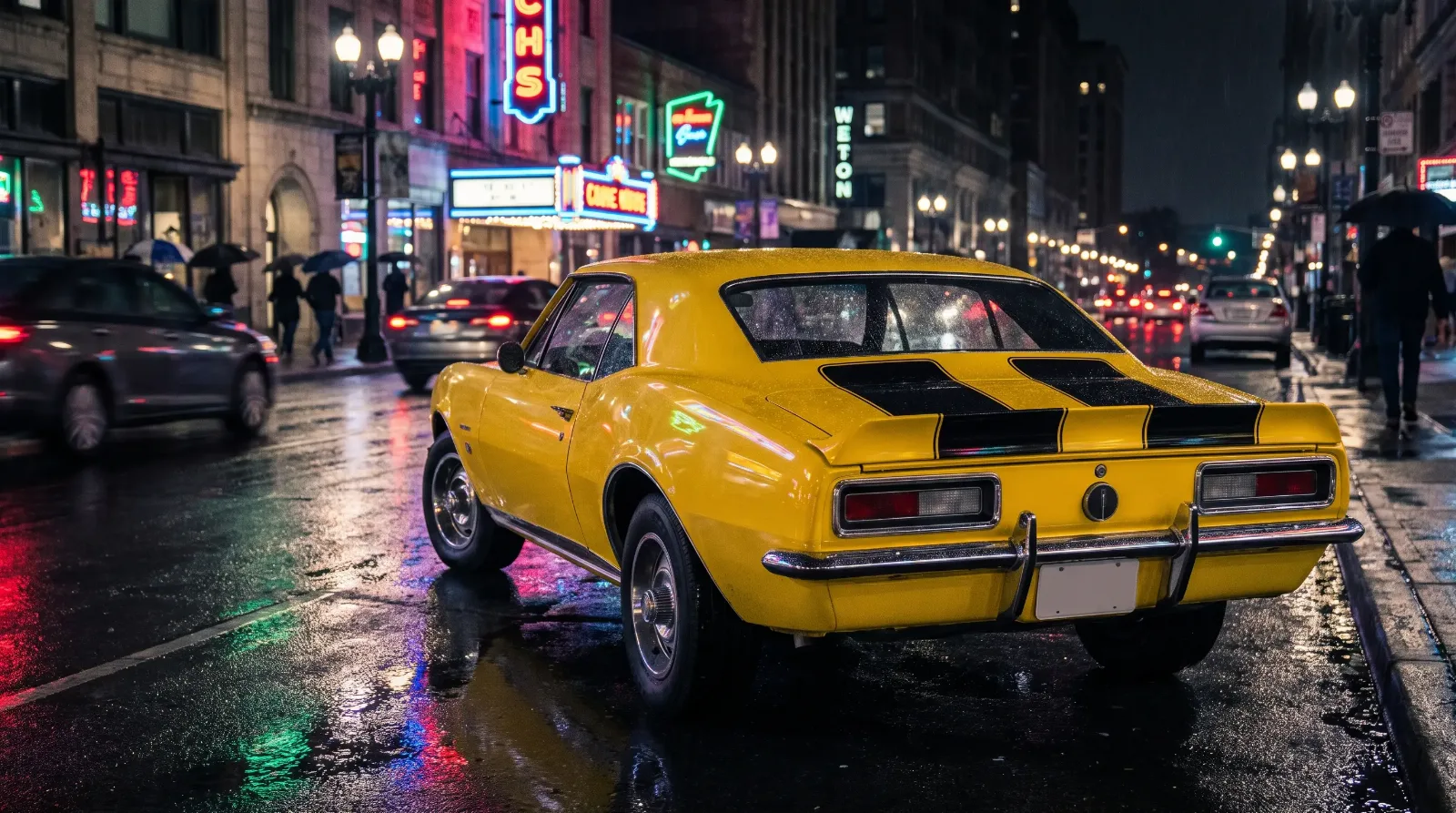
The camaro vs challenger vs mustang story is best understood as two separate rivalries that happened to involve the same cars. The Camaro and Mustang were already two years into their fight when Dodge introduced the Challenger for the 1970 model year. Plymouth had the Barracuda in the same segment, and Chrysler was trying to claim a piece of territory that Ford and General Motors had built without them. The Challenger was their heavy weapon.
Where the Mustang had launched as a relatively light, relatively affordable car aimed at young buyers who wanted style, and the Camaro had come in as a direct counter to that formula, the Challenger arrived bigger and in many configurations more powerful than either. The standard body was wider, the interior was roomier, and the engine options went all the way up to the 426 Hemi and the 440 Six Pack. Dodge was not trying to beat the Mustang and Camaro at their own game. They were trying to redefine what the game was.
The peak years: 1969 to 1971
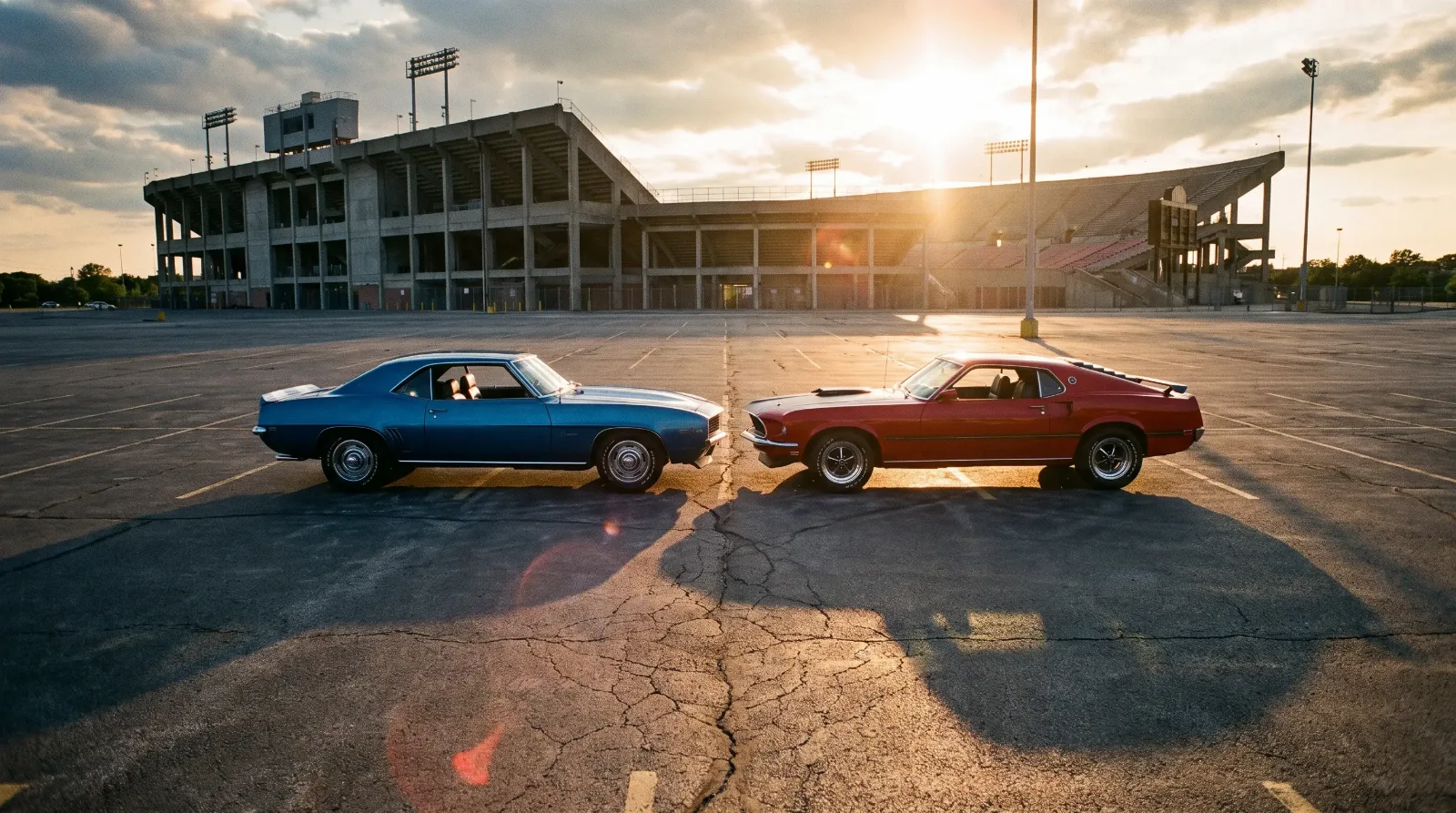
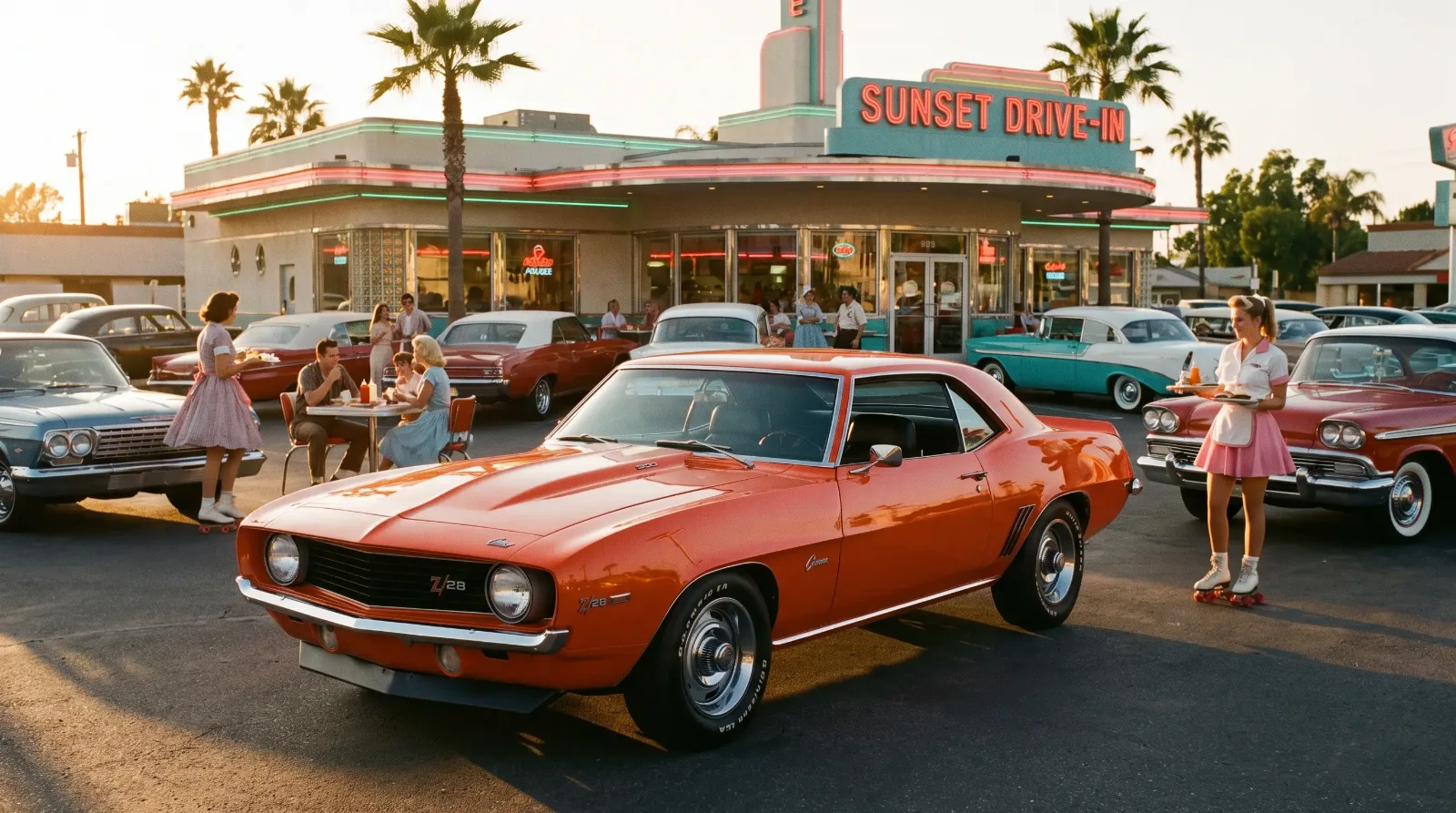
Automotive historians often mark 1969 to 1971 as the apex of the American muscle car era, and all three of these cars were involved in that peak. The 1969 Camaro Z/28 was winning Trans-Am races. The 1969 Mustang Boss 302 was built specifically to beat it. The 1970 Challenger T/A was Dodge's homologation special for the same series. Three manufacturers, one racing series, and a set of street cars that were essentially race cars with license plates.
The numbers from this period tell the story. A 1969 Camaro Z/28 ran the quarter mile in roughly 14.0 seconds at around 100 mph in factory trim [VERIFY against period road test data from Car and Driver or Motor Trend]. A 1970 Challenger R/T with the 440 could match or beat that depending on gearing. The 1969 Boss 302 was tuned more for handling than straight-line speed. Each car had a legitimate claim to being the best at something, which is why the argument never resolved.
"The beauty of the three-way fight is that there was no objectively correct answer. You could win any argument just by changing which test you used to judge the winner."
-- Patrick Walsh
The oil crisis and what it cost everyone
The 1973 oil crisis and subsequent emissions regulations hit all three brands at the same time, but they responded differently and with different results. Ford's decision to produce the Mustang II on a Pinto platform from 1974 to 1978 is now widely regarded as the low point in the Mustang's history, though it did sell reasonably well at the time. General Motors kept the Camaro on its own platform through the 1970s and maintained at least a performance identity, even as the engines were detuned. Chrysler discontinued the Challenger after 1974, leaving the segment for two brands.
The Challenger's absence lasted until 2008, when Dodge revived the name on a platform shared with the Chrysler 300 and Dodge Charger. The new Challenger was deliberately retro in styling, taking visual cues directly from the 1970 original. It arrived at a moment when Ford was preparing a new Mustang and GM was about to bring back the Camaro for 2010. All three cars came back within a few years of each other, which was either a coincidence or a sign that each brand was watching the others carefully.
The modern three-way and what changed
By the mid-2010s, all three cars were available simultaneously for the first time since the early 1970s. The comparison tests returned to the automotive press, and the results were more complicated than they had been in the muscle car era. The sixth-generation Camaro (2016-2024) consistently earned the highest marks for driving dynamics from publications like Car and Driver and Road and Track, with the 1LE track package in particular drawing comparisons to purpose-built sports cars. The Mustang GT350 and GT350R split the difference between road car and track tool. The Challenger, always the heaviest of the three, leaned into straight-line performance with the Hellcat and Demon variants that produced over 800 horsepower in street-legal form.
The Camaro ended production after the 2024 model year, leaving the Mustang and Challenger to continue without their original rival. Dodge also announced the end of V8 Challenger production as the brand moved toward electrification, though a Dodge muscle car future was still being discussed at the time of writing. The Mustang remains in production, now available with a high-output four-cylinder as well as the traditional V8. The era of all three cars in a showroom simultaneously may have passed.
Why the fight still matters
The camaro vs challenger vs mustang debate produced better cars than any of the three manufacturers would have built without competition. Every special edition, every track package, every displacement increase was a response to something the other brands did. That is how rivalry is supposed to work, and American muscle cars are one of the clearest examples of it working at full volume.
The next article in this series looks at something quieter but just as revealing about the Camaro's cultural life: the nicknames the car has accumulated over the decades. Read about the Hugger and other classic Camaro nicknames. And for background on how the two-way fight started before the Challenger arrived, revisit the Camaro in pop culture.
Sources and notes
Production figures, engine specifications, codes, and dates in this article are cross-referenced from established Camaro references, period documentation, and owner registries. Where sources differ, the most commonly cited value is used. Cost figures are indicative and vary by supplier, region, and condition.