The Mustang on the silver screen
No American car has had a longer or more varied film career than the Ford Mustang. From its very first year of production through to the twenty-first century, the Mustang kept appearing in cinemas around the world as the car that characters chase, steal, or simply drive when they want to look like they mean business. The entries below cover the screen appearances that deserve their own spotlight, alongside the two landmark cars that have earned their own deep-dive articles on this site. For the bigger picture of how the pony car conquered popular culture, read the Mustang's pop-culture story.
Bond's first Mustang: Goldfinger (1964) and the white convertible
The Mustang's movie debut came almost simultaneously with its real-world launch. In the 1964 James Bond film Goldfinger, Tilly Masterson drives a white 1964 and a half Mustang convertible, making it the first Mustang to appear in a Bond film. Ford had only unveiled the car to the public in April 1964, yet it was already on cinema screens before the year was out. The scene was filmed in the Swiss Alps, and Goldfinger's forces put the car out of commission with one of their standard-issue gadgets before it can cause much trouble. The 260 cubic-inch Windsor V8 was the entry-level V8 of the introductory Mustang lineup, sitting just above the standard 170 cubic-inch straight-six, making a V8 convertible a representative example of exactly what American buyers were queuing up to order.
The appearance carried genuine historical significance. Bond films in that era set aspirational consumer tastes across Europe and North America. Having the Mustang appear in a major release during its launch year gave Ford a marketing boost that no television spot could have replicated. Seven years later, Bond returned to the Mustang again in Diamonds Are Forever (1971), this time in a 1971 Mach 1 fastback finished in Pinto Red with a black-and-red Vermillion sports interior and powered by the 429 Cobra Jet V8. The car's most-discussed moment is the Las Vegas alley sequence, during which it enters the narrow passage tilted up on the passenger-side wheels and exits balancing on the driver-side wheels, a continuity error director Guy Hamilton tried to mask with an interior shot of the car rocking the other way.
Gone in 60 Seconds: the original (1974) and the remake (2000)
The Eleanor story begins well before the Nicolas Cage remake that most audiences know. H.B. Halicki's self-financed 1974 original assigned the Eleanor name to a yellow Mustang Sportsroof presented on screen as a 1973 Mach 1 (the cars were actually 1971 Sportsroofs updated with 1973 grilles and painted a plain school-bus yellow), the final target in a car-theft operation that Halicki wrote, directed, produced, and starred in himself. The film's forty-minute finale chase through Torrance, California was filmed on public streets without road closures or coordinated traffic control, reportedly destroying or damaging dozens of cars in the process. It established the template for the car-theft action genre and gave the Mustang Mach 1 its first starring role.
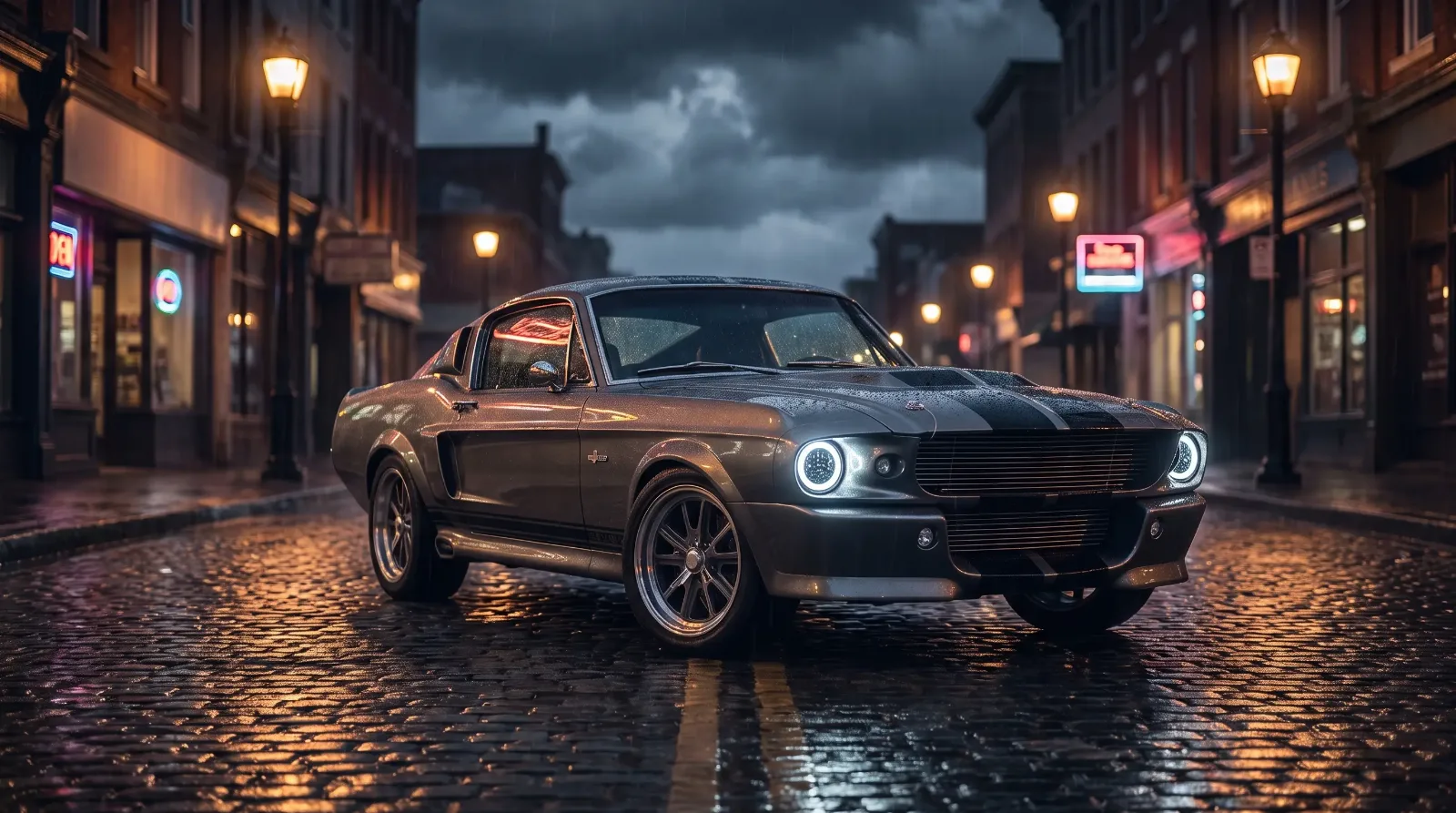
The 2000 remake took the Eleanor name and attached it to something altogether more extravagant: a custom Shelby GT500-style fastback built on 1967 Mustang bodywork, fitted with a widened body kit, custom hood, and a 351 cubic-inch Ford V8. The design was sketched by Steve Stanford, refined by Chip Foose, and the cars were built by Cinema Vehicle Services. Eleven 1967 and 1968 Mustang fastbacks were built for filming, each specified differently depending on whether the shot required a street-driving car, a stunt machine, or a static display vehicle. The Eleanor design became so commercially distinctive that it was eventually trademarked, which generated ongoing legal disputes over replica builds that continue to this day. For audiences in 2000, the car confirmed that the Mustang still had genuine cultural currency thirty-two years after Bullitt.
"Halicki's 1974 original was genuinely reckless filmmaking, no permits, no coordination, just a man and a Mach 1 and forty minutes of real chaos through California streets. The remake is slicker, but the original is the one that matters historically."
— Patrick Walsh
The Bullitt fastback and its lasting effect
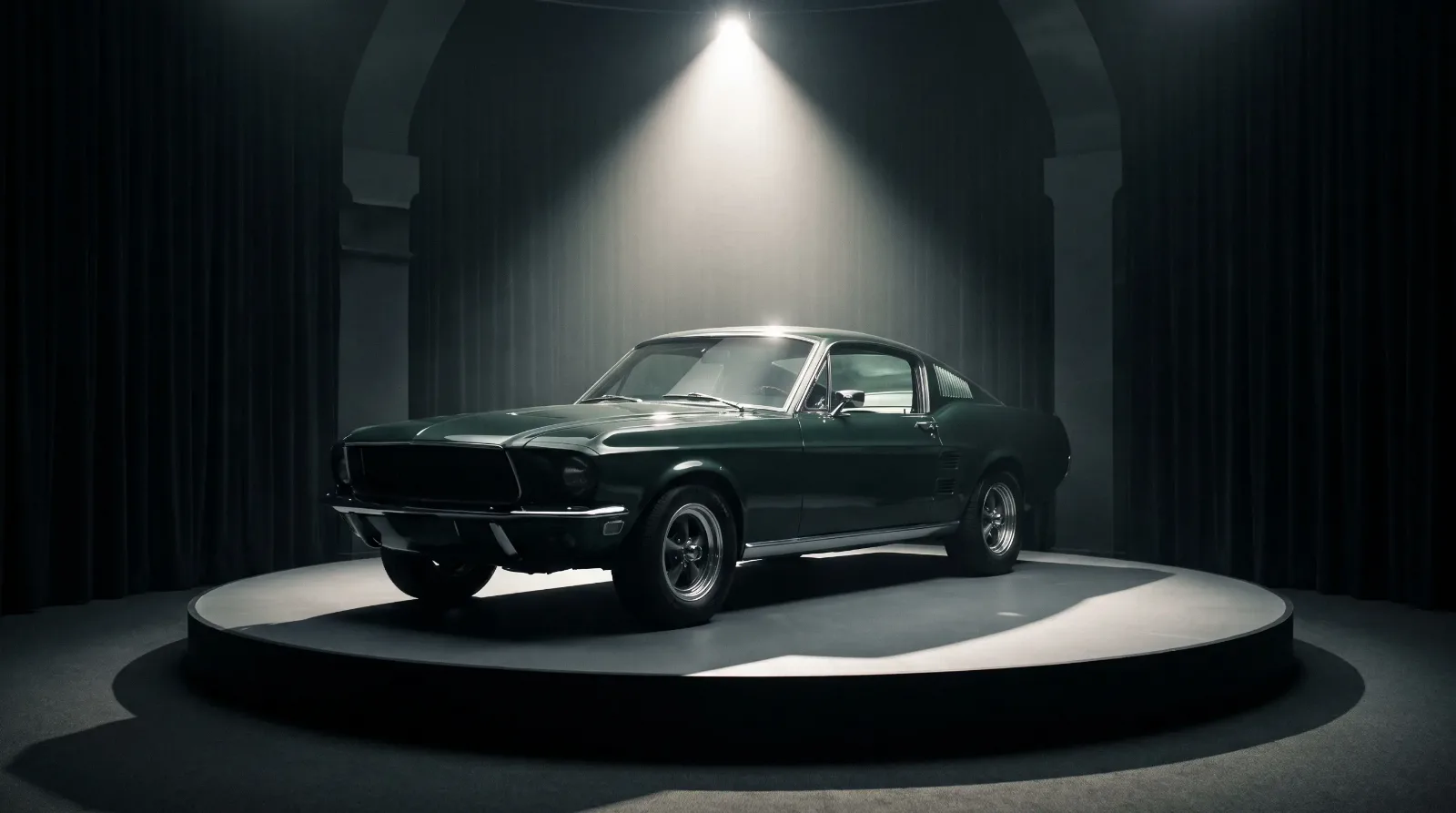
The 1968 Highland Green 390 fastback Steve McQueen drove in Bullitt is the most famous movie Mustang and is covered in its own article on this site. Its importance to this list is less about the car itself than about what the film did to the Mustang's reputation permanently. Before Bullitt, the Mustang was stylish and quick. After it, the Mustang became the car you used in a chase sequence when you wanted to be taken seriously. Every subsequent appearance on this list carries that inheritance. The McQueen car also introduced the 390 cubic-inch FE-series big block to mass popular awareness, a fact that has driven values for genuine 390 fastbacks sharply upward in the collector market.
John Wick's Mach 1 and I Am Legend's Shelby GT500
Two twenty-first-century films used Mustangs as character-defining props rather than pure chase hardware. In John Wick (2014), a charcoal-gray 1969 Mach 1 with low-gloss black stripes was among the final connections Wick had to his late wife. On screen the thief Iosef Tarasov misidentifies it as a 1970 Boss 429, and Wick corrects only the year, calling it a '69; the cars used were in fact 1969 Mach 1s rather than the rare and costly Boss 429. Its theft, along with that of his dog, sets the entire film in motion. The car's role is emotional rather than mechanical, which was a notable departure from how the Mustang had typically been used in action cinema. The Mach 1's fastback silhouette reads cleanly on camera at any speed, which makes it a reliable choice for filmmakers even in a film where it spends most of its screen time parked.
In I Am Legend (2007), Will Smith's character drives a Torch Red 2007 Shelby GT500 through an abandoned Manhattan, using the empty streets as a test track in sequences that were filmed on location with a production fleet of about half a dozen cars, of which the surviving hero car used for close-ups was later sold. The combination of the car's exhaust note and the silence of a depopulated city made those early scenes among the more atmospheric uses of the Mustang on film. The choice of a Shelby rather than a standard Mustang was deliberate: the character needed to read as someone with resources and taste, and the GT500 delivered that immediately.
A quick reference: Mustangs on film
| Film | Year | Mustang |
|---|---|---|
| Goldfinger | 1964 | 1964½ convertible (260 V8) |
| Diamonds Are Forever | 1971 | 1971 Mach 1 (429 Cobra Jet) |
| Bullitt | 1968 | 1968 fastback (390 V8) |
| Gone in 60 Seconds | 1974 | 1973 Mach 1 (Eleanor) |
| Gone in 60 Seconds (remake) | 2000 | 1967 Shelby GT500 (Eleanor) |
| I Am Legend | 2007 | Shelby GT500 |
| John Wick | 2014 | 1969 Mach 1 |
Sources and notes
Film and vehicle details above were verified against the published sources listed below. Production records for movie cars are sometimes inconsistent, and figures such as the number of cars built or destroyed can vary between accounts; where sources disagree we have used the most widely corroborated figure.
- Ford Mustang (first generation) — Wikipedia (engine lineup, World's Fair debut, early film appearances)
- Ford Mustang Mach 1 — Bond Lifestyle (Diamonds Are Forever Mach 1 color, engine and alley stunt)
- Eleanor (automobile) — Wikipedia (1974 and 2000 Gone in 60 Seconds car specifications)
- John Wick's Mustang was a Mach 1, not a Boss 429 — Jalopnik (John Wick 1969 Mach 1 identity and paint)
- I Am Legend 2007 Shelby GT500 — Carscoops (Torch Red GT500, production fleet)