
Why the LS belongs in an F-body
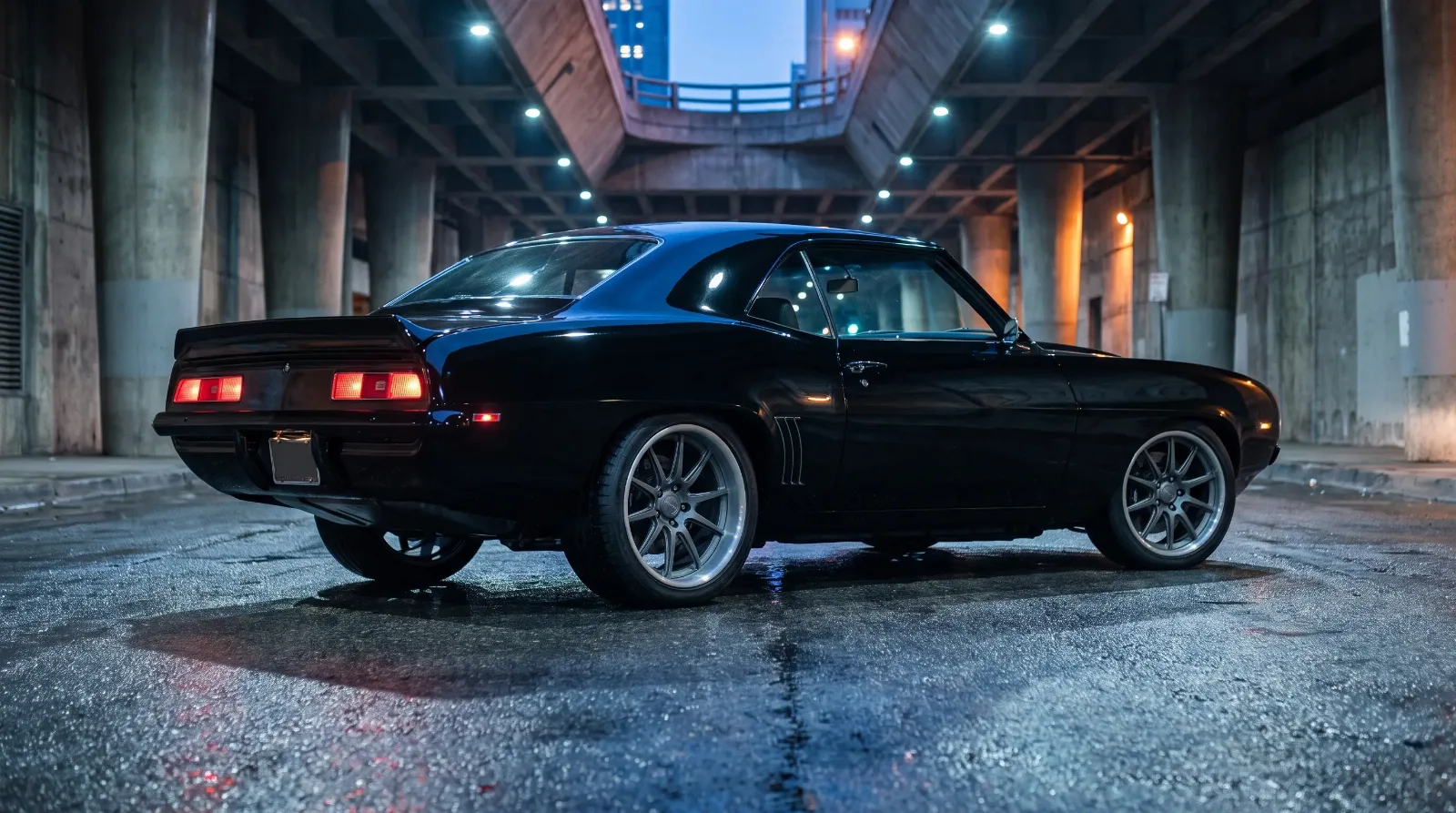
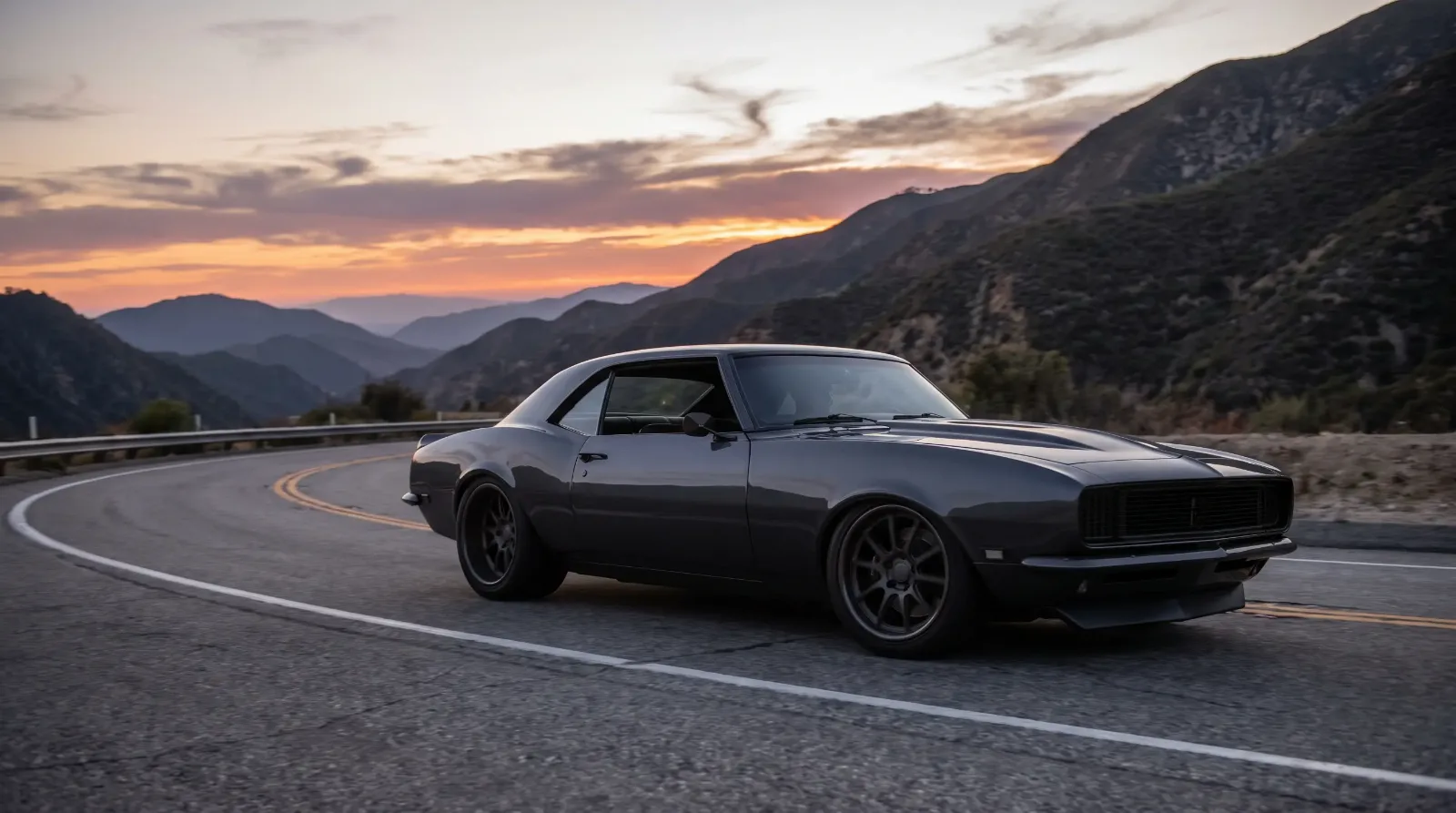
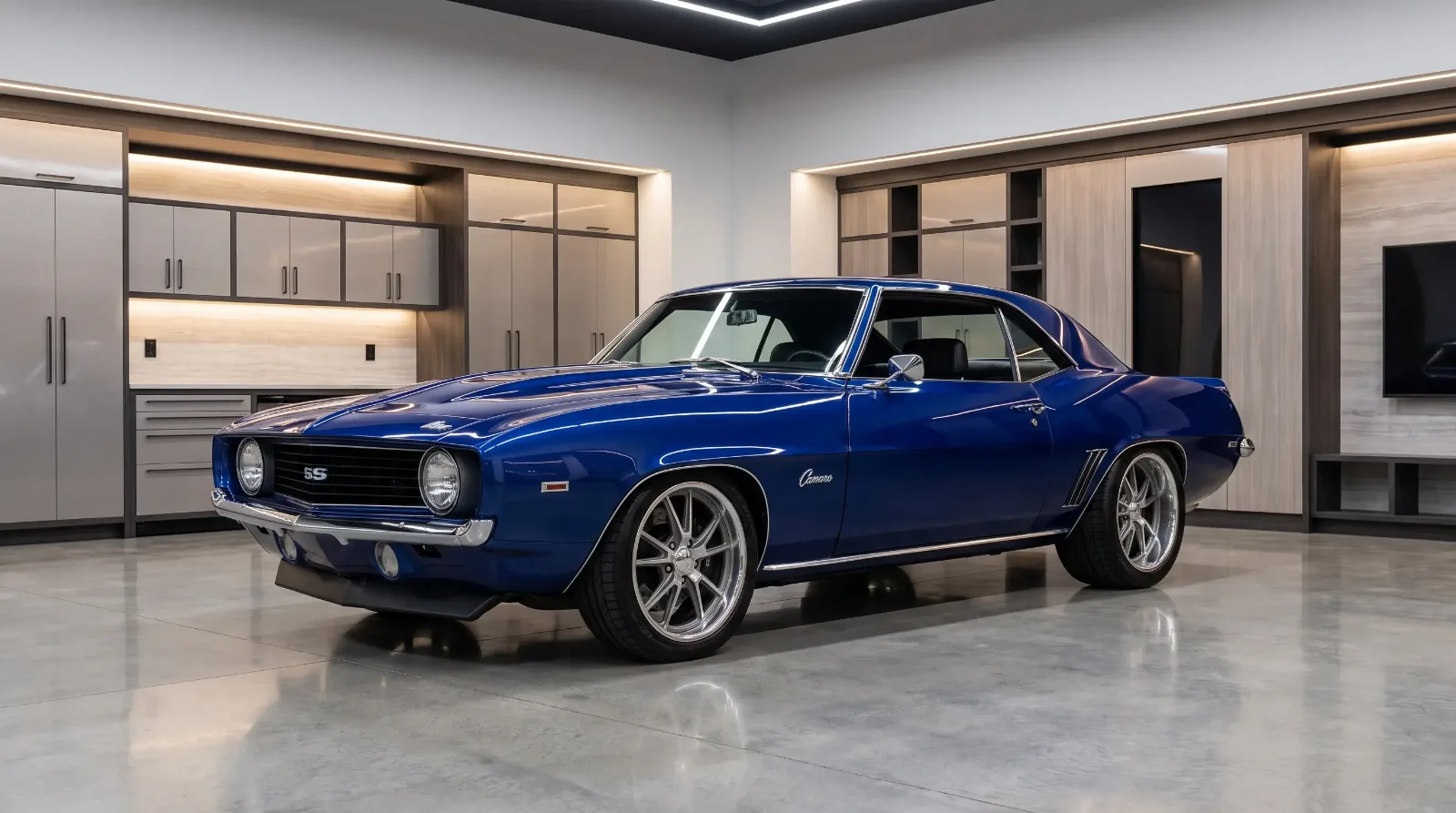
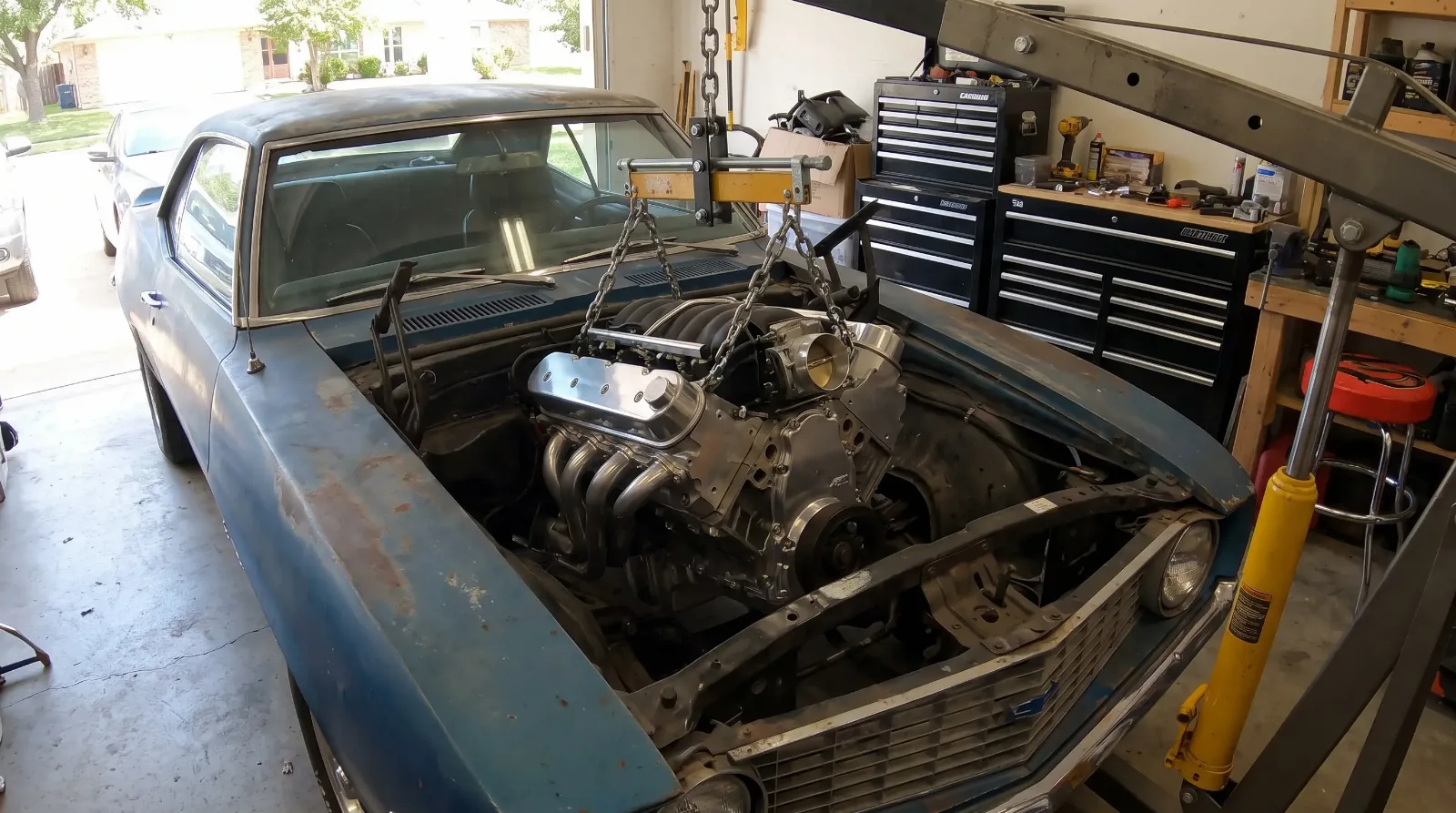
The first-generation Camaro was engineered around a small-block V8. The engine bay dimensions, the firewall angle, and the front subframe geometry were all set with a pushrod V8 in mind. When General Motors developed the LS family in the mid-1990s, they were designing for the same basic envelope, and the dimensional overlap is remarkable. An LS drops into a 1967-to-1969 Camaro with far fewer clearance headaches than most swaps involve. The exhaust ports are tighter to the block than an older small-block, which actually helps with header routing. The block itself is aluminum on most modern variants, so you often reduce nose weight compared to a worn iron 350. Anyone reading about restomod and pro-touring builds will notice that LS power is the default choice for a reason: the package is compact, the aftermarket support is massive, and the power ceiling is extremely high relative to cost.
This is a support article for builders who have already decided to do the swap and want a clear map of the decisions ahead. It is not a step-by-step workshop manual, but it will tell you what matters, what to budget, and where builders typically get into trouble. For historical context on the platform you are working with, the backstory explains why the F-body became such a natural canvas for performance work.
Engine and transmission choices
The LS family spans roughly 25 years of production and a wide range of displacements and power outputs. For a street-driven first-gen Camaro, the most common donor engines are the LS1 (5.7L, found in 1997-to-2004 Corvettes and Camaros), the LS2 (6.0L, from 2005-to-2007 Corvettes and GTO), and the LS3 (6.2L, from 2008-to-2013 Corvettes). All three share the same basic external dimensions and mount in the same location. The LS1 is the most affordable donor, typically found for around one to two thousand dollars for a pulled engine with accessories. An LS3 in good condition from a wrecked car commands several times that. Truck LS engines, specifically the LQ4 and LQ9 iron-block 6.0L units, are abundant and cheap but add weight you just eliminated. They are better suited to heavier cars. For a first-gen Camaro build targeting street and occasional track use, an LS1 or LS2 is the sweet spot.
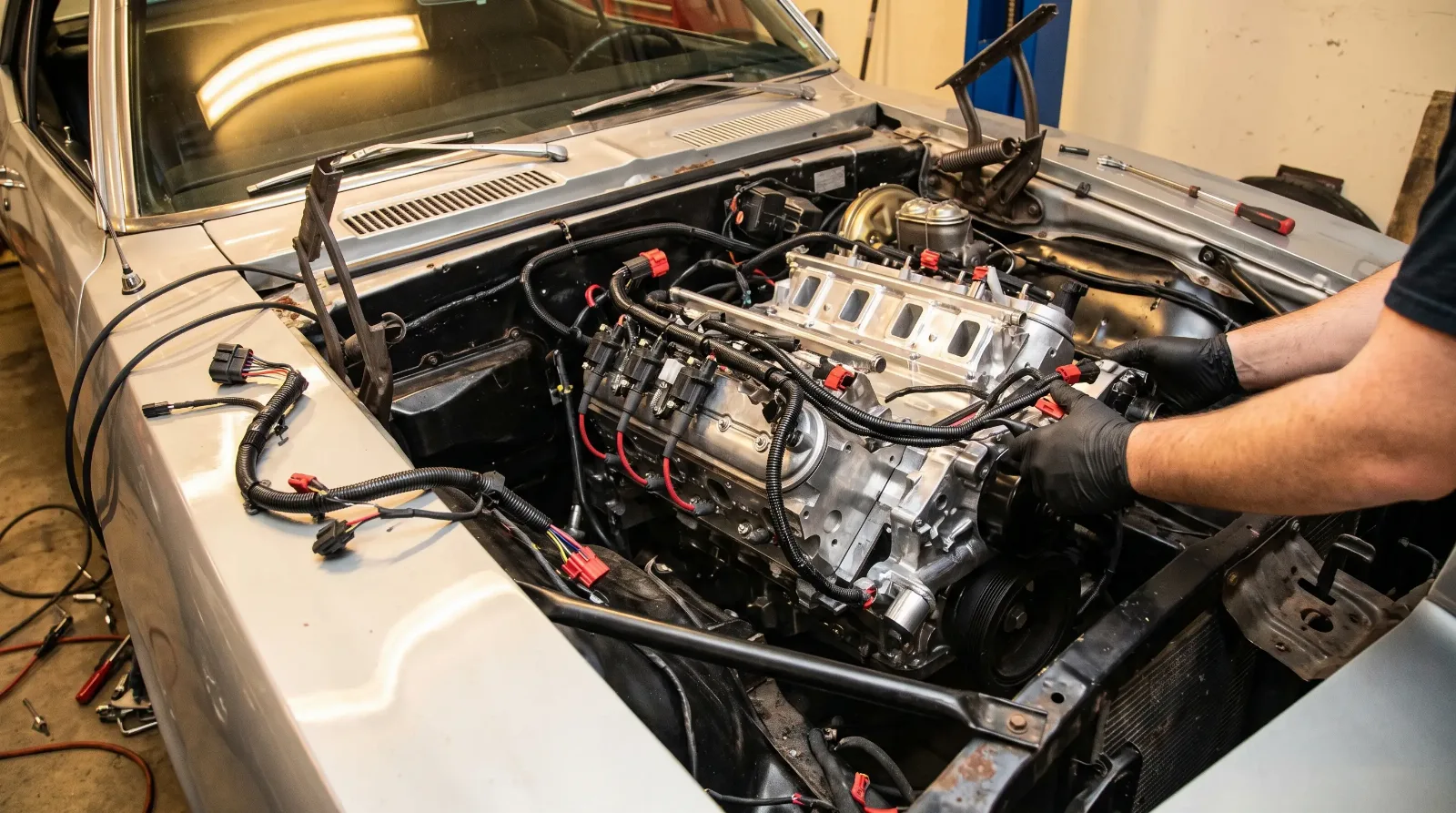
Transmission choice follows engine choice. The T56 six-speed manual that came behind factory LS1s is the most popular pairing and fits with commonly available transmission crossmembers for the F-body. The 4L60-E and 4L80-E automatics are also widely swapped. The 4L60-E handles moderate power levels and is narrow enough to work with stock tunnel dimensions on most builds. If you are planning to run significantly over 450 hp to the wheels, the 4L80-E is more durable but requires tunnel modification on a first-gen car.
| Engine | Displacement | Factory power (approx.) | Common source | Block material |
|---|---|---|---|---|
| LS1 | 5.7L | 345 to 350 hp | 1997-2004 Corvette, Camaro SS | Aluminum |
| LS2 | 6.0L | 400 hp | 2005-2007 Corvette, GTO | Aluminum |
| LS3 | 6.2L | 430 to 436 hp | 2008-2013 Corvette | Aluminum |
| LQ4/LQ9 | 6.0L | 300 to 345 hp | 2000-2007 GM trucks/SUVs | Cast iron |
| LS7 | 7.0L | 505 hp | 2006-2013 Z06 Corvette | Aluminum |
Mounts, headers, and fabrication basics
Motor mount plates are the first purchase most builders make, and the quality range is wide. Companies like Hooker Blackheart, Dirty Dingo, and ICT Billet all make bolt-in LS swap mounts for first-gen Camaros. The better kits include transmission crossmembers and are designed to position the engine at a specific height and setback that keeps the steering shaft clear and allows the stock hood to close without modification. Verify hood clearance with the specific kit before you order, because valve cover height varies between LS variants and some coil-on-plug covers are taller than others.
Headers are the other critical fabrication decision. Long-tube headers produce more power but require careful routing around the steering and require collector positioning that works with your transmission and exhaust path. Short-tube headers (also called shorty headers or block-huggers) are easier to fit and keep heat closer to the block, but sacrifice top-end power. Most builders running the car primarily on the street choose 1-7/8-inch long-tubes with a 3-inch collector. Verify that your header choice clears the steering shaft on a first-gen, since the relationship between the driver's-side header and the Pitman arm area is tight on these cars.
Keep going in this series with what a restomod costs.
Wiring, ECU, and fuel system
This is where LS swaps become genuinely complicated for first-time builders. The LS engine is drive-by-wire on some applications and drive-by-cable on others. LS1 and LS2 engines from Camaros and Corvettes in the late 1990s and early 2000s are cable-throttle, which simplifies the wiring harness significantly. Later engines with electronic throttle control (ETC) require either a standalone ECU that supports ETC or conversion to a cable throttle setup using a different intake manifold and throttle body.
The factory engine control module (ECM) can be retained and tuned using HP Tuners or EFI Live, which are the two dominant tuning platforms in the LS community. Alternatively, a standalone ECU from Holley (the Dominator or Terminator X series) or FAST eliminates the factory emissions controls and simplifies the harness at the cost of losing some factory protections. For a street-driven car with reasonable emissions standards in your state, keeping the factory ECM and running a clean engine swap harness from a company like American Autowire or Painless Performance is the most reliable approach. Expect to spend several hundred dollars on a purpose-built swap harness and plan for professional tuning afterward, which typically adds a few hundred dollars on a dyno.
Fuel system requirements are non-negotiable. The LS family runs returnless fuel injection at 58 psi for most applications. A first-gen Camaro has a mechanical-pump carbureted fuel system at roughly 5 to 7 psi, which is completely incompatible. You need an in-tank electric pump, a return line or a return-style fuel system, a fuel pressure regulator set to the correct pressure, and injector-grade fuel hose throughout. Budget several hundred dollars for a complete fuel system conversion depending on whether you use a drop-in pump replacement for the tank or fabricate a custom setup.
"The wiring is where most first-gen LS swaps stall out. People buy the engine, drop it in, admire it for a week, and then start pulling their hair out over the harness. Plan the ECU and harness solution before you pull the original engine, not after. The engine bay decisions are easy compared to making a Gen III computer talk to a 1969 car."
— Emily Chen
Cooling system and what it costs
An LS engine produces significantly more heat than most of the engines it replaces, and it requires a cooling system that can manage it. A stock first-gen Camaro radiator is borderline adequate on a good day with a stock small-block at normal operating temperatures. With an LS putting out 350 to 430 hp and generating heat accordingly, a high-capacity aluminum radiator is not optional. A two-row or three-row aluminum unit sized for the application from a supplier like Griffin, Be Cool, or Champion runs a few hundred dollars. Pair it with a quality electric fan setup (the factory mechanical fan will not work with most LS installations) and a good thermostat. The LS runs a 180-to-195-degree thermostat in factory applications, and this should be respected in a swap application as well. Running the engine too cool causes fuel trim problems and premature wear. The coolant fittings on the LS block are a different configuration than older small-blocks, so you will need adapter fittings or a swap-specific water pump and hose routing kit.
Total project costs range widely depending on whether you do the labor yourself or hire it out and how much of the wiring you handle personally. A realistic budget for parts only, starting from a bare first-gen Camaro with no drivetrain:
- LS1 donor engine with accessories: low four figures
- T56 or 4L60-E transmission: mid four figures or less
- Motor mount and crossmember kit: a few hundred dollars
- Headers and exhaust: several hundred dollars
- Fuel system conversion: several hundred dollars
- Wiring harness and ECU solution: several hundred to low four figures
- Cooling system: several hundred dollars
- Miscellaneous (driveshaft, shifter, clutch if manual): several hundred to about a thousand dollars
Parts-only total typically lands in the mid four figures to high four figures for a competent LS1 or LS2 swap. Professional labor at a shop with LS swap experience adds several thousand dollars depending on region and build complexity. Choosing a later LS variant, a standalone ECU instead of the factory unit, or custom exhaust fabrication pushes costs higher. The ceiling is unlimited for bespoke builds.
Sources and notes
Production figures, engine specifications, codes, and dates in this article are cross-referenced from established Camaro references, period documentation, and owner registries. Where sources differ, the most commonly cited value is used. Cost figures are indicative and vary by supplier, region, and condition.
- General Motors LS-based small-block engine (LS1/LS2/LS3/LS7 power & block specs)
- Chevrolet Performance - LS / LSX Crate Engines
- Holley - LS Swap Components (mounts, oil pans, accessory drives)
- TREMEC T-56 Magnum Transmission Specifications
- American Autowire - LS Swap Wiring Harnesses
- Hooker Blackheart - LS Swap Headers & Mounts for First-Gen Camaro