
Chevrolet Corvette Stingray Buyer's Guide
The Corvette Stingray — C2 Sting Ray (1963–1967) and C3 Stingray (1968–1976) — represents the most dramatic and collectible Corvette of the classic era, with the 1963 split-window coupe and the 1969–1972 big-block cars standing as the definitive American sports cars of their generation.

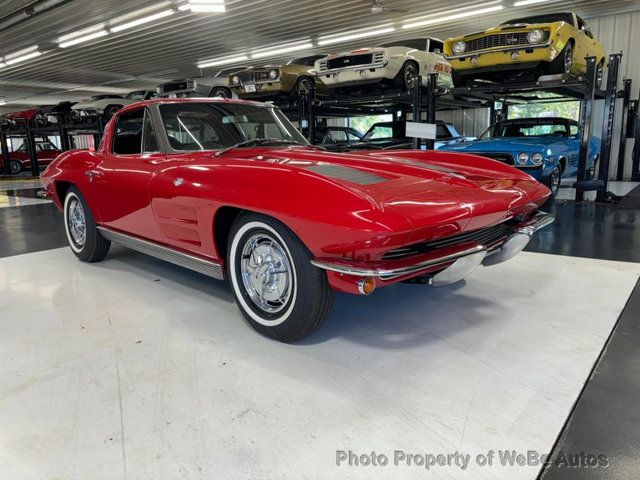
Tom Ramirez here. I've spent two decades cataloguing Corvettes, and when people ask me which generation matters most, I always say the same thing: if you understand the Sting Ray, you understand what the Corvette was trying to be. Bill Mitchell's 1963 Sting Ray coupe — the one with the split rear window that Zora Duntov hated because it blocked rearward vision — is the most beautiful American sports car ever made. I don't say that lightly. That design is fifty years ahead of everything around it.
Two generations carry the Stingray name. The C2 Sting Ray (two words, 1963–1967) is the smaller, lighter, more sophisticated sports car. The C3 Stingray (one word, 1968–1976) is the wider, lower, more dramatic car that carried the Corvette through the muscle car era. Both deserve serious collector attention; both have specific years that represent peak value.
The C2 Sting Ray: 1963–1967
Bill Mitchell created the C2 Sting Ray as a translation of his 1959 Stingray racer concept into a production car. The result was unlike anything in American showrooms: an independent rear suspension (the first Corvette IRS), a tighter, more sports-car-like wheelbase than the C1, and a body that used specific aerodynamic shapes that Mitchell's team had actually tested. This wasn't styling for styling's sake.
The 1963 Sting Ray arrived in two body styles simultaneously: the first-ever Corvette coupe (with the split rear window that became the most disputed design decision in Corvette history) and a revised roadster. Both used the same 98-inch wheelbase and the same Small Block V8 base engine. The coupe is the target; the 1963 split-window coupe specifically is the most valuable single-year Corvette in the C2 family.
The Split Window Debate
Zora Arkus-Duntov, Corvette's chief engineer, lobbied against the split rear window because it compromised rearward visibility. Bill Mitchell insisted the twin-window look was essential to the design. Mitchell won the argument for 1963; Duntov won for 1964, and the split window was replaced by a single rear window. This makes the 1963 coupe the only Corvette with the split-window treatment — a one-year-only feature that defines collector demand today.
C2 Engine Options
| Engine | Designation | Output | Notes |
|---|---|---|---|
| 327ci SBC | L75 | 250 hp | Base; good driver car |
| 327ci SBC | L76 | 340 hp | Solid lifters; strong performer |
| 327ci SBC | L84 | 360 hp | Fuel injection; most complex |
| 396ci BBC | L78 | 425 hp | 1965 only; first Sting Ray big-block |
| 427ci BBC | L36/L68/L71/L88/L89 | 390–560 hp | 1966–1967; the performance apex |
The 1967 L88 427ci is the most powerful and most valuable C2 — officially rated at 430 hp but actually producing over 550 hp, built specifically for racing. Only 20 L88s were produced in 1967, making them the rarest of the rare. The L71 (three 2-barrel carburetors) and L89 (aluminum heads) are more attainable performance benchmarks.
The C3 Stingray: 1968–1976
Larry Shinoda (who had also worked on the C2's styling) and Bill Mitchell produced the C3 body from the "Mako Shark II" show car concept. The result was more dramatic than the C2 — lower, wider, with dramatically flared fenders and a T-top roof that became the defining C3 feature. The C3 arrived on the same basic chassis as the C2 but with a revised suspension and a longer, wider body that gave the car a more imposing presence.
The 1968–1969 C3s are the most desirable: they carry the 427ci big-block options from the C2 era into the new body. The 1969 Stingray (with the name restored to one-word "Stingray") with the L88 or LS7 427ci is the peak C3. After 1971, emissions regulations and insurance pressures began reducing output, and by 1975 the base engine was producing 165 horsepower — a dramatic fall from the 1969 peak of 435 hp for the ZL1 option.
C3 Years to Target
The 1969–1972 big-block C3 is the target for performance buyers. The 1973–1976 cars offer more comfort but significantly less performance. The 1968 cars have unique features (the Astro Ventilation system, the specific wiper setup) that were revised in 1969 — they're interesting transition cars but the 1969 is the more sorted Stingray. The 1975–1976 cars with the catalytic converter are the most drivable daily-driver C3s but the least exciting from a collector standpoint.
"I have examined hundreds of 1963 Sting Ray coupes. I've seen every variation of the restoration story, every attempt to create a split-window from a later car, every claimed L88 that turned out to be a base 327. The documentation tells the story — always cross-reference the build sheet and the tank sticker. A genuine documented car is worth the premium. A car with a good story and missing paperwork is worth far less than the seller thinks."
— Tom Ramirez
Browse Chevrolet Corvette Stingray listings
 Dealer
 United States
1963 Chevrolet Corvette Stingray
 Dealer
United States
Dealer
United States
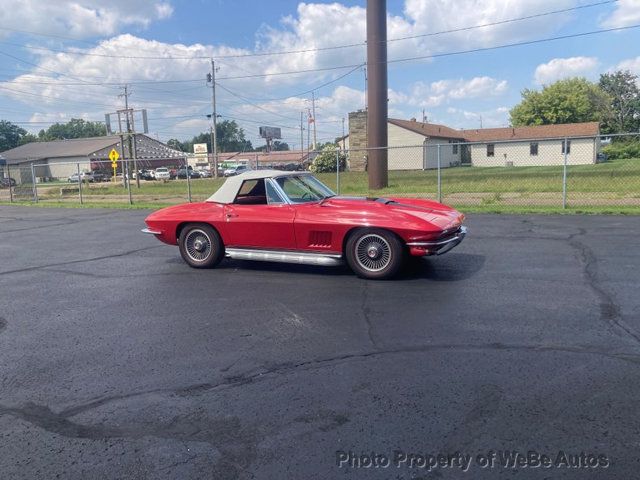
1967 Chevrolet Corvette Stingray
What to Look For
VIN and documentation verification is the first priority on any C2 or C3 Sting Ray purchase — particularly for claimed high-performance variants (L88, L71, L89 on C2; L88, ZL1, LS6, LS7 on C3). Cross-reference the VIN against the NCRS (National Corvette Restorers Society) database and any available build sheet or tank sticker. On C2 cars, verify the frame rails are straight and uncompromised — C2s were hard-driven and accident histories are common. On C3 cars, inspect the T-top roof seals and the sill areas for water damage from T-top leaks. Fiberglass body condition: check for stress cracks at door corners and around the T-top openings. Verify the rear suspension (C2 IRS) pivot points for corrosion and wear.Pre-Purchase Checklist
-
VIN & Build Sheet
Cross-reference VIN against NCRS database and any available build sheet — especially for performance variants. -
Split Window Authenticity (1963)
On 1963 coupes, verify the original split rear window — conversions from single-window cars exist. -
Engine Date Codes
Verify engine casting date falls before the car's production date — an out-of-period engine reduces value. -
C2 Frame Rails
Inspect for accident damage and corrosion at rear suspension mounting points — C2s were hard-driven. -
T-Top Seals (C3)
Check T-top panels and seals — leaks are common and cause structural sill rust and interior water damage. -
Fiberglass Stress Cracks
Inspect door corners and T-top openings for fiberglass stress cracking — indicates hard use or flex. -
Fuel Injection Unit (L84)
On FI-equipped C2 cars, verify the Rochester unit is original and functioning — complex to restore. -
Battery Compartment
Check the battery area for acid damage to fiberglass — a common issue on all C2/C3 Corvettes.
Common Issues
Documentation fraud on high-value C2 variants — always verify against NCRS records. C2 frame corrosion at the rear suspension mounting points. C3 T-top water leaks causing sill rust and interior damage — extremely common. Fiberglass body stress cracks at door corners and T-top openings. C2 327ci fuel-injected (L84) Rochester unit failures — complex and expensive to restore correctly. Big-block cars: overheating from inadequate cooling system maintenance. Battery acid damage to the fiberglass underhood area. Early C3 (1968) wiper and ventilation system specific-part sourcing.More Corvette Stingray for sale
 Dealer
United States
Dealer
United States
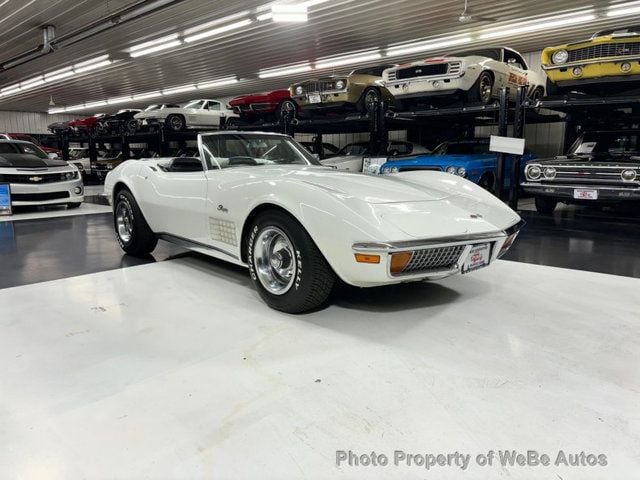
1972 Chevrolet Corvette Stingray
 Dealer
United States
Dealer
United States
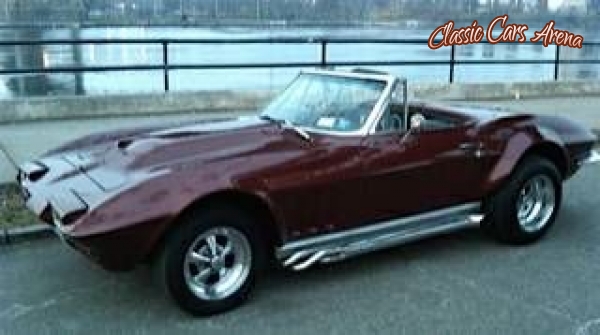
1966 Chevrolet Corvette Stingray
Pricing Guide
C2 327ci roadster: $45,000–$85,000. C2 327ci coupe (non-split window): $55,000–$95,000. 1963 Sting Ray split-window coupe (documented): $80,000–$150,000+. C2 427ci big-block: $75,000–$130,000. C2 L88 (verified): $350,000–$600,000+. C3 Stingray 427ci (1969–1971): $40,000–$80,000. C3 350ci (1971–1976): $22,000–$45,000. NCRS Top Flight or Bloomington Gold certified cars command 20–35% premium.Fun Facts
The 1963 Corvette Sting Ray was the first Corvette offered as a coupe — all previous Corvettes (1953–1962) had been convertibles only. The independent rear suspension was also a first for the Corvette in 1963. Bill Mitchell named the car "Sting Ray" after the fish he kept in an aquarium in his design studio. The 1963 split-window coupe is the only year the feature appeared in production — Duntov's visibility objection won the argument for every subsequent year.Frequently Asked Questions
Ready to find your Corvette Stingray?
Browse 6+ active Chevrolet Corvette Stingray listings on Classic Cars Arena.
View Listings →