
Classic Chevrolet K10 4x4 Buyer's Guide (1960–1987)
The K10 has the visual appeal of the most desirable C10, plus a live front axle and transfer case. Values have tripled in a decade. A genuine factory 4WD is a different truck — and a different price — than a converted C10.

The K10 occupies a unique space in classic truck collecting: it has the visual appeal of the most desirable C10, plus a live front axle, a transfer case, and the ability to go off-road if you point it that way. The market has figured this out. Values on clean 1967–1972 K10s have roughly tripled over the past decade. A genuine, rust-free factory K10 is a truck worth finding and paying for. Here's how to tell a real one from a conversion — and what to inspect once you find it.
History & Generations
Chevrolet introduced four-wheel-drive half-ton trucks under the K designation in 1960. The formula was straightforward: a live Dana 44 front axle added to the proven C10 platform, a two-speed transfer case, and front locking hubs. The result was a serious off-road vehicle with mainstream pickup styling and comfort.
1960–1966: The First Generation K10
Early K10s used a high-mounted front axle requiring a taller ride height — the characteristic stance of vintage 4x4 trucks. Power from the 235 inline-six or optional 283 V8. These are the rarest K10s; their value is rising as collectors look beyond the more famous later generations.
1967–1972: The Action Line K10 — Peak Desirability
The 1967 redesign gave the K10 the iconic Action Line body while retaining full 4WD capability. Dana 44 front axle, NP205 part-time transfer case, manual locking hubs. Engine choices ran from the 250 six through the 350 and 396/402 V8. The combination of landmark styling, capable drivetrain, and smaller production numbers makes this the most sought-after K10 generation — and the most expensive.
1973–1987: The Square Body K10
More interior room, better HVAC, and the eventual option of automatic locking front hubs. The NP205 transfer case remained through most of the era. Square Body K10s are the fastest-appreciating segment of the 4WD truck market — clean examples that were $15,000 trucks in 2018 routinely bring $30,000–$45,000 now.
Years to Target
- 1967–1972: Most desirable era. Short-wheelbase trucks command the highest premiums. Verify factory 4WD — conversions are common.
- 1973–1980 Square Body: Best value among Square Bodies — same NP205, slightly less premium than early trucks.
- 1981–1987 Square Body: More amenities but some years used the NP208 chain-drive transfer case instead of NP205. Verify which unit is fitted.
- Avoid: Any K10 that is actually a converted C10 — common and worth significantly less than factory 4WD.
What to Look For in Person
Standard C/K inspection applies. K10-specific additions are significant. First: verify factory 4WD via the VIN plate — model code must show "K." A conversion reads "C." Conversions have value but not K10 value.
Inspect the front axle: the Dana 44 should be tight at the knuckles with no lateral play. Grasp each front wheel at 9 and 3 o'clock and push and pull — no movement should be detectable. Any movement indicates worn kingpins (pre-1977) or worn ball joints (later), either of which is repairable but adds to budget.
Engage 4WD in both high and low range. Both should engage smoothly without grinding. Drive in 4WD: any shimmy or vibration indicates worn U-joints, worn front hubs, or alignment issues from off-road use. Check transfer case output seals for leaks.
| Component | 1967–1972 | 1973–1987 |
|---|---|---|
| Front axle | Dana 44 open-knuckle | Dana 44 (most years) |
| Rear axle | GM 12-bolt semi-float | GM 10-bolt or 14-bolt |
| Transfer case | NP205 part-time | NP205 or NP203/NP208 |
| Front hubs | Manual locking | Manual or automatic |
| Top engine option | 396/402 big block V8 | 454 big block V8 |
"A factory K10 and a converted C10 look identical from twenty feet away. The difference is everything — factory trucks have the correct geometry, the correct frame mounts, and a drivetrain engineered to work together. A conversion can be done well, but it's still a conversion. It's worth C10 money plus whatever the conversion cost. Check the VIN plate before you fall in love with the truck."
— Robert Halloran
Market Outlook
The K10 market has been one of the strongest appreciators in classic trucks over the past decade. A 1967–1972 short-wheelbase K10 in driver condition traded at $18,000–$25,000 in 2018; the same truck now brings $35,000–$55,000. Show-quality 1967–1972 examples have exceeded $80,000 for the best documented trucks. Square Body K10 driver condition: $22,000–$38,000; show: $45,000–$70,000. Demand from the overlanding community, the restomod market, and traditional collectors all support the floor simultaneously. A factory-original, rust-free K10 is a genuine appreciating asset.
Browse Chevrolet K10 listings
 Dealer
 United States
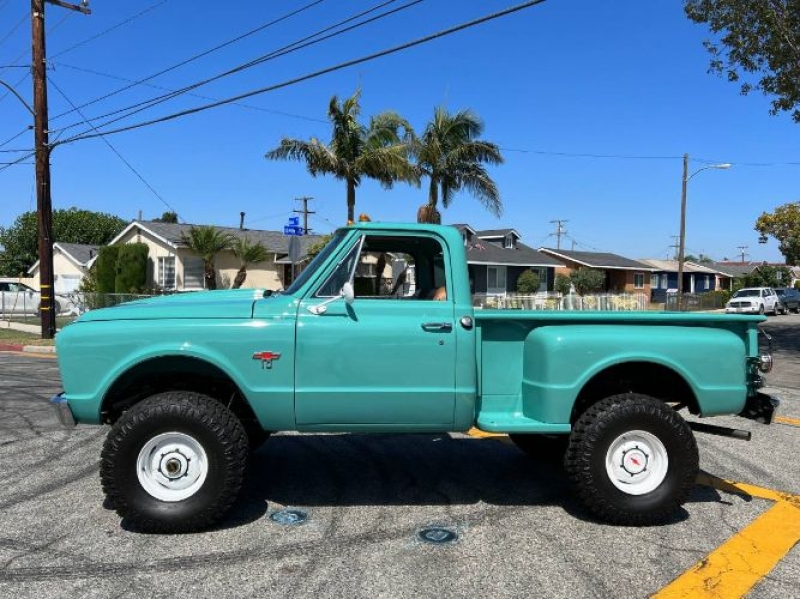
1967 Chevrolet K10
 Dealer
United States
Dealer
United States
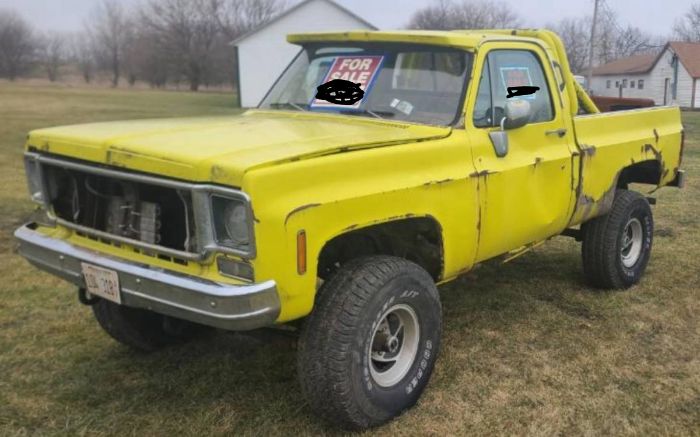
1978 Chevrolet K10
What to Look For
First priority: verify factory 4WD via VIN plate — "K" in model code confirms factory, "C" means conversion. Front axle: grab each wheel at 9 and 3 o'clock and check for lateral play — worn kingpins or ball joints. Test 4WD in both high and low range — smooth engagement, no grinding. Drive in 4WD and check for shimmy or vibration. Inspect transfer case output shaft seals for leaks. Check front axle knuckle seals for gear oil leaks. Verify transfer case type: NP205 (cast iron, gear-driven, preferred) vs NP203/NP208 (chain-drive). Apply full C/K frame and cab corner inspection with extra attention to mud-packed underbody areas. Verify manual front hub function if fitted.Pre-Purchase Checklist
-
VIN verification (K vs C)
Check VIN plate on driver door sill — K = factory 4WD, C = 2WD (likely conversion) -
Front axle play test
Grab each front wheel at 9 and 3, push/pull — no movement should be detectable -
4WD 4H engagement
Engage 4H on gravel or grass — smooth engagement, no grinding -
4WD 4L engagement
Engage 4L — should engage cleanly with noticeably lower crawl ratio -
Transfer case identification
Identify NP205 (gear-drive, preferred) vs NP203/NP208 (chain-drive) -
Transfer case seals
Inspect output shaft seals for gear oil leaks — common, inexpensive to address -
Knuckle seals
Inspect front axle knuckle seals for leaks and grease condition -
Front U-joints
Check driveshaft and axle U-joints for wear and play -
Manual hub function
Verify front hubs lock and unlock cleanly if manual type -
Underbody mud inspection
Check for packed mud in frame areas that may conceal rust -
Cab corners and frame
Full C/K inspection protocol with amplified attention for off-road rust -
4WD drive behavior
Drive in 4WD and check for shimmy, pull, or vibration indicating front-end wear
Common Issues
Kingpin wear (1960–1972) and ball joint wear (later models) cause front end shimmy and wander — both repairable with available parts. Transfer case output shaft seal leaks are nearly universal on high-mileage examples. The NP203 full-time transfer case (some 1973–1979 trucks) has a chain that wears with age and is less desirable than the NP205. Rust on off-road trucks is amplified by mud packing — inspect more thoroughly than on road-only trucks. Cab corners, frame kick-ups, and the area above the front axle on the frame are accelerated rust points. Front U-joints wear faster with 4WD use.More K10 for sale
 Dealer
United States
Dealer
United States
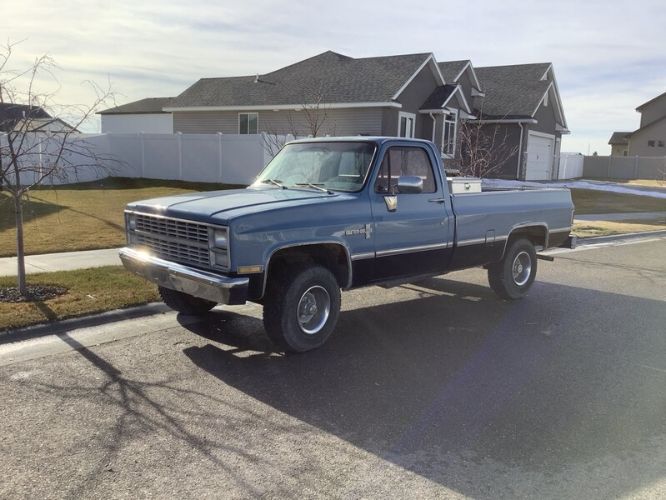
1984 Chevrolet K10
 Dealer
United States
Dealer
United States
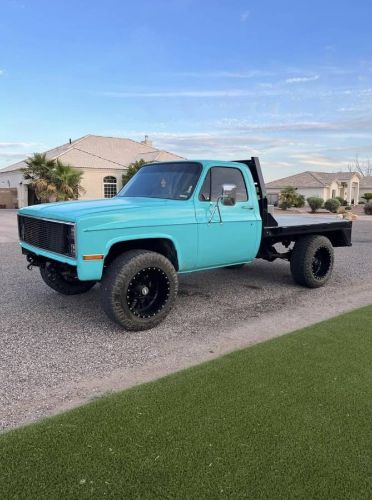
1976 Chevrolet K10
Pricing Guide
1967–1972 K10 driver: $35,000–$55,000; show: $65,000–$85,000+. Square Body K10 1973–1987 driver: $22,000–$38,000; show: $45,000–$70,000. First gen 1960–1966: $20,000–$32,000 driver. A C10 with 4WD conversion is worth C10 money plus a premium for quality conversion work — not K10 money. Factory 4WD premium over equivalent C10 runs 25–40% consistently.Fun Facts
The NP205 transfer case was also fitted to military vehicles and is considered one of the strongest two-speed transfer cases ever made for civilian use — no plastic internals, direct gear-drive output, virtually indestructible with basic maintenance. The K10 designation was retired in 1987 with the introduction of the OBS generation using "K1500" nomenclature. The special "Cheyenne" trim K10 package — upgraded interior, exterior chrome, special badging — is among the most sought-after Square Body configurations today.Frequently Asked Questions
Ready to find your K10?
Browse 6+ active Chevrolet K10 listings on Classic Cars Arena.
View Listings →