
Classic Chevrolet Nova Buyer's Guide
Expert buyer's guide to the classic Chevrolet Nova 1962–1979. SS396 verification, COPO documentation, cowl tag decoding, floor pan inspection, and current market pricing tiers.

The Chevrolet Nova ran from 1962 through 1979 and spent most of that run being underestimated. General Motors built it on a compact platform originally designed for the economy-minded Chevy II, then spent the late 1960s cramming engines as big as the 396 cubic-inch big-block into every corner they could find. The result is one of the most rewarding sleepers in the classic car market — if you know how to verify what you're actually buying. A documented SS396 is worth real money. A car wearing repro SS badges without a cowl tag to back them up is worth considerably less.
History & Generations
The Nova passed through three platform generations. The original Chevy II (1962–1967) launched as GM's answer to the Ford Falcon — a simple lightweight compact with a four-cylinder or inline-six base engine. The SS option arrived for 1963 and escalated rapidly through the decade.
Second Generation (1968–1974)
This is the generation collectors covet. The 1968 redesign gave the Nova an engine bay wide enough to accept GM's big-block V8s. The 1969–1972 window produced the most desirable cars: SS396 (technically a 402 from 1970 onward), the L78 375-horsepower solid-lifter option, and the legendary COPO Novas built for drag racers with either the L72 427 or the all-aluminum ZL1 427. Production numbers for COPO cars were tiny — roughly 1,015 in 1969 — and documentation requirements are strict. The fakes outnumber the real ones by a wide margin.
Third Generation (1975–1979)
The 1975 Nova moved onto GM's X-body platform, gained a hatchback body style, and lost most of its performance credibility to emissions regulations. These are reliable, inexpensive drivers — not performance investments.
Years to Look For
- 1969: Peak COPO year. SS396 with L78 option is the top non-COPO spec. COPO 9562/9737 cars command strong premiums.
- 1970: Last year of true muscle-era output before emissions cuts began. SS 396 (402) with L78 is the most desirable configuration.
- 1966–1967: Last of the first-gen Chevy II body. Clean survivors with the 327 V8 offer affordable classic Chevy ownership.
- 1972: Last year of the second-gen high-compression engines before the transition to net ratings.
What to Look For In Person
Walk around the car and look at the rocker panels, lower rear quarters, and rear valance before opening a door. These are universal rust points on second-gen Novas. Under the hood, verify engine casting numbers against the VIN and cowl tag. The block casting is on the rear driver's side. A numbers-matching L78 block carries a significant premium — confirm it with the casting date and cross-reference against published registries.
| Engine | Displacement | Horsepower (gross) | Notes |
|---|---|---|---|
| L65 Turbo-Fire | 350 cu in | 250 hp | Base SS V8, 1969–1972 |
| L34 | 396 cu in | 350 hp | SS option, hydraulic lifters |
| L78 | 396 cu in | 375 hp | Solid lifters, most desirable SS engine |
| L72 COPO | 427 cu in | 425 hp | COPO 9562 only, rare |
| ZL1 COPO | 427 cu in | 430 hp | Aluminum block, ultra-rare |
"I've inspected hundreds of Nova SS cars over the years. The cowl tag and VIN together tell me everything I need to know in the first five minutes. If a seller won't let me under the hood to read both before we talk price, I'm already walking. There's no legitimate reason to hide a cowl tag on an honest car."
— Mike Sullivan
Market Outlook
Second-gen Novas (1968–1974) have appreciated steadily. A clean non-numbers-matching SS350 driver runs $28,000–$42,000. A documented numbers-matching SS396 L34 commands $55,000–$75,000. L78 cars add another $10,000–$20,000. COPO 9562 Novas with full documentation start at $90,000. Third-gen 1975–1979 cars remain affordable at $8,000–$18,000 — the hatchback body is gaining appreciation as a practical classic.
Browse Chevrolet Nova listings
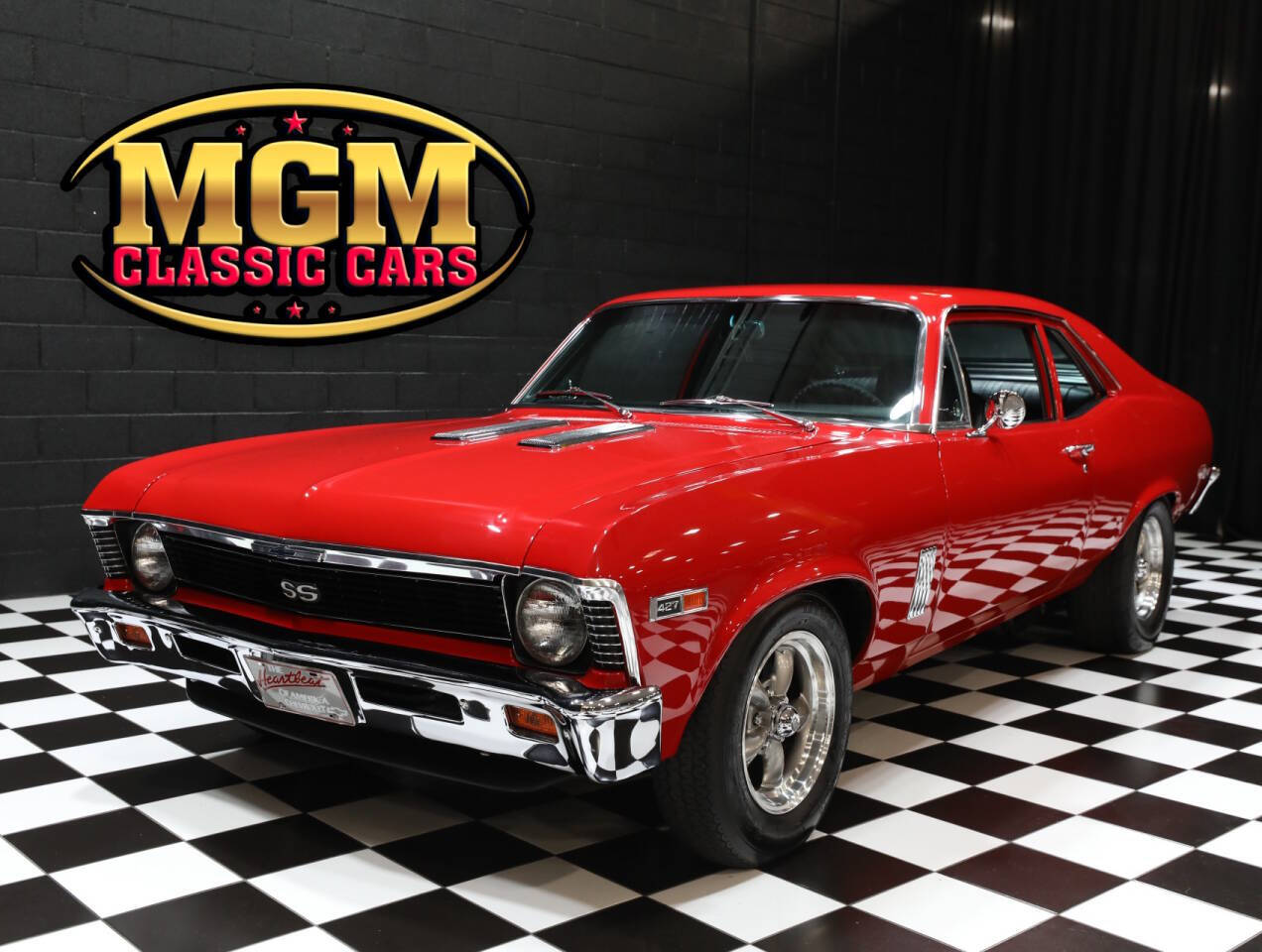 Dealer
 United States
1969 Chevrolet Nova
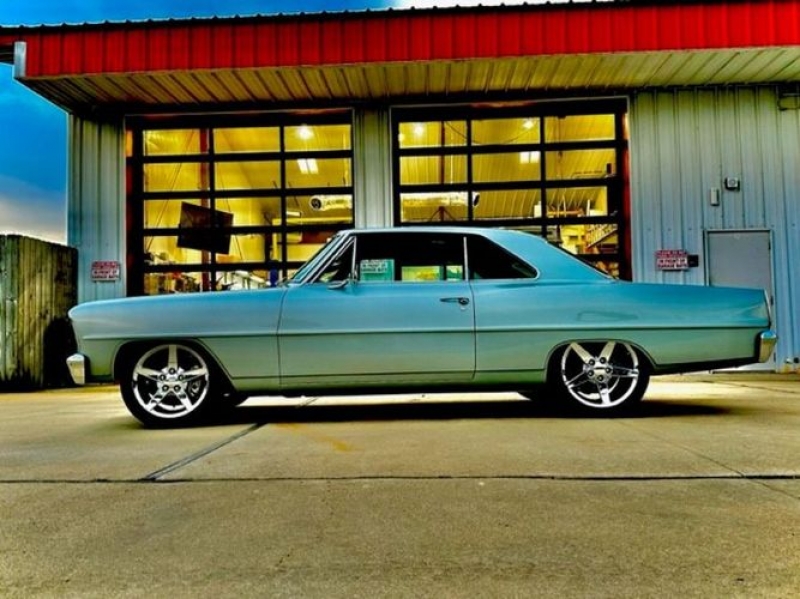 Dealer
United States
Dealer
United States
1966 Chevrolet Nova
What to Look For
Start with the cowl tag — riveted to the firewall, lists original body, trim, and option codes. On 1968 to 1971 Novas the engine is not encoded in the VIN; verify the engine by its block casting number and stamped suffix code. On 396/SS cars, confirm block casting numbers and casting dates. Inspect floor pans from underneath with a screwdriver — they rot from trapped moisture under carpeting. Check rocker panels and lower rear quarters for filler with a magnet. Inspect the cowl seam at the base of the windshield for rust perforation. Look at the rear frame rails where they meet the floor. On manual transmission cars, check the bellhousing area for cracked metal. Verify front subframe mounting points for corrosion. Check trunk floor and spare tire well.Pre-Purchase Checklist
-
VIN Engine Decode
On 1968 to 1971 cars the VIN does not encode the engine; decode the block casting number and stamped suffix code. Any mismatch means the SS package is not factory. -
Cowl Tag Check
Locate and photograph the firewall cowl tag. Verify body code, trim code, and option codes match the advertised configuration. -
Block Casting Number
Read the engine block casting number on the rear driver's side. Cross-reference against published casting number guides for the claimed engine. -
Floor Pan Probe
From underneath, probe floor pans with a screwdriver at seat mount areas and around the transmission tunnel. Soft metal means rot. -
Rocker Panel Magnet Test
Run a magnet along the full length of each rocker. Filler is non-magnetic. Check for rippling or waviness indicating patch panels. -
Cowl Seam Inspection
With the hood open, inspect the cowl seam at the windshield base. Bubbling paint or soft metal indicates serious rust. -
Rear Quarter Rust
Check lower rear quarters and the area behind the rear wheel opening. These rust from the inside out — look for bubbling paint. -
Trunk Floor Check
Pull up the trunk mat and inspect the floor and spare tire well for rust-through. Check seams where the floor meets the quarters. -
Subframe Mount Condition
Inspect front subframe mounting points on the unibody for corrosion. Cracked or rotted mounts require serious structural repair. -
Cooling System Check
On 396 cars, check for overheating history: rusty coolant, white residue on valve covers, or milky oil on the dipstick.
Common Issues
Floor pan rust is the Nova's most universal problem — water trapped under carpet rots the pans from above while road spray attacks from below. Budget $1,500–$4,000 for full floor replacement on a rough car. Cowl rust at the windshield base is serious structural rot affecting the firewall — repair costs run $2,500–$5,000. Rocker panel rust is cosmetic on the surface but structural underneath; full rocker replacement runs $800–$2,000 per side. Lower rear quarter rust is common and repairable but can extend into the trunk floor. On 396 cars, check for overheating damage — cracked heads and warped intake manifolds result from cooling system neglect. SS badge fraud is widespread: verify every claim with cowl tag data.More Nova for sale
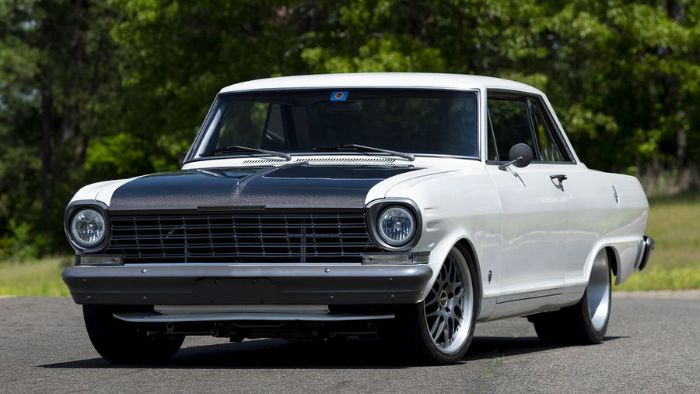 Dealer
United States
Dealer
United States
1964 Chevrolet Nova
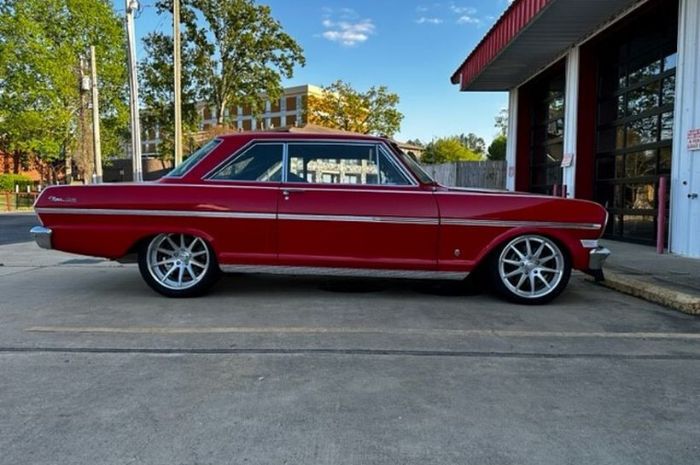 Dealer
United States
Dealer
United States
1963 Chevrolet Nova
Pricing Guide
Third-gen 1975–1979 drivers: $8,000–$18,000. Chevy II 1962–1967 with V8: $18,000–$32,000. Second-gen 1968–1974 non-SS 350: $22,000–$38,000. SS350 driver: $28,000–$42,000. Documented SS396 L34: $55,000–$75,000. Numbers-matching SS396 L78: $70,000–$90,000. COPO 9562 documented: $90,000–$130,000+. Deduct 30–40% for a non-original engine. Regional premiums apply in the Southwest where rust-free originals surface more frequently.Fun Facts
The Nova nameplate generated an urban legend in Spanish-speaking markets — "no va" loosely means "it doesn't go" — though GM sold Novas successfully throughout Latin America. The 1975 Nova hatchback shared its platform with the Pontiac Ventura and Oldsmobile Omega. Yenko Chevrolet of Canonsburg, Pennsylvania was responsible for most documented COPO Nova orders — Don Yenko personally lobbied GM engineers to enable the 427 installation in the compact platform.Frequently Asked Questions
Ready to find your Nova?
Browse 6+ active Chevrolet Nova listings on Classic Cars Arena.
View Listings →