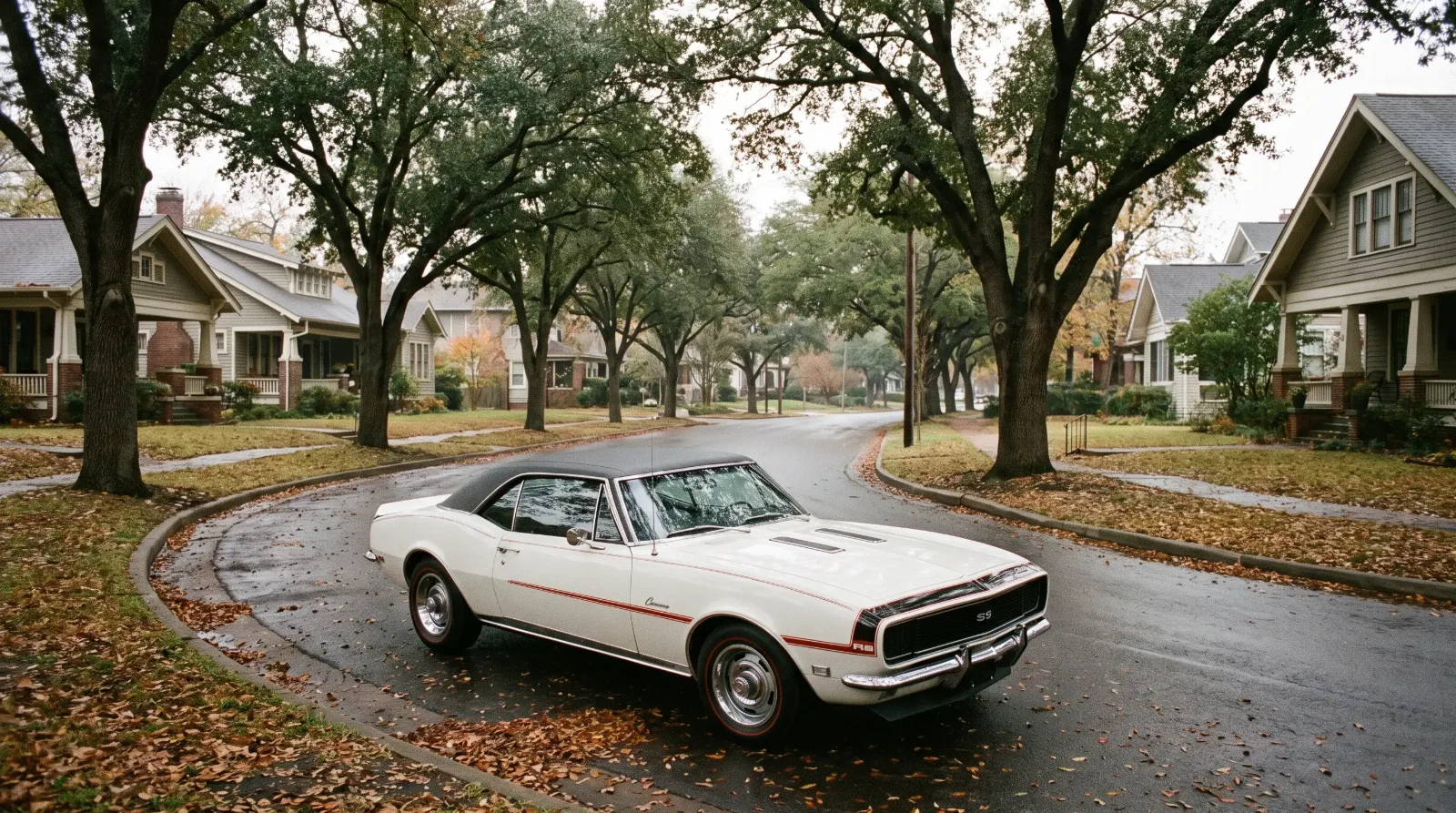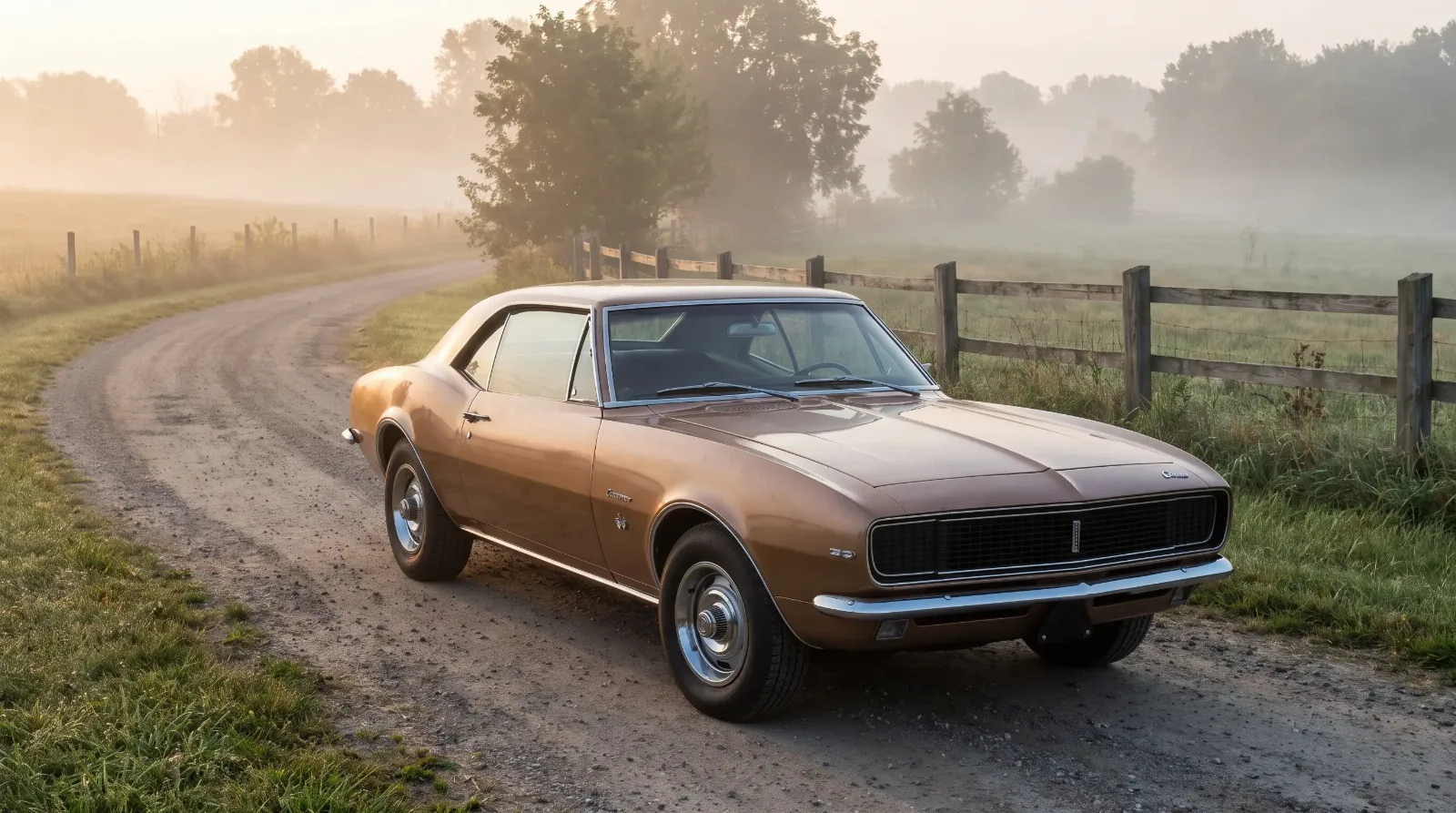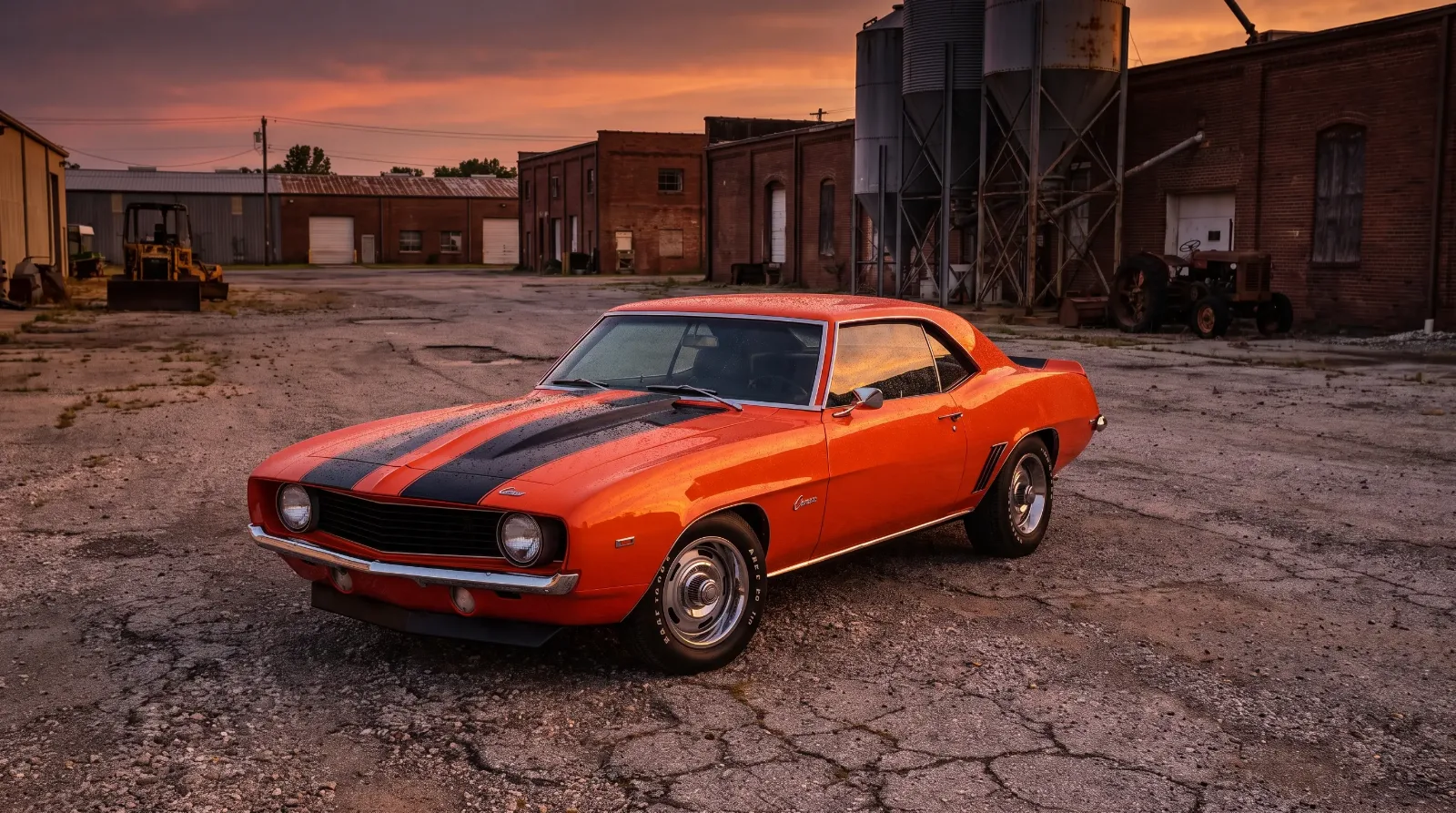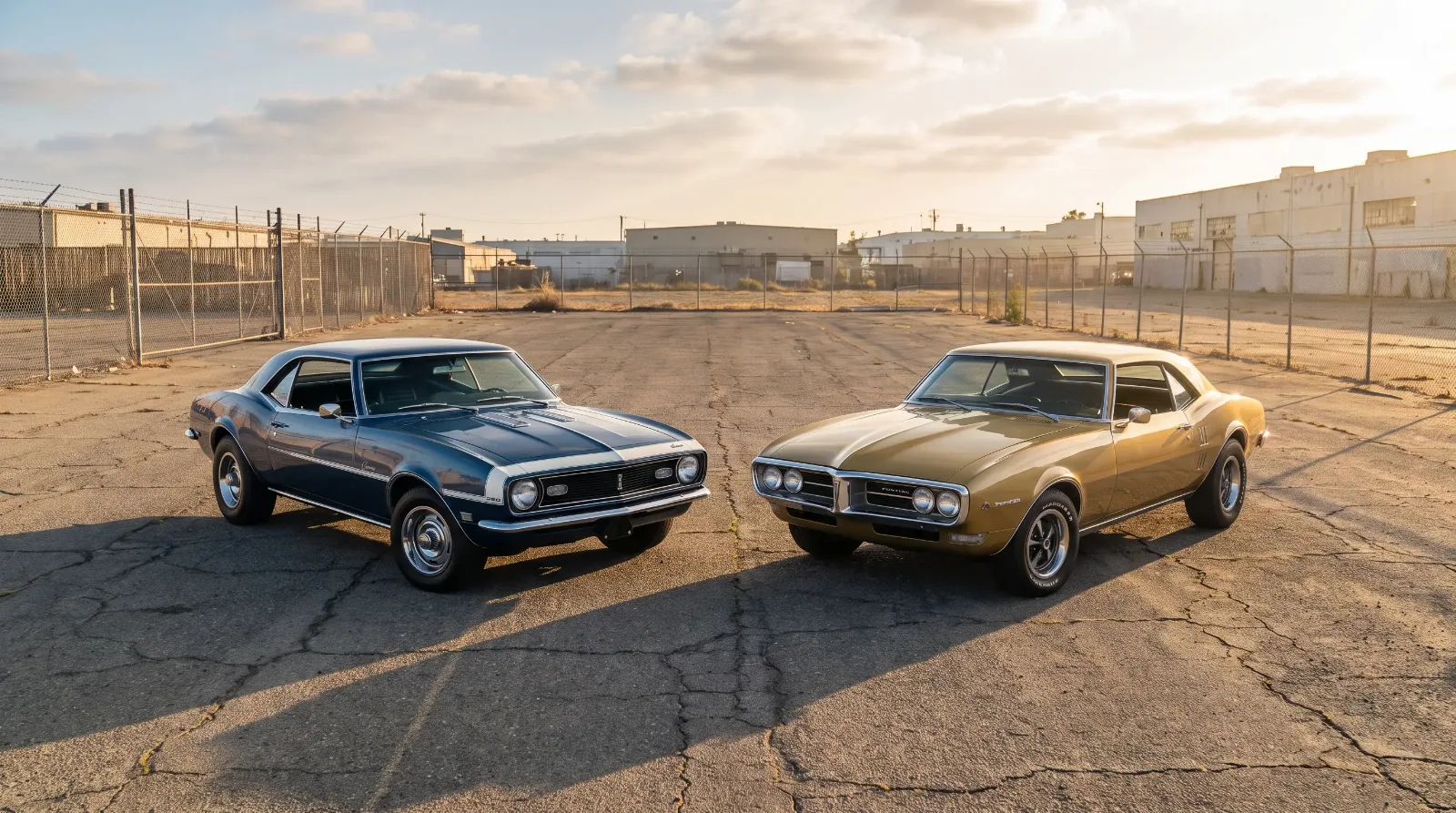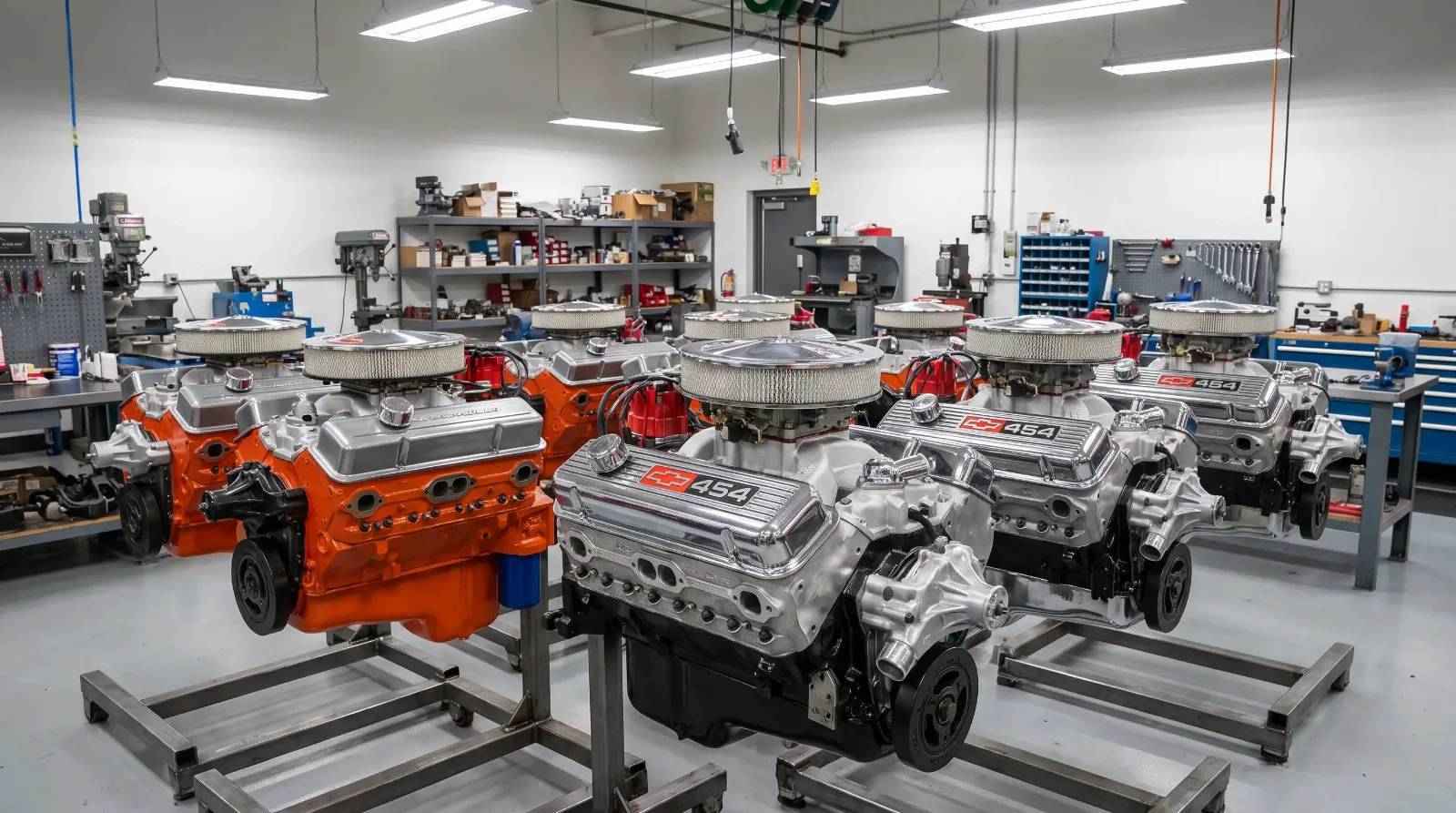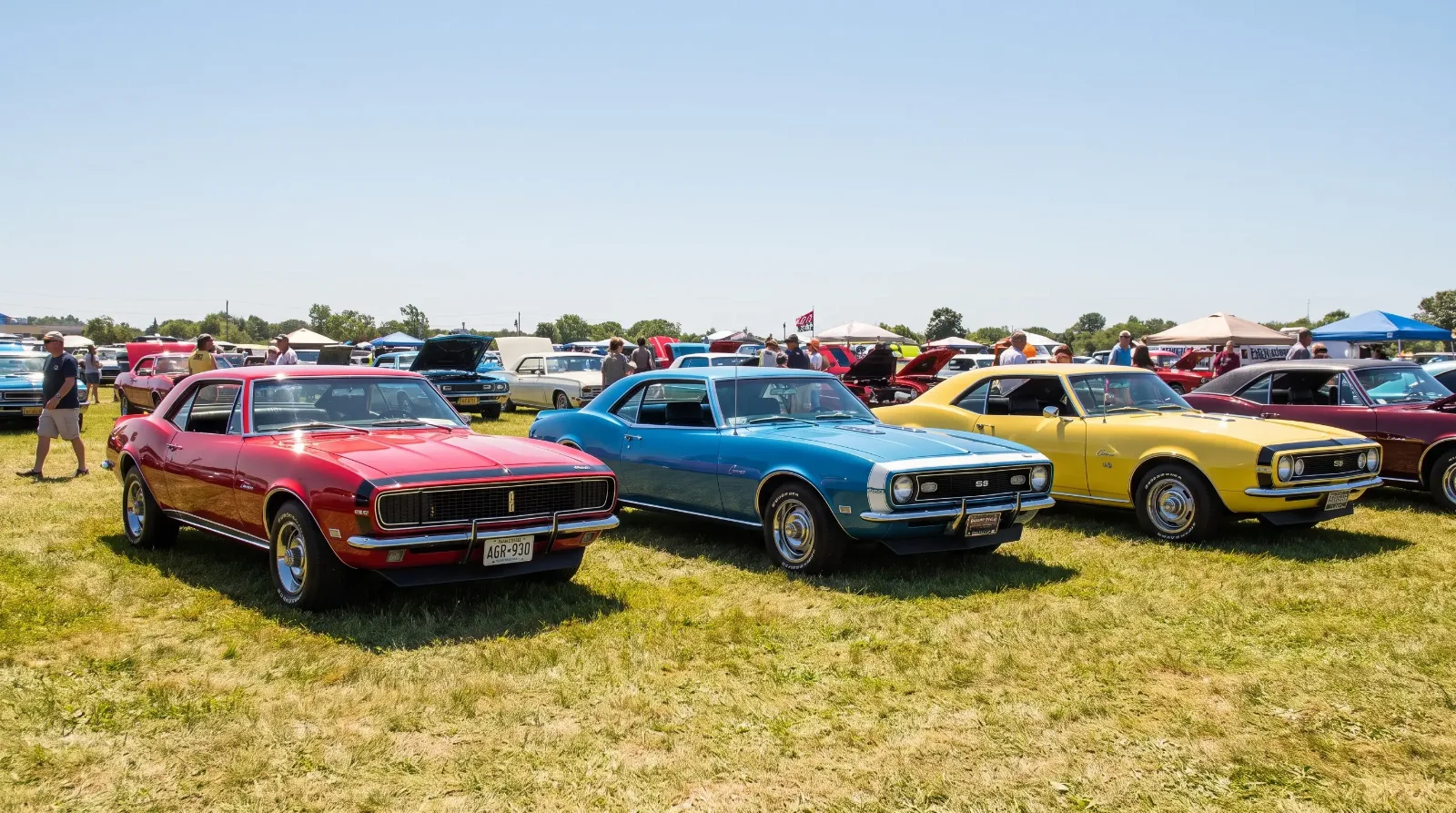
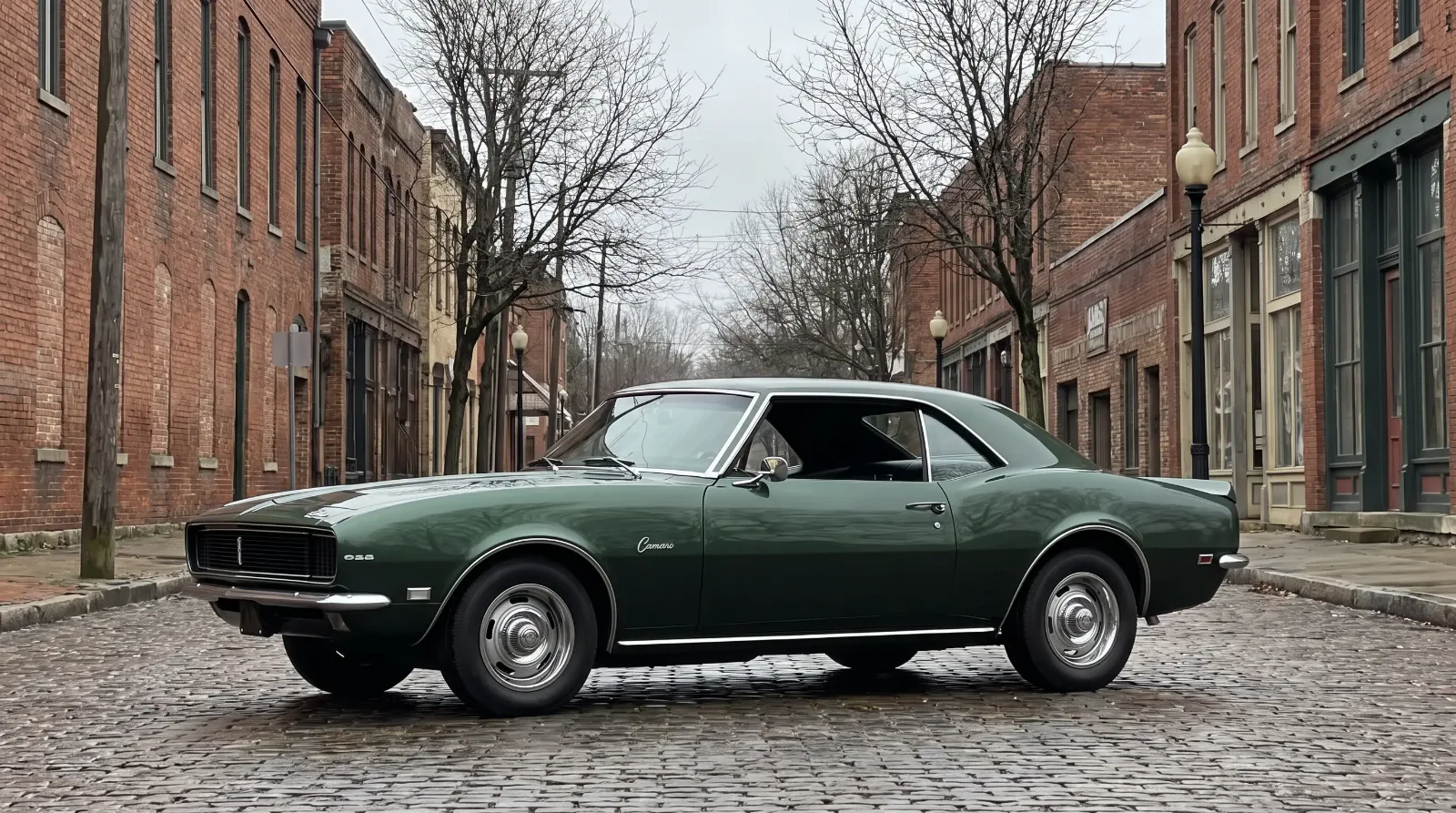
Every successful car gets a second year that almost nobody talks about. The first year is the story. The third year, if there is one, usually brings a restyle significant enough to become its own story. The second year is where the engineers get to fix things quietly, where the production lines smooth out, and where the car becomes more fully what it was trying to be at launch. For the Camaro, that year was 1968.
You can read the first-generation story to understand the full arc from 1967 through 1969, but the 1968 model year deserves a closer look on its own terms. It is the year Chevrolet removed the vent windows, added federally required side marker lights, rethought the interior ventilation, revised the rear spring setup, and delivered a car that the critics of the day generally found more accomplished than the already-well-received original.
What disappeared: the vent windows
The triangular vent windows forward of the main door glass were standard on 1967 Camaro coupes. They were a holdover from the pre-air-conditioning era, designed to direct airflow into the cabin when the car was moving. By the late 1960s, air conditioning was increasingly common as an option, and the engineering argument for vent windows was getting weaker. Chevrolet deleted them for 1968.
The practical effect was a cleaner door glass line. Without the vent window frame interrupting the glass, the side profile of the 1968 reads as slightly more modern, slightly less like a product of the early part of the decade. Whether you prefer the 1967 with its vent windows or the 1968 without them is mostly a matter of what era you grew up with. The functional difference was addressed by what Chevrolet put in the interior.
Astro Ventilation: the replacement for fresh air
Removing the vent windows created a cabin ventilation problem. Chevrolet's answer was Astro Ventilation, a flow-through system that pulled fresh air in through vents below the windshield and exhausted it through louvers in the rear roof pillars. This was the same system appearing across the GM lineup in 1968, and it worked well enough that air-conditioned and non-air-conditioned buyers alike generally found the cabin comfortable at highway speeds.
The Astro Ventilation system shows up in trim-tag and option documentation, and its presence or absence in a car presented as a 1968 is one of the details worth verifying. The system is not difficult to understand mechanically, but the pillar louvers and their surrounds are trim pieces that get damaged in restoration work or simply replaced with non-original parts over time.
Federal requirements: side marker lights and what they tell you
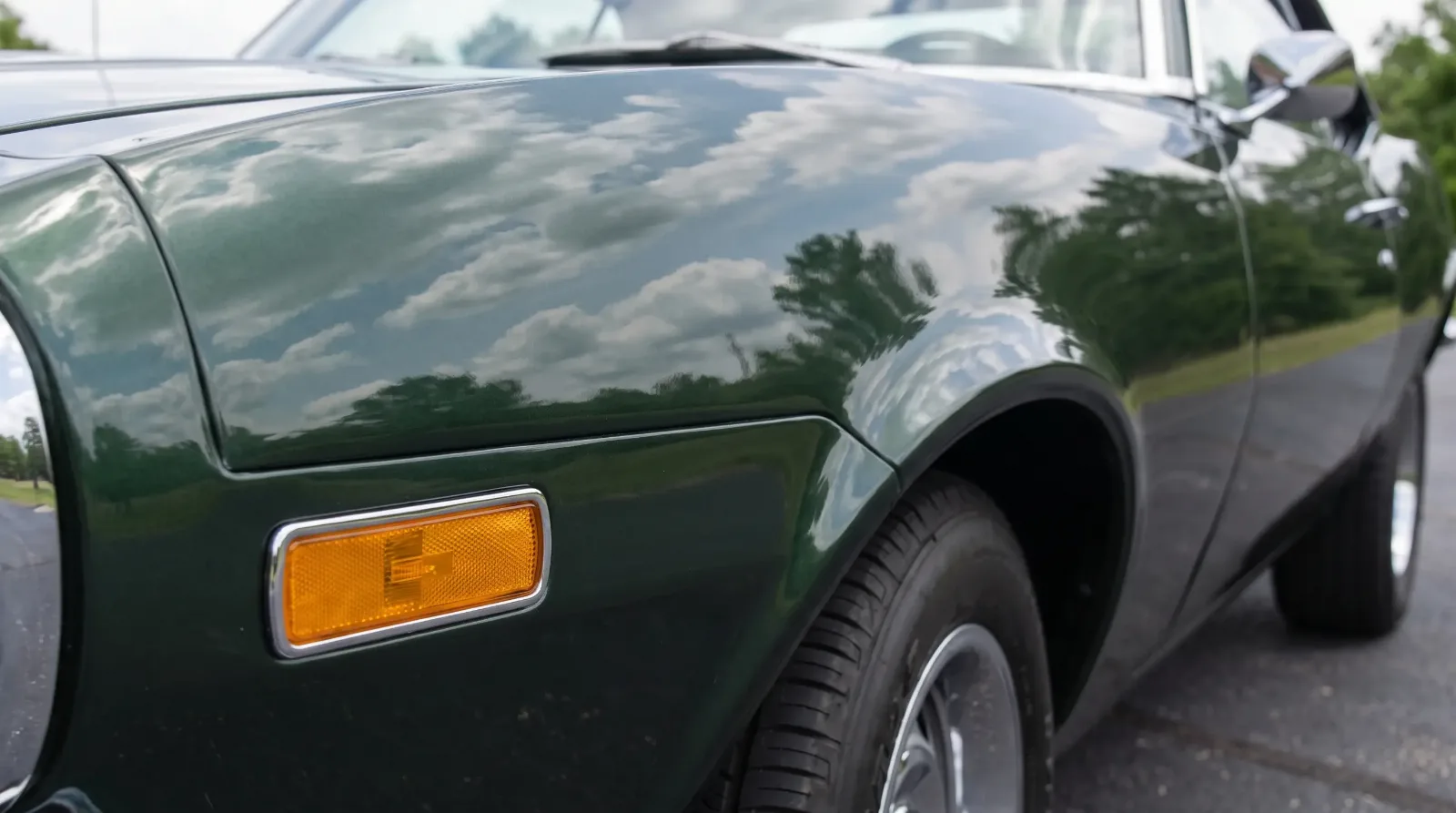
The National Traffic and Motor Vehicle Safety Act set a January 1, 1968 effective date for side marker lights on all new passenger cars sold in the United States. The 1968 Camaro received amber markers at the front and red markers at the rear, integrated into the body at the lower edges of each fender and quarter panel. They are small, easy to miss, and one of the clearest ways to date a first-generation Camaro at a distance.
A 1967 has no side markers. A 1968 does. This sounds obvious, but it comes up repeatedly with cars that have had accident repair, panel replacement, or poorly documented restoration. If a car is represented as a 1968 and the side markers look wrong or are missing, that is worth understanding before proceeding. The markers themselves are reproduced and available, which means their presence alone does not confirm authenticity, but their absence on a claimed 1968 is a flag.
Keep going in this series with the 1969 Camaro.
The rear of the 1968 also changed in ways related to the lighting. The taillight configuration was revised from 1967, and the rear panel treatment is specific to the model year. A 1967 tail and a 1968 tail are not interchangeable.
The rear suspension change: multi-leaf springs
The 1967 Camaro used a single-leaf rear spring on base models, a design that worked adequately but was not ideal for performance use or heavy loads. For 1968, Chevrolet introduced multi-leaf rear springs on the higher-output V8 cars (SS and Z/28), while base six-cylinder and lower-output models retained the single mono-leaf spring; the change applied across the whole 1968 lineup was the staggered rear shock layout. The multi-leaf setup and staggered shocks together offered more consistent handling, better axle location under hard acceleration, sharply reduced wheel hop, and a more controlled ride over rough surfaces.
This change is not the kind of thing that makes magazine covers, but it is the kind of thing that makes the car feel more sorted in use. Enthusiasts who have driven both years back-to-back generally note that the 1968 feels more planted at the rear, particularly when the throttle is opened in a corner. For a car that was competing against the Mustang and trying to establish itself as a genuine driver's machine, these kinds of incremental improvements mattered.
| Engine | Displacement | Power (rated) | Notes |
|---|---|---|---|
| Inline-six | 230 cu in | 140 hp | Base engine; replaced mid-year by 250 cu in unit |
| Turbo-Fire V8 | 307 cu in | 210 hp | Entry V8; replaced the 327 at the base end |
| Turbo-Fire V8 | 350 cu in | 295 hp | Standard SS engine; also available in base trim |
| Turbo-Jet V8 | 396 cu in | 325 hp | Big-block entry; L35 |
| Turbo-Jet V8 | 396 cu in | 375 hp | Top big-block option; L78; solid lifters |
| Z/28 V8 | 302 cu in | 290 hp (understated) | Trans-Am homologation; high-revving; rare |
How to spot a genuine 1968
First-generation Camaros are well-documented cars with an active ownership community, which means the information for identifying a genuine 1968 is available and the shortcuts sellers take are fairly well catalogued. The starting point is the VIN, which encodes the model year, assembly plant, body style, engine, and production sequence. For a 1968, the fifth character of the VIN should be an 8.
The trim tag is the second document. It lives on the firewall or doorjamb depending on the year and plant, and it encodes the body color, interior color, and options. Cross-referencing the VIN and trim tag is the basic authentication step that any serious buyer should run before committing. If the numbers do not match, or if a seller cannot produce both, treat the car as undocumented regardless of what the title says.
Visually, the 1968 is the car with no vent windows, with side marker lights on all four corners, and with the specific taillight and rear panel treatment that changed from 1967. The front grille configuration also varied between the standard and RS versions, with the RS retaining its concealed headlight doors. The RS system uses vacuum and electrical actuation for the headlight doors, and cars with non-functioning RS systems need that work factored into any purchase price.
"The 1968 is the Camaro that had to prove the first one was not just lucky. It did that without making a fuss about it, which is probably why it does not get the headlines that the launch year and the restyled 1969 both attract. That kind of quiet competence tends to reward the buyers who are paying attention."
— Patrick Walsh
Production for the 1968 model year came in at roughly 235,000 units, up from the first year, which reflected both improving consumer awareness of the model and the refinements that made the car more broadly appealing. The split between coupes and convertibles held roughly consistent with 1967, with coupes representing the large majority of output.
If you are looking at 1968 Camaros for sale right now, the market for driver-quality examples without major documentation has remained accessible compared to the documented high-performance configurations. A clean 1968 SS 350 with correct trim tag and matching-numbers engine is a different transaction from a re-engined car with a fresh paint job and no paperwork, and the price gap between those two describes the value of documentation in this hobby. You can browse 1968 Camaros for sale to see what the current market looks like across the range of conditions and configurations.
The 1968 sits between two years that get more attention. The 1967 has the vent windows and the launch story. The 1969 has the restyle that many collectors regard as the generation's best-looking body. The 1968 has something less photogenic and more durable: it is the year the car became the thing it was trying to be, without drama, on schedule, in the details that drivers notice after the first hundred miles rather than on the showroom floor.
Sources and notes
Production figures, engine specifications, codes, and dates in this article are cross-referenced from established Camaro references, period documentation, and owner registries. Where sources differ, the most commonly cited value is used. Cost figures are indicative and vary by supplier, region, and condition.