Ask a group of Camaro people which year they would pick and a majority will land on 1969. Not every time, not unanimously, but often enough that the answer has become almost predictable. That consensus is not pure sentiment. There are concrete reasons why the 1969 model year produced the most collected, most photographed, and generally most coveted cars of the first generation, and they are worth walking through one at a time.
If you want the full arc of how this generation started, the first-generation Camaro story covers all three years and the competitive context that shaped each one. This article focuses on what 1969 specifically brought, why the model year ran longer than anyone planned, and what all of those performance variants actually were.
The 1969 restyle
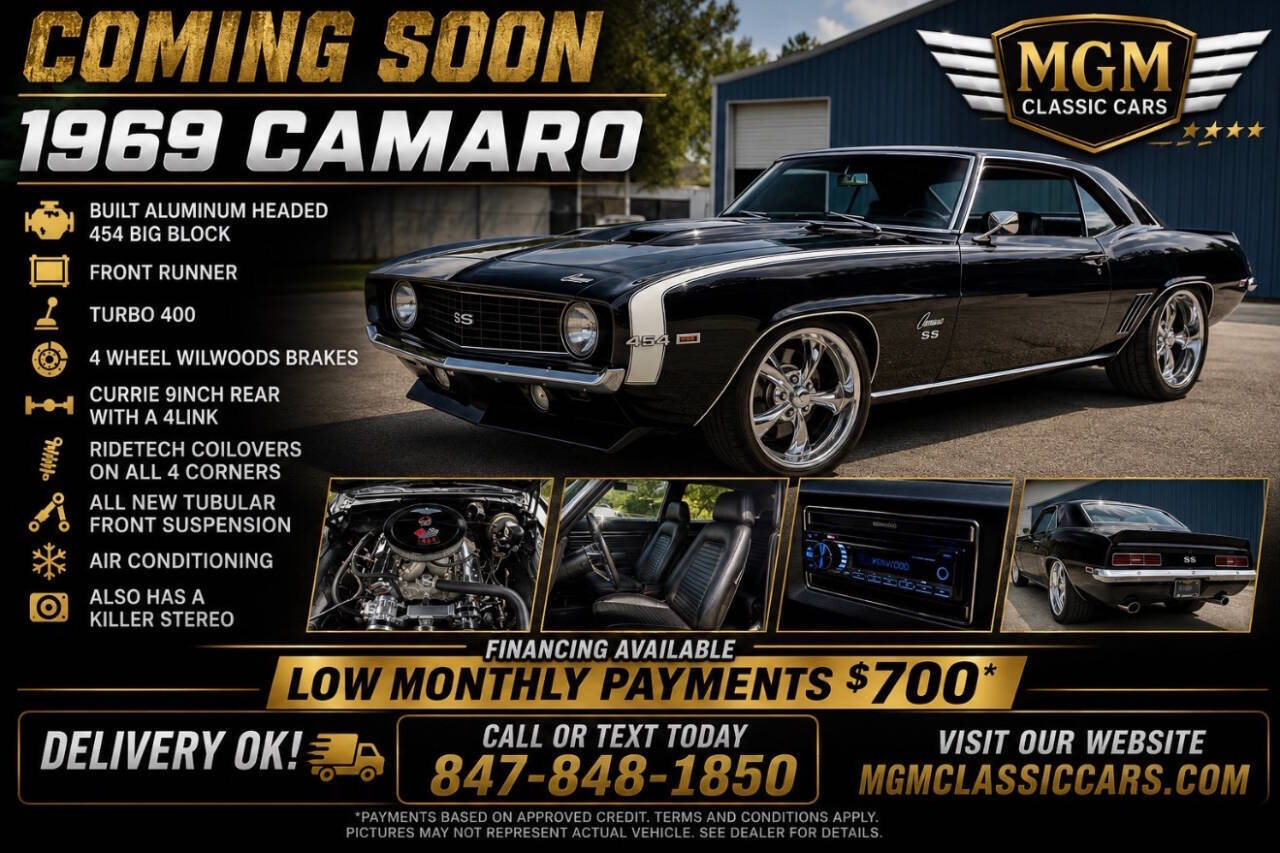
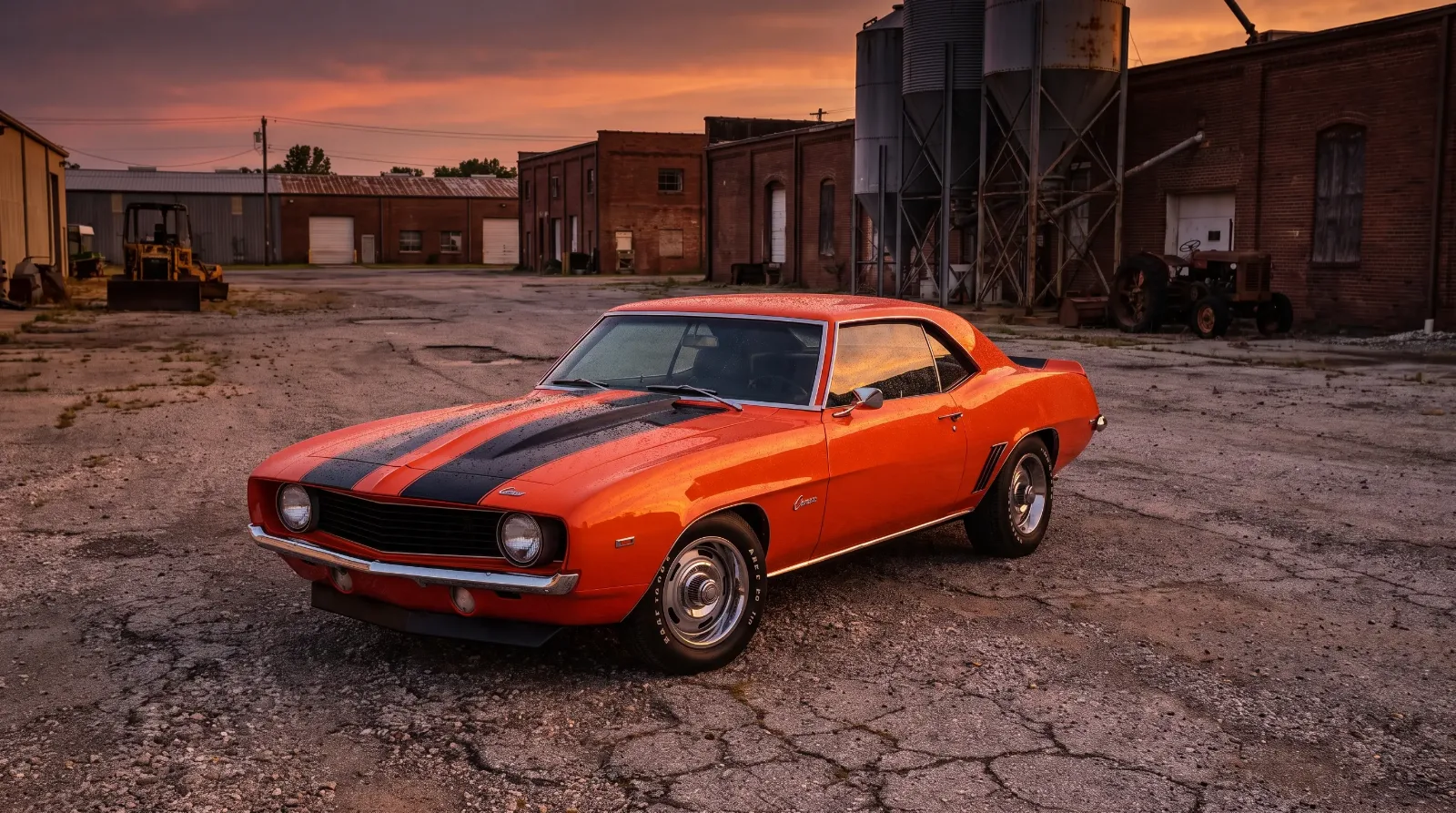
The 1969 Camaro shared its F-body structure with the 1967 and 1968 cars. The platform did not change in any fundamental way. What changed was everything visible. General Motors' design team reshaped the body for a wider, lower appearance without substantially altering the actual dimensions. The hood gained more surface area. The nose was reshaped around a wider grille opening that looked more aggressive than what came before. The rear panel was redesigned completely, with new taillights that read as three segments per side rather than the horizontal strip treatment on earlier cars.
The result read as a more planted car, a more purposeful shape. Where the 1967 had a certain upright formality, the 1969 looked like it was leaning forward slightly even at rest. The beltline character line moved, the shoulder broadened, and the front fascia lost some of the visual softness that was common on late-1960s American cars. It was not a dramatic rethink of the original concept, but the execution was confident enough that many collectors regard it as the strongest design of the three model years.
The interior was updated as well, with a revised instrument cluster and new door panel treatment. The changes were real but not sweeping. You would recognize a 1969 interior if you had spent time in a 1967 car, but the details felt more resolved.
The option sheet in 1969
The real story of 1969 is the option sheet, because no previous Camaro model year offered anything close to the range of what you could order. The breadth ran from mild V8 configurations to factory race cars built through channels that technically did not appear in the standard catalog.
| Variant | Engine | Rated power | Notes |
|---|---|---|---|
| SS 350 | 350 cu in V8 | 300 hp | Super Sport package, V8 required |
| SS 396 | 396 cu in big-block V8 | 325 to 375 hp | Multiple states of tune; L78 at top |
| Z/28 | 302 cu in small-block V8 | 290 hp | Trans-Am homologation; catalog option for first time in 1969 |
| COPO 9561 | 427 cu in iron-block V8 | 425 hp | Central Office Production Order; L72 engine |
| COPO 9560 (ZL1) | 427 cu in aluminum-block V8 | 430 hp | Approximately 69 built; lightest of the COPO cars |
| Indy Pace Car | Various, incl. 350 and 396 | Varies by engine | Commemorative replica; RS/SS standard; Dover White with orange stripe |
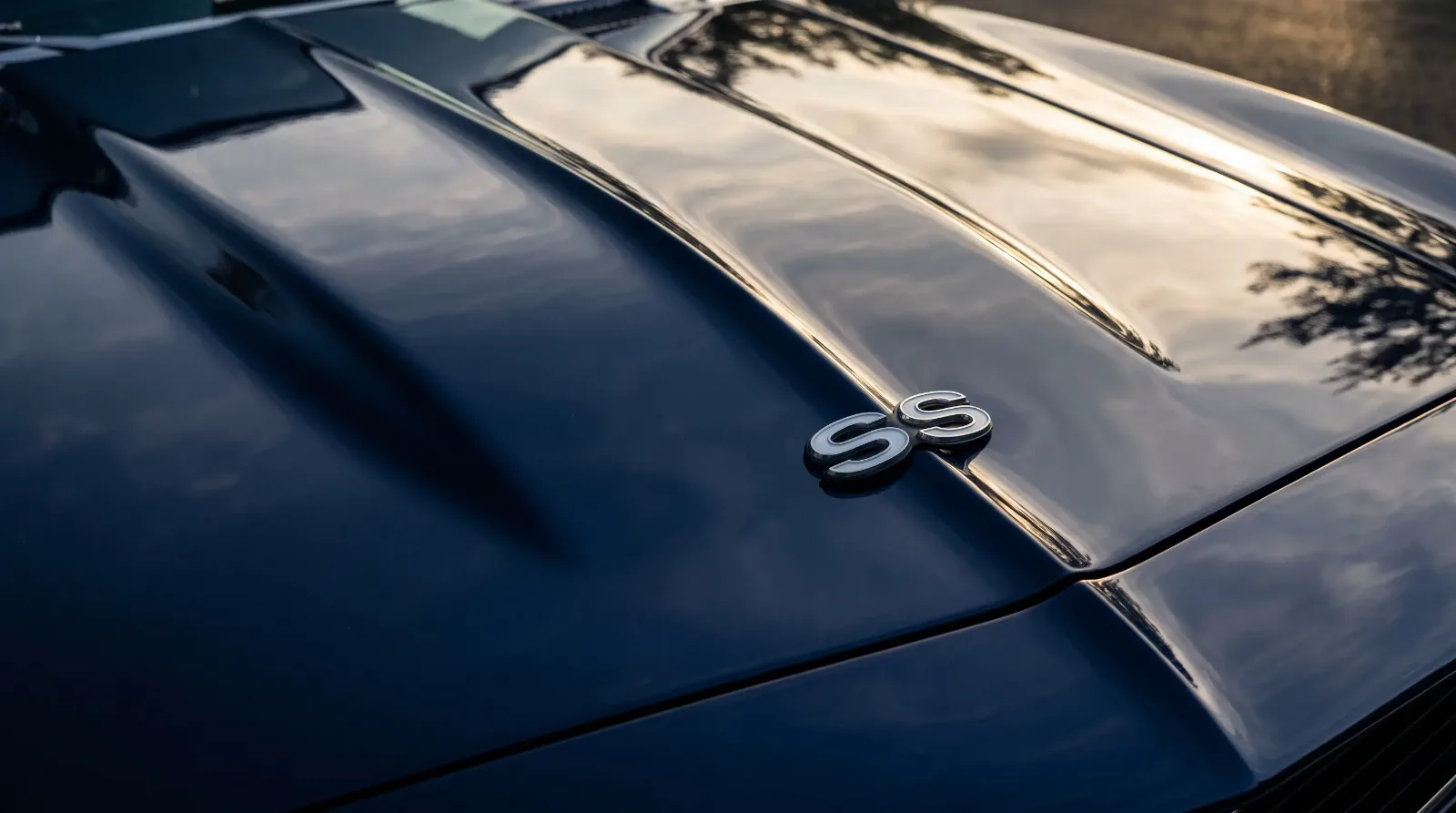
The Super Sport package in 1969 required a V8 and brought specific hood treatment, instrumentation, heavy-duty suspension, and power front disc brakes. The SS 396 combined a big-block engine with those suspension upgrades, producing a car that was genuinely fast in a straight line and more capable at the limits than most buyers ever tested. The L78 396, rated at 375 hp, was the most powerful version available through normal ordering channels.
The Z/28 becomes a real catalog car
The Z/28 option had existed since 1967 as a dealer-ordered homologation package for Trans-Am racing, but it was not widely advertised and required some knowledge to find. Chevrolet brought it into the standard order book for 1969, which is part of why Z/28 production numbers for 1969 are significantly higher than either previous year. Roughly 20,300 Z/28 Camaros were built for 1969, compared to around 7,200 in 1968 and fewer still in 1967.
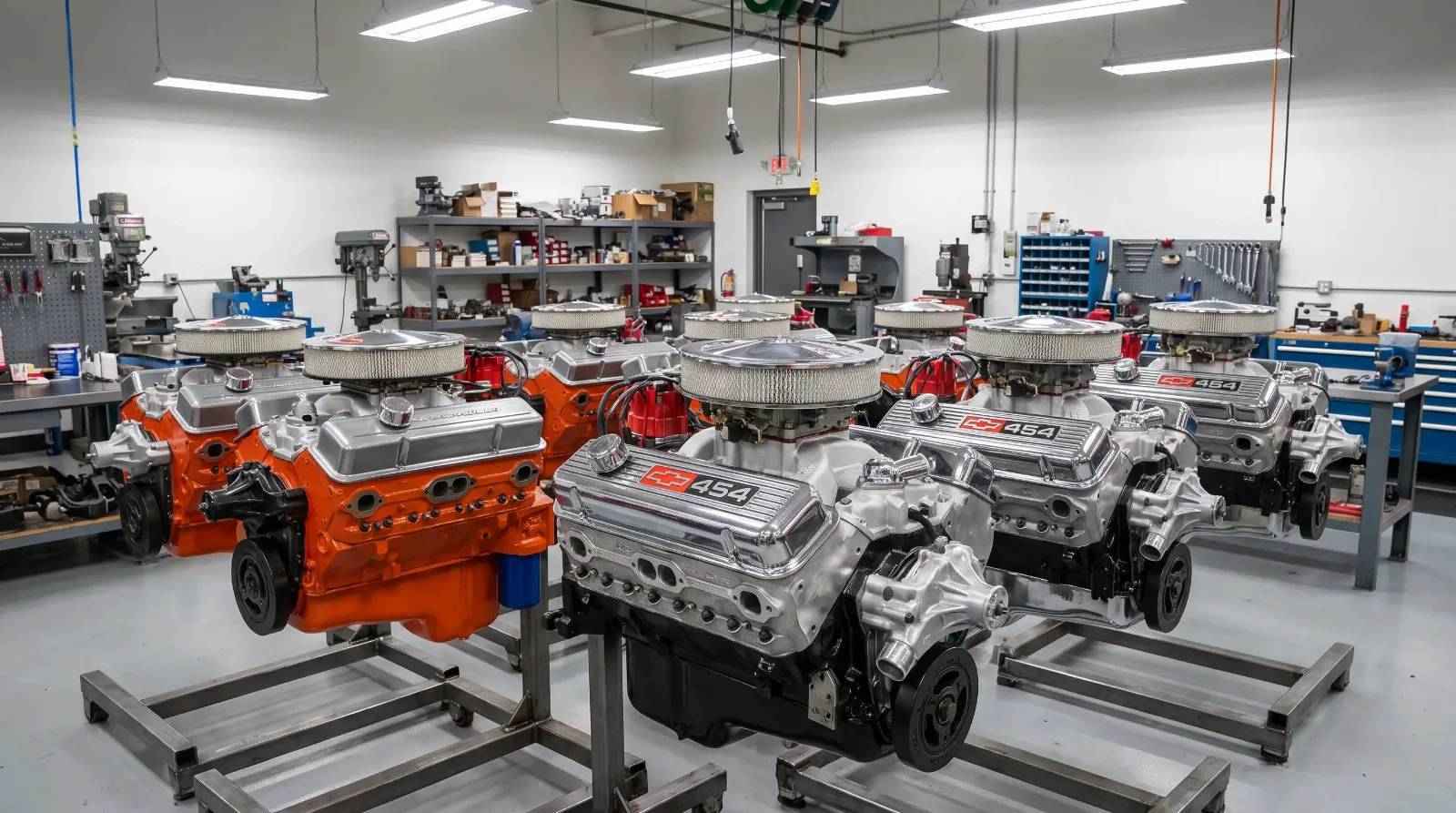
The engine was a 302 cubic-inch V8 assembled specifically to qualify under the 305 cubic-inch displacement limit in Trans-Am racing. It used a 327 block with a shorter-stroke 283 crankshaft. Factory power rating was 290 hp, a conservative number that the period automotive press generally agreed was understated. Road-test 0 to 60 times varied depending on the driver and conditions, but low 6-second figures were achievable.
What made the Z/28 different from the SS cars was not raw horsepower but character. The 302 needed revs to make power in a way that a torque-heavy big-block did not. The standard close-ratio Muncie four-speed transmission, the specific rear axle ratios, and the tuned suspension all pointed toward a car that rewarded commitment. It was a better road car than a drag car, and in 1969 that was a less common product than it sounds.
Next in the series, see the 1967 cars.
The COPO program and what it actually was
GM had a corporate policy in the late 1960s that prohibited installing engines larger than 400 cubic inches in its intermediate and pony car platforms. The Camaro fell under that limit. The policy existed partly for safety and liability reasons, partly because the corporate hierarchy wanted to manage the performance image carefully.
The Central Office Production Order, or COPO, was an ordering channel used primarily by fleet buyers. It allowed dealers and commercial purchasers to request configurations outside the standard catalog for legitimate commercial applications. A few dealers, most notably Fred Gibb Chevrolet in LaHarpe, Illinois, and Yenko Chevrolet in Canonsburg, Pennsylvania, recognized that the COPO channel could be used to order Camaros with the 427 big-block that corporate policy would not allow in the standard order book.
COPO 9561 brought the L72 iron-block 427, rated at 425 hp. COPO 9560 brought the ZL1 aluminum 427. These were factory-built cars, not dealer conversions. They came with the correct VIN documentation and were subject to the same warranty as any other Chevrolet product, which was not a small thing given the way warranty claims on modified vehicles worked at the time. Production of COPO 427 Camaros was modest by any standard, and documentation matters enormously when verifying them today.
"What I find compelling about the COPO cars is not the horsepower number. It is the fact that Chevrolet built them at all. Someone in that organization understood that the rules had a gap, and they used it. That is a specific kind of institutional boldness that is worth appreciating separately from the cars themselves."
— Patrick Walsh
The Pace Car edition
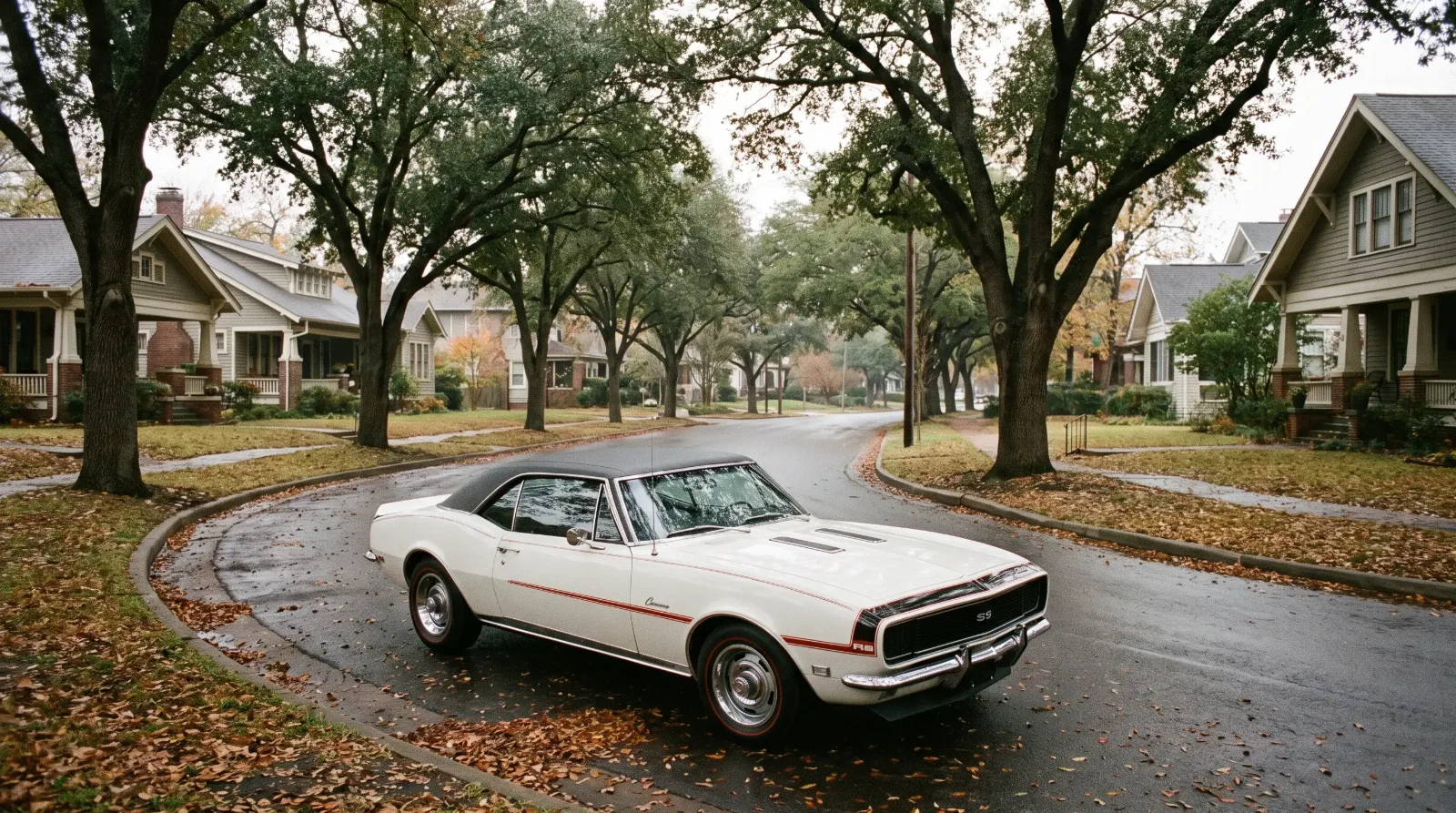
The 1969 Camaro served as the official pace car for the Indianapolis 500, and Chevrolet produced a commemorative replica edition for public sale. The Indy Pace Car replica came in Dover White with a Hugger Orange striping package and a black-accented interior. It included the RS and SS packages as standard equipment, which meant hidden headlights, the blacked-out grille treatment, and at minimum a 350 V8.
Production numbers for the Pace Car replica have been cited differently across sources, with common figures around 3,675 units built. The complication is that the Pace Car package could be ordered with multiple engine configurations, and not every car ordered with the appearance package has identical documentation. Collectors who prioritize correctness over cosmetics spend time on the details here, specifically which engine, which transmission, and whether the car has its original trim tag configuration.
The Pace Car is visually striking and easy to identify. It is also one of those configurations where cosmetic tribute cars exist in greater numbers than genuine factory examples, so verification matters in a way that is somewhat less pressing for a standard coupe. To browse what is currently available, 1969 Camaros for sale on Classic Cars Arena covers the full range from driver-quality examples to documented high-option cars.
Why 1969 leads the collector market
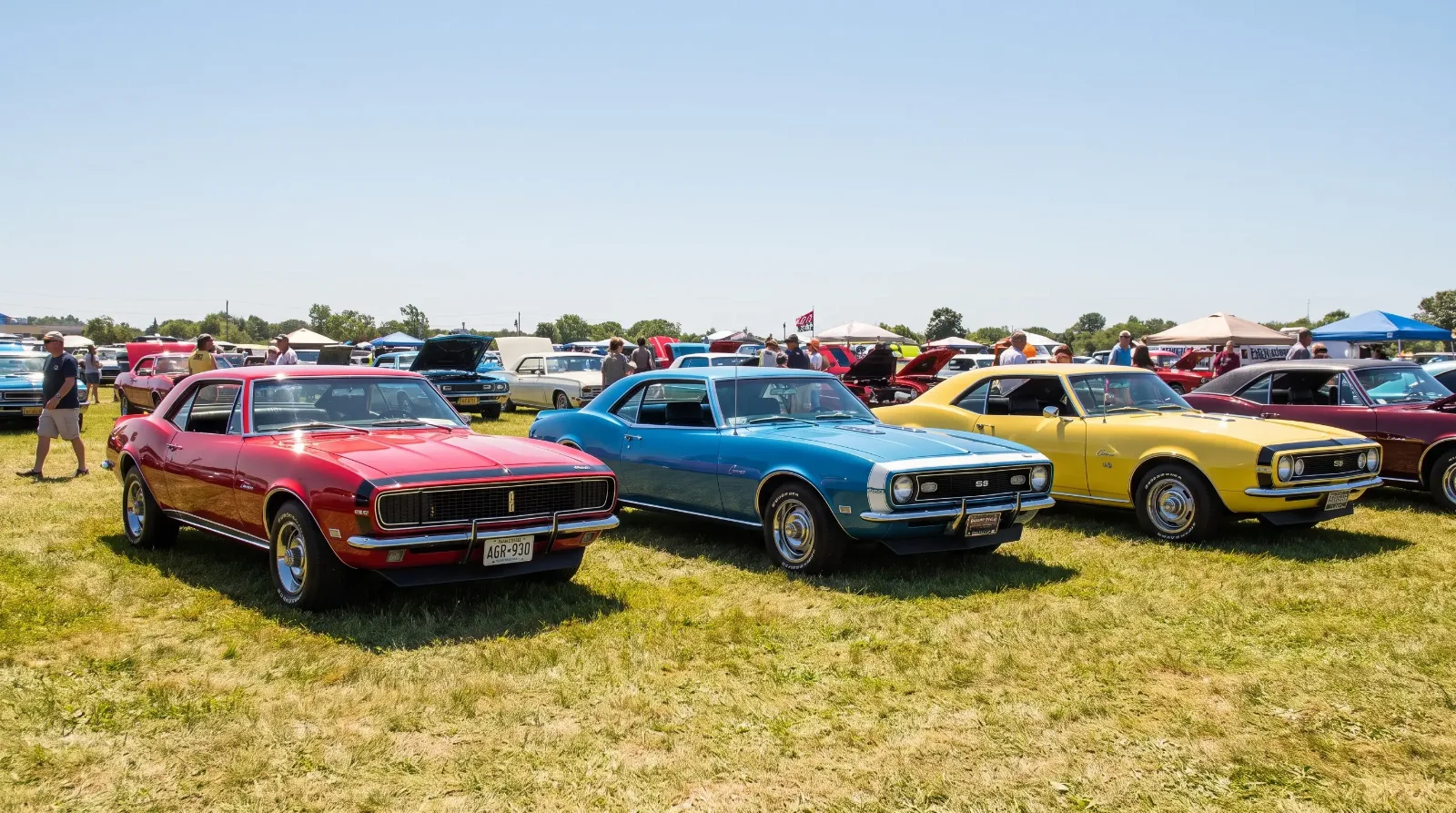
The question of why 1969 specifically became the dominant year in the collector market has a few honest answers. One is the design: enough collectors prefer the 1969 body to drive a meaningful price premium over 1967 and 1968 equivalents in similar condition. Another is the option breadth: no other first-generation year offered the Z/28, the Pace Car, and the COPO program simultaneously, so the 1969 produced more genuinely rare configurations than either predecessor.
The third reason is more structural. Because the second-generation Camaro launch was delayed by production problems, 1969 had an unusually long model run. More cars were built for 1969 than for either 1967 or 1968, which means there are simply more 1969 Camaros available today. That higher supply has not suppressed prices for the desirable variants because those cars are rare regardless, but it has kept entry-level 1969 prices accessible enough that new collectors can get into the market. A driver-quality 1969 coupe with a solid V8 is obtainable at a reasonable number. A numbers-matching Z/28 with documentation is not, and the gap between them has widened.
For the broader history of how Chevrolet developed the Camaro across generations and what the first-generation cars mean within that arc, the classic Camaro covers the full timeline from 1967 through the fifth generation. The 1969 car sits at the peak of the first generation not because the later cars were worse, but because 1969 concentrated everything the first generation could be into a single model year and then stopped. The second generation was a different car for different reasons. What came before it, in that final year, was the first-generation Camaro at full expression.
Sources and notes
Production figures, engine specifications, codes, and dates in this article are cross-referenced from established Camaro references, period documentation, and owner registries. Where sources differ, the most commonly cited value is used. Cost figures are indicative and vary by supplier, region, and condition.
- Chevrolet Camaro (first generation) - Wikipedia
- CRG Research Report - COPO 427 Camaros (Camaro Research Group)
- CRG Research Report - 69 Pace Cars and Z10's (Camaro Research Group)
- CRG Research Report - The First-Generation Camaro Z28 (Camaro Research Group)
- 1969 Chevrolet Camaro Fact Sheet (Over-Drive Magazine)
- 1969 Camaro Statistics & reference (NastyZ28)