Two Cars, Two Companies, One Moment
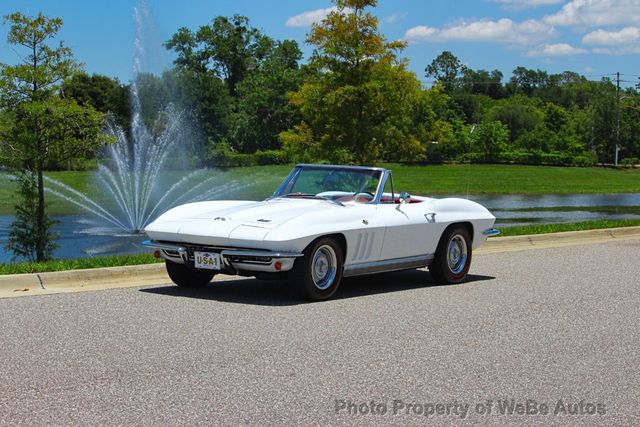
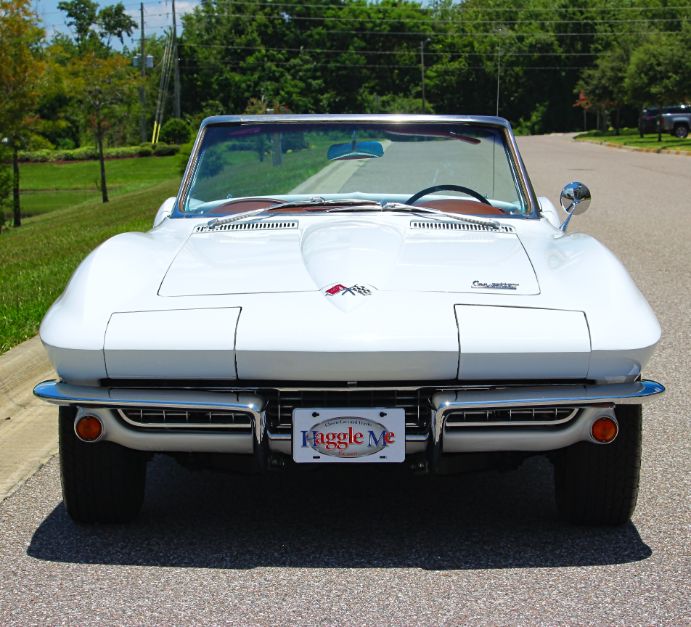
The autumn of 1954 was a bad time to be the Chevrolet Corvette. The car had arrived the previous year as a bold promise — a genuine American sports car, fiberglass-bodied and two-seated, something the country had never produced at volume before. The promise had not been kept. Sales collapsed in 1954. Dealers discounted unsold inventory. Within General Motors, the conversation had turned from how to improve the Corvette to whether the Corvette deserved to exist at all. The numbers argued against it.
Then Ford showed the Thunderbird.
When Ford unveiled its two-seat personal car at the Detroit Auto Show in February 1954 — for sale as a 1955 model — the internal GM calculus shifted in ways that would determine the Corvette's fate and shape American sports car culture for decades. The story of how the Corvette survived 1954 is partly an engineering story and partly a market intelligence story, but it is fundamentally a story about how competition changes institutional thinking. Ford gave GM a reason to fight for a car it had been preparing to abandon.
What the Thunderbird Actually Was
The popular shorthand frames the 1955 rivalry as sports car versus personal luxury car, and that framing is accurate as far as it goes. But the Thunderbird was more nuanced than the caricature suggests, and understanding what Ford actually built matters for understanding why GM reacted the way it did.
The Thunderbird was two-seated, like the Corvette — a deliberate choice that Ford's designers made to give it sporting credibility while still positioning it above the economy market. But where the Corvette's 1953–54 configuration offered a folding soft top and side curtains in place of roll-up windows, the Thunderbird came with proper roll-up glass, an available removable hardtop, and a level of interior refinement that made the Corvette feel spartan by comparison. Ford also gave the T-Bird a proper V8 from launch: a 292 cubic inch unit producing 193 horsepower, mated to either a manual three-speed or Ford's automatic transmission.
The result was a car that could genuinely outrun the six-cylinder Corvette while also being more comfortable, more weatherproof, and more practical for daily use. Ford's marketing positioned it as a "personal car" — a category distinct from sports cars — but the distinction was somewhat academic to a buyer choosing between them in a showroom. The Thunderbird did what the Corvette was supposed to do, and it did it better by most measurable standards. This is why the birth of the C1 Corvette needs to be understood alongside the competitive landscape that surrounded it.
| Specification | 1955 Corvette | 1955 Thunderbird |
|---|---|---|
| Engine | 265 cu in V8 (late production) / 235 cu in I6 (early) | 292 cu in V8 |
| Horsepower | 195 hp (V8) / 155 hp (I6) | 193 hp |
| Transmission | 2-speed Powerglide automatic | 3-speed manual or Ford-O-Matic |
| Windows | Side curtains | Roll-up glass |
| Hardtop option | No | Yes (removable) |
| 1955 production | ~700 units | 16,155 units |
| Base price | $2,774 | $2,944 |
The Sales Gap and What It Meant Inside GM
The production numbers tell an unambiguous story. Ford built 16,155 Thunderbirds for the 1955 model year. Chevrolet built approximately 700 Corvettes — a figure so low that it reflects a car on the edge of cancellation rather than a product actively being sold. The ratio was roughly 23 to 1 in Ford's favor. In any normal competitive analysis, those numbers would confirm the case for discontinuation.
But GM's leadership did not read them that way, or at least not entirely. The Thunderbird's success demonstrated that the American public would buy two-seat cars — that the market existed, that it was real, that Ford had found it. The Corvette had failed to capture that market, but the market was evidently there to be captured. If GM pulled the Corvette and Ford continued selling Thunderbirds, the narrative would write itself: Ford builds exciting cars, Chevrolet does not.
According to period accounts, GM's product planning discussions shifted from "should we kill the Corvette?" toward "what does the Corvette need to compete?" That is a fundamentally different question, and it led to fundamentally different answers. The Thunderbird had not saved the Corvette by losing to it; it had saved the Corvette by winning so visibly that GM could not afford to cede the segment. Competitive pressure, applied externally, did what internal advocacy had failed to accomplish. The complete Corvette story across the C1 era shows how decisive this moment was.
"The Thunderbird is not a sports car. We're building a sports car."
— Zora Arkus-Duntov, reportedly in internal GM correspondence, circa 1955
Two Philosophies, Clearly Defined
The rivalry clarified something that had been murky in the Corvette's original conception: what kind of car it was supposed to be. The 1953–54 Corvette had tried to be a sports car in appearance while compromising on nearly every performance criterion. The Thunderbird showed, by contrast, what happened when you made the opposite set of compromises — maximum comfort and refinement, minimum sporting pretension, maximum sales success.
Zora Arkus-Duntov, the Belgian-American engineer who had joined Chevrolet in 1953 and would become the Corvette's defining technical voice, had strong views on this distinction. He believed the Corvette should be a genuine sports car — one that a driver could take to a road course and drive competitively — rather than a luxury personal car with a sporty silhouette. The Thunderbird's existence gave Duntov and his allies a concrete example to argue against. Every time the question arose of whether to add more convenience features at the expense of performance, the answer could be framed as: that's what the Thunderbird does. The Corvette does something else.
This philosophical clarity had direct engineering consequences. When Chevrolet redesigned the Corvette for 1956, the changes were pointed: roll-up windows (matching the T-Bird's practicality), an exterior door handle, and a reshaped body that was more graceful and more European in character. But the performance changes went the other direction from the T-Bird. The 265 V8 that had appeared in very late 1955 Corvettes became standard. A three-speed manual transmission became available. Dual four-barrel carburetor options pushed power outputs into territory that made the T-Bird's 193 horsepower look pedestrian. The 1957 Corvette with fuel injection — read the full story of the Fuelie — represented the culmination of this philosophy, an engine producing one horsepower per cubic inch in a car designed around driver engagement rather than passenger comfort.
What the Rivalry Made Possible
It is worth being precise about causation. The Thunderbird did not single-handedly save the Corvette. Ed Cole's small-block V8 was already in development before the T-Bird was announced; the engineering work that would transform the Corvette's performance had its own internal momentum. What the Thunderbird provided was institutional permission — a competitive rationale that allowed GM's product planners to justify continued investment in a car that was losing money on every unit.
The American automotive industry of the 1950s was not driven by visionaries operating in isolation. It was driven by competitive intelligence, by watching what the other company did and responding. Ford had responded to the Corvette; now GM had to respond to the Thunderbird. The cycle of response accelerated the Corvette's evolution far beyond what internal advocacy alone might have achieved. The manual transmission arrived for 1955–56. The V8 became standard. The chassis was tuned for handling. The fuel injection arrived for 1957. Each of these developments can be traced, at least in part, to the competitive pressure that the Thunderbird applied.
The two cars went their separate ways after 1957. Ford made the Thunderbird a four-seater in 1958, chasing the broader personal luxury market that would eventually produce the Mustang. Chevrolet kept the Corvette a two-seater, kept it focused on performance, and watched it become an institution. If you want to find Chevrolet Corvette listings today — any generation, any era — you are looking at cars whose character was forged in part by a rivalry with a Ford that no longer exists in the same form. The Thunderbird became a comfortable personal car and then faded. The Corvette became America's sports car. The competition of 1955 decided which path each would take.
Sources and notes
- MotorTrend — 1955 Corvette vs. 1955 Thunderbird comparison — period-style comparison covering specifications, production numbers, and competitive context
- National Corvette Museum — Corvette History — institutional archive covering the 1953–1957 development years and competitive pressures
- Hemmings Motor News — Thunderbird vs. Corvette — cultural and competitive history of the 1955–1957 rivalry period
- Car and Driver — History of the Ford Thunderbird — Thunderbird development history including the original two-seat conception and 1958 transition
- The Henry Ford Museum — Thunderbird: The Original Personal Car — primary institutional source on Ford's design and marketing philosophy for the original T-Bird