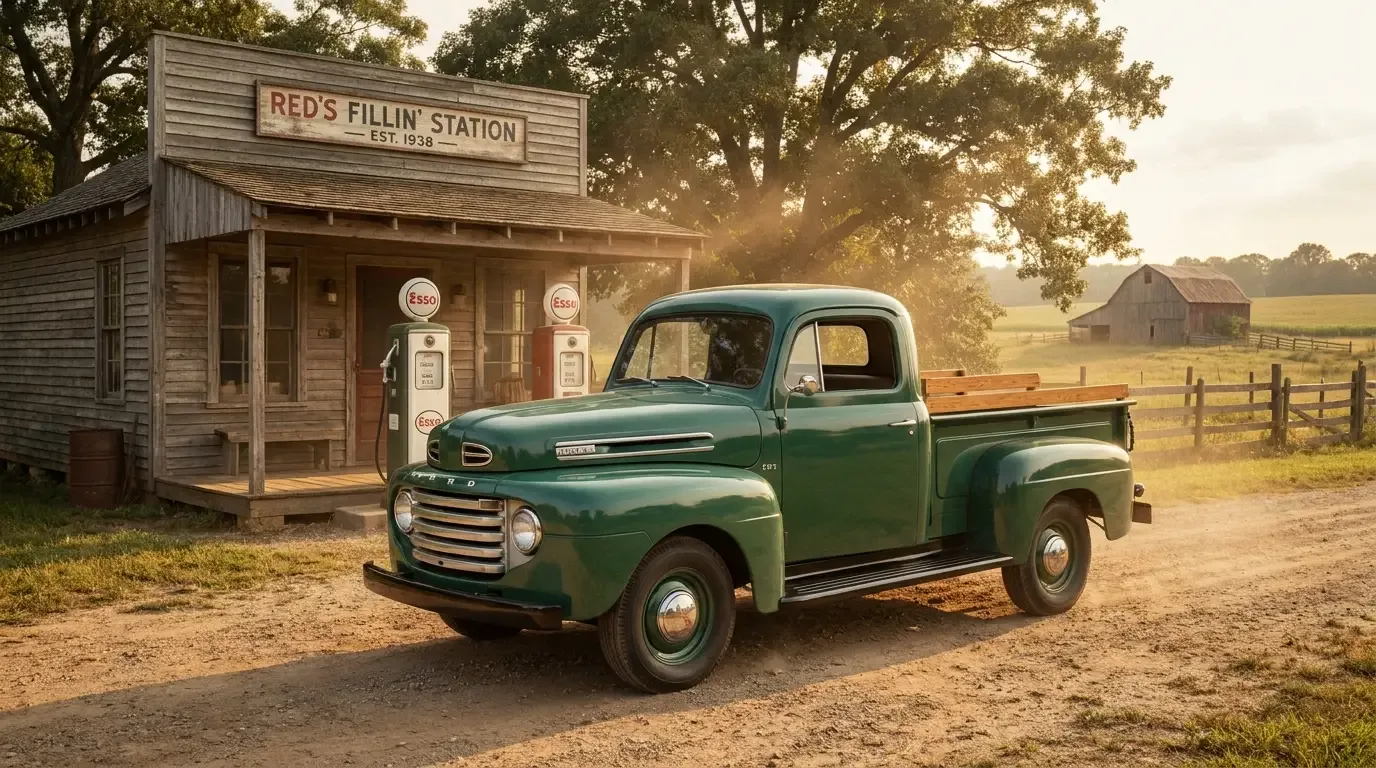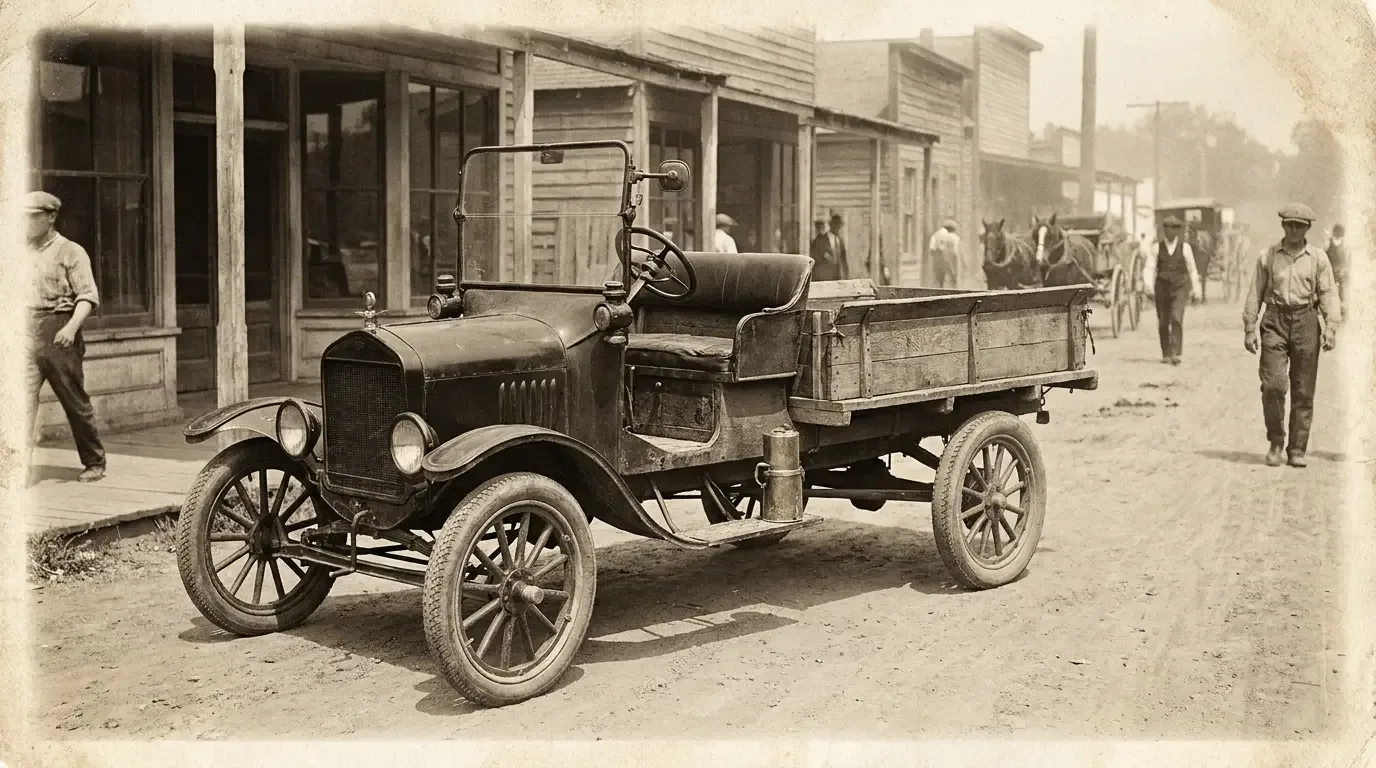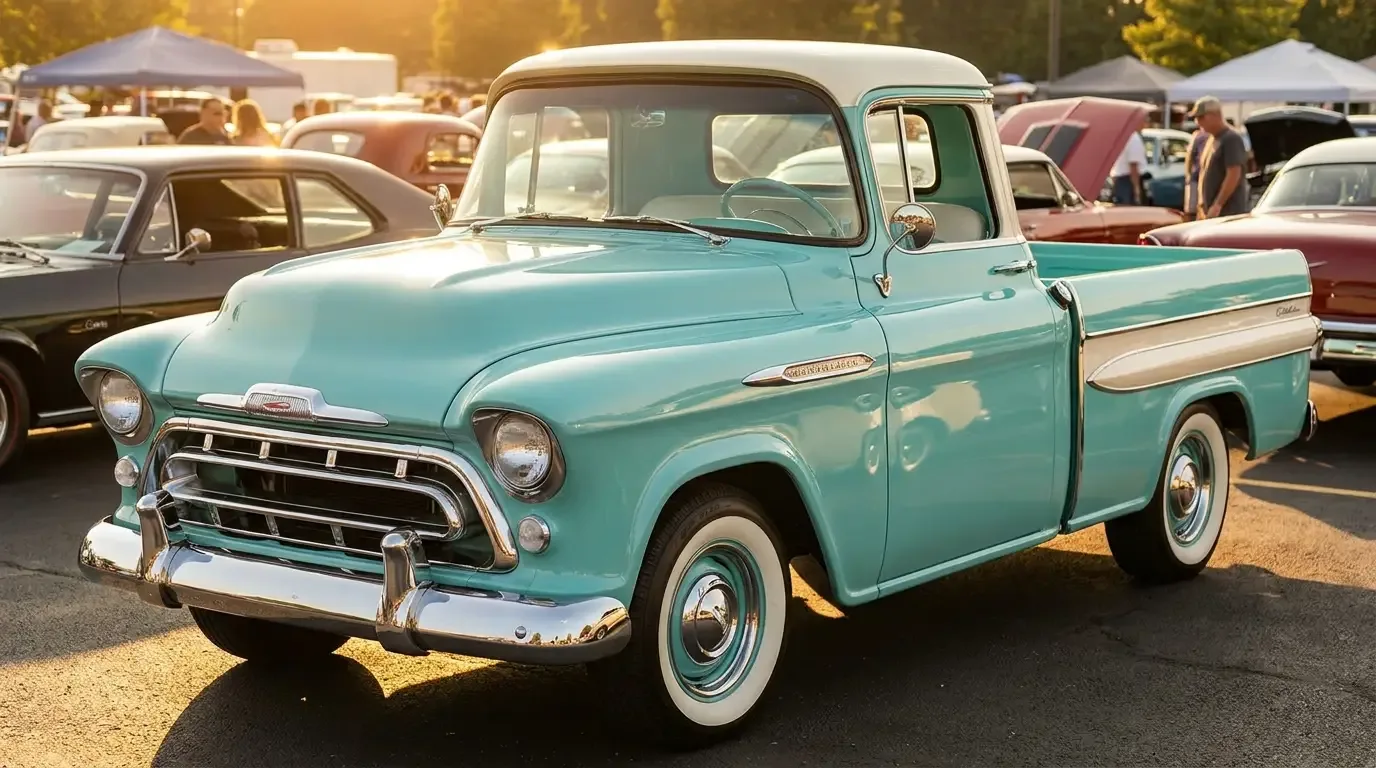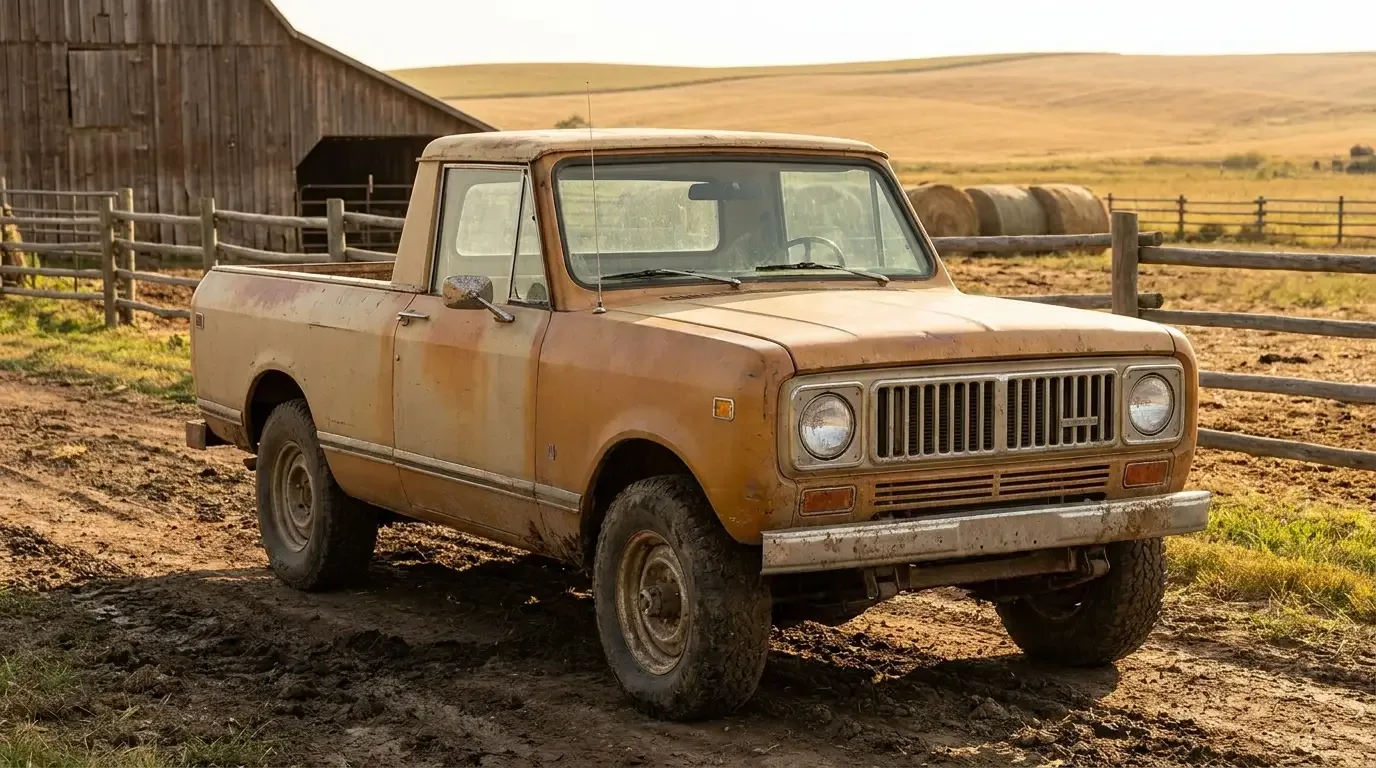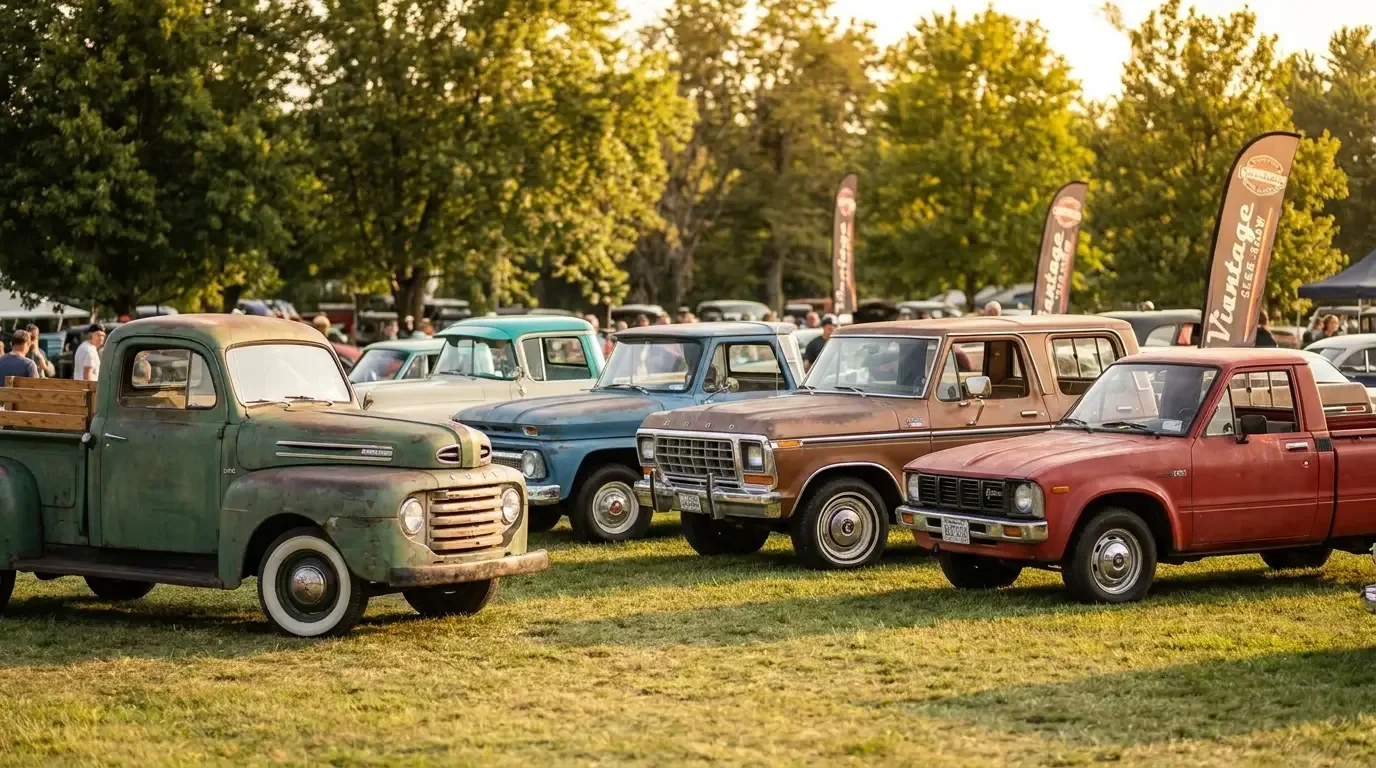
Ask anyone who bought a new pickup in 1946 and they will tell you it looked an awful lot like the one they could have bought in 1941. That is not laziness on Detroit's part. For roughly four years, the plants that stamped truck cabs and cast truck engines were building something else entirely, and when civilian production finally came back, it came back changed in ways that took a decade to show up in the showroom. If you want the longer arc, read the history of the American pickup. This piece is about the middle of that arc, the part where the war stopped the truck business cold and then handed it a new set of lessons.
The day the assembly lines stopped
In early 1942, the government ordered civilian automobile and light-truck production halted so the factories could be turned over to war material. That was not a suggestion. Passenger-car lines shut down almost completely, and truck production was allowed only under strict rationing and permit systems for buyers who could prove a war-essential need. A farmer hauling produce or a contractor on a defense project might get a permit for a new truck. A man who just wanted one did not.
So the civilian pickup, as a consumer product, basically disappeared for the duration. What little rolled out of the plants went to essential users, and the design was frozen at wherever it happened to be in 1941 or 1942. There was no money, no material, and no reason to restyle a cab nobody could buy. Steel, rubber, and aluminum were spoken for. Even the truck a farmer already owned had to be nursed along, because replacement parts were scarce and tires were rationed harder than almost anything.
What the factories built instead
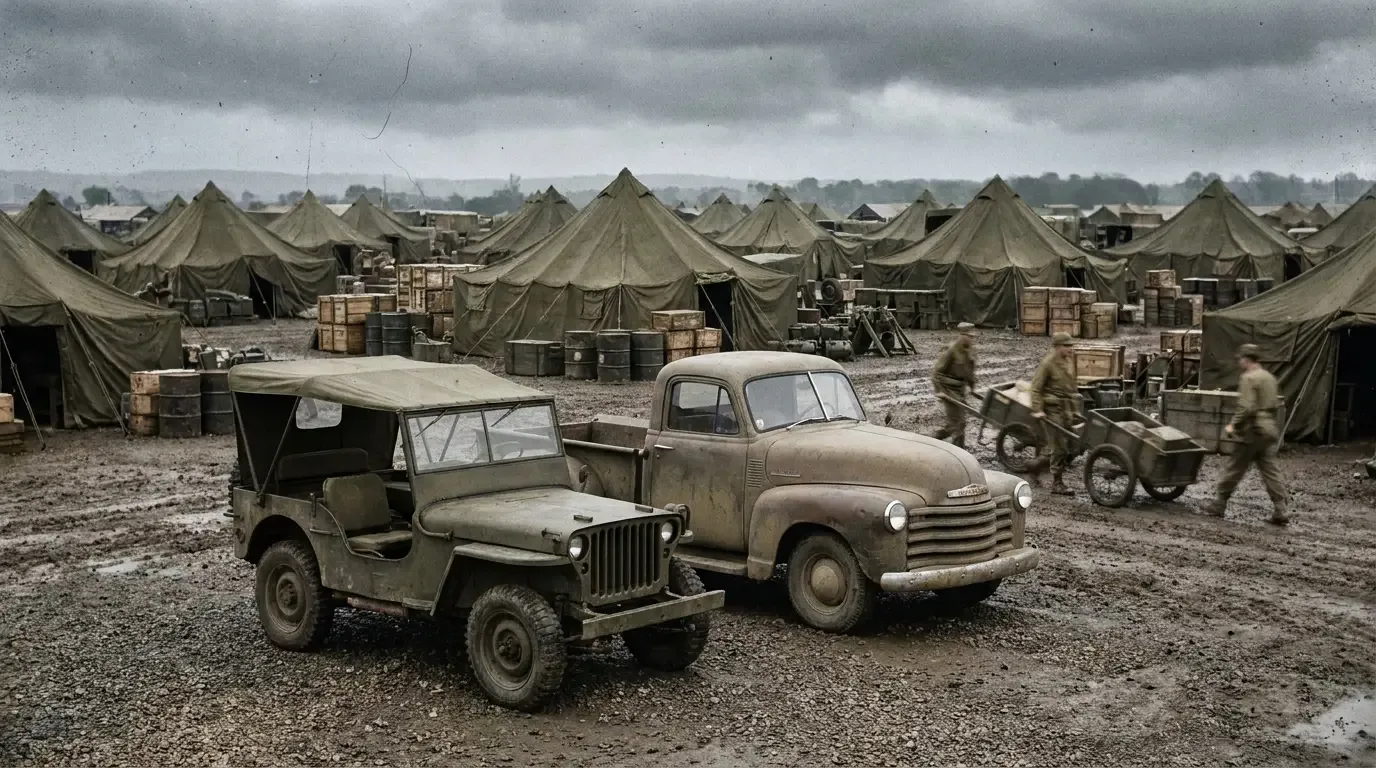
The same companies that had been making pickups spent the war building military trucks by the hundreds of thousands. The light-utility 4x4 that most people picture, the flat-fendered quarter-ton, was produced in enormous numbers, and alongside it came a whole family of heavier cargo trucks, the six-wheel-drive haulers, and specialized rigs for every job the military could invent. Production volumes ran into the hundreds of thousands of units for the light 4x4 alone.
Building at that scale, under wartime deadlines, with vehicles that had to survive mud, sand, cold, and abuse no civilian would ever inflict, taught the industry things a peacetime market never would have paid for. Engineers learned what actually broke when a truck was driven hard by someone who did not own it and did not care. They learned how to build a drivetrain that could put power to all four wheels and keep doing it. And they learned to manufacture that complexity fast, in volume, to a standard.
"A truck the Army drove for a year told you more than ten years of a farmer babying one in a dry barn. It came back broken in all the honest places, and you fixed those places for good."
— Robert Halloran
The lessons that came home: four-wheel drive and durability
Before the war, four-wheel drive on a light truck was a specialty item. A few firms built capable off-highway rigs, but the mainstream half-ton pickup was a two-wheel-drive machine, and that was that. The war put millions of soldiers and mechanics in direct contact with four-wheel-drive vehicles that could go where a normal truck could not. They saw it work. They came home knowing it worked.
That mattered. When the light 4x4 platform came available for civilian sale after the war, farmers, ranchers, utility crews, and loggers understood immediately what it was for. The idea that a working pickup might reasonably drive all four wheels stopped being exotic and started being something you could ask for. It did not happen overnight, and factory four-wheel-drive pickups from the major makers took years to become common, but the demand was seeded in the war.
Durability was the other lesson, and it is the quieter one. Wartime testing exposed weak points in axles, transfer cases, cooling systems, and frames that ordinary civilian use might have hidden for years. The engineering that survived combat conditions carried real knowledge back into the light-truck line. Here is roughly how the picture shifted.
| Trait | Prewar light pickup (typical) | What the war pushed toward |
|---|---|---|
| Drive layout | Two-wheel drive standard, 4x4 rare | 4x4 understood and demanded by working buyers |
| Design cycle | Frozen at 1941-42 for the duration | Restyle backlog released postwar |
| Durability data | Civilian-use assumptions | Hard-use failure data from military service |
| Buyer expectation | Truck as basic farm tool | Truck as capable, go-anywhere work vehicle |
How the postwar pickup got shaped by the war
The first trucks off the reopened lines in 1945 and 1946 were warmed-over prewar designs, because that was the fastest way to get product moving and start earning again. But the restyles that had been sitting in the drawer, plus everything the engineers had learned, showed up soon after. By the late 1940s the makers were rolling out genuinely new postwar cabs, wider, more comfortable, better sealed, with an eye toward the returning serviceman who now saw a truck as something he might actually want to spend time in, not just work from.
There was also a flood of demand. Millions of men came home wanting to build, farm, haul, and start businesses, and the country had gone years without new civilian trucks. That pent-up market gave the makers the volume and the confidence to invest in new designs and new capability. The war did not just teach the industry engineering. It created the customer, and it gave that customer money and a reason to buy. If you want to see what actually came out of that period, browse the 1940s classic trucks for sale and notice how the late-decade trucks differ from the early ones.
Why any of this matters to a buyer today
Understanding the war years helps you read a 1940s truck honestly. A truck built in 1941 and a truck built in 1948 can wear similar badges and still be different animals, one a survivor of the frozen prewar era, the other a product of everything the industry learned in between. The postwar trucks generally offer more comfort and, on the models that got it, more capability. The early ones carry the simpler, tool-first character that some buyers prize precisely because it is unadorned.
Neither is automatically the better buy. It depends on what you want out of the truck and what condition it is actually in. But knowing that a real dividing line runs down the middle of the decade, drawn by four years of war, keeps you from paying postwar money for a prewar design, or dismissing an honest early truck for being plain. Get under it with a good light and judge the metal, not the myth.
Sources and notes
- Marque and light-truck histories covering wartime production halts and postwar reintroduction.
- Period wartime production and rationing records (dates and volumes confirmed against primary sources).
- Factory service literature and model-year data for late-1940s cab and chassis changes.
- Contemporary road tests and buyer guides documenting early civilian four-wheel-drive availability.