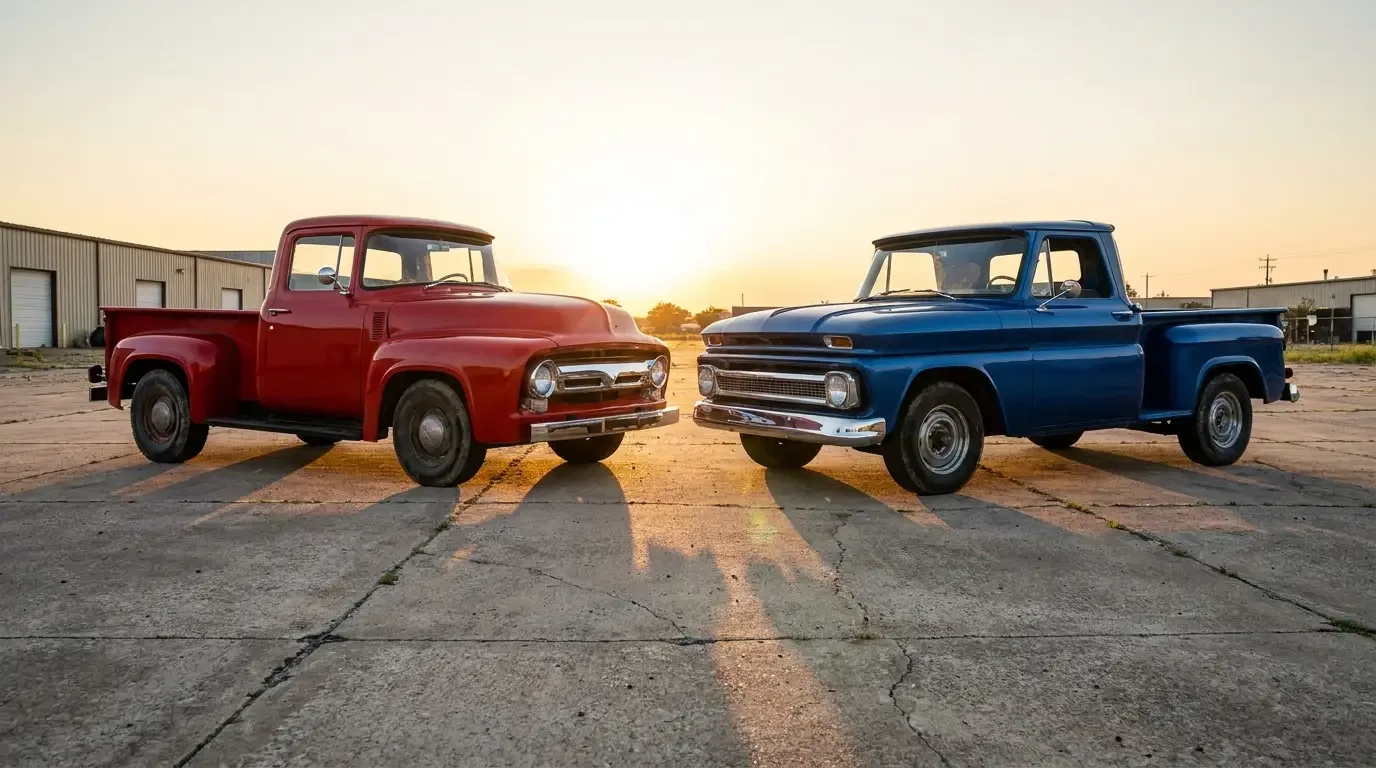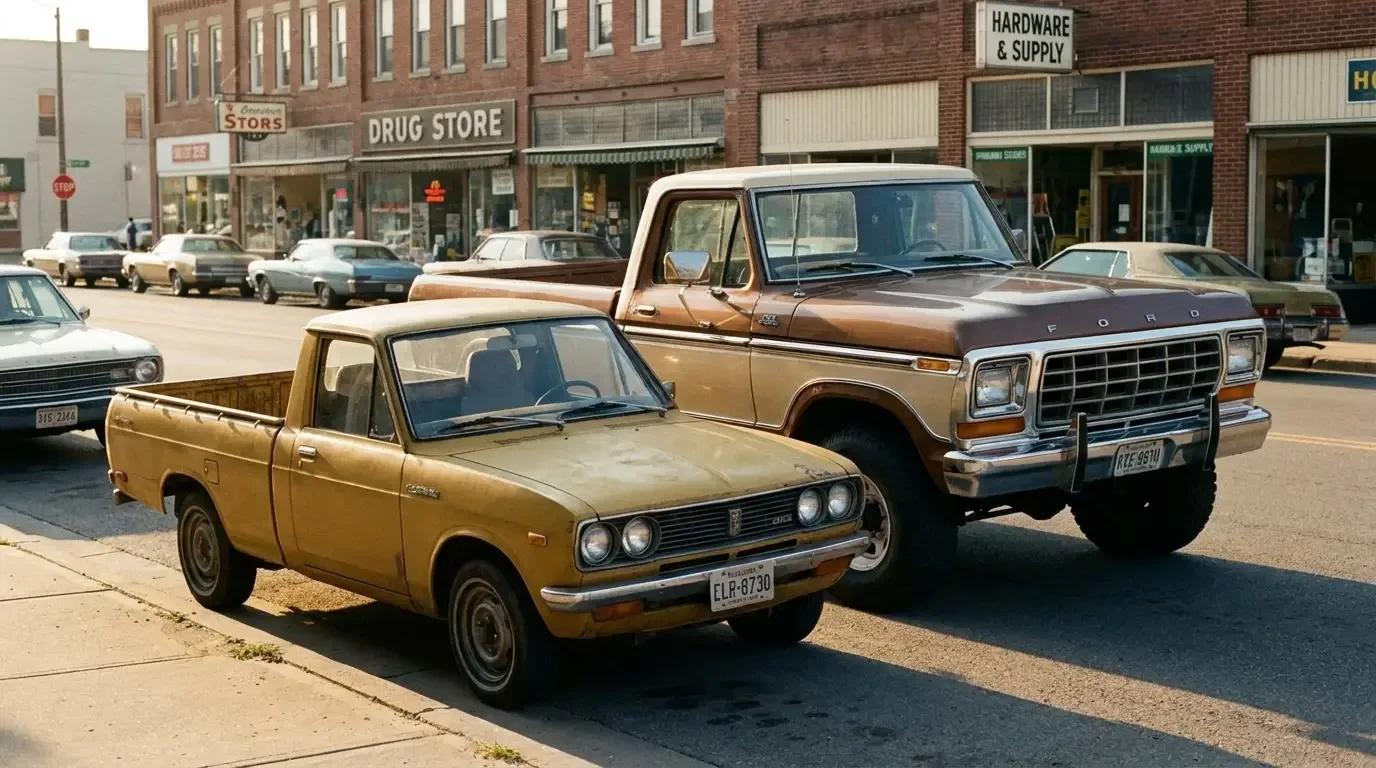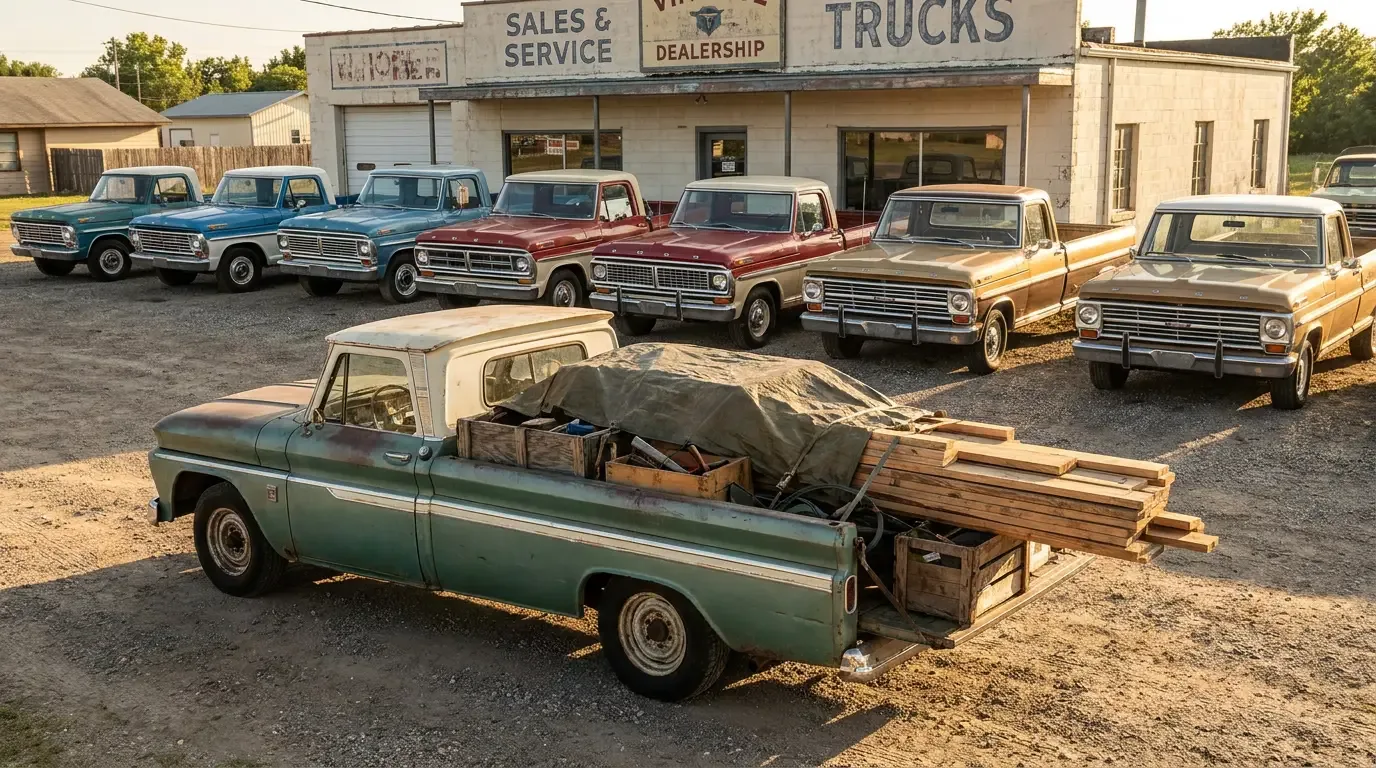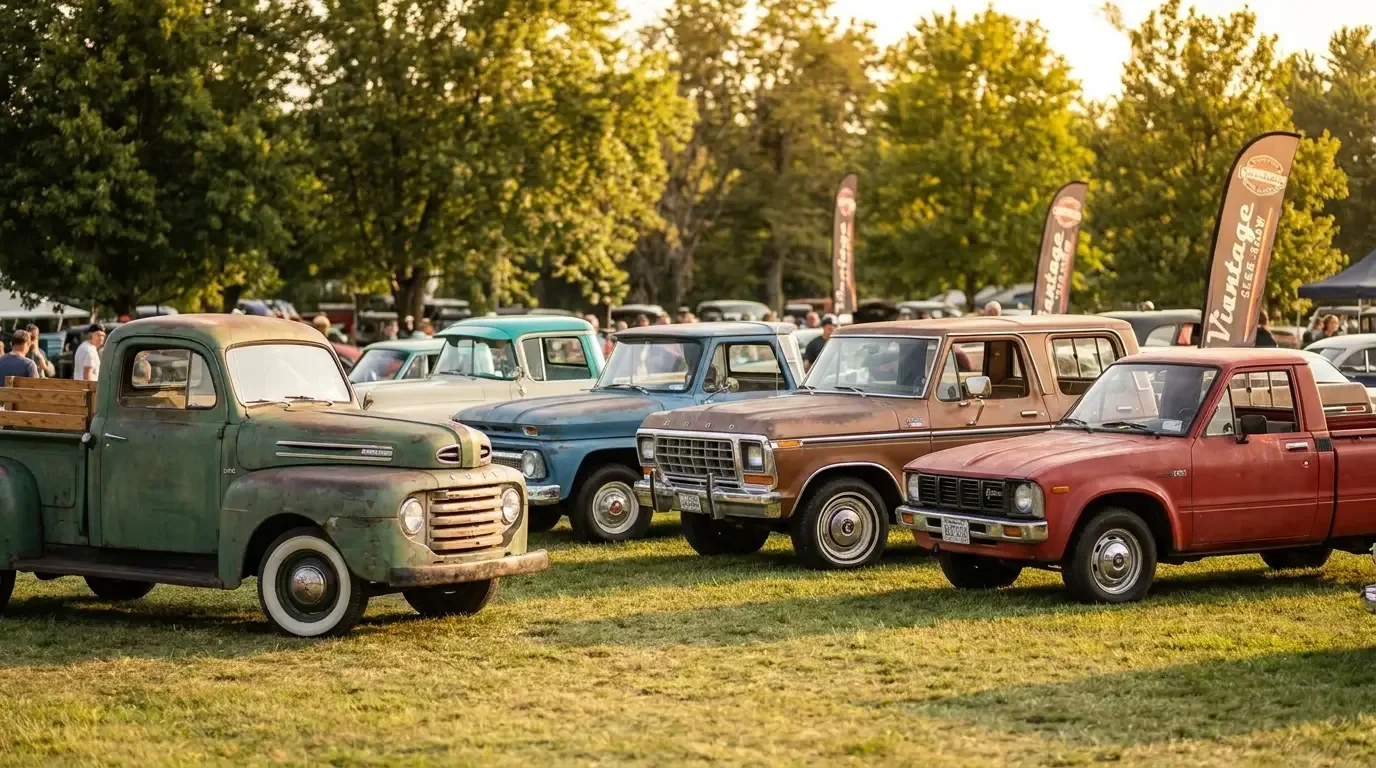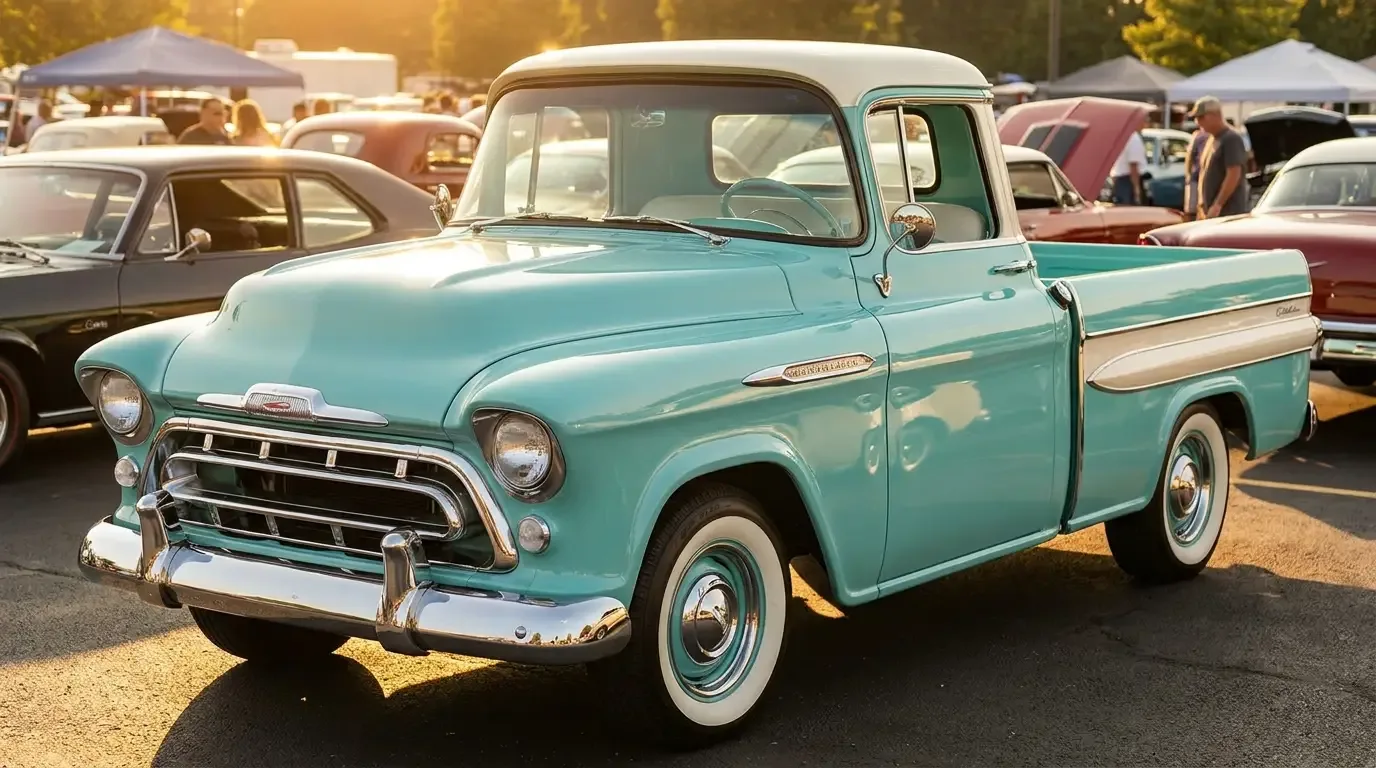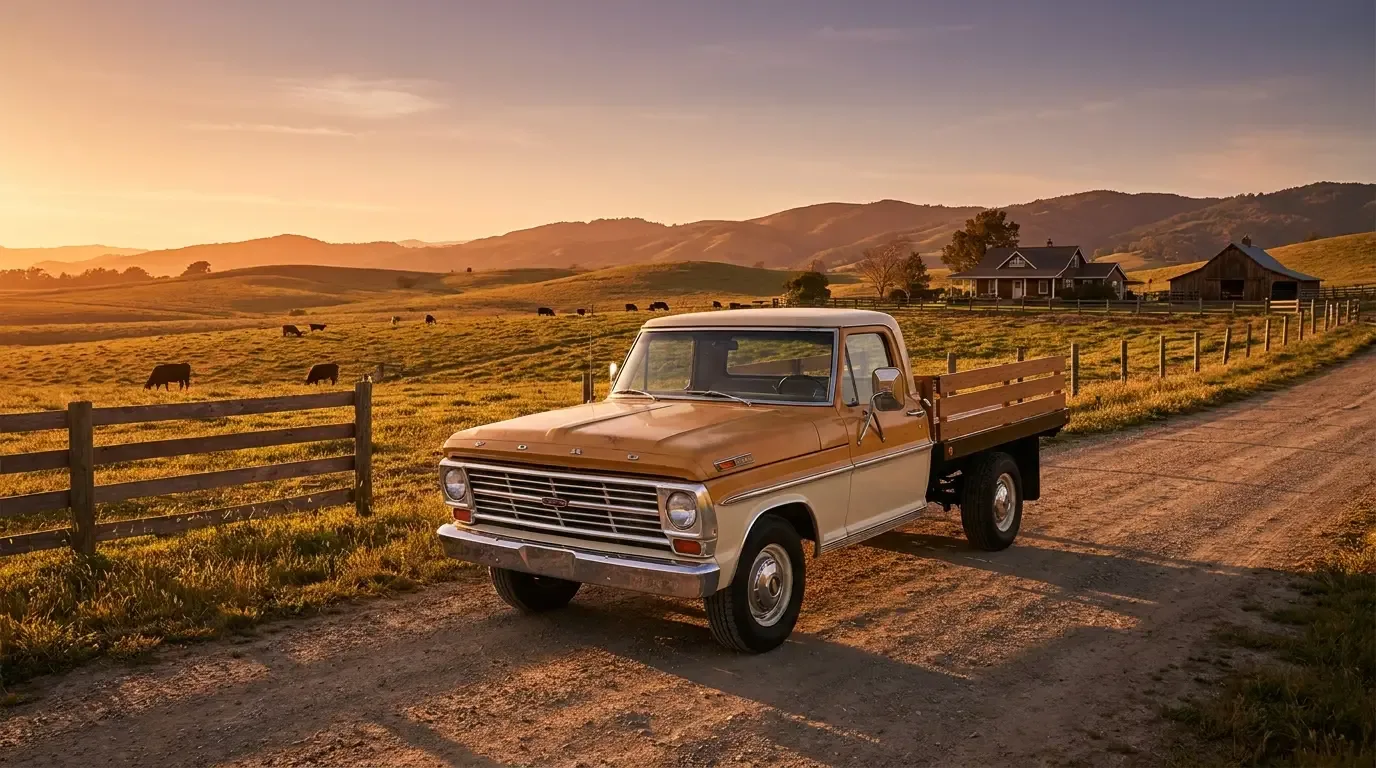
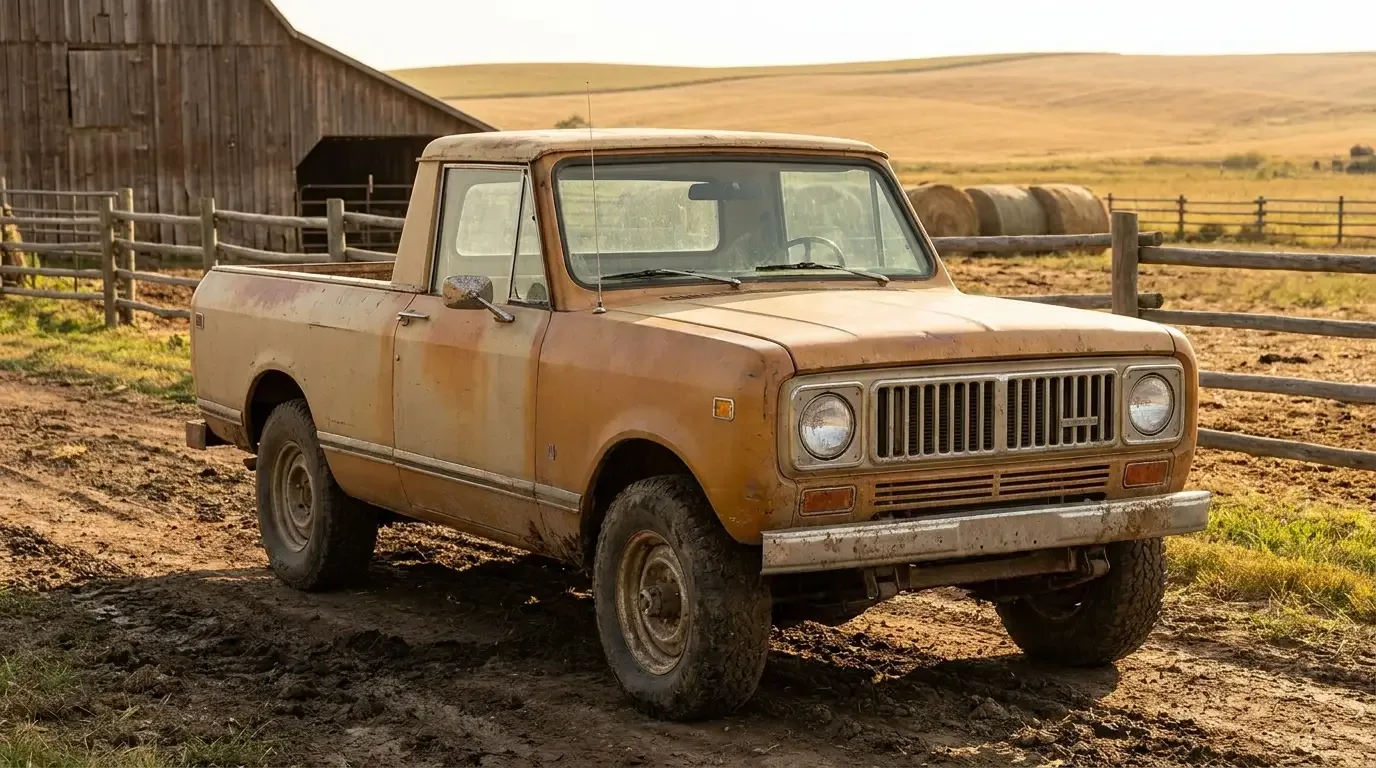
Everybody knows the fight was Chevy against Ford, and Dodge hanging in there as the third name in the room. What most people forget is that there was a fourth builder in that yard, and for a long stretch it built a better truck than it got credit for. International Harvester made pickups and Travelalls and the Scout, and it sold them off the same lots as the tractors and combines. When you talked light trucks in America, for decades you were talking about four companies, not three. If you want the backstory on the two that stayed on top, read the Chevy vs Ford rivalry first, then come back here and I will tell you where the odd one out fit in.
A truck built by a farm-equipment company
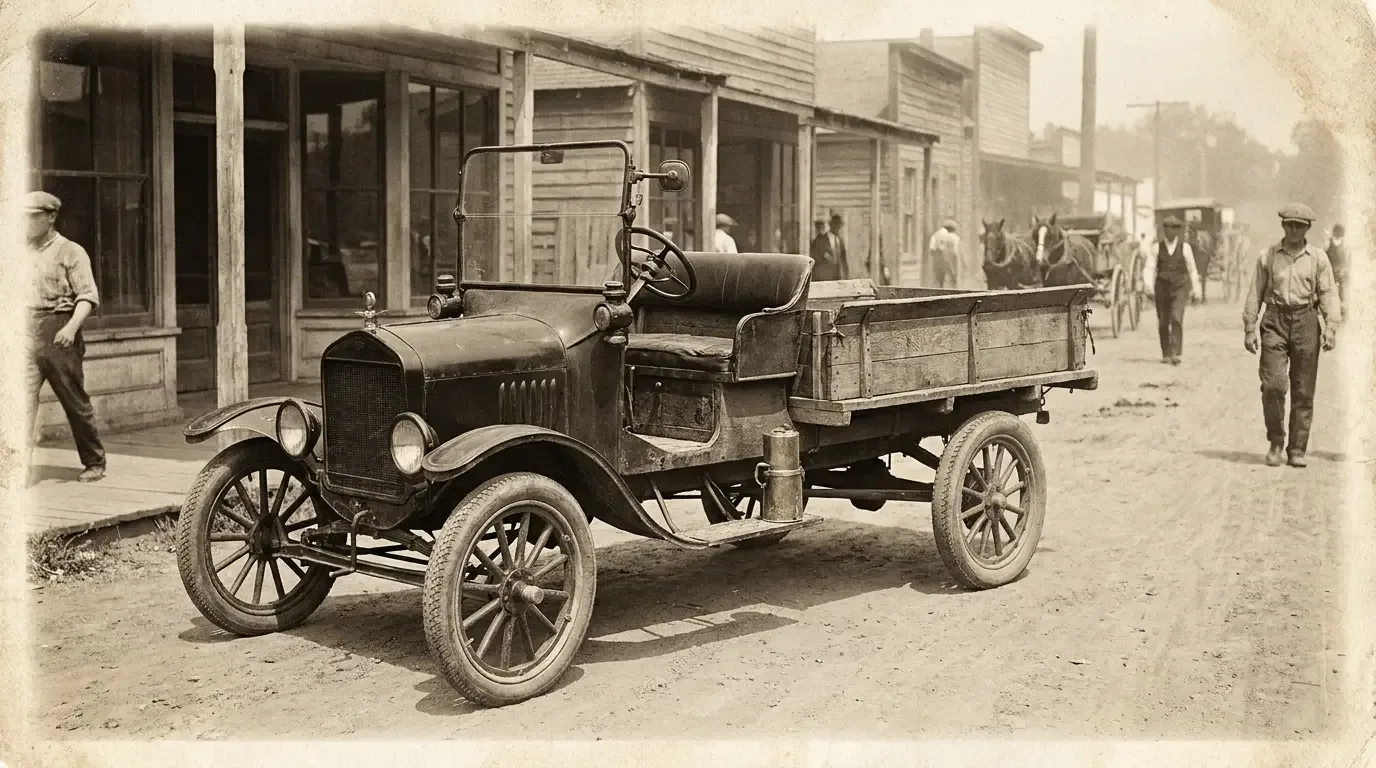
International Harvester came together in 1902 out of the McCormick and Deering farm-machinery outfits, so trucks were never the whole business. They were a sideline that got serious. The company put out its first purpose-built motor truck in 1907, the Auto Wagon, which looked like a buggy with an engine bolted where the horse used to be. That is not a knock. It tells you exactly who these people were. They built things to haul a load and take a beating on a farm road, and they did not much care whether it looked like anything.
That DNA stuck around for the next seventy years. An IH truck was built for weight and work first. The upside is a truck that would run past the odometer's ability to count. The downside, and it is a real one for a collector, is that IH never had the volume the Big Three had, so it never got the polish. Interiors were plain. Trim options were thin. If you wanted chrome and carpet, you bought a Chevy. If you wanted something that would still be pulling a stock trailer when the Chevy was scrap, you bought the International.
The pickups: the C, D, and the Light Line
The light trucks came in waves, and the model names ran through the alphabet. The postwar KB series gave way to the L-line around 1950, then the R-line, the S-line, and by the late 1950s the A-line and B-line. In 1961 IH brought out the C-series, and in 1969 the D-series, and those are the ones most people picture when they think of an old International half-ton. Then came the last real redesign, the Light Line, which carried the pickups through to the end.
Under the hood you had a straight-six for years, and later the in-house V8s. These are honest engines. A worn one is a rebuild, not a mystery, and parts for the common gas V8s are findable if you are patient. The frames were heavy. The front axles were stout. What kills these trucks is almost never the drivetrain. It is the sheet metal.
🔧 Inspection Priorities
- Cab corners and rockers. Rust here is the number-one killer of an IH pickup. Patch panels exist but are not as plentiful as Ford or Chevy, so budget more for bodywork than you would on a comparable Big Three truck.
- Bed and rear crossmember. These worked for a living. A rotted bed floor and a crusty rear crossmember are common and cost real money to do right.
- Cooling system. The in-house V8s run hot if the radiator is tired. Check for a fresh core and a working shroud before you trust a temp gauge on a test drive.
- Trim and glass. Small stuff, big headache. Reproduction emblems, seals, and interior pieces are scarcer than the mechanicals, so a truck missing its bits will stay missing them for a while.
The Scout: where International actually won
Here is the part that matters. In 1961 International Harvester put out the Scout, and for a few years it more or less had the compact four-wheel-drive market to itself. The Jeep CJ was around, sure, but the Scout was roomier and easier to live with, and it landed before Ford built the Bronco and years before Chevy built the Blazer. IH saw that market coming and got there first. That does not happen often with a small company against the Big Three.
The first Scout, the Scout 80 and later the 800, ran from 1961 into the early 1970s. Then came the Scout II in 1971, a bigger, more comfortable rig that is the one most collectors chase today. You could get it with the four-cylinder, the gas V8s, and even a diesel in some years. The Scout II is the high point of the whole IH light-truck story, and prices have followed. A clean, honest Scout II now brings money that would have been laughable twenty years ago.
"People ask me why the Scout is worth more than the pickup that shares half its parts. Simple. The Scout got there first and it still looks right in a driveway. A good one is a real truck you can drive, not a trailer queen. Get under it with a light. Not a flashlight at arm's length, get under it. The floors tell the truth."
— Robert Halloran
Where International couldn't compete
So if the trucks were tough and the Scout was first, why is IH gone from the light-truck lot? Money and scale, mostly. The Big Three sold pickups by the hundreds of thousands and spread the tooling cost across all of it. IH sold a fraction of that, and it was also spending to keep up in tractors and big commercial trucks at the same time. When you are fighting on three fronts with one wallet, the light-truck line is the one that gets starved.
The result showed up in the showroom. IH could not refresh its pickups as often, so by the middle 1970s the Light Line looked dated next to a new Ford or Chevy. Options were thinner. The dealer network was built to sell farm equipment, not to move family trucks against a Chevy dealer on every corner. A buyer walking in for a comfortable half-ton usually found more truck, more choices, and a cheaper price at the competition.
| Builder | Light-truck strength | Where it fell short |
|---|---|---|
| Chevrolet / Ford | Massive volume, deep options, dealers everywhere | Nothing structural in this segment |
| Dodge | Strong engines, loyal following | Smaller volume than the top two |
| International Harvester | Toughest work truck, first with the Scout | Low volume, thin options, farm-focused dealers |
The 1970s finished the job. Fuel crises, labor trouble, and a brutal squeeze on the company's finances meant something had to go. Light trucks were the smallest slice of the business and the easiest to cut. IH ended pickup production in 1975 and shut down the Scout in 1980, and after that the company put everything into big commercial trucks, the business that eventually became Navistar. It was the right call for the company's survival. It was a loss for anybody who liked an International in the driveway.
What the fourth player is worth now
For years an International was the truck the guys who knew trucks bought, and everybody else drove past it at the auction. That has changed. The Scout II caught the vintage-four-wheel-drive wave and pulled the rest of the line up behind it. Even the plain pickups are getting respect now, partly because there are fewer left and partly because people finally figured out how well they were built.
My honest read is that IH is the smart-money corner of classic American trucks. You are not paying the Chevy or Ford tax on every clean example, the engineering is as tough as anything from that era, and the story is a good one. This was the underdog that got to the SUV market before the Big Three and built a work truck that would embarrass most of them. If you want to see what is out there and what people are asking, start with our classic trucks for sale and keep an eye out for the odd fourth name. It earned its place.
Sources and notes
- International Harvester and Navistar corporate histories and marque references
- Period factory brochures and light-truck sales literature (C-series, D-series, Light Line, Scout 80/800/II)
- Factory service and parts manuals for IH light trucks and the Scout
- Contemporary road tests and enthusiast-club technical guides
- Published auction results and classic-truck price guides for market context