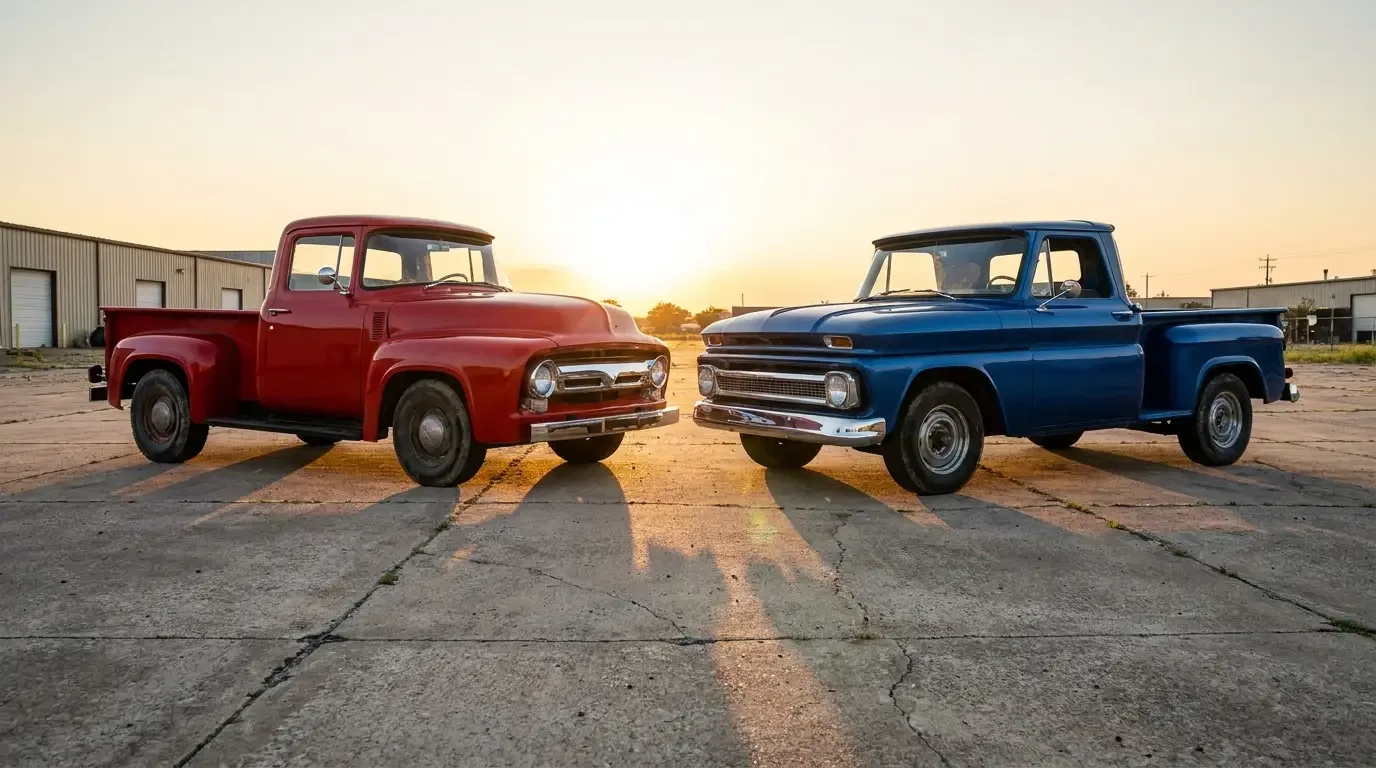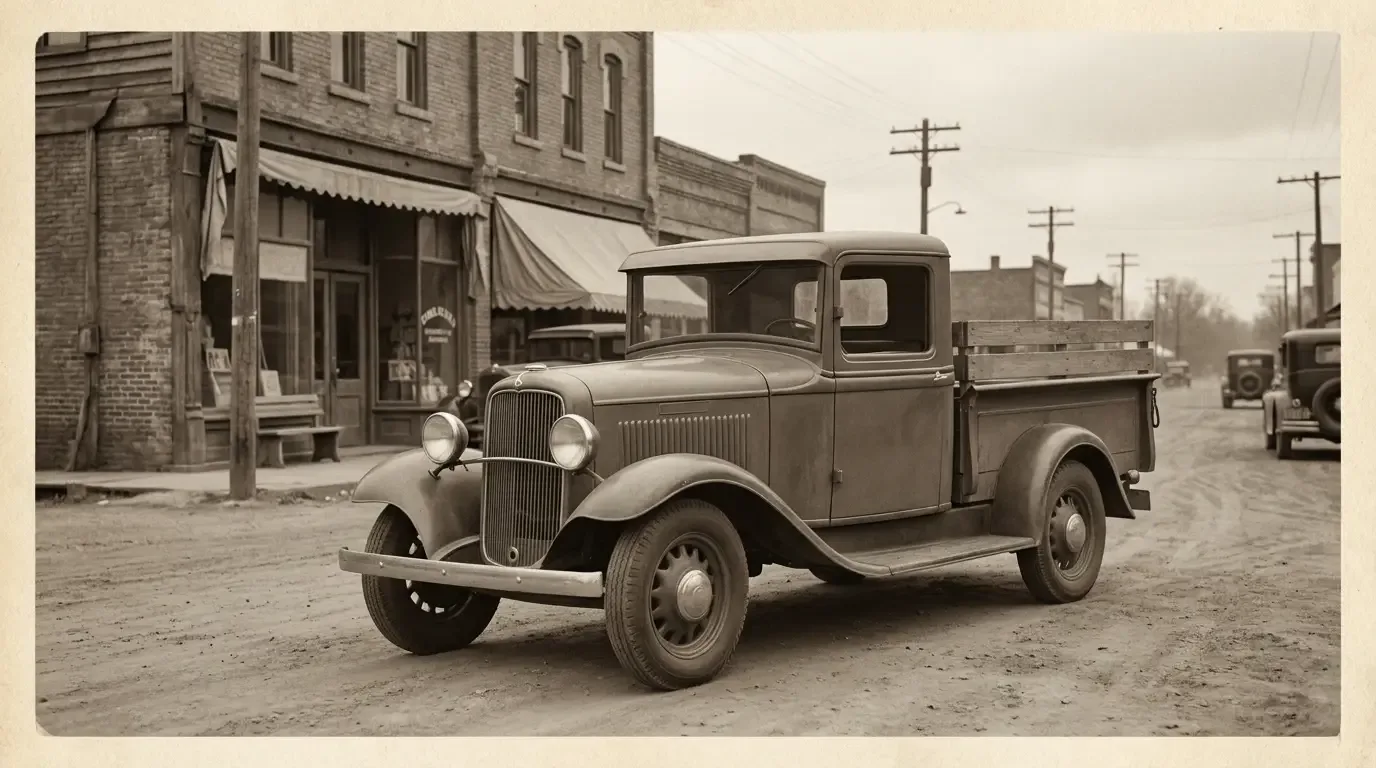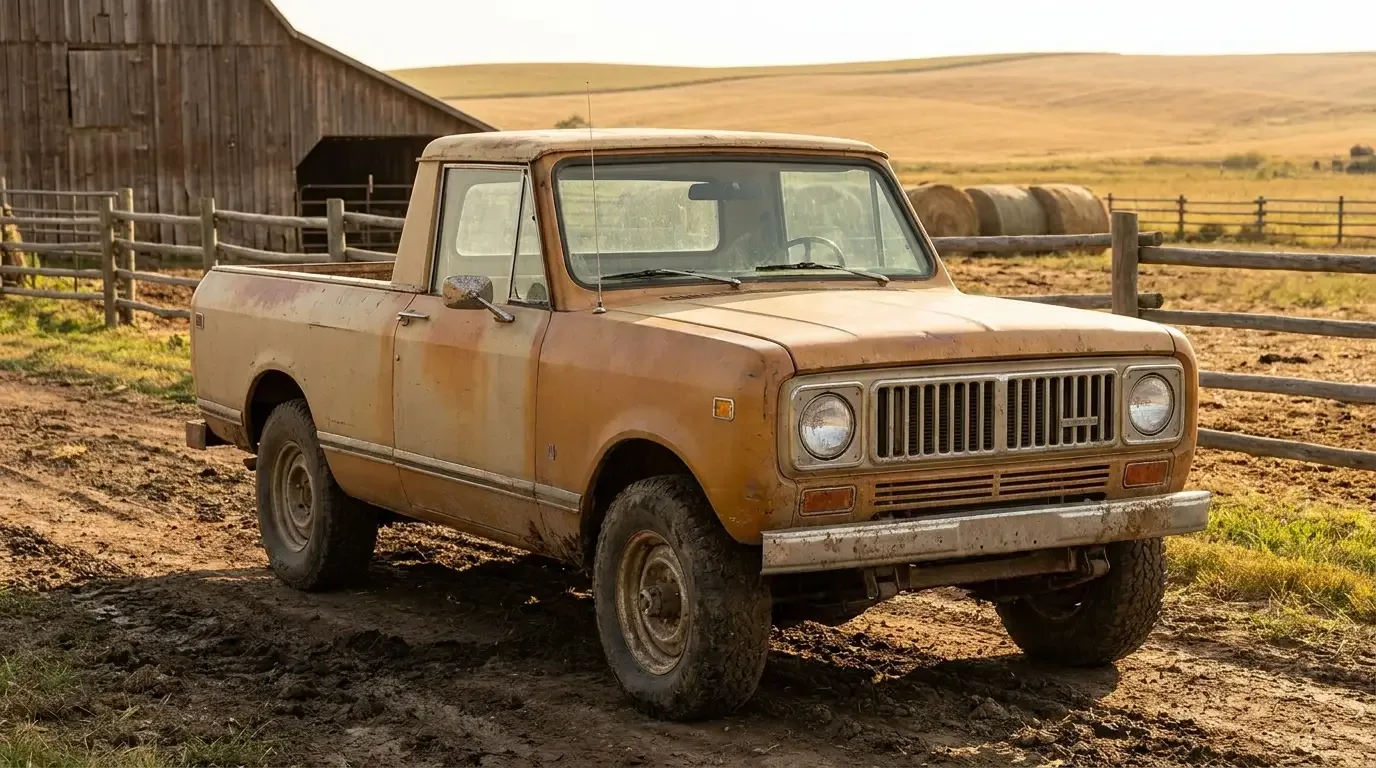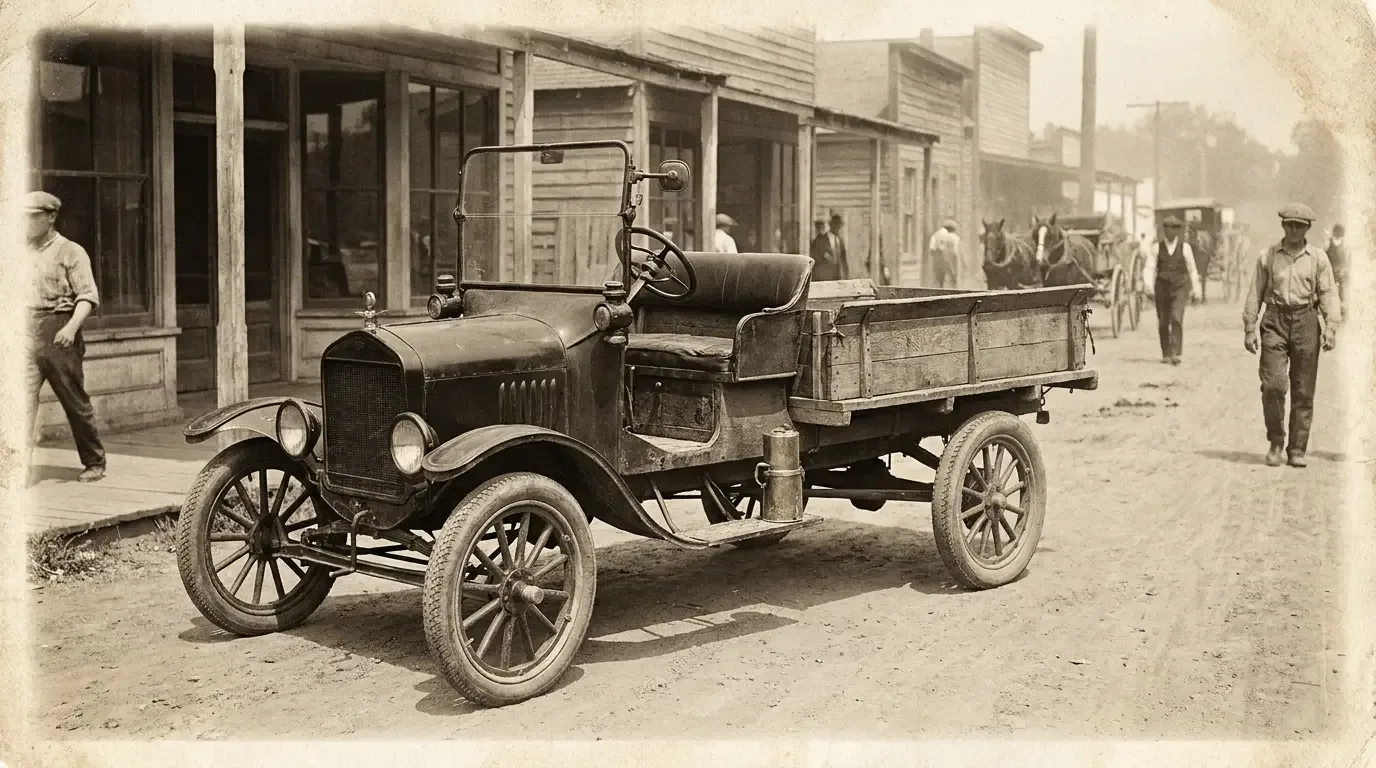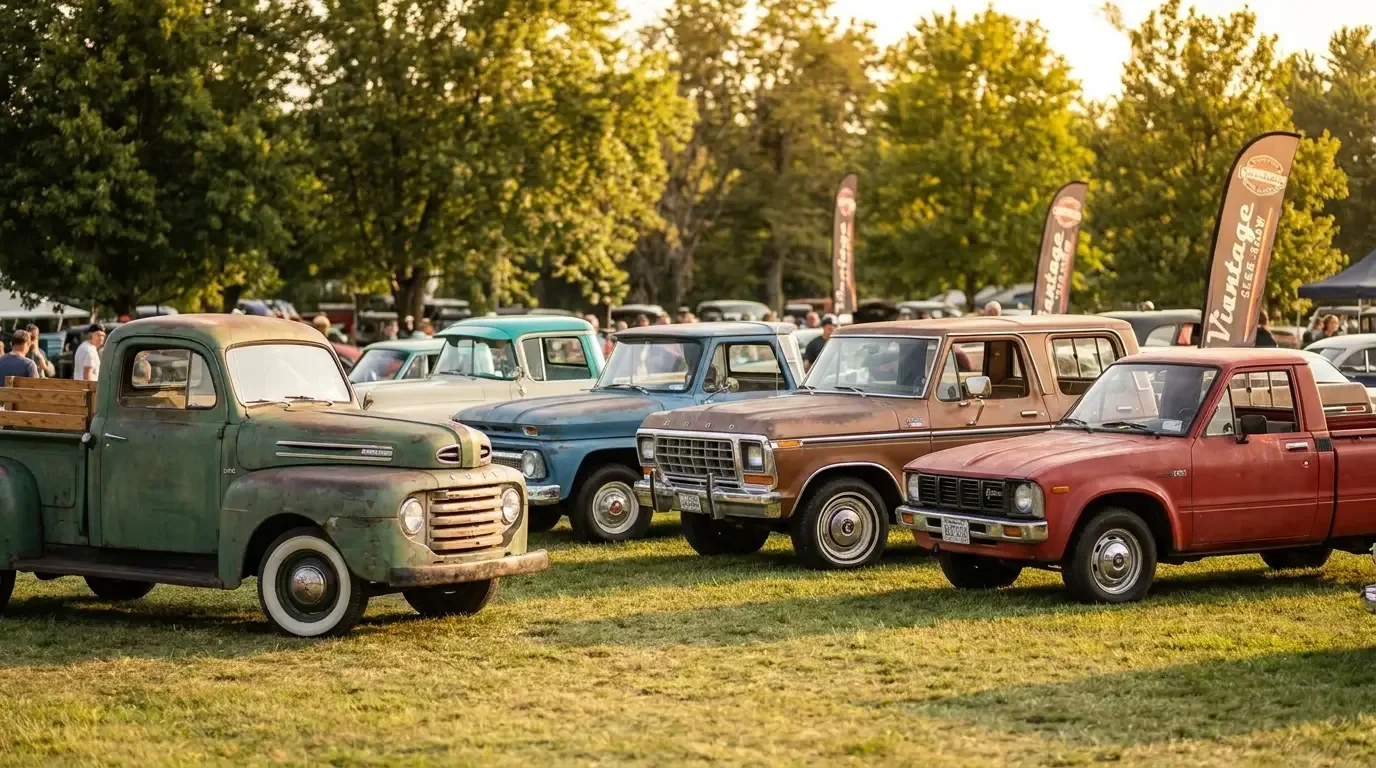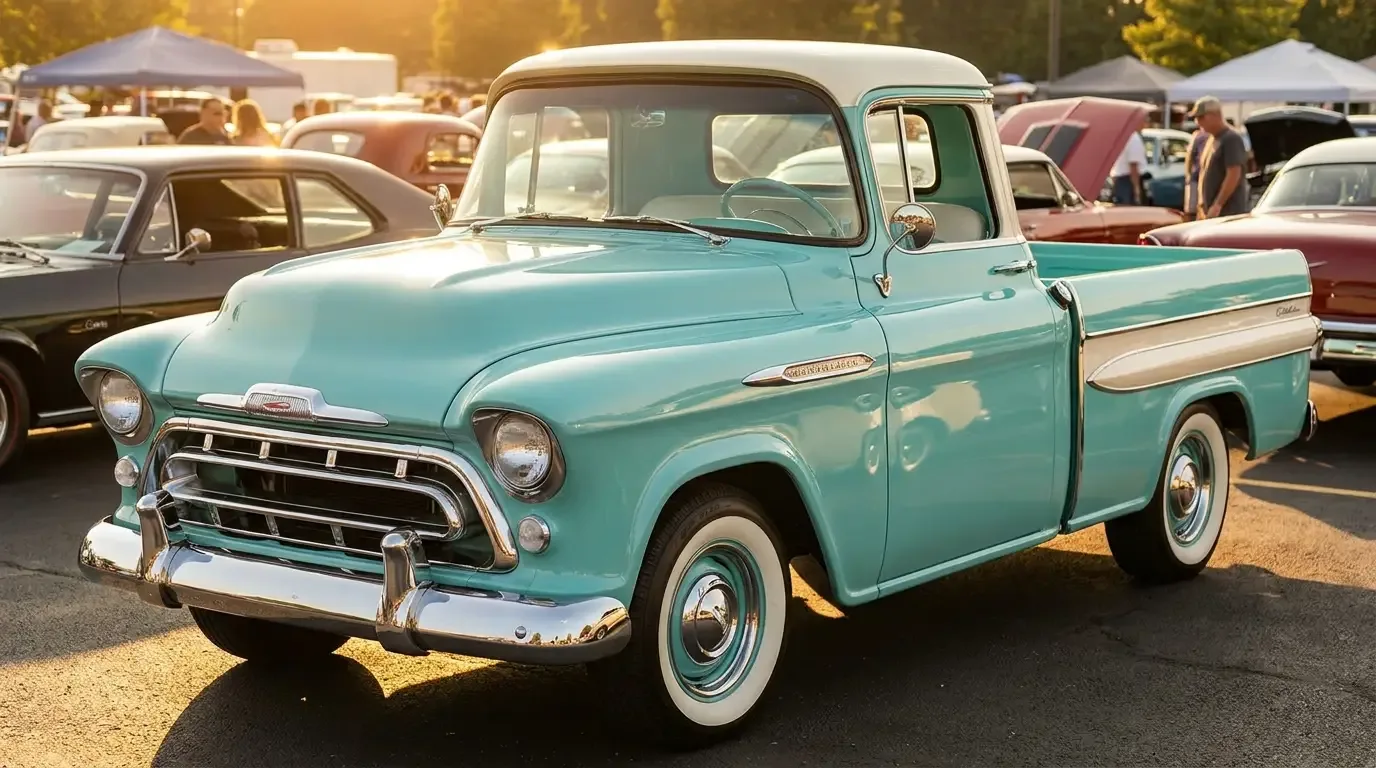
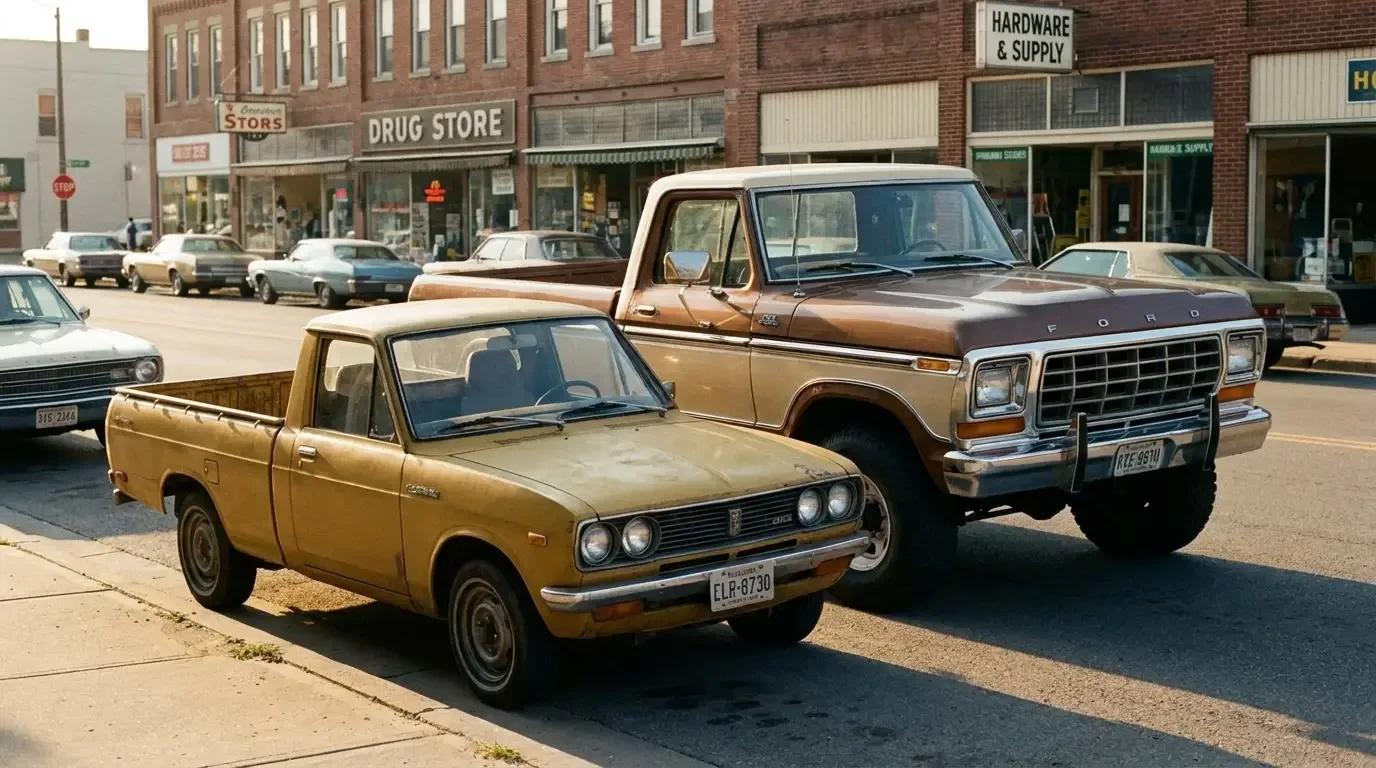
For most of American history, a pickup meant Detroit iron. Full-size, body-on-frame, a straight-six or a small V8, and a bed long enough to haul a cord of wood. Then, sometime in the mid-1960s, a different kind of truck started showing up on dealer lots in California and the Pacific Northwest. It was small, it was cheap, and it had a name most buyers had never heard of. Datsun. Toyota. Within fifteen years those two words changed what a work truck was supposed to be, and Detroit spent the back half of the 1970s scrambling to answer.
This is the story of how the import compacts got here, the tax that shaped the whole fight, and what it did to the domestic small truck. If you own or want a classic pickup from this era, understanding this history tells you why the truck in your driveway looks the way it does.
The imports arrive small and cheap
The first Japanese pickups to reach the United States were tiny by American standards. Datsun (the export brand of Nissan) brought its compact pickup over at the end of the 1950s, and Toyota followed with the Hilux late in the following decade. These were not scaled-down full-size trucks. They were a different animal: unibody or light body-on-frame, four-cylinder engines under two liters, and a payload rating that would embarrass an F-250.
What they had going for them was price and thrift. A young buyer, a small contractor, a rancher who needed a runabout and not a hauler, all of them could get a brand-new truck for less than a stripped domestic half-ton, and it sipped fuel while doing it. In the years before the 1973 oil crisis that was a niche argument. After it, it was the whole ballgame. Fuel economy stopped being a hobbyist's concern and became a line item every buyer read.
The imports also earned a reputation the hard way, by not breaking. A four-cylinder Toyota or Datsun with regular oil changes would run past 150,000 miles at a time when that was considered a hard life for an engine. Word got around. The trucks were basic, sometimes crude, but they started every morning.
The chicken tax and how it reshaped the fight
You cannot tell this story without the chicken tax, and it is stranger than it sounds. In the early 1960s European countries, chiefly West Germany and France, put tariffs on American frozen chicken, which had flooded their markets thanks to cheap US industrial farming. American producers lost a fortune. In 1963 the Johnson administration retaliated, and one of the targets it picked was light trucks: a 25 percent tariff on imported light trucks went into effect in 1964.
The number matters. A 25 percent duty is brutal. It was aimed partly at Volkswagen's commercial vans, but it landed on every imported light truck, including the Japanese compacts that were just getting started. That tariff on light trucks has never gone away. It is still on the books today, six decades later.
So how did Datsun and Toyota sell so many pickups here despite a 25 percent wall? They gamed the definition. For years the trucks were imported as incomplete vehicles, cab and chassis only, with the cargo bed shipped separately or the truck brought in as a passenger "chassis cab" that did not meet the tariff definition. The bed was then bolted on at the port or the dealer once the vehicle was on American soil. A tariff written to protect Detroit ended up teaching importers to assemble the last few bolts of a truck in the United States. Later, some builders went further and opened US assembly plants outright.
| Truck type | Typical layout | Rough engine size | Buyer |
|---|---|---|---|
| Domestic full-size (1960s) | Body-on-frame, RWD | 3.8 to 5.9L six or V8 | Farm, trade, heavy haul |
| Early import compact | Light frame, RWD | 1.3 to 2.0L four | Light hauler, commuter, budget |
| Domestic compact answer (mid-70s) | Light frame, RWD | 1.6 to 2.3L four | Same buyer Detroit was losing |
Detroit answers, sometimes by badge and sometimes for real
By the early 1970s the Big Three could see the compact segment growing and did not have a product to sell into it. The fastest fix was not to build one but to buy one. Detroit turned to partners in Japan and rebadged their trucks.
Ford sold the Courier, which was built by Mazda. Chevrolet sold the LUV, the Light Utility Vehicle, which was an Isuzu wearing a bowtie. Dodge sold the D-50, also built by Mitsubishi and sometimes badged as the Plymouth Arrow truck. These were captive imports: foreign-built trucks sold through domestic dealer networks under domestic names. It let the Big Three offer a compact tomorrow instead of in five years, and it let them learn the segment on someone else's engineering bill.
The real domestic answer came later and came in two forms. Ford launched the Ranger as a genuine US-designed compact in the early 1980s, replacing the Mazda-built Courier. Chevrolet did the same with the S-10, retiring the Isuzu LUV. These were the trucks Detroit built when it finally took the small-truck buyer seriously instead of renting a solution from overseas.
"People forget that for a while a Chevy dealer would sell you an Isuzu and a Ford dealer would sell you a Mazda, both with American badges on the tailgate. Detroit wasn't slow because it was dumb. It was slow because a full-size truck was where the money was, and nobody wants to quit a good thing until the customer makes them."
— Robert Halloran
What the segment war left behind
The pressure the imports put on Detroit was real, and it did not stay in the compact class. The habits the Japanese trucks taught buyers, better fuel economy, reliability you could bank on, and a price that made sense, migrated up into the expectations for full-size trucks too. Buyers who cut their teeth on a cheap reliable compact remembered that experience when they went back for a bigger truck later.
The compact segment itself had a long run. It peaked, then slowly climbed in size and price until the "compact" trucks of the 2000s were nearly as big as the full-size trucks of the 1970s. The genuinely small, cheap work truck, the thing that started the whole fight, largely disappeared from the American market, squeezed out by safety rules, buyer taste, and the same chicken tax that shaped its arrival.
For collectors, the whole episode reads on the road today. When you see the parallel rivalry play out in the full-size world, as with the Chevy vs Ford rivalry, remember that the compacts were fighting a second front the whole time. An early Courier, LUV, or first-year Datsun pickup is a survivor of that fight, and clean ones are getting harder to find because most of them were used up exactly as intended: as tools.
Sources and notes
- Period road tests and buyer's guides covering Japanese and domestic compact pickups of the 1960s through 1980s.
- Manufacturer and marque histories for Datsun/Nissan, Toyota, Ford, Chevrolet, and Dodge light trucks.
- Trade-press and historical reporting on the 1963 to 1964 US light-truck tariff (the "chicken tax") and its effect on imported light trucks.
- Contemporary sales and segment data for compact versus full-size pickups.