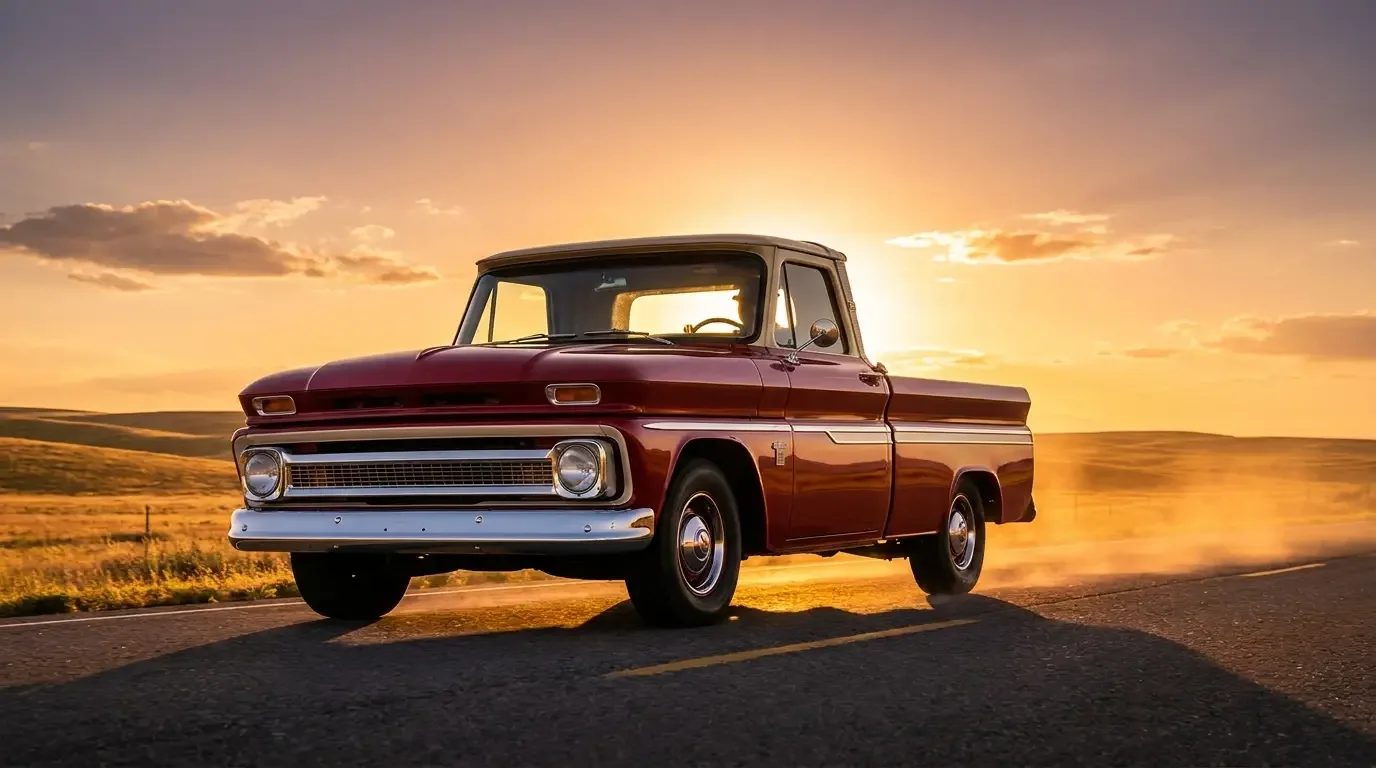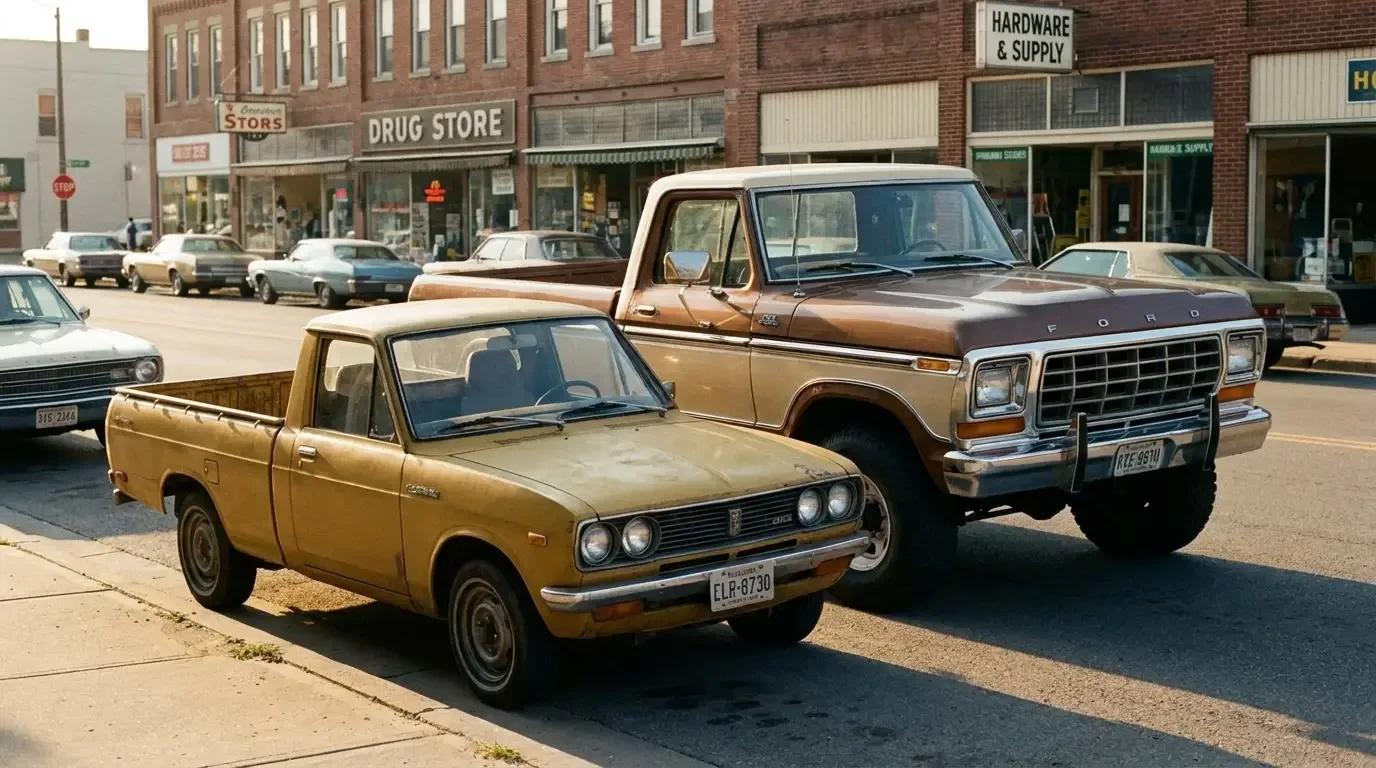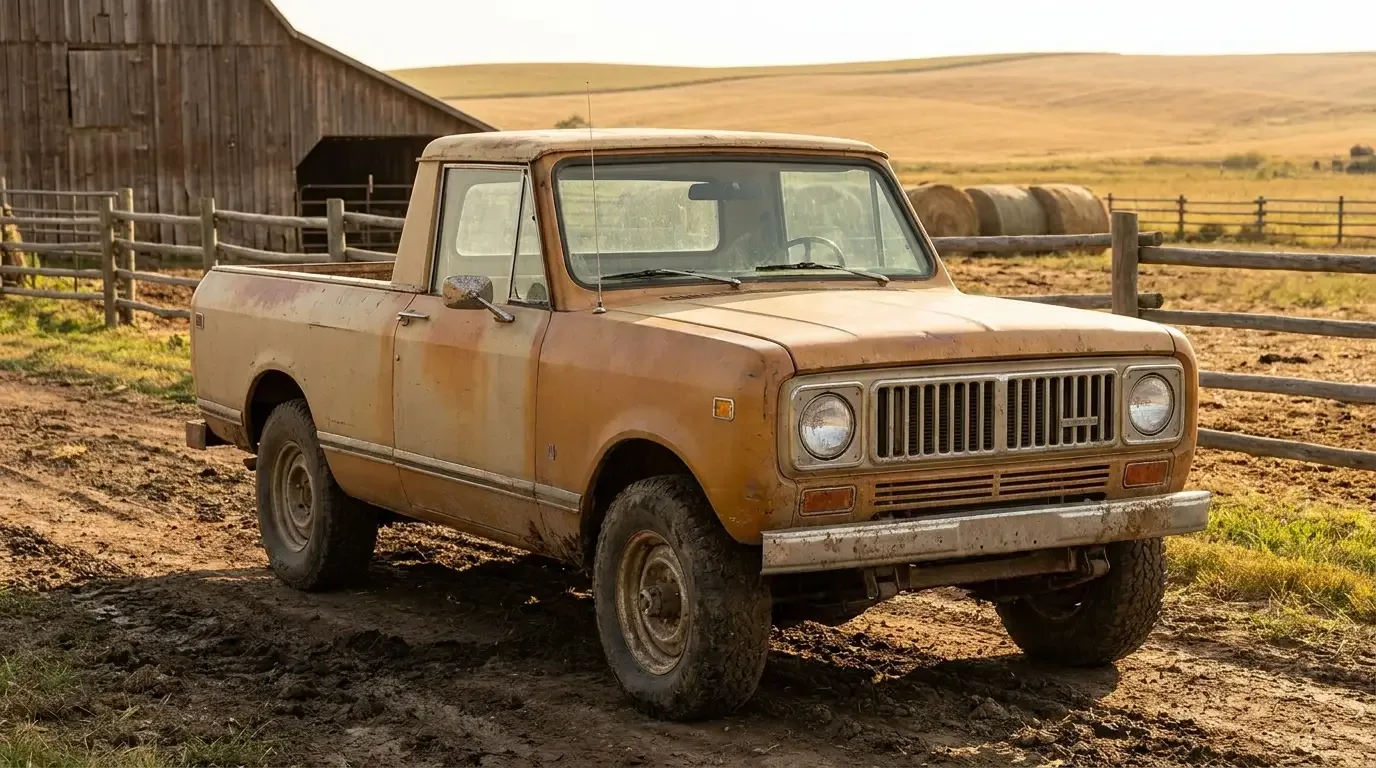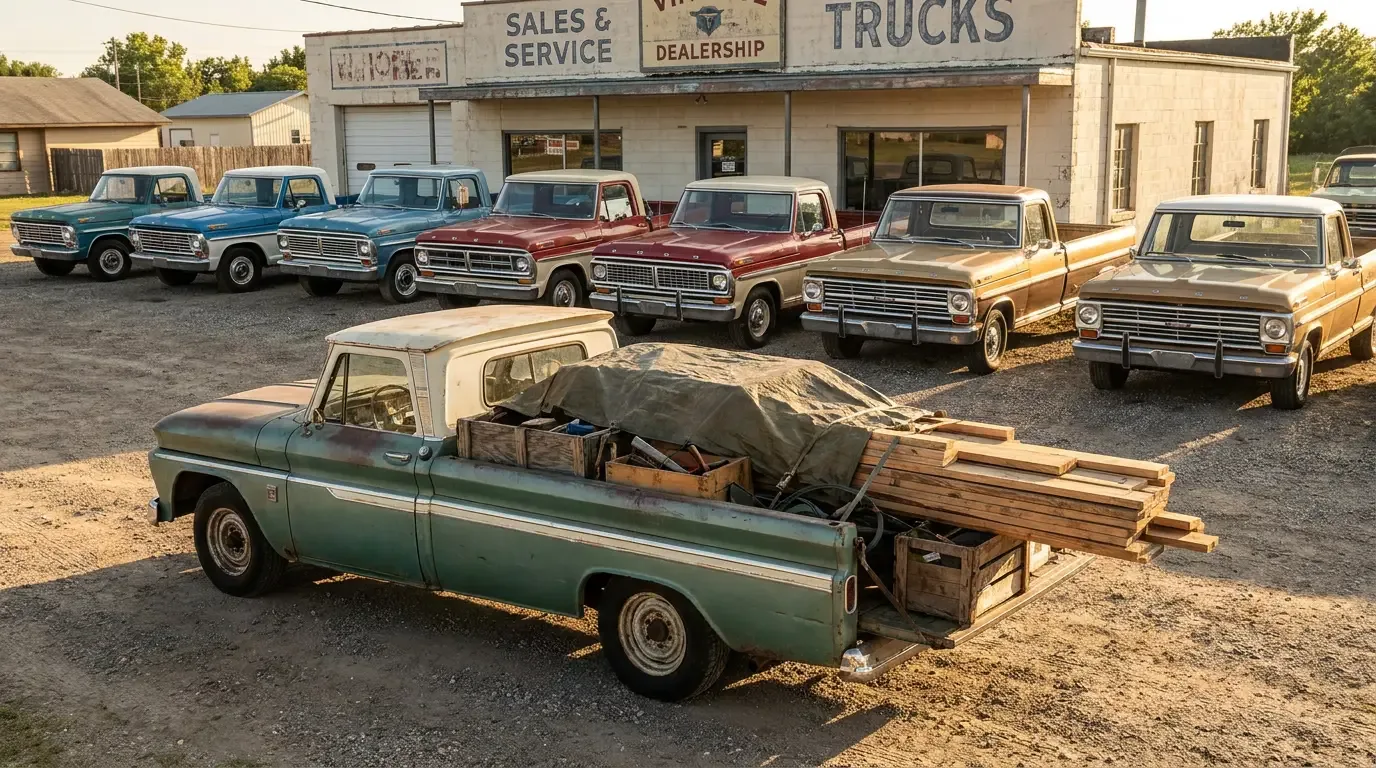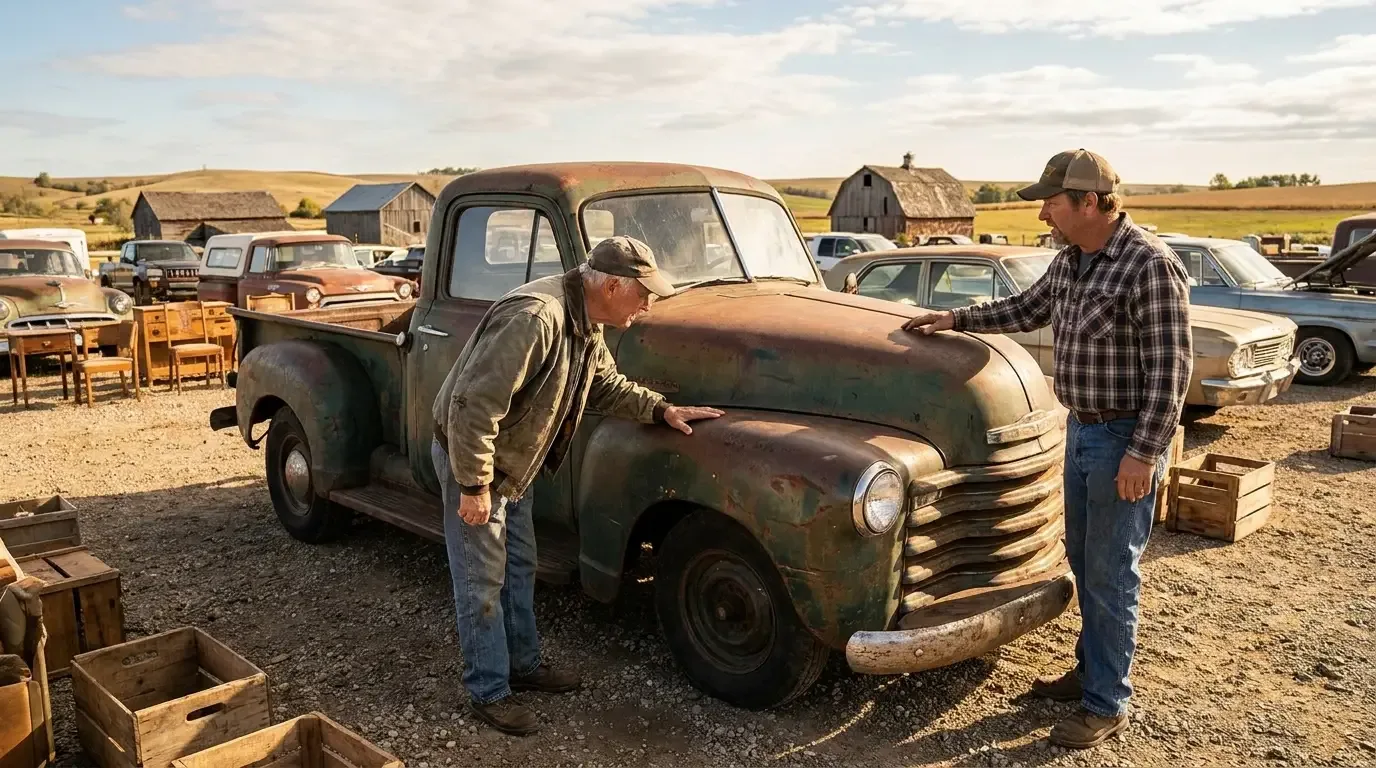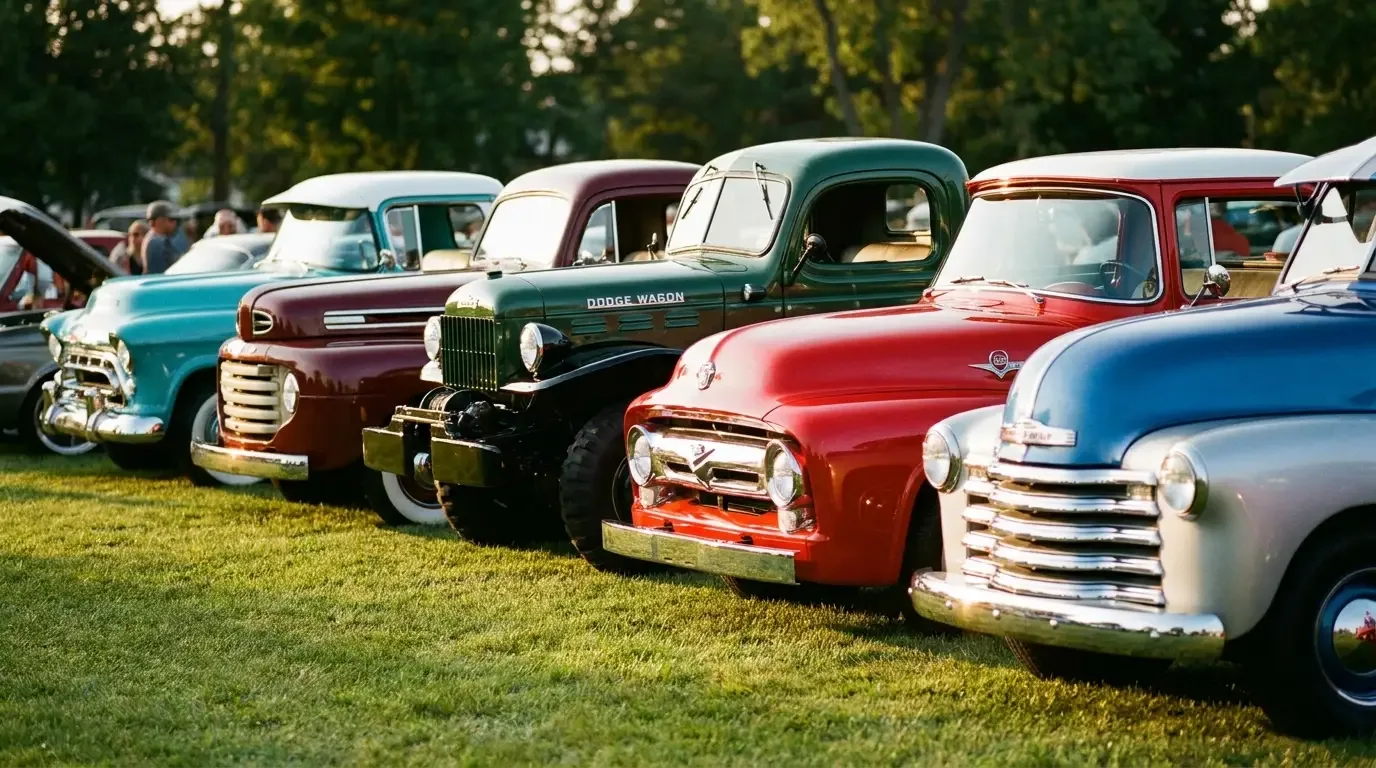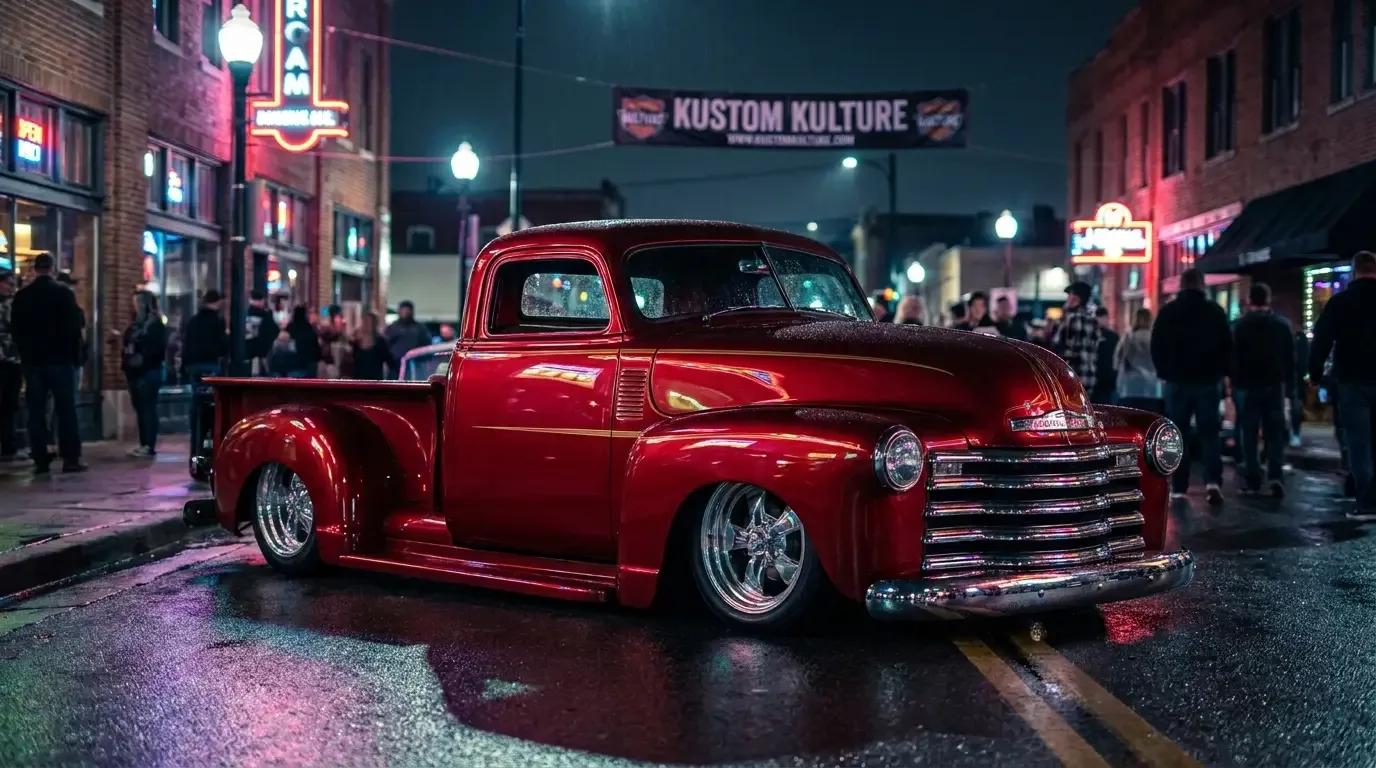

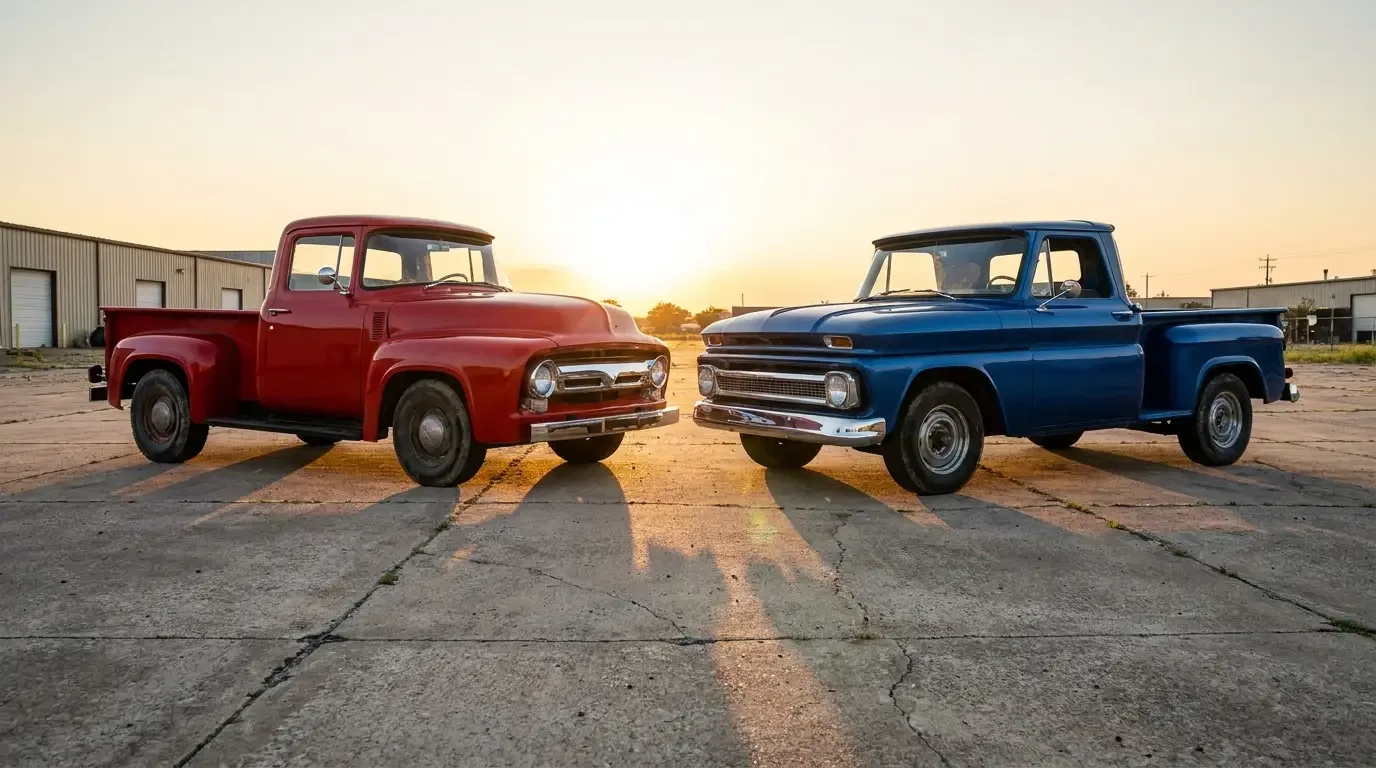
Ask a hundred truck people which is better, a Chevy or a Ford, and you will get a hundred answers and about forty arguments. The rivalry between these two is older than most of the men who argue about it. It ran through gas stations, farm co-ops, and job sites for the better part of a century, and it shaped what an American pickup even is. Neither brand invented the pickup on its own. Both spent decades watching the other, copying the good ideas, and swearing they thought of them first. If you want the wider frame, read the classic American truck story first, then come back here for the part where the punches get thrown.
This is the segment fight, Chevy vs Ford trucks at the brand level, not a single model held up as proof. The trucks changed. The rivalry didn't.
Where the fight started
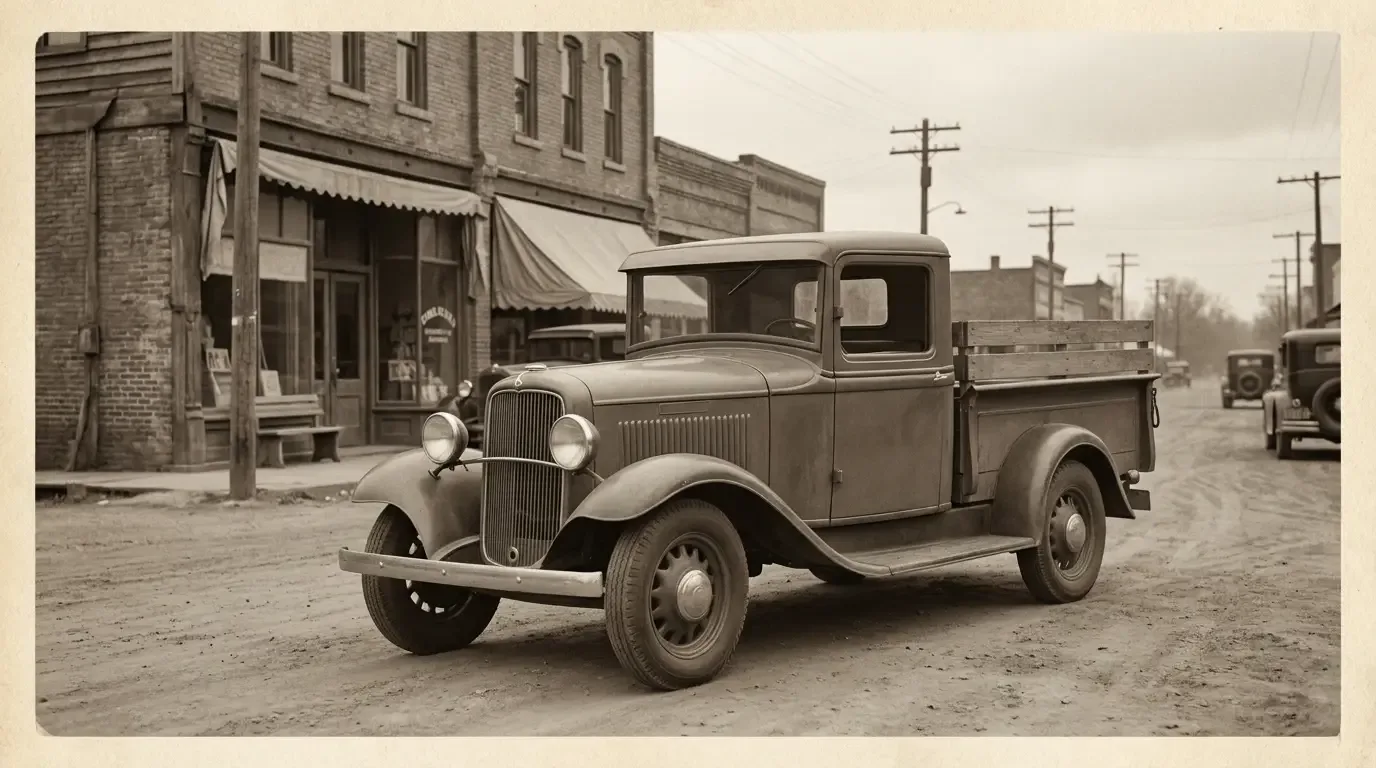
Both companies were building trucks before World War I, but they were building bare chassis, cowl, and frame, with the buyer or a coachbuilder adding a bed. The pickup as a finished factory product, cab and box bolted on and driven off the lot, came later. Ford put its Model T and then Model A to work hauling, and by the early 1930s both makers were selling closed-cab, factory-bodied light trucks aimed at farmers and tradesmen.
The early lead was mostly Ford's, on the strength of one thing, a cheap V8. Ford dropped a flathead V8 into its light trucks in 1932, and for the rest of the decade that gave Ford a power story Chevrolet could not match with its six. Chevy answered with the "Stovebolt" overhead-valve six, a durable, torquey engine that ran forever and sipped fuel. That split, Ford's V8 punch against Chevy's stubborn six, set the pattern for the next thirty years. If you want the deeper story of that engine race, see who built the first V8 pickup.
Leapfrog on styling
Trucks used to look like whatever was cheapest to stamp. That changed after the war, when both makers figured out a truck could be handsome and still work.
Chevy's Advance-Design trucks, launched in 1947, were the first genuinely modern-looking postwar pickups from either camp. Wider cab, better visibility, a real effort at comfort. Ford answered in 1948 with the F-Series, the first truck to wear the F-1 through F-8 naming that survives on the F-150 today. Then Ford leapfrogged again in 1953 with a wider, lower, more car-like cab, and Chevy came back in 1955 with the Task Force trucks, wraparound windshield, optional V8 at last, and styling that still turns heads at any show.
That was the rhythm. One side sets a new look, the other one-ups it inside three or four years. The 1955 Chevy V8 mattered because it closed the power gap that Ford's flathead had opened two decades earlier. From there, the fight was even, and it stayed close.
The power years
By the 1960s the pickup had stopped being purely a farm tool and started becoming personal transportation. That shift rewarded whichever brand could offer more comfort and more engine, and both leaned in hard.
Chevy's C/K trucks arrived for 1960 with independent front suspension on the two-wheel-drive models, a genuine ride advantage, and the coil-spring setup gave the Chevy a smoothness Ford couldn't match for a while. Ford held the towing and payload reputation, helped by its Twin I-Beam front suspension introduced in 1965, which was tough and gave a decent ride under load. The two engineering answers, Chevy's coils versus Ford's I-beams, became talking points at every feed store in the country.
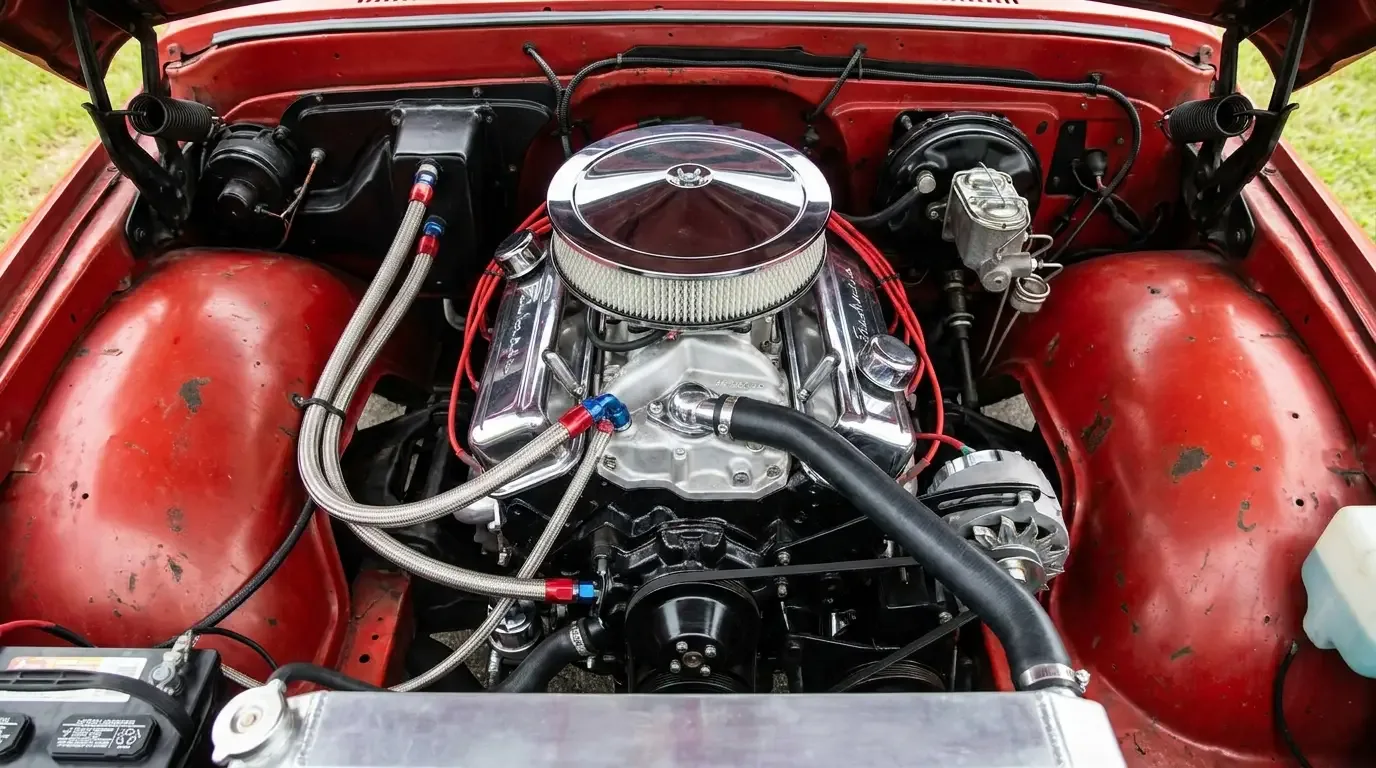
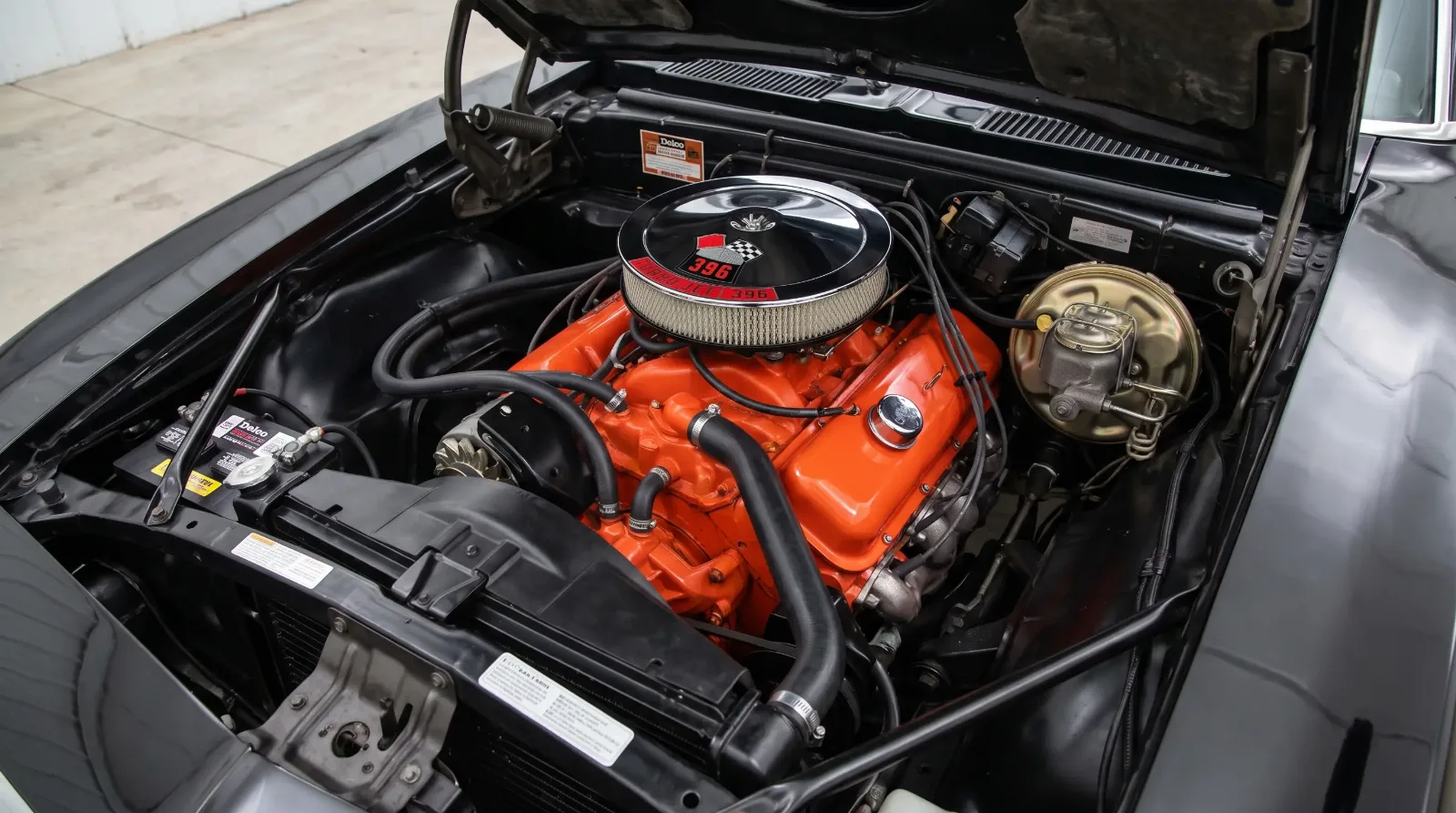
On engines, both offered big-blocks by the mid-1960s. Chevy had its 396 and later 454. Ford ran the FE-series big-blocks and later the 460. Horsepower numbers from this era are quoted loosely and changed measurement standards midstream, so treat any specific figure as approximate. What's not in dispute is that a well-optioned truck from either brand could tow, haul, and cruise a highway in a way the prewar trucks never dreamed of.
| Era | Chevrolet answer | Ford answer | Who led |
|---|---|---|---|
| 1930s | Stovebolt OHV six | Flathead V8 | Ford, on power |
| 1947–48 | Advance-Design | F-Series (F-1) | Chevy, first to modern styling |
| 1953–55 | Task Force, V8 option | Wider 1953 cab | Traded blows |
| 1960s | C/K, IFS coil ride | Twin I-Beam, big-blocks | Even, different strengths |
| 1970s–80s | Square-Body, crew cabs | Dentside, then Bullnose | Even, sales close |
Comfort and the personal-truck turn
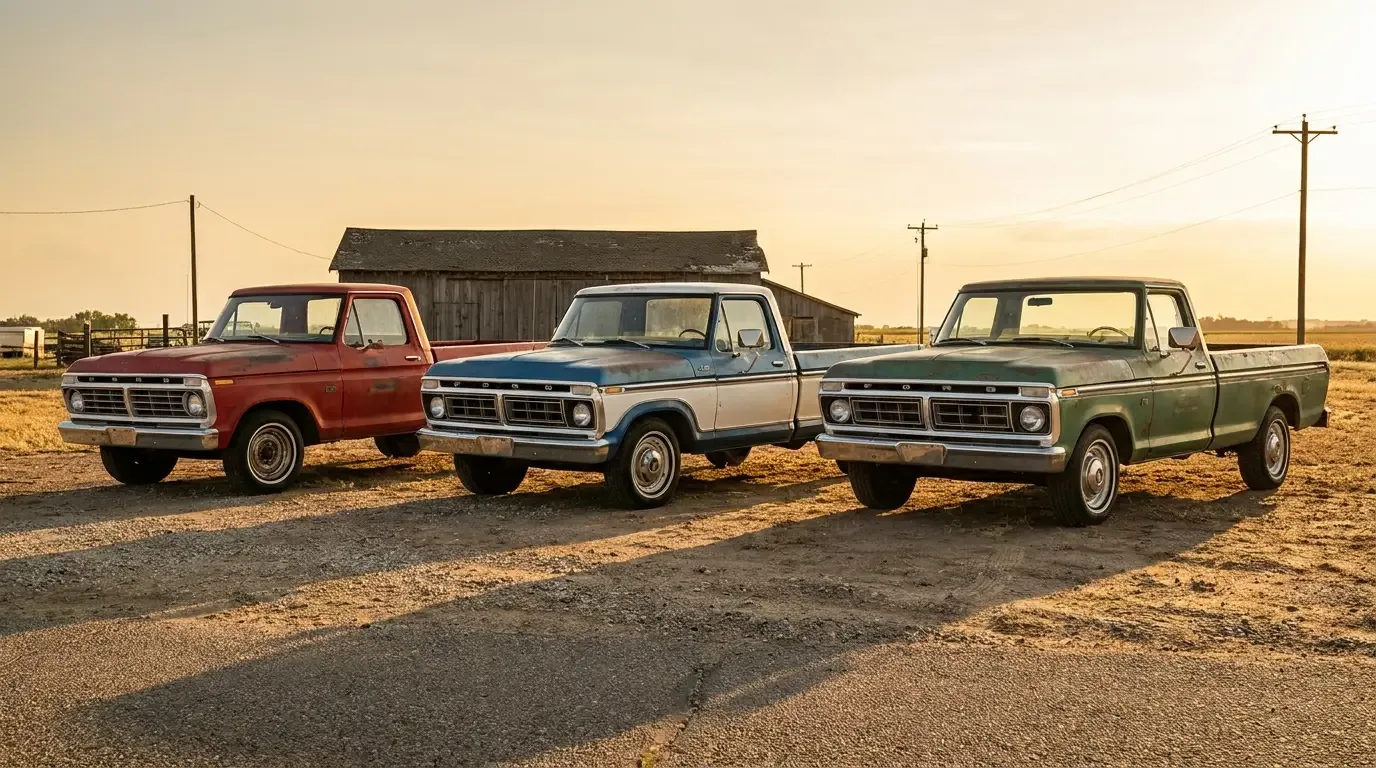
The 1970s is where the pickup quietly stopped apologizing for being a truck. Air conditioning, carpet, cloth seats, AM/FM radios, and trim packages with actual names showed up in both camps. Chevy's Square-Body C/K, built from 1973 well into the late 1980s, is the poster child for that era and one of the most restored classic trucks going today. Ford's "Dentside" trucks of the same stretch, followed by the 1980s "Bullnose" restyle, matched Chevy option for option.
This was also when both makers took crew cabs and four-wheel drive mainstream for regular buyers, not just fleets and ranches. A truck could now be a family's only vehicle and not punish anyone for it. The rivalry moved from "which one works harder" toward "which one you'd rather spend two hours a day inside of," and that argument had no clean winner either. It came down to which dealer treated your father right, and which badge your uncle swore by. Brand loyalty in trucks runs down family lines like a religion.
What defined each side
Strip away the year-by-year and a character emerges for each brand. It's a generalization, and every generalization has a hundred exceptions parked at any given show, but it holds up.
- Chevrolet leaned into ride and styling. The independent front suspension, the coil springs, the clean lines of the Task Force and Square-Body eras. Chevy's argument was that a truck didn't have to ride like a buckboard.
- Ford leaned into work reputation and continuity. The F-Series name never went away, the towing and payload story stayed front and center, and Ford was quick to remind you how many it sold.
Both stories are partly marketing and partly true, which is exactly why they stuck. A buyer picked the truck that matched the story he already believed about himself. That's the decade-by-decade texture, and if you want it laid out era by era with the Dodge angle added in, read the Big Three truck wars by decade.
"I've owned both, and I'll tell you the truth. On a good day, a clean example of either one will do everything you ask and outlast you. The rivalry is real, but a lot of it lives in the cab of the man doing the talking. Buy the straightest body and the best history you can afford, and let the badge sort itself out."
— Robert Halloran
Buying into the rivalry today
For a collector, the good news is that the fight left behind two deep, well-supported hobbies. Whichever side you land on, parts are available, clubs are active, and knowledge is a phone call away. The practical differences at buying time are smaller than the forum arguments suggest.
Prices track condition and originality far more than badge. A rust-free Square-Body and a rust-free Dentside in the same shape will land in the same neighborhood. Where you'll feel the rivalry is in specific desirable trims, a factory big-block, a short-bed step-side, a well-documented one-owner truck, those command a premium on either side. The one hard rule that spans both makes, buy the metal, not the paint. A tidy respray over rot costs you far more than honest patina over solid steel.
When you go looking, look at plenty of both before you commit to a side. The best way to end the argument for yourself is to crawl under a few, Chevy and Ford alike, and let the trucks make their own case. Browse the current classic trucks for sale and compare an even-year Chevy against an even-year Ford in person. You'll pick a side fast enough, and you'll have earned the opinion.
Sources and notes
- Factory service manuals and sales brochures, Chevrolet and Ford light-truck lines, 1930s through 1980s.
- Period road tests and truck-magazine comparisons from the era.
- Marque and model histories for the Advance-Design, Task Force, C/K, F-Series, and Square-Body ranges.
- Auction results and price-guide summaries for classic pickup values.
- Reproduction-parts catalogs and restoration-club references for parts-availability notes.
- Specific horsepower, production, and sales figures confirmed against period sources: Ford F-Series has been America's best-selling truck since 1977 and best-selling vehicle overall since 1981; GM's Chevrolet/GMC divisions combined have periodically matched or exceeded Ford in total full-size truck volume.