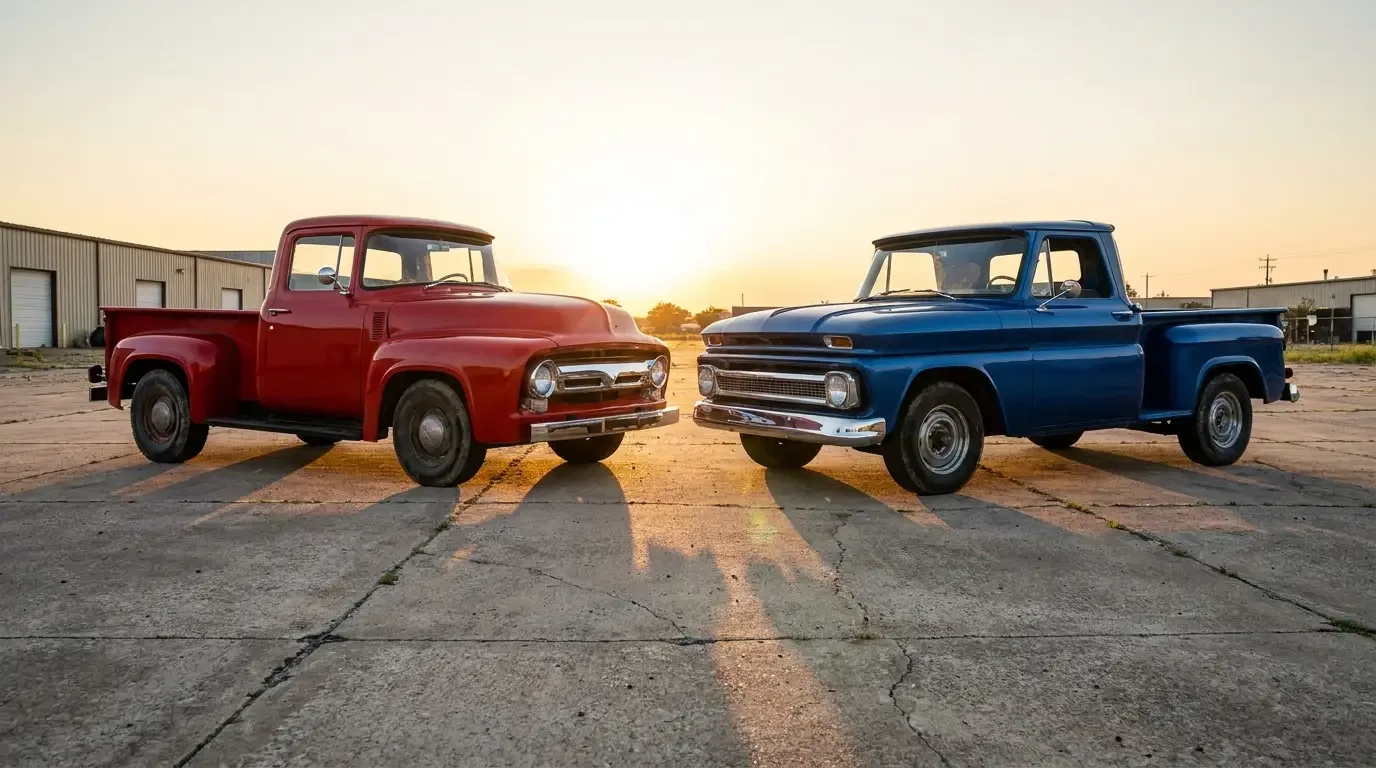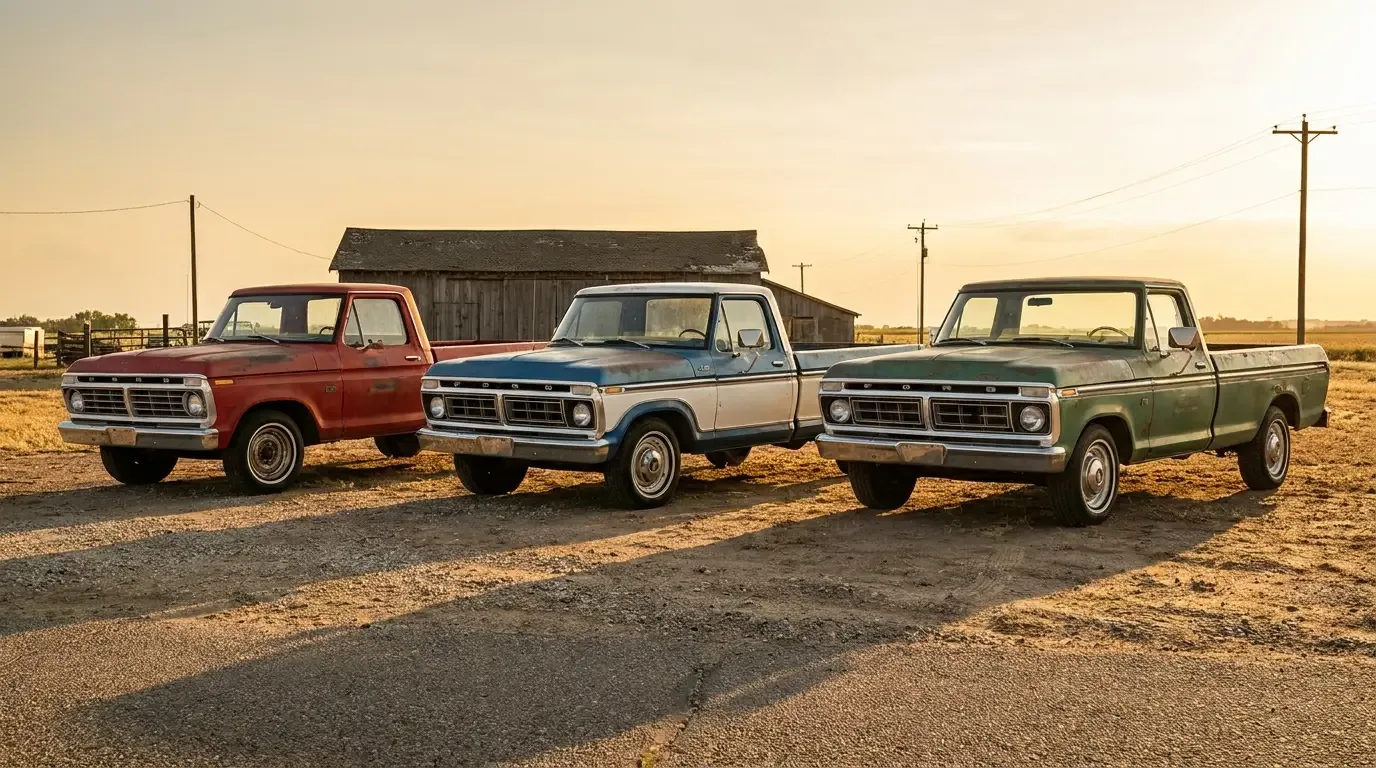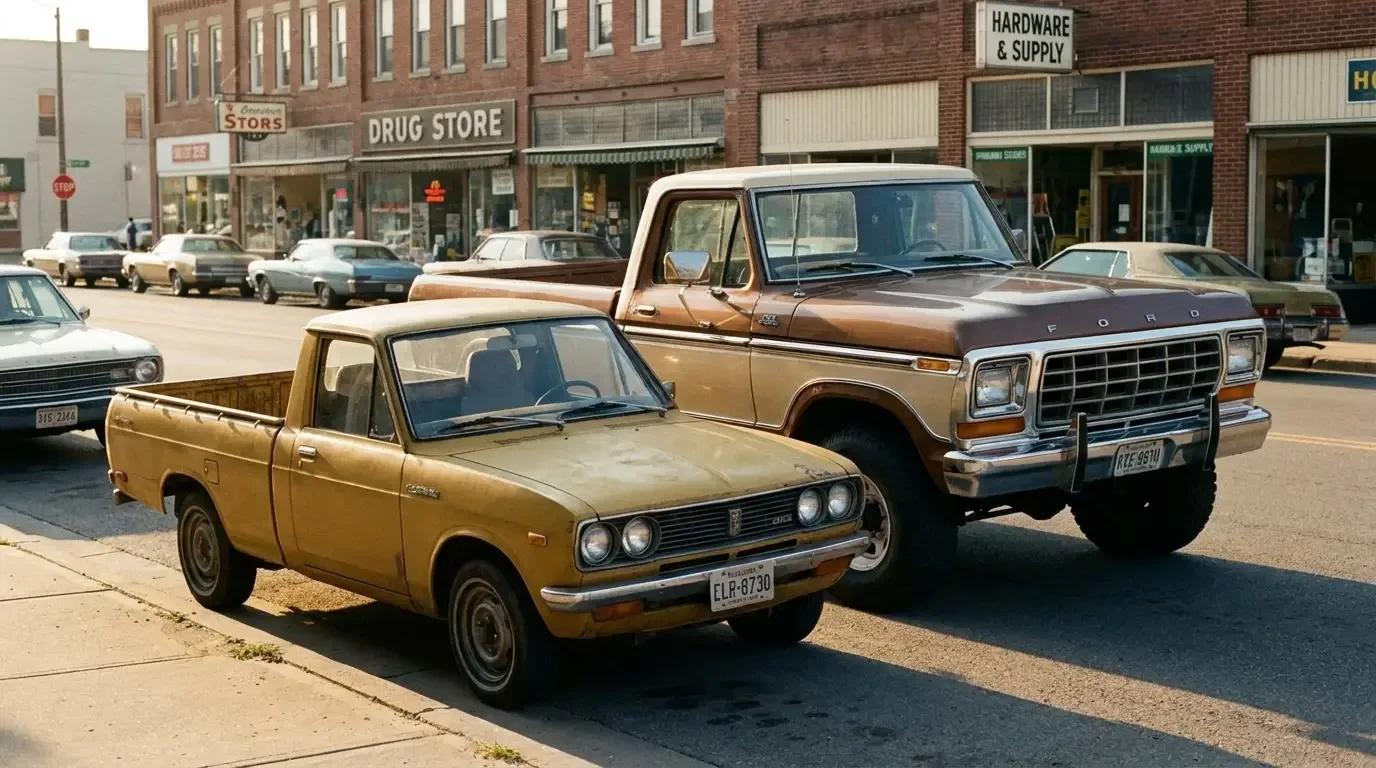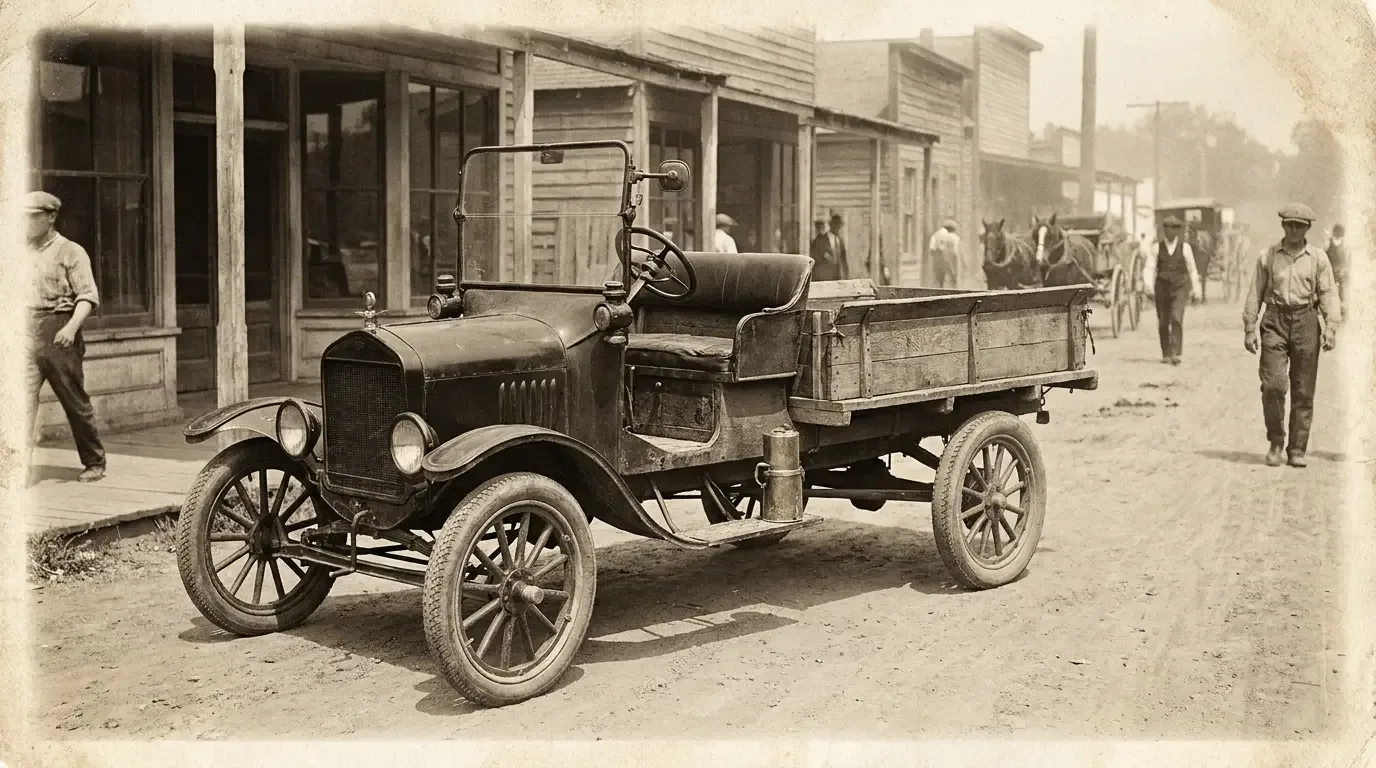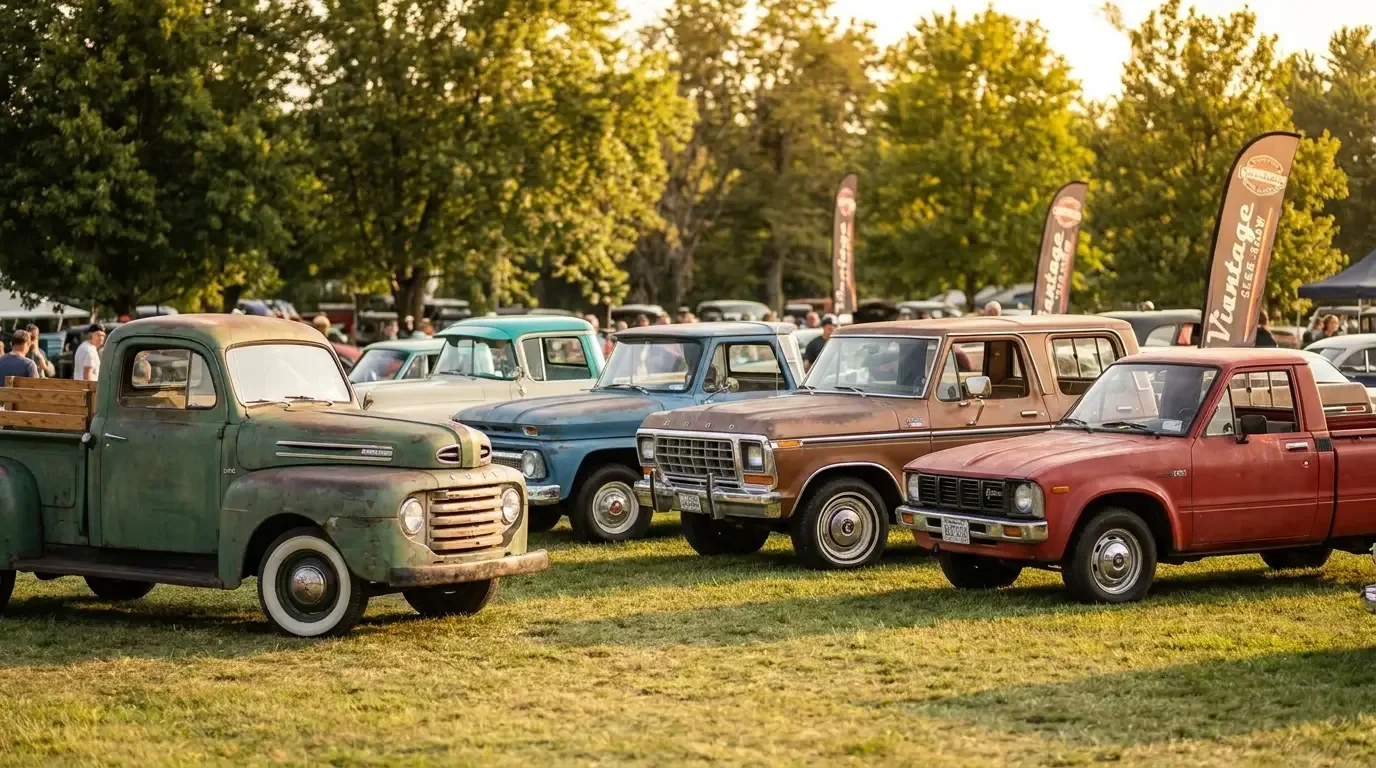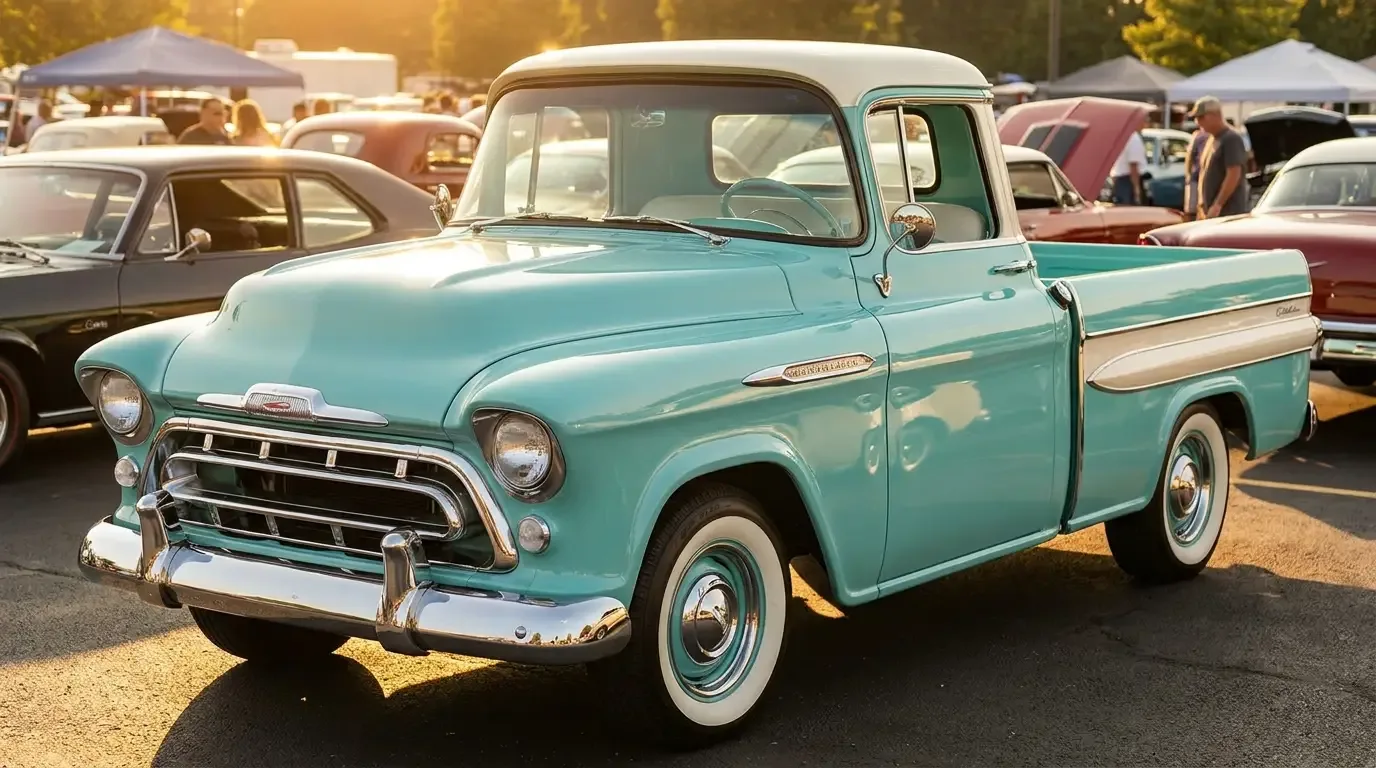
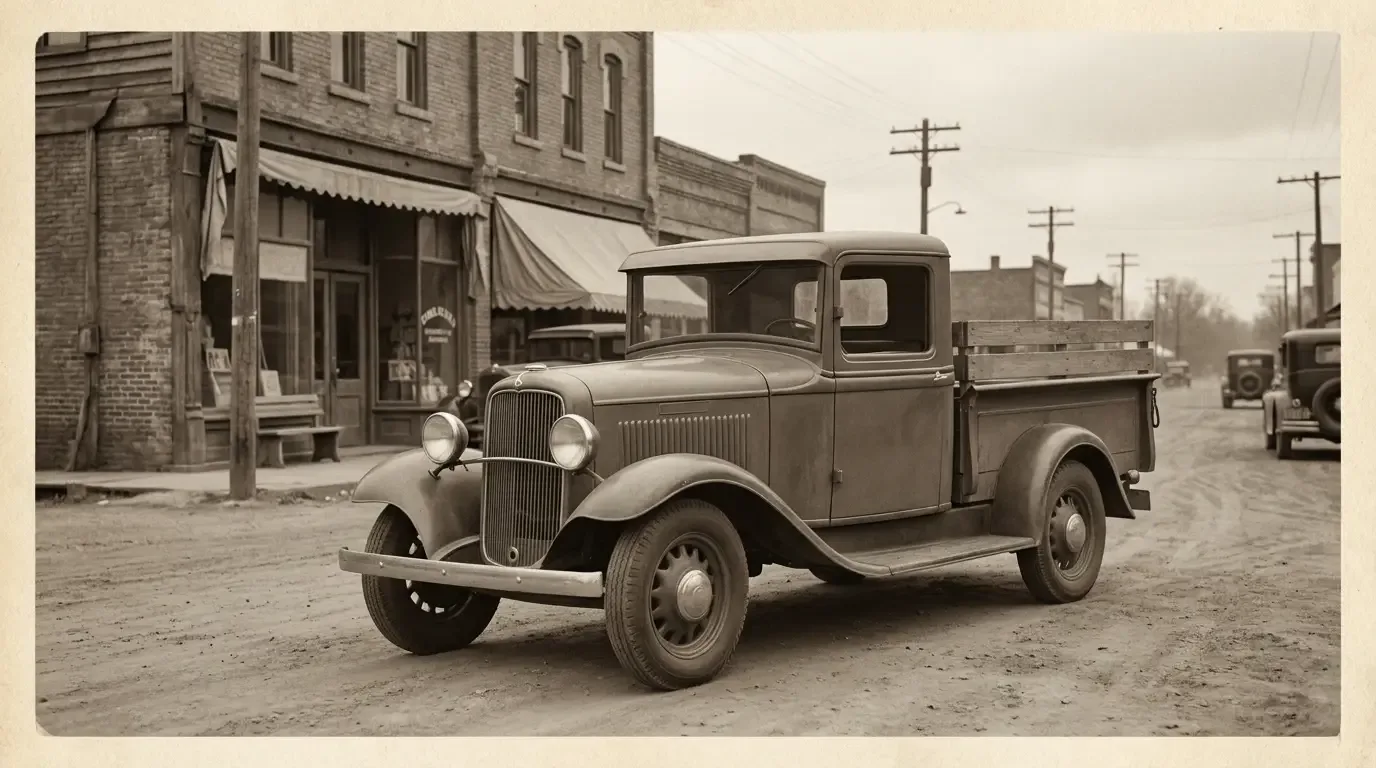
People ask me this one a lot, usually while we are both standing over an old engine bay. Who put a V8 in a pickup first? The short answer most folks want is Ford, with the flathead in 1932. The honest answer has more edges to it, and those edges are worth knowing before you go quoting dates at a swap meet.
The claim matters because it is not just trivia. The V8 in a work truck changed what a farmer or a contractor could expect from a half-ton, and it set off a horsepower argument between the big American makers that ran for decades. If you want the wider story of that fight, read the Chevy vs Ford rivalry. Here I just want to sort out the "who was first" question and be straight about what we actually know.
What the Ford flathead V8 claim actually says
The specific claim is this. In 1932, Ford introduced the Model 18 with the new flathead V8, and that engine was available across the Ford line, including the light commercial and pickup models. So the standard telling goes: the first mass-produced, affordable V8 in a pickup came from Ford in 1932.
Two words in there are doing a lot of work: mass-produced and affordable. Ford's achievement was not inventing the V8. The V8 layout was decades old by then, and luxury makers had used them for years. What Ford did was cast the engine block in one piece and sell the whole car or truck at a price a working person could reach. That is the real story, and it is why the flathead became a legend rather than a footnote.
The flathead was a side-valve design, which is where the "flat head" name comes from. Early versions were rated at around 65 horsepower, which does not sound like much now but was a serious jump over the four-cylinder and six-cylinder engines most trucks carried at the time. Output climbed through the 1930s and 1940s as Ford revised the castings and the carburetion.
Why "first" is harder to pin down than it looks
Here is where I slow people down. "First V8 pickup" depends entirely on how you define your terms, and folks who argue about it are often arguing about different questions without knowing it.
If you mean the first V8 engine ever offered in a vehicle you could haul with, that goes back much further than 1932, into the early luxury and commercial vehicles that predated the modern pickup. If you mean the first purpose-built, factory light pickup with a V8 sold to the general public at a mass-market price, the Ford flathead claim is on much firmer ground. And if you mean the first V8 in a specific weight class or body style, the answer shifts again.
- First V8 engine, period: predates the pickup as we know it, so not really a truck question.
- First affordable, mass-produced V8 in a light truck: the Ford flathead claim, commonly dated 1932.
- First V8 from a given competitor: a different date for each maker, and years later in several cases.
So when I say Ford was "first," I am really saying Ford was first to make a V8 pickup a normal thing a normal person could buy. That is a defensible claim. A flat "Ford invented the V8 truck" is not, and I would not stand behind it.
"Ask ten people who was first and you will get the same name and ten different reasons. Half of them are answering a question nobody asked. Pin down what you mean by first, then we can talk."
— Robert Halloran
Why it mattered on the competitive side
The reason this claim gets defended so hard is that being first with an affordable V8 gave Ford a real advantage, and the competition felt it. Chevrolet's answer for years was a strong overhead-valve six rather than a V8, and that six had a loyal following of its own. The two makers ended up selling two different philosophies: Ford's eight cylinders and Chevy's smooth, reliable six.
For a buyer choosing a work truck in the 1930s and 1940s, the V8 meant more pulling power and a higher ceiling for loads and hills. For the makers, it meant a marketing story. "V8" became a badge people recognized, and Ford leaned on it hard. That head start is a big part of why the flathead is remembered the way it is, and why the "who was first" question still carries some pride in it.
It is worth being fair to the competition here. A later V8 is not automatically a worse V8. Some of the overhead-valve V8 designs that arrived in the 1950s were, by most accounts, better engines than the aging flathead by the time they showed up. Being first is not the same as being best for the whole run. It just means you got there first, and in Ford's case, at a price that mattered.
| Question you are really asking | Honest answer |
|---|---|
| Who invented the V8 engine? | Not a truck story; the layout predates the pickup. |
| Who sold the first affordable V8 in a light pickup? | Ford, flathead V8, commonly dated 1932. |
| Who had the best V8 over the long run? | Debatable; later OHV designs closed and passed the gap. |
How to talk about it without getting corrected
If you are going to make the claim out loud, make the careful version of it. It holds up, and it keeps you out of an argument you cannot win. The sloppy version invites some fellow with a casting-number guide to set you straight, usually with an audience.
The flathead earned its reputation, and Ford earned the "first" it usually gets credited with, as long as you say it the right way. The engine put eight cylinders in reach of ordinary buyers and forced everybody else to answer it. That is the part worth remembering. The exact year, the exact horsepower figure, the precise ranking against later engines, check those before you commit to them, because the story gets repeated more often than it gets verified.
Sources and notes
- Marque histories and factory literature covering early Ford V8 production and the flathead engine family.
- Period road tests and truck buyer guides from the 1930s through the 1950s.
- Casting-number and engine identification guides for verifying displacement and output figures.
- General automotive engineering histories covering the development of the V8 layout and its adoption in light trucks.
- Specific dates, horsepower ratings, and "first" attributions in this article reflect widely documented Ford flathead V8 history (1932 introduction, ~65 hp, one-piece cast block) and the earlier De Dion-Bouton V8 lineage.