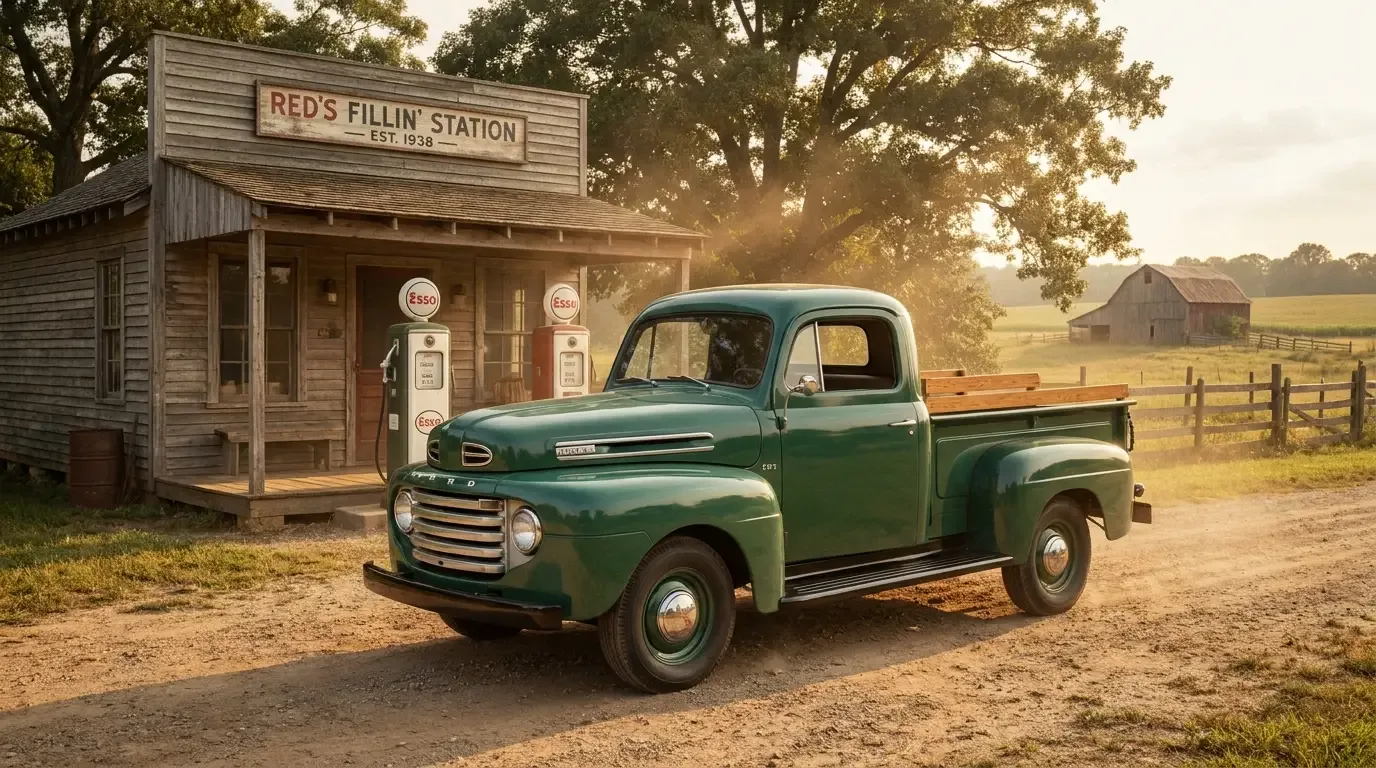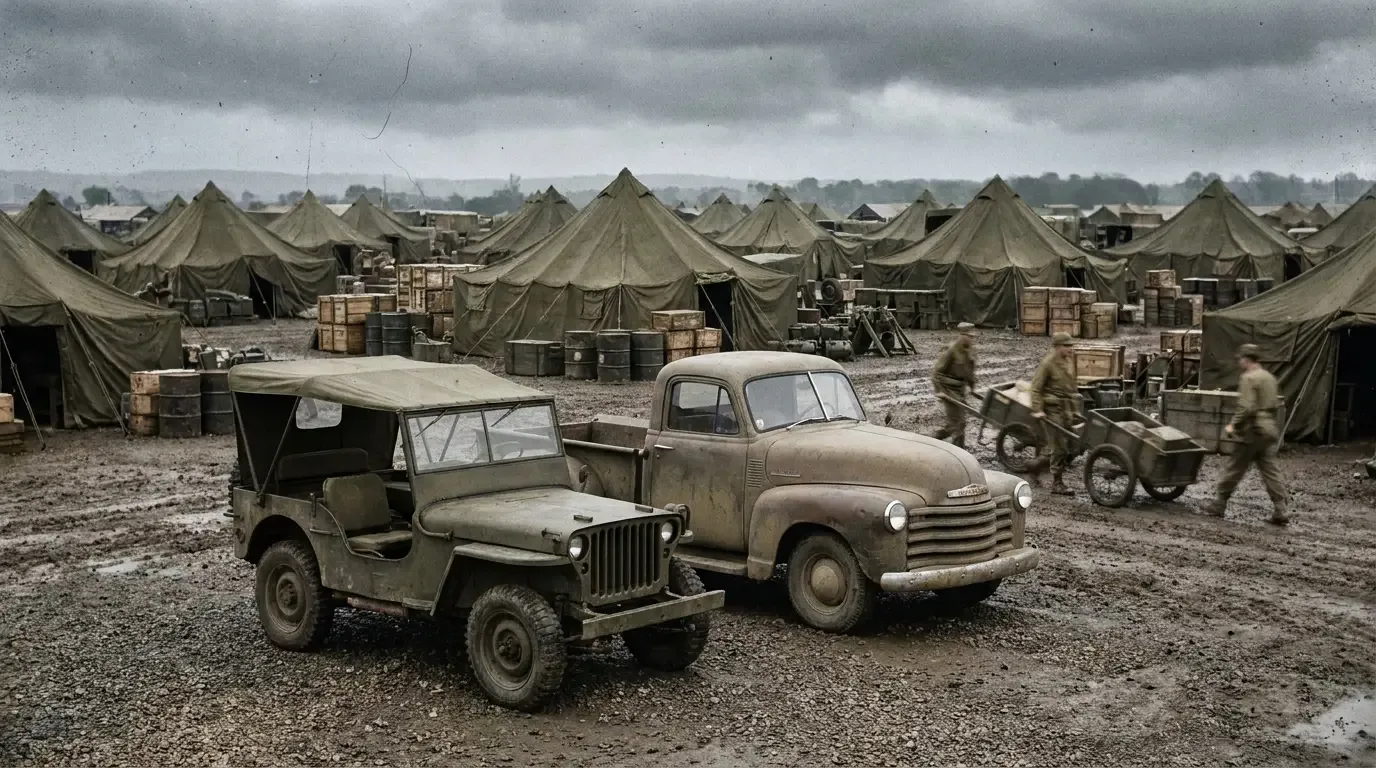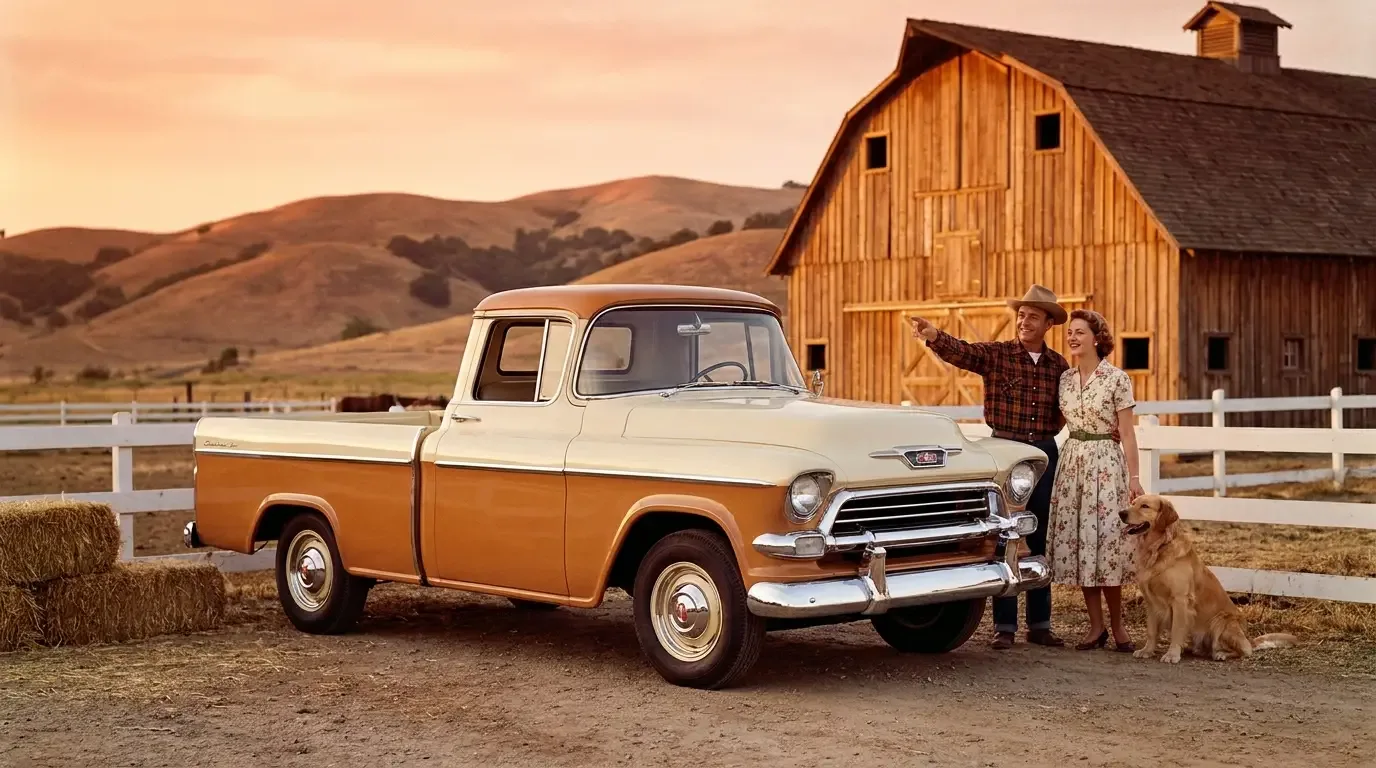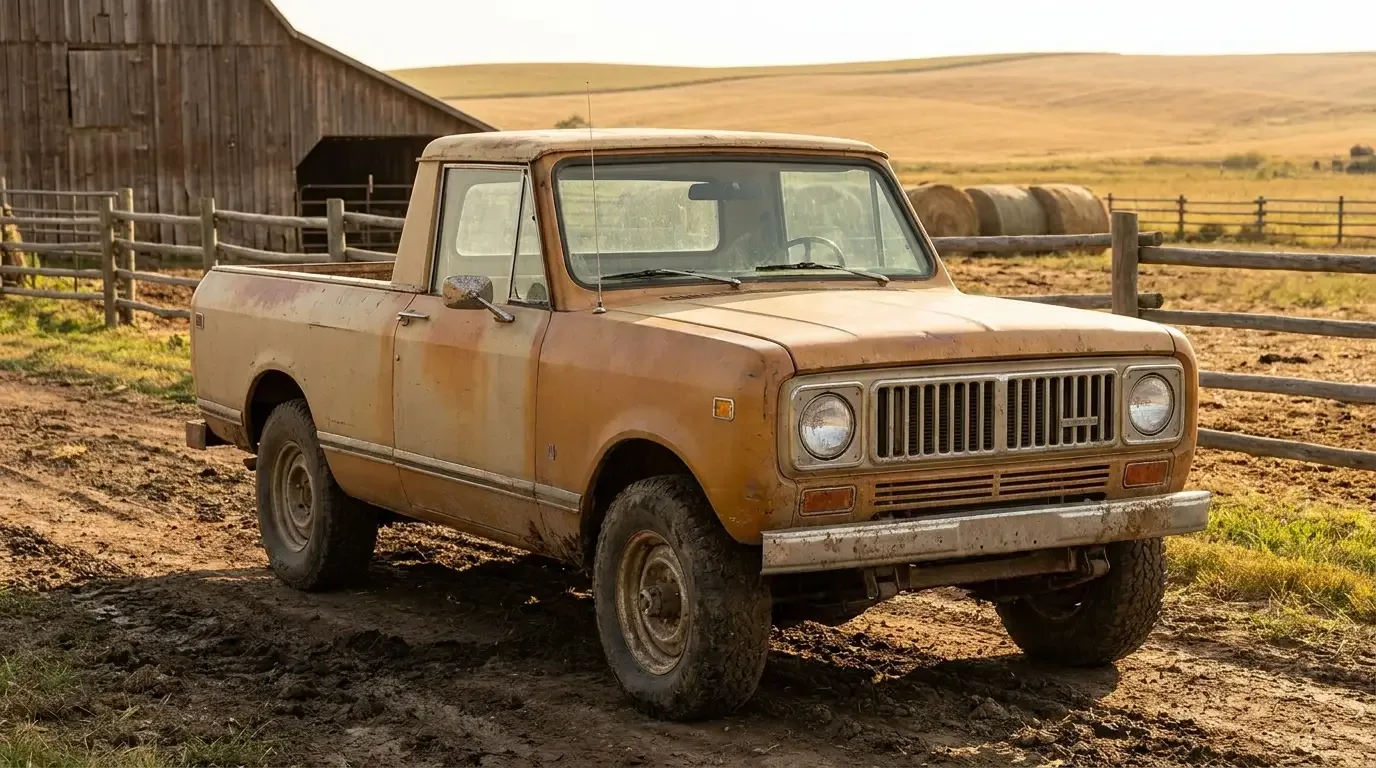
For the first stretch of the automobile age, you could not walk into a dealer and buy a pickup truck the way you buy one today. You bought a running chassis. Then you took it to a body shop, a wheelwright, or a carpenter, and you told him what you hauled. He built the bed to fit the job. Two farmers on the same road could own the identical make of car underneath and drive two completely different trucks. The pickup as a finished product, built on a line and sold whole, came later. When it arrived it changed how America worked, and it is the reason the the complete history of the American pickup reads the way it does.
This is the story of that shift. Not one badge, not one model, but the moment the truck stopped being a kit of parts and became a thing you could point at on a lot.
Before the factory: buy a chassis, build a bed
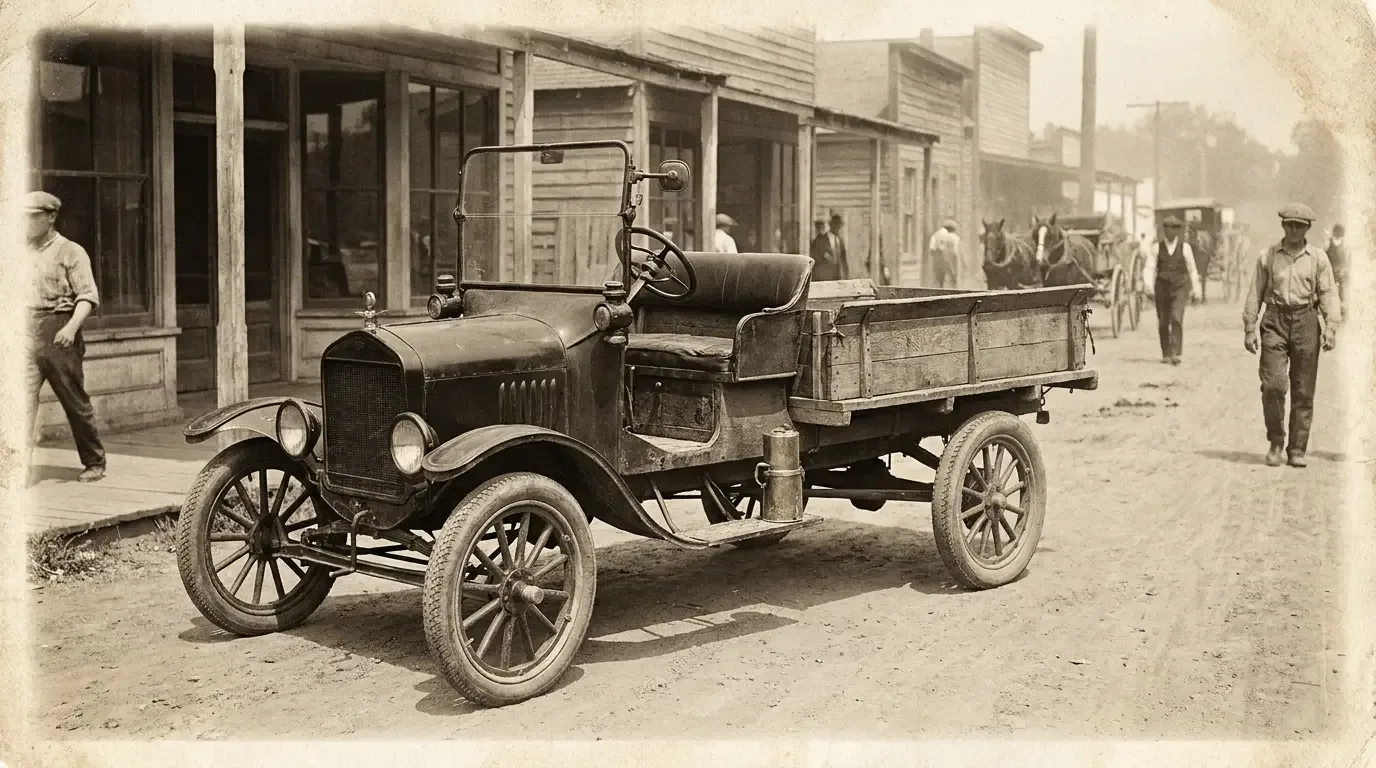
In the 1910s and into the early 1920s, most work vehicles started life as a bare cowl-and-chassis unit. The factory gave you the engine, the frame, the front sheet metal, the seat, and the running gear. Everything behind the seat was your problem. That was not a flaw in the system. It was the system. A dry-goods store, a coal dealer, and a dairy all needed different backs, so the maker left the back off.
The people who finished these trucks were coachbuilders and local body shops, the same trades that had bodied horse wagons a generation earlier. Some fitted stake sides. Some built enclosed panel boxes. Plenty of owners just bolted down planks and called it done. Quality ran from cabinet-grade joinery to something that rattled apart by the second winter. There was no such thing as a standard bed because there was no standard buyer.
The trade-offs were real, and any honest look at the era has to name them:
- You got exactly the load bed your work demanded, sized to your freight.
- You also got a second bill, a second trip, and a wait while someone built it.
- Repairs meant finding whoever made the body, because no two were quite alike.
- Resale was a guess. A buyer had to judge the homemade back on its own merits.
That fragmentation is easy to romanticize now. On the ground it was friction. It slowed the truck down as a product, and it kept prices soft because a used work vehicle was only as good as the bed some stranger had nailed to it.
Ford, GM, and the move to a finished truck
The change did not happen in a single afternoon. Two forces pushed it. First, the moving assembly line made it cheap to build the same thing over and over, and a truck with a factory bed fit that logic far better than a truck that left the plant unfinished. Second, buyers were tired of the second trip to the body shop.
Ford is the name most people reach for here, because the Model T ran the country's roads and Ford eventually offered a factory-built steel-bed light truck rather than just a chassis. Around the mid-1920s, a purpose-built pickup body arrived from the factory, ready to load. Chevrolet and the rest of General Motors moved in the same direction, offering complete light-duty trucks off the same industrial machinery that built their cars.
The point is not which badge crossed the line first by a matter of months. The point is the idea: a light truck engineered, built, and sold as one finished unit. Once one big maker proved buyers would pay for that convenience, the whole industry followed, because the economics were plain.
"People forget the truck used to come home half-built. You paid for the front, then you paid again for the back. The day you could drive the whole thing off the lot and go to work, that was the day the pickup became a truck instead of a project."
— Robert Halloran
Why the factory bed mattered
A steel bed bolted on at the plant looks like a small thing. It was not. It reset the economics of owning a work truck, and it did so in ways an owner felt every month.
Standardization was the big one. When the bed came from the factory, every truck of that model had the same dimensions, the same tailgate, the same mounting points. A repair part fit. A replacement bed fit. A man buying used could measure once and know what he was getting. That predictability is boring, and it is exactly what made the pickup a dependable tool instead of a gamble.
| Aspect | Chassis-and-coachbuilt era | Factory-built pickup |
|---|---|---|
| Who built the bed | Local body shop or owner | The vehicle manufacturer |
| Bed dimensions | One-off, varied by builder | Standardized per model |
| Time to put to work | Days to weeks after purchase | Drive it off the lot |
| Repair parts | Custom, often unavailable | Interchangeable, catalog-listed |
| Resale clarity | Judged bed by bed | Known quantity by model year |
Price came down too. A body built one at a time by hand costs more than a body stamped by the thousand. Rolling the bed into mass production pulled the total price of a work-ready truck within reach of the small operator, the farmer, the tradesman who could not justify a second trip and a second invoice. The truck stopped being an outfit you assembled and became a purchase you made.
And it opened the door to something the coachbuilt era never could: a used-truck market that made sense. When trucks are standardized, a buyer three owners down the line can price one with confidence. That confidence is what eventually made these early trucks collectible at all, and it is why the earliest purpose-built pickups sit at the front of the story in the classic American truck story. If you want to see what survives from that first factory-built generation, the pre-war classic trucks for sale are where those machines turn up today.
What the finished pickup set in motion
Once the industry settled on the factory-built pickup, everything that followed built on that foundation. The bigger enclosed cab, the longer bed, the heavier springs, the badge-versus-badge rivalry that defined the following decades, all of it assumed a truck that arrived complete. You cannot have a model lineup, a trim ladder, or a loyal repeat buyer when every truck leaves the plant half-finished. The finished pickup made those things possible.
It also changed who owned a truck. When the price dropped and the bed came ready, the truck reached people who had made do with a wagon or a worn-out car. A working pickup on the farm, at the lumberyard, behind the store, became ordinary. That ordinariness is the whole point. The factory-built pickup did not win because it was glamorous. It won because it was cheaper, more predictable, and ready to work the day you bought it.
That is why the first purpose-built factory pickups matter more than any single spec sheet from the era. They are the hinge. On one side sits the truck as a craft object, finished by hand and different every time. On the other sits the truck as a product, the same one you can still buy on a lot today.
Sources and notes
- Marque and manufacturer histories covering early Ford and General Motors light-truck production.
- Period sales literature and factory catalogs describing chassis-only versus complete-truck offerings.
- Coachbuilding and commercial-body trade references from the wagon-to-truck transition.
- General automotive-industry histories on the spread of assembly-line manufacturing.