In 1925, a farmer standing in a dealership looked at a pickup and did the math on how many trips to the grain elevator it would save him. He was not buying a lifestyle. He was buying a machine that turned his back into an engine and his engine into hours of daylight recovered. The advertising that put him there did not ask him to dream. It asked him to count. Seventy years later, a man in a suburb who had never hauled a bale of hay in his life bought a three-quarter-ton truck because a commercial made him feel like the kind of person who could. Somewhere between those two buyers, American truck advertising stopped selling a tool and started selling a myth about the man who owned it. That shift is the whole story, and it tells you as much about the country as it does about the trucks.
When the pitch was just the payload
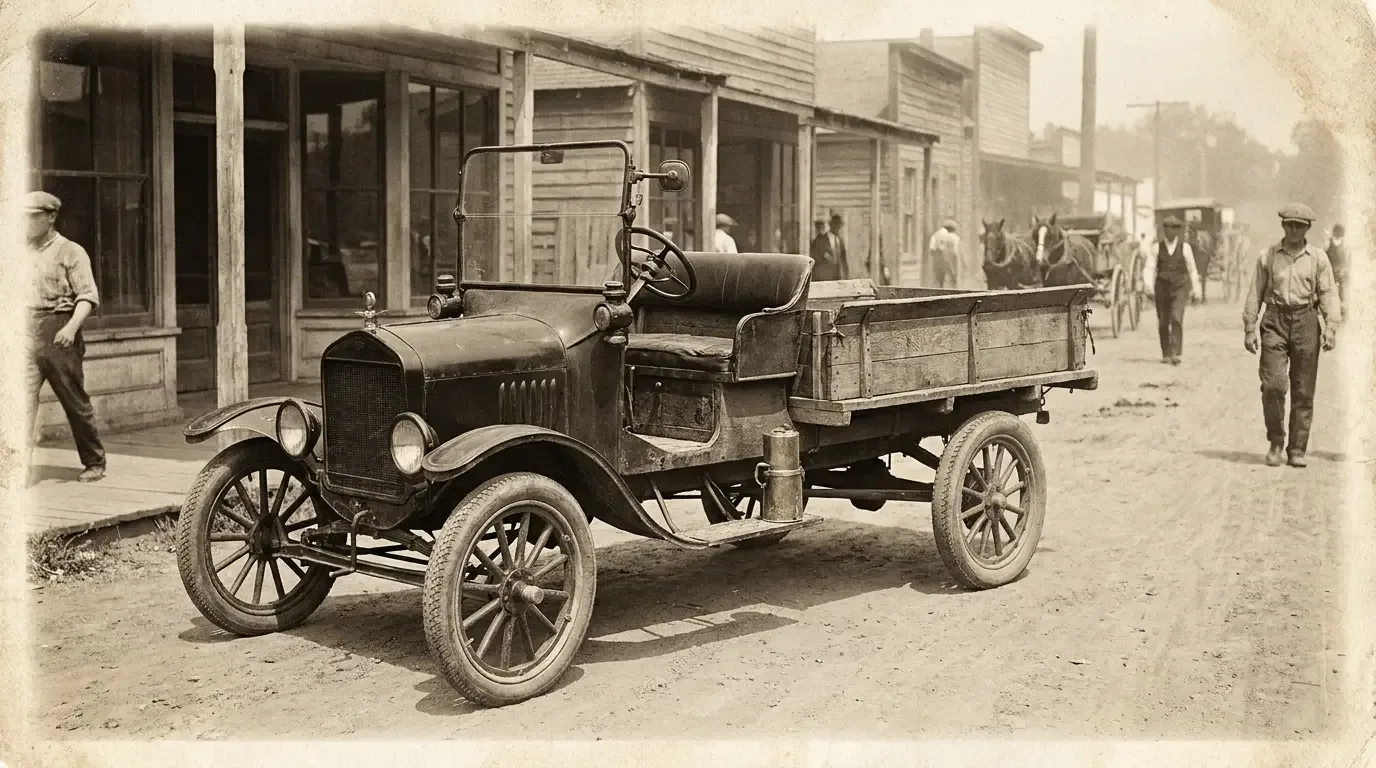
Early truck advertising, roughly the 1920s through the postwar years, read like a spec sheet with a headline. The copy was dense, technical, and aimed squarely at the wallet. Ads listed load capacity, wheelbase, axle ratings, and fuel economy. They ran in farm journals and trade papers, not glossy magazines, because the people who bought trucks were people who needed one for work. A truck was a capital expense, and the manufacturers knew their audience approached it the way they approached a plow or a milking machine: does it do the job, and will it pay for itself?
The tone was earnest and unglamorous. A typical ad might promise that the truck would haul a ton over rough roads without complaint, or that its engine would run all day and start on a cold morning. There were no cowboys, no mountains, no swelling music implied by the layout. The illustrations, and later the photographs, showed trucks doing labor. A pickup backed up to a loading dock. A truck full of lumber. A delivery vehicle parked outside a small-town store. The message was simple: this thing works, and it will keep working, and that is why you should give us your money.
This was not a failure of imagination. It was an accurate read of the market. Through the Depression and into the 1940s, the pickup was overwhelmingly a rural and commercial vehicle. The advertising matched the buyer because the buyer had no patience for anything else. You did not romance a man who was going to work the truck to death and then decide whether to buy another one based on how the first held up.
"You can learn a lot about a decade by reading what its ads were afraid to leave out. In the twenties, they were afraid to leave out the axle rating. By the eighties, they were afraid to leave out the sunset."
— Patrick Walsh
The postwar turn toward comfort and belonging
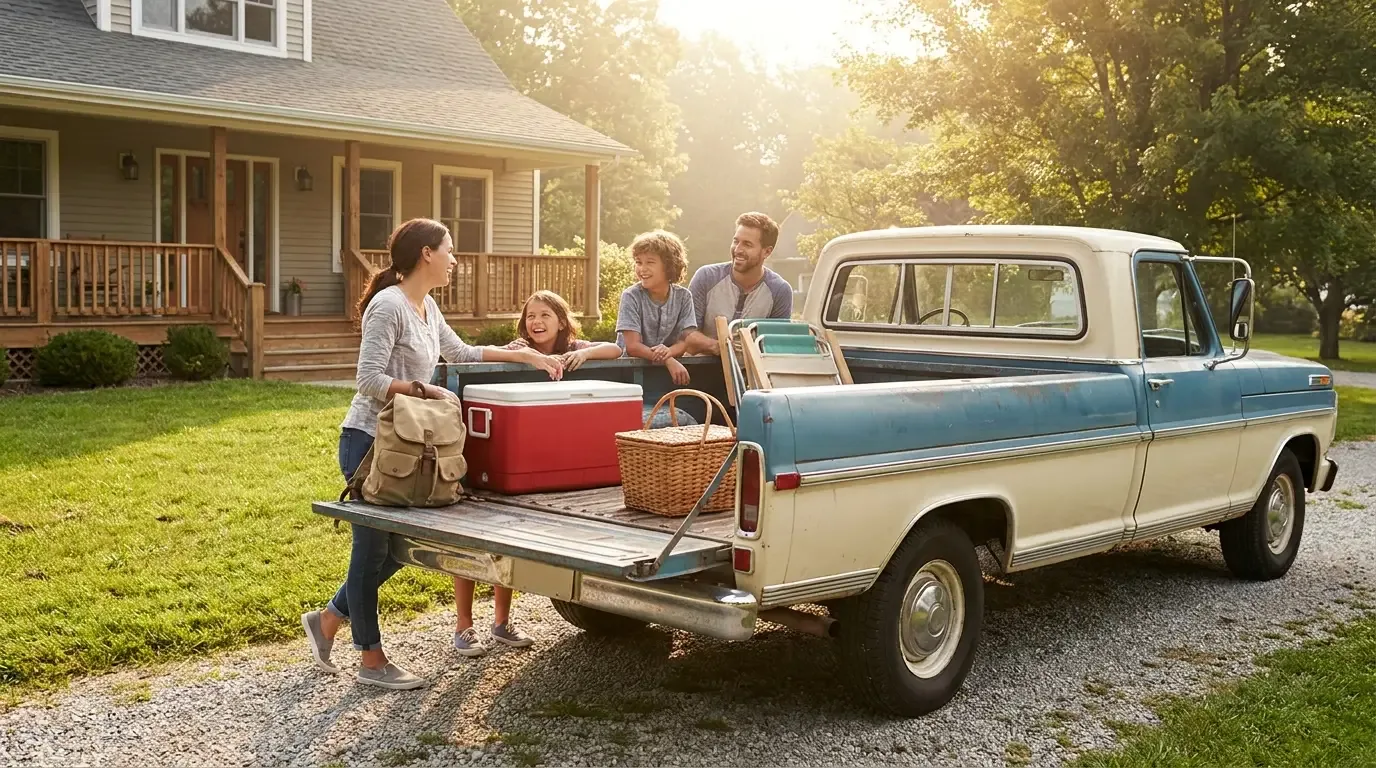
Something changed after World War II, and it changed slowly at first. Returning veterans and a booming economy created a new kind of buyer, and manufacturers noticed that trucks were starting to leave the farm. Small business owners, tradesmen, and eventually ordinary families were looking at pickups. The advertising began, cautiously, to talk about more than tonnage. It started to mention the cab.
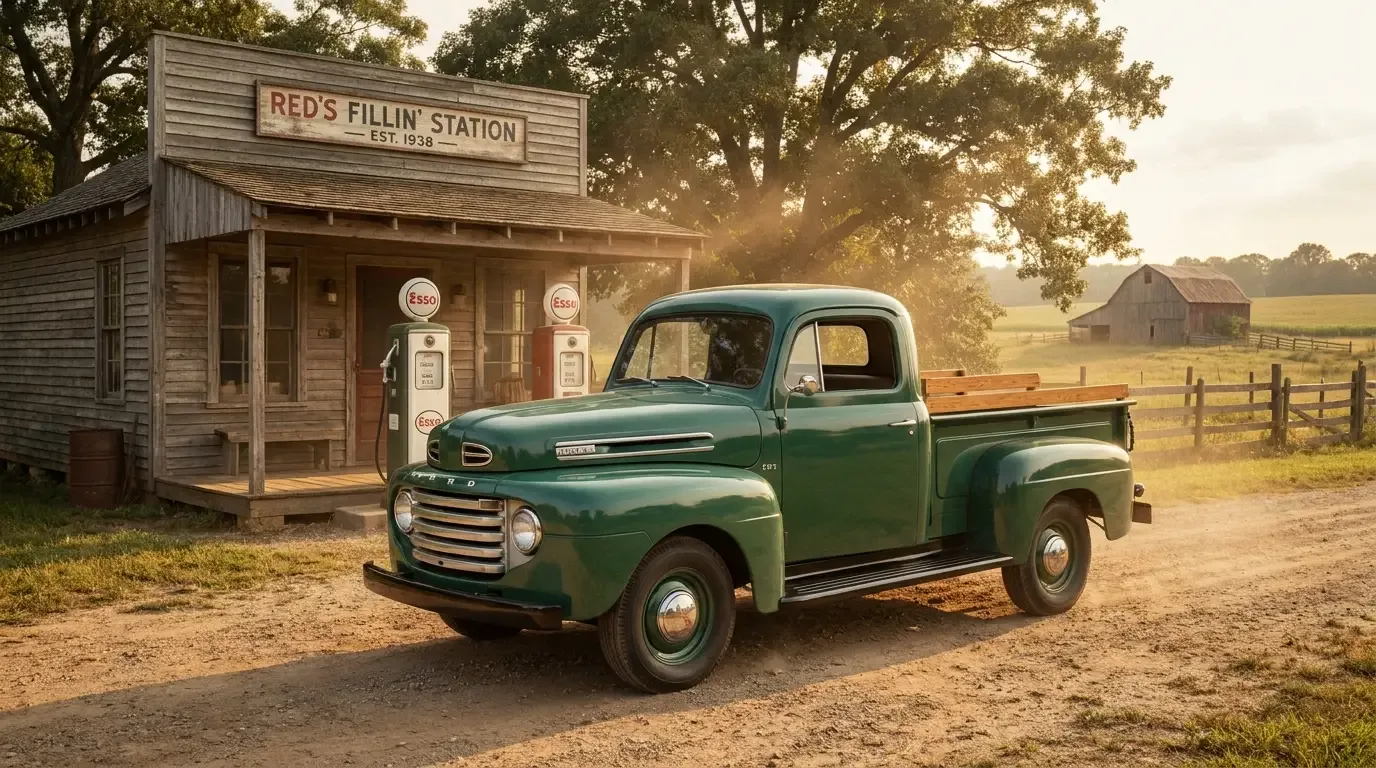
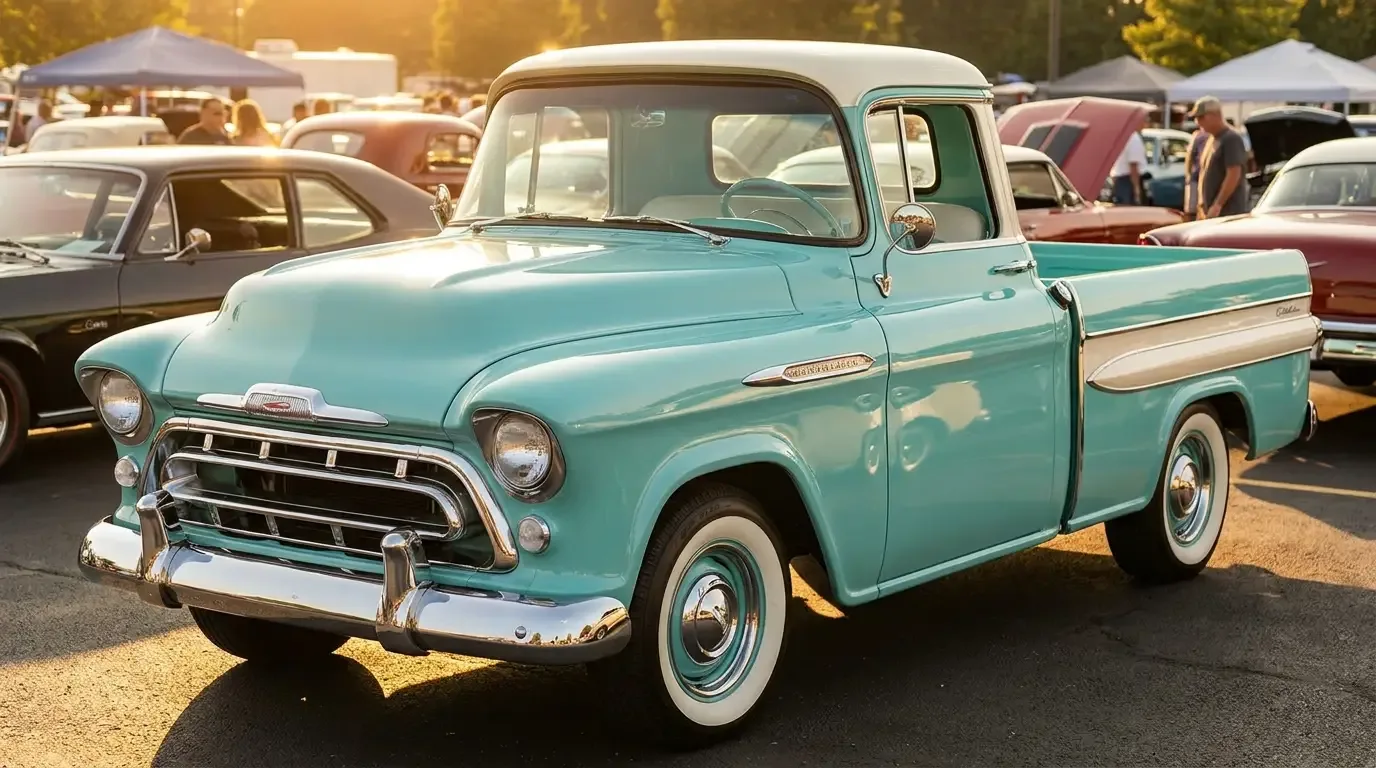
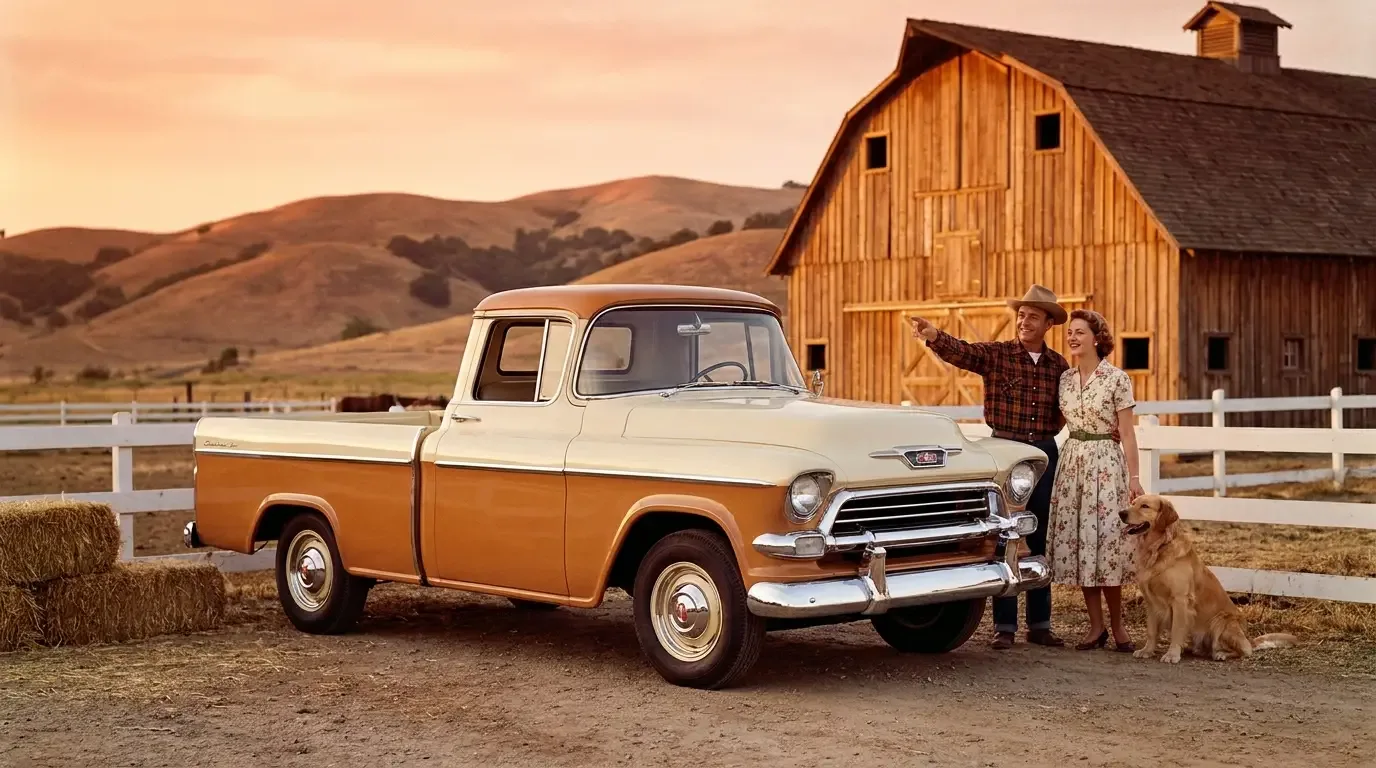
By the 1950s, truck ads were selling comfort alongside capability. Copy praised roomier interiors, smoother rides, and styling that borrowed from passenger cars. The pickup was no longer just a beast of burden; it was becoming something a man might be seen in around town, something with a bit of pride attached. Two-tone paint appeared. Chrome appeared. The trucks got prettier because the ads had figured out that buyers wanted them to.
This is the hinge. The utilitarian pitch never fully disappeared, and it still hasn't, but it stopped being the whole message. Advertising began to suggest that owning a truck said something about you. Not yet a full mythology, but the seed of one. The ad was no longer only answering "will it work?" It was starting to answer "what kind of man drives this?" And once an advertiser learns that a customer will pay to feel like a certain kind of person, the advertiser never forgets it.
Selling the rugged individual
By the 1970s and into the 1980s, the mythology was fully built. The truck ad became a short film about American masculinity, self-reliance, and the frontier. The imagery is instantly recognizable because it is still with us: a lone truck cresting a hill against an open sky, mud flying, a working man's hands on the wheel, a dog in the bed, the promise of a life lived outdoors and unbossed. The soundtrack got a twang. The narration got a growl.
What the manufacturers had discovered was that a truck could be sold as a symbol rather than a tool, and symbols command loyalty that spec sheets never could. The advertising stopped competing primarily on payload and started competing on identity. Toughness became a feeling you could purchase. The word "built" got a workout. Durability was no longer just a practical claim; it was a moral one, a statement about the kind of person you were and the kind of country you believed in.
This is where the marketing began to shape the buyer rather than merely describe him. A generation of Americans learned to associate the pickup with rugged independence whether or not they had any use for a truck's actual capabilities. The advertising created the demand it then fulfilled. Suburbanites who would never tow a horse trailer bought trucks capable of towing horse trailers, because the ad had sold them the feeling of being someone who might. The truck became aspirational, and aspiration has no ceiling on what people will spend.
- The landscape as co-star. Mountains, deserts, and open range signaled freedom and the frontier, tying the truck to a national self-image older than the automobile.
- The working man as hero. Even as buyers went white-collar, the ads kept the mud and the calloused hands, letting the customer borrow an identity he no longer lived.
- Toughness as language. Words like tough, built, and rugged migrated from engineering claims to emotional ones, and stuck.
How the myth reshaped the machine
Advertising did not just reflect the truck. It remade it. Once the marketing had established the pickup as a personal statement, the vehicles themselves began to change to fit the story being told about them. Cabs grew. Crew cabs, once a niche configuration for work crews, became the default because families wanted the truck-as-identity with room for kids. Interiors gained carpet, leather, and eventually the full suite of luxury-car appointments. The bed, ironically, often shrank, because fewer buyers actually needed to haul anything.
Trim levels multiplied, and many carried names lifted straight from the advertising vocabulary of the outdoors and the frontier. The truck was being engineered to match its own commercials. Ride height, styling, and badging all bent toward the mythology. By this point the causation ran both ways: the ads sold a fantasy, buyers rewarded the fantasy, and manufacturers built more of it, which gave the ads more to sell. The tool had become a costume, and a very profitable one.
There is a real cultural cost and a real cultural gift tangled together here. The gift is that the pickup became one of the most durable and beloved shapes in American life, a genuine folk object that people restore, cherish, and pass down. The cost is that a machine born to work got partly hollowed into a symbol, sold to people who wanted the meaning without the labor. Both things are true, and the old work trucks that survive from before the mythology took over are prized today precisely because they came from the era when the ad still told the truth about what the truck was for.
What the advertising tells us now
Look at a century of truck advertising in sequence and you are looking at a portrait of what Americans wanted to believe about themselves. The farmer counting trips to the elevator became the tradesman who wanted a comfortable cab became the suburban buyer purchasing a feeling of self-reliance. At each step the advertising led and the buyer followed, and the truck was quietly rebuilt to keep the promise the last campaign had made.
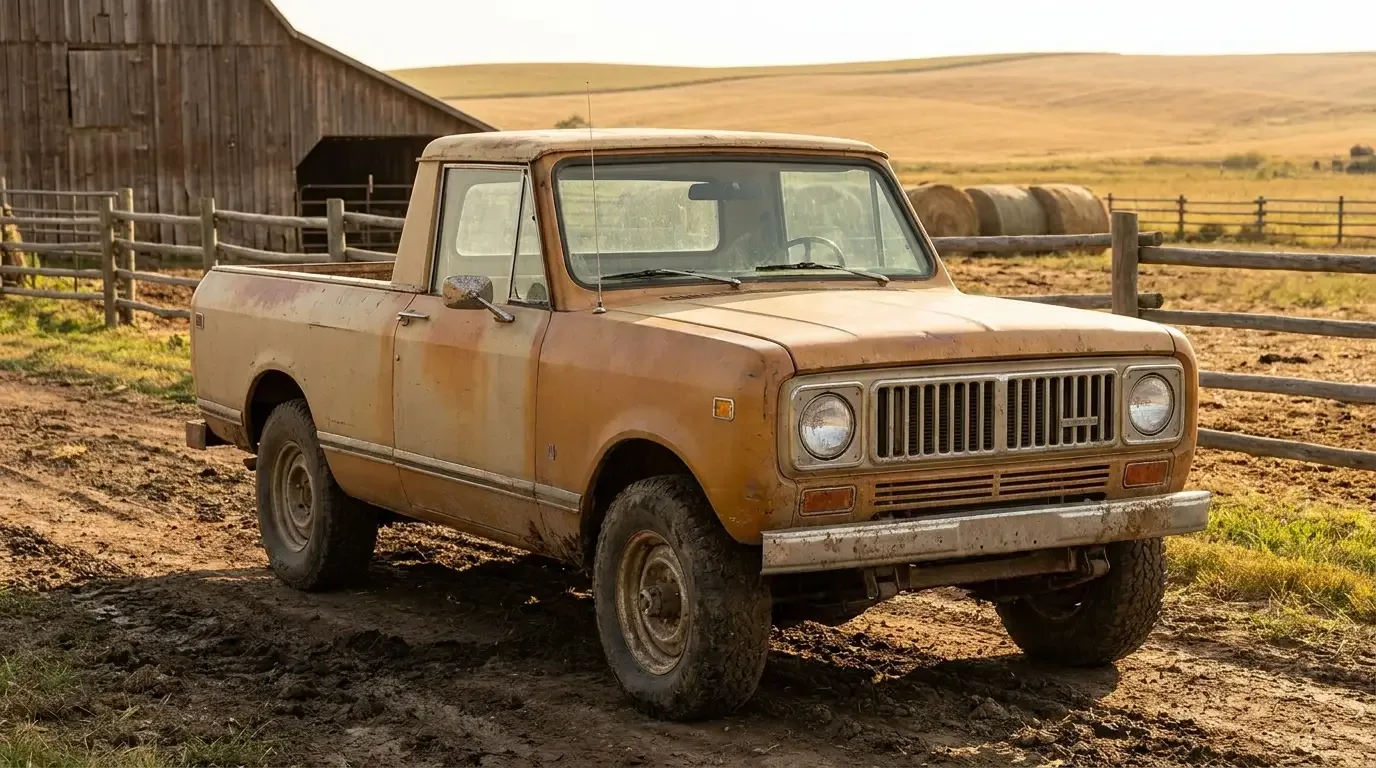
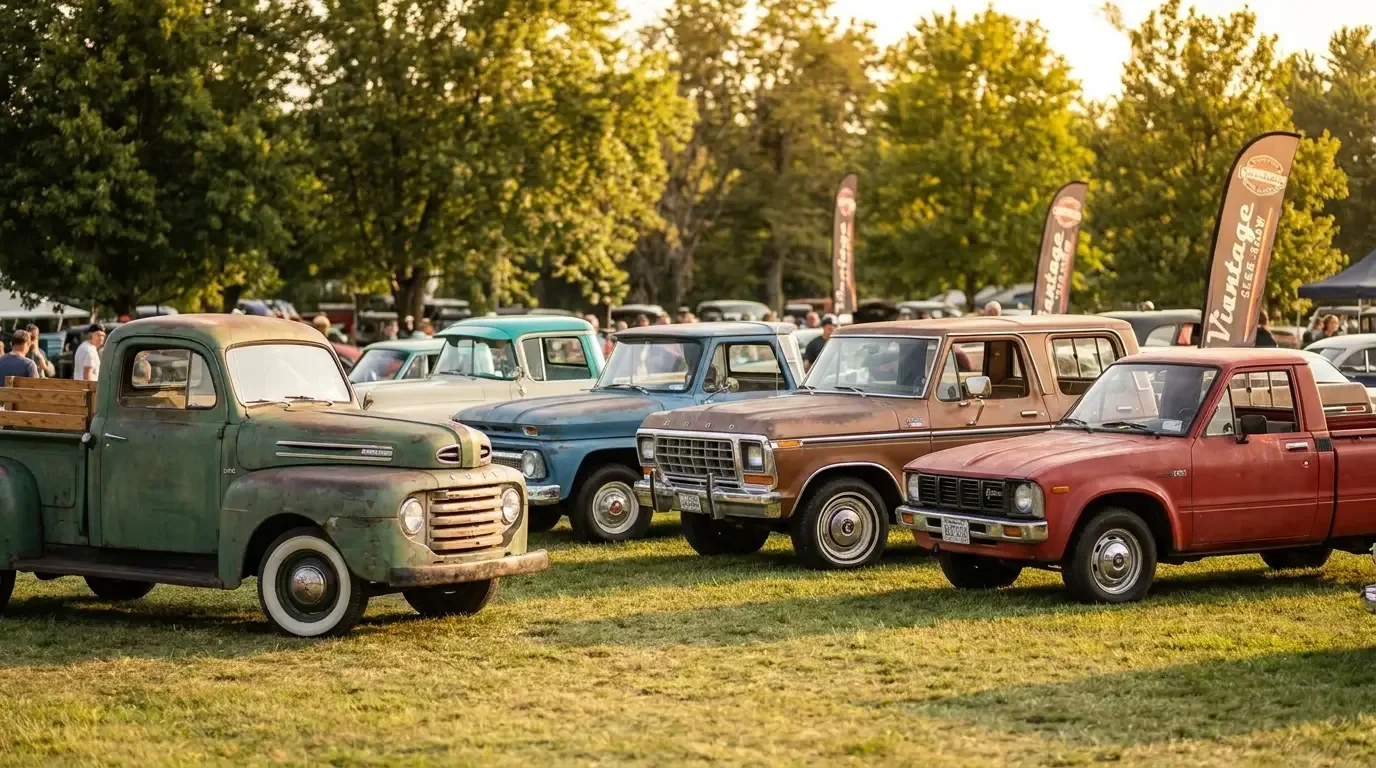
That is why the old trucks matter so much to the people who love them. A pre-mythology pickup is an honest object. It was sold to do a job, it was built to do that job, and everything about it, the plain cab, the long bed, the modest trim, was answering a practical question rather than flattering an ego. When you restore one of those trucks, you are preserving a moment before the marketing took over, when the pitch was still just the payload. For the fuller story of how these machines evolved decade by decade, see the complete history of the American pickup, which traces the same arc from the engineering side that the advertising was busy dressing up.
Sources and notes
- Period truck advertisements and brochures from farm journals, trade publications, and general-interest magazines across the 1920s through 1980s.
- Marque histories and manufacturer archives covering the postwar transition of the pickup from commercial to personal vehicle.
- General automotive and cultural histories on American truck marketing and the evolution of trim levels and cab configurations.
- Claims about production eras and buyer demographics are directional; no specific sales figures or prices are cited here.