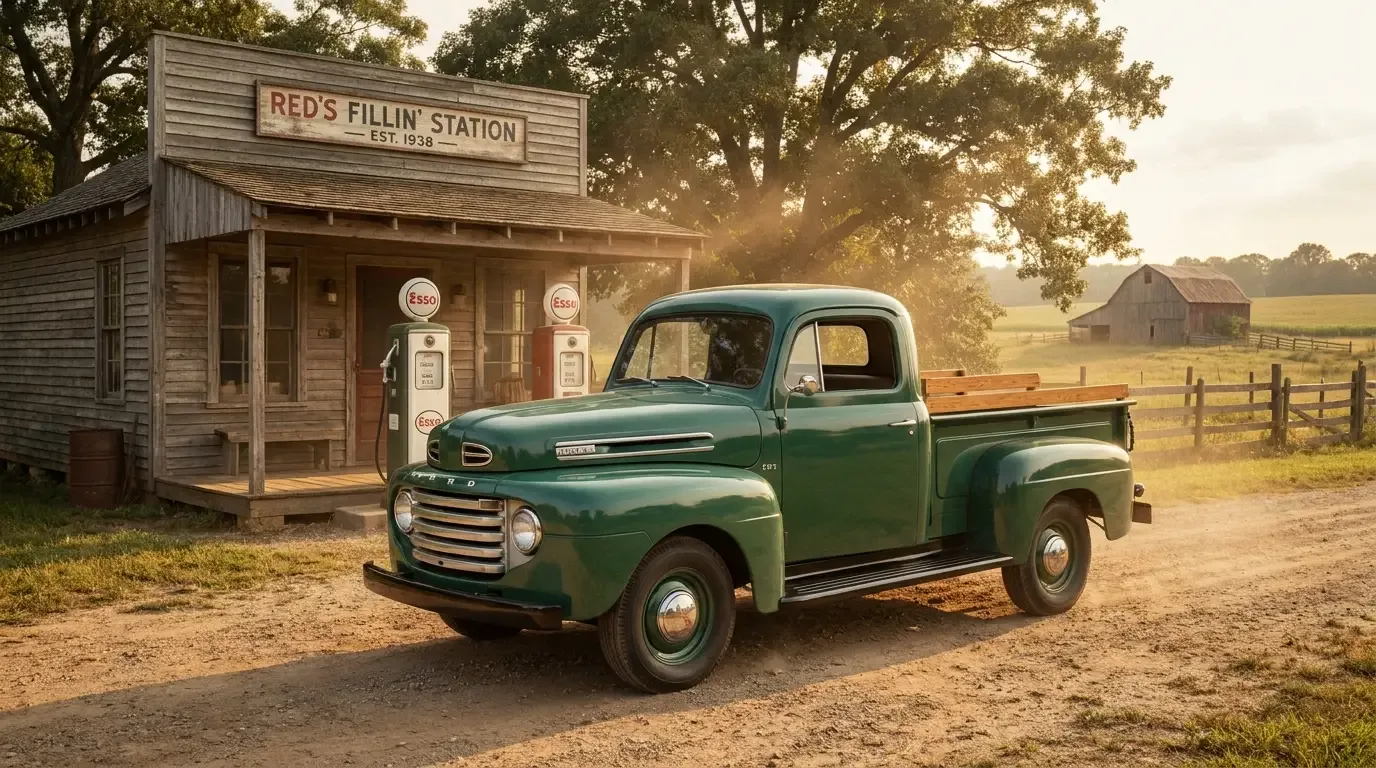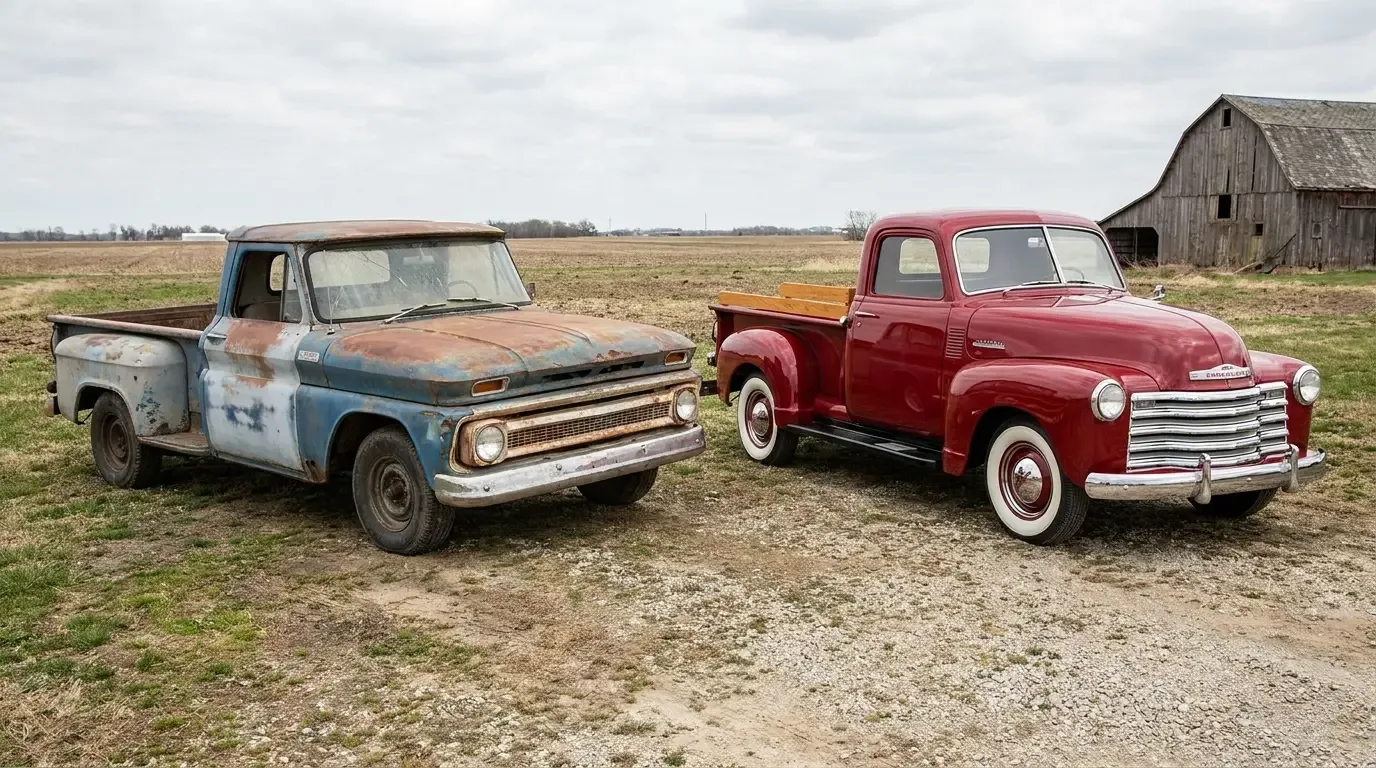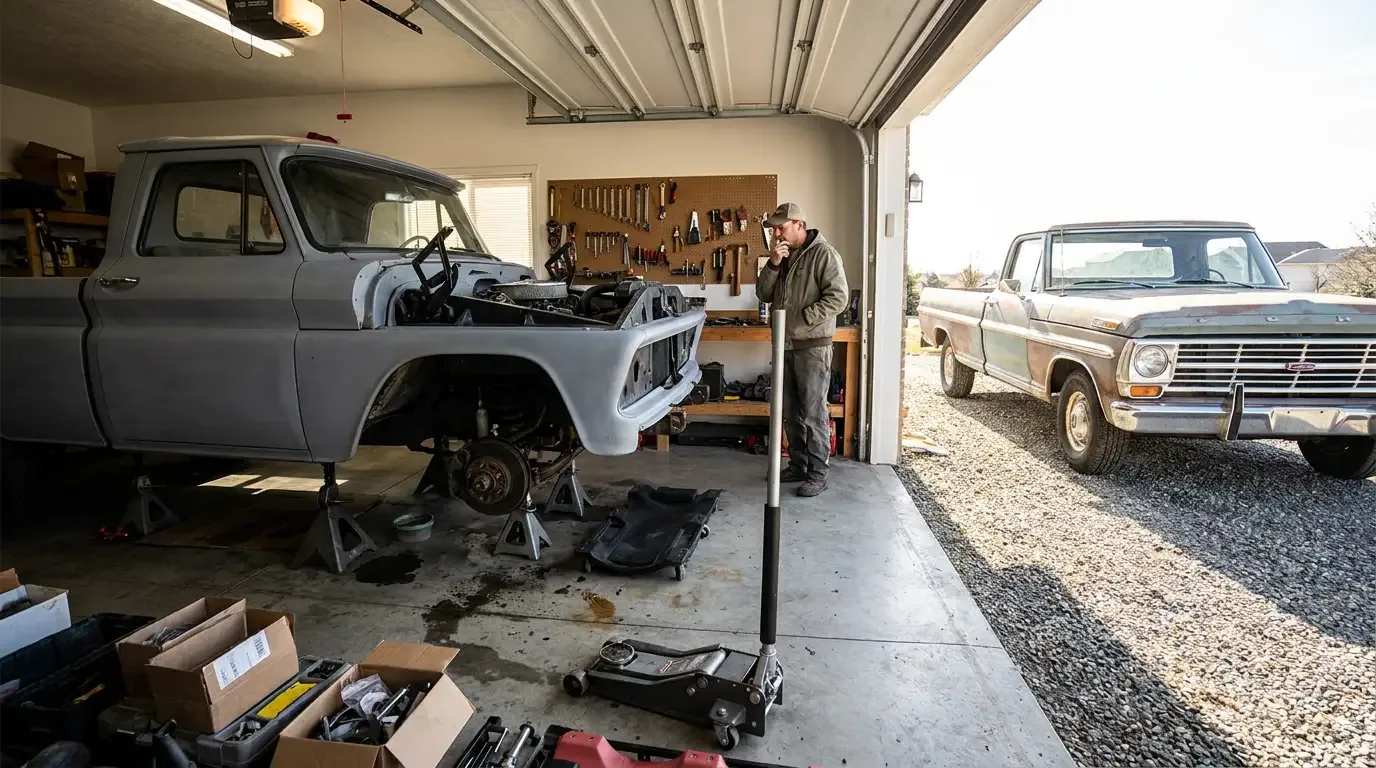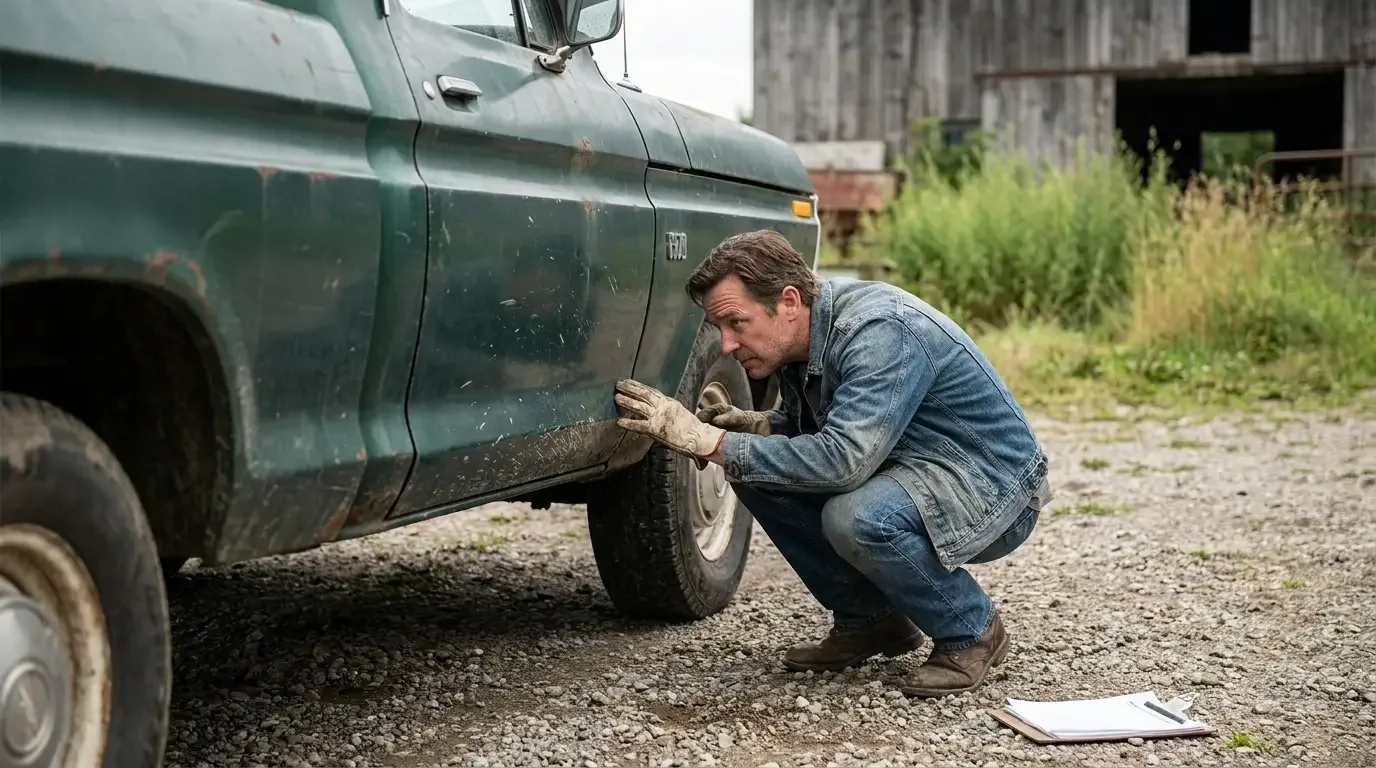

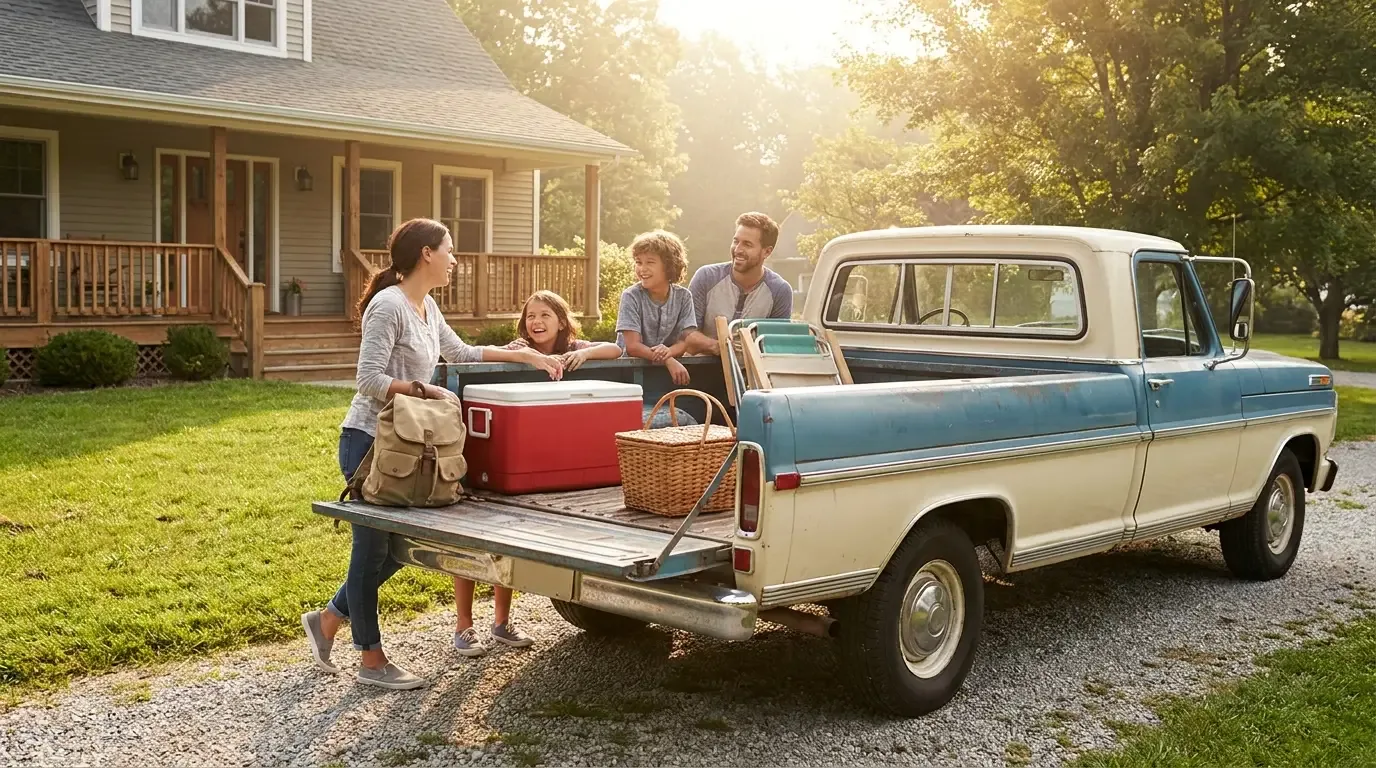
In the summer of 1965, a farmer named Earl in central Ohio kept two vehicles in his yard. One was a sedan, waxed and reserved for church. The other was a pickup, mud on the running boards, a coil of baling wire behind the seat, and a bench so hard it could double as a workbench. Nobody in Earl's family would have dreamed of taking the truck to a wedding. It smelled of diesel and hay. It was a tool, the same as a post-hole digger or a chainsaw.
Thirty years later, Earl's grandson drove a pickup with air conditioning, carpet, a stereo, and a back seat big enough for two kids in car seats. He took it everywhere. To work, to the lake, to that same church. Somewhere between those two trucks, the American pickup stopped being a farm implement and became the vehicle a family built its life around. That shift is one of the strangest and most complete transformations in the story of the automobile, and it says as much about how Americans lived as it does about how they drove. It is a thread worth pulling from the larger the history of the American pickup.
The truck as pure implement
For its first forty years, the pickup was honest about what it was. It hauled feed, lumber, tools, and livestock. The cab was a place you tolerated, not a place you enjoyed. Early postwar trucks came with a single bench seat, rubber floor mats, and a heater that was often optional. Roll-down windows were the climate control. If you wanted a radio, you paid extra, and plenty of buyers didn't bother.
The design language matched the mission. Flat glass, upright cabs, and beds sized for a task rather than a lifestyle. Manufacturers rated these trucks by payload and by how much abuse they could absorb before something bent. A rancher didn't ask whether the seat was comfortable on a long drive because he wasn't taking long drives. He drove fence line to barn and back. The truck was a work animal with a gas tank, and it was priced and equipped accordingly.
What mattered was durability and repairability. A farmer expected to fix his own truck in the yard, so the mechanicals stayed simple on purpose. That simplicity is part of why so many of these trucks survived to become collectible. They were built to be worked, not pampered, and the ones that were cared for lasted decades.
Comfort arrives, one option at a time
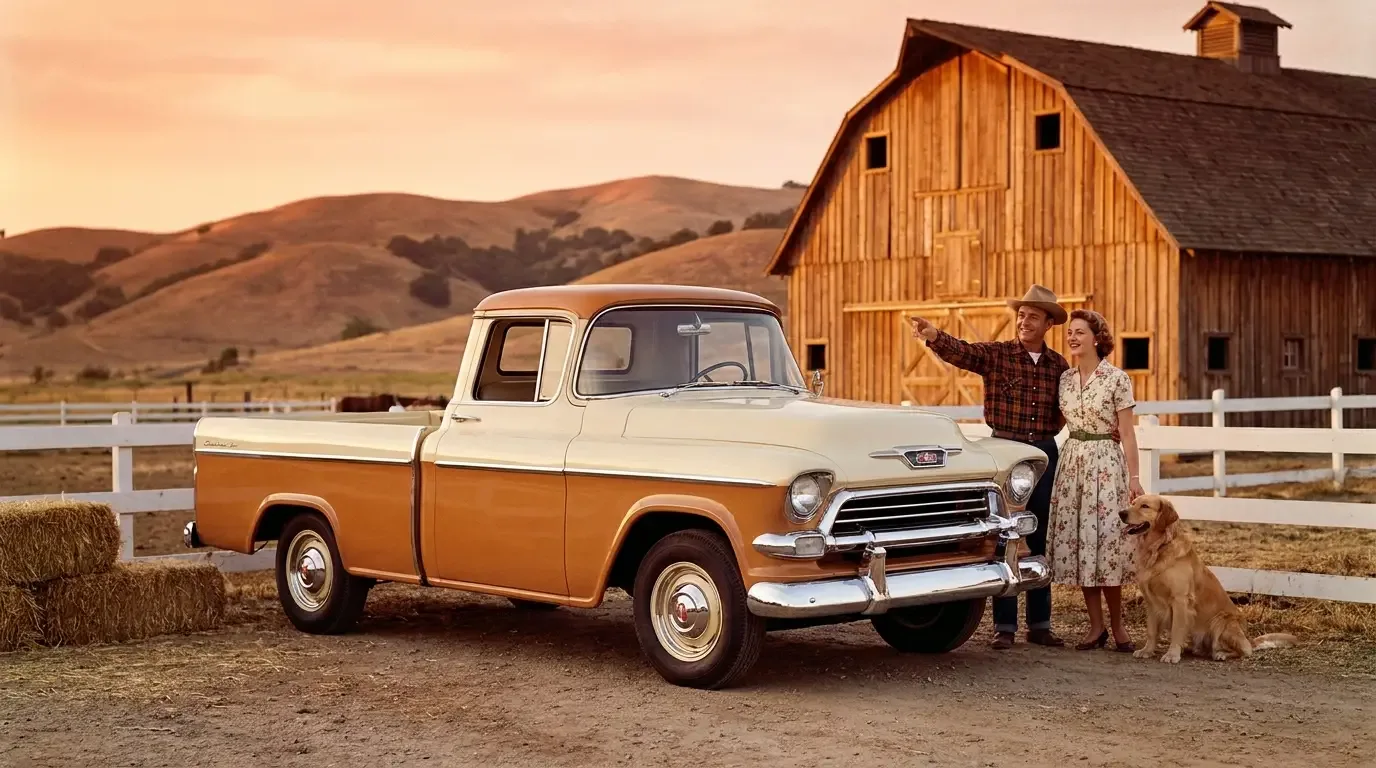
The change didn't happen overnight. It arrived quietly, one option box at a time. First came the optional radio, then a better heater, then the choice of a padded bench instead of the bare one. By the 1960s, buyers could order two-tone paint and brightwork that had nothing to do with hauling capacity and everything to do with how the truck looked in the driveway.
Manufacturers noticed something. People were buying trucks they didn't strictly need for work, and those people wanted the truck to be pleasant to sit in. So the options list grew. Air conditioning appeared as an extra-cost item. Carpet replaced rubber in the upper trim levels. Vinyl gave way to cloth. Bucket seats and center consoles, once the language of sports cars, started showing up in pickup order sheets.
The industry gave these dressed-up trucks their own trim names, and the names became shorthand for a new idea: a truck could be nice. Not just capable, nice. That was a genuinely radical thought in a segment that had spent decades proudly refusing to be anything but functional. A buyer could still get a stripped work truck, and many did. But now, right next to it on the lot, sat a version with the comfort of a car and the utility of a truck. That combination turned out to be exactly what a growing suburban middle class wanted.
"The first time I sat in a fully optioned truck from the mid-sixties, I remember thinking it felt like someone had smuggled a living room into a work vehicle. That was the whole trick. You didn't have to choose between comfort and capability anymore, and once people tasted that, there was no going back."
— Patrick Walsh
The crew cab changes everything
If comfort options softened the truck, the crew cab redefined what it was for. A regular cab seats two, maybe three across the bench. That is fine for a work crew or a solo driver. It is useless for a family. The crew cab, with its second row of doors and a real back seat, answered a question nobody in 1950 was asking: can the whole family ride in the truck?
Early four-door trucks were built for exactly what the name suggests, hauling a work crew to a job site. Utility companies, forestry services, and construction outfits bought them to move men and tools together. But the moment a truck had a usable back seat, families started to see it differently. Kids could ride in back. Groceries had somewhere to go besides the exposed bed. The truck could do the school run and still haul plywood on Saturday.
The crew cab is the single most important body style in the truck's journey from tool to family vehicle. It closed the last gap between a pickup and a station wagon. Once a family could seat everyone comfortably, the only remaining difference between a truck and a car was capability, and capability was a feature, not a drawback. Consider what the crew cab added:
- A second row of seating that made the truck viable for daily family use.
- Enclosed, lockable storage behind the front seats for anything that couldn't ride in the open bed.
- A cab long enough that manufacturers could add rear climate vents, cupholders, and eventually rear entertainment.
- A footprint that signaled the truck was now a primary vehicle, not a second one parked behind the sedan.
The truck as identity in the suburbs
By the time the pickup reached the suburban driveway, it carried more than passengers. It carried meaning. A truck said something about its owner that a sedan never could. It suggested you were capable, that you could tow a boat or move a couch or help a friend on moving day. It projected a certain rugged self-reliance even to people who used it mostly for commuting and Costco runs.
This is the part of the story that goes beyond seats and options. The pickup became a piece of identity. It showed up in country songs, in advertising that leaned hard on themes of work and freedom, and in the quiet social signal of a clean truck parked in front of a nice house. The vehicle that once meant you had a farm now meant you had an attitude. Owners personalized them the way earlier generations personalized cars, with wheels, lift kits, bed covers, and paint.
The irony is thick. The pickup earned its cultural authority from decades of genuine hard work, then cashed in that authority as a lifestyle statement for buyers who rarely worked it hard at all. That doesn't make the affection fake. Plenty of suburban truck owners genuinely valued the capability, even if they only used it a few times a year. The point is that the truck had become something you wanted to be seen in, which is a long way from a mud-caked implement nobody would drive to church.
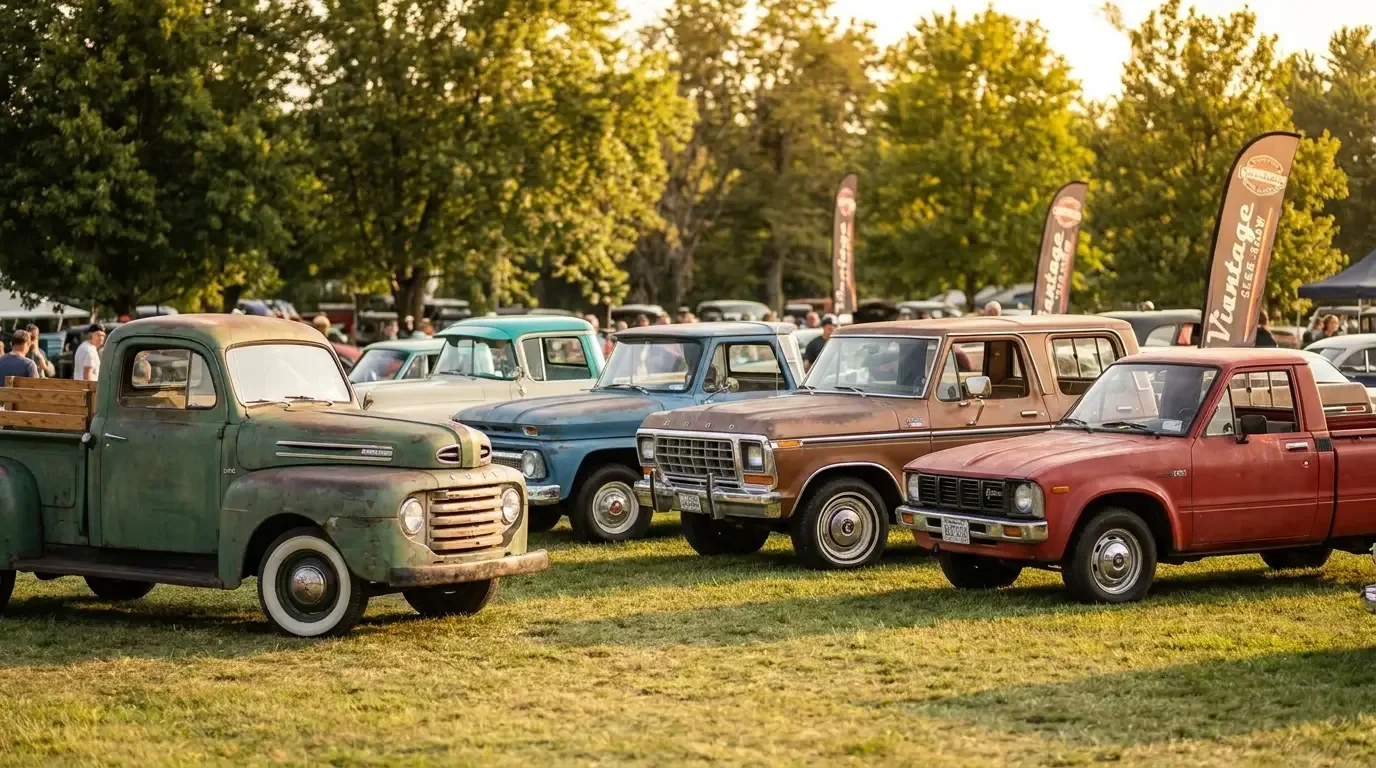
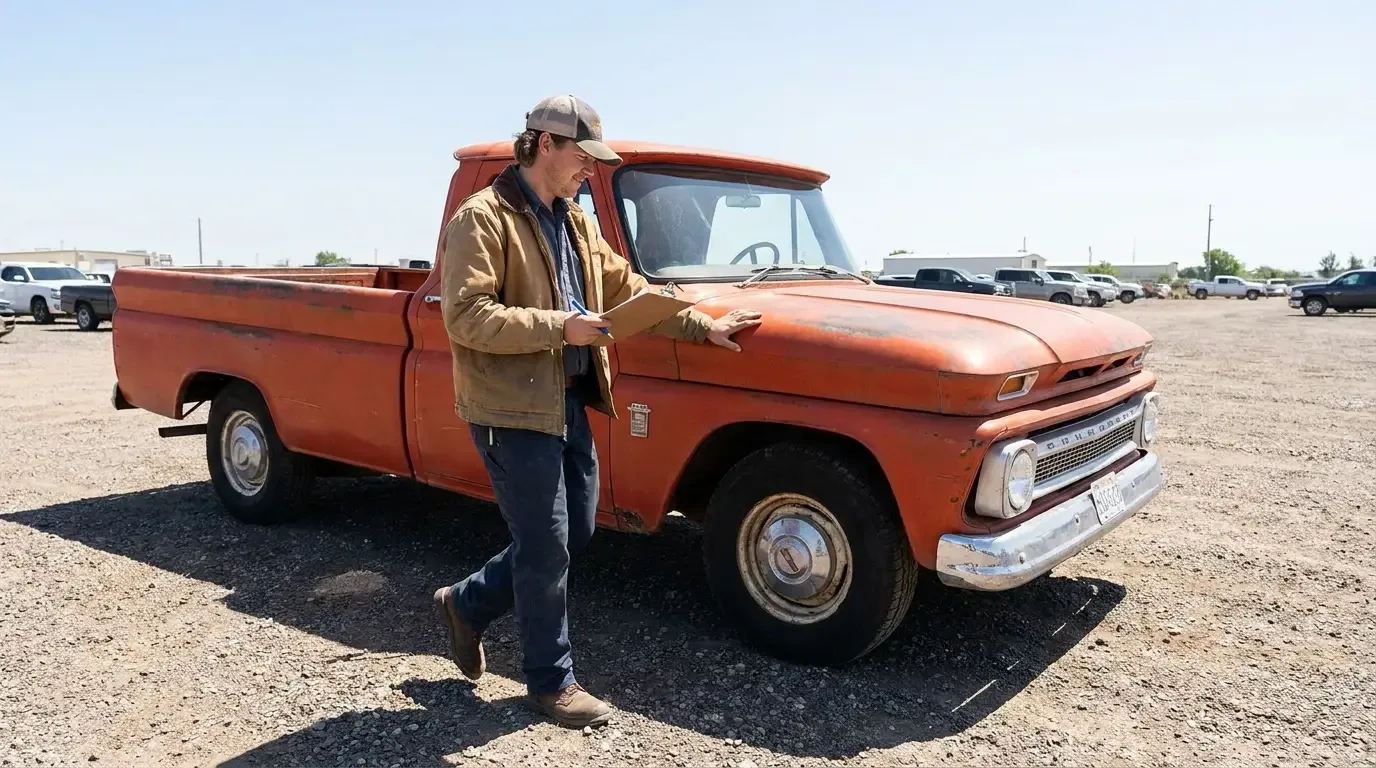
That heritage is exactly why classic trucks hold such a grip on collectors today. A well-kept older pickup carries both the work story and the family story in one body. If the pull is strong enough that you find yourself browsing classic pickups for sale, you are responding to the same thing that moved Earl's grandson: a machine that manages to be useful and beloved at the same time.
Sources and notes
- Marque and model histories covering postwar American pickup development and trim evolution.
- Period road tests and factory brochures documenting optional equipment and comfort features.
- Factory order guides and option lists for cab configurations and trim levels.
- General automotive histories addressing the pickup's cultural role in postwar and suburban America.