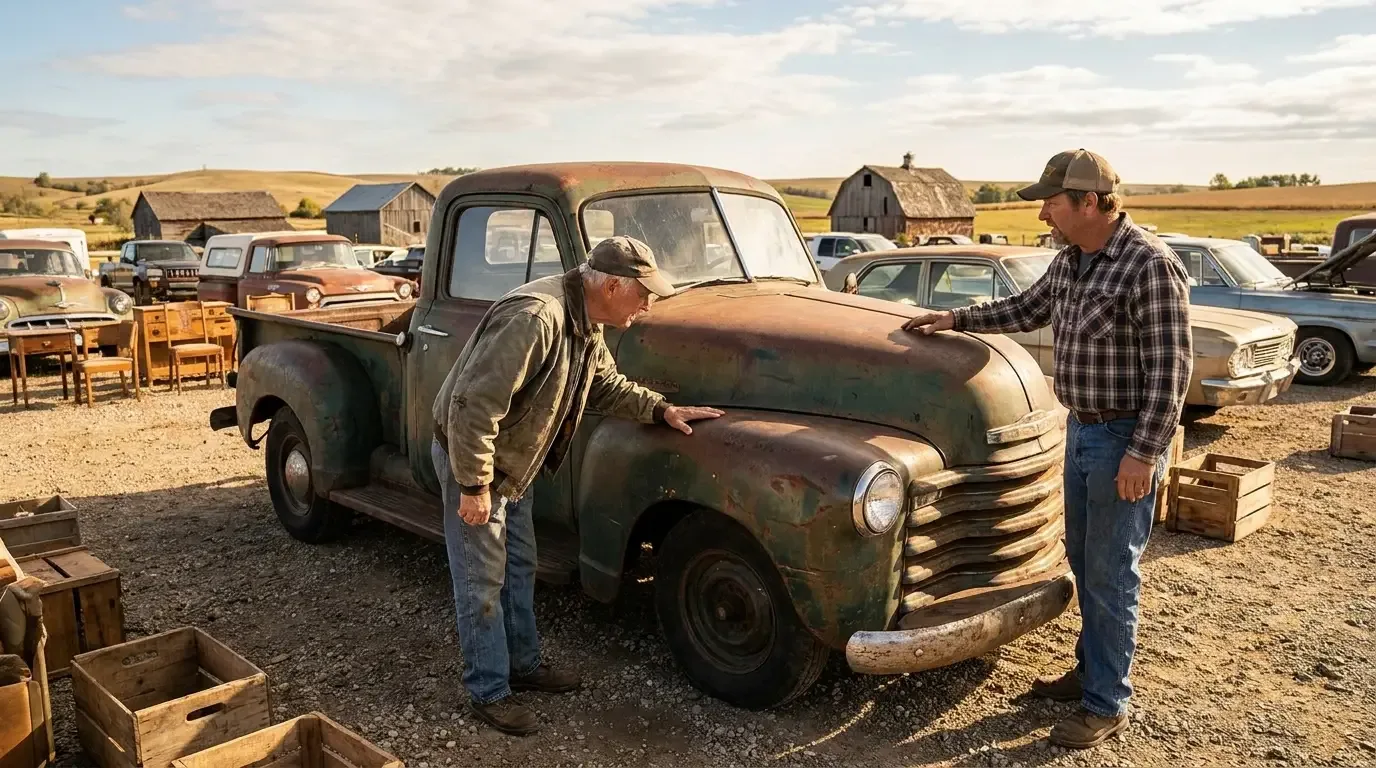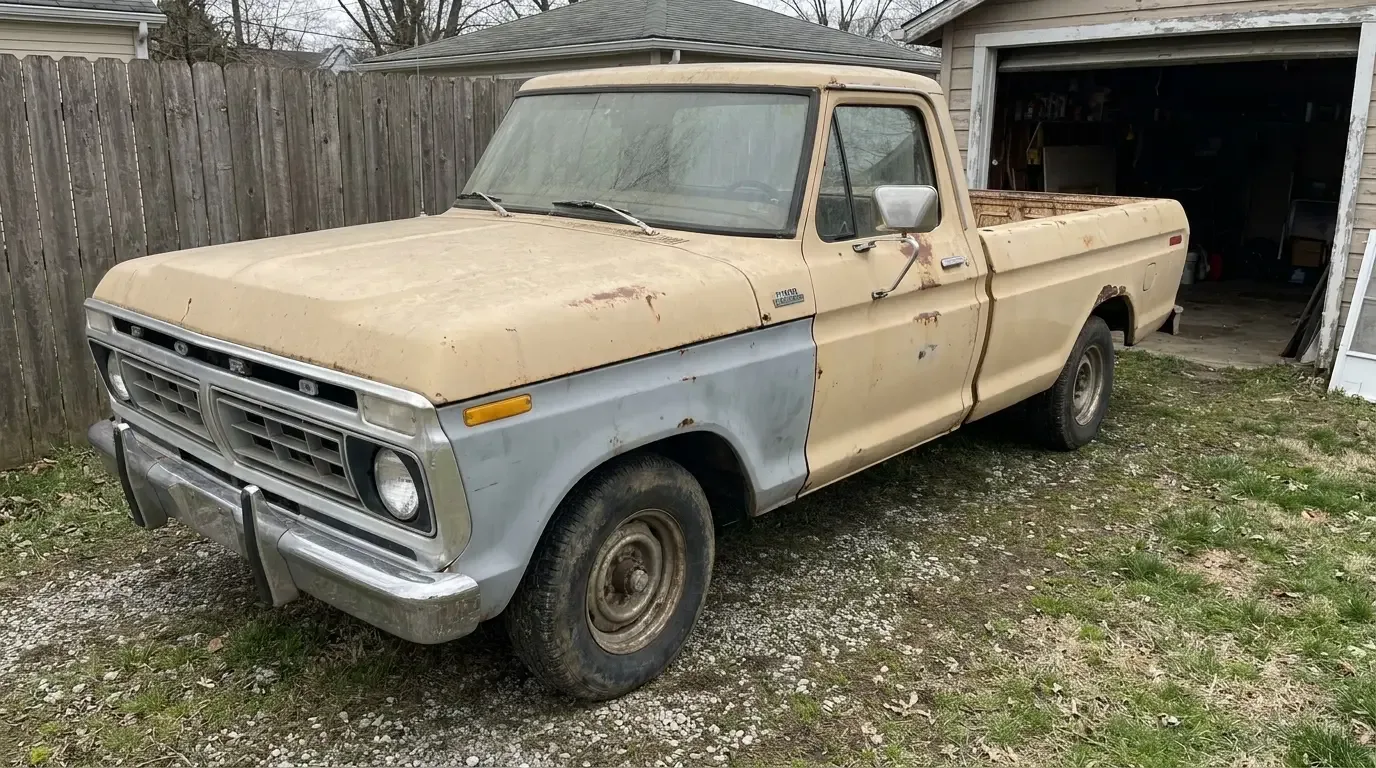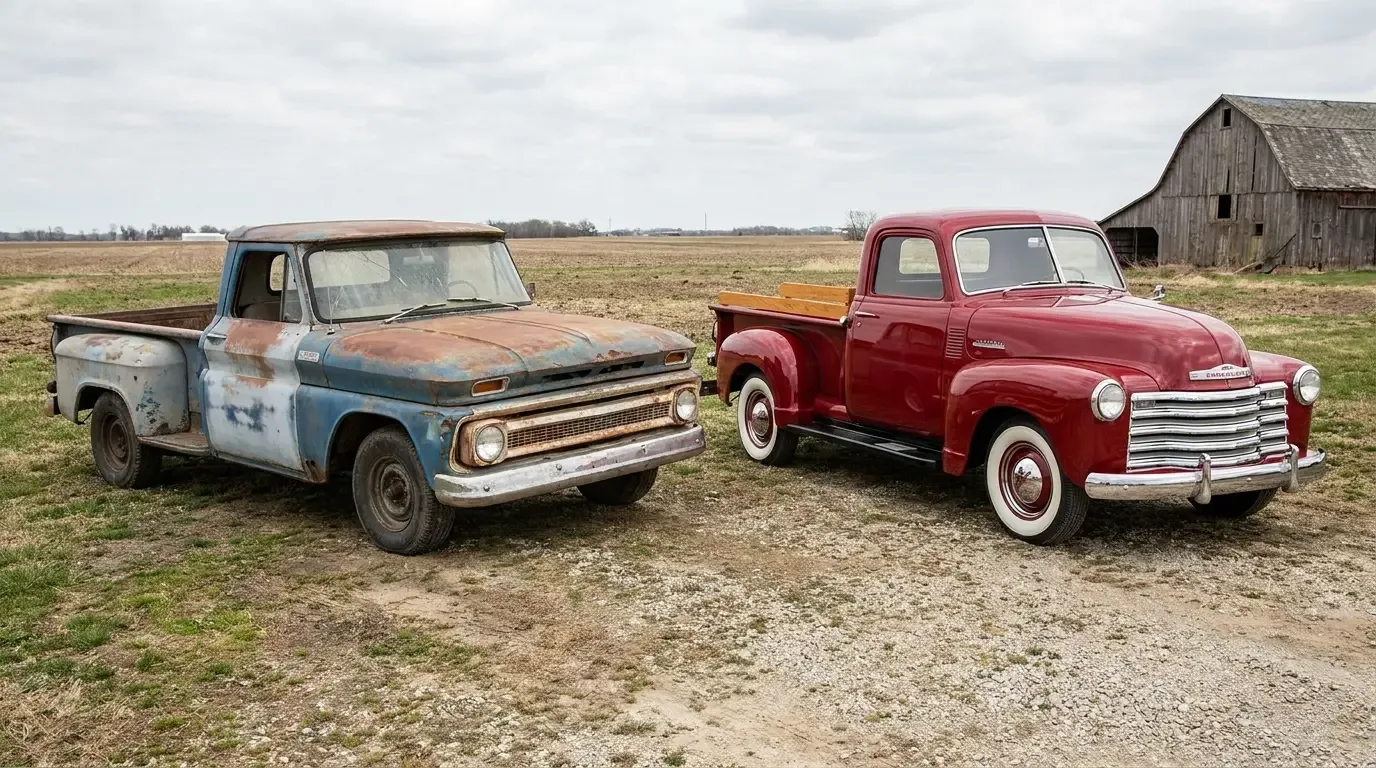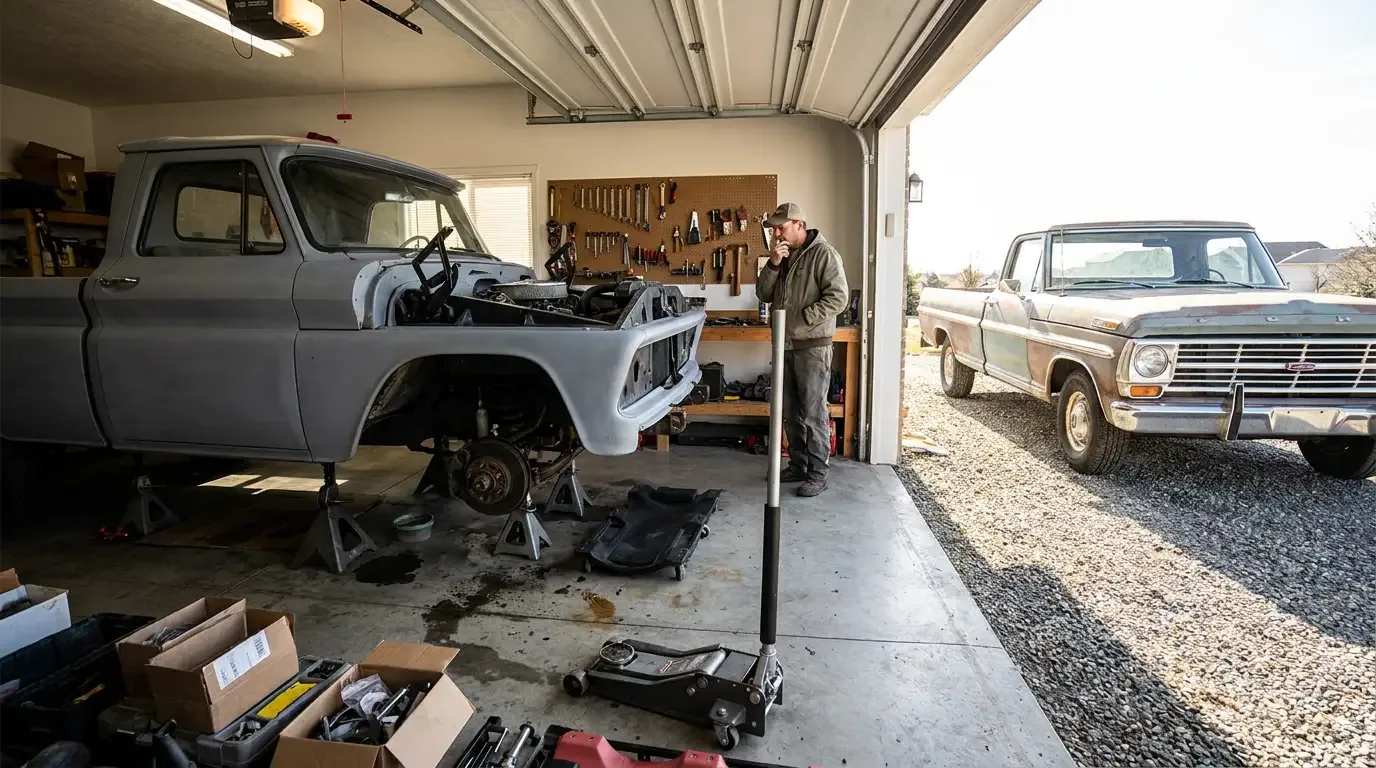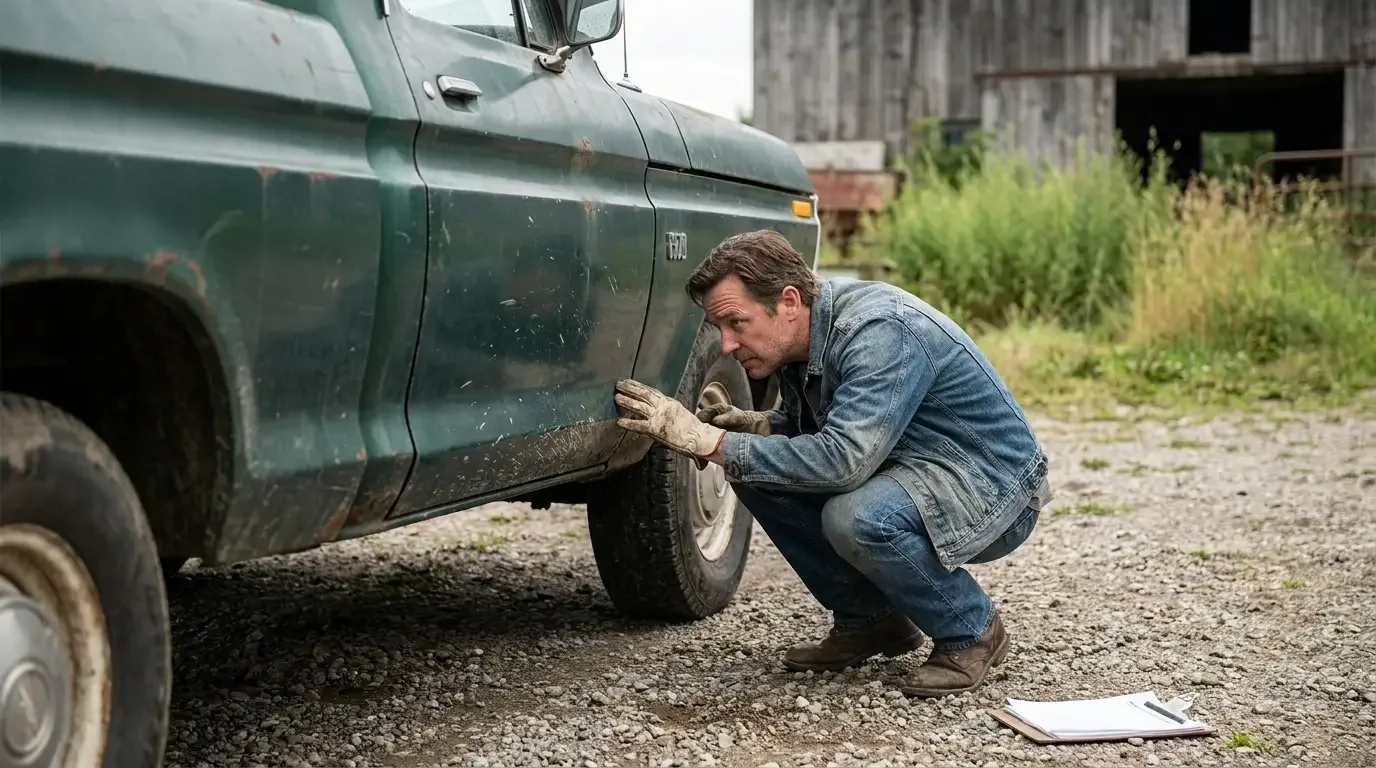

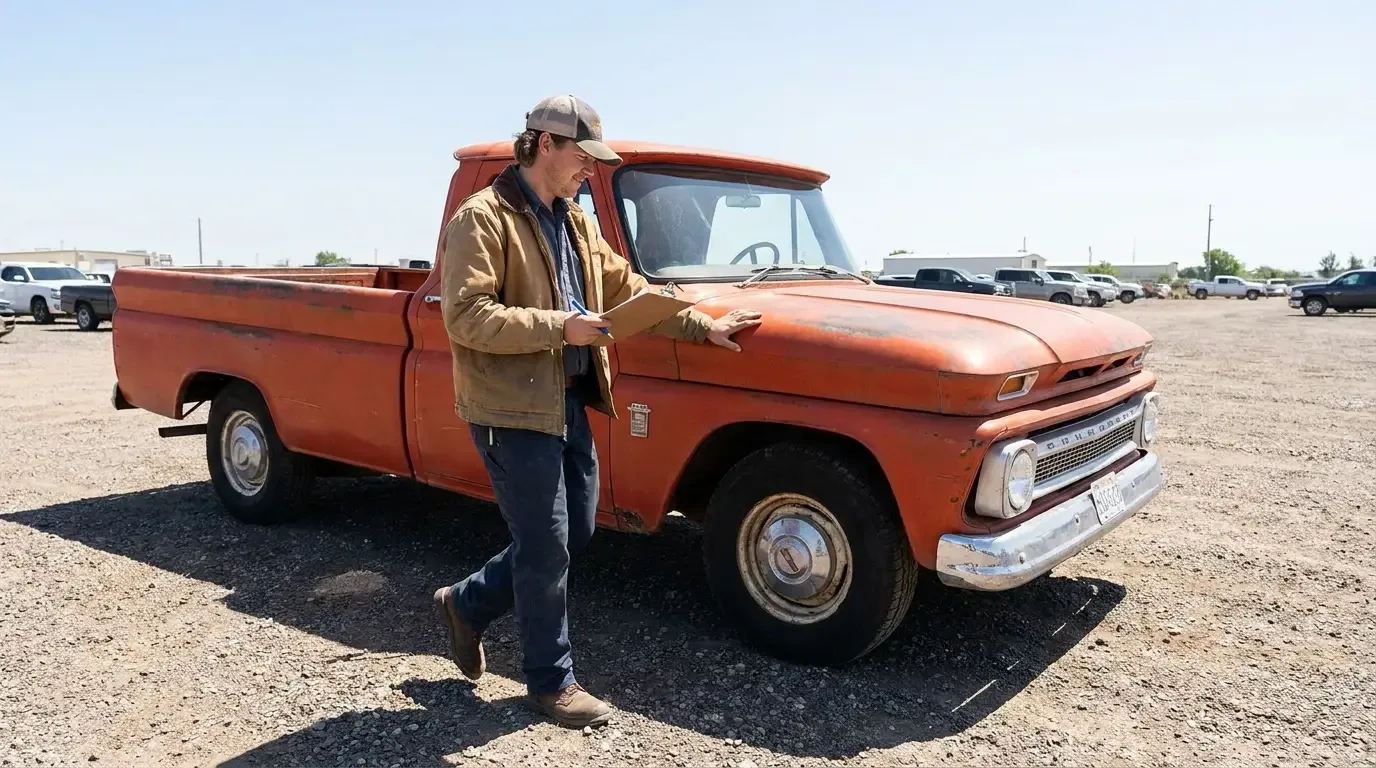
A classic truck sells itself in the photos. Fresh paint, a bench seat you could sleep on, a tailgate that shines. None of that tells you whether the thing will still be a truck in five years or a pile of parts on jack stands. The buying decision happens underneath, in the seams and the floor pans and the spots the seller conveniently parked in shadow. This is the pre-purchase walk I do on every truck, in the order I do it, so you know what stops a deal before you hand over a dime.
If you are earlier in the process and still weighing whether to buy at all, start with how to buy a classic truck and come back here when you have a candidate in front of you.
Start with the frame and floors
Trucks rust from the bottom up and from the inside out. The frame is the one thing you cannot easily replace, so it gets looked at first. Get under it with a light. Not a flashlight held at arm's length while you crouch by the tire. On your back, light in hand, running your eyes and your fingers along the rails.
You are looking for two things: scale-flaking surface rust, which is annoying but usually cosmetic, and the deeper trouble, perforation and delamination where the steel has swollen into layers. Pay attention to where the frame boxes in behind the cab and over the rear axle. Water and road salt collect in those pockets and sit there for decades. A screwdriver is a fair tool here. Not to stab holes in a nice truck, but to press firmly on suspect areas. Good steel rings and resists. Rotten steel gives, flakes, or goes through.
The floors come next. Lift the mats and the carpet if there is any. Cab corners, the toe boards under the pedals, and the seams where the floor meets the rockers are the usual rot zones. Surface rust you can live with. A floor that flexes under your palm or shows daylight is a bodywork bill, and on a truck those panels are often available as reproductions, so the question becomes how much welding and how much money.
🔧 Inspection Priorities
- Frame rails behind the cab and over the rear axle. Perforation here is structural and expensive to fix right. Press with a screwdriver; sound steel resists.
- Cab corners and rocker seams. The most common rot on any classic truck. Repair panels exist, but budget for welding and paint blending, often four figures done properly.
- Floor pans and toe boards. Lift every mat. Flex or daylight means metal work before the truck is safe or solid.
- Bed floor and inner bed sides. Cheaper to replace than a cab, but a rotten bed hints at how the whole truck was stored.
- Matching, running drivetrain. Verify it starts, drives, and stops. Confirm the engine belongs to the truck if that matters to the price.
Chase the rust zones the seller skipped
Once the structure checks out, walk the body panels the same way, methodically, from the front back. Fenders trap mud behind the inner liners. Doors rust along the lower seams where the two skins are folded together. The lower tailgate and the bed sides collect standing water. On trucks that ran with a cab-over or a tall load, the roof and the top of the windshield frame can hide rot under a vinyl top or a repaint.
Bring a small magnet wrapped in a cloth so you do not scratch anything. Run it over the lower panels. Where it stops holding, you have filler. A little filler is normal on a fifty-year-old truck. A quarter-inch of it packed into a cab corner is a patch over cancer, and it will come back. Look at panel gaps too. Doors that sag, hoods that sit proud on one side, a tailgate that catches when it drops. Those are clues that the body has moved, either from a hit or from a frame that is no longer straight.
Get honest about the drivetrain
A worn engine is not the deal-killer buyers think it is. These trucks used simple, robust engines that were built to be rebuilt, and parts are cheap and everywhere. What you want to know is the truth about the current state, so you can price it right.
Start it cold if you can. A truck that has been warmed up before you arrive is hiding a hard start or a smoky first minute. Watch the exhaust on startup and again under a rev. Blue smoke is oil and worn rings or valve guides. White that will not clear is coolant, and that points at a head gasket or worse. Listen for a deep knock from the bottom end versus a lighter tick up top; the tick is often a lifter and cheap, the knock is a bottom-end rebuild.
Drive it. Feel for a clutch that slips under load, a manual box that grinds going into a gear, an automatic that flares between shifts. Under the truck again, look at the transmission and axle for weeping seals and a fresh coat of undercoating that might be hiding leaks. Brakes on these trucks are often drums all around, and a truck that stops crooked or needs the pedal pumped is telling you the whole system needs attention.
"A worn small-block doesn't scare me. Cheap to freshen, parts on every shelf in the country. What scares me is a frame with layers peeling off like a croissant. You can't order a new one of those on a Tuesday."
— Robert Halloran
Matching engine, glass, and trim
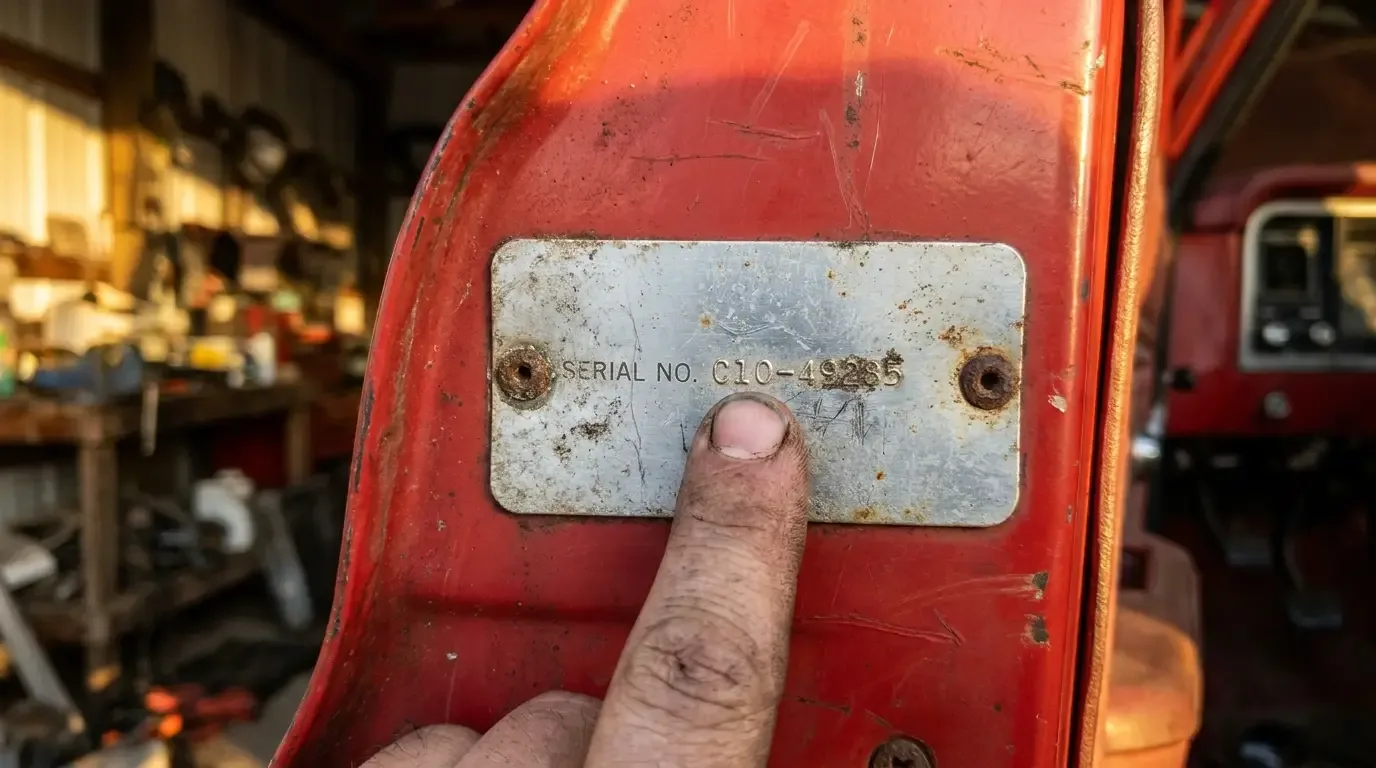
Whether the engine matches the truck depends entirely on what you are paying for. On a work truck or a driver you plan to enjoy, a correct running V8 that was swapped in decades ago is fine, sometimes better than the tired original. On a truck sold at a premium as an original, numbers-matching example, that claim needs proof. Check the engine casting numbers and pad stampings against a casting-number guide for that maker and year, and compare the stamped codes to the truck's data plate or door tag. If the seller is charging original-drivetrain money, the numbers should back it up. If they cannot, price it as a nice driver, not a matching-numbers truck.
Glass and trim look minor and are not. Windshields and back glass for older trucks can be flat and available, or curved and scarce, depending on the model and year. A cracked windshield on a common truck is a phone call. On a rarer cab it can be a months-long hunt. Same with trim: grilles, bezels, emblems, and stainless are the parts that finish a truck and the parts that go missing. Pitted, dented, or absent trim is not a deal-killer, but it is real money and real time, so factor it in before you agree on a number.
What actually stops a deal
Most problems on a classic truck are money problems, and money problems have prices. A tired engine, a leaking axle seal, pitted trim, a worn interior: those are line items. You add them up, subtract from what the truck is worth done, and decide if the math works. That is a negotiation, not a walk-away.
What stops a deal is the trouble you cannot easily price or cannot trust. A frame with real perforation, especially at the boxed sections, because a bad frame undermines everything you bolt to it. A cab so far gone in the corners and floors that you are buying a body shell to hang good parts on. Panel gaps and a body that has clearly shifted, pointing at a hard hit or a bent frame hidden under fresh paint. And a seller who gets evasive about numbers, history, or why the truck was warmed up before you got there. When the story and the metal do not agree, believe the metal. Walk, and go look at the next one, because on a classic truck there is almost always a next one.
When you have run this checklist and the truck earns it, the next step is finding the right example. Browse the current classic trucks for sale and put this list to work on the ones that catch your eye.
Sources and notes
- Factory service manuals for chassis, drivetrain, and body construction details.
- Casting-number and data-plate guides for verifying engine and drivetrain originality.
- Period road tests and owner reports for common wear and rust patterns.
- Marque and model histories for parts availability and body construction notes.
- Restoration and bodywork references for typical repair scope and panel availability.