A vehicle identification number is the truck's fingerprint. On a classic pickup it tells you what the factory built, and when you read it against the title and the tags, it tells you whether the truck in front of you is the truck the paperwork says it is. That second part is the whole game. Before you hand over money for a classic truck, learn to find the number, read what it can tell you, and know what it cannot.
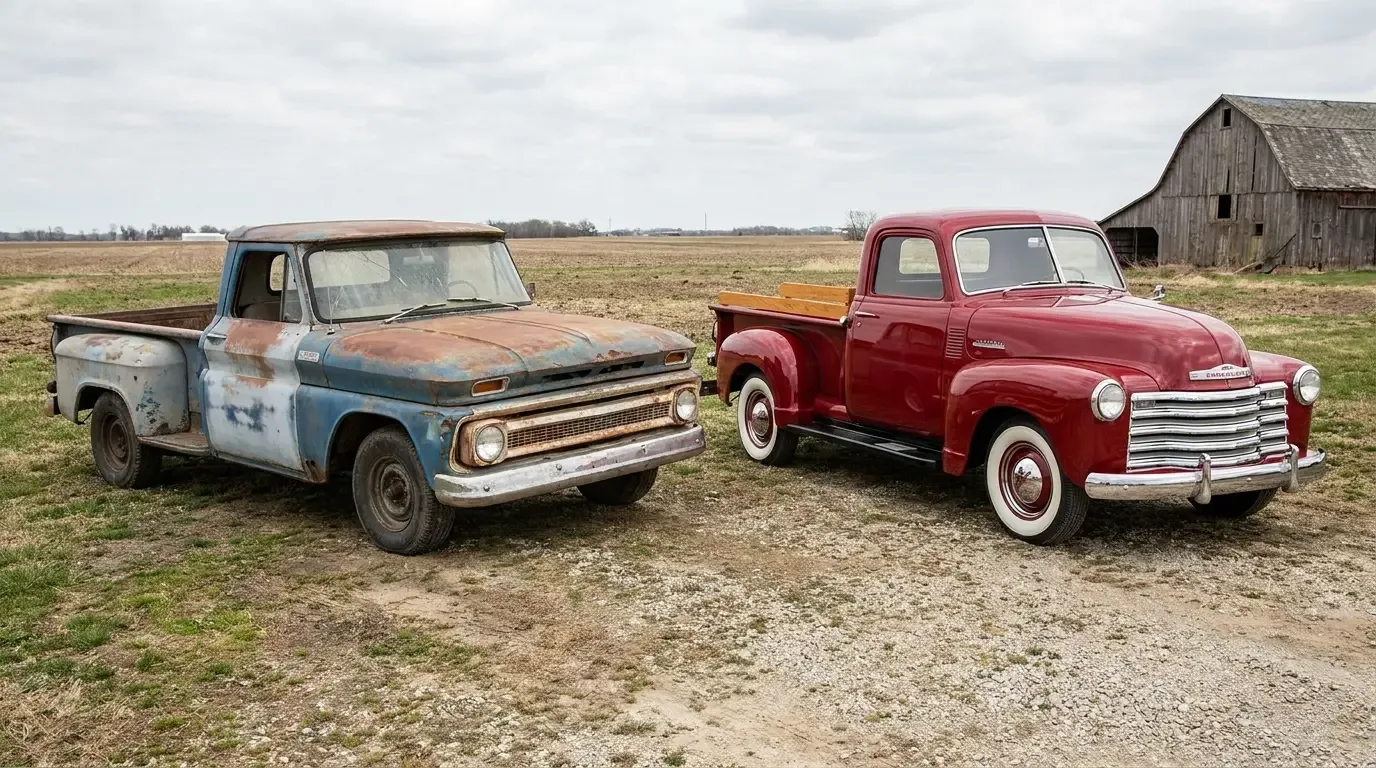
The catch with old trucks is that there was no single rulebook until fairly late. Two trucks parked side by side, same year, different makers, can carry serial numbers built on completely different logic. So the honest starting point is this: a VIN or serial number is only useful if you know which system you are looking at, and you verify the decode against a source made for that specific make, year, and plant. Everything below is the general shape of how these numbers work, not a decode chart to apply blindly. If you are still deciding whether to jump in at all, start with our guide on how to buy a classic truck and come back to the number.
Before 1981 it was the wild west
People say "VIN" for any old truck, but the standardized 17-character VIN did not exist for most of the classic era. In the United States the 17-digit VIN became the required format for the 1981 model year, after the federal government set a common standard so every manufacturer used the same length and the same rules. Before that, each maker ran its own numbering scheme, and those schemes changed over the years too.
What that means in practice: a pre-1981 truck usually carries a shorter serial number, and its length, the mix of letters and numbers, and where the meaningful digits sit all depend on the maker and the year. One brand might code the engine or series into the first character. Another might start with a plant code. Some early serial numbers barely tell you more than a build sequence and a year. There is no universal key. Anybody who hands you one chart and says it decodes every old truck is selling confidence, not accuracy.
So the first thing to establish is not what the number means, it is which system you are reading. Identify the make and model year, then find a reference written specifically for that make and that year. A factory service manual, a marque registry, or a well-documented owner's club is worth ten generic internet decoders.
After 1981, the 17-digit standard
From the 1981 model year forward, trucks carry the familiar 17-character VIN, and the structure is consistent enough that you can learn the map once. In broad strokes the number breaks into sections. The opening characters identify the world manufacturer, meaning the country and the company that built it. A middle block describes the vehicle: body style, engine, series, and similar details, coded by the manufacturer. One position is a check digit that validates the whole string. Then comes the model year character, the assembly plant code, and finally the production sequence number, the unique serial for that individual truck.
Two cautions even here. First, the model-year character runs on a repeating cycle, so the same letter can mean two years decades apart. You confirm the year with other evidence, not the VIN alone. Second, the middle descriptor block is manufacturer specific. Knowing the general layout tells you where the engine code lives, but not what a given code means. For that you still go to a make-and-year reference.
| Position in a 17-digit VIN | What that section is | What it tells you |
|---|---|---|
| 1 to 3 | World manufacturer identifier | Country and manufacturer |
| 4 to 8 | Vehicle descriptor | Body, engine, series (maker-coded) |
| 9 | Check digit | Validates the number is unaltered |
| 10 | Model year | Year, on a repeating cycle |
| 11 | Assembly plant | Where it was built |
| 12 to 17 | Production sequence | Unique serial for that truck |
"A number on a piece of paper never sold me a truck. I want to find the same number stamped on the truck, in a spot the factory put it, before I believe a word of the story. Two minutes with a rag and a light settles more arguments than an hour of talking."
— Robert Halloran
Where the number actually lives
Finding the number is half the work, and on a classic truck it can hide in more than one place. The exact locations vary by maker and year, so treat this as where to look, not a promise of what you will find.
- The dash VIN. On later trucks the primary VIN often sits at the base of the windshield on the driver's side, visible through the glass. This is common on newer classics, less so on the oldest ones.
- The door jamb or door. A certification or data plate is frequently mounted on the driver's door or the door pillar it closes against. It often repeats the VIN and adds build data.
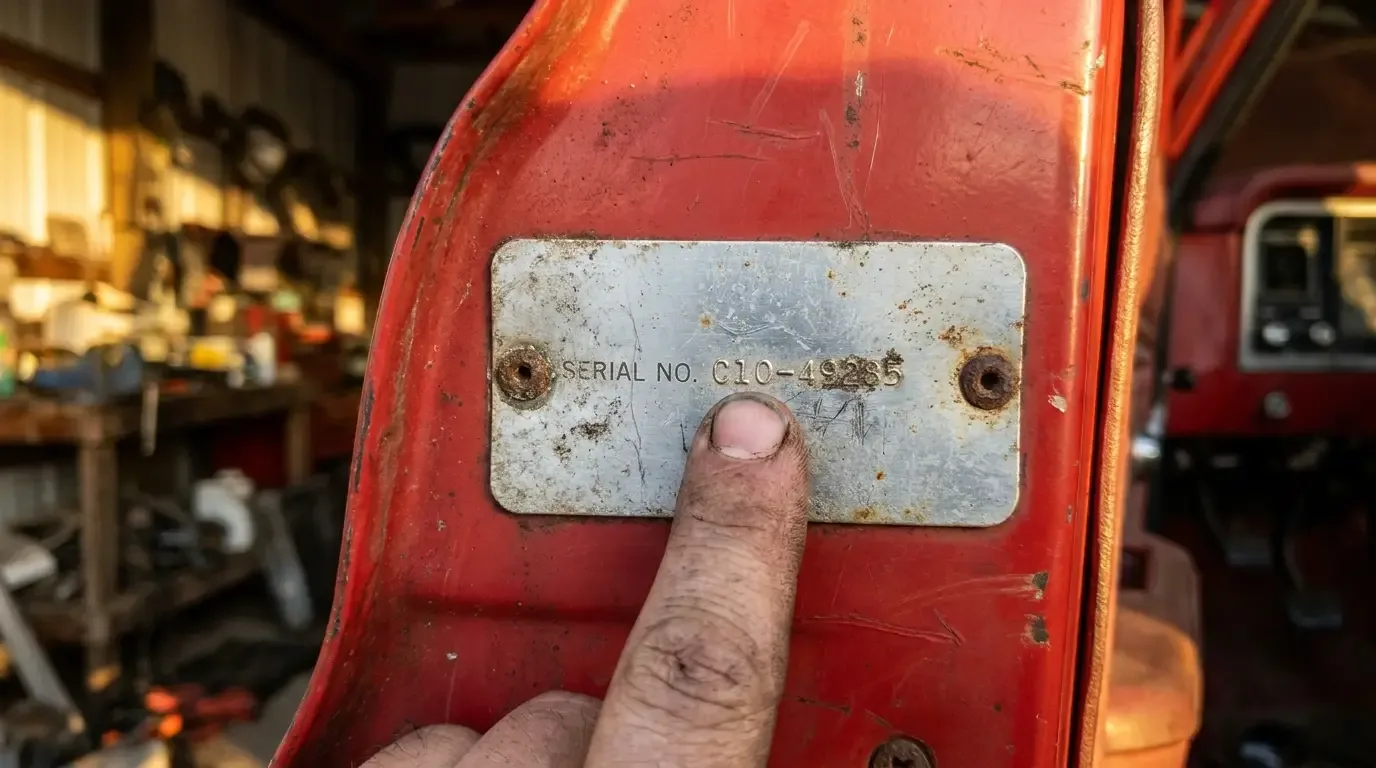
- The cowl or firewall. Many older trucks carry a serial or data tag on the cowl, on the firewall inside the engine bay, or on a frame rail. This is where a lot of pre-1981 numbers live.
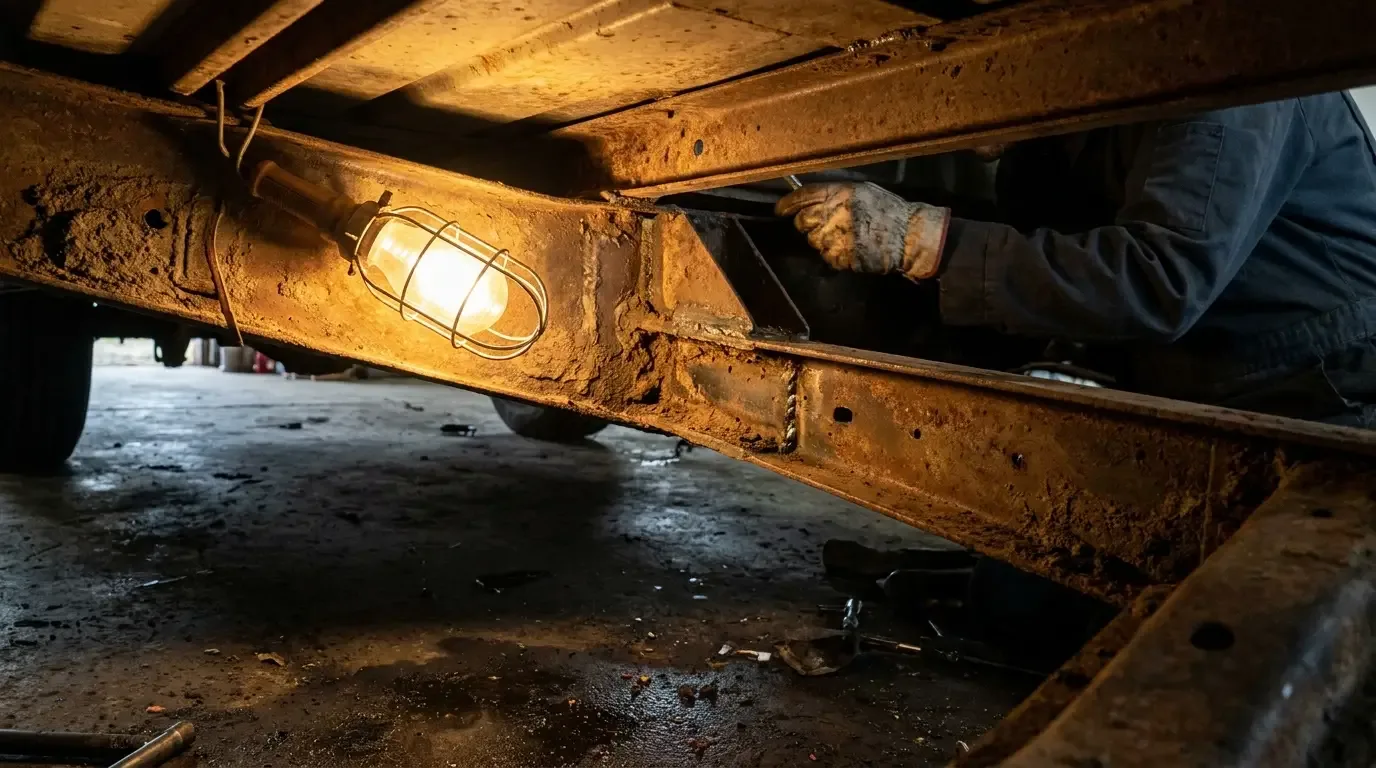
- Stamped into metal. Beyond the tags, makers often stamped a number directly into the frame, the engine block, or the transmission. These stampings are harder to fake than a riveted plate.
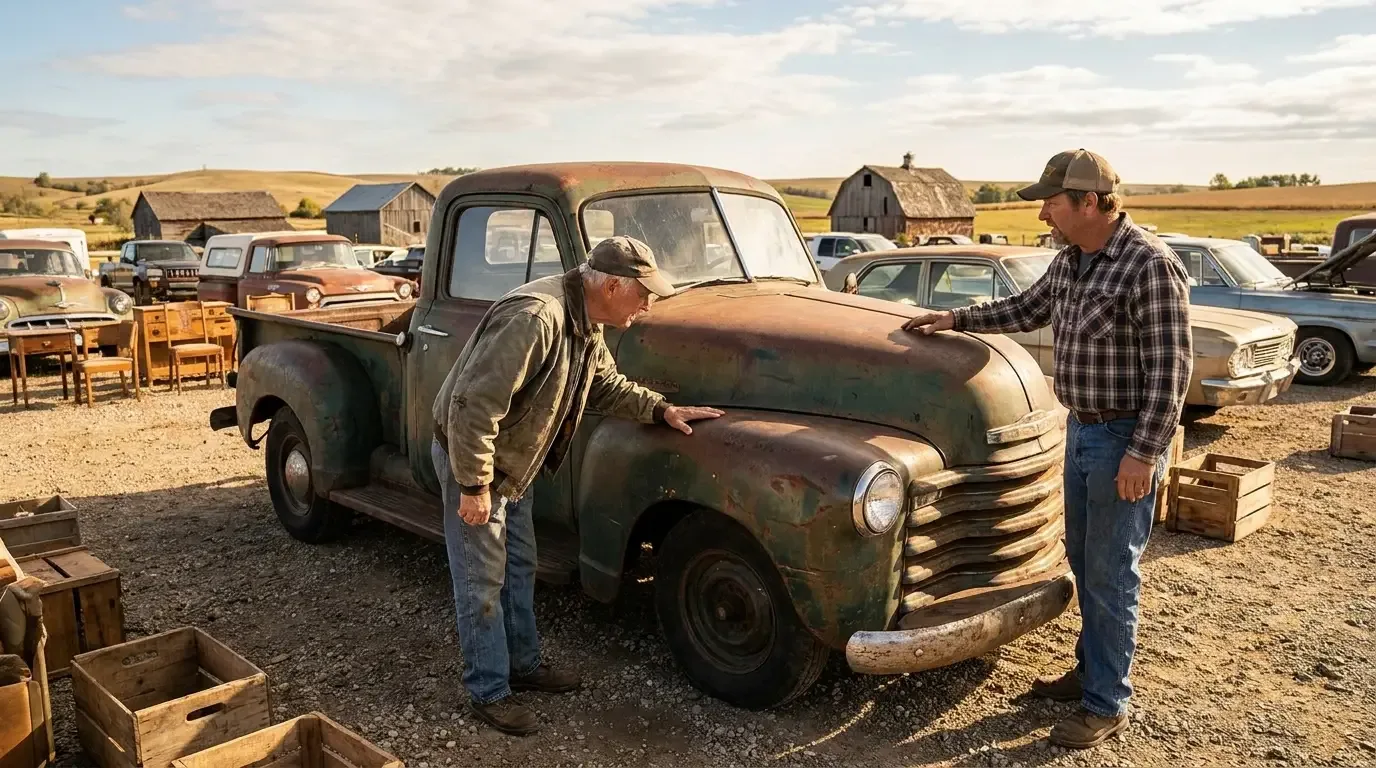
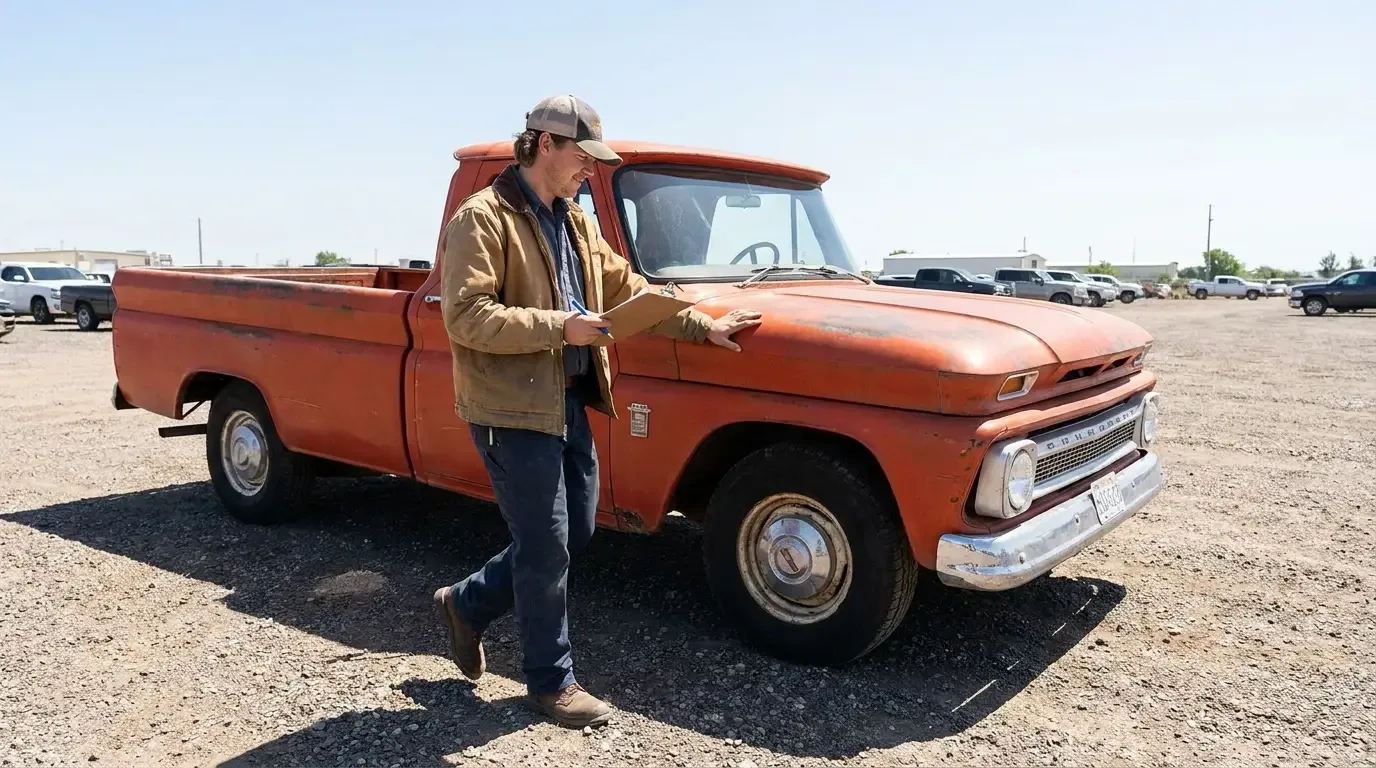
Get physical about it. Bring a strong light and a rag, kneel down, and look. A plate that is held on with the wrong fasteners, sits crooked, shows fresh scratches around the rivets, or has font that does not match the era is a plate to question. Numbers should agree across the tag, the stampings, the title, and any documented history. When they do not agree, you stop and find out why before anything else.
What the number can and cannot prove
A correctly read number confirms identity and, on many trucks, original configuration. It can tell you the truck matches its title, which plant built it, and roughly when. On trucks where the factory coded engine and series into the descriptor, it can flag whether the drivetrain in the truck now is the type it left the factory with. For a collector, an unmolested, matching number is worth real money because it is proof, not a claim.
Here is what it cannot do. It cannot tell you the truck is rust-free, that the frame is straight, or that the seller is honest. Old trucks were tools, and tools get engines swapped, cabs replaced, and beds changed as a matter of course. A non-matching number is not automatically fraud, it may just be an honest working life, but it should change the price and the story you accept. And a number can be altered. A restamped block or a swapped door plate is exactly why you verify across multiple locations and against a title, rather than trusting any single tag.
When the stakes are high, a matching-numbers truck at a real price, get the number checked properly before money moves. Run the title, confirm the VIN against the make-and-year documentation, and if anything reads wrong, walk. The number is a tool for telling the truth apart from the tale. Used carefully, it does that job better than anything else on the truck.
Sources and notes
- Factory service manuals and body-builder references for VIN and data-plate locations by make and year.
- Manufacturer and marque registries documenting serial-number formats across model years.
- Owner's club and enthusiast decode guides for specific makes (verify against factory sources).
- Federal motor vehicle standards establishing the 17-character VIN format (model year of adoption to be confirmed against the governing standard).
- General note: pre-1981 serial-number systems varied by manufacturer and year; no single decode chart applies universally.