Walk a swap meet or an online listing page and you will see the same trucks described three different ways. One seller calls it a "big cab." Another says "club cab." A third just says "extended." They might all mean the same thing, or they might not. Cab style is one of the first things that separates one classic truck from another, and it changes what the truck is worth, who it suits, and how hard it is to find good parts. If you are still sorting out the broader shape of these trucks, start with our overview of classic truck body styles explained, then come back here to nail down the cab.
This is a plain read on the cab styles you will actually run into on American classics, roughly from the 1950s through the 1980s. It is model-agnostic on purpose. Every manufacturer used its own trade names, so the point is to teach you the shapes and the tells, not to memorize a dozen brand catalogs.
The standard cab, and why it dominates the classics
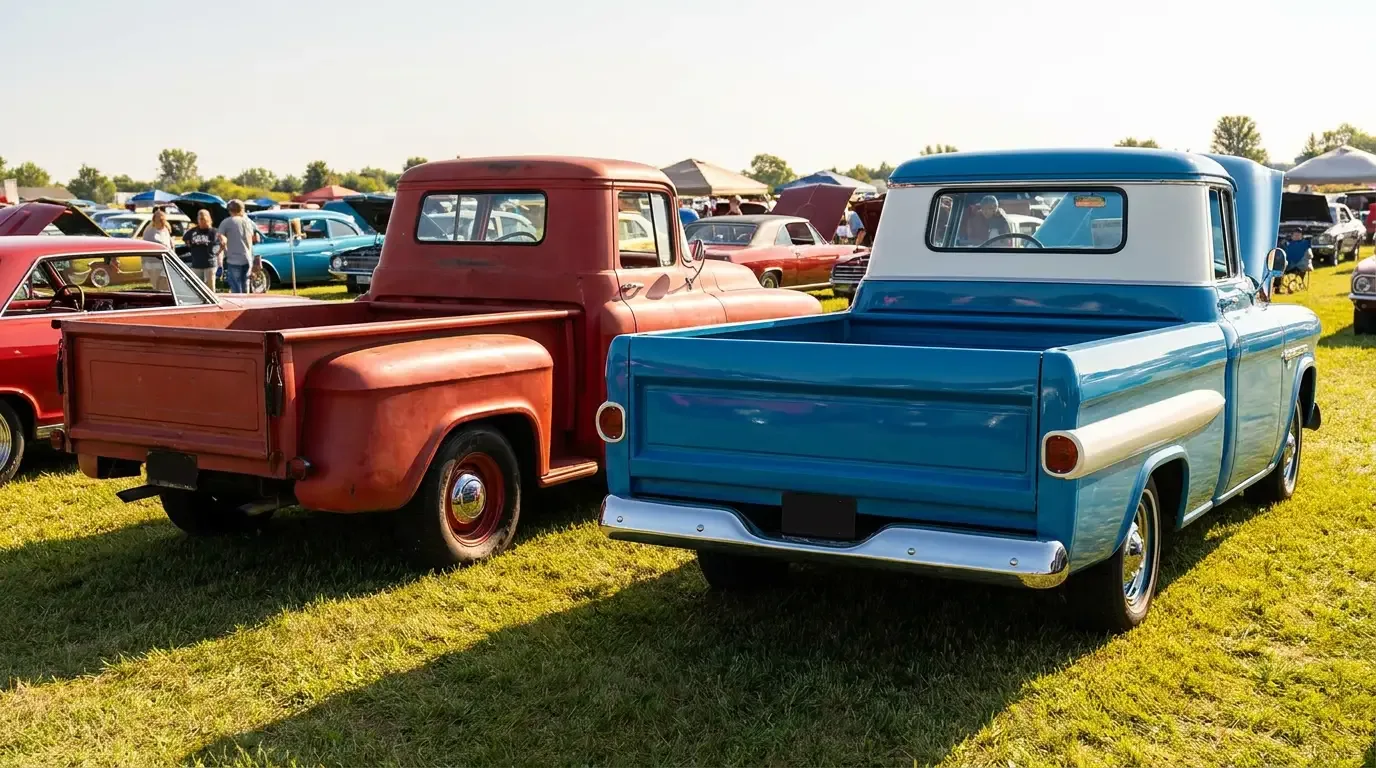
For most of the classic era, "the cab" meant one thing: a single row of seats, two doors, a bench, and a back wall right behind your shoulders. This is the standard cab, sometimes called the regular cab. If you picture a 1950s or 1960s pickup, this is the picture in your head.
The standard cab is short front to back. The seat is a bench, usually good for three across if the middle rider does not mind the shifter. Behind the seat is a thin gap, a package tray, or nothing at all. That tight packaging is why these trucks feel so honest to drive. There is no wasted space. It is also why the bed on a standard-cab truck can run long without making the whole vehicle enormous.
Two sub-types are worth knowing because they change the look and the glass. A truck with a small window in the back wall is often called a "big window" or "big back glass" cab, versus a "small window" cab with a narrow slit or no rear glass at all. On some models the big-window cab is the more desirable and pricier version because it looks better and it is rarer. When you shop, check which one you are looking at, because the rear glass and its seal are cab-specific and not always easy to source.
The extended cab, the first stab at more room
By the early 1970s buyers wanted somewhere to put a toolbox, a dog, or a jacket without throwing it in the open bed. The answer was the extended cab: the standard two doors up front, but the cab stretched back to add a small space behind the front seat. Some had tiny jump seats facing sideways or forward. Some had nothing but a shelf.
Dodge's Club Cab arrived for the 1973 model year and is often credited as the first modern extended cab on a mainstream American pickup. The name stuck so hard that plenty of people now say "club cab" for any extended cab, the way people say "thermos" for any vacuum flask. Ford followed with its SuperCab in 1974, and other makers added their own names through the 1970s and into the 1980s.
The tells are simple. Look at the doors first. If there are only two door handles but the cab clearly runs longer than a standard cab, with a small side window behind the door, you are looking at an extended cab. On the earliest ones the rear seating is an afterthought, better for cargo or a child than a grown adult on a long trip.
"People buy an extended cab thinking they got a back seat. Half the time they got a padded shelf. Sit in it before you pay for it. If your knees are in the dash, that space is for groceries, not for people."
— Robert Halloran
The crew cab, four doors before it was cool
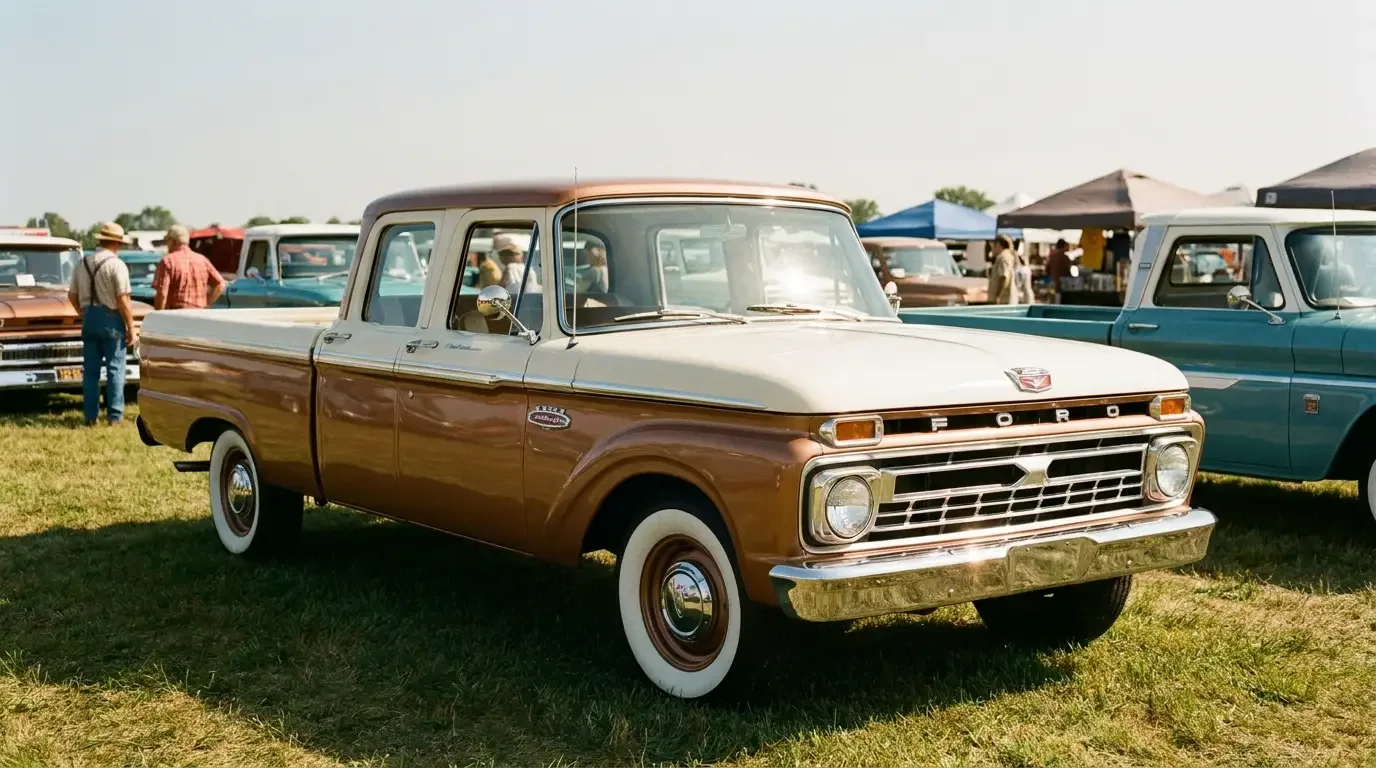
The crew cab is the one that surprises people. Four full doors and a real back seat on a pickup is not a modern invention. Manufacturers built crew cabs through much of the classic era, mainly for work fleets: utility crews, fire departments, farms, anyone who needed to move a gang of people and their gear in one truck.
Factory crew cabs go back further than most people expect. International Harvester's Travelette arrived in 1957, and Ford began building its own factory crew cabs in 1965, though all were low-volume compared to standard cabs. Because they were built in small numbers and worked hard, survivors are scarce. That scarcity is exactly why a clean classic crew cab can command strong money today. The people who once ignored them now want them, because four doors and a vintage look is a rare combination on an old truck.
Identifying a crew cab is the easy part: four doors, four handles, a rear bench you can actually sit on. The trick is telling a genuine factory crew cab from one somebody welded together out of two donor cabs. Fabricated crew cabs exist, and some are done well, but they are not worth factory money.
How to identify a cab style in thirty seconds
You do not need a decoder plate for the first pass. You need to count and look. Here is the order that works.
- Count the doors. Two or four. Four doors means crew cab, full stop, once you confirm they are real doors and not a home build.
- If two doors, check the cab length. A standard cab ends right behind the seat. An extended cab keeps going, with a small fixed window behind the door.
- Look at the rear glass on a standard cab. Big window or small window changes the value and the parts hunt.
- Open the doors and sit. The back space tells you what the cab is really for. A shelf is not a seat.
After the quick look, verify against the truck's data plate or build tag and the specific model's records, because trade names and availability shifted year to year. The plate is the truth. Your eyes get you close.
| Cab style | Doors / seating | Era it appeared | Notes |
|---|---|---|---|
| Standard (regular) cab | 2 doors, 1 bench, up to 3 across | Throughout the classic era | Most common; short cab, room for a long bed. Big-window versions often worth more. |
| Extended cab | 2 doors, front bench plus small rear space or jump seats | Early-to-mid 1970s onward | Rear space often better for cargo than adults on early versions. Many brand names. |
| Crew cab | 4 doors, front and rear bench, 5 to 6 people | Late 1950s / 1960s onward | Built mostly for fleets; low production makes clean survivors valuable. |
What the cab style should mean to a buyer
Cab choice is not just taste. It drives price, practicality, and your parts life for years.
If you want the purest classic-truck feel and the widest parts supply, the standard cab is the safe bet. It is what most people restored, so seals, glass, floor pans, and trim are the easiest to find, and you are not paying a rarity tax. If you need to carry people, the crew cab is the honest answer, but you will pay for it up front and you may wait to find a good one. The extended cab sits in the middle: a little more usable room than a standard cab without full crew-cab money, as long as you go in knowing what that back space really is.
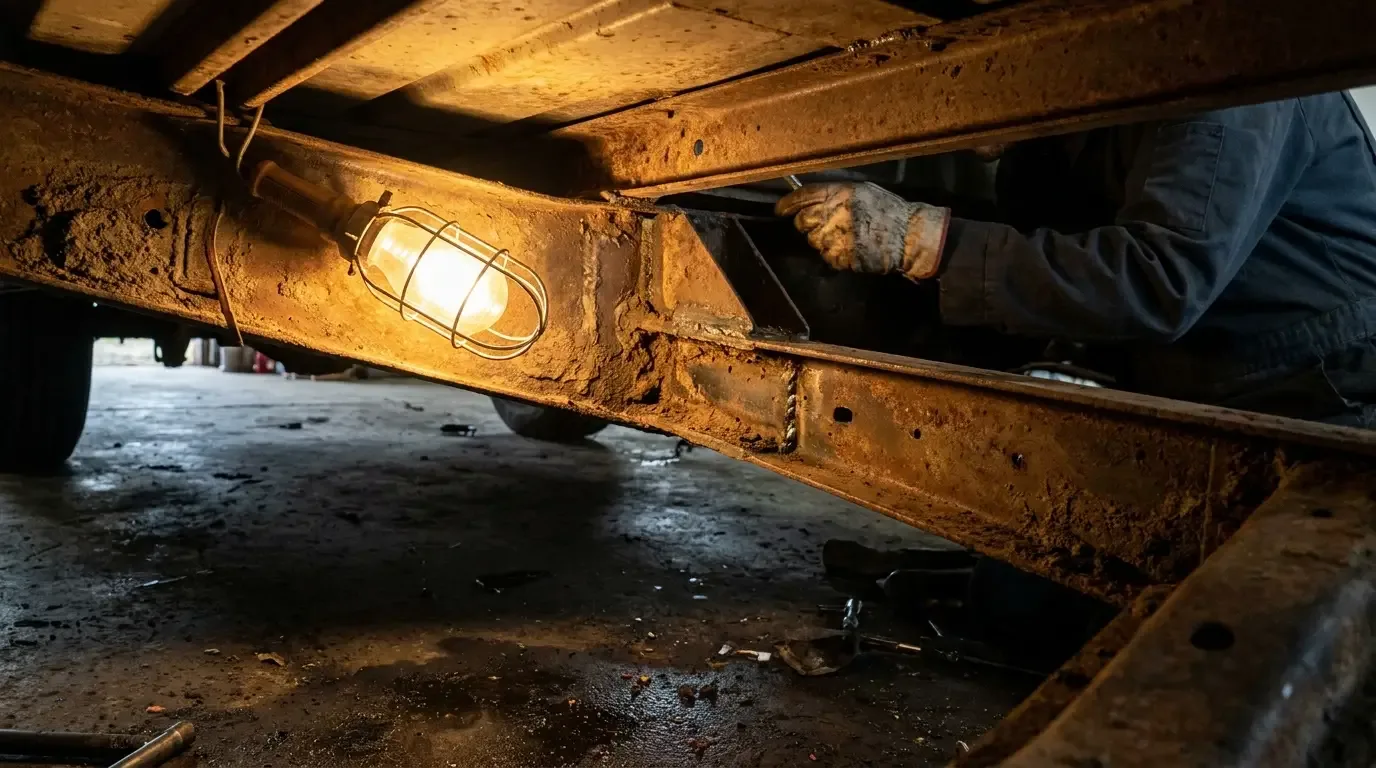
One more practical point. Cab length and door count change rust and repair math. More cab means more floor, more rockers, more seams for water to sit in, and on crew cabs, two extra doors that can rot and rack. Match the cab to how you will use the truck, price the repair honestly, and do not pay factory-crew-cab money for a truck that started life with two doors.
"Buy the cab you need, not the cab that looks best in the photo. A standard cab you can afford to fix beats a crew cab you can't get glass for. Cheapest truck in the long run is the one with parts on the shelf."
— Robert Halloran
Sources and notes
- Factory service manuals and body-builder guides for cab dimensions and configuration codes.
- Period sales brochures and dealer literature for trade names and model-year availability.
- Marque and model histories for the introduction of extended and crew cab configurations.
- VIN, data-plate, and build-tag references for confirming factory cab styles.
- Auction results and classified listings for relative pricing between cab styles.