Truck shopping gets confusing fast, mostly because the words moved around over seventy years. A "stepside" at one dealership was a "Fenderside" at another and a "flareside" a decade later, and they all meant the same bed. Cab styles multiplied, bed lengths split into short and long, and half the model names on the tailgate were marketing, not engineering. If you want to buy a classic truck without getting talked in circles, you need the vocabulary first. This is the map. It is model-agnostic on purpose, because these terms cross Ford, Chevy, Dodge, GMC, and International alike, and once you know them you can read any listing straight. For the wider context of how these trucks came to be, see the classic American truck story.
Bed styles: the shape that started every argument
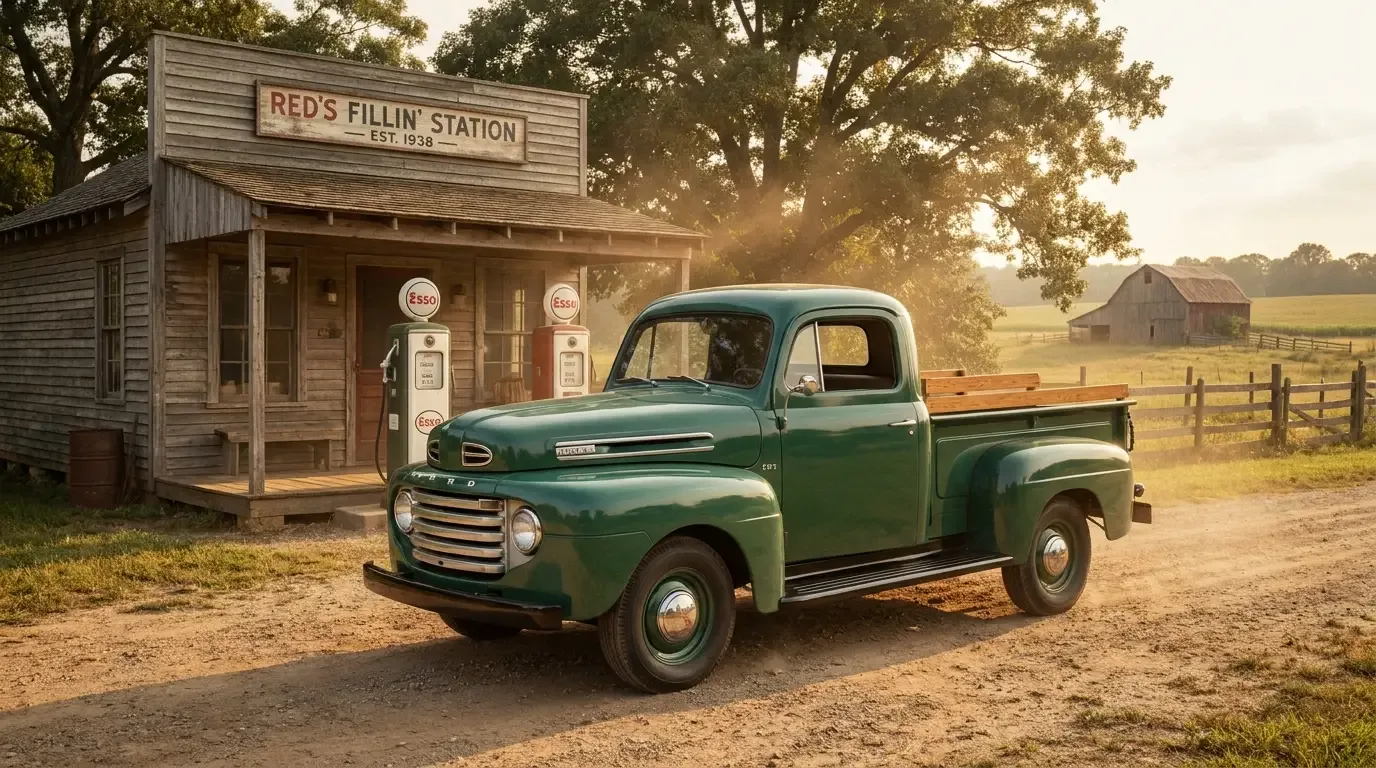
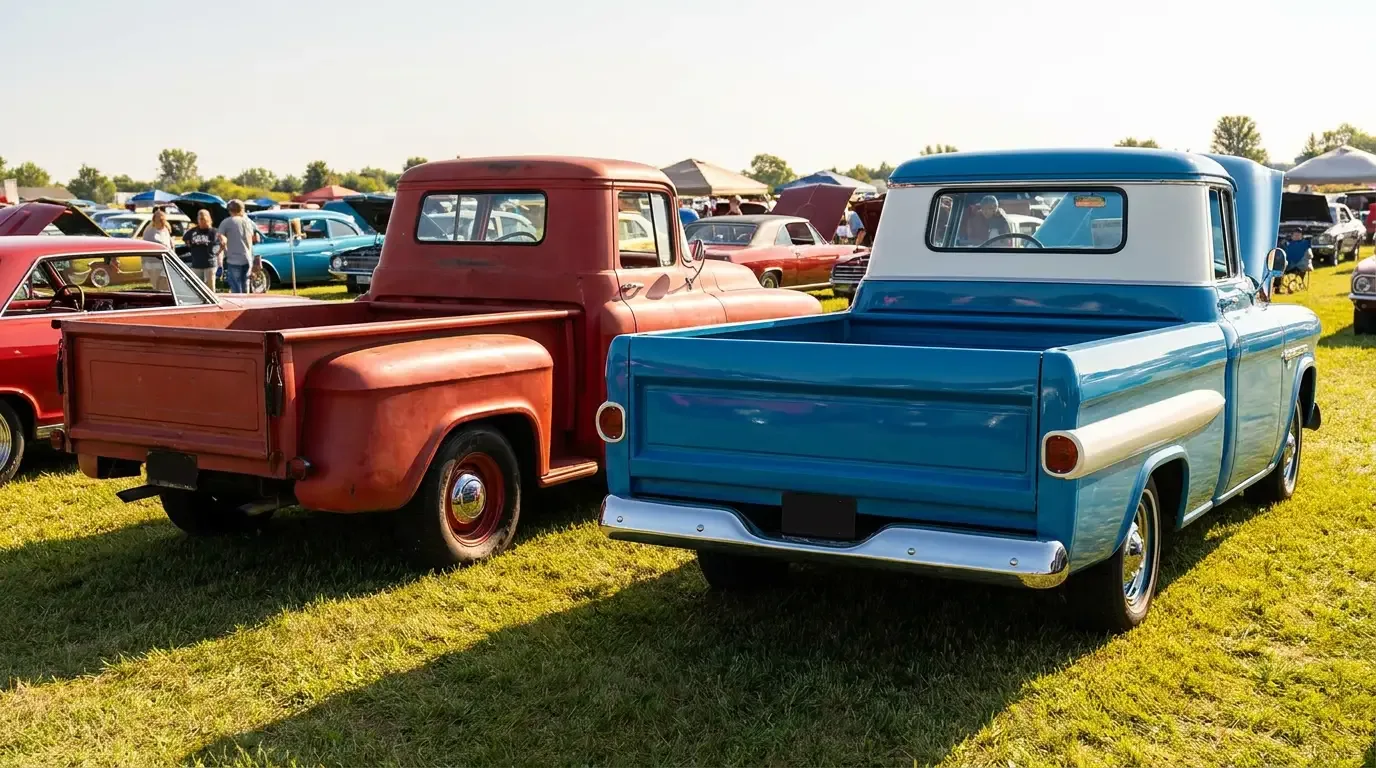
The bed is the loudest visual on a pickup, and it splits into two camps that every buyer learns first. The older camp is the stepside, also called Fenderside (GMC), Flareside (Ford), or Sweptline's opposite (Dodge). On a stepside, the bed is a narrow box with the rear fenders bolted on the outside, and a flat step tucked between the cab and the fender. That step is where the name comes from. It is the traditional look, the one people picture when they hear "old truck," and it stayed in production for decades because farmers and tradesmen kept buying it.
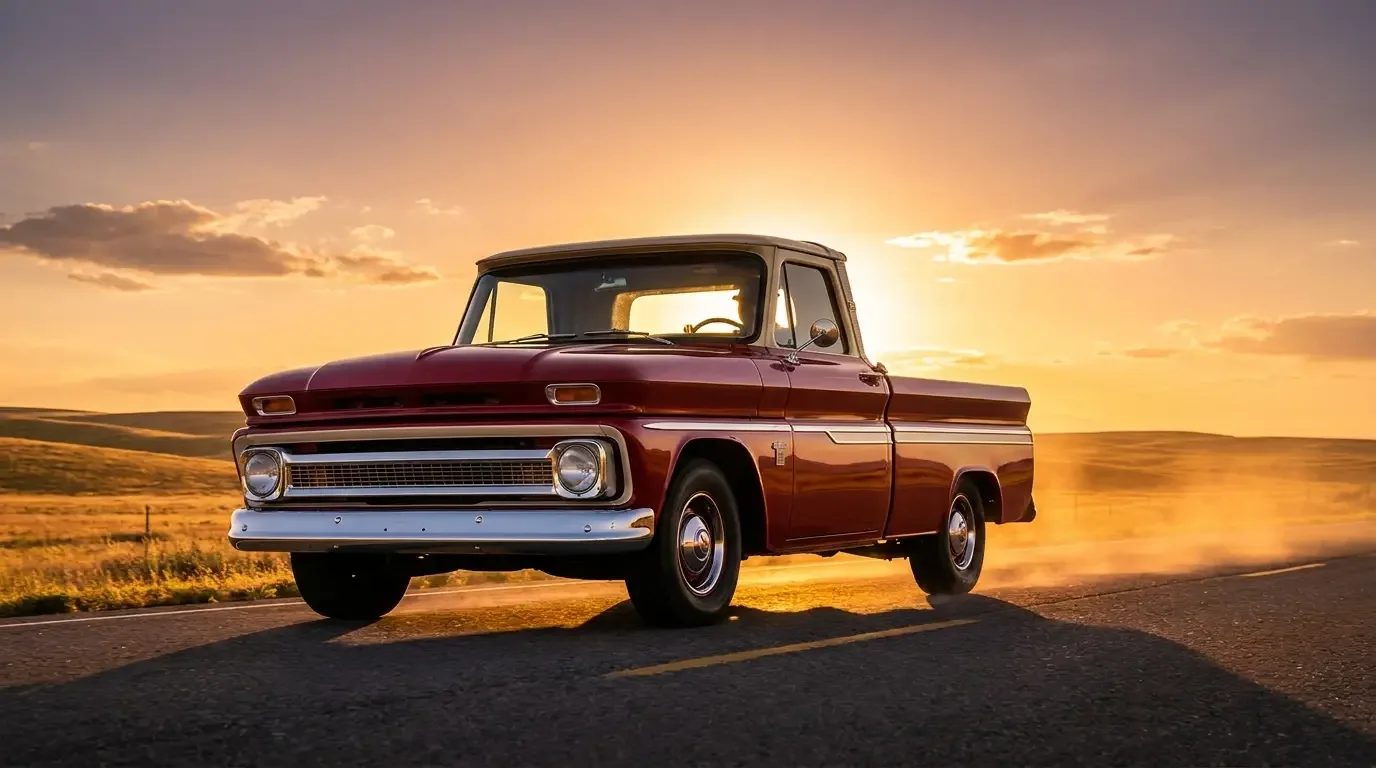
The newer camp is the fleetside, also called Wideside (GMC), Styleside (Ford), Sweptline (Dodge), or Custom Sports Bed depending on the badge. Here the bed walls run straight out to the full width of the truck, fenders hidden inside, giving you a smooth slab side and far more usable floor. Fleetside arrived in the mid-to-late 1950s and slowly took over, because a flat wide bed hauls sheet goods and pallets better than a narrow one with wheel humps eating the corners. If you want the full breakdown of which one to buy and why, read our piece on stepside vs fleetside.
Cab styles: how many people ride
Cab style tells you how many seats and doors you get, and on a classic truck the range is narrower than modern buyers expect. The standard cab, sometimes called a regular cab, is the base: two doors, a single bench, room for three across if two of them are friendly. This is the overwhelming majority of surviving classic trucks. It is also the lightest and the cheapest to buy and restore, and it is what most people mean when they say "pickup."
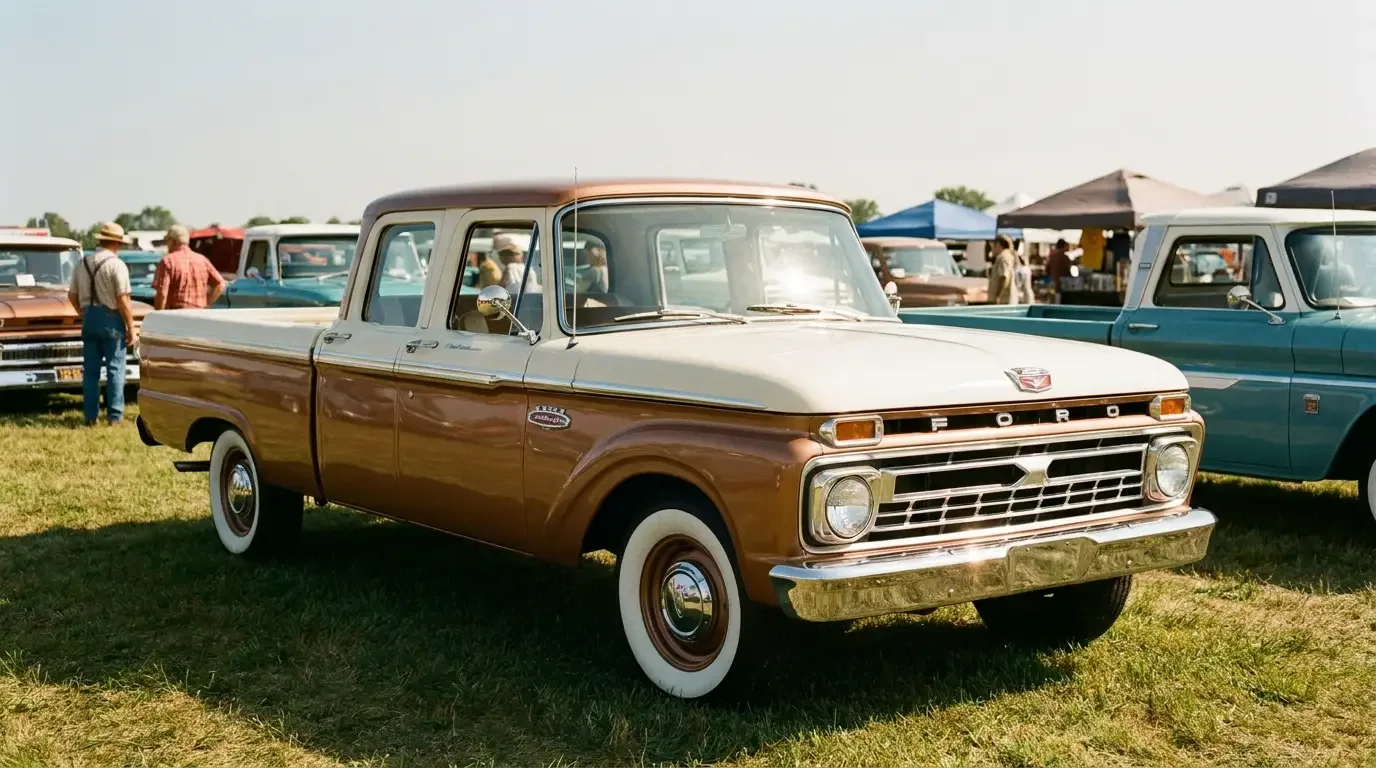
The extended cab, badged SuperCab (Ford), Club Cab (Dodge), or later Extended Cab (GM), stretched the cab back to add jump seats or storage behind the bench. Dodge is generally credited with the first modern extended-cab pickup in the early 1970s with the Club Cab. The rear "doors" were often just access panels or small rear-hinged half doors, not full doors. The crew cab, also called Crew Cab or Double Cab, is the four-door, six-passenger body, built originally for work fleets that needed to move a whole crew and a load at once. Crew cabs on older trucks are rarer and command a premium because far fewer were built.
"Everybody wants a crew cab now because that is what they drive at home. Fifty years ago almost nobody ordered one, so the survivors are thin on the ground and the prices show it. Buy the cab you actually need, not the one Instagram wants."
— Robert Halloran
Bed length: short, long, and why it matters
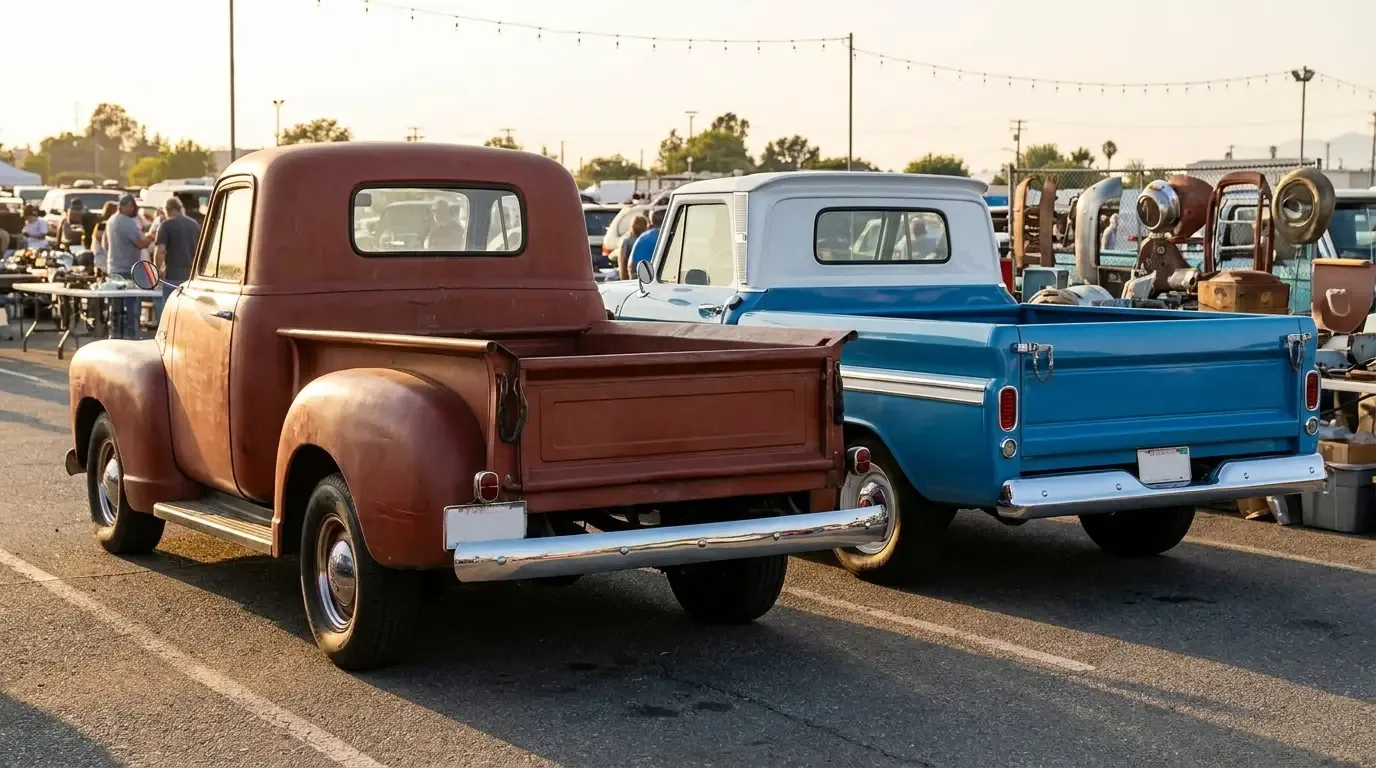
Bed length is the quiet spec that changes a truck's whole character. The short bed, commonly around six to six and a half feet, gives a stubby, balanced look and a shorter wheelbase that parks and turns easier. The long bed, generally around eight feet, is the work length, the one that takes a full sheet of plywood flat on the floor with the tailgate up.
Here is the thing that trips up buyers: short beds are usually worth more today, sometimes noticeably more, even though long beds were more common and more useful for actual hauling. The market pays for looks. A short-bed, standard-cab, fleetside truck is close to the ideal cruiser profile, and prices reflect that. A long-bed of the same year and trim can be a genuine bargain if you do not mind the extra length, and it will haul more. Do not let anyone tell you a long bed is a lesser truck. It is a cheaper entry into the same drivetrain and cab.
Beyond the pickup: panel trucks, Suburbans, and haulers
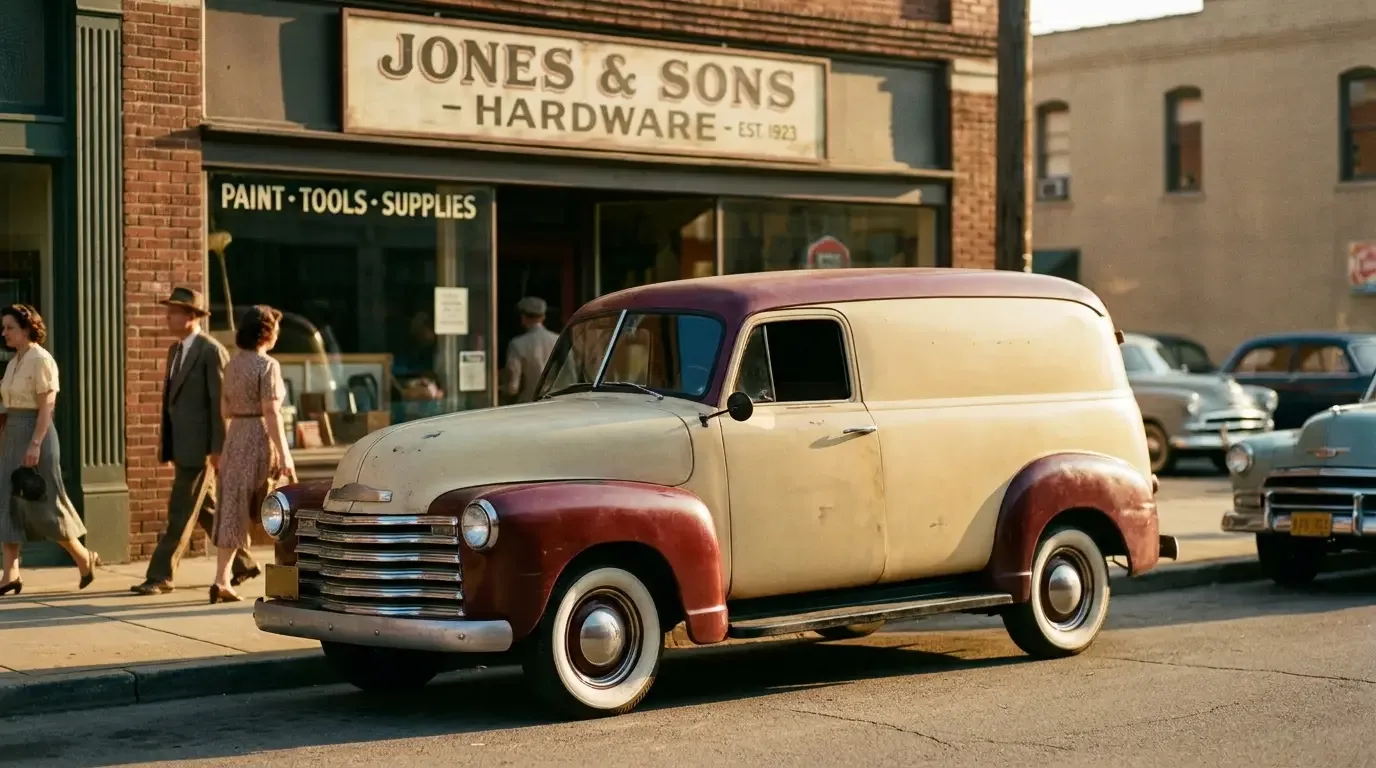
Not every classic truck has an open bed, and the closed-body variants have their own vocabulary. A panel truck is a pickup cab and chassis with a fully enclosed, windowless cargo box in place of the bed, with rear barn doors. Bakeries, plumbers, and delivery services ran these by the thousands, and because they were used hard and scrapped hard, clean survivors are collectible now.
The Suburban started life as a panel truck with side windows and seats, a wagon body on a truck chassis, and it is arguably the ancestor of the modern SUV. Chevrolet has used the Suburban name continuously since the 1930s, which makes it one of the longest-running nameplates in the industry. A "carryall" is the same idea from other makers. Then there is the sedan delivery, which is car-based rather than truck-based, a two-door wagon body with no rear side windows, blurring the line between car and truck.
- Panel truck. Enclosed windowless cargo box, rear barn doors, pickup front end.
- Suburban / carryall. Enclosed wagon body on a truck chassis, side windows, multiple seat rows.
- Sedan delivery. Car-based enclosed two-door wagon, no rear side glass, light-duty.
- Stake bed. Flat bed with removable vertical wooden or steel stakes for tall or loose loads.
Cab-over and the heavy end
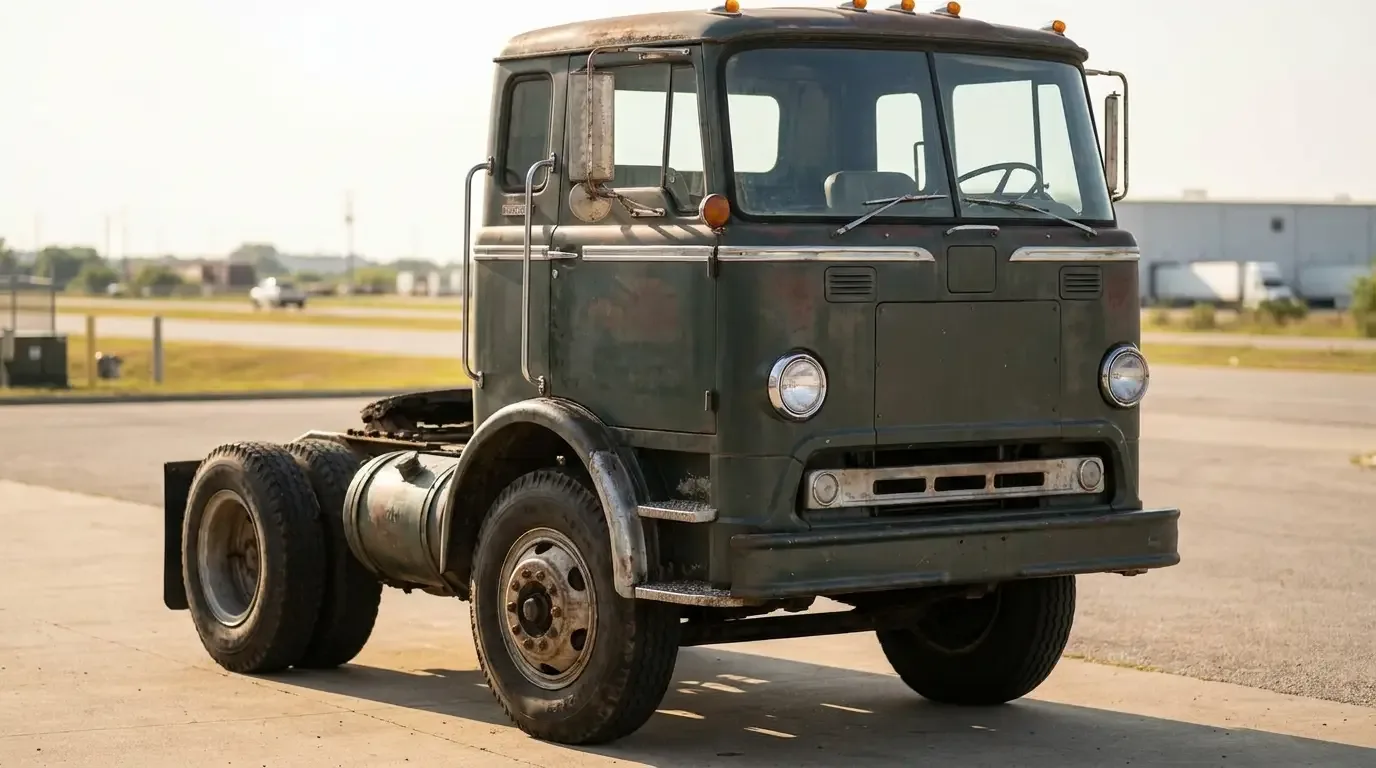
Once you get past the half-ton pickup, the layout itself can change. A cab-over, short for cab-over-engine and often abbreviated COE, puts the cab directly on top of the front axle and engine instead of behind it. The result is that flat-faced, snub-nosed look, no hood out front. The point was length: fitting more cargo box into the legal overall length by deleting the nose. COEs were everywhere in medium- and heavy-duty work, and the small ones have a devoted following among builders and collectors today. We cover the layout in depth in our guide to what a cab-over truck is.
The other heavy-end concept is weight rating, and it is the number that actually defines what class of truck you are looking at. Half-ton, three-quarter-ton, and one-ton are old payload nicknames, not literal capacities anymore, but they still sort trucks by size. In model numbers you see them as Ford's F-100 / F-250 / F-350, Chevy and GMC's C10 / C20 / C30 (and the 1500 / 2500 / 3500 that replaced them), and Dodge's D100 / D200 / D300. The bigger the number, the heavier the springs, axles, and brakes, and the rougher the ride when the bed is empty.
The terminology map at a glance
Here is the whole vocabulary in one place, so you can read any listing and know exactly what the seller is describing before you drive out to look. Keep it handy when you browse classic pickups for sale, because sellers rarely use the same words twice.
| Term | What it means | Also called |
|---|---|---|
| Stepside | Narrow bed, external rear fenders, step behind cab | Fenderside, Flareside |
| Fleetside | Full-width smooth bed, fenders hidden inside | Wideside, Styleside, Sweptline |
| Standard cab | Two-door single bench, 2-3 seats | Regular cab |
| Extended cab | Stretched cab, jump seats or storage behind bench | SuperCab, Club Cab |
| Crew cab | Four-door, six-passenger body | Double Cab |
| Short bed | Roughly 6 to 6.5 ft, shorter wheelbase | Short box |
| Long bed | Roughly 8 ft, full-sheet capacity | Long box |
| Panel truck | Enclosed windowless cargo box, rear barn doors | Panel delivery |
| Suburban | Enclosed wagon body on truck chassis, seats | Carryall |
| Cab-over (COE) | Cab mounted over the engine, flat nose | Forward control, tilt-cab |
| Half / three-quarter / one-ton | Payload class nicknames, not literal weights | 150/250/350, 10/20/30, 1500/2500/3500 |
Learn these eleven terms and the fog clears. You stop reading listings and start reading trucks: you know whether the seller has a common long-bed standard cab or a scarce short-bed, whether that "old delivery van" is a collectible panel truck, and whether a heavy-sounding one-ton badge means a stiffer ride than you want. The words are the first tool in the box. Everything else, the inspection and the money, comes easier once you can name what you are looking at.
Sources and notes
- Factory sales brochures and model catalogs (Ford, Chevrolet, GMC, Dodge, International) for period body-style names and trim nomenclature.
- Factory service and shop manuals for bed lengths, wheelbases, and cab configurations.
- Marque and model histories for the evolution of stepside/fleetside beds, extended and crew cabs, and the Suburban nameplate.
- Period road tests and buyer guides for payload-class conventions and cab-over usage.