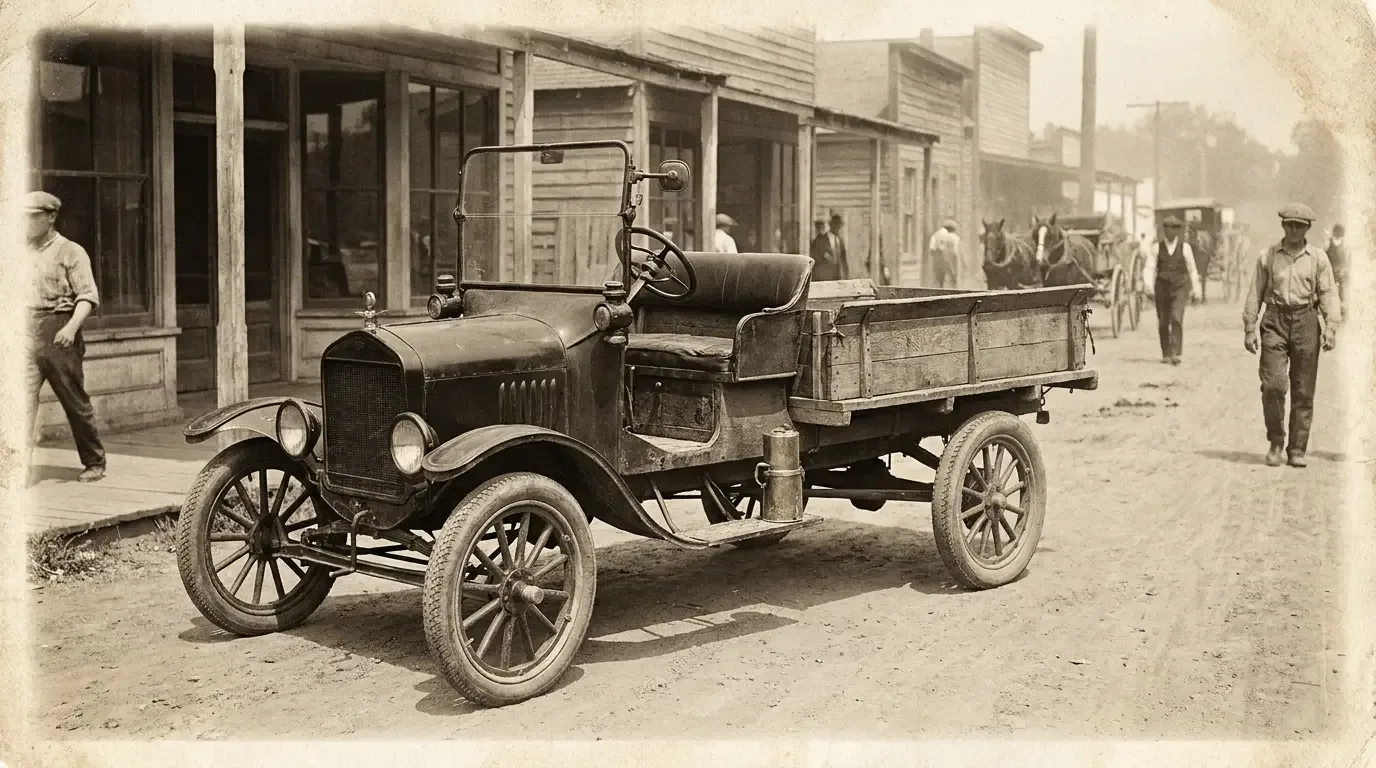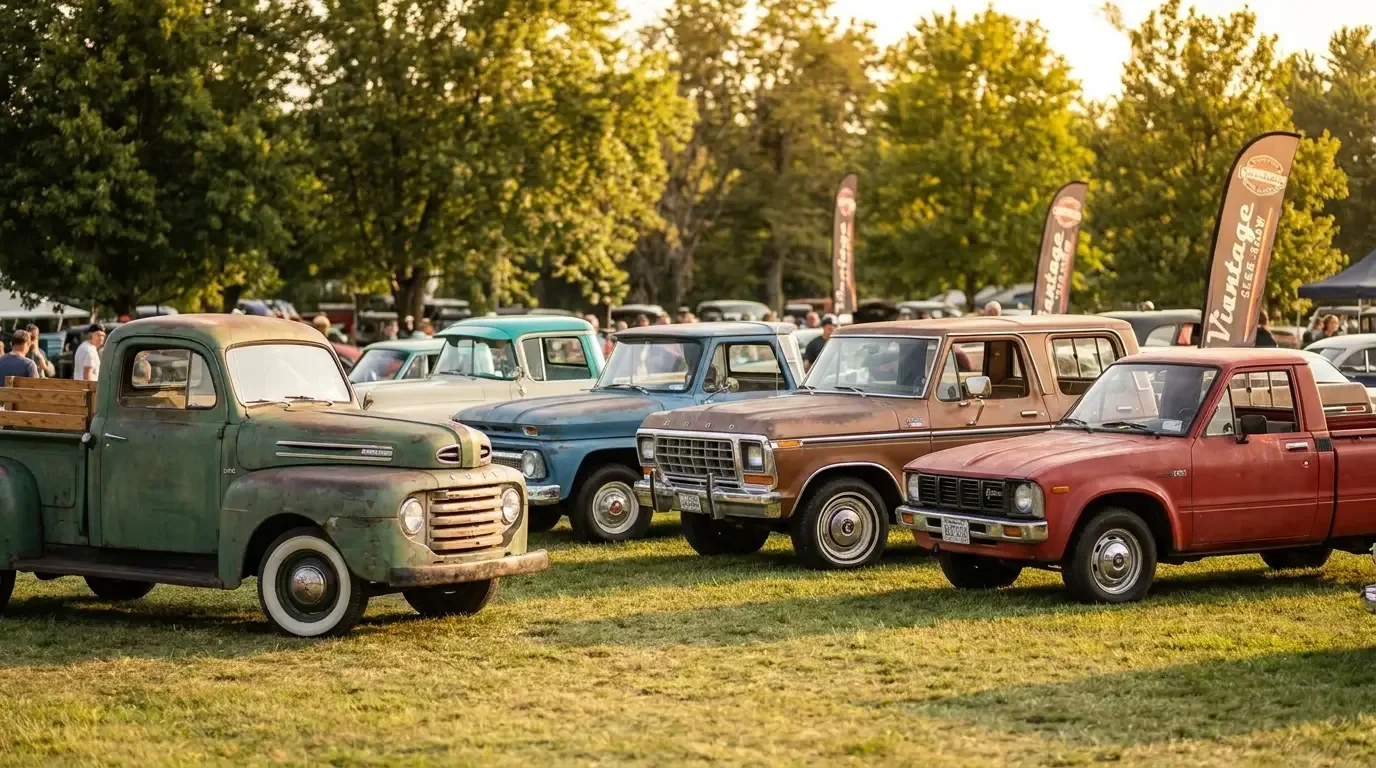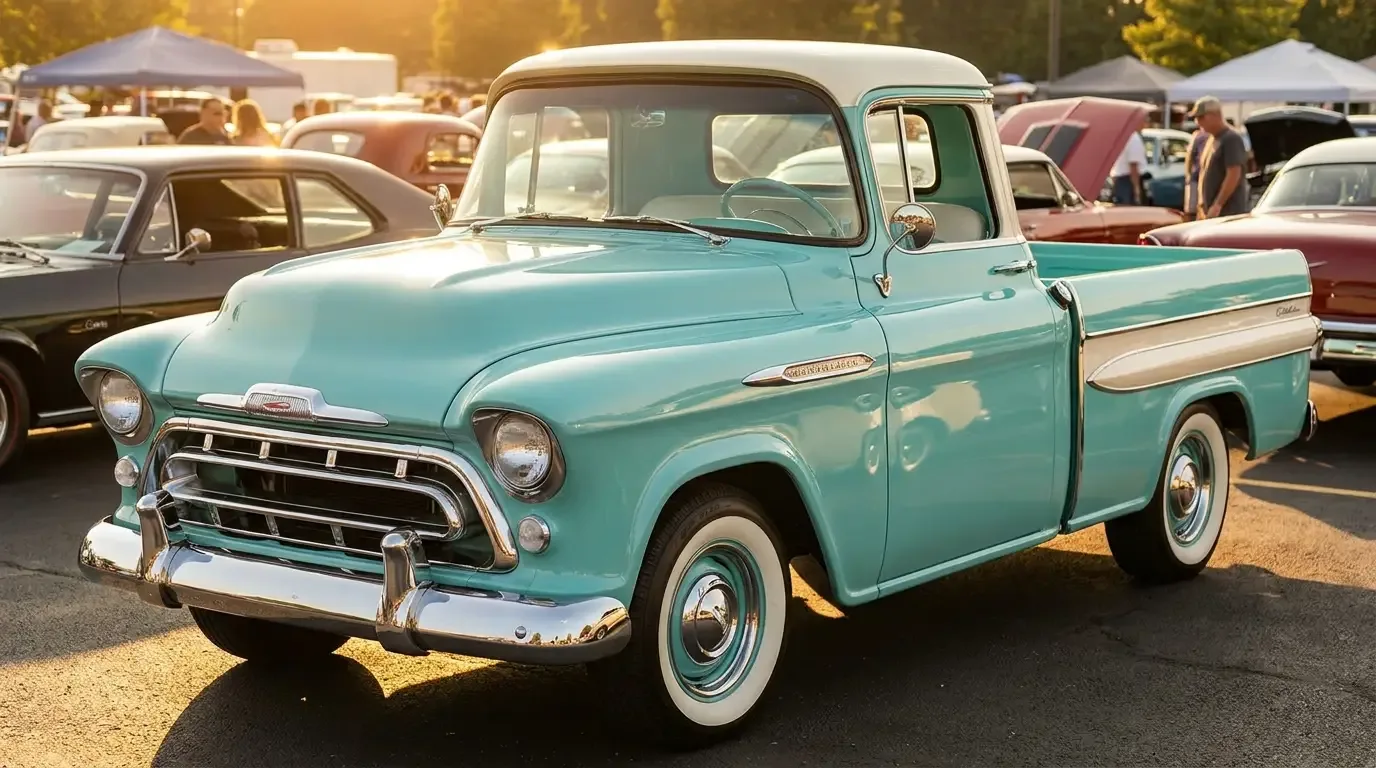

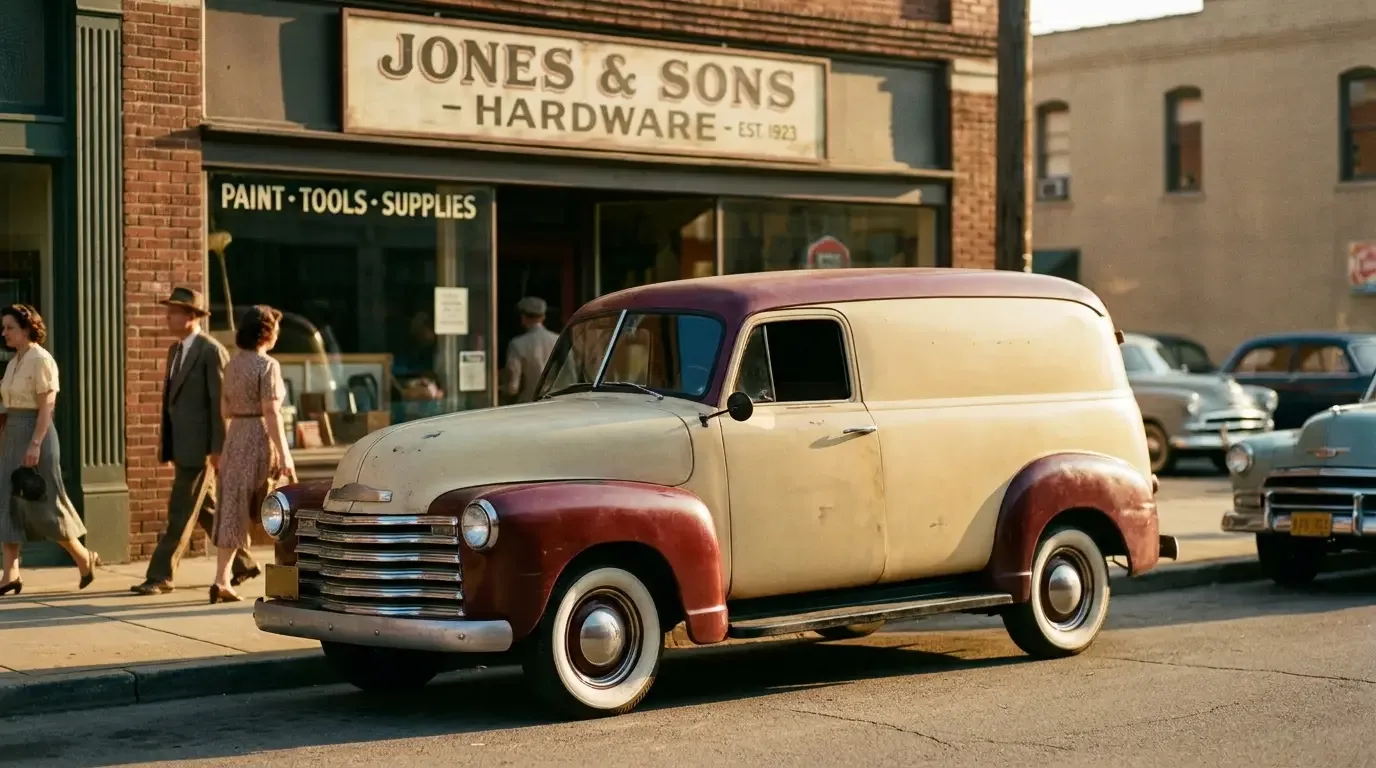
A pickup carries its load in the open. A panel truck seals it up. That one difference, a solid steel box behind the cab instead of a bed and tailgate, made the panel truck the working backbone of American commerce for half a century. The plumber, the baker, the telephone company, the flower shop, they all wanted their goods dry, out of sight, and lettered with the company name. The classic panel truck gave them that, and its close cousin, the early Suburban or carryall, gave families and work crews the same enclosed body with windows and seats instead of shelves. Both grew out of the same idea. Both are collectible now for reasons nobody in 1948 would have guessed.
If you want the wider family tree of open beds, stakebeds, and cabs, start with classic truck body styles explained. This piece stays on the enclosed haulers.
What a panel truck actually was
Take a pickup chassis and cab. Instead of bolting a bed to the frame, build a full enclosed steel body from the back of the cab to the rear doors. No side windows behind the driver, usually just blank sheet metal, which is exactly what a sign painter wanted. Solid rear doors that swing open, sometimes a side door too. That is a panel truck. The load rode inside, protected from weather and thieves, and the flat body sides became a rolling billboard.
Nearly every American maker built one. Chevrolet and GMC panels rode the same underpinnings as their pickups. Ford ran panel versions of the F-Series and, earlier, the sedan delivery. Dodge had its own. The sedan delivery, worth naming here, was the car-based version: a two-door wagon body with the rear side glass panelled over, built on a passenger-car frame rather than a truck frame. Lighter, faster, car-like ride. The truck-based panel was heavier and hauled more. Buyers picked based on what they carried.
Capacities ran the usual light-duty ladder, roughly half-ton to one-ton depending on the model and year. Power came from whatever inline six or, later, small V8 the maker put in its trucks that year. Nothing exotic. These were tools, priced and built to work.
From panel to carryall: the Suburban lineage
Now cut windows into those blank sides, add a second and third seat, and swap the cargo shelves for a passenger floor. You have a carryall, which Chevrolet named the Suburban Carryall when it introduced the wagon body on its half-ton truck chassis in the mid-1930s. GMC sold the same vehicle under its own badge. The idea was simple: a truck that could haul people and their gear over rough roads, with a truck's ground clearance and durability but a wagon's enclosed, seated interior.
That combination found a specific set of buyers early on. The military and civilian government fleets wanted a rugged people-and-equipment hauler. Contractors moved crews and tools in one vehicle. Rural families who needed one vehicle to do everything bought carryalls because a sedan could not handle the road and a pickup could not carry the kids. The body style predates the word "SUV" by decades, and the Suburban nameplate itself became one of the longest-running in American automotive history.
The line between a windowed panel truck and a carryall was sometimes just glass and seats. Some panels were ordered with a single row of side windows for a work crew. Some carryalls got their rear seats pulled and went straight back to hauling cargo. The bodies shared stampings and doors. What you called it depended on how it was optioned.
"People ask me which is the better buy, the panel or the carryall. Wrong question. Ask what you're going to do with it. A panel with blank sides is a canvas for a shop that wants the look. A carryall you can put a family in on a Sunday. Different jobs. Buy the one that matches yours, and get under it with a light before you sign anything."
— Robert Halloran
Fifty years of hard commercial use
Here is the reason good original panel trucks are hard to find. They worked, and working killed most of them. A bakery ran its panel truck seven days a week until the floor rotted through, then bought another. Delivery fleets clocked enormous mileage on stop-and-go routes, the worst kind of duty for an engine and a clutch. When a body got too tired to letter, it went to the scrapper. Nobody garaged a delivery truck. Nobody waxed it.
The typical enemies are predictable:
- Floor and lower body rot. Wet cargo, road salt, and a sealed interior that trapped moisture ate the floors from below. This is where the money hides on a restoration.
- Rear door sag and rust. Heavy steel doors on constant use loosen their hinges and rust at the bottoms.
- Cab and cowl corrosion. Same as any truck of the era, the cowl and lower cab corners collect water and rot.
- Worn drivetrains. High-mileage commercial life means tired engines, clutches, and rear ends. A worn six is cheap to sort. A rotted body is not.
Because so few survived intact, a straight, rust-free panel body is worth real money before you touch the mechanicals. That scarcity is half the collector story.
🔧 Inspection Priorities
- Floors and lower body. Get underneath with a good light and probe the floor, rockers, and lower door skins. Rust here is the single biggest hidden cost, often thousands in fabrication and welding.
- Rear and side doors. Check that they close square, latch cleanly, and are not rusted through at the bottoms. Sagging hinges and rotted door bottoms are common and tedious to fix.
- Cowl and cab corners. Look for filler and rot at the cowl, kick panels, and lower cab. These are shared truck weak points and telegraph how the whole body was stored.
- Drivetrain condition. Compression on the six or V8, clutch feel, and rear-end noise. A tired engine is a known, budgetable job. Decide if the price already assumes a rebuild.
Why they are collectible now
Two crowds drive panel truck and carryall values today, and they want very different things.
The first is the hot rod and kustom builder. A panel truck is a gift to a builder: those blank steel sides are a huge, uninterrupted canvas for paint, and the tall enclosed body takes a chop and a dropped stance beautifully. Builders lower them, drop in a modern or period small-block, and letter the sides with a real or invented business name, leaning into the vintage-shop look. The panel's very plainness, the thing that made it a cheap work truck, is now the aesthetic. A finished hot rod panel with good paint and a clean chop is a show-stopper precisely because the body is so simple and so rare.
The second crowd is surf and beach culture. The enclosed carryall and panel became icons of postwar surf life for a plain reason: you could sleep in one, throw wet gear and boards inside out of the sun, and drive it down a sand track. The woody wagon gets the songs, but the steel panel and carryall did the same job cheaper and tougher. That association, vintage boards, faded paint, a stack of gear in the back, now sells these trucks to buyers who never hauled a loaf of bread in their lives.
Add straightforward nostalgia and scarcity on top. A restored delivery panel lettered for a period business is rolling Americana, and there simply are not many left. If you want to see what survivors and restos trade for, browse the classic haulers for sale and watch how a clean panel body commands a premium over a comparable open pickup.
What the enclosed haulers left behind
The panel truck and the carryall solved the same problem from two directions. Seal the load, put a business name on the side, build it tough enough to run every day for years. One kept the cargo, the other added windows and seats and, without meaning to, invented a body style that families would want for the next eighty years. The delivery fleets are long gone, replaced by vans that owe those old panels their basic shape. What survived went to builders and beach-culture buyers who saw in a plain steel box something the plumber and the baker never did. A blank canvas, and a rare one.
Sources and notes
- Factory service manuals and body-builder guides for period light trucks (panel, carryall, and sedan delivery body types).
- Marque and model histories covering American truck lines and the introduction of the Suburban/carryall wagon body.
- Period road tests and dealer literature describing capacities, engines, and body options.
- Auction results and price guides for panel trucks, carryalls, and sedan deliveries.
- Restoration references on common rust areas and body repair for enclosed light-truck bodies.