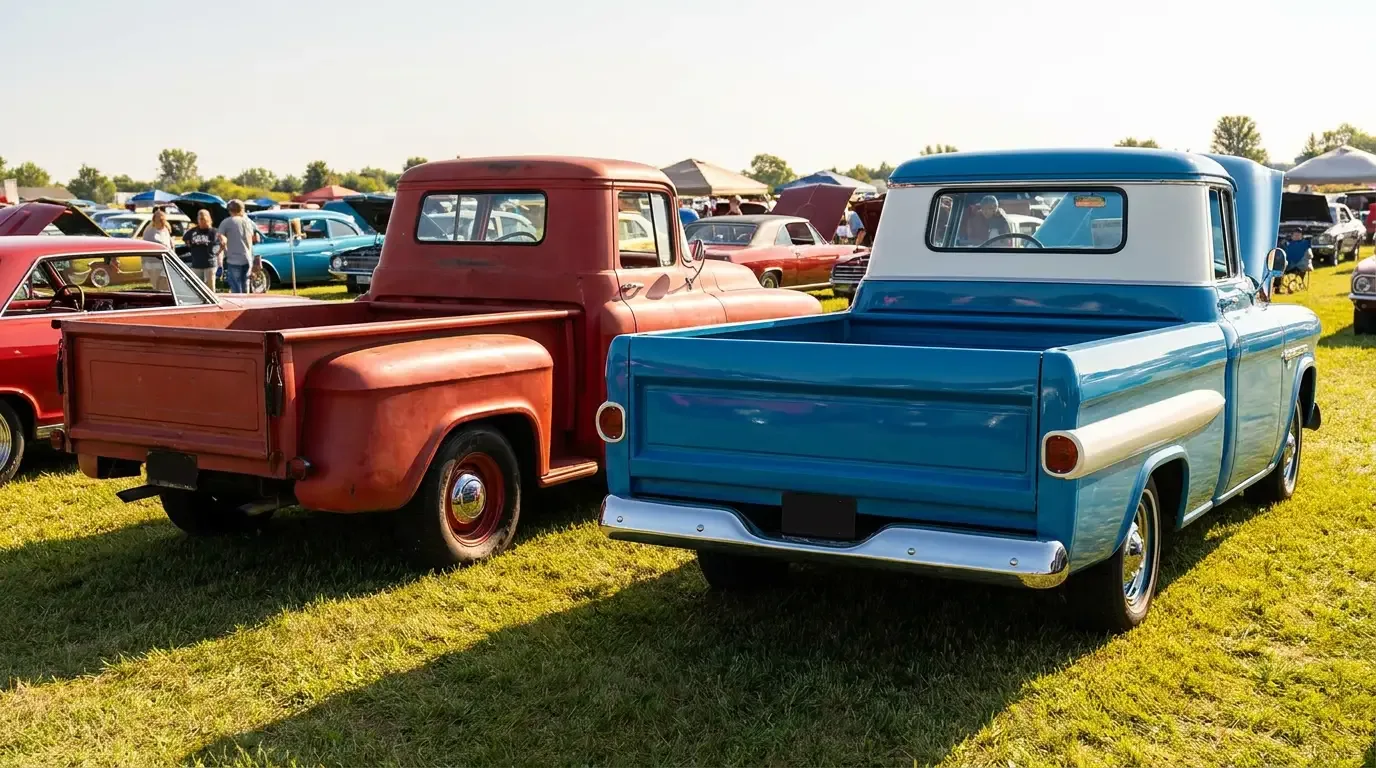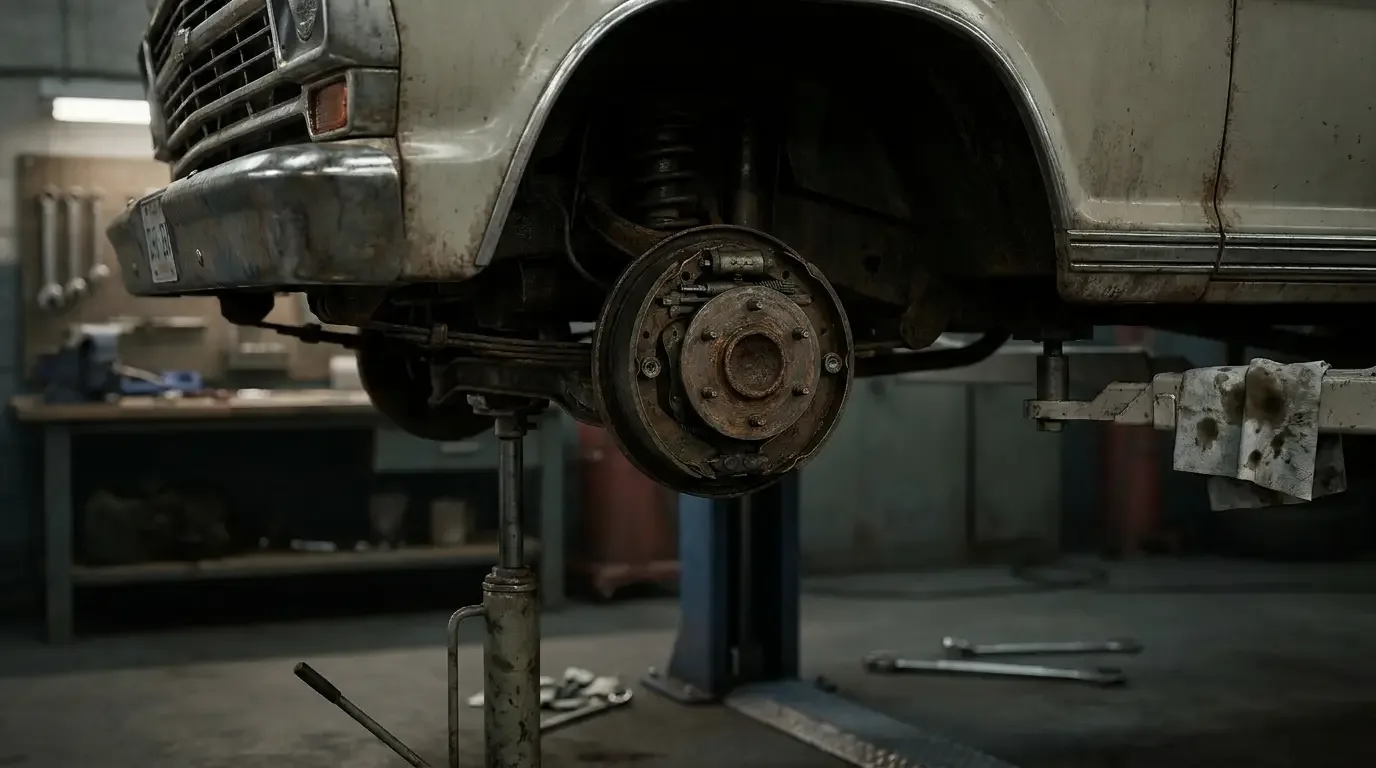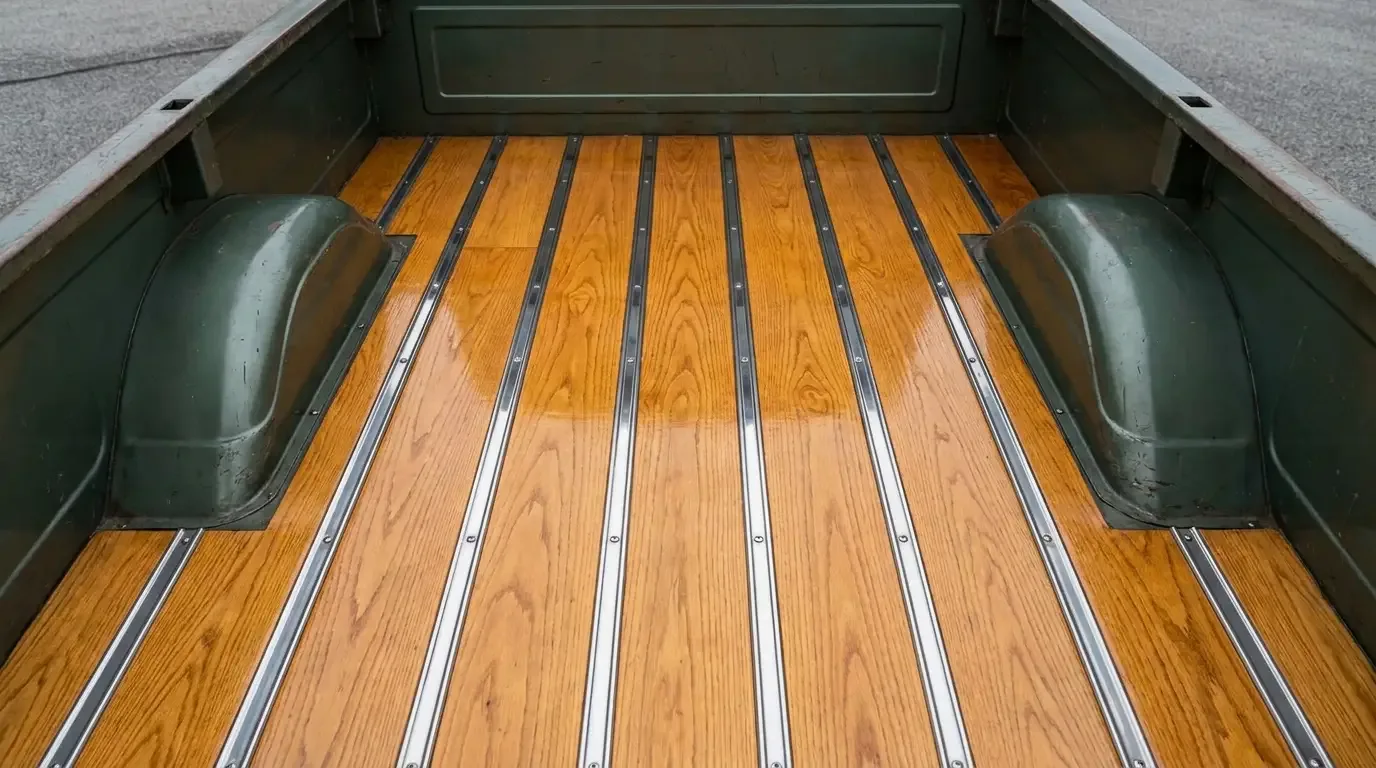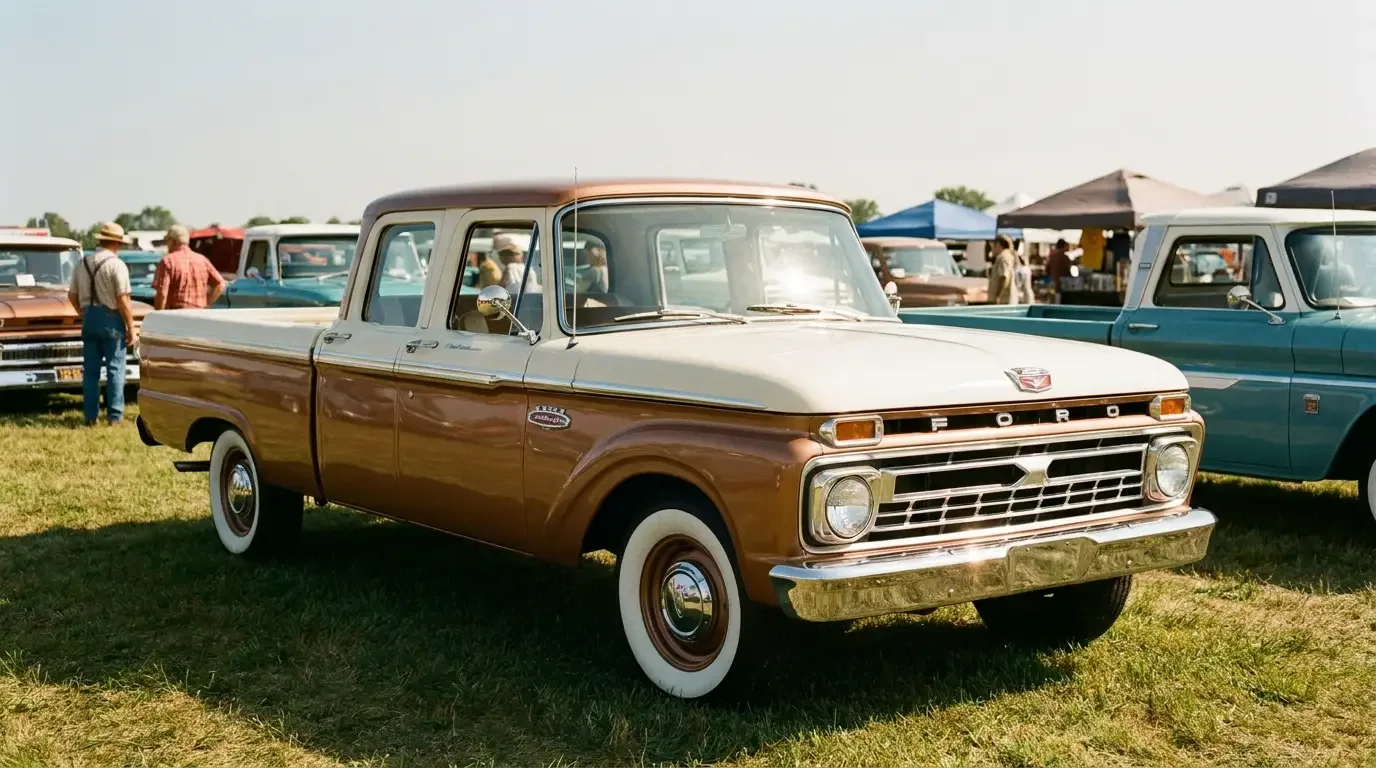

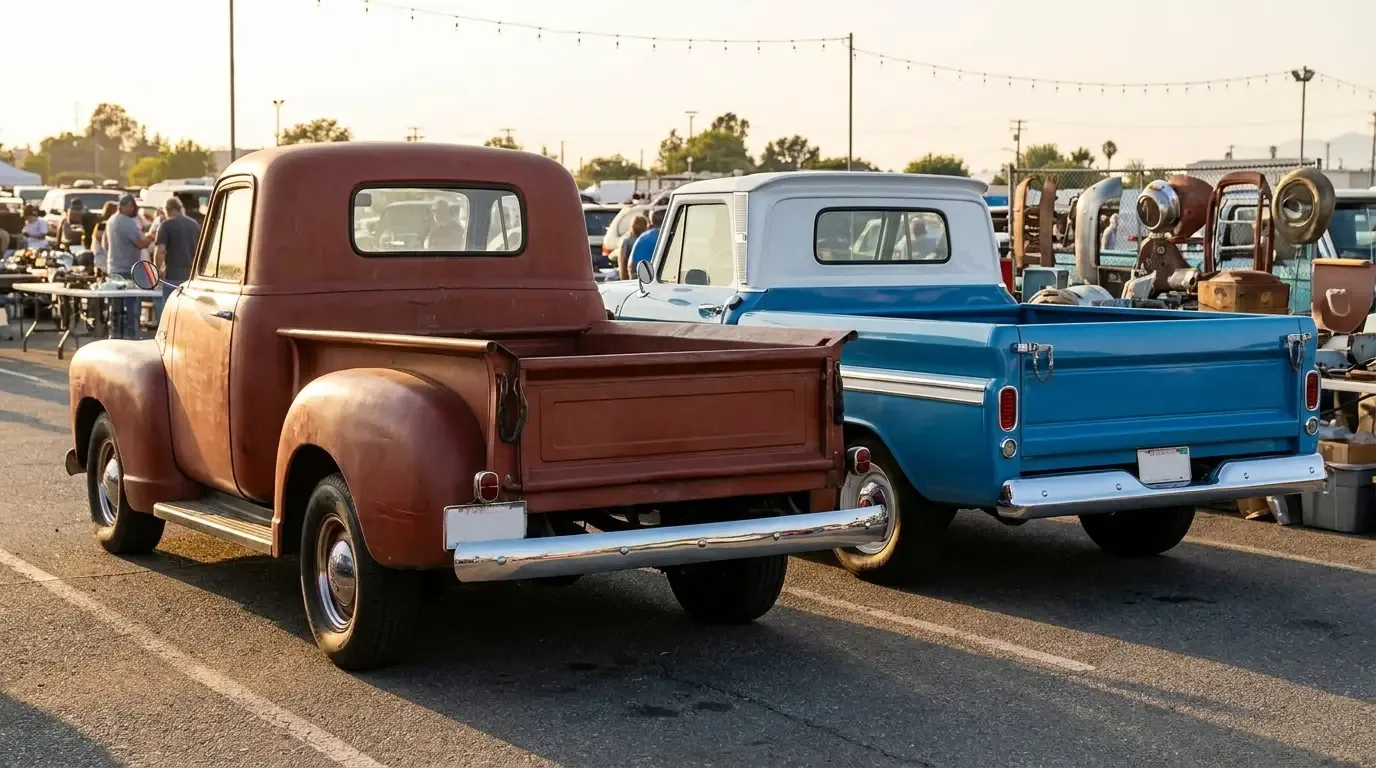
Two pickups sit side by side at a swap meet. From the cab forward they look the same. Walk to the back and the difference is obvious: one has a narrow bed with the rear wheels bulging out into fenders and a running board you can step on, the other has a wide, smooth-sided bed that runs flush from the cab to the tailgate. That's the whole stepside vs fleetside question in one glance. The trouble is that every manufacturer had its own name for these two shapes, and buyers throw the terms around loosely, so it helps to know exactly what you're looking at before you hand over money. This fits into the bigger picture of classic truck body styles explained, but here we're just settling the two most common bed types.
How to tell them apart at a glance
A stepside bed is the older shape. The cargo box is narrow, roughly the width of the cab, and the rear wheels sit outside the box in separate bolt-on fenders. Between the cab and the rear fender there's a running board, the "step," which is where the name comes from. Look down the side of the truck and the line is broken up: cab, step, fender, tailgate. It reads as a collection of parts.
A fleetside bed is smooth. The outer wall of the box runs in one straight line from behind the cab all the way to the tailgate, and the wheels are tucked up inside the bed under the wheel wells. No separate fenders, no running board back there. The line down the side is one clean panel. If you can run your hand from the cab to the taillight without going over a fender, it's a fleetside.
Names change by brand, and this is where people get tripped up. Chevrolet called the smooth bed Fleetside and the fendered bed Stepside, while GMC badged the same shapes Wideside and Fenderside. Ford called them Styleside and Flareside. Dodge used Sweptline and Utiline. Studebaker had its own words too. They all describe the same two shapes. When someone says "stepside" as a generic term, they almost always mean the narrow fendered bed no matter who built it.
When each style appeared
The stepside is the original. Go back to the earliest factory pickups and the bed is always a narrow box with the wheels hanging outside it. There wasn't another way to do it. The fenders were separate because the tooling to stamp a full-length smooth side didn't exist yet, and the narrow box was cheaper to build. For decades, if you bought a pickup, you got what we now call a stepside.
The fleetside arrived in the mid-1950s as manufacturers modernized their trucks and started chasing buyers who wanted something that looked less like a farm implement. Chevrolet's Cameo Carrier is the one people point to as the turning point: it wrapped a smooth-sided bed in fiberglass panels to hide the seams and gave the truck a car-like profile. It was expensive and sold in small numbers, but it proved people would pay for the look. Within a few years the all-steel fleetside became the volume seller, and the stepside slid down to being the cheaper, more utilitarian option on the order sheet.
By the 1960s and into the 1970s both beds were offered side by side across the truck lines. The fleetside was the default most buyers checked. The stepside stayed on the books as the budget bed and the working-farm bed, which is exactly why the ones that survive tend to be honest, used-up trucks rather than pampered ones.
Stepside vs fleetside spec comparison
| Feature | Stepside | Fleetside |
|---|---|---|
| Bed shape | Narrow box, cab-width | Full-width smooth box |
| Rear fenders | Separate, bolt-on, outside the bed | Integrated, wheels tucked inside |
| Running board at bed | Yes (the "step") | No |
| Usable cargo width | Narrower; wheel wells outside | Wider floor between the walls |
| First common era | From the earliest pickups | Mid-1950s onward |
| Original market position | Budget / working truck | Volume seller / better looking |
| Panel complexity | More separate parts to fit | One long panel, fewer seams |
| Collector appeal today | Nostalgic, hot-rod favorite | Cleaner canvas, big-window trucks prized |
Treat those era and price notes as general guidance rather than gospel, since the exact year each brand switched and what it charged varied. If you're cross-shopping actual trucks, browse the current classic pickups for sale listings to see how the two beds are priced against each other in the real market.
Pros and cons of each
The stepside's strength is character. Those bulging fenders and the running board give it a shape people associate with old trucks, and that look drives a lot of the hot-rod and restomod builds you see. The step itself is genuinely useful for reaching over the side into the bed. The downsides are practical. The bed floor is narrower, and because the wheel wells sit outside the box you can't lay a full sheet of plywood flat the way the marketing would suggest on a fleetside. The separate fenders are also a maintenance headache: they trap dirt behind them, they rust at the mounting flanges, and finding straight original fenders for a rare year is a real chore. More parts means more things to align, more seams to fill, and more chrome or trim to source.
The fleetside's strength is the flat, wide floor and the clean sides. It hauls better, it looks more finished, and there's less to fit when you restore it because the side is one panel instead of a running board plus a fender plus a mounting bracket. The tradeoff is that the smooth panels are big and prone to dents and bondo, and a wavy fleetside side takes real bodywork to make straight again. Rust in the lower bed sides and the wheel-well lips is common and it's a highly visible area, so a bad repair shows.
"People fall in love with the fenders on a stepside and forget they've got to buy two of them, hang them straight, and keep them from rusting off. A fleetside gives you one big panel to worry about instead of a pile of little ones. Neither is wrong. Just know which headache you're signing up for before you write the check."
— Robert Halloran
Which one collectors and buyers prefer
There's no single answer, because the two beds attract different buyers. Stepsides tend to win with people building a truck for looks: hot rodders, restomod shops, and anyone chasing that old-truck silhouette. The narrow bed and the fenders photograph well and they suit a lowered stance and big wheels, so a lot of the eye-catching builds start with a stepside. Because stepsides were the cheaper working bed originally, clean unmolested ones can be scarce, and scarcity in a good year can push prices up.
Fleetsides pull the buyers who want a usable, good-looking truck they can drive and haul with, plus the purists who prize specific desirable configurations. On the classic Chevrolet and GMC trucks, the later "big window" cabs and short-bed fleetsides in particular are sought after, and a correct short-bed fleetside will usually out-value a long-bed of the same year. Ford Styleside short beds follow the same logic. The flat sides also give a restorer a cleaner canvas for a factory-correct repaint, which matters to the show-judging crowd.
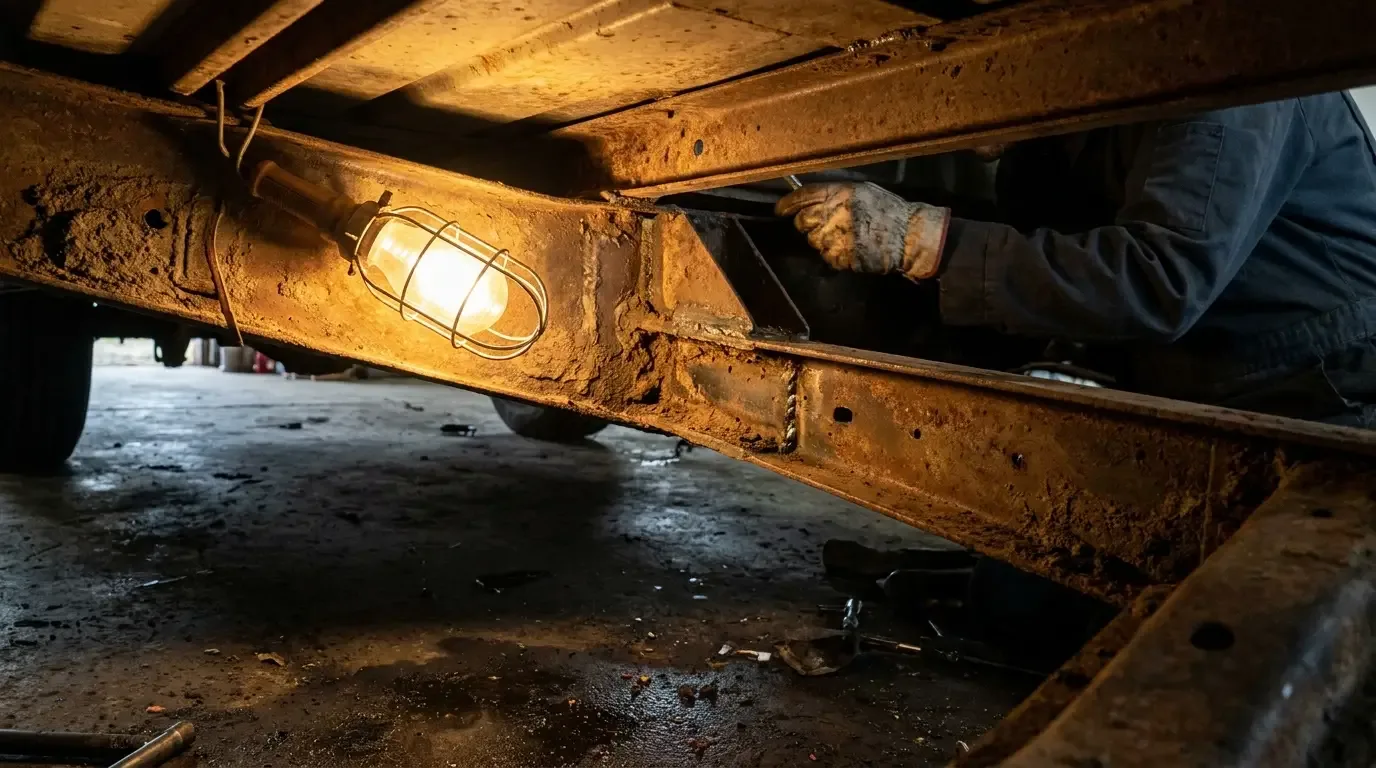
If you're buying to build something wild, the stepside gives you a head start on the look. If you're buying to drive, show, or keep original, the fleetside is usually the more sensible and more liquid choice, especially in a short-bed. Value swings hardest on the same things for both beds: how straight the sheet metal is, whether it's a desirable short bed, and whether the truck has been butchered by a previous owner. Get under it with a good light and check the bed floor, the wheel wells, and the lower cab corners before the bed style even enters into it.
Sources and notes
- Factory sales literature and order guides for period pickup lines (bed-style names and options).
- Marque and model histories covering the mid-1950s move to smooth-sided beds.
- Period road tests and truck buyer guides describing cargo dimensions and bed construction.
- Auction results and collector price guides for relative short-bed vs long-bed and stepside vs fleetside values.
- Restoration and body-panel supplier catalogs for fender, running-board, and bed-side availability.