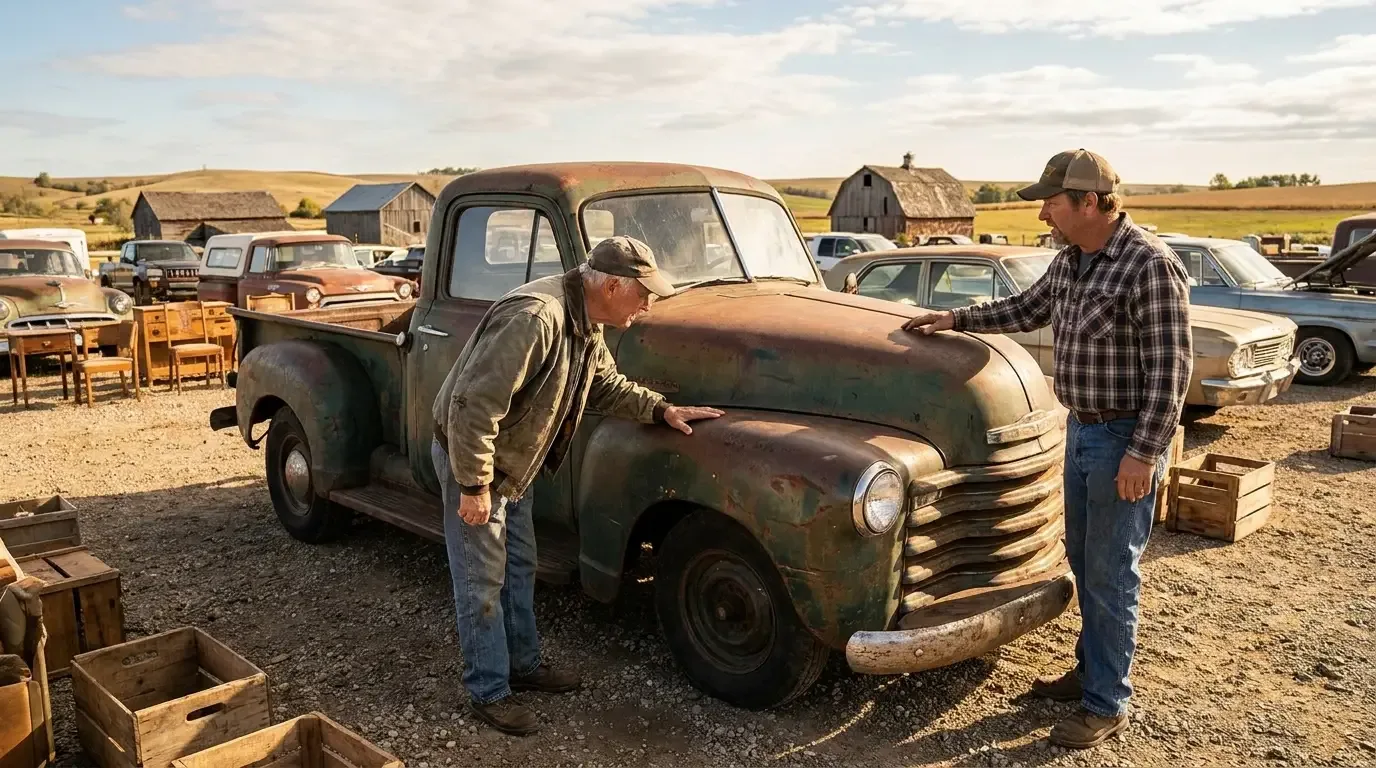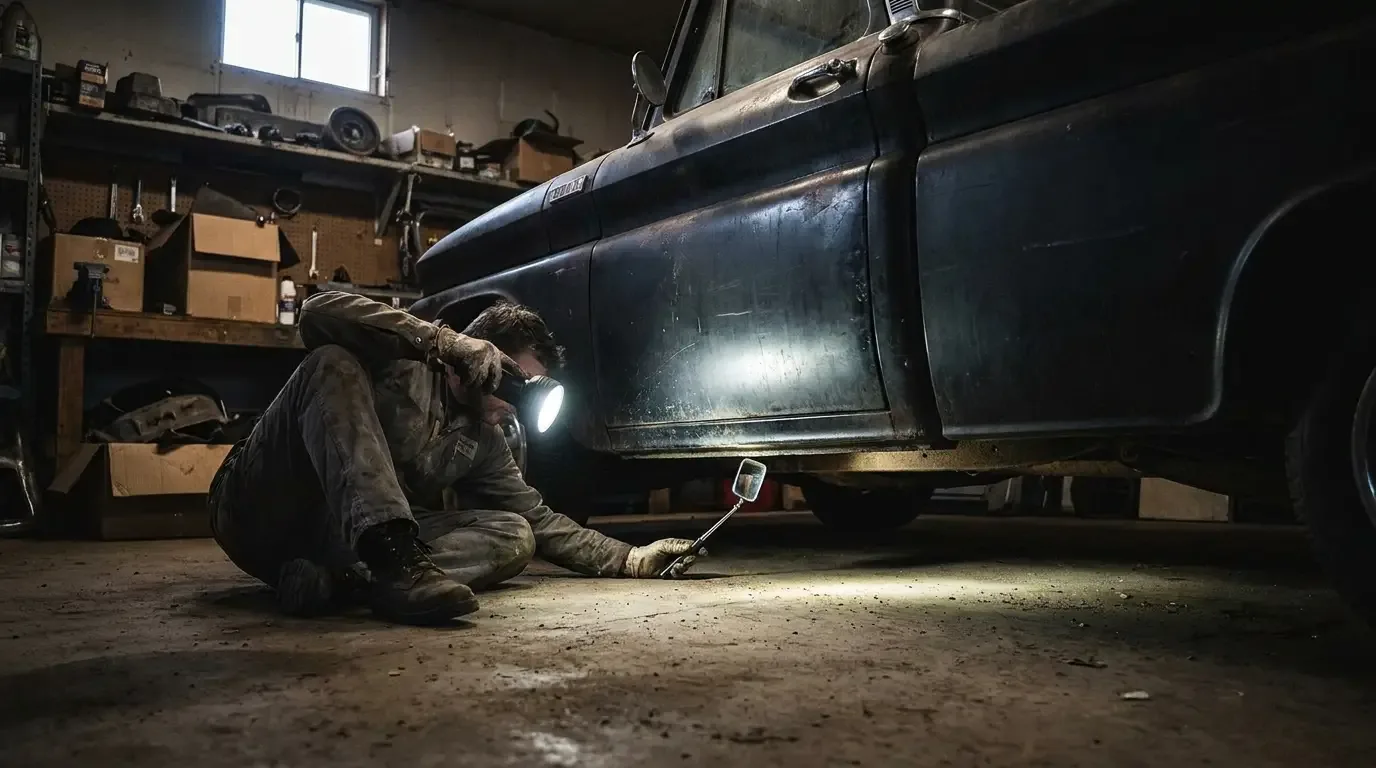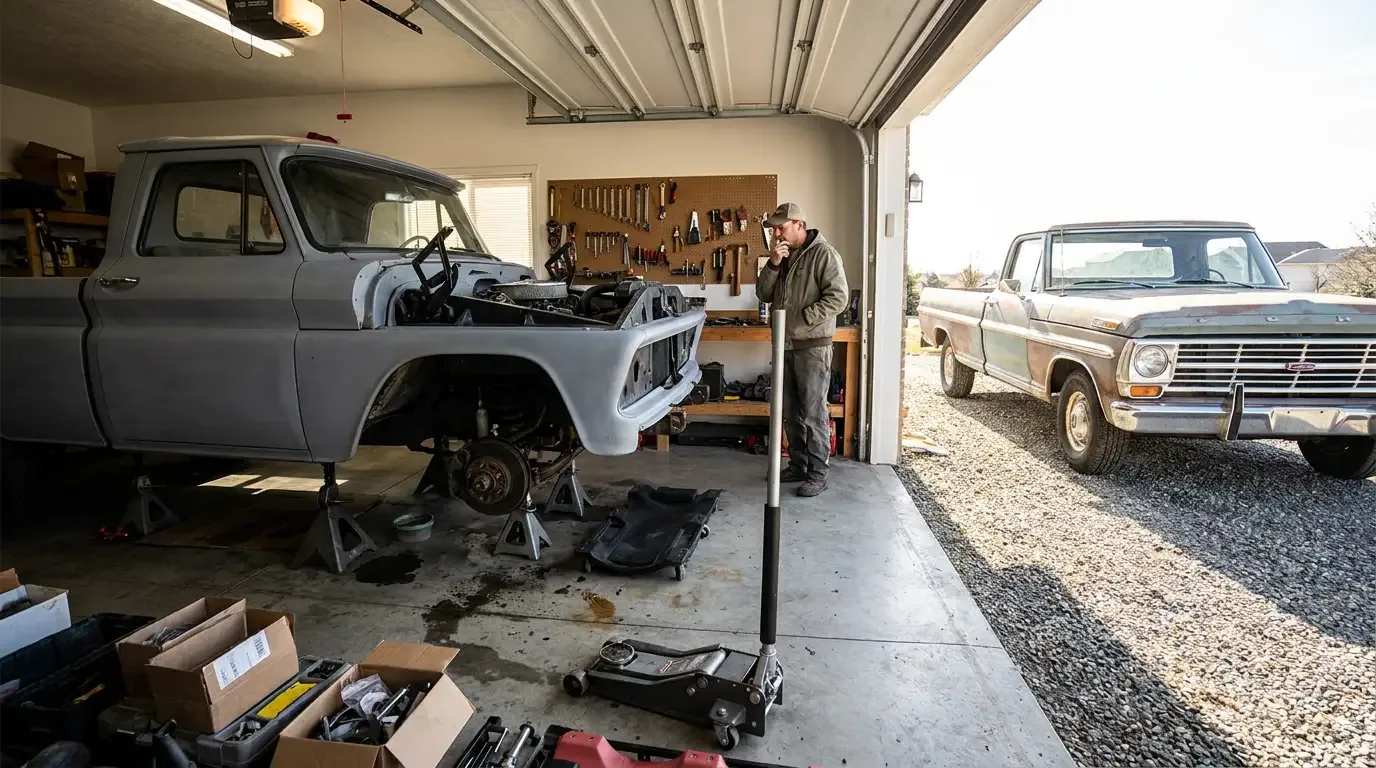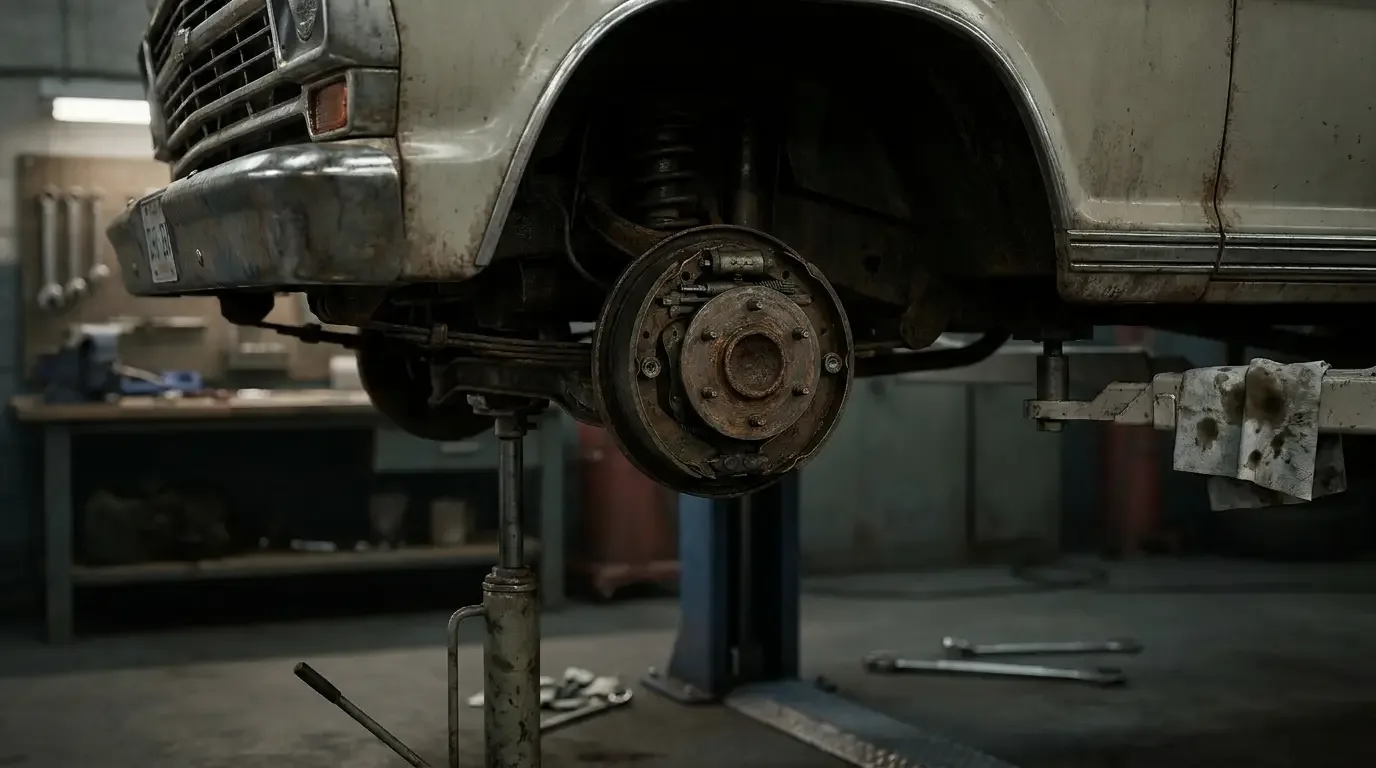
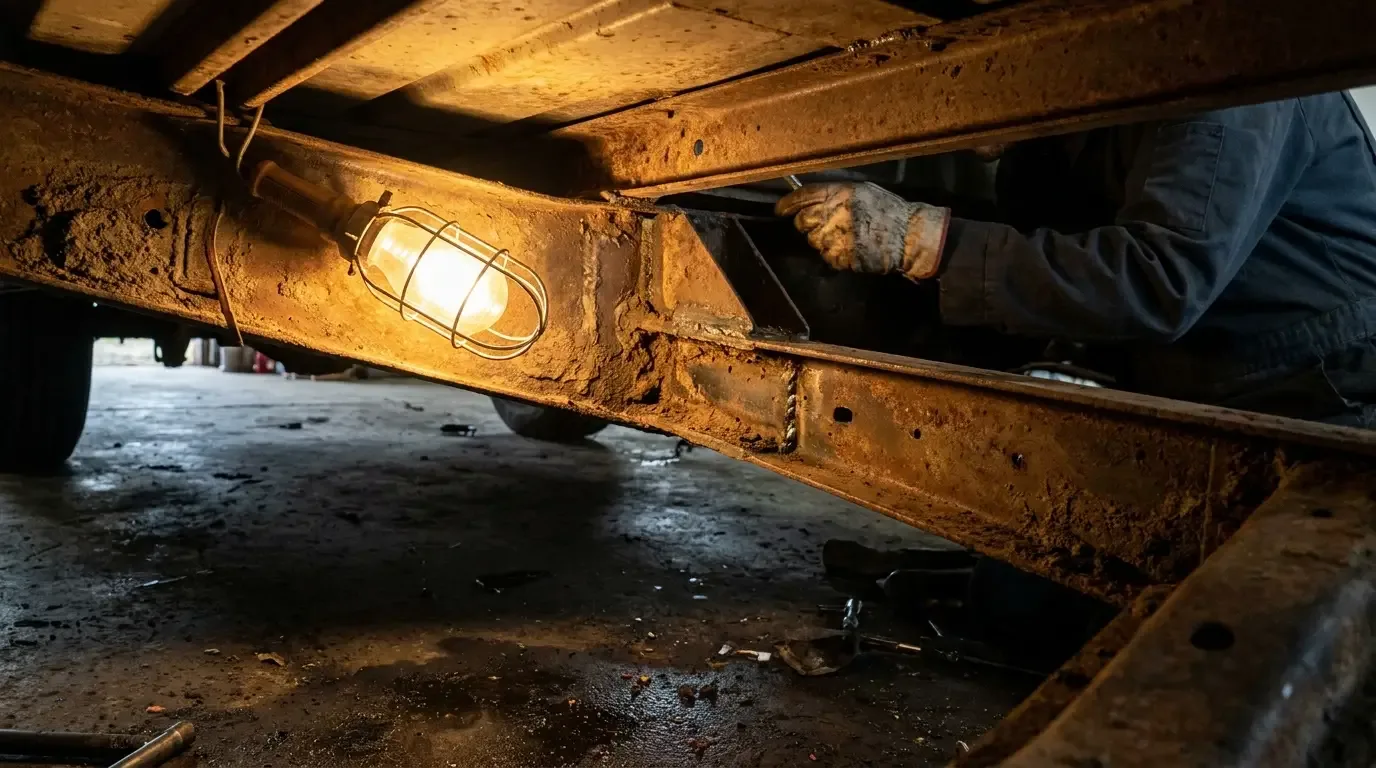
The body can lie to you. Fresh paint, a tidy interior, a motor that fires on the first turn of the key, all of that can hide the one thing that actually decides whether a classic truck is worth buying: the frame. On a car you might get away with a little rot in a rocker. On a truck, the frame is the truck. It carried the loads, took the hits, flexed over the ruts, and rusted from the inside where nobody looked. Get under it with a light, not a flashlight held at arm's length, and you will learn more in ten minutes than the seller told you in an hour. This is a guide to reading a frame honestly, no matter what badge is on the tailgate. For the bigger picture on the whole purchase, start with our guide on how to buy a classic truck.
Why the frame is the dealbreaker
Most classic American pickups ride on a ladder frame. Two long rails run front to back, and a set of crossmembers tie them together like the rungs of a ladder. That layout is simple, tough, and repairable, which is exactly why these trucks are still on the road decades later. It is also why the frame is the one component you cannot fudge. Sheet metal you can patch. A tired drivetrain you can rebuild on a Saturday. A bent or rotted frame changes everything about how the truck drives, and fixing it right is expensive, slow, and often not worth the money.
Here is the honest economics. A body-off frame repair, if you want it done properly with the truck straightened on a jig and the corroded sections cut out and replaced, can run into thousands of dollars in labor alone before parts. On a truck whose finished value might sit in the low five figures, that math stops working fast. A frame that has been tweaked in a hard hit and never truly straightened will fight you forever: the truck wanders, tires wear on one edge, doors and fenders never quite line up. You end up chasing a ghost. That is why a bad frame is a walk-away, not a bargaining chip you patch later.
Reading the rails: rot, kinks, and prior repair
Start at the rails, the two long members that run the length of the truck. Work from the front bumper to the rear, one side at a time, with the truck on a lift or ramps if you can get it there. You are looking for three separate problems, and they tell you different things.
Rot. Frame rails are usually C-channel or boxed sections, and the ugly truth is they rust from the inside out. Road salt, mud, and water collect inside the channel and eat the steel where you cannot see it, so by the time rust shows on the surface the metal underneath may already be paper. Tap along the rail with a small hammer or the handle of a screwdriver. Good steel rings. Rotten steel gives a dull thud, and if the tool goes through, you have your answer. Pay special attention to the rear behind the cab, over the axle, and anywhere mud packs in and stays wet.
Kinks. Sight down the length of each rail like you are checking a rifle barrel. A straight frame runs true. A kink, a dimple, a section that is pushed in or buckled, means the truck took a hit. Kinks often hide behind the front wheels where a hard frontal impact folds the rail, and under the bed where a rear hit does the same. A ripple in the metal or a spot where the rail is no longer flat is a red flag that the truck has been in a serious collision.
Prior repair. Look for weld beads that do not belong, plates bolted or welded over the rail, and sections of newer, shinier steel spliced into older metal. Some frame repairs are done well and are perfectly serviceable. Many are not. A plate slapped over a rusty rail to hide the rot, a crossmember hacked out and never properly replaced, a weld laid down cold and cracking already, these are the repairs that cost you later. New-looking paint on only one section of an otherwise weathered frame is often covering something. Ask what happened, then look with your own eyes.
Crossmembers, mounts, and the alignment check
The rails are only half the story. The crossmembers tie the two rails together and hold the truck square. Check every one you can reach, especially the crossmember under the cab and the one that carries the transmission, since those trap debris and rust. A crossmember that is cracked, rotted, or has been cut and left out entirely lets the frame flex where it should not, and the whole truck loses its structure.
Then look at the mounts. Body mounts, where the cab and bed bolt to the frame, sit on rubber or urethane cushions that rot and collapse over the years. Rusted-out mount points let the cab shift and are a real repair, not a cosmetic one. Suspension and spring mounts take the loads and are prime spots for cracks. Any mount that is torn, rotted through, or has been welded up in a hurry deserves a hard look.
Finally, check alignment, because a frame can be rotten-free and still be bent. You do not need a shop rack to catch the obvious cases. Stand back and look at the truck as a whole. Do the gaps between the doors, fenders, hood, and bed line up evenly side to side, or is one gap tight and the other wide? Do all four wheels sit square under the body, or does one tuck in or poke out? Uneven tire wear, a steering wheel that sits crooked while the truck goes straight, and a truck that "dog tracks" down the road, rear end offset from the front, all point to a frame that is no longer true.
🔧 Inspection Priorities
- Tap-test the rails end to end. Ring means solid, thud means rot. Inside-out corrosion is invisible until you sound it out. Undetected rail rot is the difference between a driver and a project you never finish.
- Sight down each rail for kinks. Buckles behind the front wheels or under the bed mean a past collision. A tweaked rail that was never straightened means permanent handling and fitment problems.
- Hunt for hidden repair. Odd welds, cover plates, one freshly painted section on a weathered frame. Good repairs are fine; hack jobs and rust cover-ups are a walk-away.
- Inspect crossmembers and mounts. Cab, transmission, and spring mounts rot and crack. A missing or butchered crossmember lets the frame twist. Mount repair is real labor, not a weekend job.
- Check panel gaps and tire wear for alignment. Uneven gaps, dog-tracking, and one-edge tire wear reveal a bent frame even when the metal looks clean. Straightening on a jig is shop money you rarely recover.
Making the call: what a frame is telling you
Once you have been under the truck, sort what you found into three buckets. Surface rust with solid steel underneath, tired body-mount bushings, a clean older repair that was done properly, those are normal for a truck this age and are fine to work with. Price them in and move on.
The middle bucket is where judgment matters. A localized rust repair on an otherwise straight and solid frame can be sound if a competent shop does it, but you should get a real estimate before you buy, not after. A truck that needs one crossmember replaced is a different animal than one that needs a rail section spliced. Know which you are looking at.
The walk-away bucket is short and firm. Rot you can push a screwdriver through. A kinked rail from a hard hit that was never straightened. A frame so far out of alignment that nothing lines up. Multiple bad repairs stacked on top of each other. In those cases the truck may still be worth something for parts, but it is not worth restoring unless it is a rare model and you are going in with eyes open and a fat budget. A good-looking truck on a bad frame is the most expensive mistake a first-time buyer makes.
"I have watched a fellow fall in love with the paint and never once look under the truck. The frame does not care how shiny the fenders are. Get under it with a light, sound out the rails, and if it thuds, you already have your answer. Walk away and go find one that rings."
— Robert Halloran
Sources and notes
- Factory service and body manuals for ladder-frame light trucks (frame construction, crossmember layout, body-mount specifications).
- Period road tests and owner literature covering frame design and load ratings.
- Restoration shop practice and frame-straightening guidance from the classic truck trade.
- General corrosion-inspection guides for ladder-frame vehicles.