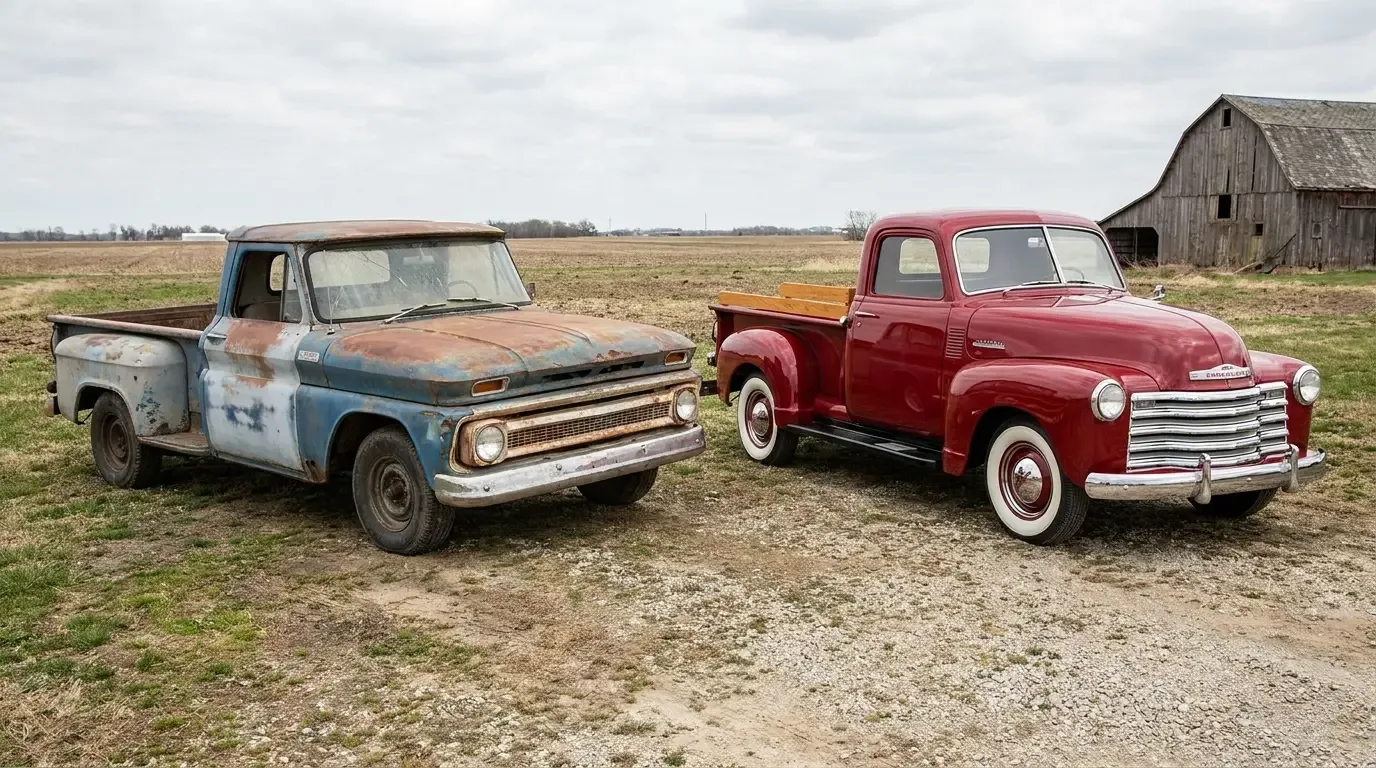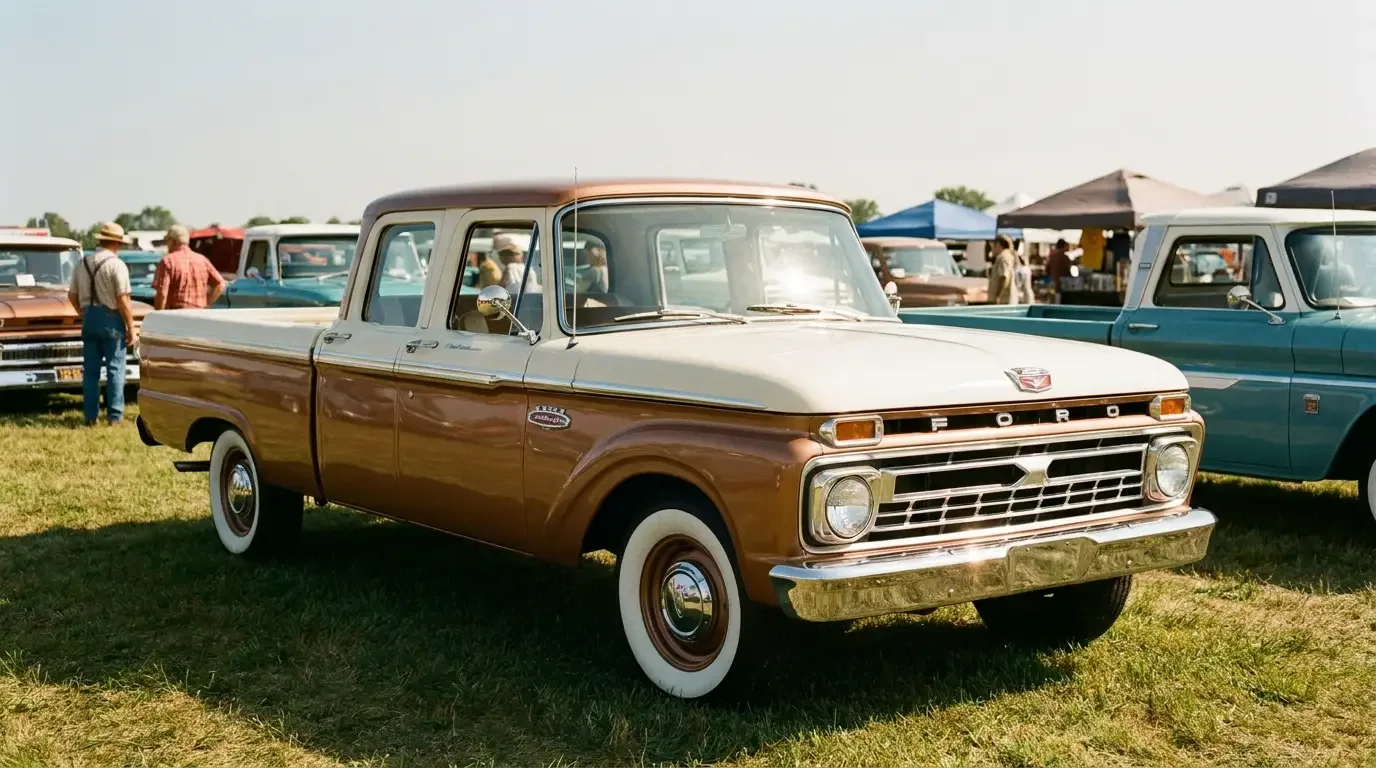
Rust is the one thing that turns a cheap old truck into an expensive one. Paint you can see. A tired engine you can hear. Rust hides. It works from the inside out, from the bottom up, in the seams where water sits and nobody looks. By the time it bubbles through the paint, the metal behind it is usually long gone. If you are shopping for a classic pickup, learning where the rot lives and how to find it will save you more money than any other single skill. Before you go looking at trucks, it helps to read how to buy a classic truck so you know what you are walking into. This piece is about the rust itself, where it hides, how to catch it, and when to walk away.
None of this is model-specific. A short-bed from the fifties and a crew cab from the seventies rot in the same places for the same reasons, because they are built the same way: a body bolted to a ladder frame, panels folded into seams that trap dirt and moisture. Learn the map once and it works on almost anything with a bed.
Where rust hides on an old truck
Rust needs three things: bare steel, water, and time. On a truck, those three meet in a handful of predictable spots. Here is the map, roughly in order of how much trouble each one causes.
- Cab corners. The lower rear corners of the cab, behind the doors. Water runs down the back glass and the door seals, collects in the corner, and sits. These rot from the inside. The outside can look fine while the metal behind it is paper.
- Rocker panels. The horizontal panel below the doors along the bottom of the cab. On trucks with an inner and outer rocker, mud packs into the cavity between them and never dries. Structural on most trucks. This is not trim.
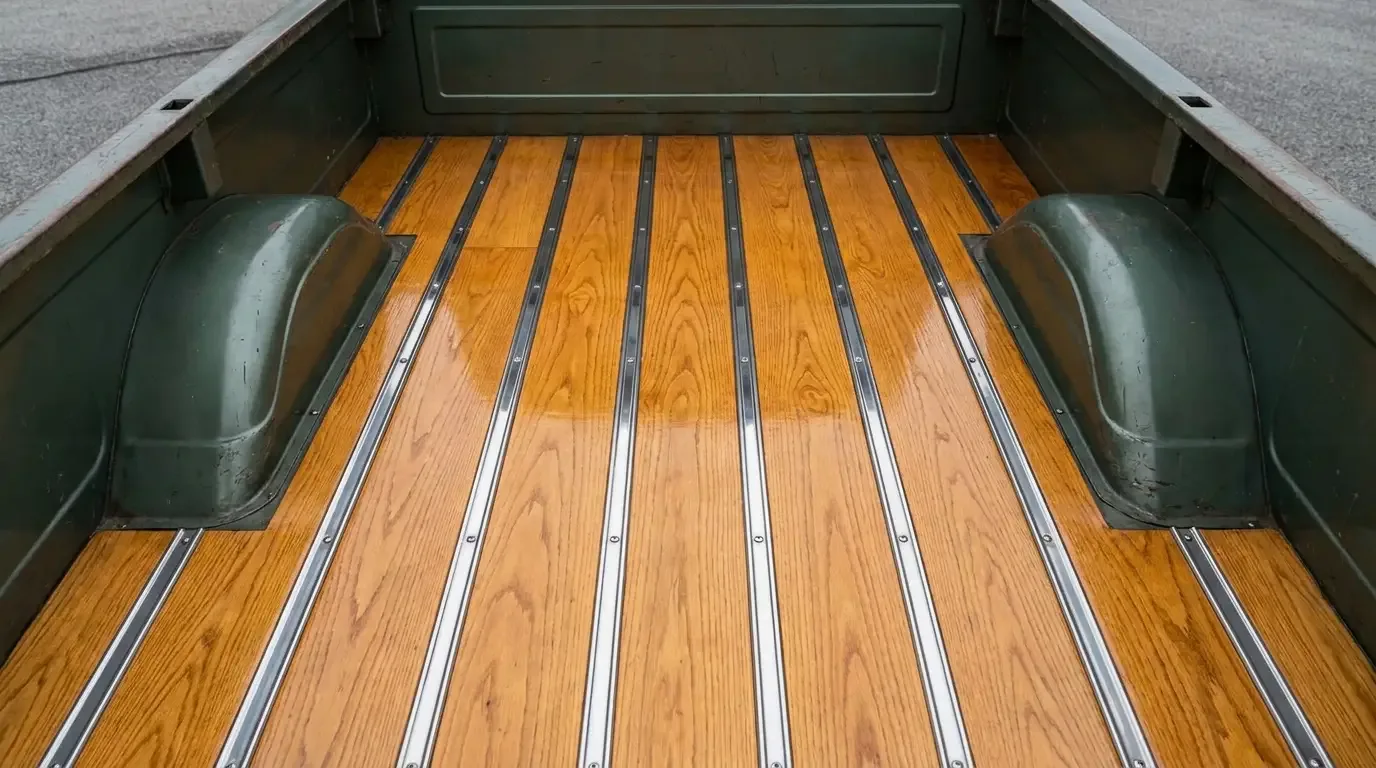
- Bed floor. Especially under the front lip and along the seams where the floor meets the bedsides. Hauling wet gravel, firewood, or livestock for forty years does exactly what you would expect.
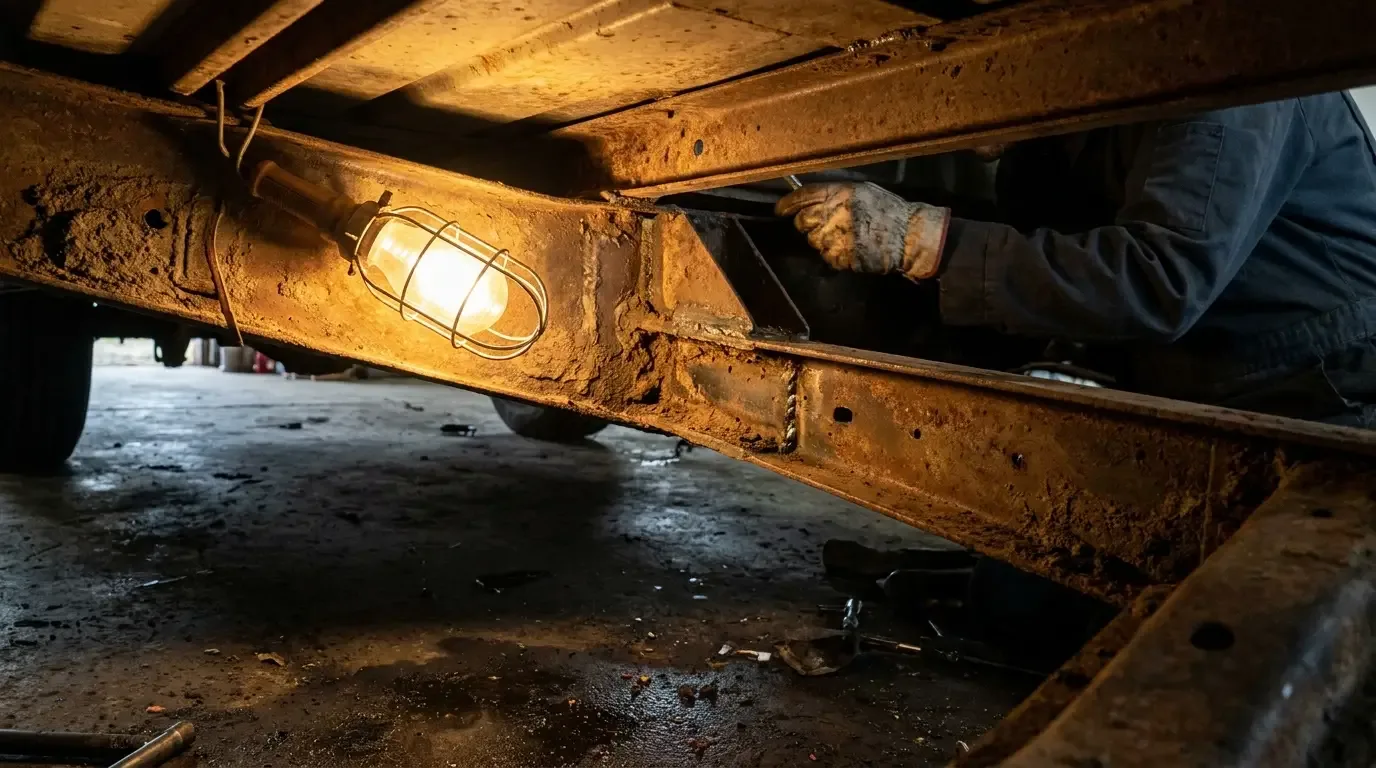
- Cab mounts. The brackets where the cab bolts to the frame, and the frame directly under them. Water and debris collect at the mount and eat both the bracket and the frame rail. This one is dangerous because it is load-bearing and hard to see.
- Frame boxing and rails. The frame itself, particularly the boxed sections and anywhere a crossmember meets a rail. Trap water inside a closed box section and it rusts from the inside where you will never spot it with a glance.
Notice the pattern. Every one of these is a place where two pieces of metal meet and hold water. Rust is not random. It follows the water.
How to actually find it
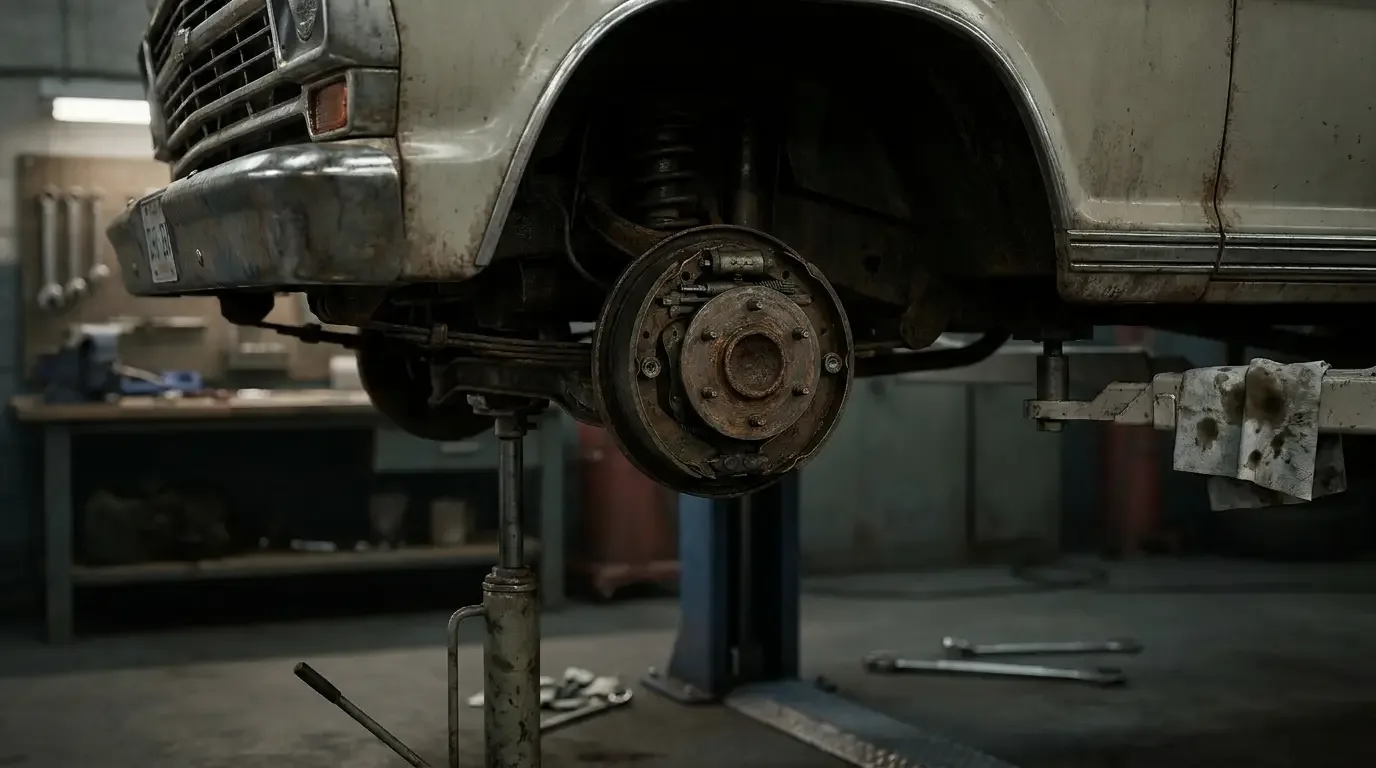
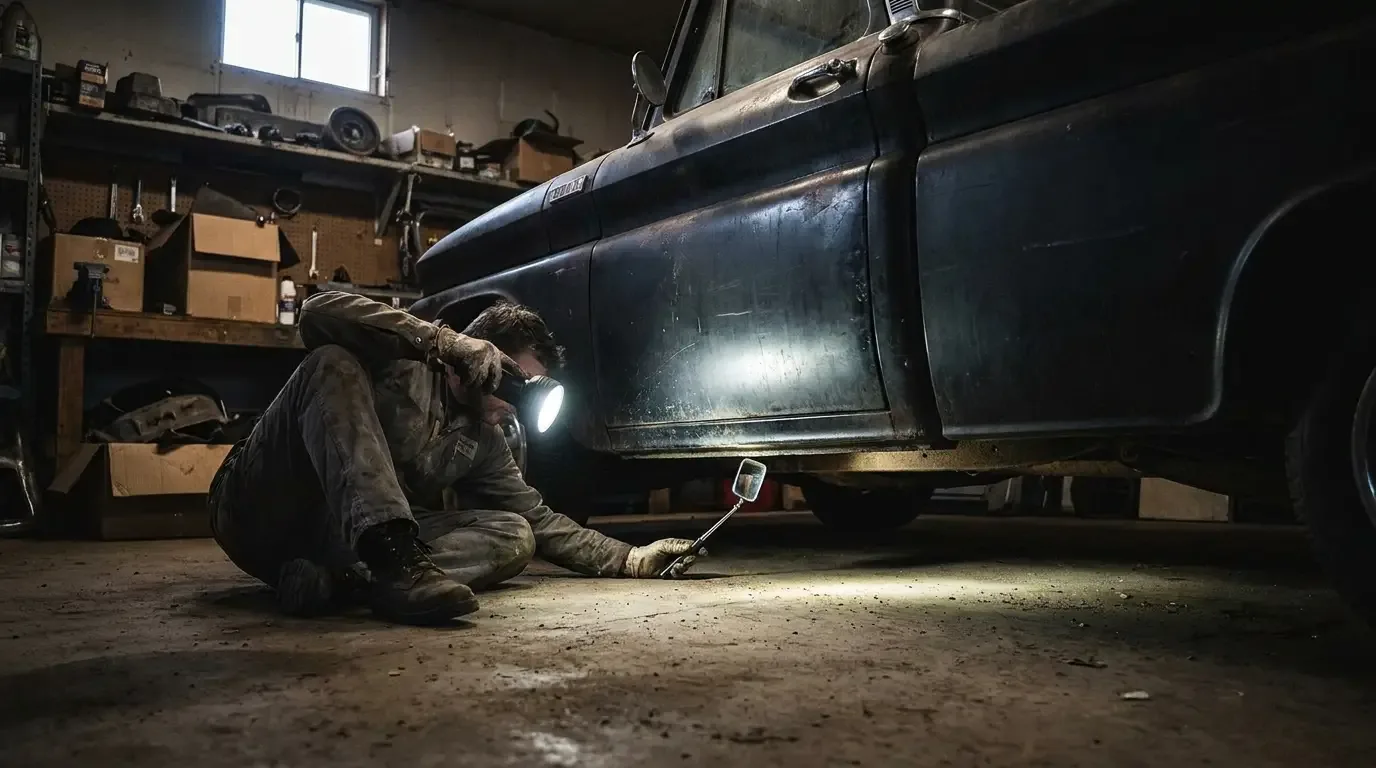
Most people inspect a truck standing up, at arm's length, in good light, looking at the paint. That is exactly backward. Rust does its worst work where you have to get low and dirty to see it. Get under it with a light. Not a flashlight held at arm's length while you lean over the bed. Down on a creeper, or at least on your knees, with a good light and something to poke with.
Bring three things: a bright light, a small screwdriver or an awl, and a magnet. Here is how each earns its keep.
- The light goes inside cavities, up into cab corners through the drain holes, and along the frame rails. You are looking for scale, flaking, and daylight where there should not be any.
- The poke test is the honest one. Press firmly, do not stab, on rockers, cab corners, bed floor, and cab mounts. Solid steel resists. Rotten metal gives, crunches, or goes straight through. If it goes through, you found the rust. If the seller flinches, you also found something.
- The magnet tells you where the bodywork is. A magnet sticks hard to steel and weakly or not at all to body filler and fiberglass. Run it over the lower cab, rockers, and corners. A patch of no-grip over a suspicious area usually means filler troweled over rust rather than a proper repair.
Check the frame from underneath along its whole length, paying attention to the boxed sections and cab mounts. Tap the closed sections and listen. Solid steel rings. Rust-scaled steel sounds dull and dead. Look for a heavy scaly texture, flaking that comes off in sheets, or any spot where the rail looks thinner than the metal around it. Surface rust that is just a brown film wipes to solid steel underneath and is normal on any old truck. Scale that flakes away and leaves pits, or a screwdriver that sinks in, is the kind that costs money.
🔧 Inspection Priorities
- Cab mounts and the frame under them. Get under it and inspect both the mount bracket and the rail directly beneath. This is structural and safety-critical. Frame repair is welding, not bolt-on, and if the rail is rotted through the truck may not be worth saving. Check this first, before you fall in love with the paint.
- Rocker panels, poked not glanced. Press firmly along the full length. Soft or crunchy rockers mean the inner structure is likely gone too. Replacement panels are available for most trucks and the work is doable, but budget real hours for cutting, fitting, and welding.
- Cab corners, checked from inside and out. Look through the drain holes with your light. Outside can look clean while the back of the corner is lace. Patch panels are cheap and plentiful; the labor to cut, fit, and blend is where the cost lives.
- Bed floor and bedside seams. Poke the front lip and the seams. A rotten bed floor is annoying but not fatal, complete reproduction bed floors and even whole bed kits exist for common trucks. Price the parts before you assume it is cheap.
- Frame boxing and closed sections. Tap and listen along the rails, especially boxed areas and crossmember joints. Rust inside a box section is the one you cannot see and cannot easily fix. If a rail is soft, treat it as a walk-away unless the price already accounts for a frame swap.
Fixable versus money pit
Here is the honest part, the part a lot of sellers would rather you skipped. Not all rust is equal. Some of it is a weekend and a patch panel. Some of it is a project that will cost more than the truck will ever be worth. Knowing the difference before you hand over cash is the whole game.
The fixable stuff is bolt-on and panel-level. Cab corners, bedsides, bed floors, tailgates, even full rockers on many trucks, all of that has reproduction parts and a well-understood repair. You are looking at metalwork and paint, which costs money and time but has a known end. A truck that needs corners and a bed floor is a normal old truck, not a disaster.
The money pit is structural and hidden. Rotted frame rails, rusted-through cab mounts, and rust deep inside boxed sections are the ones that turn a fun project into a bottomless one. Frame work means cutting and welding load-bearing steel, and getting it wrong is a safety problem, not just a cosmetic one. When the frame is gone, you are often better off finding a rust-free frame from a dry climate and swapping everything over, and now you own two trucks and a much bigger bill.
| Rust location | Typical fix | Verdict |
|---|---|---|
| Cab corners | Weld-in patch panel | Fixable, budget the labor |
| Rocker panels | Replacement rocker, weld-in | Fixable, more involved |
| Bed floor | Repro floor or bed kit | Fixable, price the parts |
| Cab mounts | Bracket and frame repair, welding | Serious, verify before buying |
| Frame rails / boxing | Section repair or frame swap | Often a money pit |
One more rule of thumb. Rust you can see is usually the smallest part of the problem. If the cab corners are bubbling and the rockers are soft, assume the cab mounts and floor are worse, because they live in wetter, dirtier spots and nobody has been looking at them. The visible rust is the tip. Price the truck as if the hidden rust matches what you can see, and you will rarely be surprised in a bad way.
"I have watched more men lose money to a pretty paint job over a rotten frame than to any engine that ever quit. The engine tells you it is sick. The frame just waits. Get under it with a light before you get out your wallet."
— Robert Halloran
Reading the seller and the truck together
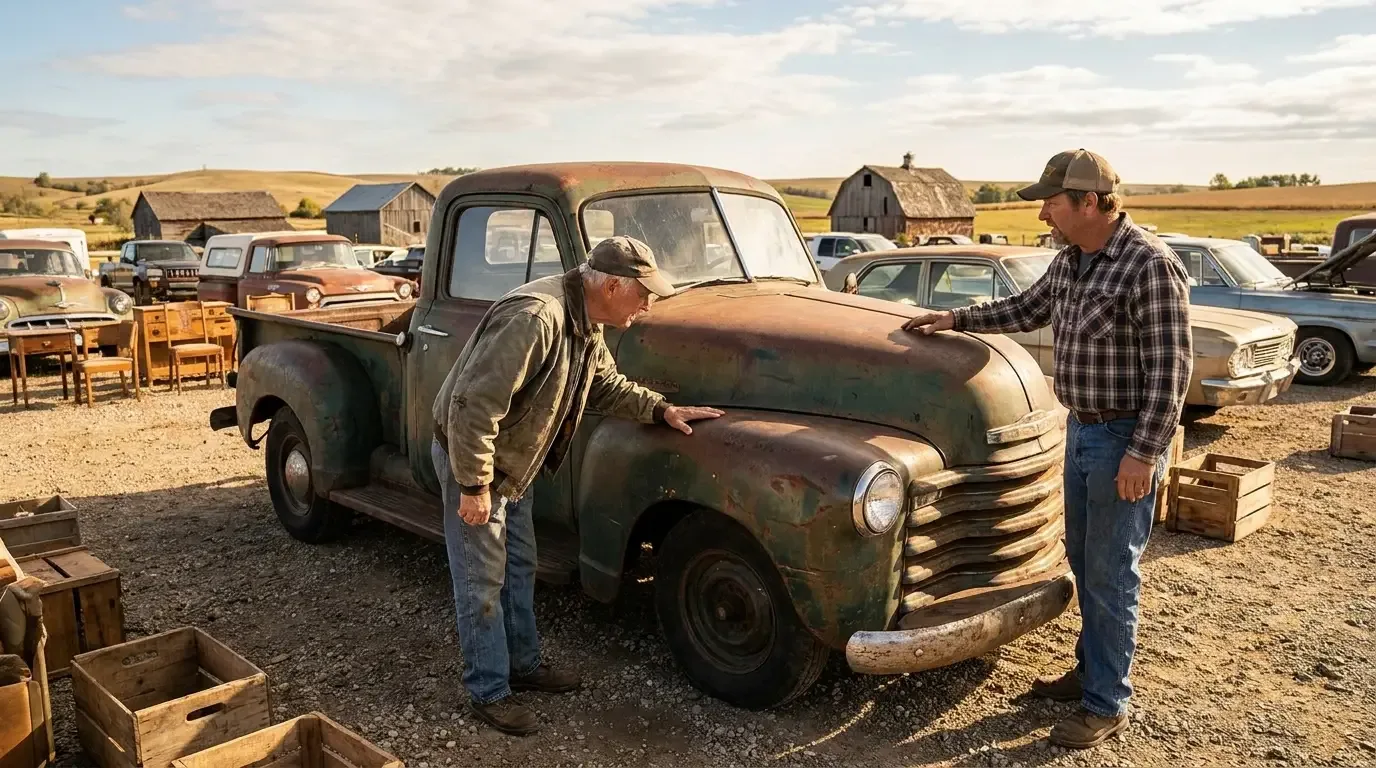
Rust does not only tell you about the metal. It tells you about the life the truck had and the story the seller is telling. A truck from a dry western state that spent its life on a ranch will show sun-baked paint and honest surface rust but often a solid frame. A truck from the salt-belt north, driven through decades of winter road treatment, can look shiny after a repaint and be rotten underneath. Ask where the truck lived. Then verify it with your own eyes underneath, because a fresh coat of paint and a story are cheap.
Watch how the seller reacts when you get low and start poking. An honest seller who knows the truck will point you to the bad spots before you find them, because they already priced the truck accordingly. A seller who steers you away from the rockers, keeps the conversation up by the hood, or gets nervous when the magnet comes out is telling you something without saying a word. Fresh undercoating sprayed heavy over the frame is a classic tell. Sometimes it is honest protection. Just as often it is hiding scale.
Buying an old truck is not about finding one with no rust. On anything worth owning, that truck does not exist at a price you want to pay. It is about finding rust you understand and can afford to fix, and avoiding the rust that will quietly bankrupt the project. Get under it with a light, poke the honest spots, and price the truck for the metal you find and not the paint you see. Do that and you will end up with a good truck instead of an expensive lesson.
Sources and notes
- Factory service manuals and body repair sections for period pickups (panel construction, cab mount and frame details).
- Reproduction and restoration parts catalogs (availability of cab corners, rockers, bed floors, and bed kits for common trucks).
- Period road tests and marque histories for general construction context across truck generations.
- Restoration-shop practice and body-repair guides for rust-detection technique (magnet, poke test, raking light) and frame inspection.