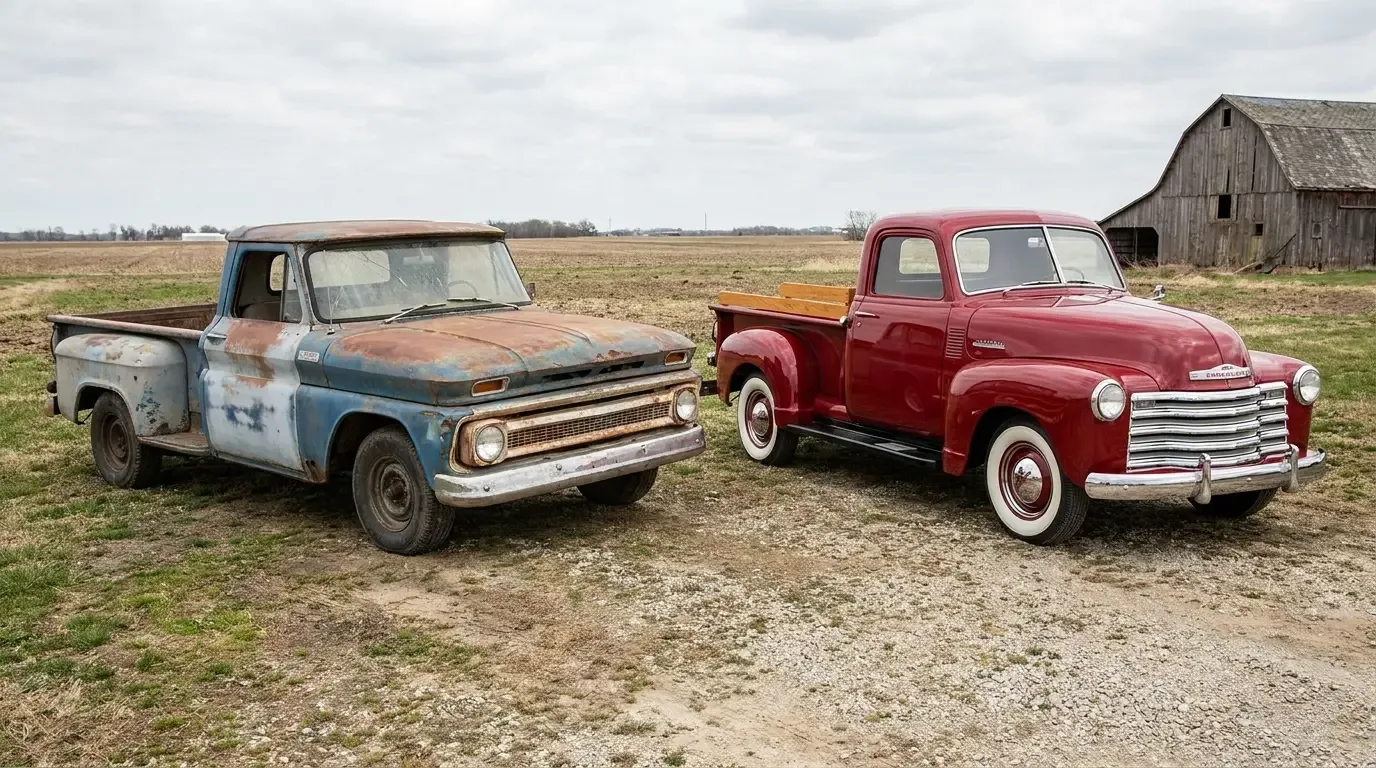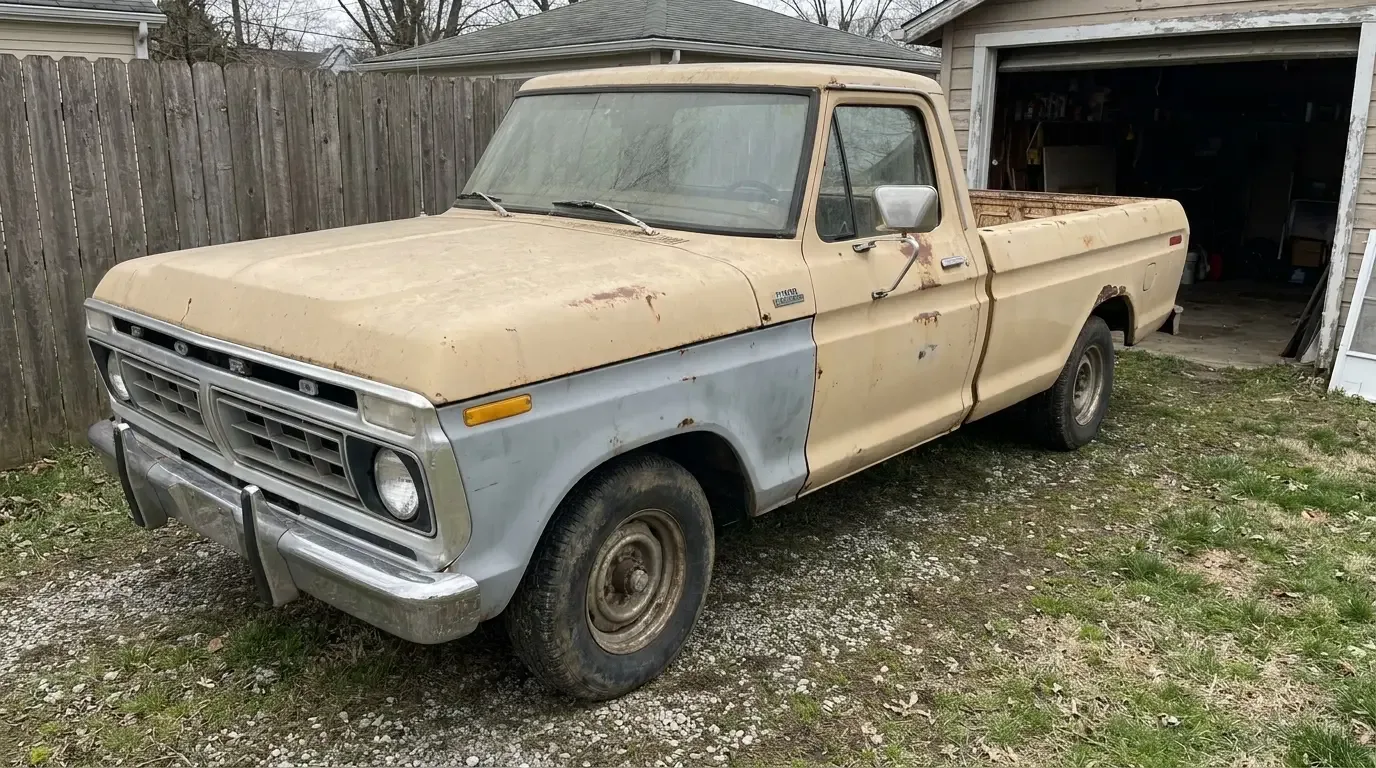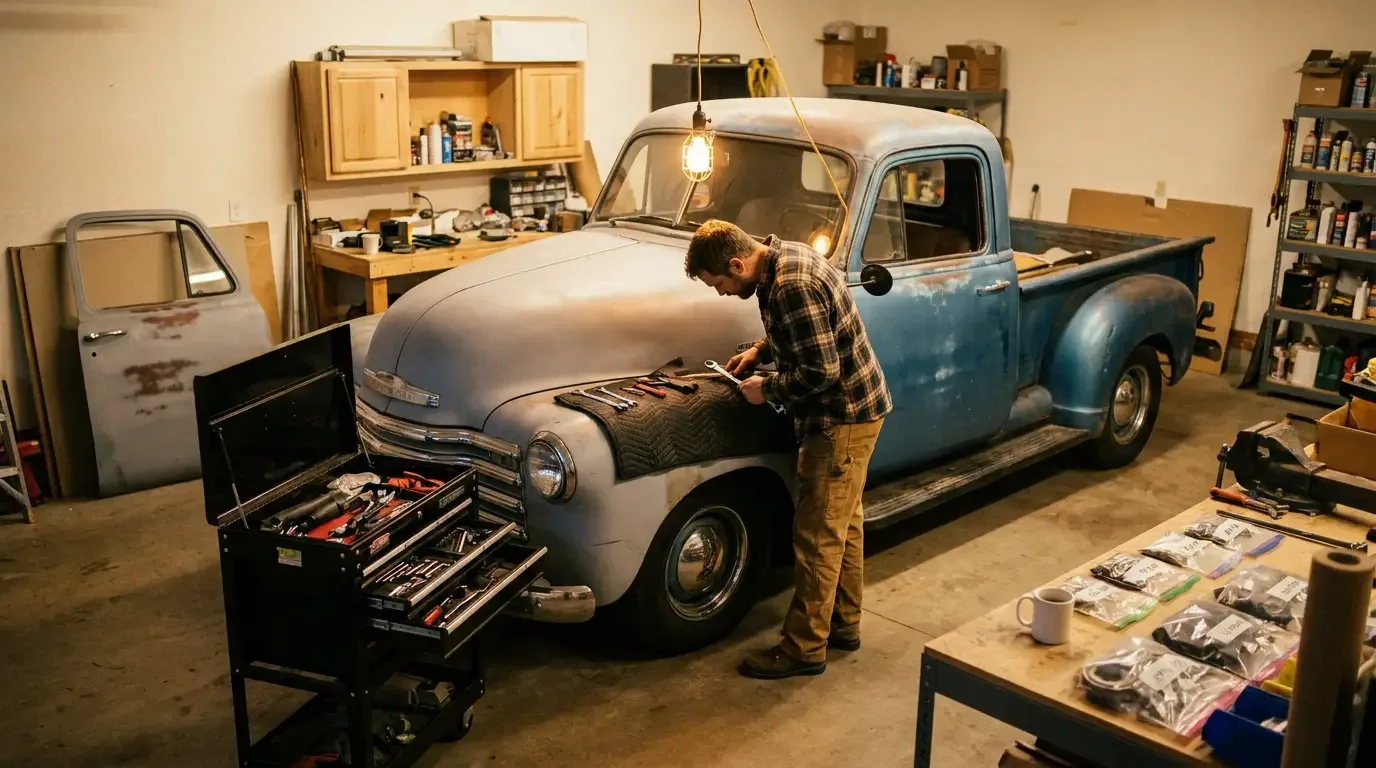

Buying a classic truck is not like buying a classic car, and anyone who tells you otherwise has never crawled under a half-ton with a droplight looking for a rotted crossmember. Trucks were built to work. They hauled feed, framing lumber, and firewood, and most of them earned their keep for decades before anyone thought of them as collectible. That history is exactly why the buying process is different. You are not just judging paint and chrome. You are judging how hard something worked, how it was patched along the way, and whether the bones underneath are worth saving.
This guide walks the whole playbook, from the money conversation you have with yourself before you ever look at a listing, to the paperwork you sign at the end. It stays model-agnostic on purpose. The same discipline applies whether you are chasing a stepside pickup, a panel truck, or a big-window fleet-side. If you want the wider story of where these trucks came from, read the classic American truck story first. It helps to know what you are buying into.
Start with the budget, not the truck
The single most common mistake I see is a buyer who falls for a truck before deciding what they can actually spend. Set the number first, and set it honestly. Your budget is not just the purchase price. It is purchase price plus a realistic reserve for the things you cannot see in a two-hour visit.
Break the money into three buckets. First, the buy. Second, the immediate safety and roadworthiness items, brakes, tires, fuel lines, wiring, anything that stops the truck from being a driver right now. Third, the cosmetic and mechanical wishlist you will chip away at over the years. A truck that looks cheap on paper often is not once you add the second bucket.
Prices vary wildly by condition, region, and model, so treat any number you read as a starting point, not gospel. As a rough frame, a solid, running driver-grade half-ton from the postwar-through-1970s era commonly trades in the low-to-mid five figures, while a rough but complete project can be had for a fraction of that. Concours restorations and rare configurations climb well above that ceiling. Get comparable sales for the exact model and year you are chasing before you commit to a figure.
Project or driver: decide before you look
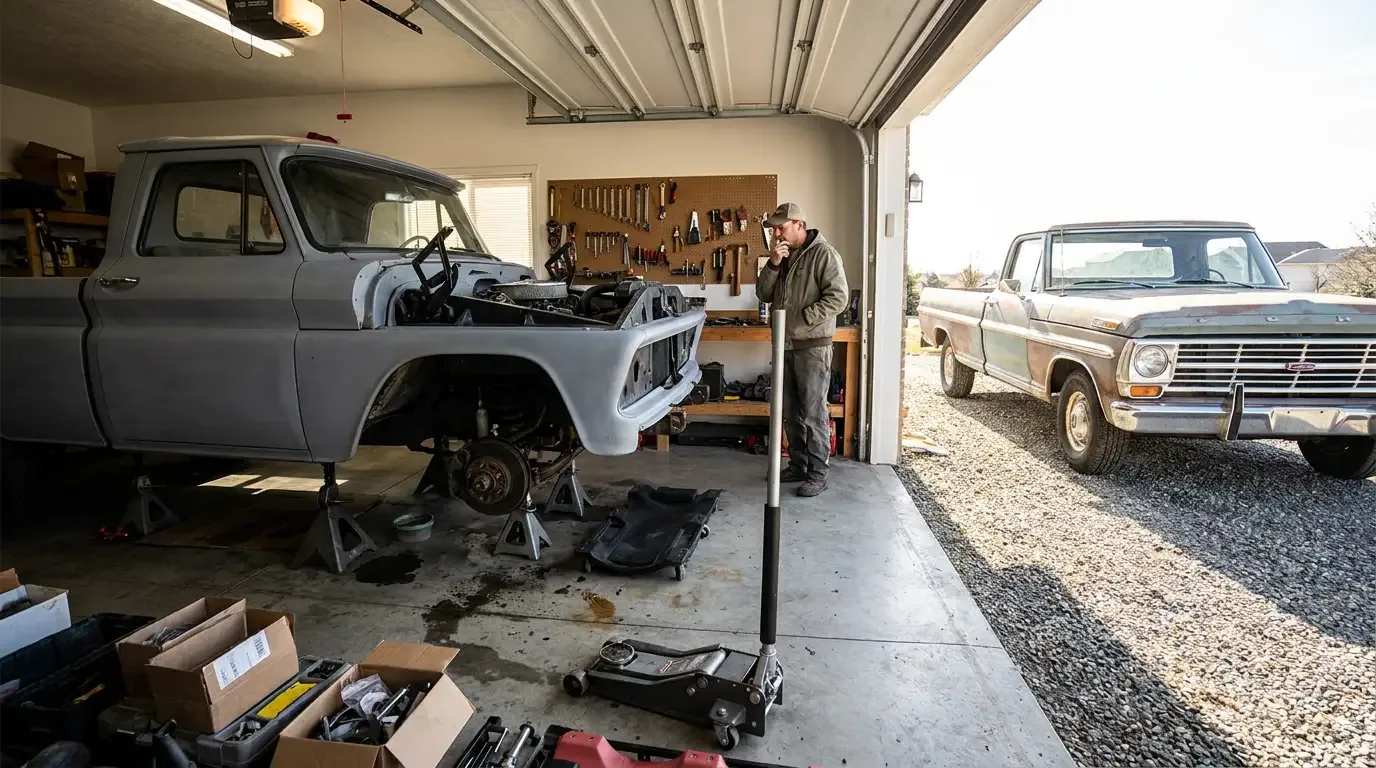
Be brutally honest about which one you are. A driver is a truck you can climb into this weekend and use. A project is a commitment measured in years and knuckles. Both are valid. Buying the wrong one for your temperament is how trucks end up sitting on jack stands for a decade and then getting sold at a loss.
Here is the economics nobody likes to hear. A cheap project almost never pencils out to less than a finished driver once you total the parts, the paint, the upholstery, and the hundred small things. If you love the work, that math does not matter, the process is the point. If you just want a truck to drive, pay more up front and buy something already sorted. Restoring to save money is a fantasy.
"Buy the best truck you can afford, not the cheapest one you can fix. I have watched a thousand-dollar bargain turn into a twenty-thousand-dollar heartache, and the guy still could not drive it to town."
— Robert Halloran
Where to look, and how to read a listing
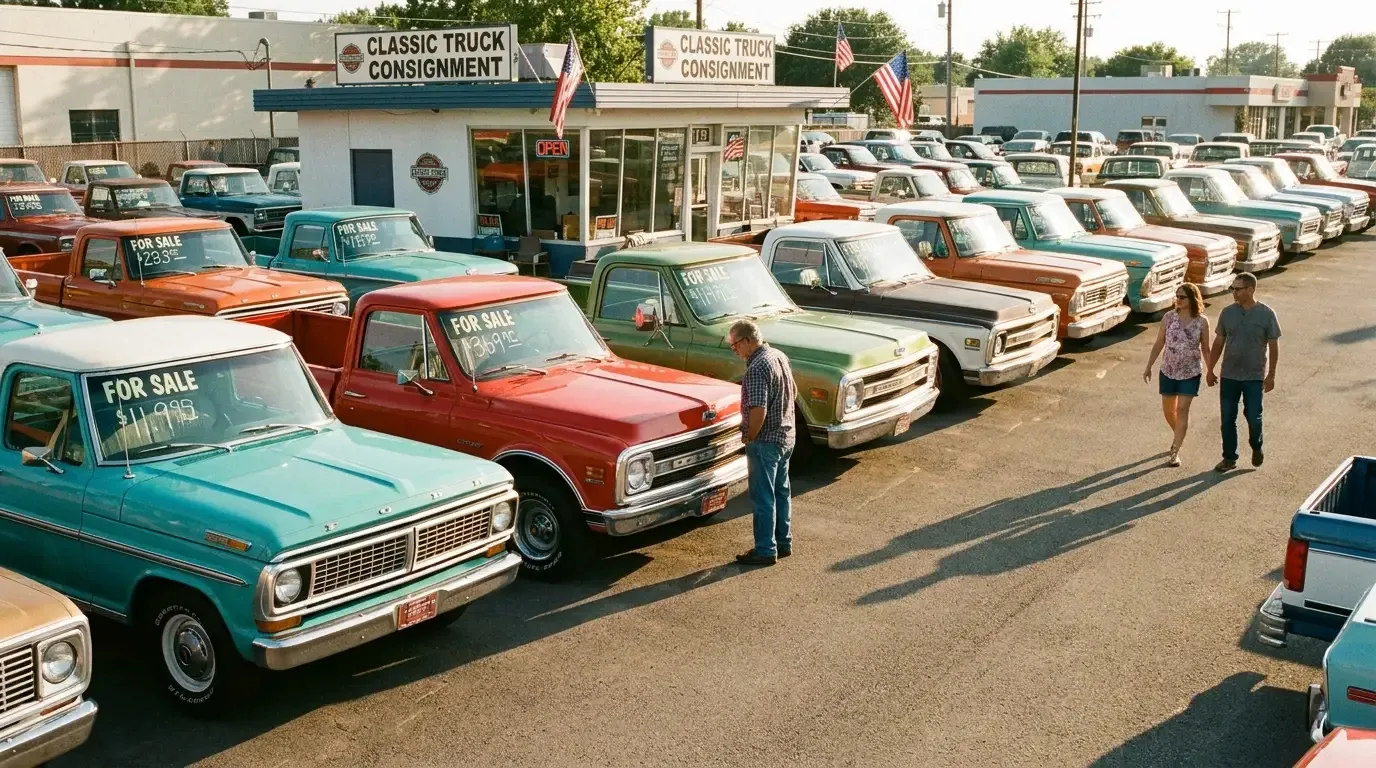
Good trucks come from a handful of places, each with its own trade-offs. Know them before you start burning weekends on dead-end drives.
- Auctions. Fast, transparent pricing, but you often buy on limited inspection and pay a buyer's premium on top of the hammer price. Best when you can inspect in person during the preview.
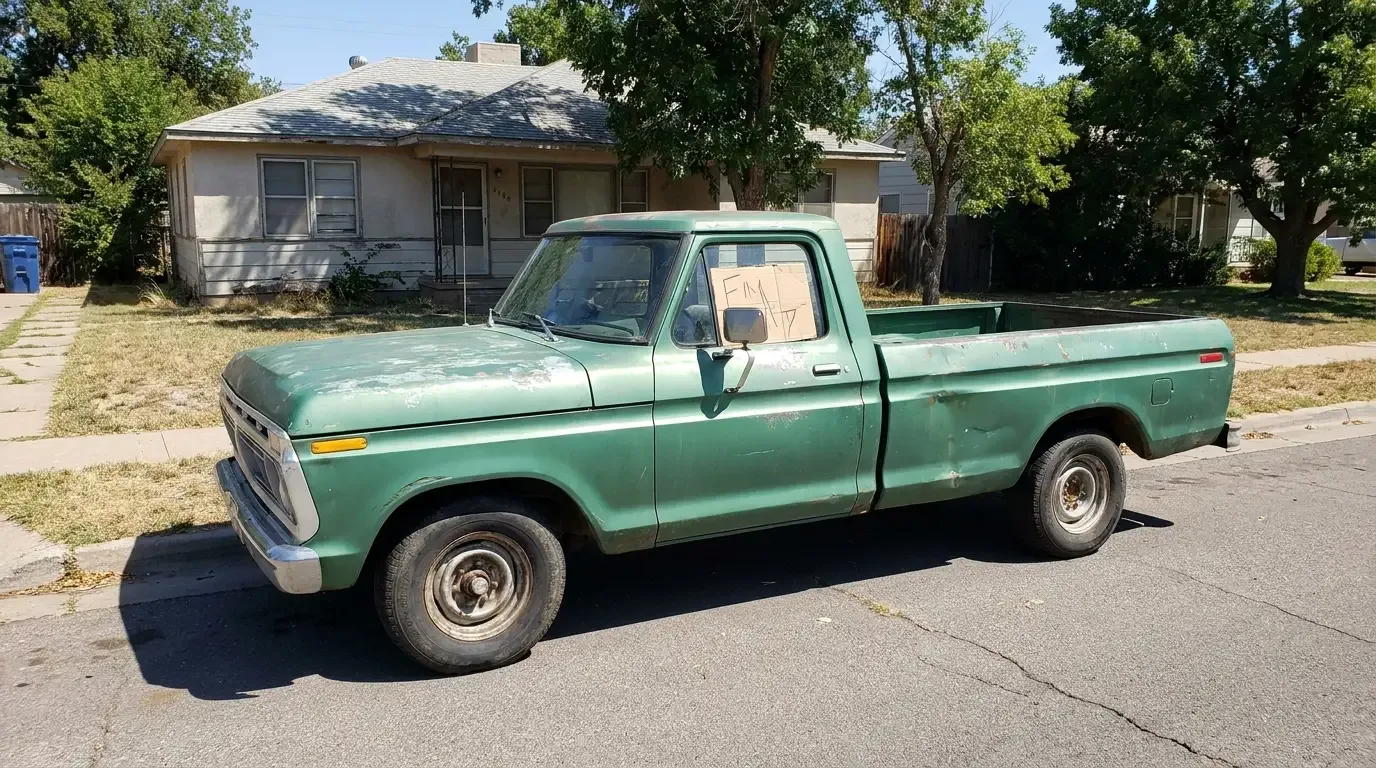
- Marketplace and classified listings. The widest selection and the most variance in honesty. Photos hide sins. Assume every listing is optimistic.
- Marque clubs and forums. The best-kept trucks often change hands here before they ever hit a public listing. Sellers tend to be knowledgeable and the history is usually documented.
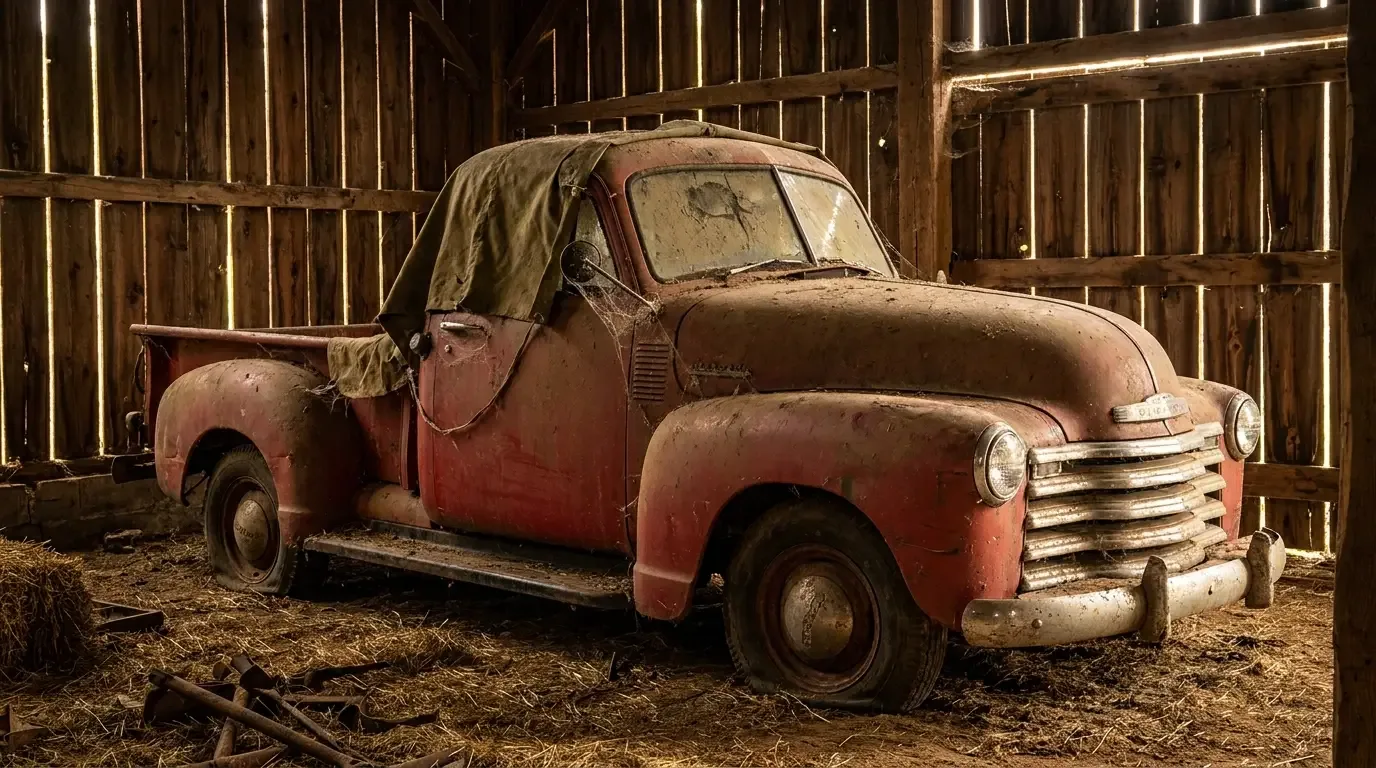
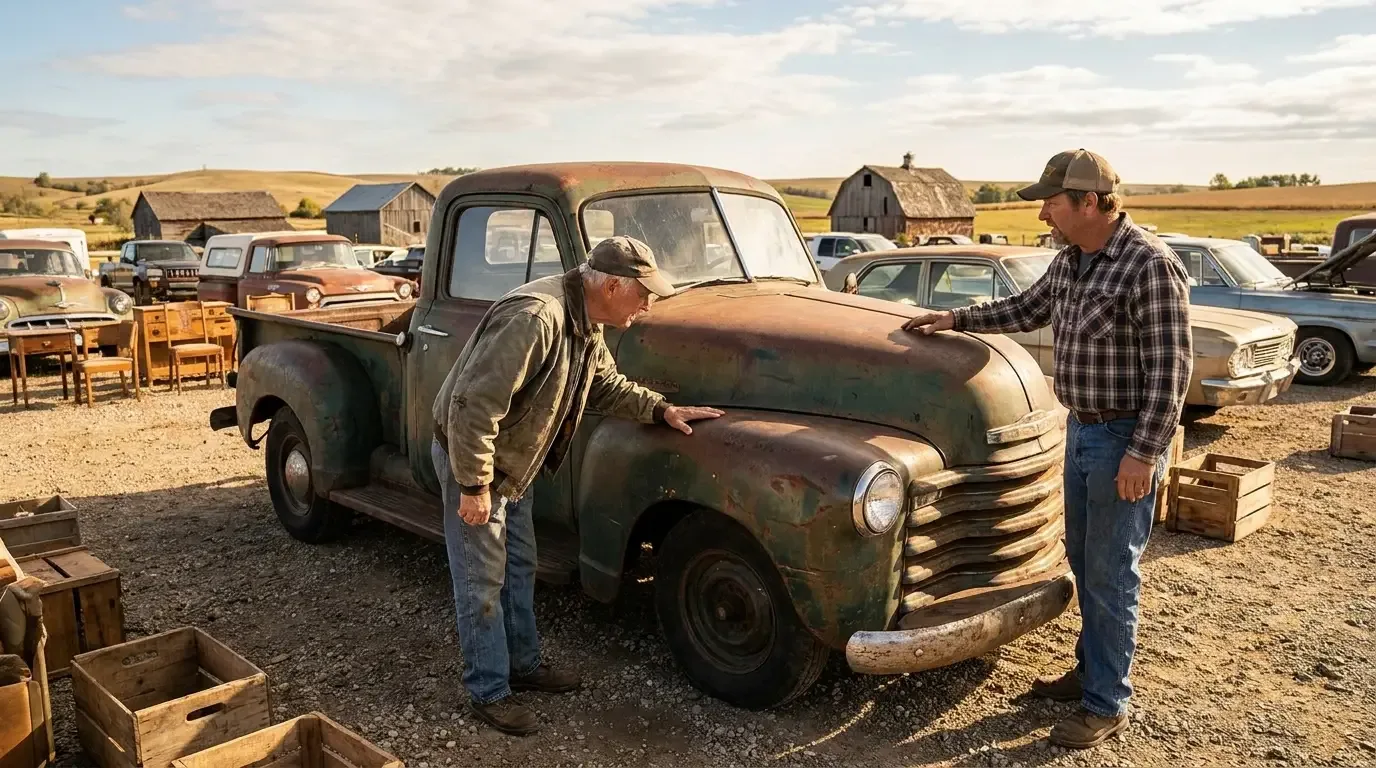
- Farm and estate sales. Where the genuine barn-find survivors turn up, often at fair prices, sometimes with decades of stored parts included.
Read every listing like a skeptic. Vague words like "runs great" and "solid" mean nothing without photos to back them. You want underbody shots, the floor pans, the cab corners, the bed, and the engine bay. If the seller will not send them, that tells you something. A truck for sale that is genuinely clean gets photographed from underneath, because a proud seller wants you to see it.
What to inspect: frame, floors, and rust
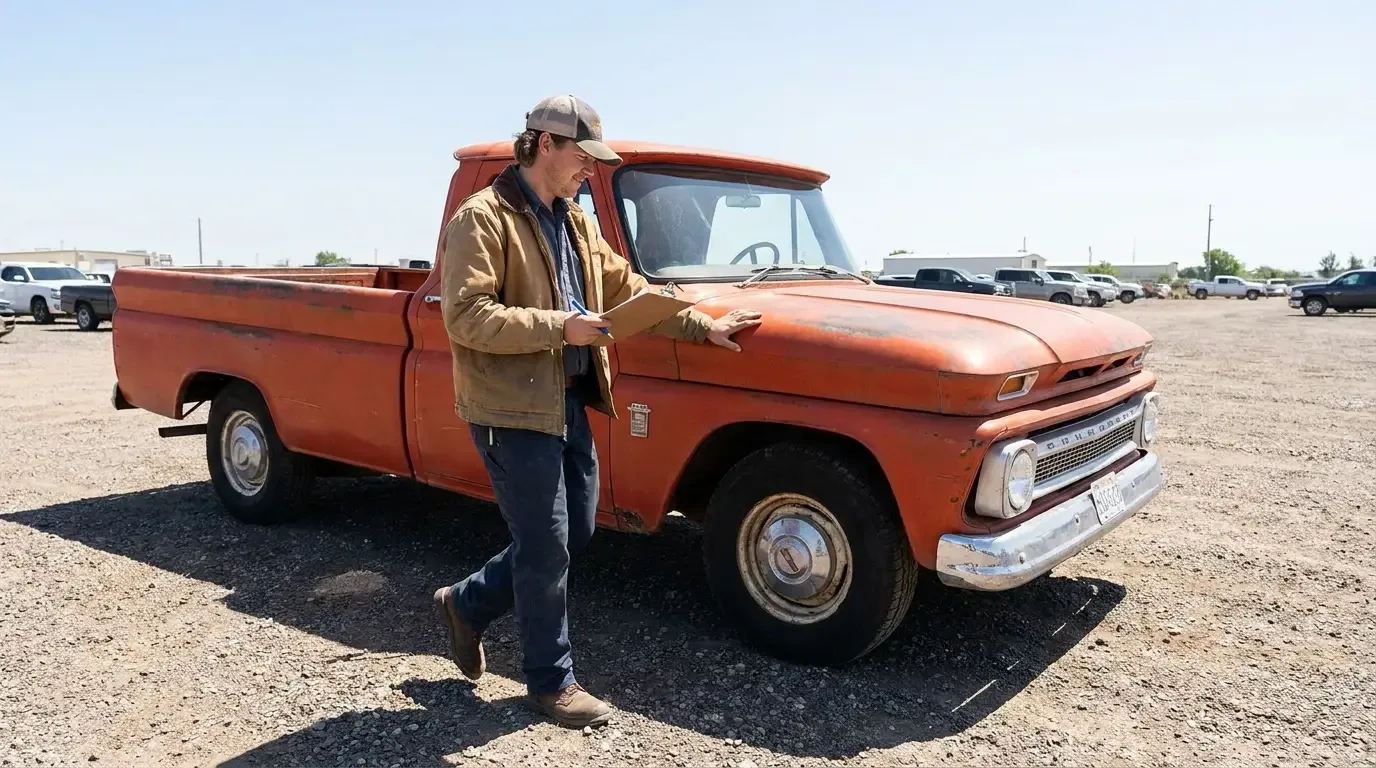
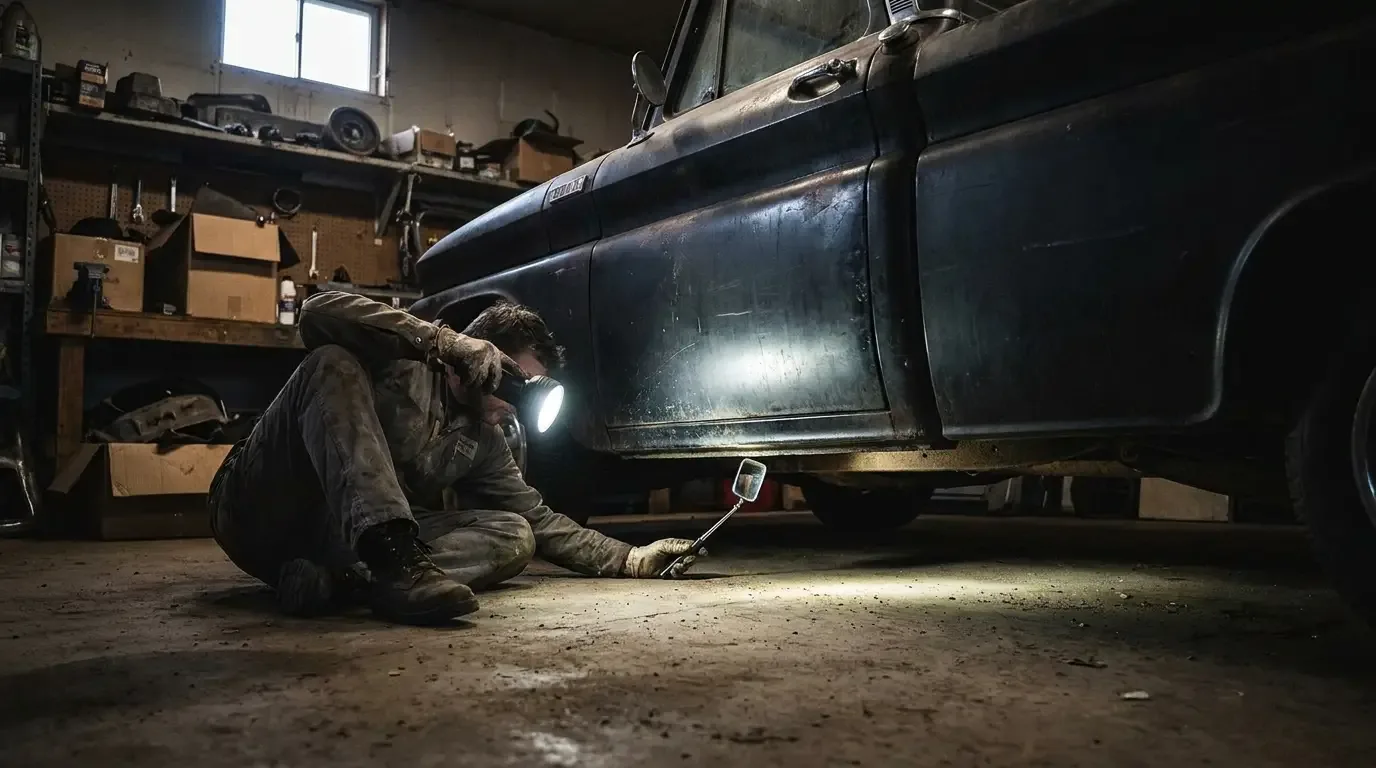
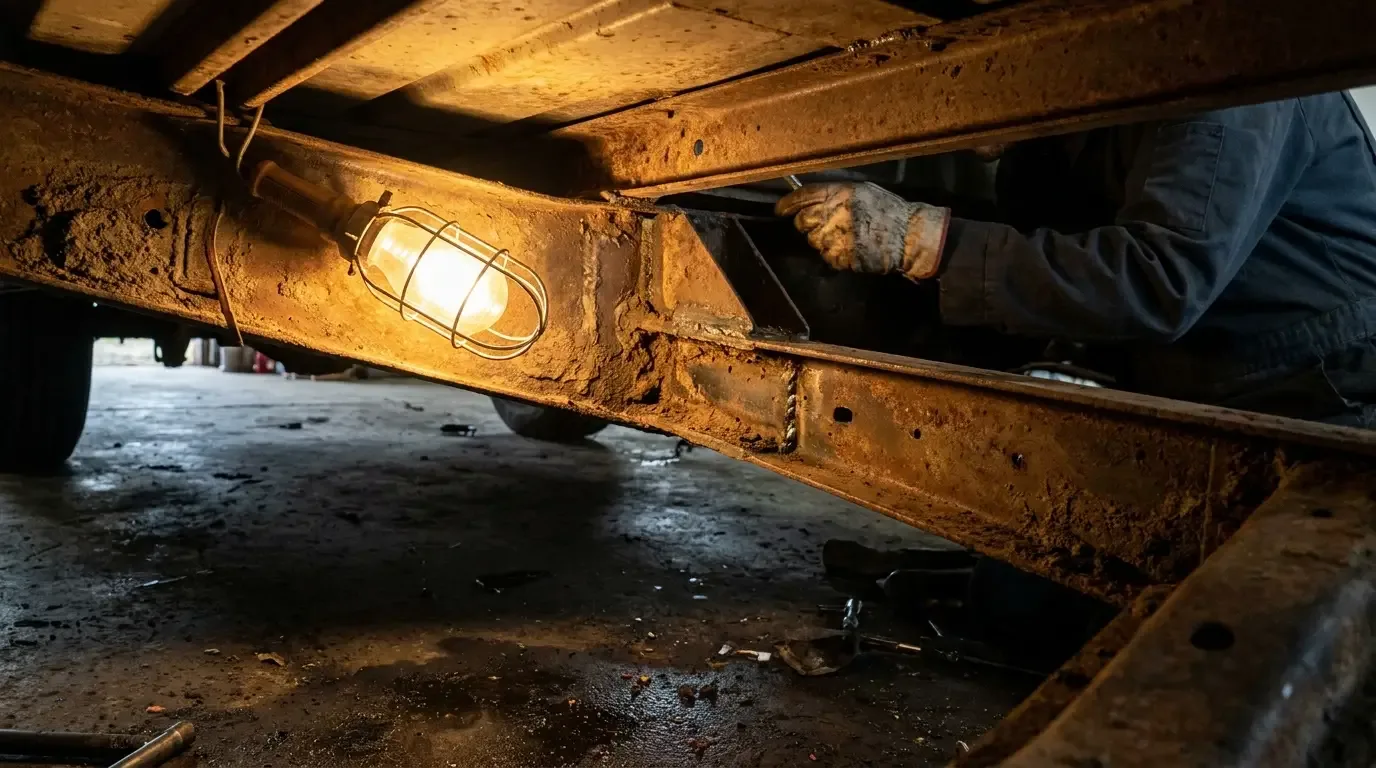
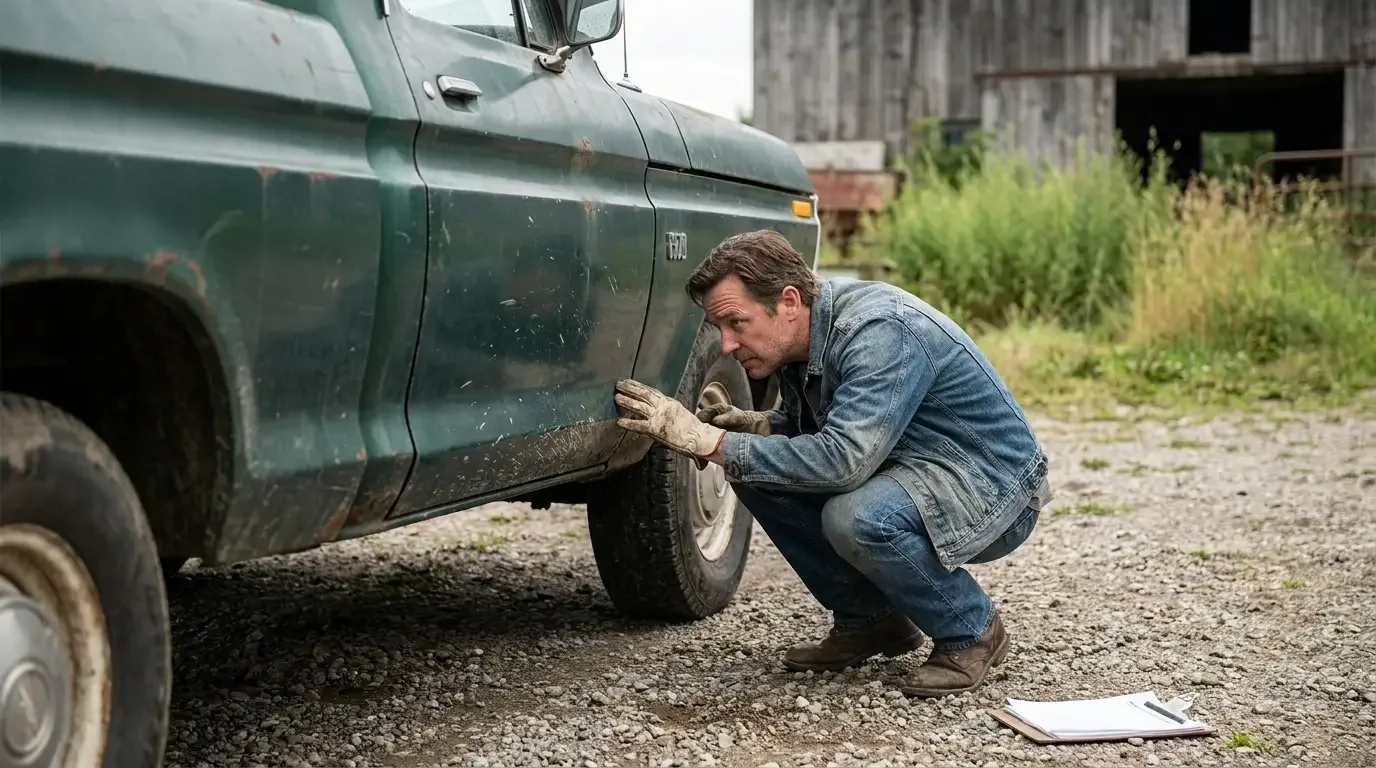
This is where trucks are won and lost. Body rust is annoying and fixable. Frame rot and structural rust can total a truck outright, and it hides where casual buyers never look. Get under it with a light. Not a flashlight at arm's length, actually get under the thing and put your hands on the metal.
The frame is the spine. On body-on-frame trucks, poke the frame rails and crossmembers with a screwdriver, especially near the rear spring hangers and where mud and moisture collect. Surface scale is normal on an old truck. Flaking, scaling, or a screwdriver that sinks in is a stop sign. Cab mounts and the front crossmember are common failure points.
Floors and cab corners are the next battleground. Pull the mats. Water sits in floor pans and rots them from the top down, and cab corners rot from the inside out. Rockers, the lower door skins, and the bottoms of the fenders all trap moisture. On the bed, check the wood or steel floor and the bedsides where the stake pockets sit. For a deeper checklist of the exact spots that separate a good truck from a money pit, read what to look for when buying a classic truck.
🔧 Inspection Priorities
- Frame rails and crossmembers. Probe with a screwdriver near spring hangers and cab mounts. Structural rot or a bent frame can total the truck. Frame repair or replacement runs into the thousands and often is not worth it on a common model.
- Floor pans and cab corners. Pull the mats and look from underneath. Patch panels exist and are affordable, but the labor to cut, weld, and refinish adds up fast. Budget accordingly if it needs metal.
- Rockers, lower fenders, and bed. Check the classic moisture traps. Bed floors and bedsides are replaceable but reproduction quality and cost vary by model.
- Engine compression and oil. A leak-down or compression test tells you the truth a rev in the driveway hides. Milky oil or coolant loss points to head or gasket trouble.
- Brakes and fuel system. Old rubber lines, a rusted tank, and seized wheel cylinders are safety items you fix before first drive. Cheap parts, essential work.
- Glass, seals, and electrics. Windshield rubber, wiring, and gauges are tedious rather than expensive, but a rat-chewed harness is a real time sink.
Verifying the engine and drivetrain
A running engine in the driveway proves less than sellers think. Anything can be made to fire for five minutes. What you want to know is whether it will still run in a year. Start it cold if you can. A seller who warms the truck up before you arrive is either being polite or hiding a hard cold-start, and you cannot tell which.
Watch the exhaust on start-up and under throttle. Blue smoke is oil and points at worn rings or valve guides. White smoke that does not clear can mean coolant in the cylinders. Listen for knocks and tapping. Pull the dipstick and look for milky residue that signals coolant intrusion. If the seller allows it, a compression or leak-down test is the single most useful thing you can do, because it measures the health of each cylinder instead of the general impression of a warm idle.
Do not stop at the engine. Check the transmission through the gears, listen for whine in the rear axle, and look for fresh underbody leaks. On a truck, worn drivetrain parts are common and usually repairable, so the question is not whether it is perfect but whether the cost to sort it fits your budget. A tired engine is a known quantity. An unknown one is the gamble.
Paperwork, title, and VIN
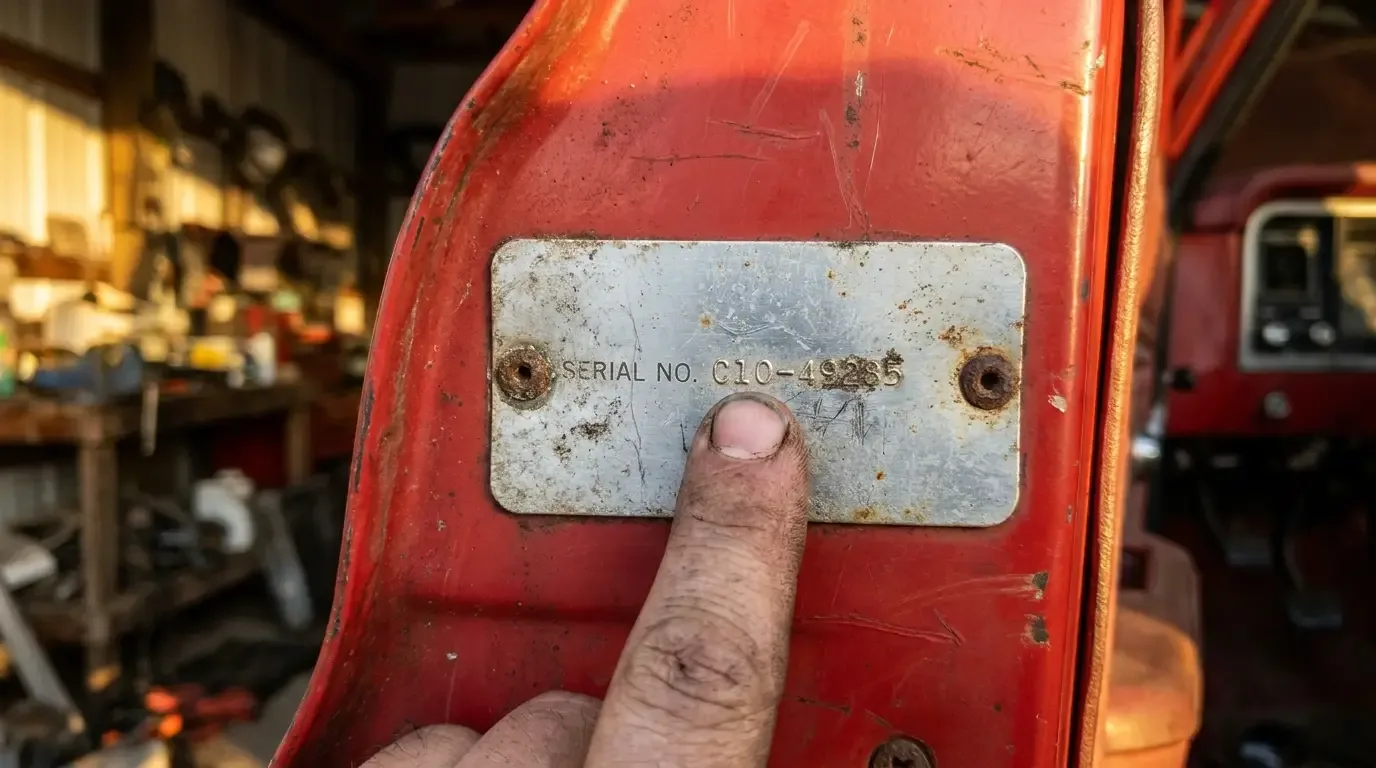
The truck can be perfect and still be a nightmare if the paperwork is wrong. Before money changes hands, match the title to the truck and match the truck to itself. Confirm the seller's name matches the title, that there are no liens, and that the VIN on the document matches the VIN on the truck.
On older trucks, the VIN or serial number lives in less obvious places than on modern vehicles, often on a door post plate, the frame, or a fireman's tag, and the format tells you the model year, plant, and series if you know how to read it. Learning to decode it protects you from mismatched or misrepresented trucks. For the full method, read how to read a classic truck VIN. A truck with a clean, matching, lien-free title is worth paying more for. A truck with a "lost title, I'll get you a bill of sale" story is worth walking away from unless you understand your state's process for a bonded title and you are willing to do it.
Negotiating and closing the deal
Negotiation on an old truck is not about being a shark. It is about knowing the truck's real condition better than the seller's asking price assumes. Every item from your inspection is a data point. You are not lowballing when you point out that the cab corners need metal and the brakes are shot, you are pricing reality.
Bring your findings to the conversation calmly and specifically. "The floors need patch panels and the fuel system needs a full going-through, so here is where I land" carries more weight than a random number. Come with cash-ready seriousness and be prepared to walk. The willingness to walk away is the strongest position you can hold, and on trucks, there is almost always another one. When you have found the right one and the numbers work, close it clean: a written bill of sale, the signed title in hand, and the VIN verified before the keys change pockets.
When you are ready to start hunting, browse the current classic trucks for sale and put this checklist to work on real listings. The discipline is the same every time. Budget first, honest self-assessment second, and a light in your hand under the frame before you ever talk price.
Sources and notes
- Factory service manuals and owner's manuals for period light-truck models (inspection points, drivetrain specifications).
- Marque and light-truck club buyer's guides and restoration references (common rust and failure points).
- Published auction results and classified market data (condition-based price ranges, treated as approximate and region-dependent).
- VIN and serial-number decoding guides and factory build data (title and identity verification).
- General shop practice for compression and leak-down testing (engine health verification).