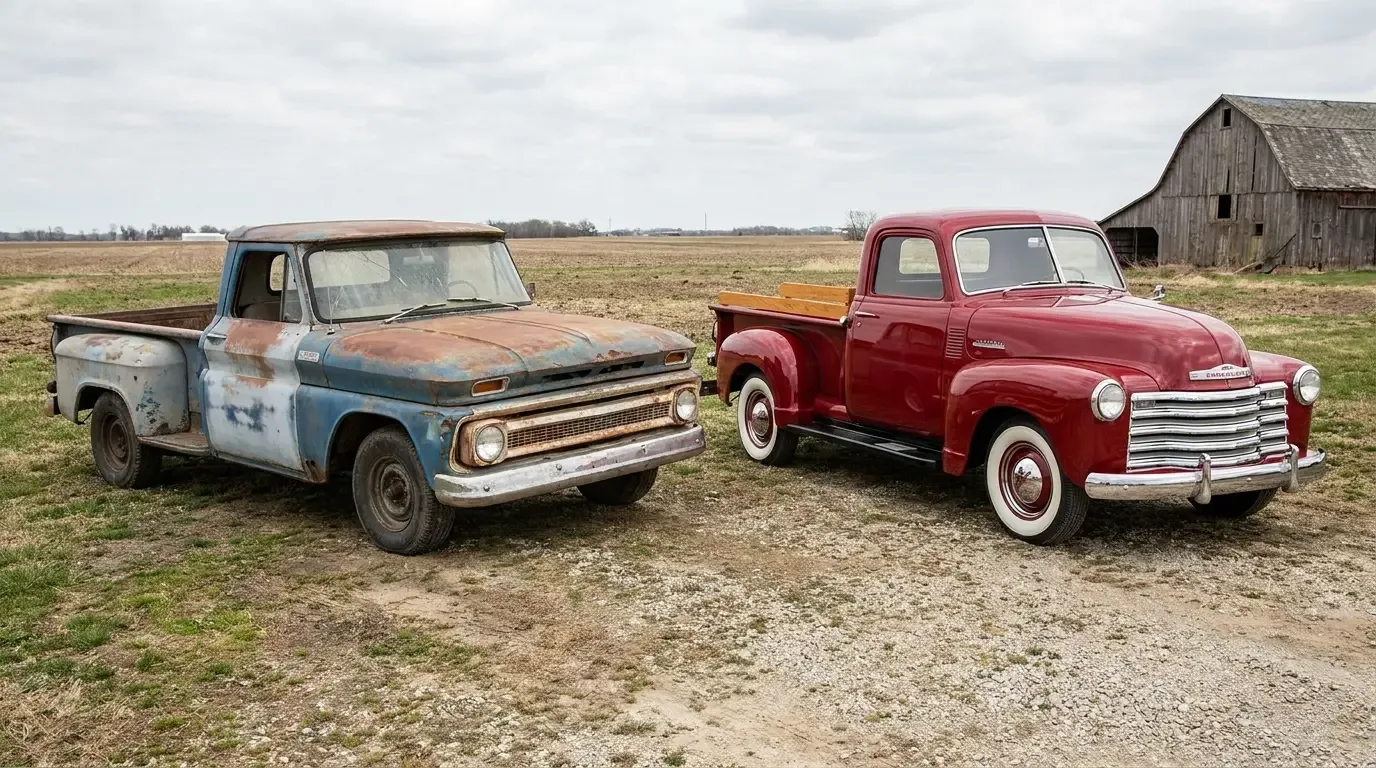
Cheap and classic don't have to fight. A classic truck can be a bargain and still be sound, but only if you know what "cheap-but-solid" actually looks like versus a rolling repair bill wearing a fresh coat of paint. The trap most first-time buyers fall into is simple. They price the truck by the sticker and forget everything hiding underneath. A $4,000 truck that needs $6,000 of metalwork isn't a $4,000 truck. It's a $10,000 truck you overpaid for.
I've bought plenty of cheap trucks over the years and sold a few of them too. The good ones stayed cheap. The bad ones taught me lessons I'm about to hand you for free. If you want the full walkthrough on the buying process itself, read how to buy a classic truck first. This piece is about one thing only. Finding the cheap one that won't bankrupt you.
What "cheap but solid" actually means
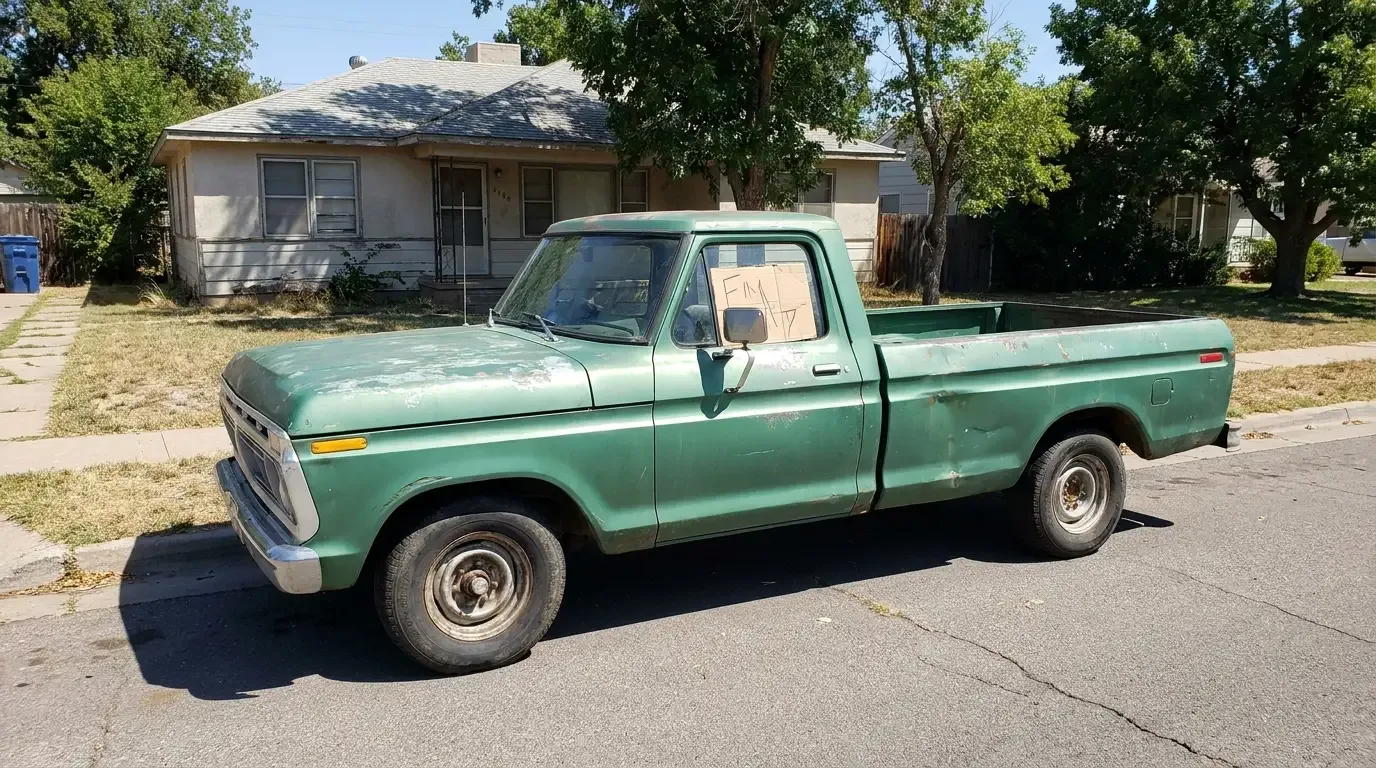
Cheap doesn't mean rusted through or missing half its running gear. It means honest. A cheap-but-solid classic truck is usually a plain-Jane workhorse. Long bed, base trim, a straight-six or a small V8, three on the tree or a basic automatic. Nobody's fighting over it at auction, so the price stays low. That's exactly what you want.
The trucks that stay affordable share a few traits. They were built in big numbers, so parts are everywhere and cheap. They have simple mechanicals a competent shade-tree mechanic can service without special tools. And they're worth more running than parted out, which keeps sellers realistic. Half-ton fleetside pickups from the 1960s and 1970s are the classic example here. Not the rare short-bed stepside collectors chase, just the everyday hauler that a farm or a phone company bought a hundred of.
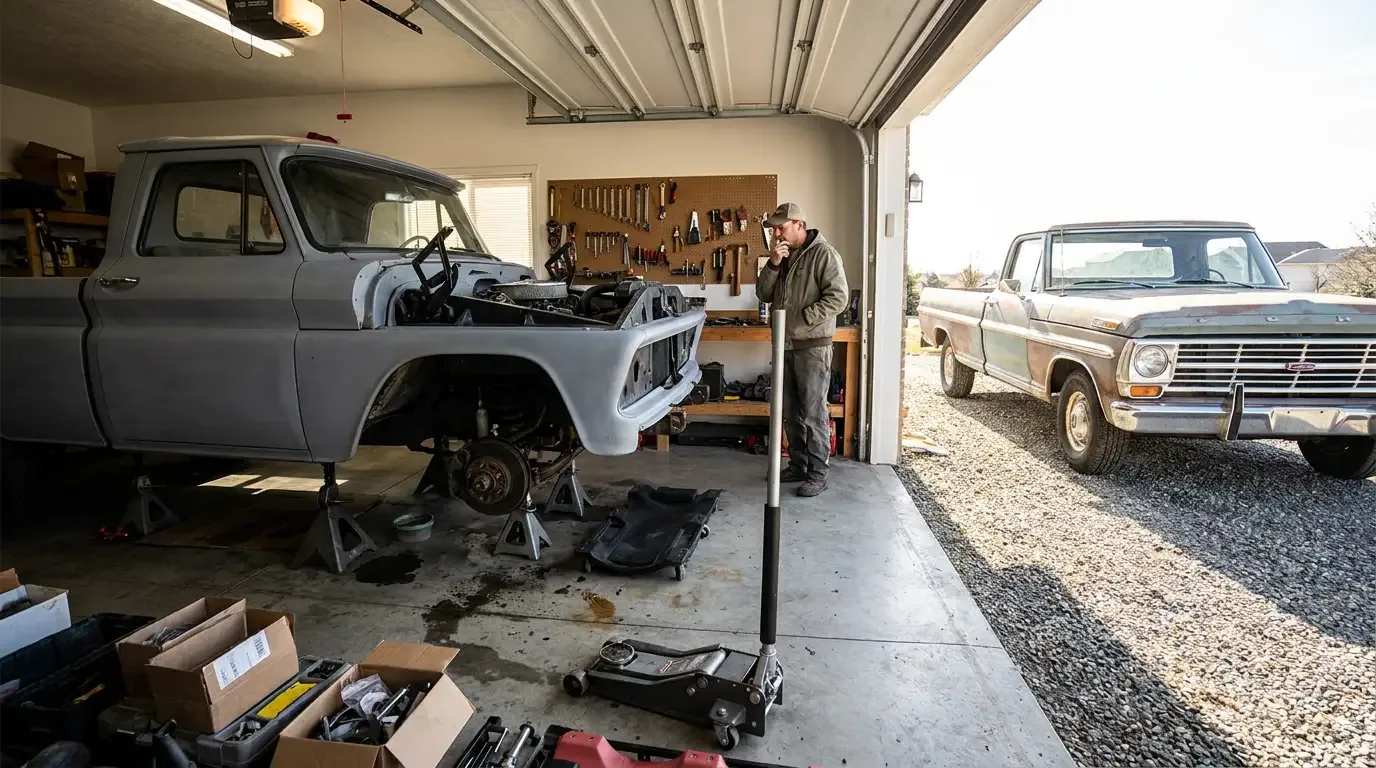
Solid comes down to the metal and the mechanicals, in that order. An engine that smokes is a weekend fix. A cab floor you can see the road through is a body shop's mortgage payment. Learn to want the truck with the tired motor and the clean frame, not the shiny one hiding a rusted cowl.
Where cheap classic trucks actually hide
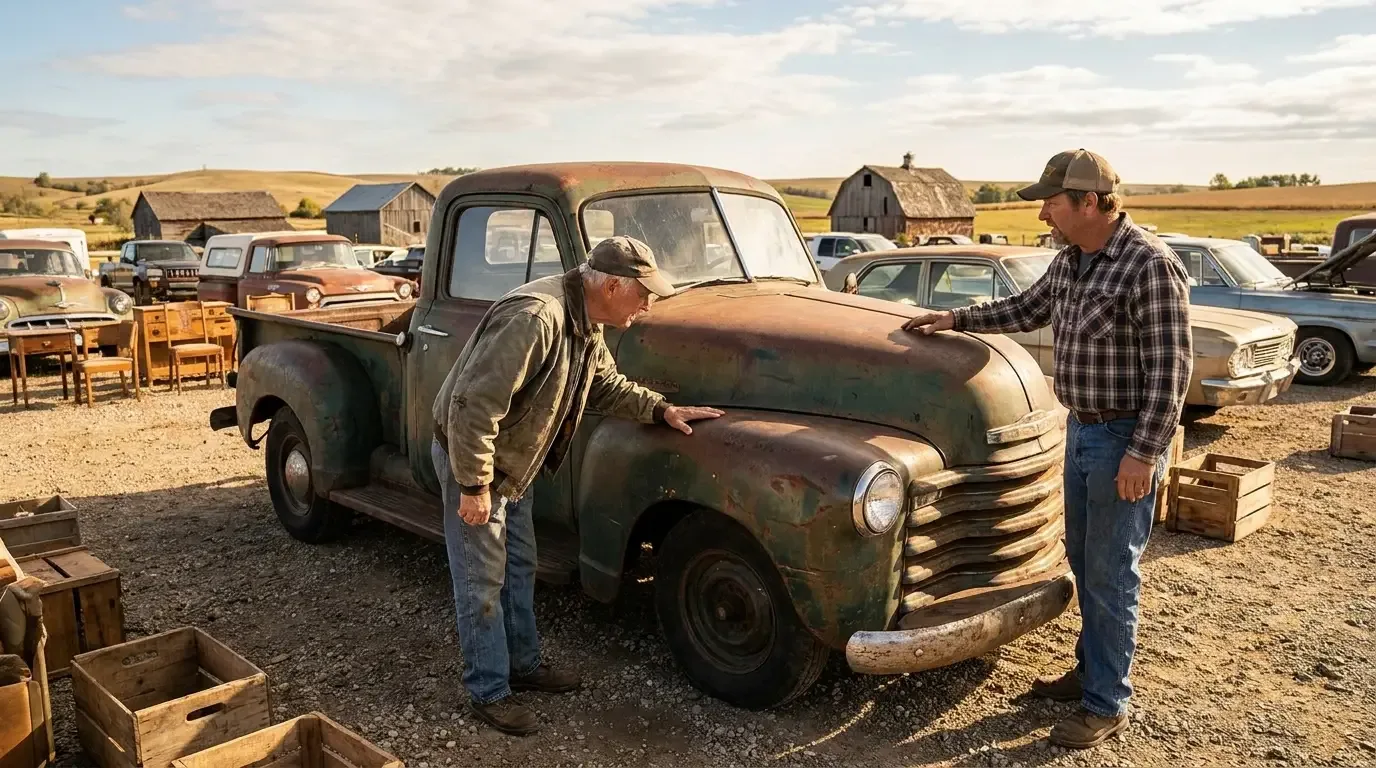
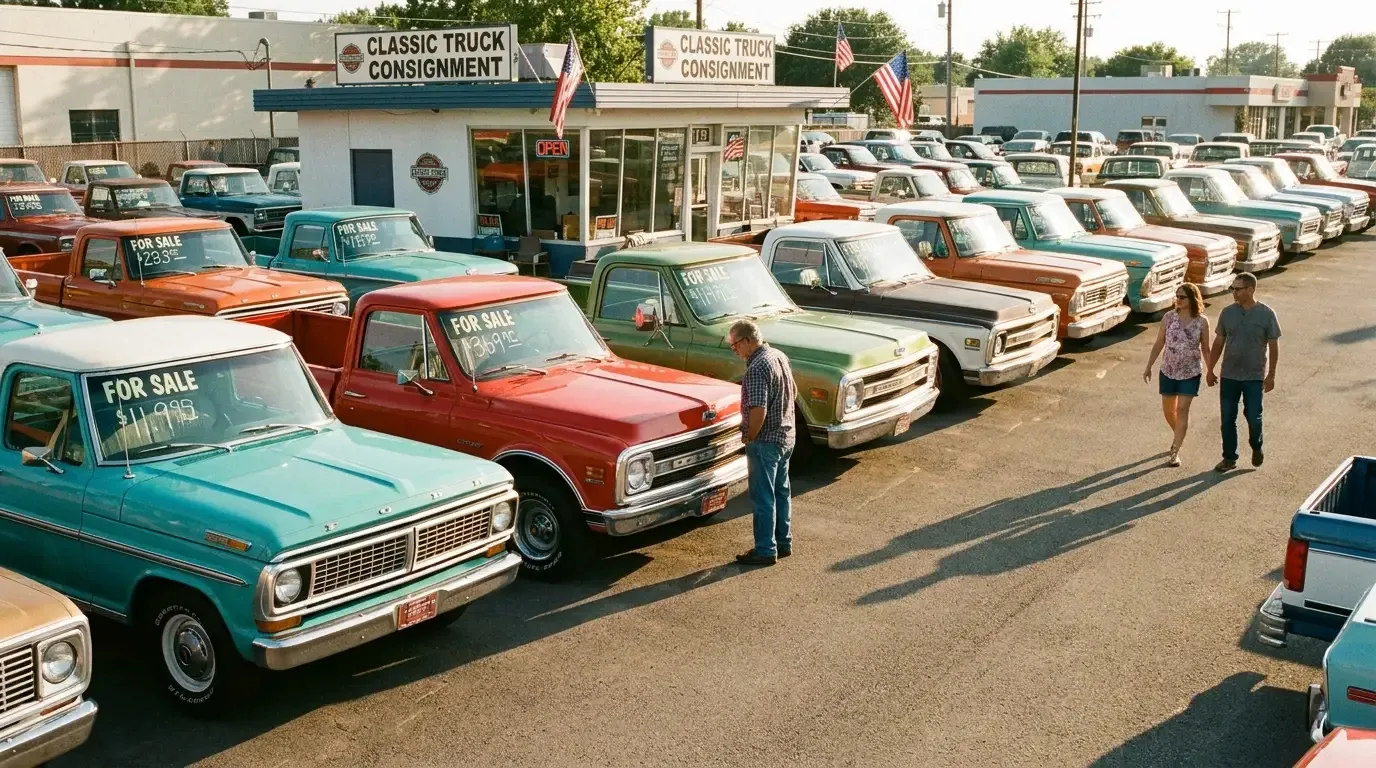
The genuinely cheap trucks rarely show up in a polished dealer listing with three hundred photos. They surface in dull, boring places. Estate situations where the family just wants it gone. Farm auctions. The back row of a lot where a truck's been sitting because it's not "collector" enough. A running project someone got tired of.
Price ranges shift with the market, but as a working guide, honest drivers in need of nothing dramatic tend to land in the low-to-mid four figures for the common models. Anything advertised well below that is usually telling you something. Either it doesn't run, it's got serious rust, or the title's a mess. None of those are automatic dealbreakers, but every one of them changes the math.
- Runs and drives, needs cosmetics. The sweet spot. You get a usable truck and improve it on your own timeline.
- Runs rough, mechanically tired. Fine if the body and frame are straight. Mechanical parts are the cheap parts.
- Doesn't run, "just needs...". Assume it needs more than the seller claims. Only worth it if the price already accounts for that.
- No title or bonded title. Registration headache. Discount it hard or walk.
When you're ready to actually shop, our filtered classic trucks under $5,000 listings are a straightforward place to see what the honest end of the market really costs right now.
The red flags that turn cheap into expensive
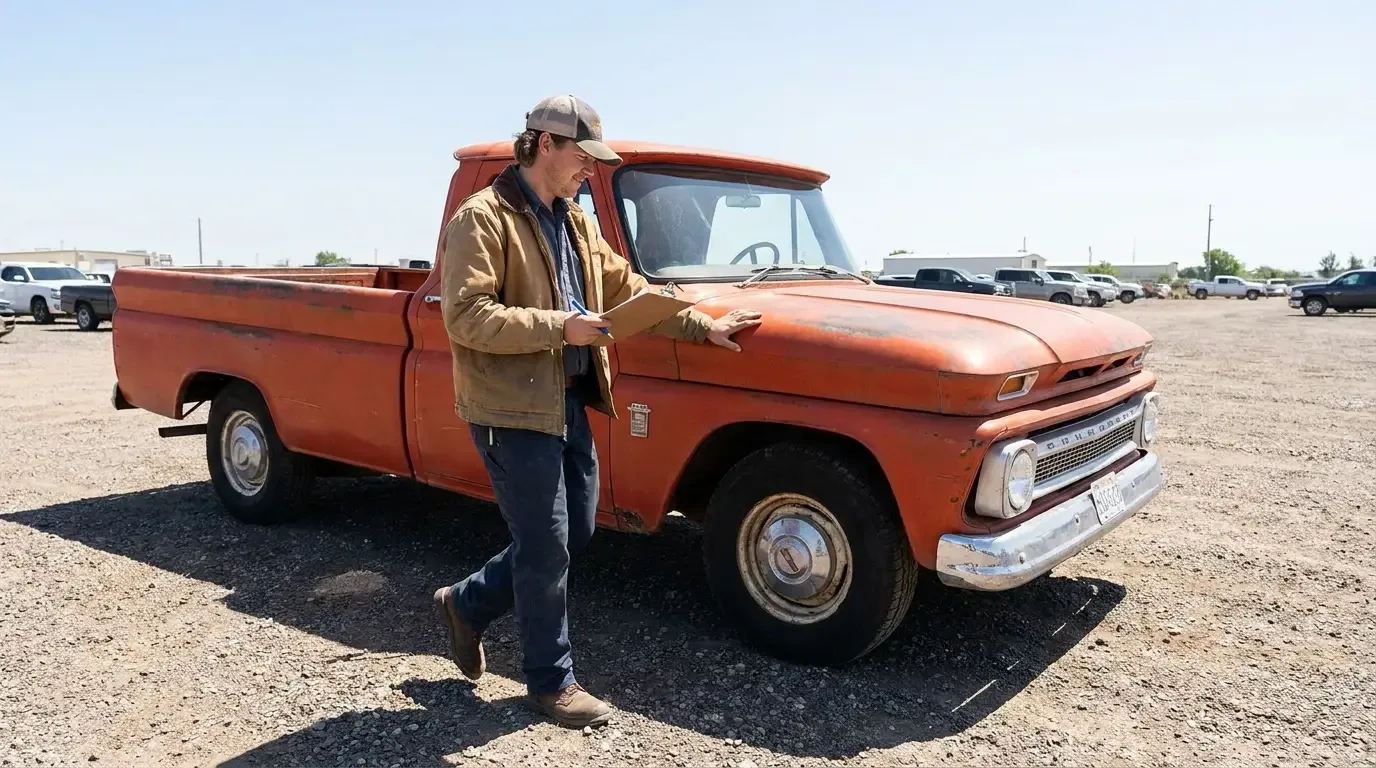
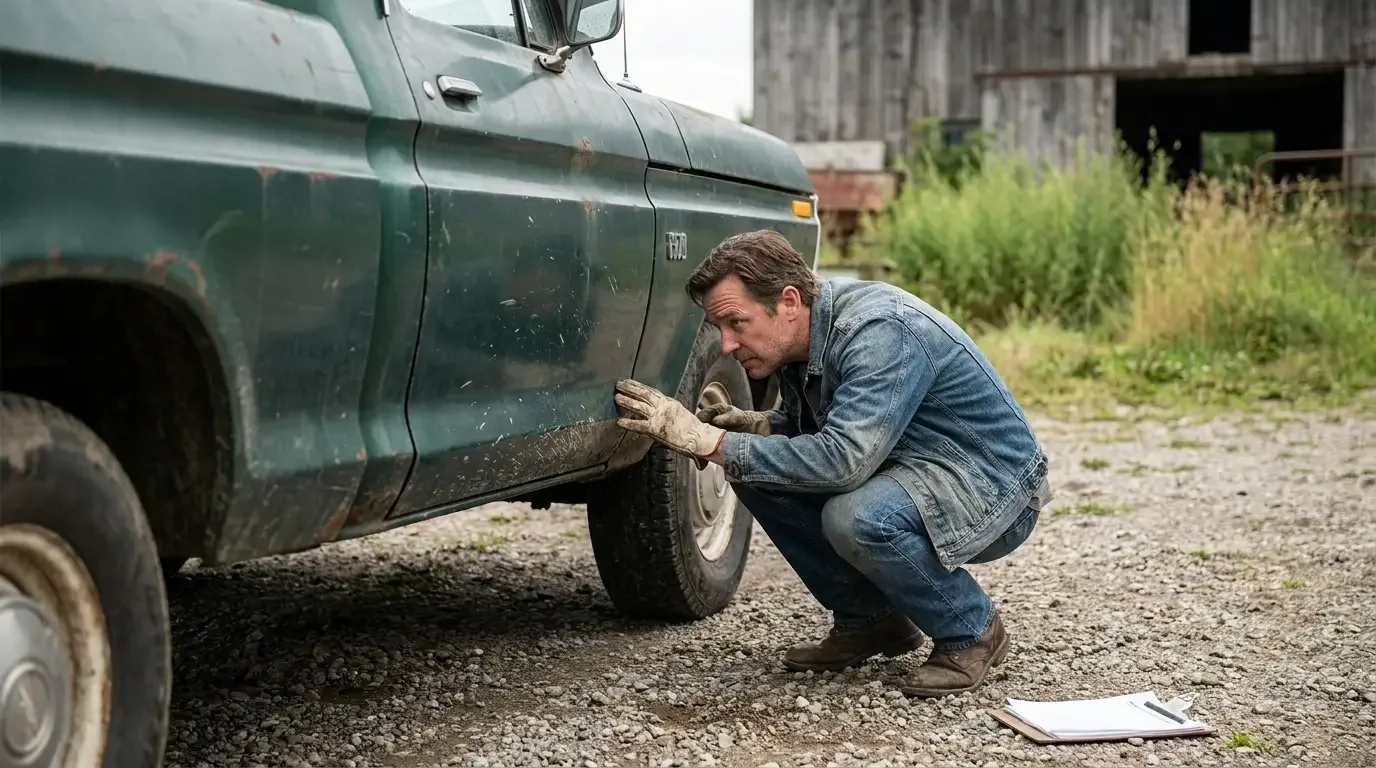
This is the part that saves you money. A cheap truck goes bad in a handful of predictable ways, and almost all of them are things you can catch in the driveway if you actually look. Get under it with a light. Not a flashlight held at arm's length while you crouch. Get under it.
Rust is the money killer. Surface rust on a frame is normal and fine. Flaky, scaling, or flaking-into-holes rust on the frame rails, especially near the rear spring hangers and the cab mounts, is a structural problem that costs real money and time. Cab corners, rocker panels, and the bed floor rust too, but those are patch-panel jobs. Frame and floor structure is the line I watch.
The other quiet killer is the mismatched, half-finished "restoration." Fresh paint over bondo you can feel with your palm. A repaint that stops at the door jambs. New seat covers hiding a floor that's gone. When a seller has spent money making it look good instead of making it right, ask what they were covering up.
🔧 Inspection Priorities
- Frame rails and crossmembers. Scaling rust or holes here is structural. A frame swap or major repair can run into the thousands. Walk unless the price reflects it.
- Cab floor and cab mounts. Soft or holed floors and rotted cab mounts mean the cab isn't safely attached. Patch panels plus labor add up fast.
- Cowl and windshield channel. Rust that leaks into the cab. Hard to reach, expensive to fix properly, easy for a seller to hide with sealant.
- Engine cold-start and smoke. Blue smoke means rings or valve seals. A tired small-block or six is cheap to freshen. Confirm it's the engine, not the wallet-emptier below.
- Title and VIN match. Numbers on the truck match the paperwork. A title problem can strand a running truck in your driveway for months.
"A worn-out engine is a Saturday and a few hundred bucks. A rotten frame is somebody else's project. Buy the tired mechanicals every time and let the shiny paint go to the guy who doesn't know better."
— Robert Halloran
Doing the honest math before you buy
Before you hand over a dollar, add it up on paper. The purchase price is one line. Then list what the truck actually needs to be the truck you want, and price each item with real parts numbers and real labor. Not hopeful guesses. If you're paying a shop, double your first labor estimate, because you will.
Here's the rough thinking on where money goes. Mechanical work is usually the affordable side. Bodywork and paint are where budgets go to die.
| Type of work | Relative cost | Notes |
|---|---|---|
| Tune-up, brakes, fluids | Low | DIY-friendly, cheap parts on common models |
| Engine rebuild or swap | Low to medium | Simple V8s and sixes are inexpensive to freshen |
| Interior refresh | Medium | Reproduction kits keep it reasonable |
| Patch-panel rust repair | Medium to high | Labor-heavy, climbs fast if you pay a shop |
| Full bodywork and paint | High | Often exceeds the price of the truck itself |
| Frame repair or replacement | Very high | The deal-breaker. Price it before you buy |
The rule I live by. Buy the truck whose problems are on the top half of that table. A cheap classic that needs a carburetor, brakes, and a set of tires is a bargain. A cheap classic that needs a frame and a full respray is a trap, and the low price is the bait.
Buying cheap the smart way
The cheapest truck to own isn't always the cheapest to buy. A solid, boring, runs-and-drives half-ton at four grand will cost you less over five years than a two-grand "project" that eats a frame, a floor, and half your weekends before it's roadworthy. Cheap up front, expensive forever. That's the money pit, and it's almost always avoidable.
So set your standard. Straight frame, solid floor, honest paperwork, and mechanicals you can afford to fix. Everything else is negotiable. Find a truck that clears that bar and the low price is just a bargain, not a warning. That's how you drive home cheap and stay cheap.
Sources and notes
- Factory service manuals and owner's manuals for common full-size American pickups (mechanical specifications and service intervals).
- Reproduction and aftermarket parts catalogs (parts availability and relative repair costs).
- Collector-truck price guides and auction result summaries (market ranges for driver-condition trucks).
- General restoration cost references and shop labor guides (relative cost of bodywork versus mechanical work).
- Author's own experience buying, inspecting, and reselling budget classic trucks.