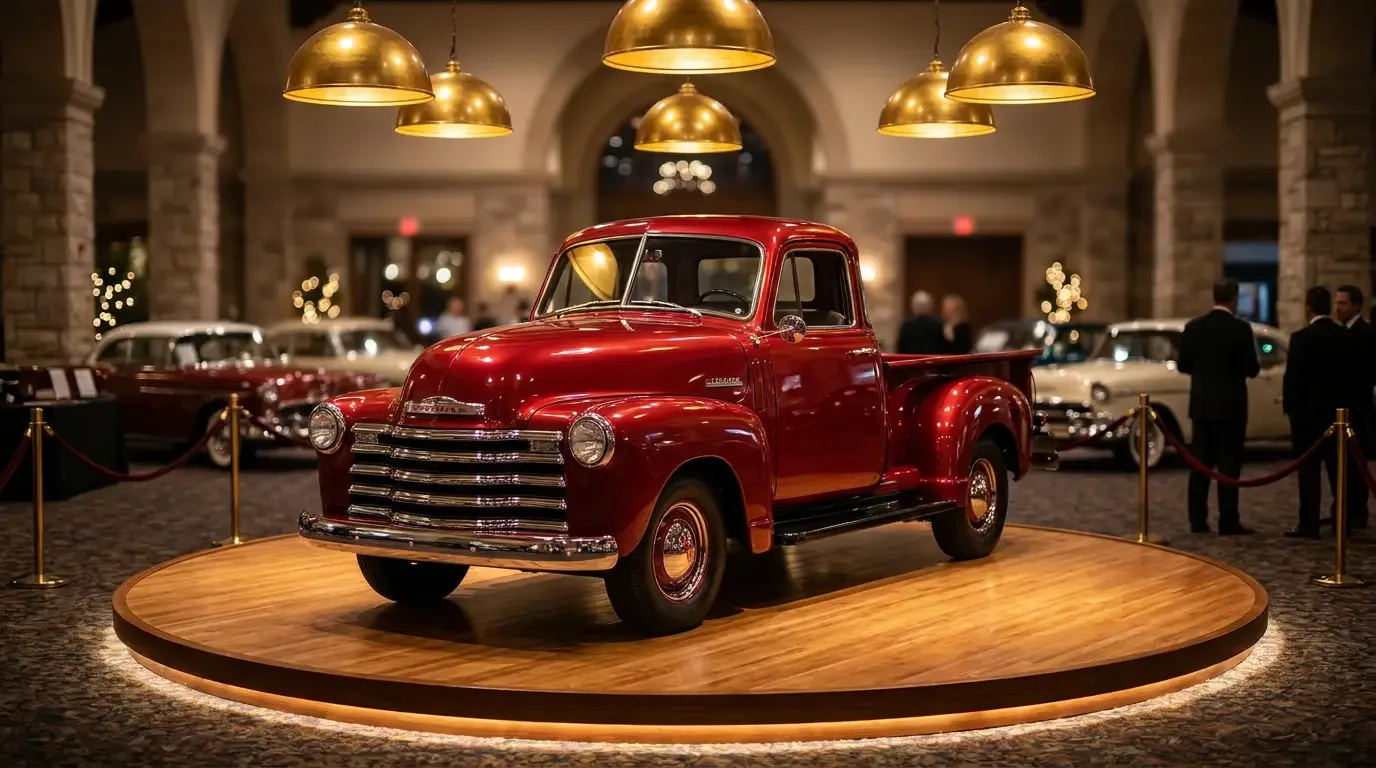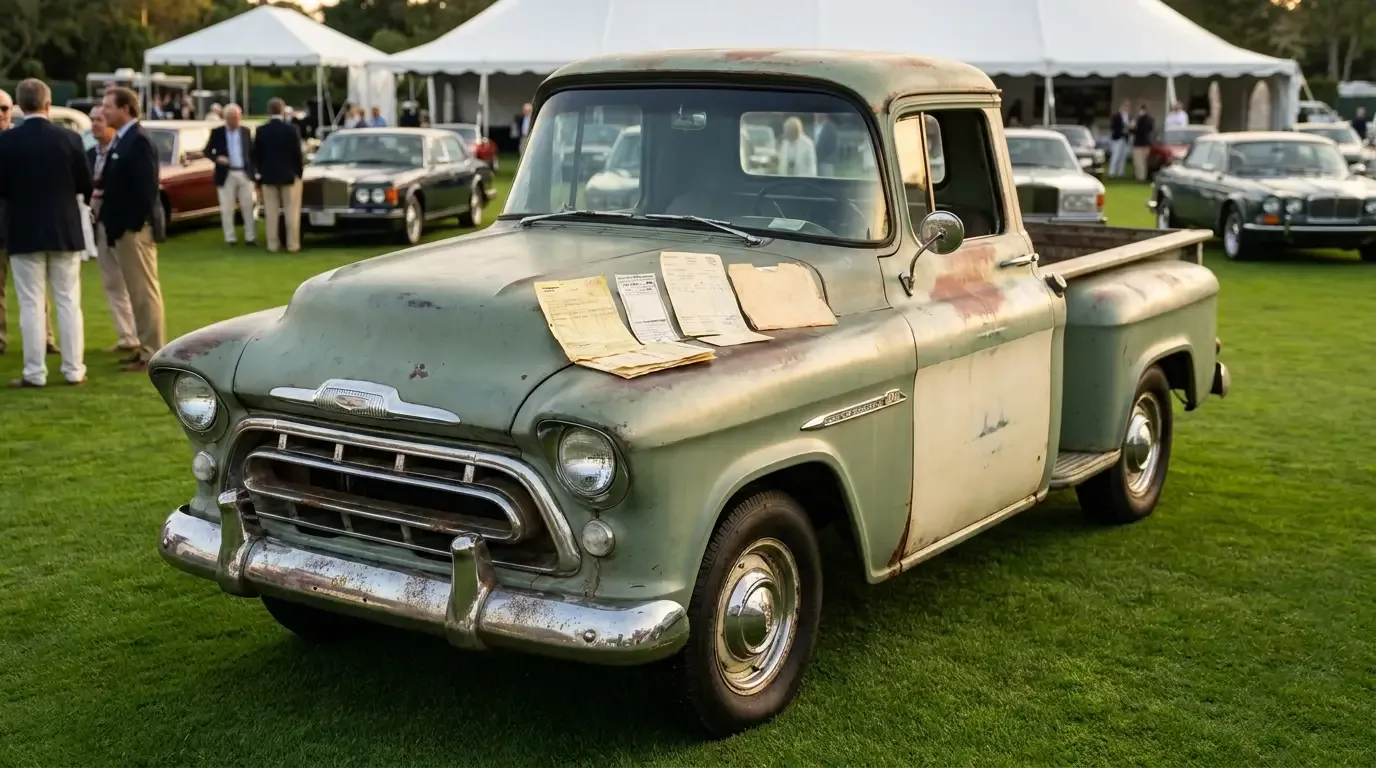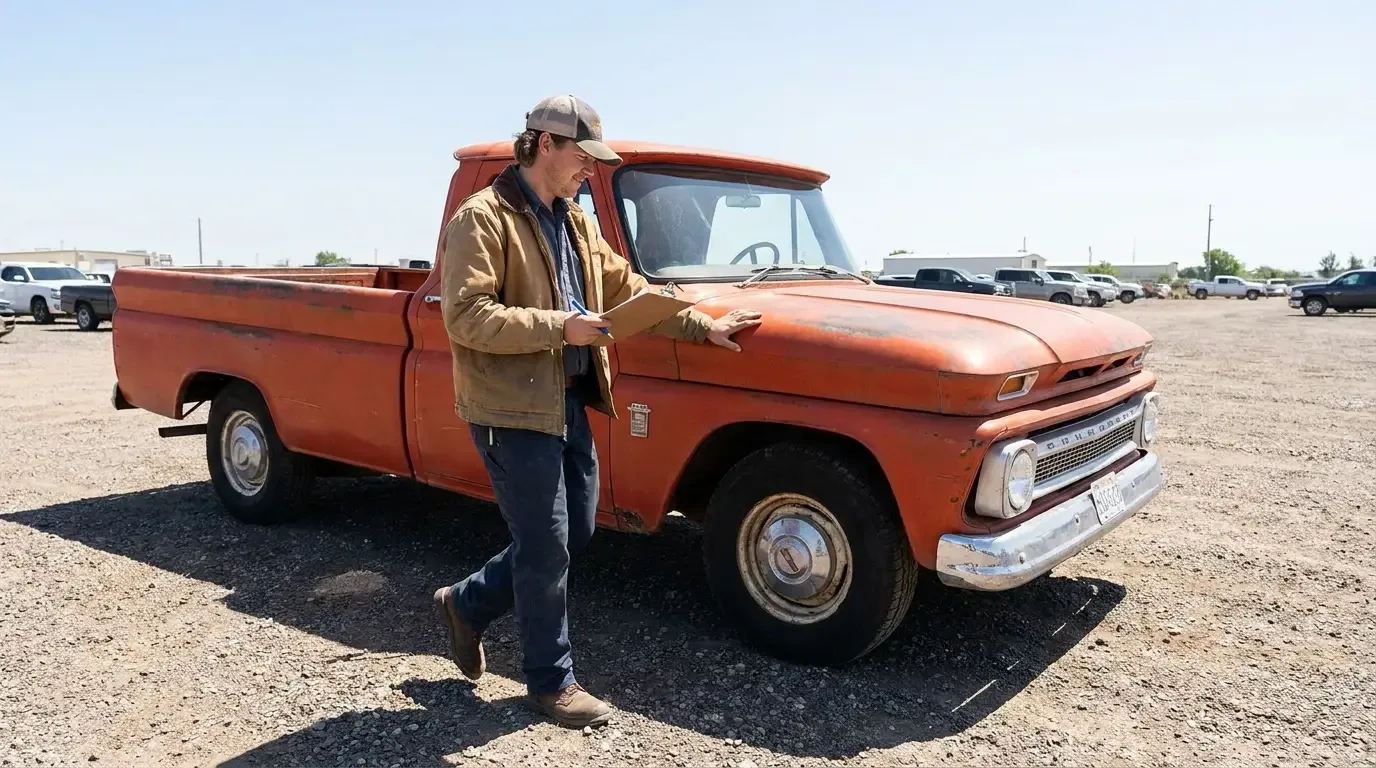
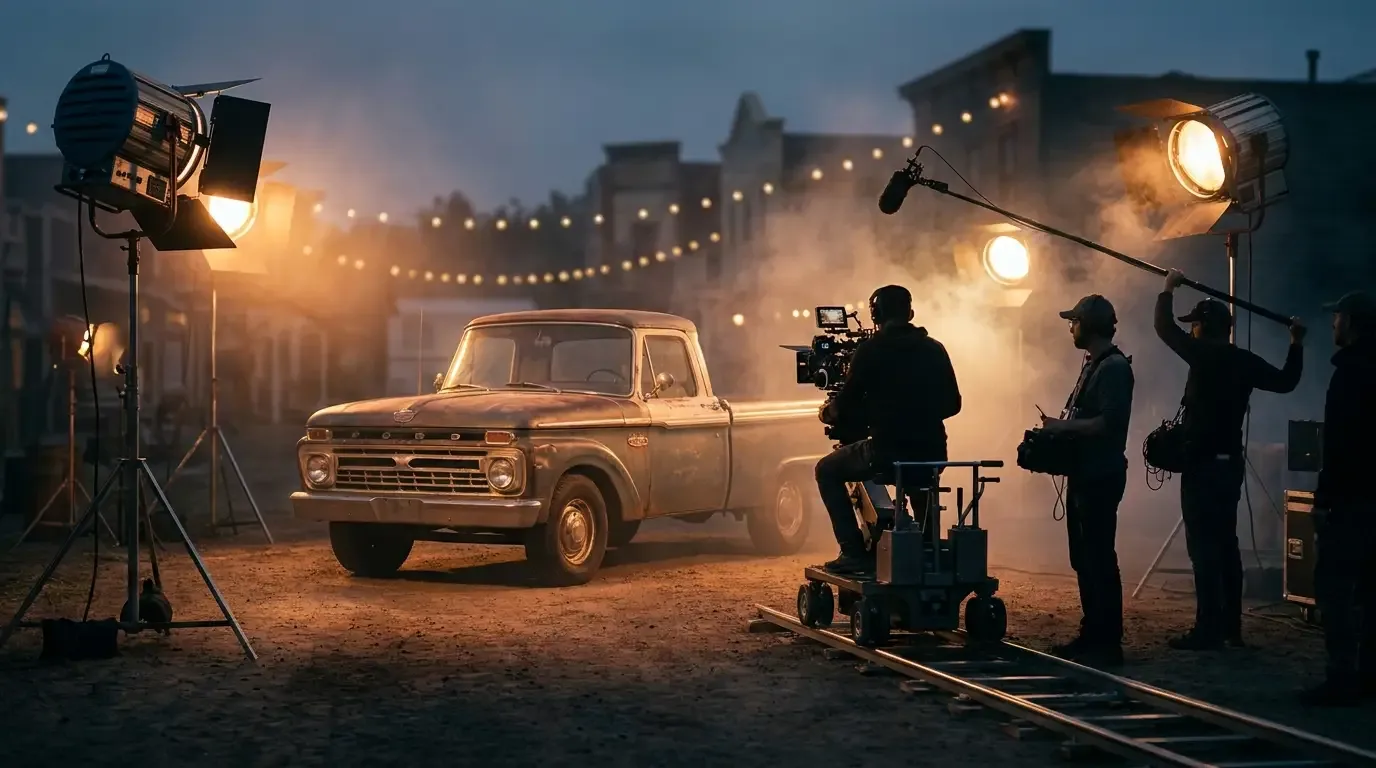
There is a moment in the 1963 film Hud when Paul Newman leans against a dusty pickup on a Texas ranch, and the truck does as much acting as he does. It is not a hero. It is a tool, scarred and honest, and that is exactly the point. Long before pickups became six-figure auction stars, Hollywood and Madison Avenue understood something about them that collectors would only catch up to decades later. A truck on screen tells you who a character is. It tells you what he works for, what he can afford, and what he refuses to give up. That storytelling shorthand shaped how millions of Americans felt about the trucks in their own driveways, and it quietly built the demand that now drives the collector market for classic pickups.
If you are trying to understand why a rusty half-ton from 1955 can outrun a luxury sedan at auction, you have to look past the sheet metal and into the culture that made these trucks matter. That story runs through movie lots, television sets, and thirty-second commercials.
Trucks as characters, not props
The best on-screen trucks are not scenery. They carry weight in the plot and in the way we read the people driving them. The 1971 film Duel, an early Steven Spielberg feature, turned a battered Peterbilt tanker into the villain of the whole picture. You never fully see the driver. The truck itself becomes the menace, a wall of rust and chrome bearing down on a terrified motorist. It worked because audiences already understood trucks as physical, threatening, and unstoppable in a way a car never could be.
Television did the opposite just as well. The Beverly Hillbillies ran from 1962 into the early 1970s, and the Clampett family's overloaded 1921 Oldsmobile flatbed truck became one of the most recognizable vehicles on American TV. It was comedy on wheels, but it also planted an idea that stuck. A truck could be a family, a home, a whole way of life stacked up and rolling down the highway. Kids who watched that jalopy sputter across the screen grew into adults with a soft spot for old, honest, hardworking machines.
Then there was the pickup as extension of a man's character. Clint Eastwood, John Wayne, and later the whole crop of rural dramas leaned on trucks to say things dialogue could not. A clean, cared-for truck meant pride. A beat-up one meant a man too busy living to fuss over paint. That visual language did not stay on the screen. It went home with the audience.
The Ford and Chevy war, fought on television
Advertising did not just sell trucks. It defined what a truck was supposed to mean. For decades Ford and Chevrolet fought their rivalry in living rooms across America, and the language they invented still shapes how buyers talk today.
Ford's long-running "Built Ford Tough" campaign, which launched in the late 1970s, tied the F-Series to grit, endurance, and blue-collar reliability. Chevrolet answered with its own emotional appeals, most famously the "Like a Rock" campaign built around a Bob Seger song that ran through the 1990s. Those two phrases did more than move inventory. They told an entire generation that owning a pickup was a statement about your values, not just your hauling needs.
The imagery was consistent and deliberate. Trucks climbing muddy hills. Trucks pulling trailers loaded past reason. Trucks parked at job sites and family farms. Advertisers understood that a pickup was aspirational in a very particular way. It was not about status through luxury. It was about capability, self-reliance, and the freedom to do your own work. That message resonated because it flattered the buyer's sense of himself.
- Capability over comfort. Early truck ads sold what the vehicle could do, not how it pampered you.
- Loyalty as identity. Ford and Chevy campaigns encouraged buyers to pick a side and stay there for life.
- Rural romance. Farms, ranches, and open country framed the truck as a piece of American independence.
That advertising legacy matters to collectors now because it created deep emotional attachment across generations. A man who grew up watching "Like a Rock" commercials with his father may spend real money to own the exact square-body Chevy those ads celebrated. The nostalgia is not accidental. It was manufactured, decade by decade, thirty seconds at a time.
How the screen created collector demand
Pop culture does not just reflect what people already want. It builds want out of nothing. The trucks that show up again and again in films, shows, and advertising become fixed in the public imagination, and that visibility translates directly into demand years later.
Consider the square-body Chevrolet and GMC trucks built roughly from 1973 through 1987. For years they were simply used trucks, cheap and plentiful. Then a generation that had seen them everywhere in childhood, in movies, on TV, in the background of every American street, reached the age and income to buy back their memories. Prices climbed. Clean examples that once sold for a few thousand dollars now command far more. The trucks did not change. The culture around them did.
"You are not buying steel and rubber. You are buying the version of America you saw when you were ten years old, and there is nothing wrong with that. Some of the best conversations I have ever had started with a stranger walking up to an old truck and saying, my dad had one just like it."
— Patrick Walsh
The same pattern plays out with the first-generation Ford Bronco and early F-100 and F-150 trucks. These vehicles appeared constantly in the visual culture of their era, and that constant presence made them feel familiar, safe, and desirable to the people who eventually bid on them at auction. If you want to understand which classic trucks hold value, look at which ones the cameras loved. For a practical breakdown of what to look for and what to pay, our guide to classic truck collecting walks through the market truck by truck.
The trucks people actually remember
Ask a room full of enthusiasts to name a memorable on-screen truck and you will get a fast, loud list. Certain vehicles earned their place in the culture and never left. Naming them is worth doing, because these are often the exact trucks that carry a nostalgia premium at auction today.
| Truck | Where it appeared | Why it stuck |
|---|---|---|
| Peterbilt 281 tanker | Duel (1971) | The faceless mechanical villain, pure menace on wheels |
| Clampett flatbed truck | The Beverly Hillbillies | Comedy, family, and the loaded-jalopy image of rural mobility |
| Chevrolet square-body pickups | Countless films and TV of the 1970s and 1980s | The everyman truck of a whole generation's childhood |
| Ford F-Series and Bronco | Westerns, rural dramas, ad campaigns | The rugged, self-reliant American work truck ideal |
What ties these together is not horsepower or rarity. It is meaning. Each of these trucks came to stand for an idea, danger, family, hard work, independence, and that idea outlived the specific film or show. When a collector chases one of these trucks, he is often chasing the feeling it represented long before he ever thought about owning it.
It is worth saying plainly that on-screen fame does not guarantee value on its own. Plenty of trucks appeared in famous productions and remain cheap because they were common and unremarkable to drive. The trucks that command premiums are the ones where pop-culture memory meets genuine desirability, good looks, decent mechanicals, and a body of owners who lived the nostalgia firsthand.
Why this history matters when you buy
Understanding the cultural story behind classic trucks is not just pleasant background. It is useful when you are standing in front of one with your checkbook out. Nostalgia inflates prices, and knowing where that nostalgia comes from helps you judge whether you are paying for real quality or just for a feeling.
A truck that appeared in a beloved film or evokes a famous ad campaign will often carry a premium over a mechanically identical example with no such association. Sometimes that premium is fair, because emotional resonance is part of what makes a hobby worth the money. Sometimes it is a trap, because the feeling fades and the rust does not. The buyer who understands both the machine and the myth is the one who walks away happy.
The trucks that Hollywood and Madison Avenue put in front of us for sixty years did their job well. They made us feel something about a simple, useful machine. That feeling is now baked into the market, and it is not going away. When you buy a classic pickup, you are joining a long conversation that started on a movie screen and ended in your garage. That is a good thing to know before you sign the check.
Sources and notes
- Period film and television references (Hud, Duel, The Beverly Hillbillies) noted from general cultural record, with specific vehicle identifications confirmed against published sources.
- Advertising campaign histories for Ford and Chevrolet drawn from marque and brand-history references, with launch dates confirmed against published sources.
- Auction results and collector-market trends for square-body and F-Series trucks from published classic-truck market commentary.
- Marque histories and model-year production notes for Chevrolet Task Force and Ford F-Series pickups.