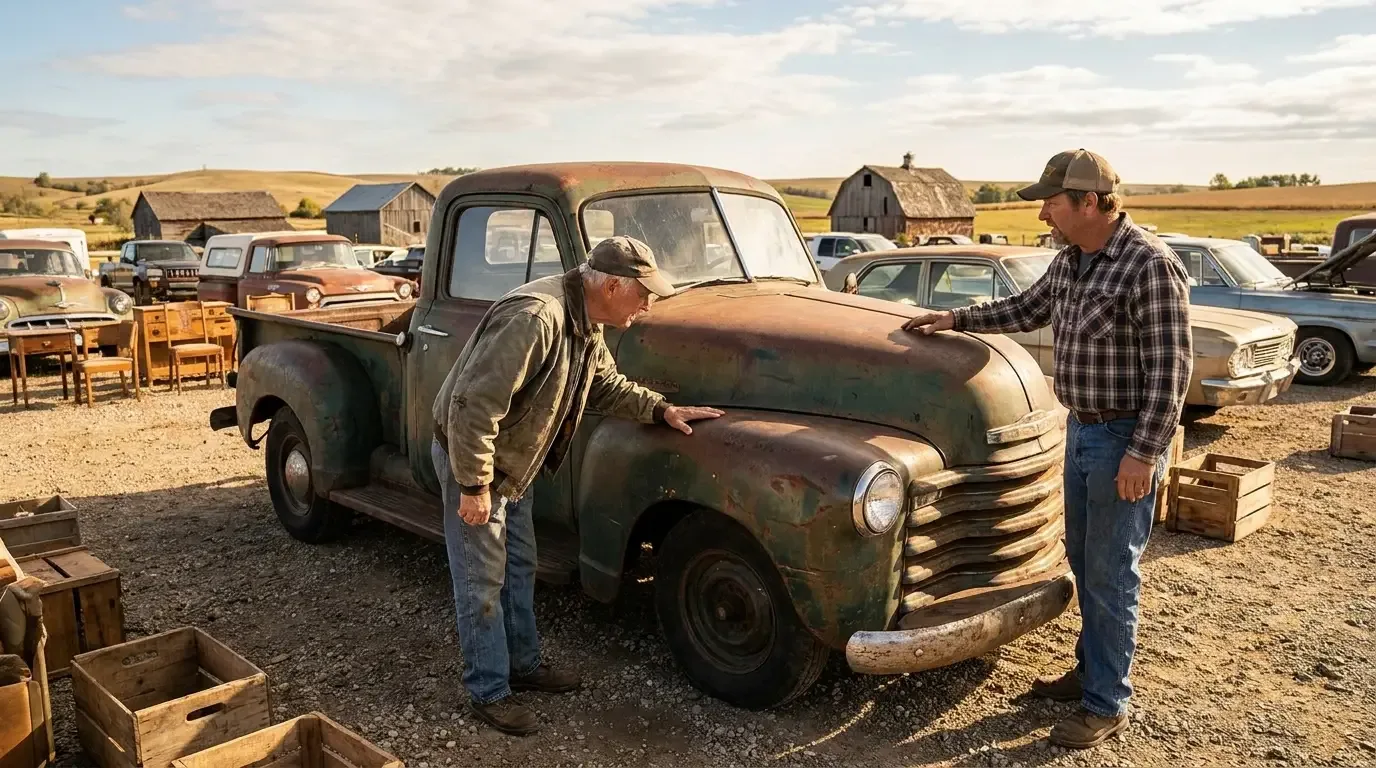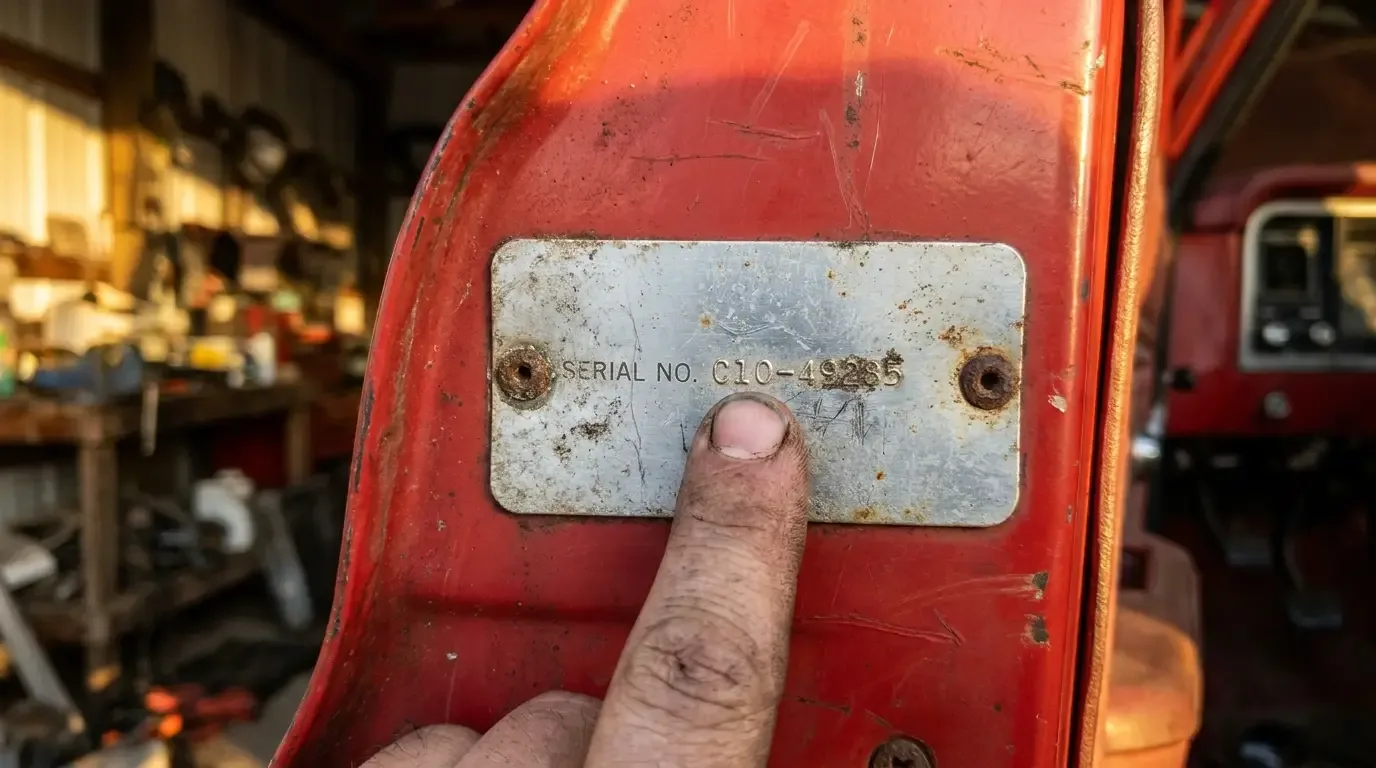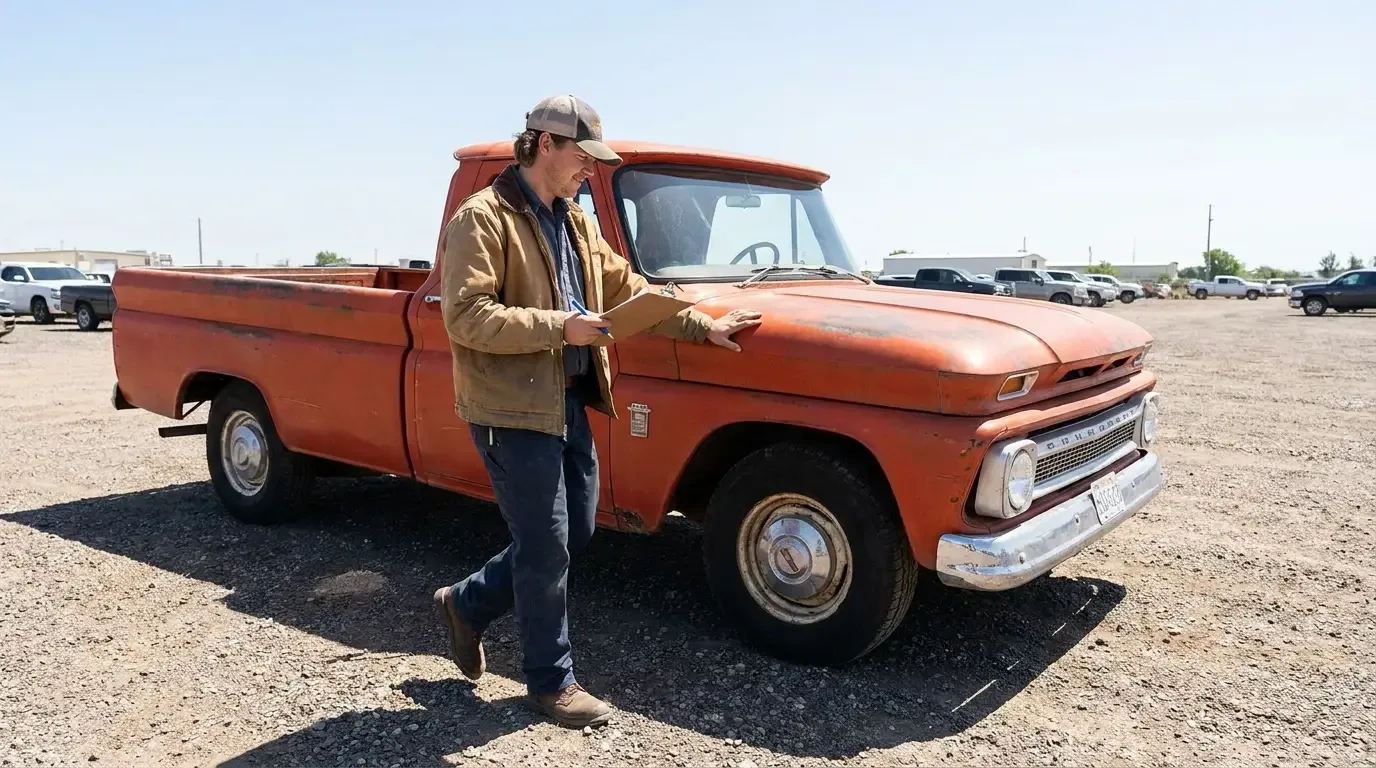
People throw the word "restored" around like it means one thing. It doesn't. A truck someone calls restored might be a rolling museum piece that has never seen rain, or it might be a repaint over rust with fresh floor mats hiding the sins. The old-car world settled this argument decades ago with a numbered grading scale, and it works just as well for trucks as it does for a Duesenberg. Learn the five grades and you stop overpaying for a #3 dressed up as a #2.
These grades came out of the collector-car appraisal business and got picked up by the price guides and the big auction houses. They run from #1 down to #5. The higher the number, the rougher the truck. If you have not read how to buy a classic truck yet, start there for the buying process. This piece is about reading the grade so you know what you are actually looking at when a seller quotes a price.
The five grades, plain and simple
Every grade describes overall condition, not just paint. A truck is only as good as its worst major system. You can have show paint sitting on a bent frame, and that truck is not a #1, no matter what the seller believes. Grade is a whole-vehicle call.
| Grade | Name | What it really means |
|---|---|---|
| #1 | Concours | Better than new. Correct in every detail, trailered to shows, rarely driven. Judged to standards most factories never hit. |
| #2 | Excellent | Shows very well up close, drives beautifully. Minor flaws only a judge would catch. A proper older restoration that has been kept up, or a light one done right. |
| #3 | Good (driver) | An honest, usable truck. Looks fine from ten feet, has visible wear up close. Runs and drives with no excuses. The heart of the hobby. |
| #4 | Fair (project) | Needs work to enjoy. Runs or nearly runs. Body issues, tired interior, deferred maintenance. A starting point, not a finish line. |
| #5 | Poor | Parts truck or a full rebuild. May not run. Rust through, missing pieces. Value is in the title and whatever is salvageable. |
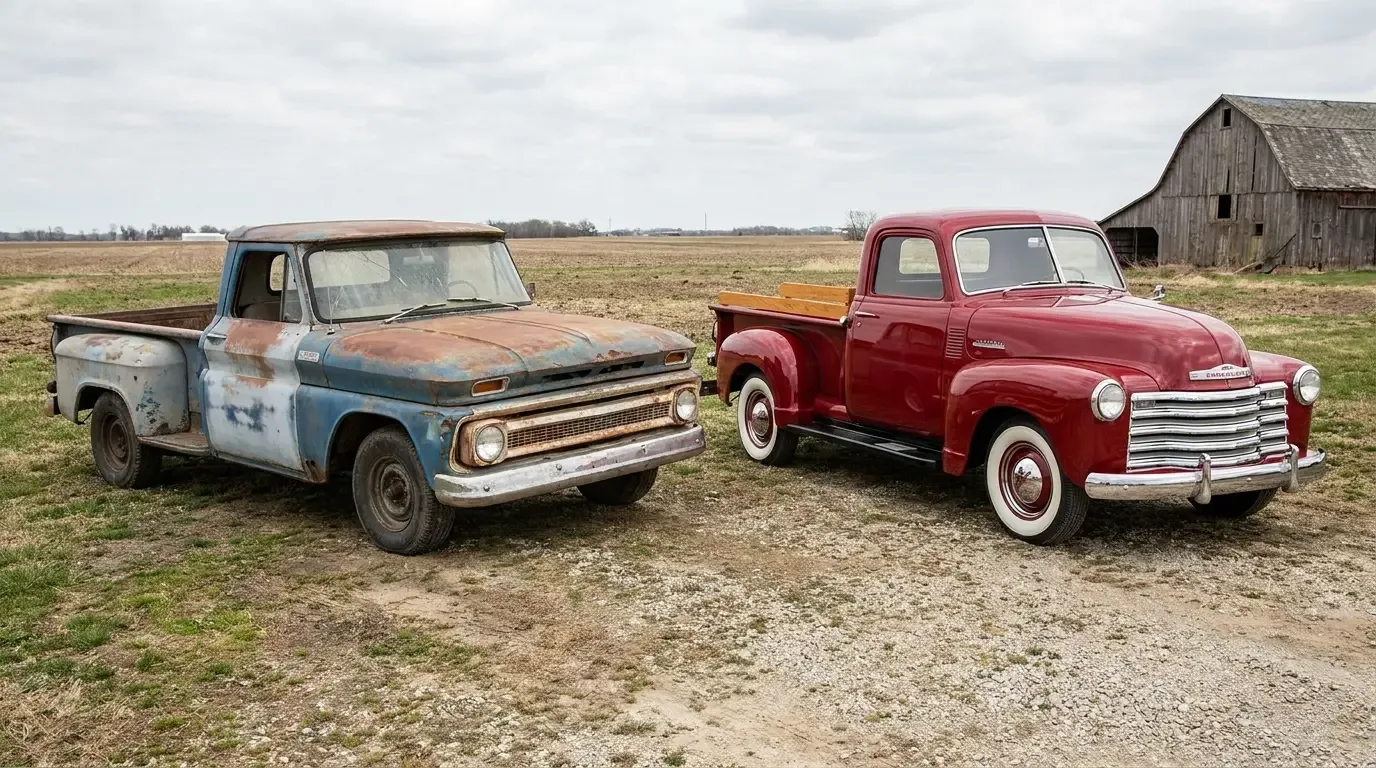
Most trucks for sale live in the #3 to #4 band. True #1 and #2 trucks are a small slice of the market, and #5s usually get parted out rather than sold whole. When a seller uses a word like "mint" or "survivor," translate it back to a number before you talk price.
Concours (#1) and excellent (#2): the top end
A #1 truck is not a truck you use. It is a finished object. Every bolt is the right finish, the engine bay is detailed to correct-original or better, the underside is as clean as the top. These get judged at organized shows and hauled there on a trailer so the tires stay clean. For a working truck this feels almost silly, and honestly, most old pickups were never built to that tolerance in the first place. But the market pays for it, so it exists.
A #2 is the sweet spot for a lot of buyers who want something excellent they can still drive on a nice weekend. Up close you might find one small paint flaw or a slightly worn pedal pad. Everything works. The restoration was done correctly and has been maintained, or the truck is a low-mileage original that got lucky. You pay a premium over a #3, but you are not paying the crazy concours money.
Good (#3): the driver, and where most trucks live
The #3 driver is the truck the whole hobby actually runs on. It looks good rolling down the road. Get up close and you see honest wear, a chip here, a slightly faded panel there, an interior that has been sat in. Nothing is broken. It starts, stops, steers, and does not embarrass you at a cruise-in. You can drive it, park it at the store, and not lose sleep over a door ding.
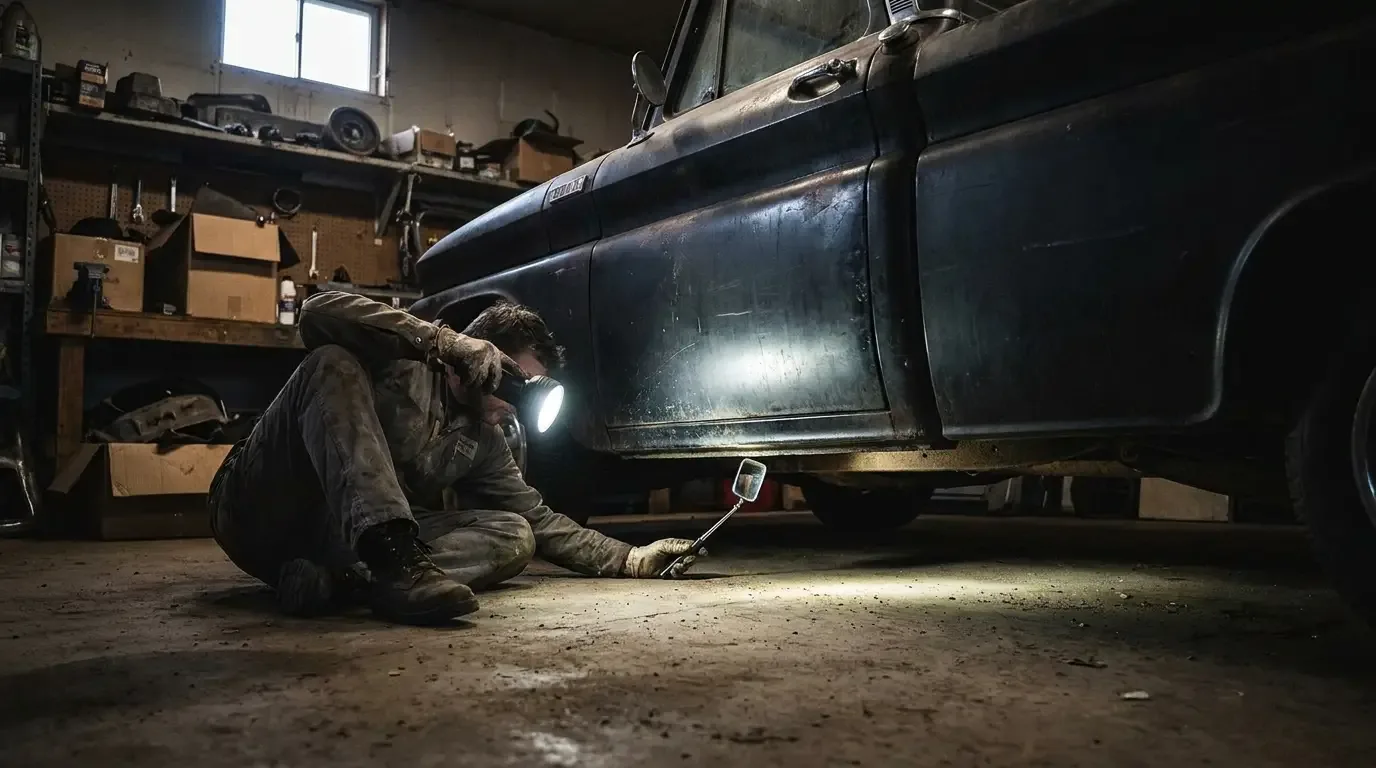
This is the grade to buy if you want to use the truck. A #3 has already taken its depreciation hit against the show trucks, and small flaws mean you drive it without babying it. The trap is a #3 priced like a #2. Sellers love to round up. Your job is to round honestly, which means getting underneath.
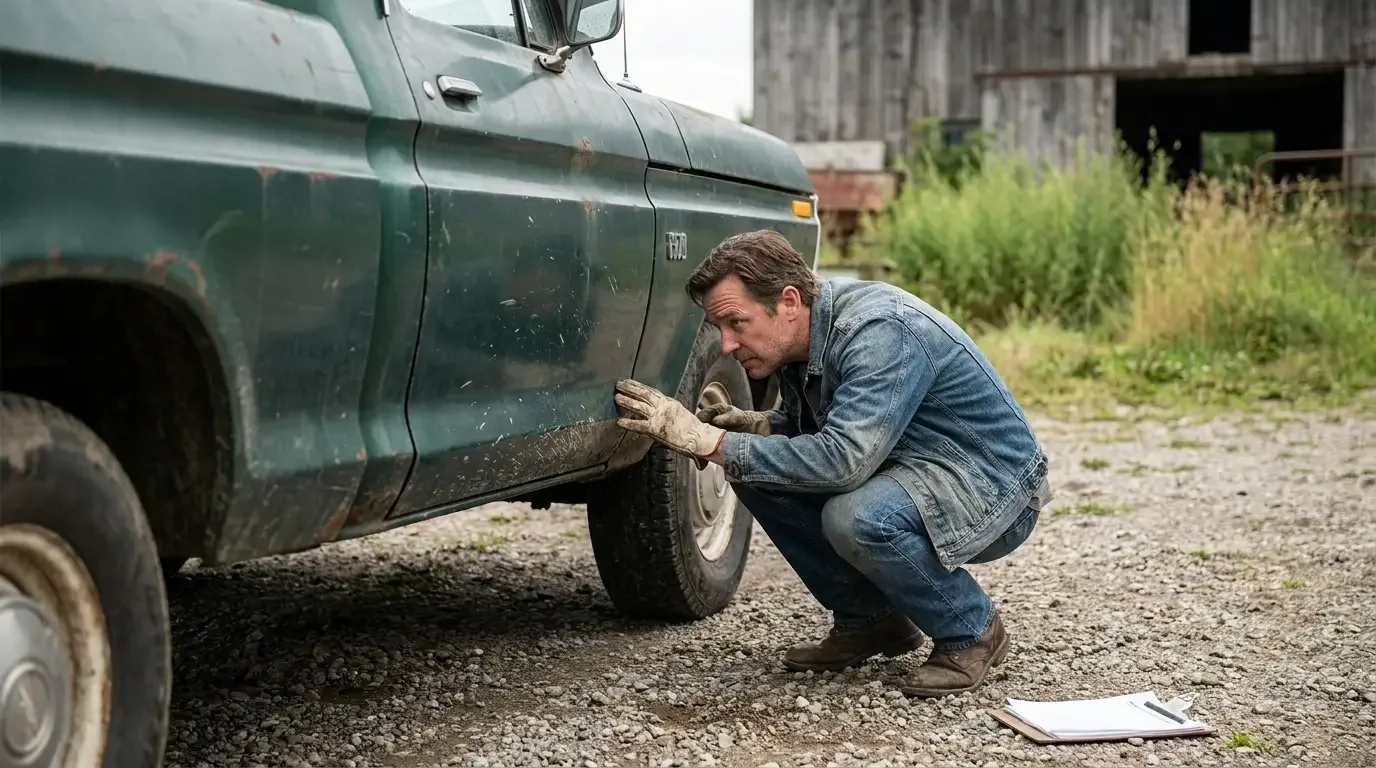
"A number-three that drives straight and stops true is worth more to me than a number-two that lives on a trailer. Get under it with a light. Not a flashlight at arm's length, actually under it, and you'll know in five minutes which one you're really looking at."
— Robert Halloran
Fair (#4) and poor (#5): projects and parts
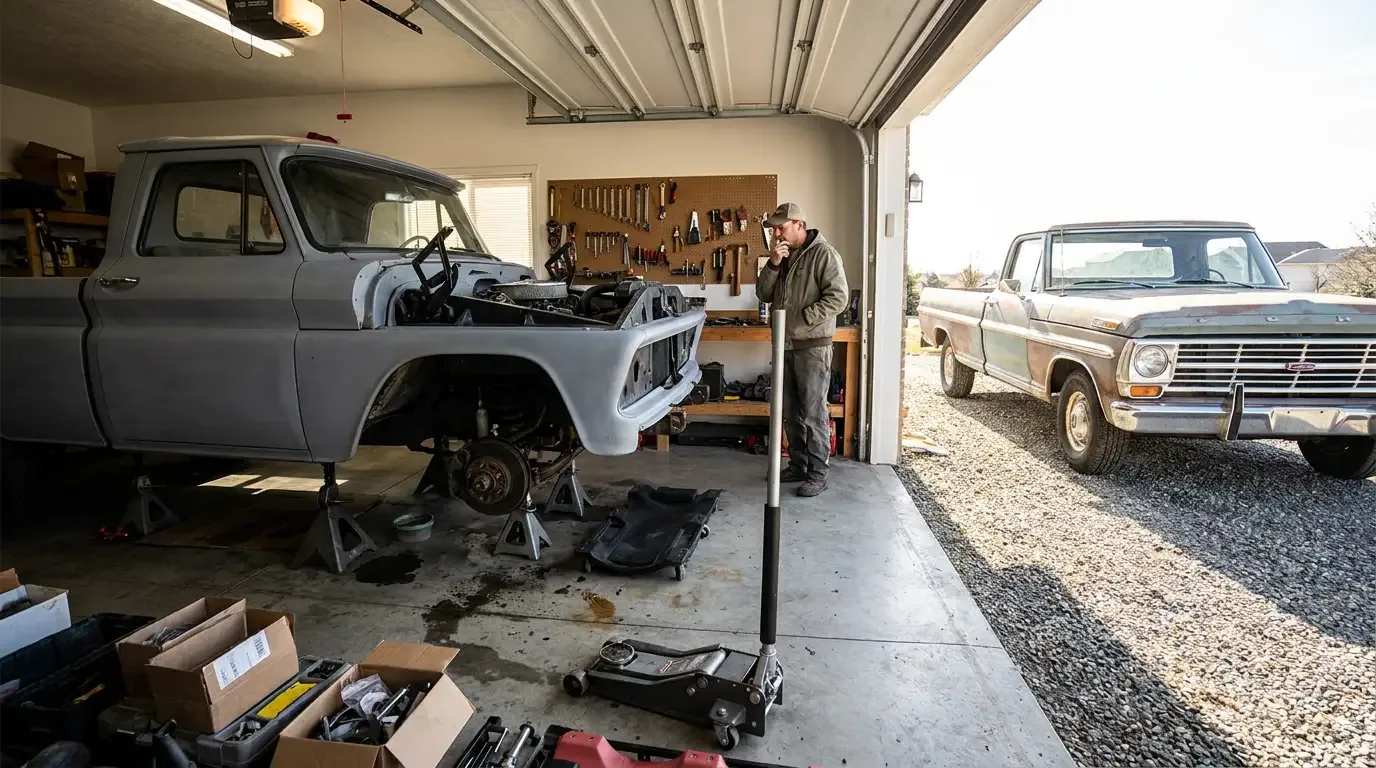
A #4 is a project. It might run and drive in a rough way, or it might need a weekend of work to move under its own power. Expect body problems, a tired or torn interior, brakes and fluids that got ignored, maybe some surface rust turning into something worse. There is a real truck in there, but you are buying the privilege of finishing it. That is fine if you want a project and you price it like one.
A #5 is a parts truck or a ground-up rebuild. It may not run at all. There is rust through the metal, pieces are missing, and the value is mostly the title, the cab if it is solid, and whatever trim and mechanical bits can be pulled and sold. People buy #5s to feed a restoration or to save one clean part off an otherwise dead truck.
The honest math on a #4 or #5 is simple and brutal: purchase price plus the cost to bring it up a grade almost always exceeds the price of just buying the higher grade to begin with. That does not make it a bad choice. It makes it a choice you make with open eyes, usually because you want the work, not because it is the cheap path.
How the grade drives the price
The jump between grades is not even. The money is stacked at the top. Going from a #4 to a #3 costs you something, but going from a #3 to a #2, and especially from a #2 to a #1, costs a lot more for what looks like a small visual difference. That top-end premium is paying for correctness and detail work, the stuff that does not make the truck drive any better but wins the judging.
As a rough shape of the market, a #2 often sells for a large multiple of a #4 of the same truck, and a #1 sits above the #2 by another wide margin. The exact spread depends heavily on the model, the year, and how desirable that particular truck is, so treat any specific dollar figure you see as a starting point to check against recent sales, not gospel. Two trucks graded the same can still sell far apart if one is a rare configuration and the other is common.
Here is the practical takeaway. Decide what grade fits your use and your budget, then hold the line on price for that grade. Do not pay #2 money for a #3, and do not talk yourself into a #4 at #3 money because the paint looks shiny in the photos. The grade is the honest starting point for every price conversation. Everything else is negotiation.
Sources and notes
- Collector-car condition grading standards as published by the major U.S. price and value guides.
- Auction results and sold listings used to observe grade-to-price spreads across comparable trucks.
- Appraiser and inspection practice for whole-vehicle grading (frame, floors, and mechanicals over cosmetics).
- Grade-to-price spreads should be checked against current guide values and recent comparable sales before relying on them.