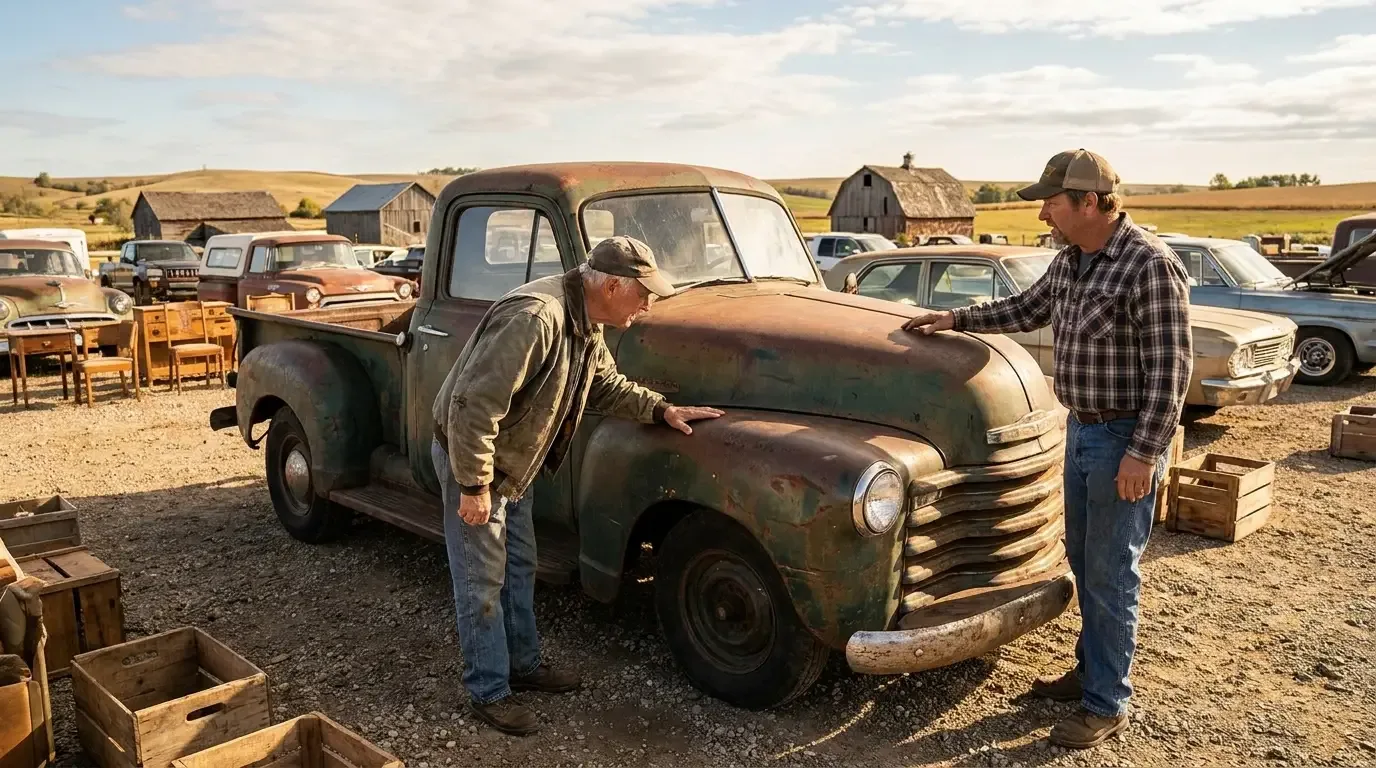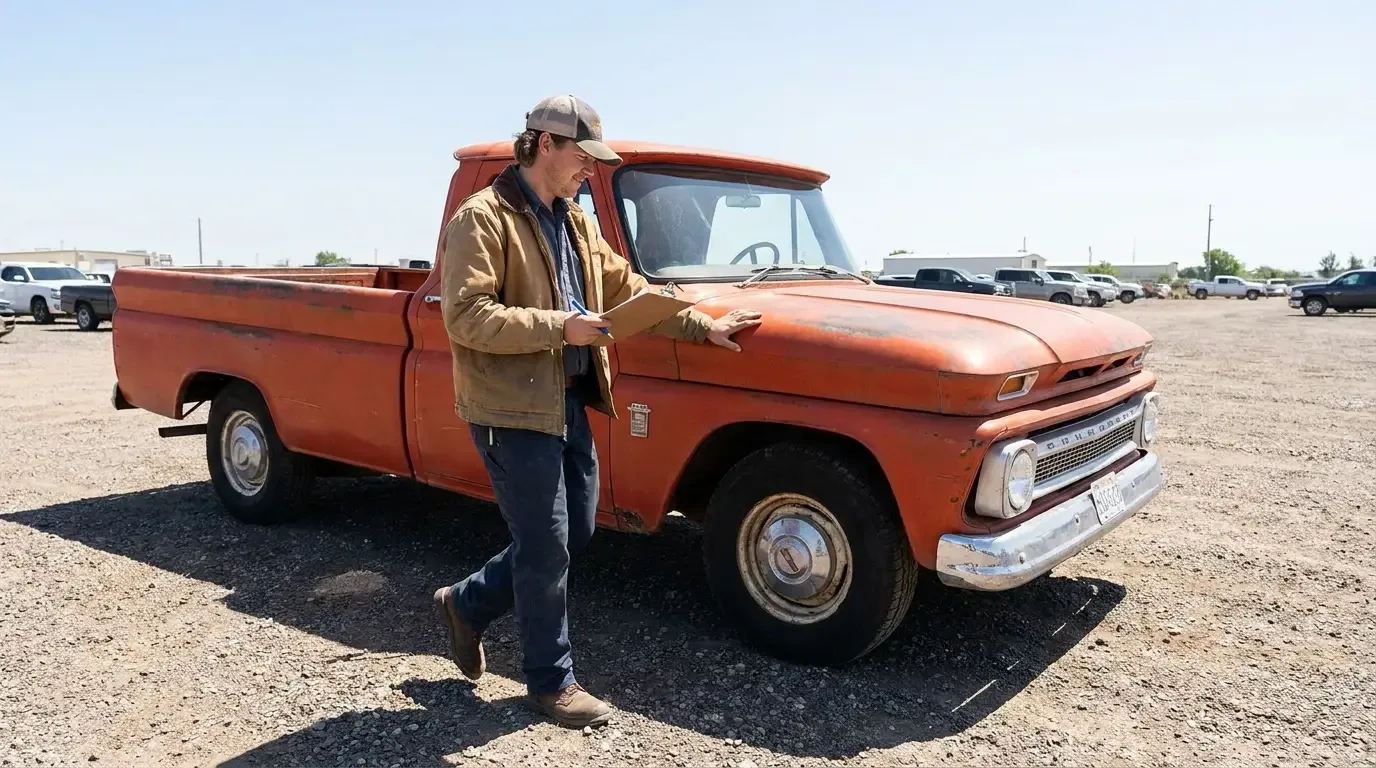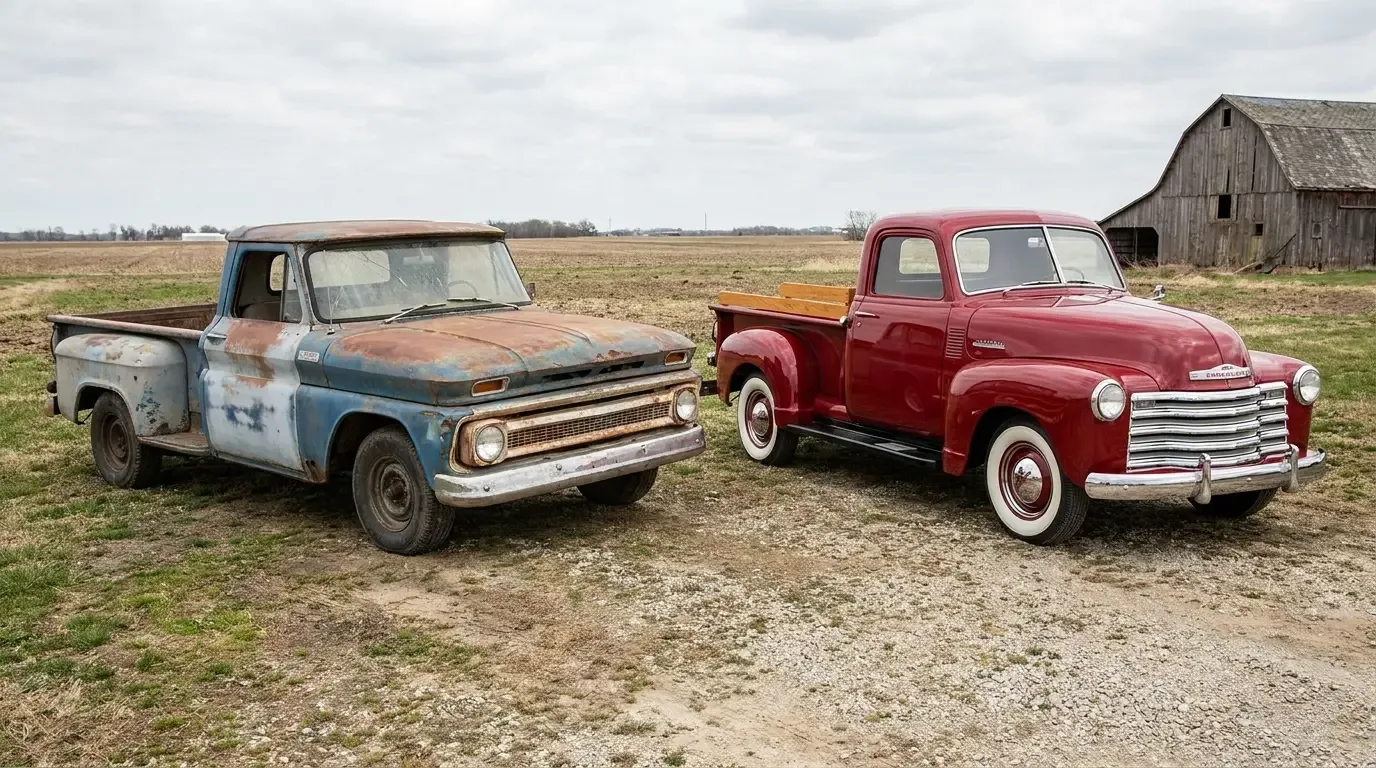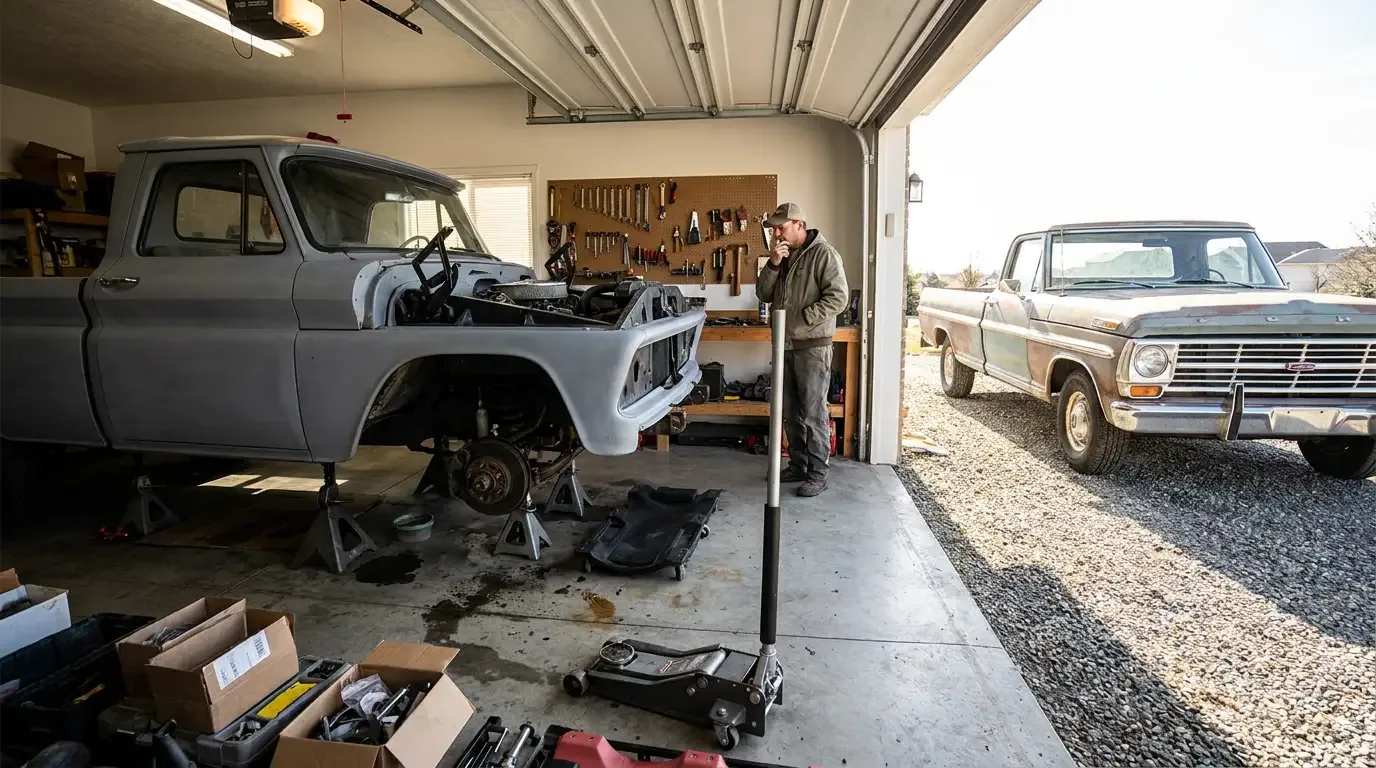
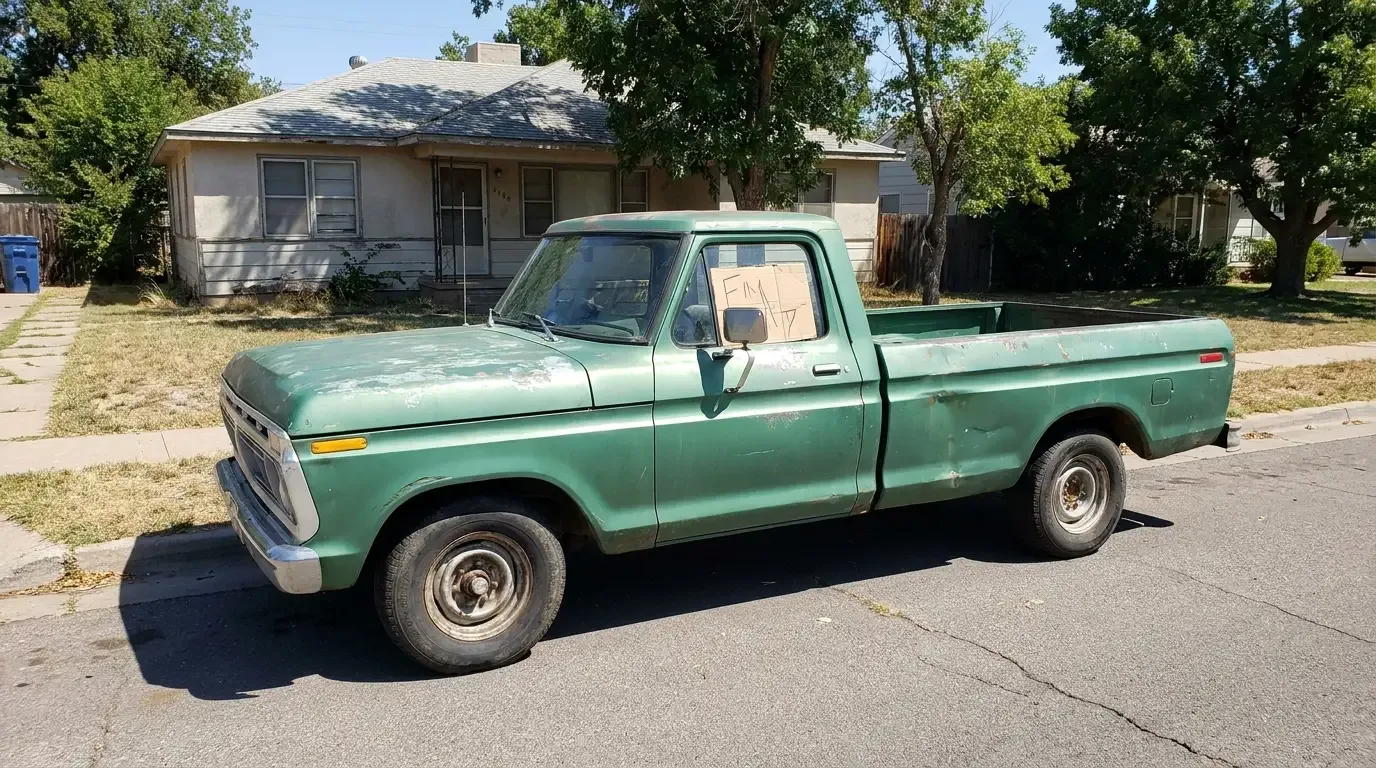
Five thousand dollars is a real number in the classic truck world, but it buys something specific, and it helps to know what before you start driving around with cash in your pocket. This is the entry floor of the hobby, the price band where you find honest drivers, unfinished projects, and the occasional truck that somebody just wanted gone. You will not find a show winner here. You will find a truck you can own, use, and learn on, which for most people is the whole point.
If you are still deciding whether a truck is even the right buy, start with our guide on how to buy a classic truck. This piece assumes you have made that call and want to know what your money actually gets you at the bottom of the market.
What condition $5,000 realistically buys
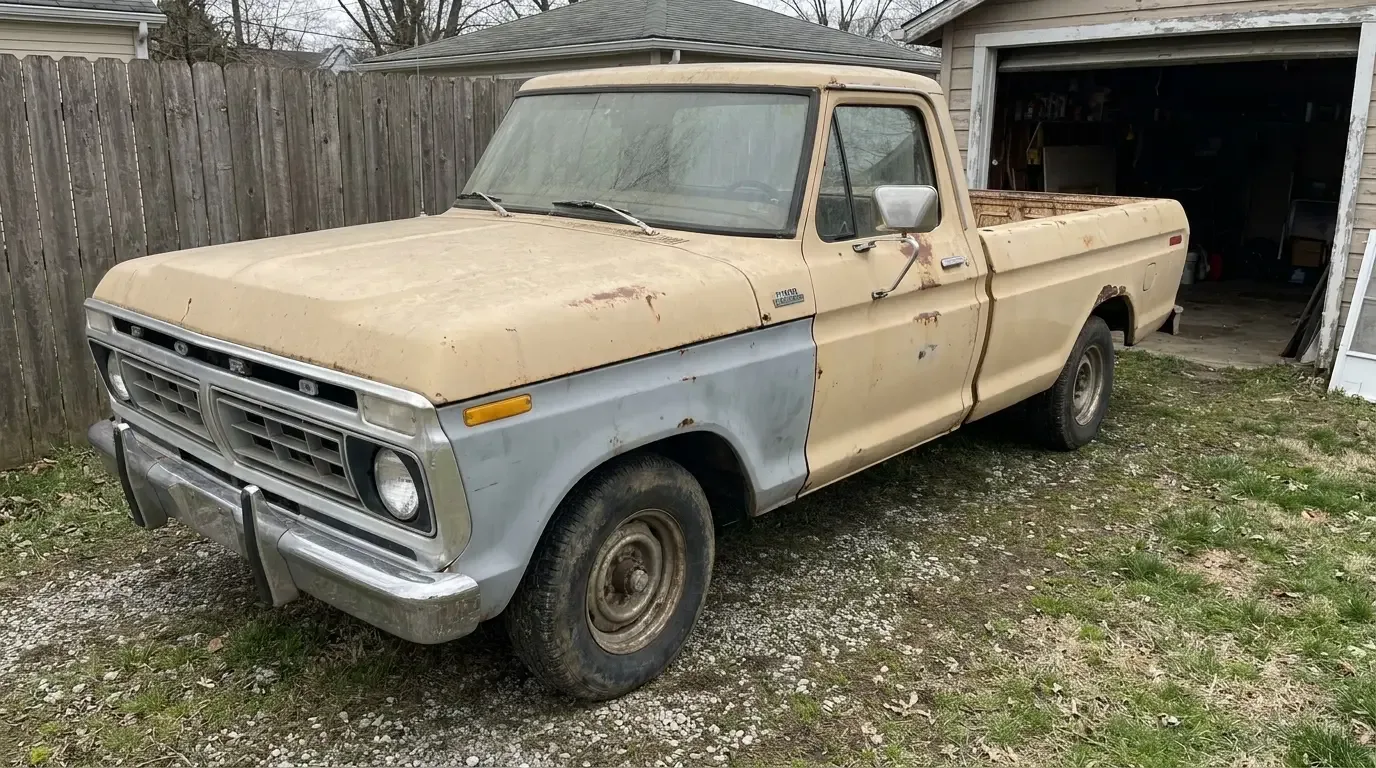
At this price, you are shopping for what the trade calls a driver. Not a restored truck, not a rust-free survivor, but a running vehicle with visible age. Expect faded or resprayed paint, a worn interior, some surface rust, and a few mechanical jobs already on the list. The good news is that trucks were built to take abuse, so a tired one is often still a sound one.
Here is the honest breakdown of what tends to land in this band. Prices are approximate and vary a lot by region, season, and how badly the seller wants out.
| What you find near $5,000 | Typical condition | Approximate range |
|---|---|---|
| Running half-ton, 1960s to 1980s | Driver, cosmetic wear, minor rust | $4,000 to $6,000 |
| Older half-ton, 1950s | Rougher driver or strong project | $4,500 to $7,000 |
| Stalled project with clean title | Not running, mostly complete | $2,500 to $5,000 |
| Straight-six or base-trim truck | Less desirable engine, better value | $3,500 to $5,500 |
Notice that the same money buys either a truck you can drive home tonight or a project you will spend a year on. That choice matters more than the model badge on the tailgate. A running driver you can enjoy while you fix it beats a rolling shell that sits under a tarp and drains your weekends.
Where $5,000 goes furthest
Your budget stretches or shrinks depending on what you chase. Chase the popular thing and you pay for the crowd. Step one lane over and the same money buys more truck.
- Later trucks over earlier ones. A 1970s or early 1980s half-ton usually costs less than a 1950s example in the same shape, and parts are easier to find. The older the truck, the more you pay for the same condition.
- Six-cylinders over V8s. The less glamorous engine is the value play. It moves the truck fine and it will not empty your wallet.
- Base trim over deluxe. Fancy chrome and options add to the ask. A plain work truck does the same job for less.
- Long beds over short beds. Short-bed trucks command a premium among collectors, so the long bed is the smart-money body style.
- Dry-climate trucks over rust-belt trucks. A truck from a dry state may cost a little more up front but saves you thousands in bodywork later.
The pattern is simple. Popularity costs money. If you can live without the most wanted version, your five grand goes a lot further.
"Everybody wants the short-bed small-window with the V8. Fine. Let them fight over it. I will take the long-bed six that nobody photographed, and I will spend the difference on tires and brakes."
— Robert Halloran
What you compromise, and what you should not
Buying at the bottom means accepting some things and refusing others. Get that line right and a $5,000 truck is a bargain. Get it wrong and it is a money pit with plates.
Things you can live with:
- Faded, chipped, or mismatched paint. Cosmetics are the cheapest thing to fix on your own schedule.
- A worn interior. Seat covers and a good cleaning go a long way, and used trim is out there.
- Surface rust on panels. If it has not eaten through, it is manageable.
- A tired engine that runs and holds pressure. A worn motor that still drives buys you time.
Things worth walking away from:
- Rust in the frame, cab corners, and cab mounts. Structural rot is expensive and sometimes a total loss.
- No title, or a title that does not match the seller. Sort that out before money changes hands, not after.
- A truck that has been apart for years with parts in boxes. Missing pieces are the hidden budget killer.
- Fresh paint hiding fresh filler. A quick respray on a rough truck is often covering something.
🔧 Inspection Priorities
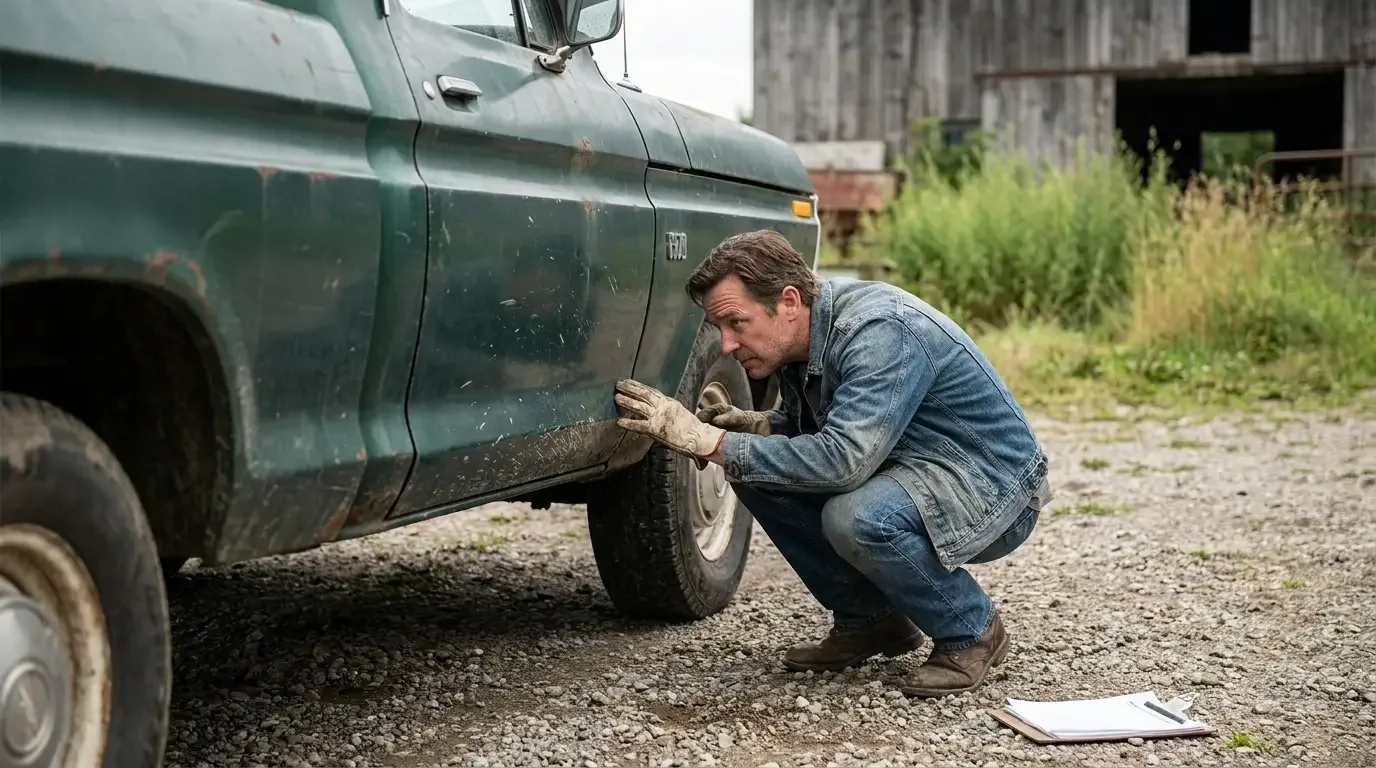
- Frame and cab mounts. Get under it with a light and a screwdriver. Rot here can cost more than the truck is worth to repair properly.
- Cab corners and floor pans. Lift the mats and press hard. Soft metal means bodywork, and bodywork adds up fast.
- Engine under load. Blue smoke, low oil pressure, and heavy blowby point to a rebuild you did not budget for.
- Brakes and lines. A truck that will not stop is not a driver. Budget a few hundred if the pedal feels wrong or lines look old.
- Title in hand. Confirm the paperwork is clean and in the seller's name before you fall in love with it.
Budgeting past the purchase price
The sticker is not the cost. It is the deposit. A $5,000 driver almost always needs a first round of work to be safe and reliable, and smart buyers set that money aside before they shop.
Plan for a shakedown fund on top of the purchase. On a bottom-market truck, expect to spend on the basics that keep you moving and stop you dying: tires, brakes, fluids, belts, hoses, and whatever the previous owner ignored. These figures are rough and depend on what you can do yourself.
Once you know your number and what to look for, the next step is seeing what is actually out there in your budget. Browse our current classic trucks for sale under $5,000 and put this checklist to work on real listings.
Sources and notes
- Classic truck auction results and private-sale asking prices, used as approximate market ranges and marked for verification.
- Marque histories and model-year guides for typical drivetrain and trim availability.
- Period road tests and owner reports for real-world condition expectations.
- General restoration and inspection references for structural rust, cost estimates, and safety priorities.