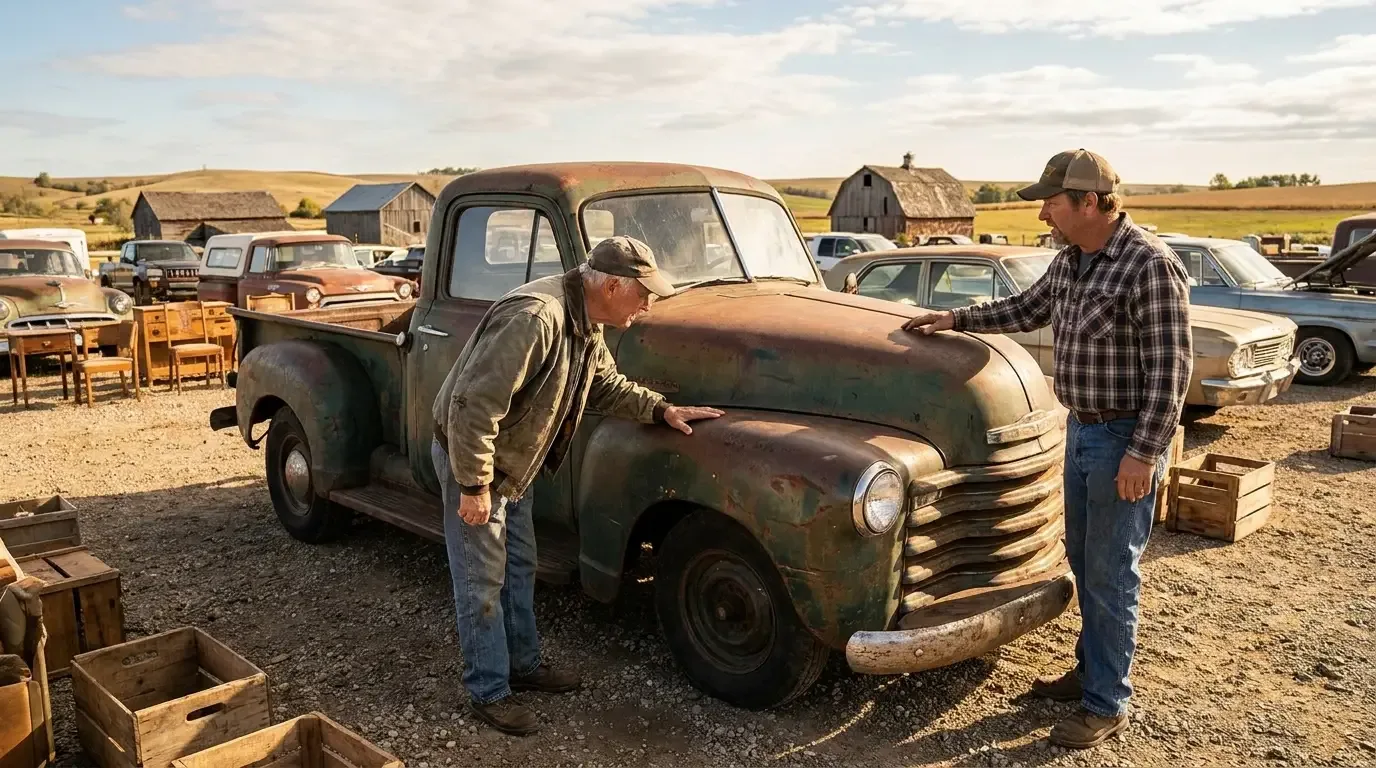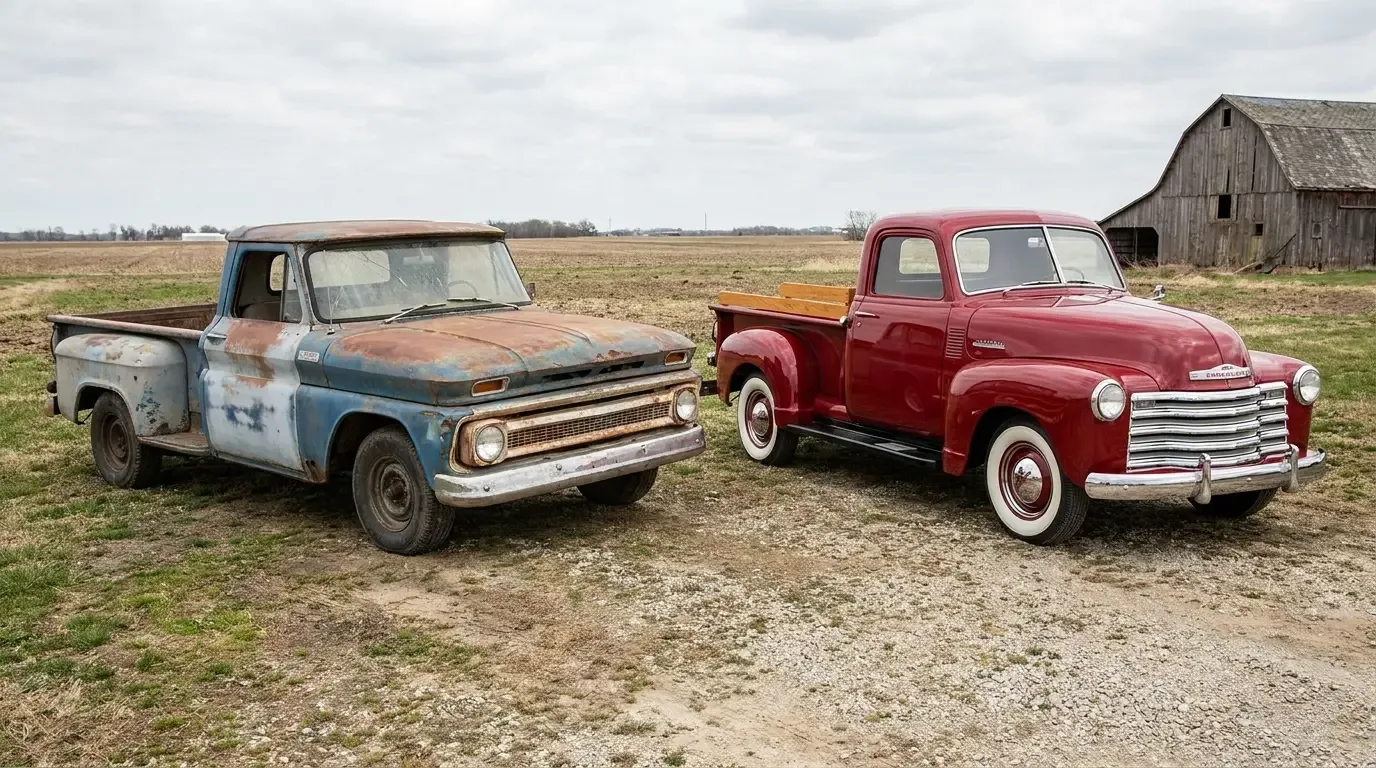
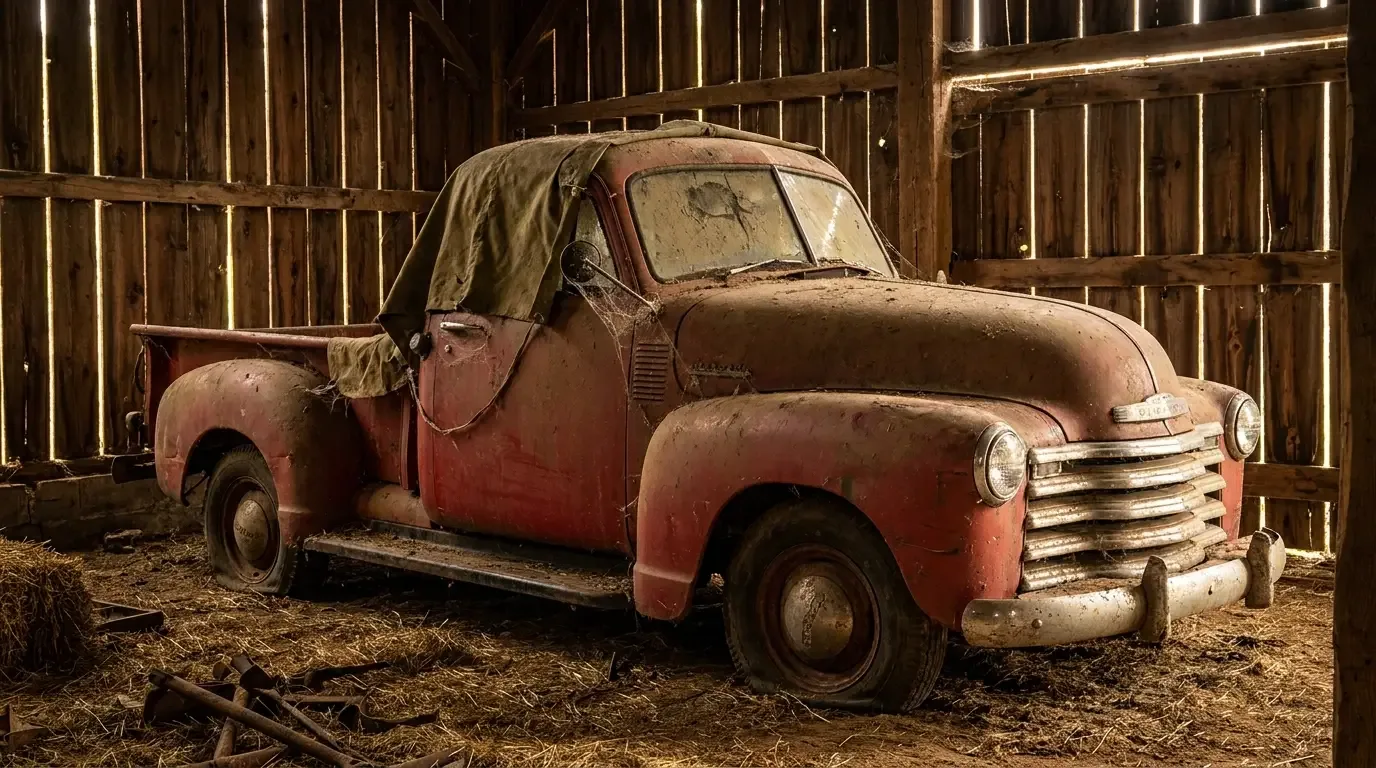
Somebody always has a cousin with a truck in a barn. The story runs the same every time. It ran when new, got parked one winter, and has sat there ever since under a tarp and forty years of dust. The price is low because nobody knows what they have, or the family just wants it gone. That is the fantasy, and sometimes it is even true. But a truck that has not turned a wheel in decades is not a bargain until you have looked at it hard and done some ugly arithmetic. If you are new to old trucks in general, start with our guide on how to buy a classic truck, then come back here for the barn-find part specifically.
I have bought a few of these and walked away from more. Here is what I have learned about telling the ones worth saving from the ones that are just a heavy way to lose money.
What "barn find" actually means
The phrase gets slapped on anything dusty. A real barn find is a truck that has been off the road and stored, usually poorly, for a long stretch, often decades, and has not been messed with since. That last part matters. Original and untouched can be worth more than a truck somebody half-restored in 1994 and gave up on. But storage is rarely kind. "Dry barn" is the dream. "Leaky barn," "dirt-floor lean-to," and "out back under a tree" are what you usually find, and each one changes the truck under the dust.
The honest way to think about it: a barn find is not a condition, it is a question. The question is how much of the truck the years took. A vehicle stored inside on a concrete floor in a dry climate can come out remarkably sound. The same truck stored on dirt in a humid state can be a rusted shell that only looks whole because the tarp held its shape.
Reading a truck that has sat for decades
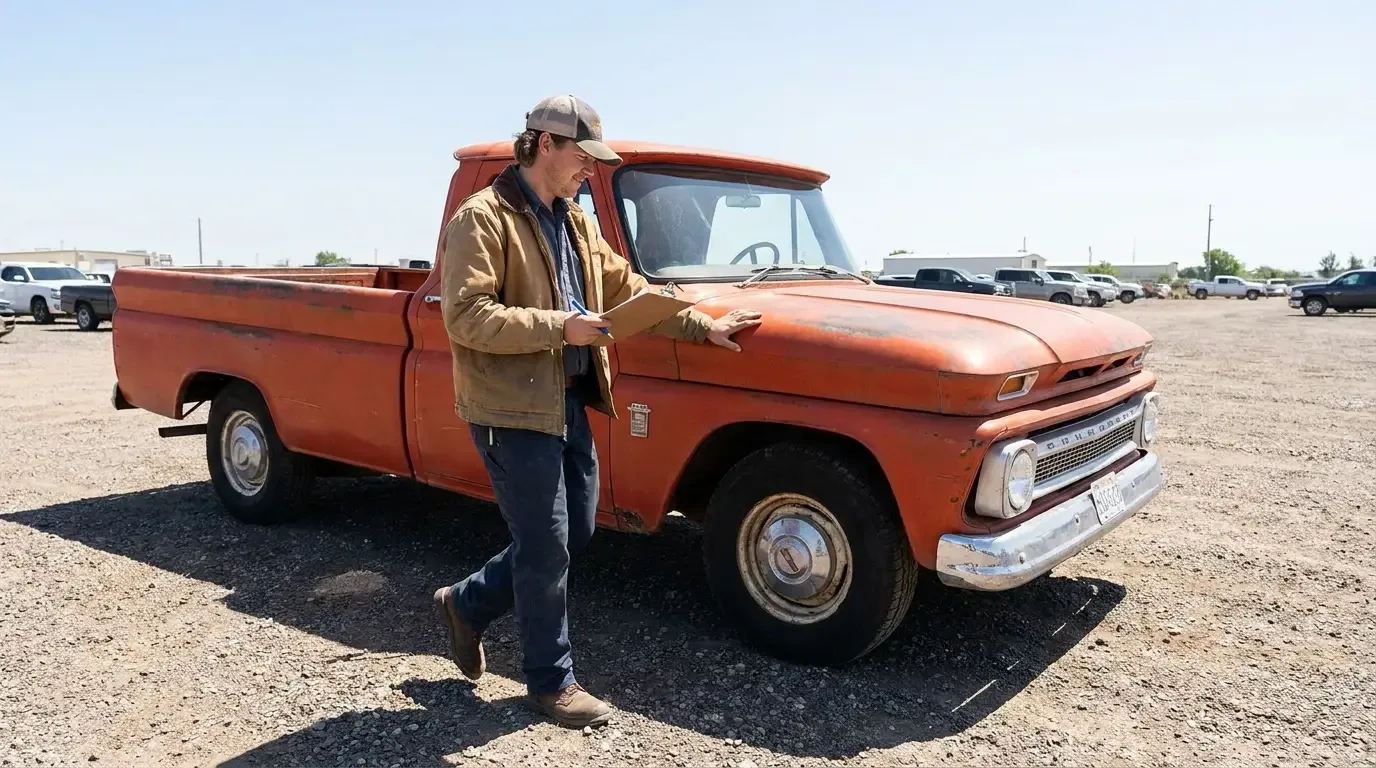
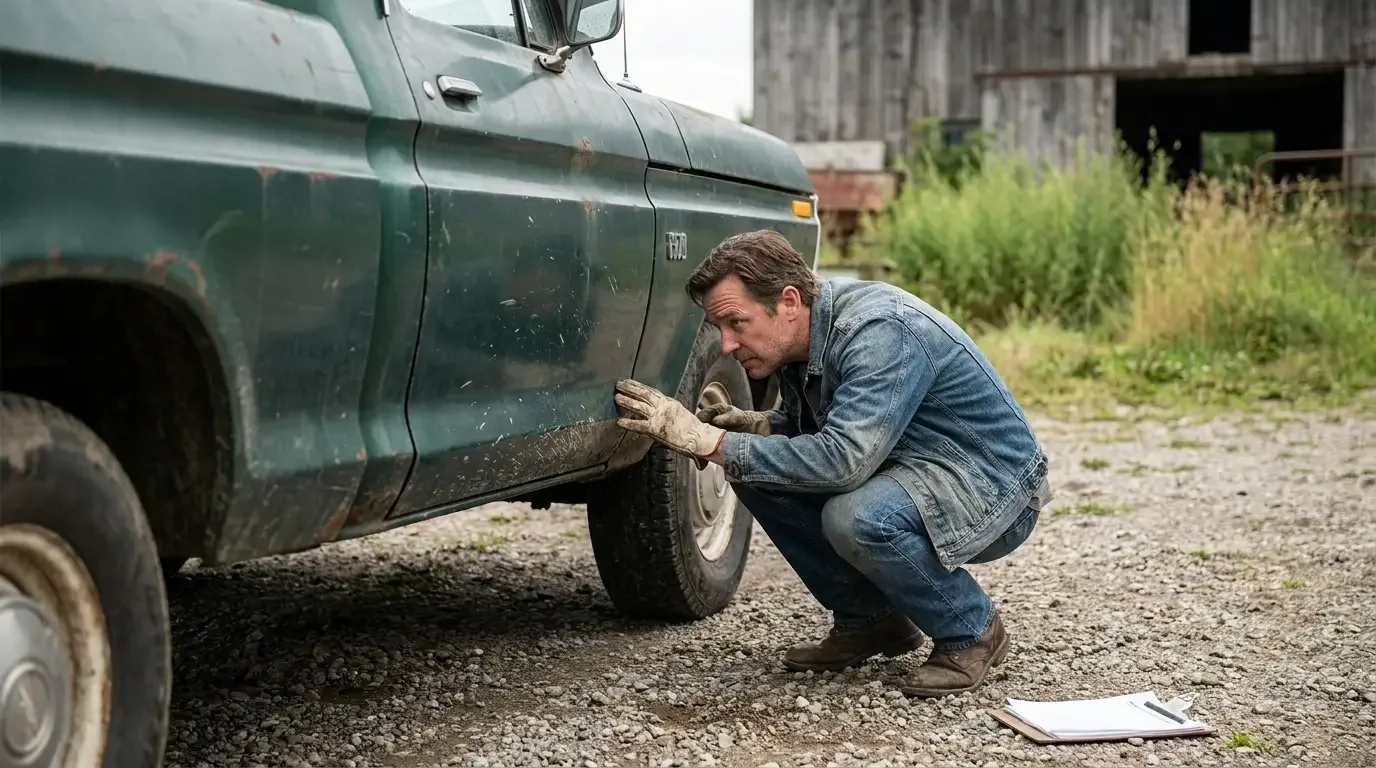
Get under it with a light. Not a flashlight held at arm's length while you nod at the fenders. Actually get down there and look at the frame rails, the crossmembers, the cab mounts, and the bed supports. On a body-on-frame truck, which is nearly all of them, the frame is the truck. Bad sheet metal is money and time. A frame that is scaled, flaking, or perforated is a different conversation entirely.
Then work through the systems that a long sleep destroys. In rough order of how much they cost you:
- The engine. Do not crank it. First, pull a plug or two and squirt oil in the cylinders, then try to turn the crank by hand with a breaker bar on the front pulley. If it turns, you have a running start. If it is locked solid, the engine may be seized from rust in the bores, and that is a rebuild or a replacement, not a weekend.
- Rodents. Mice and squirrels treat a parked truck like a condo. They nest in seats, in air cleaners, in heater boxes, and they chew wiring insulation to bare copper. A rodent-eaten harness is a genuine hazard and often a full replacement.
- Brakes. Assume the entire hydraulic system is dead. Old fluid absorbs water, cylinders seize and pit, lines rust from inside. Plan to redo it all before the truck moves under its own power.
- Fuel. Gasoline left for years turns to varnish and gum. The tank rusts, the lines clog, the pump and carburetor gum up. On most of these you are draining, cleaning or replacing the tank, blowing out lines, and rebuilding the fuel delivery from end to end.
None of these are surprises to anyone who has done it. They are surprises to the first-time buyer who thought a set of jumper cables and a fresh battery would do it.
"People fall in love with the patina on the hood and never look at the frame. The frame is the truck. Everything else you can buy in a box or off a shelf. Bring a light, bring a screwdriver to poke rust, and bring somebody who will tell you no."
— Robert Halloran
🔧 Inspection Priorities
- Turn the engine by hand. Breaker bar on the crank, spark plugs out, oil in the bores. Seized means a rebuild or swap. This is your single most important check.
- Frame and cab mounts from underneath. Poke the scaly spots. Perforation or heavy flaking is a structural cost that can exceed the truck's value.
- Wiring for rodent damage. Chewed insulation, nests, and corrosion. A full harness replacement is a real line item, not an afterthought.
- Brake and fuel systems. Assume both are dead. Budget a complete redo of hydraulics and fuel delivery before first drive.
- Floors, rockers, and bed. Lift the mats and look. Rust here is common and adds up in panels and labor.
The revival math nobody wants to do
Here is where most barn-find dreams meet the wall. The purchase price is the smallest number in the deal. A truck bought cheap because it "just needs to be woken up" can easily need several times the purchase price to become a dependable driver, and far more than that to become a show truck. The gap between "runs and drives" and "restored" is enormous, and it is worth being brutally clear about which one you actually want.
These figures are rough and vary wildly by region, truck, and how much you do yourself. Treat them as a way to think, not a quote.
| Job | What it covers | Rough cost (DIY parts) |
|---|---|---|
| Get it running | Fuel system flush, new tank or liner, carb rebuild, plugs, oil, battery | Several hundred to low four figures |
| Full brake redo | Cylinders, lines, hoses, shoes or pads, fluid | Low to mid hundreds per axle |
| Wiring harness | Reproduction harness plus your time, or a shop's time | Mid hundreds and up for the harness alone |
| Engine rebuild | Machine work, gaskets, bearings, rings if the block is good | Several thousand, more at a shop |
| Bodywork and paint | Rust repair, panels, prep, a driver-grade paint job | Highly variable, often the biggest single number |
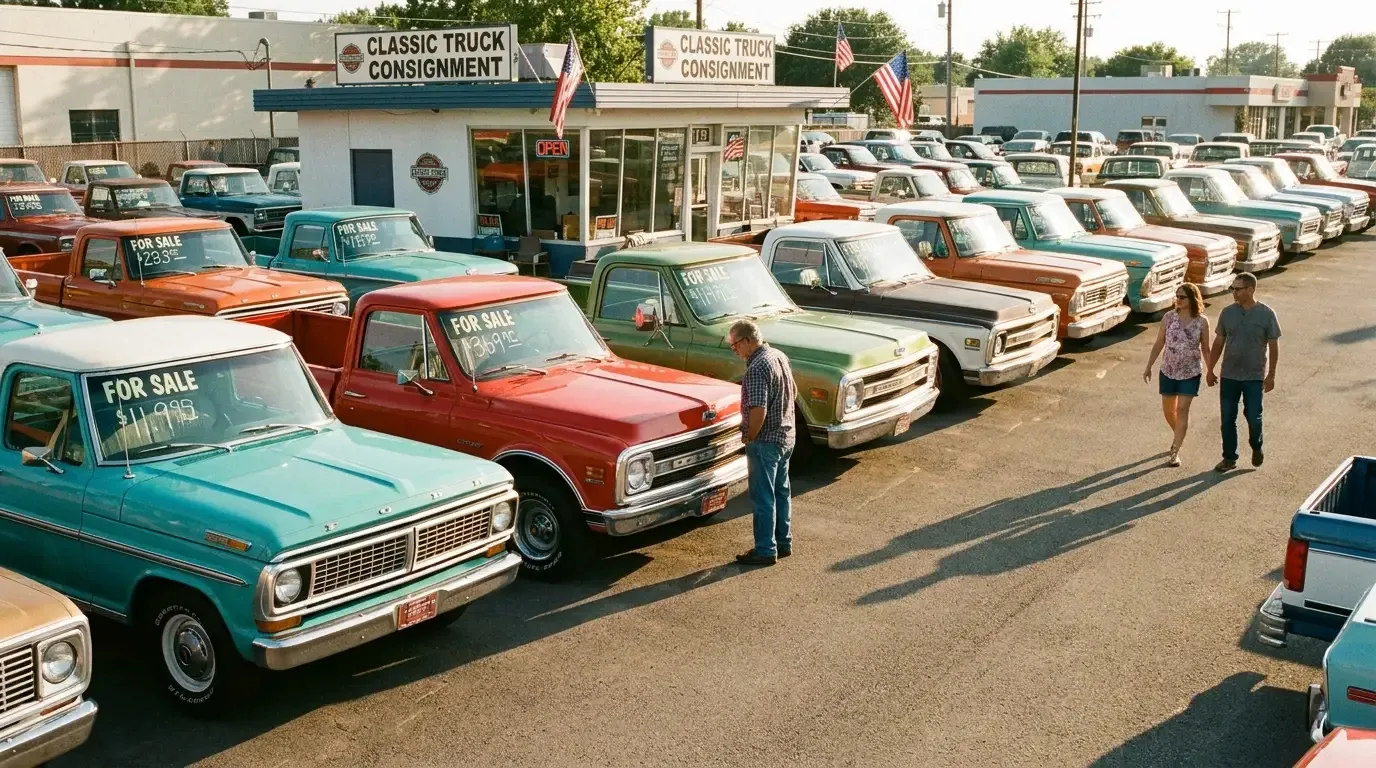
Add those up honestly and compare the total to what a running, sorted example of the same truck sells for. Often you will find that a truck already brought back to life is cheaper than the barn find plus the work. That is not a reason to never buy a project. It is a reason to buy the project because you want the project, not because you think you are stealing something.
When to walk away
Not every old truck deserves saving, and no truck is so special that it is worth overpaying for a rotten one. Walk when the frame is compromised, because you are essentially buying a truck to hang parts on a bad skeleton. Walk when the seller wants running-driver money for a seized, rusted project and will not move, because you can find a better starting point with patience. Walk when the numbers do not close, meaning restoration cost plus purchase price runs well past the value of a finished example and you are not doing it purely for love.
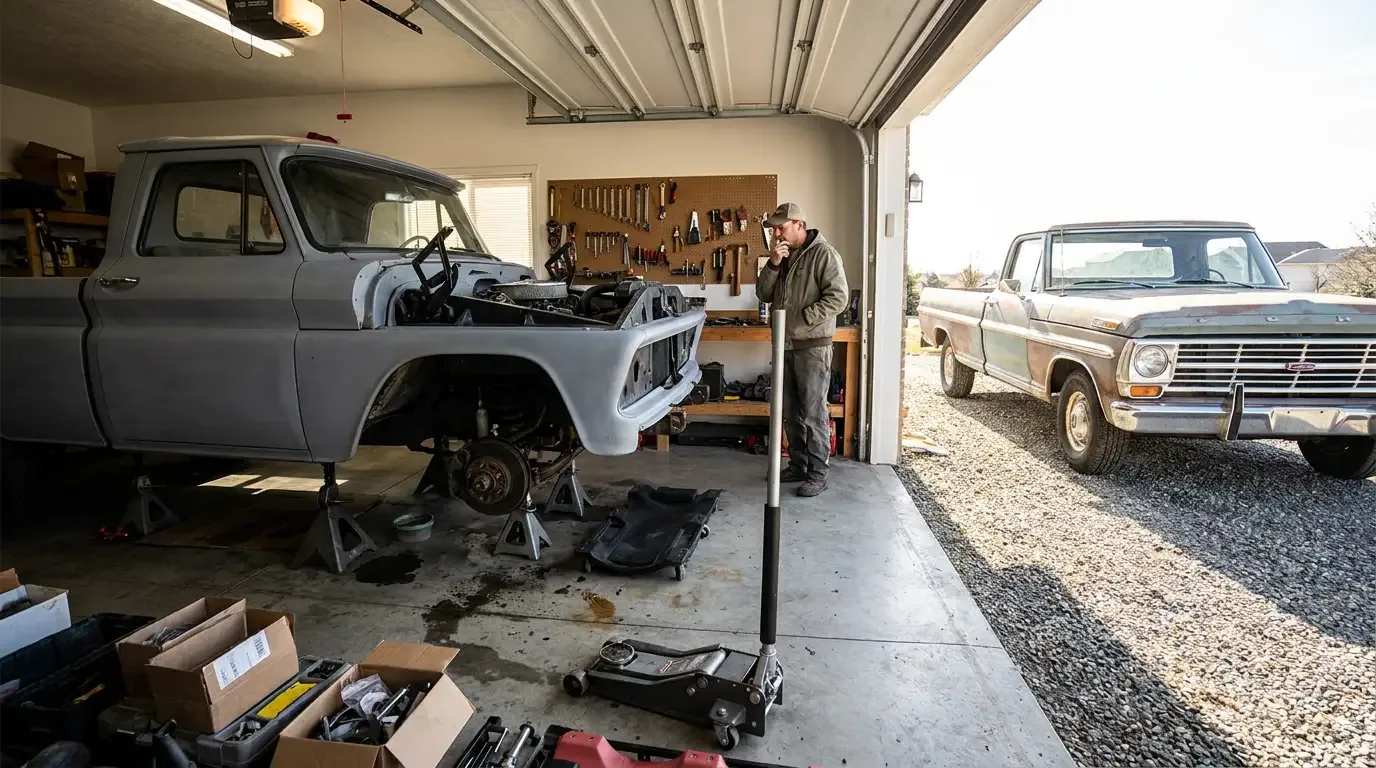
And be honest about your own shop, skills, and time. A truck that would be a fine project for someone with a lift, a welder, and winter evenings free can be a driveway anchor for someone without them. There is no shame in wanting a truck you can drive next month instead of one you might drive in three years. If that is you, skip the barn and shop the trucks that already run. Our listings of classic trucks for sale by owner are a better place to start than any tarp in a field.
The barn find that is worth it is the sound one, priced like the project it is, that you take on with open eyes. Those exist. Just make sure the truck you are buying is that one, and not the story somebody told you about it.
Sources and notes
- Factory service manuals for brake, fuel, and electrical system procedures and specifications.
- Restoration shop labor guides and reproduction-parts catalogs for cost ranges (regional, approximate).
- Period owner's manuals for original storage and layout reference.
- General collector-truck market observations for finished-vehicle value comparison. Specific prices vary by region and were not fixed to any single sale.