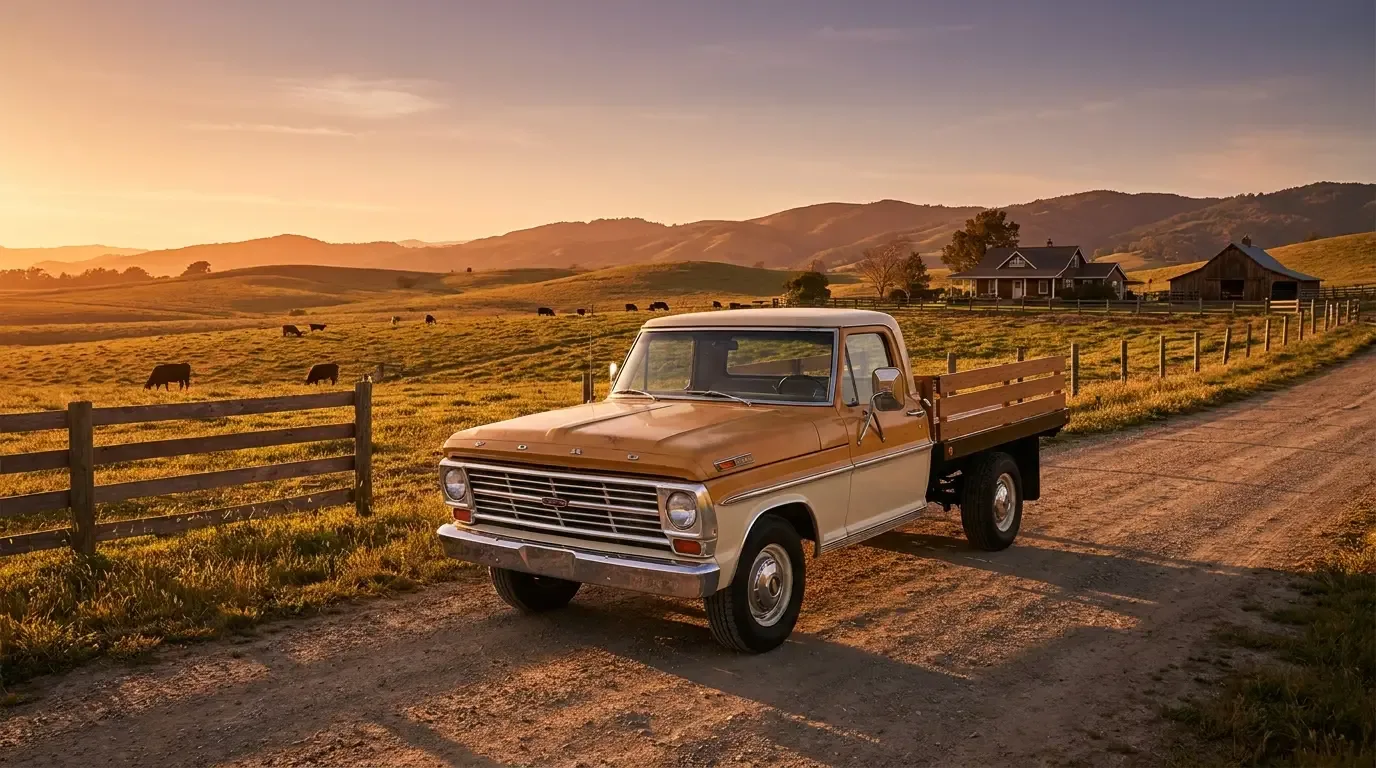
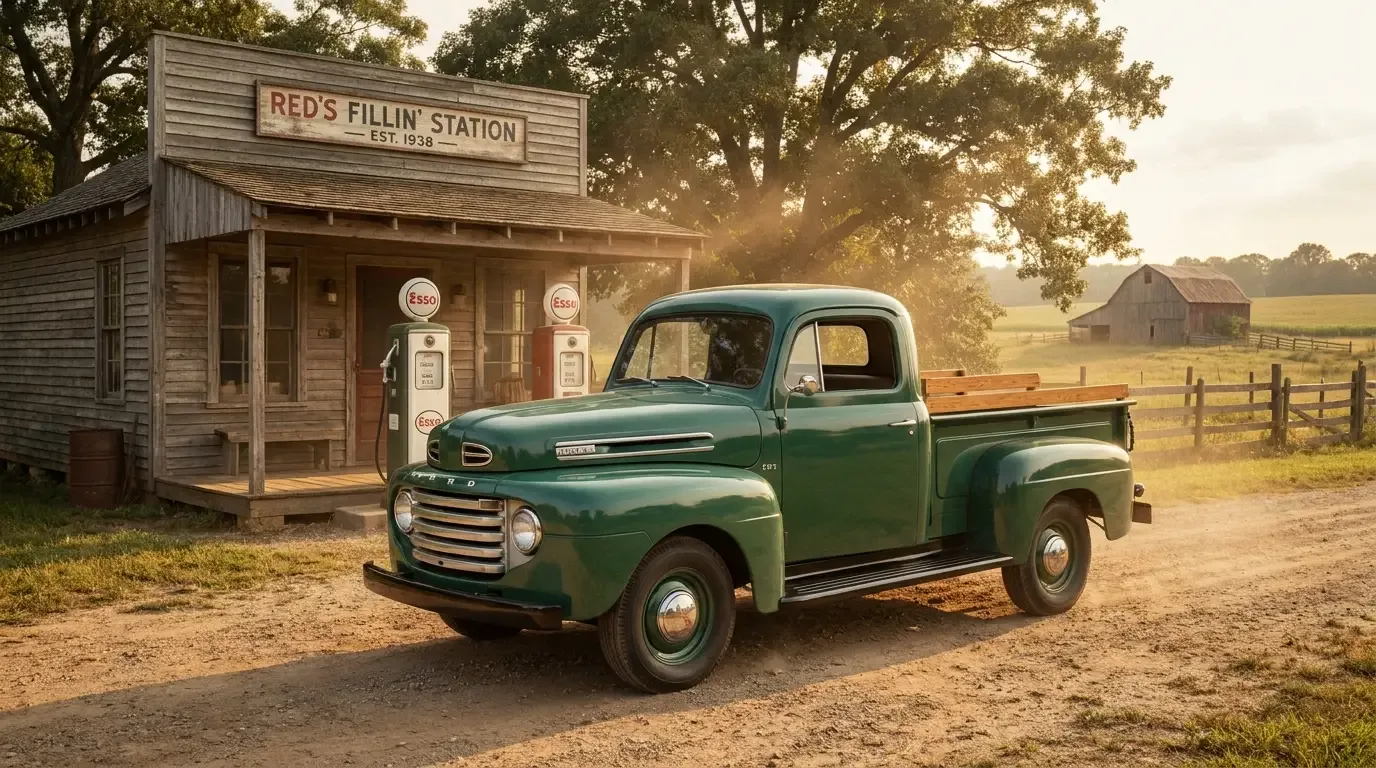
The American pickup started as an afterthought. A car with the back half cut off, a wooden bed bolted where the trunk used to be, sold to farmers who needed to haul feed and fence posts. Nobody in 1920 thought of it as a lifestyle. It was a tool, and it was priced like one. A hundred years later the pickup is the best-selling vehicle in the country and a fixture at collector auctions. The history of American trucks is the story of how a working implement slowly turned into something people wanted rather than merely needed. If you want the fuller narrative, read the classic American truck story, but here is the whole arc in one place.
Origins: the truck as an afterthought
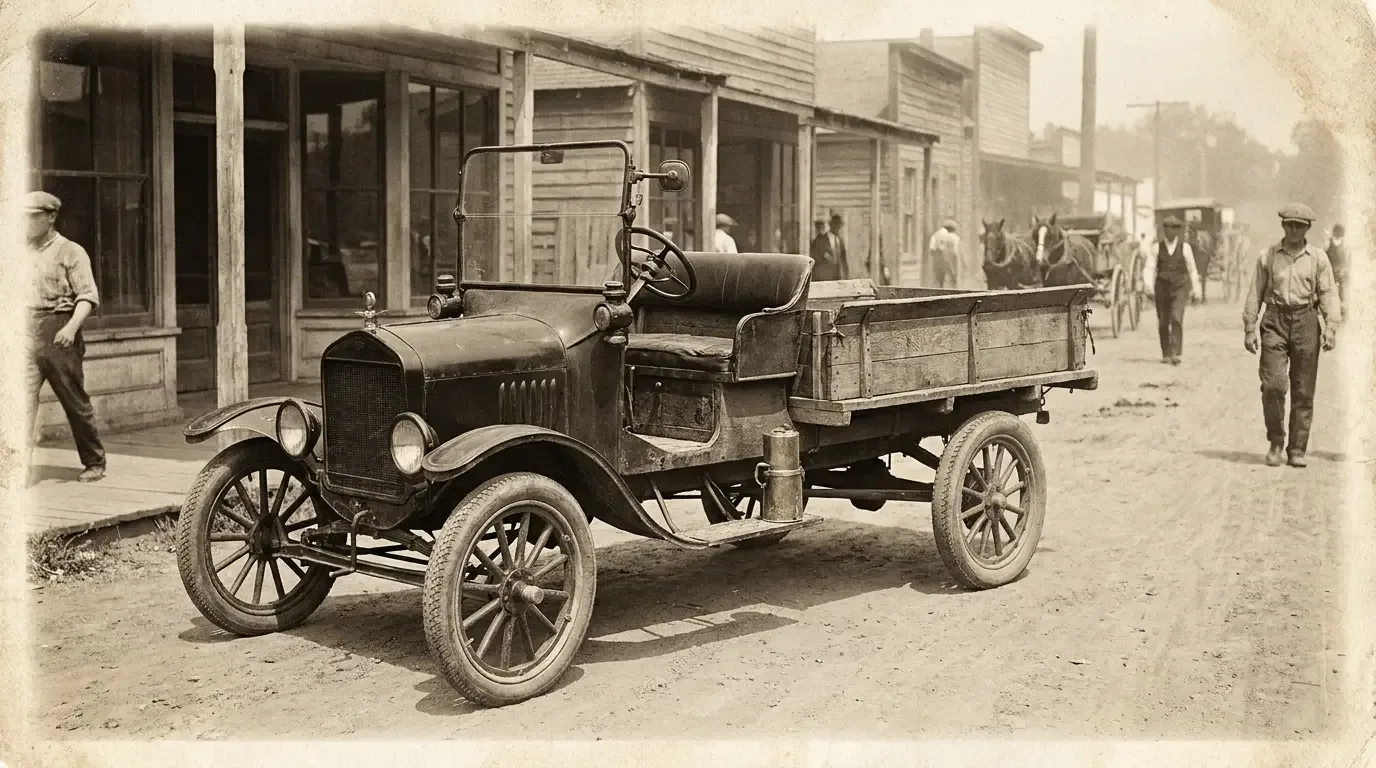
Before the factories got involved, if you wanted a truck you built one. You bought a car, usually a Ford Model T, and either you or a local body shop hacked off the rear and mounted a cargo box. Aftermarket kits sold for this exact purpose. It worked, but it was crude, and the load ratings were whatever the passenger-car frame could stand before it bent.
Ford changed that in 1925 with the Model T Runabout with Pickup Body, generally credited as the first factory-built pickup you could order complete and drive home. It was a modest thing, a roadster cab with a steel bed, priced at around $281. The word "pickup" itself comes from this era, describing a light truck you drove up to a load, picked it up, and drove off. For the deeper story of that first factory model and why it mattered, see the first factory-built American pickup.
Through the late 1920s and 1930s the segment filled in. Chevrolet, Dodge, and International all fielded light trucks. They were bought by farmers, tradesmen, and small businesses. Cabs were cramped, brakes were mechanical, and nobody expected comfort. A truck that started in the cold and carried its rated load was a good truck. That was the whole standard.
The war years: trucks go to work for the country
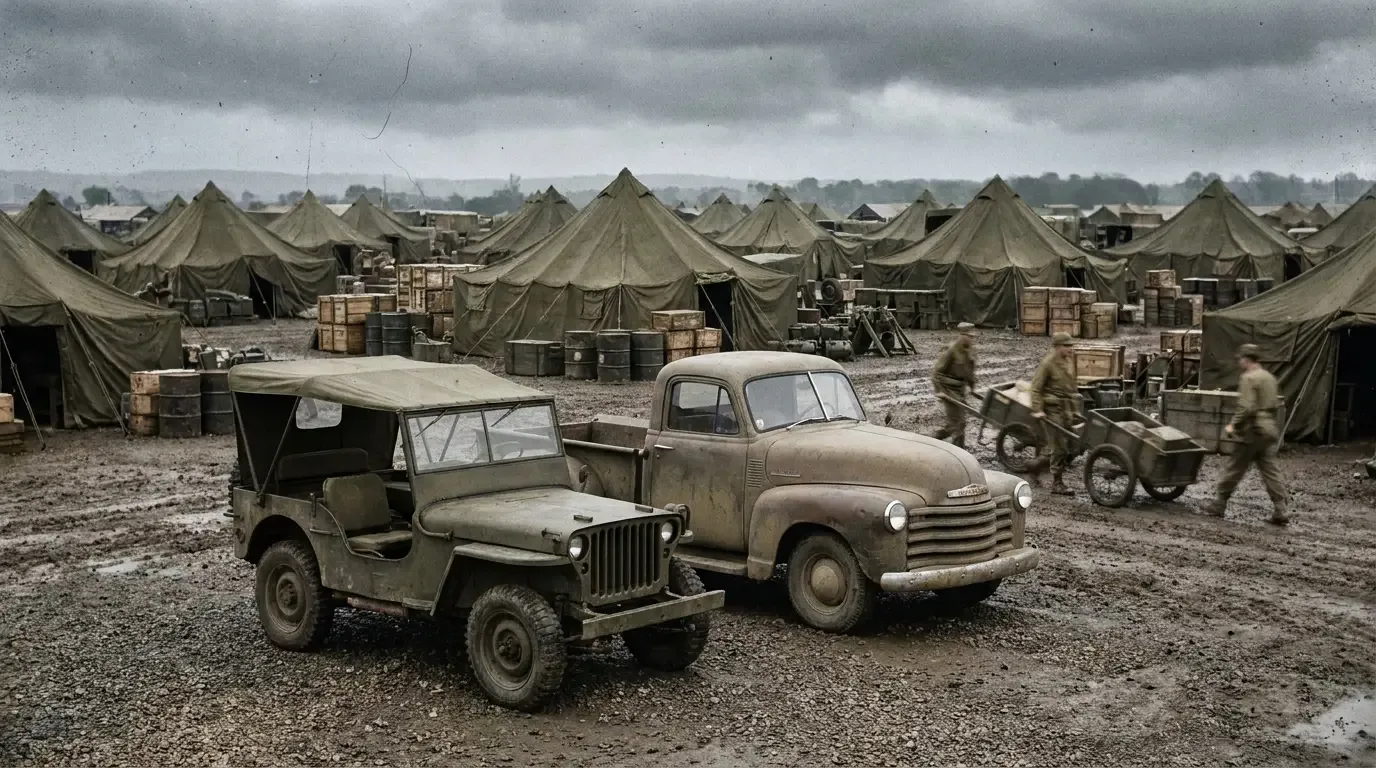
World War II stopped civilian truck production cold. From early 1942 the plants were converted to military output, and the same companies that had been building farm pickups turned out cargo trucks, weapons carriers, and the light 4x4s that moved men and supplies. Dodge built the WC series. Chevrolet and GMC built the workhorse deuce-and-a-half in enormous numbers.
Two things came out of the war that shaped every truck after it. The first was four-wheel drive, which had existed before but became familiar to a whole generation of men who drove military 4x4s through mud and snow and understood what it did for you. The second was scale. The industry learned to build trucks by the hundreds of thousands, with better metallurgy and better drivetrains, and that knowledge came home when the plants reopened for civilian buyers in 1945 and 1946.
Those early postwar trucks were essentially warmed-over late-1930s designs, because tooling was expensive and demand was so high that anything with an engine sold. But the companies were already drawing the next generation, and it was going to look nothing like what came before.
The 1950s: chrome, curves, and a cab worth sitting in
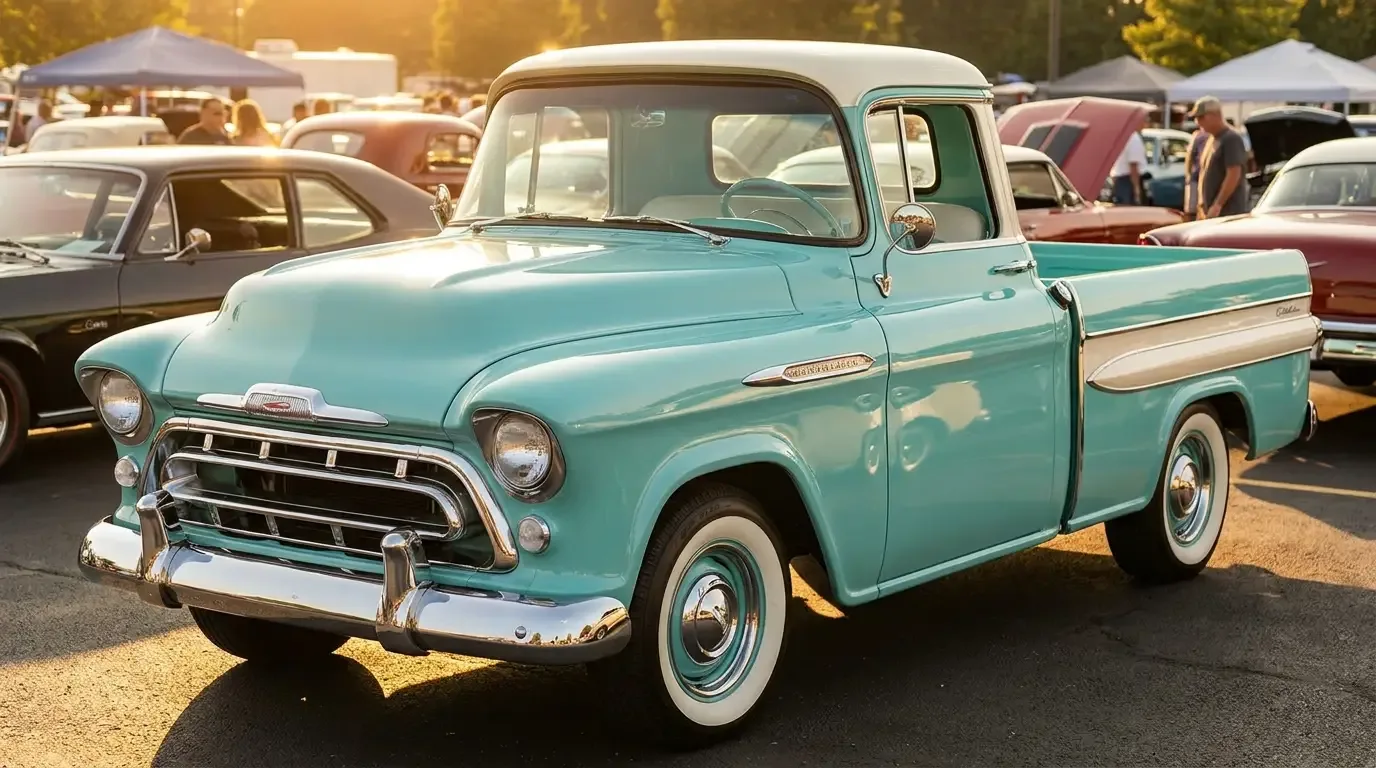
This is the decade the pickup stopped apologizing for itself. In 1948 Ford launched the F-1 as part of the new F-Series, the first truck the company designed from a clean sheet as a truck rather than a car derivative. Chevrolet answered with the Advance Design series. For the first time the cab was roomy, the seat was wide enough for three, and the styling had actual intent behind it.
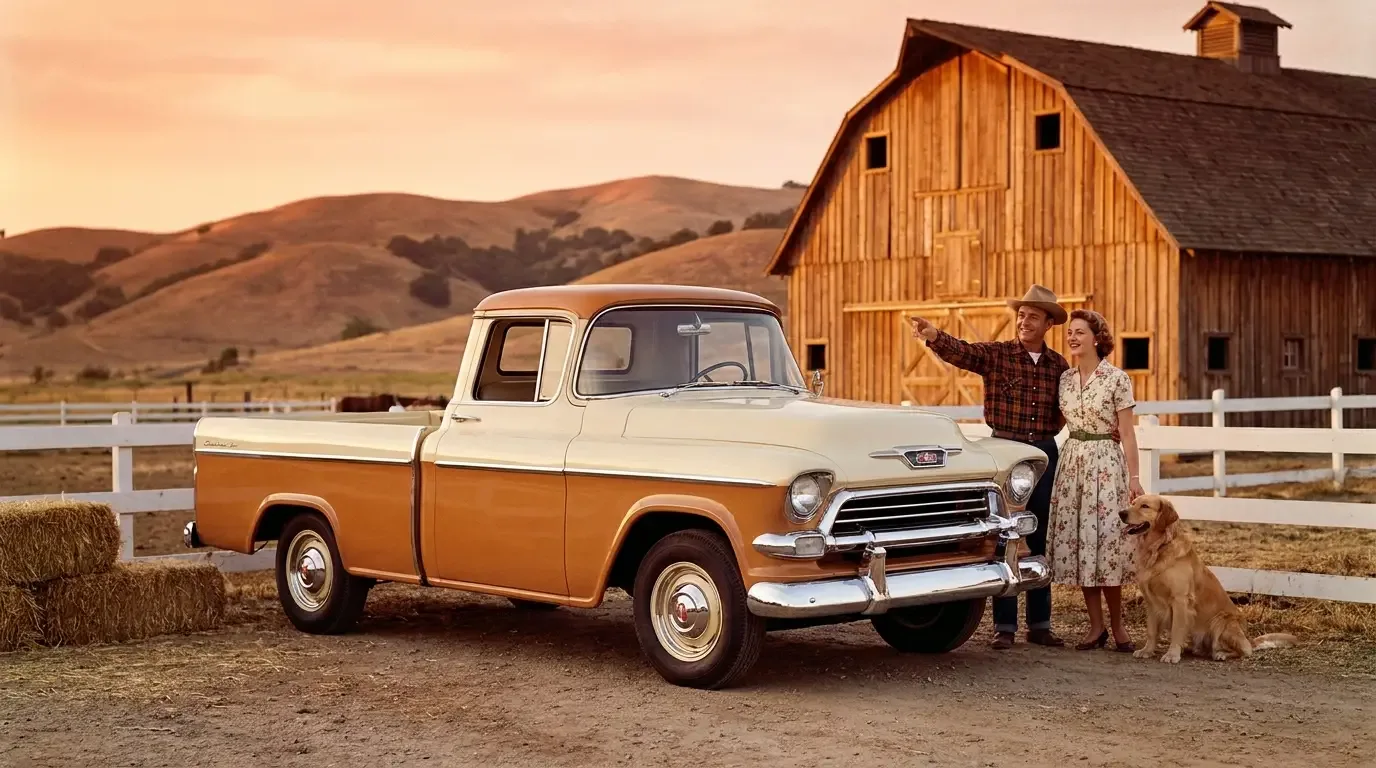
By the mid-1950s the arms race was on. Chevrolet's 1955 Task Force trucks brought a wraparound windshield, optional V8 power, and available two-tone paint. Ford's 1953 F-100 restyle rounded off the boxy lines. Trucks got chrome grilles, hood ornaments, and colors that had nothing to do with hiding dirt. Somebody in Detroit had figured out that a farmer's wife rode in that cab too, and that a truck could be sold on how it looked as well as what it hauled. The full account of that shift is in how 1950s trucks got chrome and a real cab.
| Milestone | Year | What changed |
|---|---|---|
| Ford F-1 / F-Series | 1948 | First clean-sheet truck design, roomier cab |
| Chevrolet Advance Design | 1947 | Wider cab, improved visibility and comfort |
| Ford F-100 restyle | 1953 | Softer lines, one-piece windshield |
| Chevrolet Task Force | 1955 | Wraparound glass, optional small-block V8 |
"People think the fifties trucks got pretty and lost the plot. They didn't. That Task Force still had a ladder frame you could stand on and a bed you could abuse. It just also had a seat that didn't cripple you after forty miles. Both things at once. That's the trick."
— Robert Halloran
The 1960s golden age: the shape everyone remembers
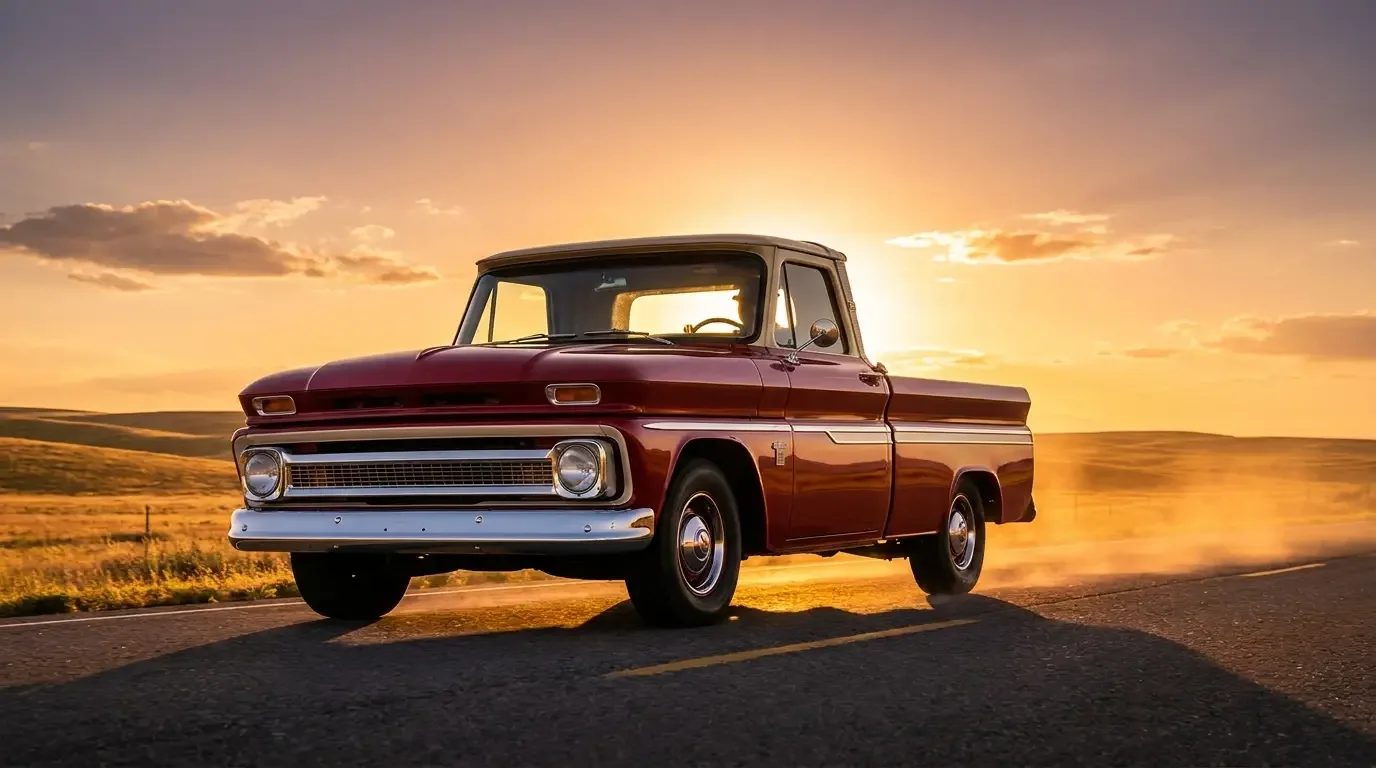
If you close your eyes and picture a classic American pickup, odds are you are seeing something from roughly 1960 to 1972. This is the stretch that produces the trucks people restore and pay real money for now. Ford's 1961 and especially the 1967 to 1972 F-Series, the Chevrolet and GMC C/K trucks from 1960 and the cleaner 1967 to 1972 generation, and the Dodge D-Series all land in this window.
The engineering matured underneath the styling. Independent front suspension appeared on some lines and made the ride civil. The Fleetside and Styleside beds gave trucks the smooth-sided profile that reads as modern even today. Engines got bigger and torquier, with small-block and big-block V8 options that meant a pickup could tow and still keep up with traffic. The truck was still a work vehicle, but it was a genuinely good vehicle, not a compromise you tolerated.
What makes this era the collector sweet spot is that balance. The trucks are old enough to have character, simple enough to fix in a home garage, and handsome enough that people want them parked out front. Parts support is deep because so many were built. If you are shopping this period, you can browse classic trucks for sale and see how much the clean 1967 to 1972 examples command against the earlier ones.
The 1970s and 80s: comfort, luxury, and the lifestyle turn
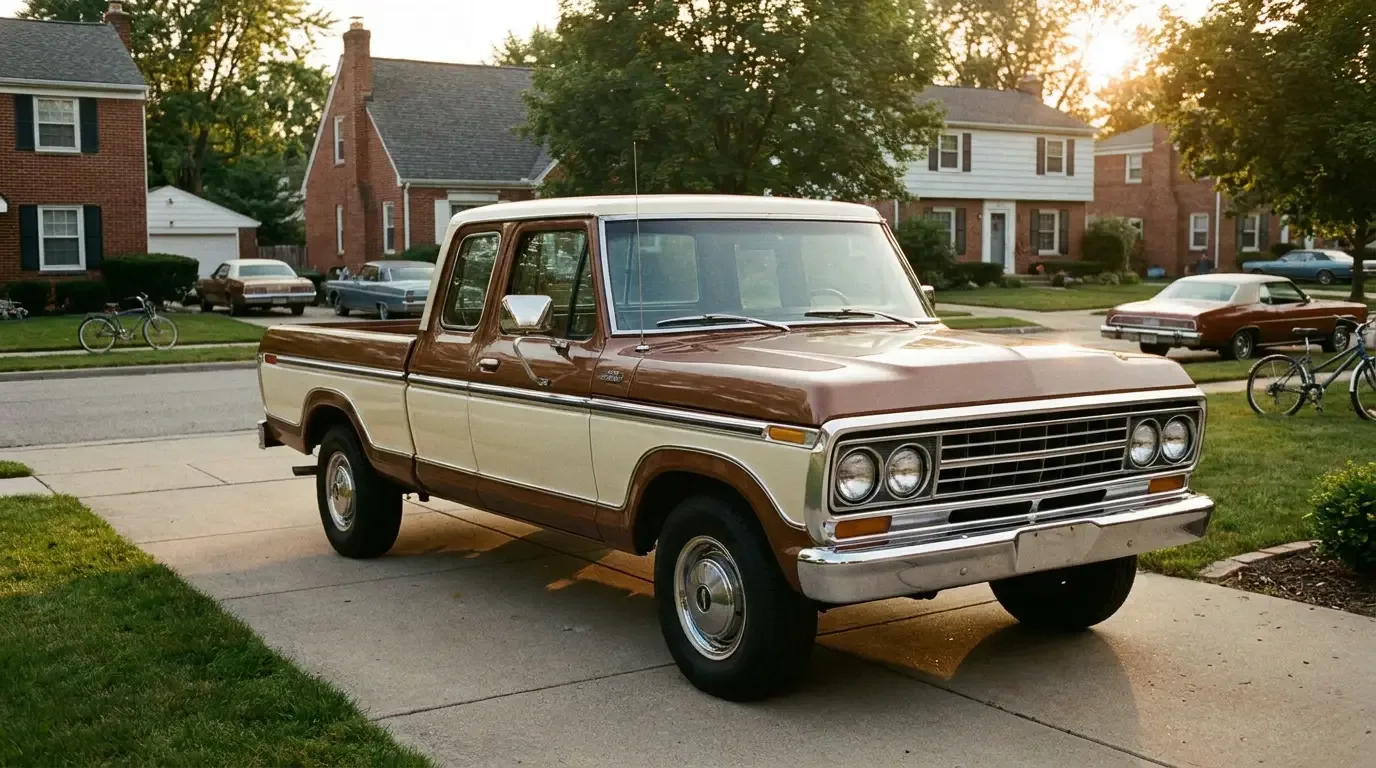
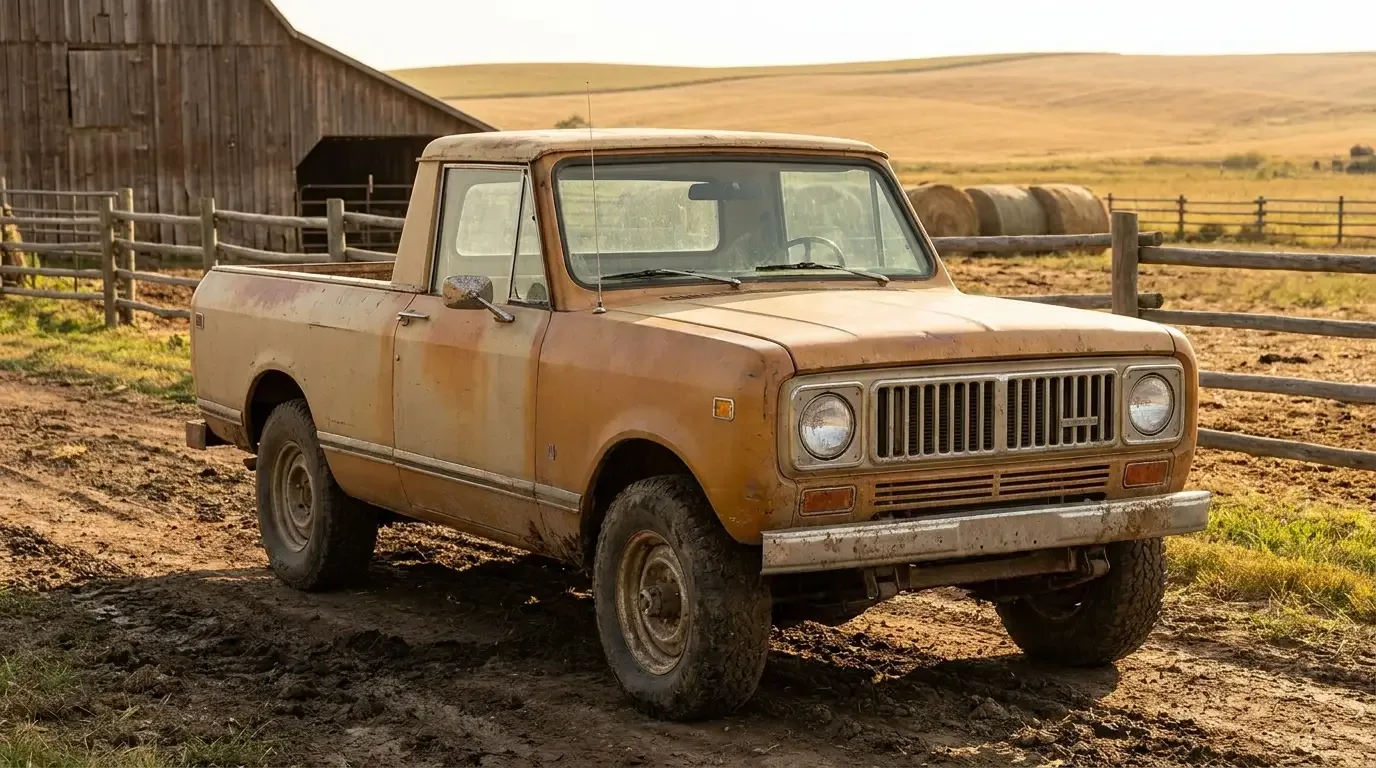
The 1970s is when the pickup went soft in the good sense. Buyers started ordering carpet, air conditioning, cloth seats, and stereos. Ford's Ranger and Lariat trim packages and Chevrolet's Cheyenne and Silverado trims sold comfort as an option you paid extra for and plenty of people did. The truck was becoming a personal vehicle, something you drove to work and to church and on vacation, not just to the job site.
The decade had headwinds. The 1973 and 1979 oil shocks made big V8s expensive to feed, and emissions rules choked engine output across the industry. Horsepower figures from the mid to late 1970s look grim next to the muscle-era numbers, partly because of genuine detuning and partly because the industry switched from optimistic gross power ratings to more honest net ratings in 1971 and 1972. Build quality wobbled. But the trend line was clear: trucks were moving upmarket.
By the 1980s the lifestyle truck was established. The compact pickup arrived to compete with imports, the Ford Ranger and Chevy S-10 among them, giving buyers a smaller, cheaper, more economical option. At the other end, loaded full-size trucks with plush interiors previewed the near-luxury pickups that would dominate later decades. The tool had become a statement.
The collectible era: how old trucks became valuable
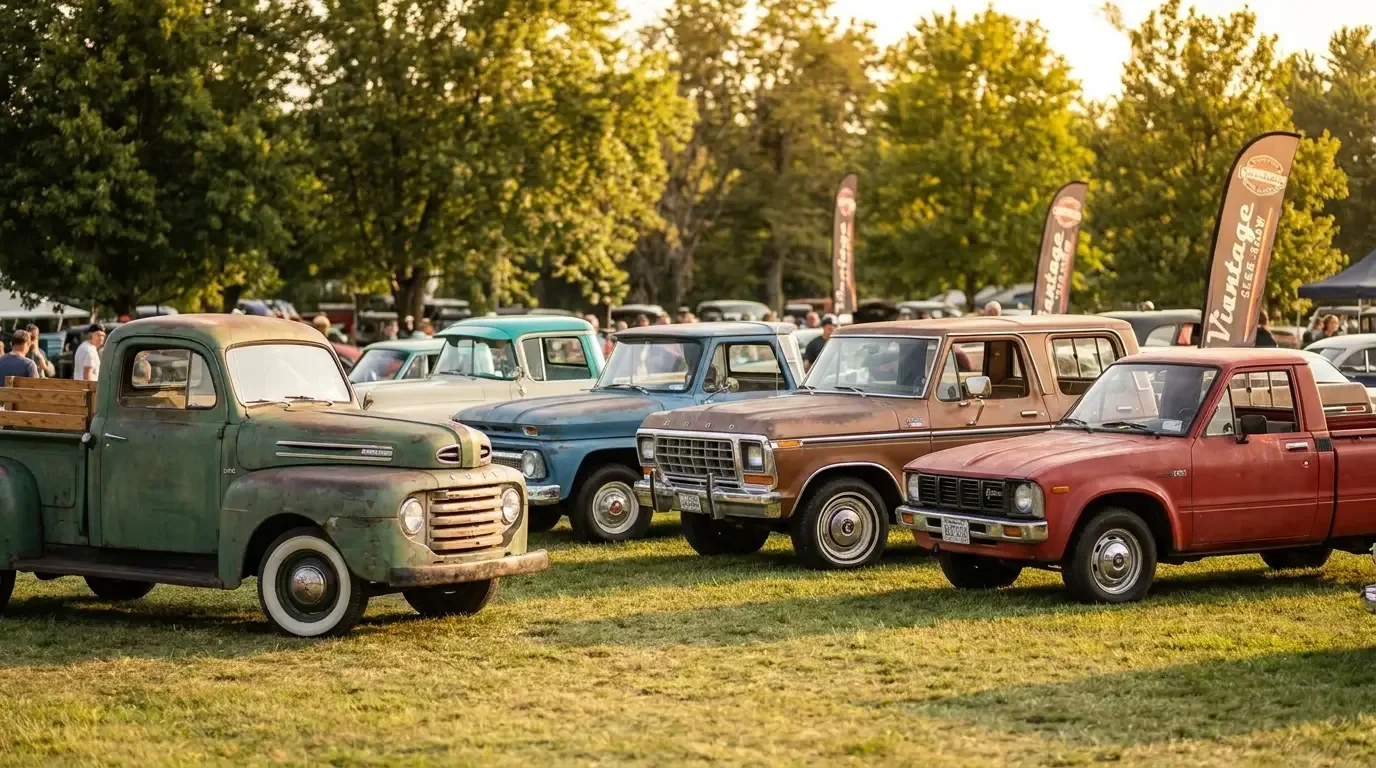
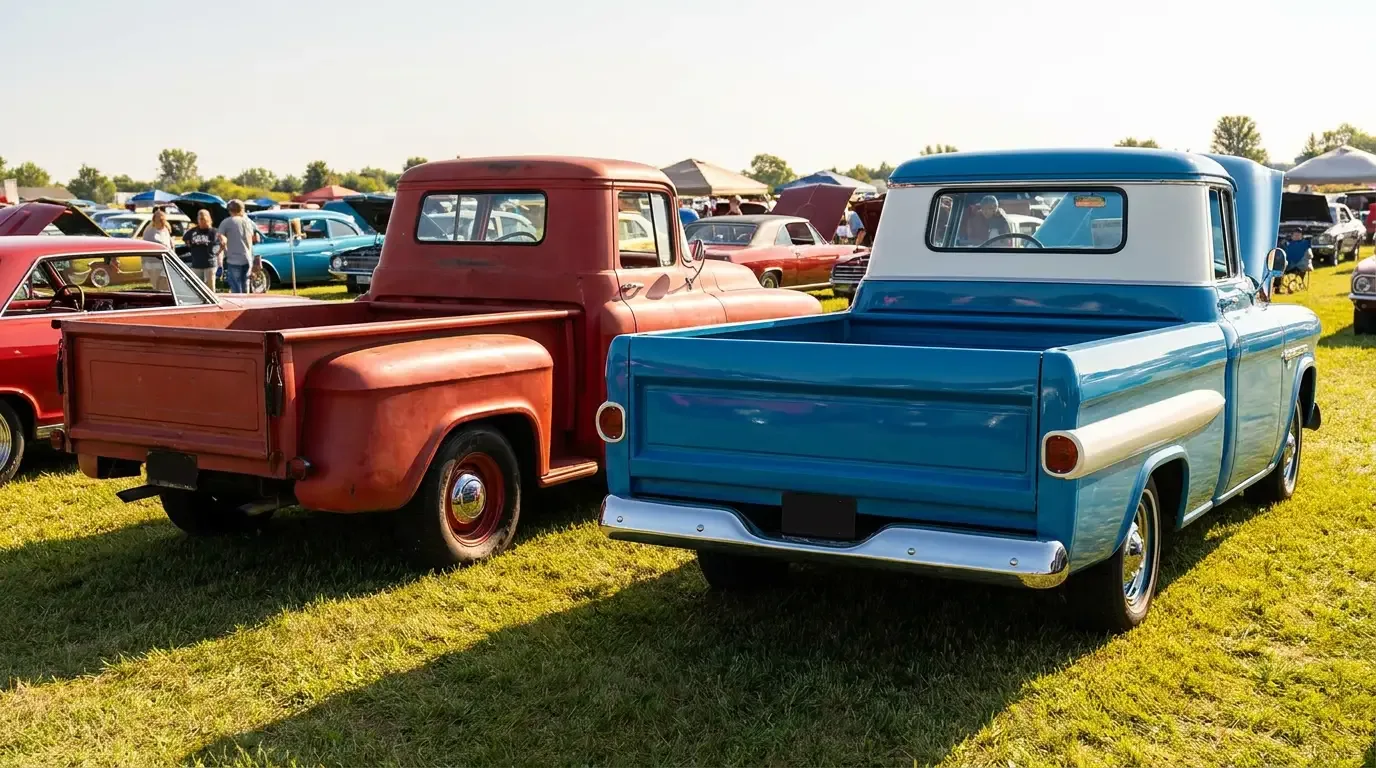
For a long time nobody collected pickups. They got used until they died, then they got scrapped or left in a field. Muscle cars and sports cars had a collector market decades before trucks did. That changed slowly through the 1990s and then quickly in the 2000s and 2010s, as the people who grew up with these trucks reached the age and income where they could buy back their youth.
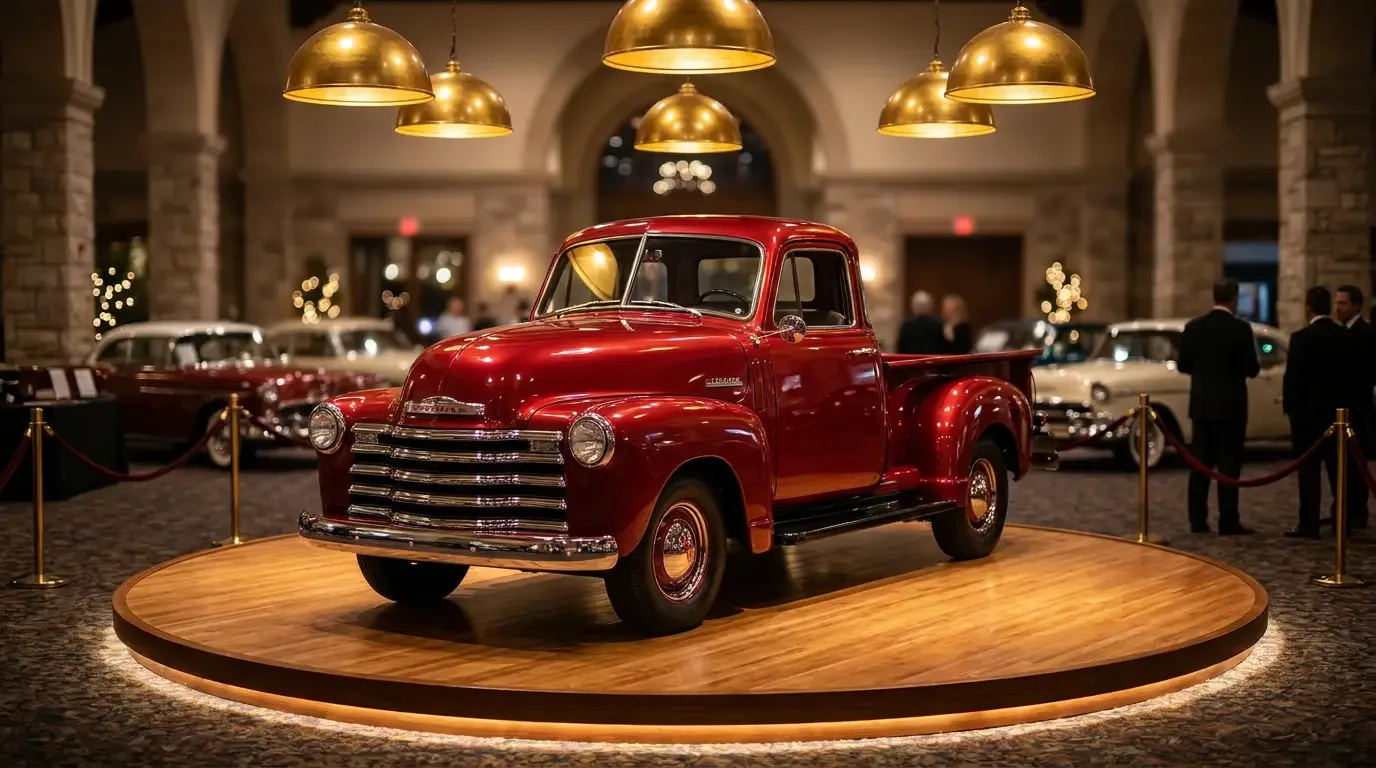
The values follow a clear logic. The 1950s stylish trucks and the 1967 to 1972 golden-age pickups lead the market because they combine looks, usability, and nostalgia. Original, unmolested survivors bring a premium over restored trucks, because you can only make something original once. Restomods, old trucks with modern drivetrains and brakes, have their own strong following among people who want the look without the vintage driving experience.
Here is the honest part, and it is worth saying plainly. Restoring a truck almost never pencils out on paper. You will spend more on a proper restoration than the finished truck is worth in most cases, and the exceptions are the rare, desirable trims and the truly complete survivors. People do it anyway, because the truck means something to them. That is a fine reason. Just go in with your eyes open about the money.
Sources and notes
- Factory service manuals and sales literature for Ford, Chevrolet, GMC, and Dodge light trucks.
- Period road tests and buyer guides from the postwar decades.
- Marque and model histories covering the F-Series, C/K, and D-Series lines.
- Auction result summaries and collector price guides for classic pickups.
- General automotive reference works on the development of the American light truck.