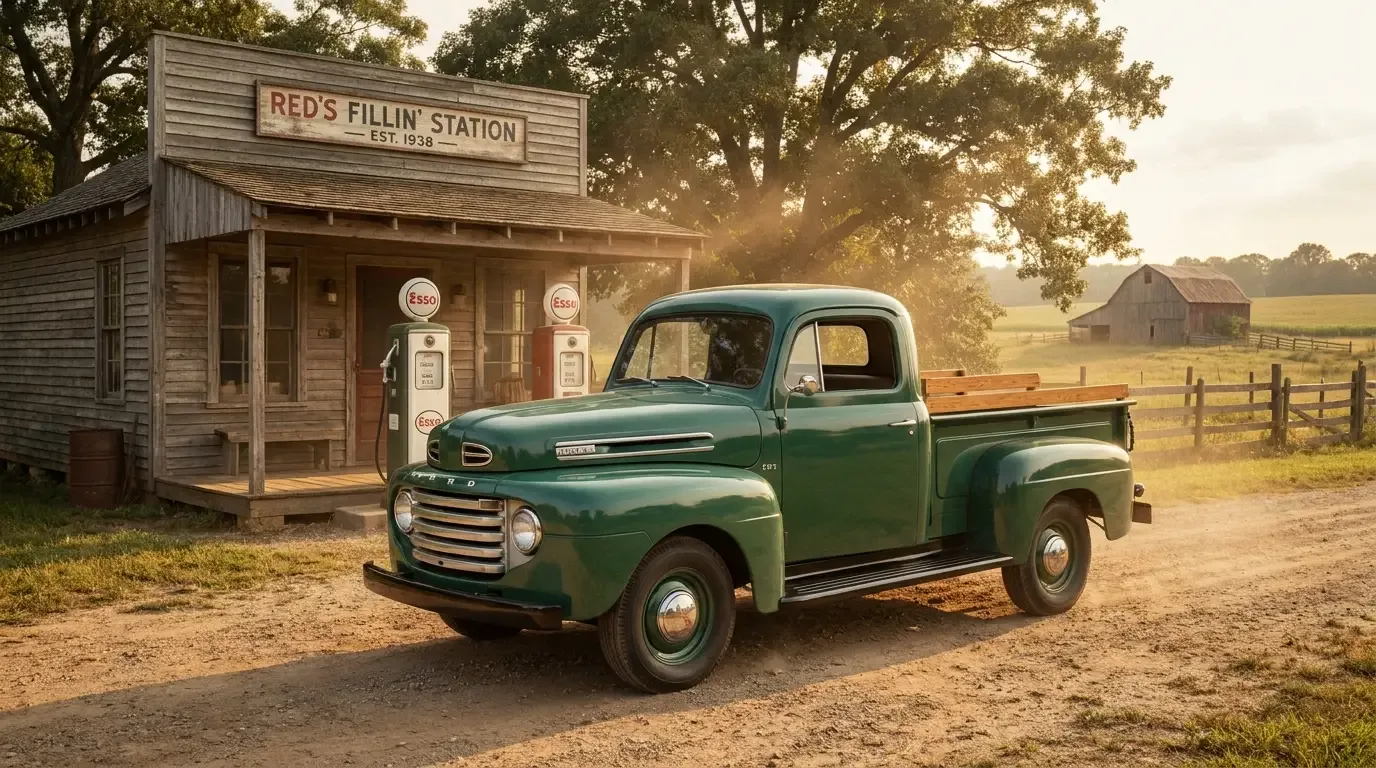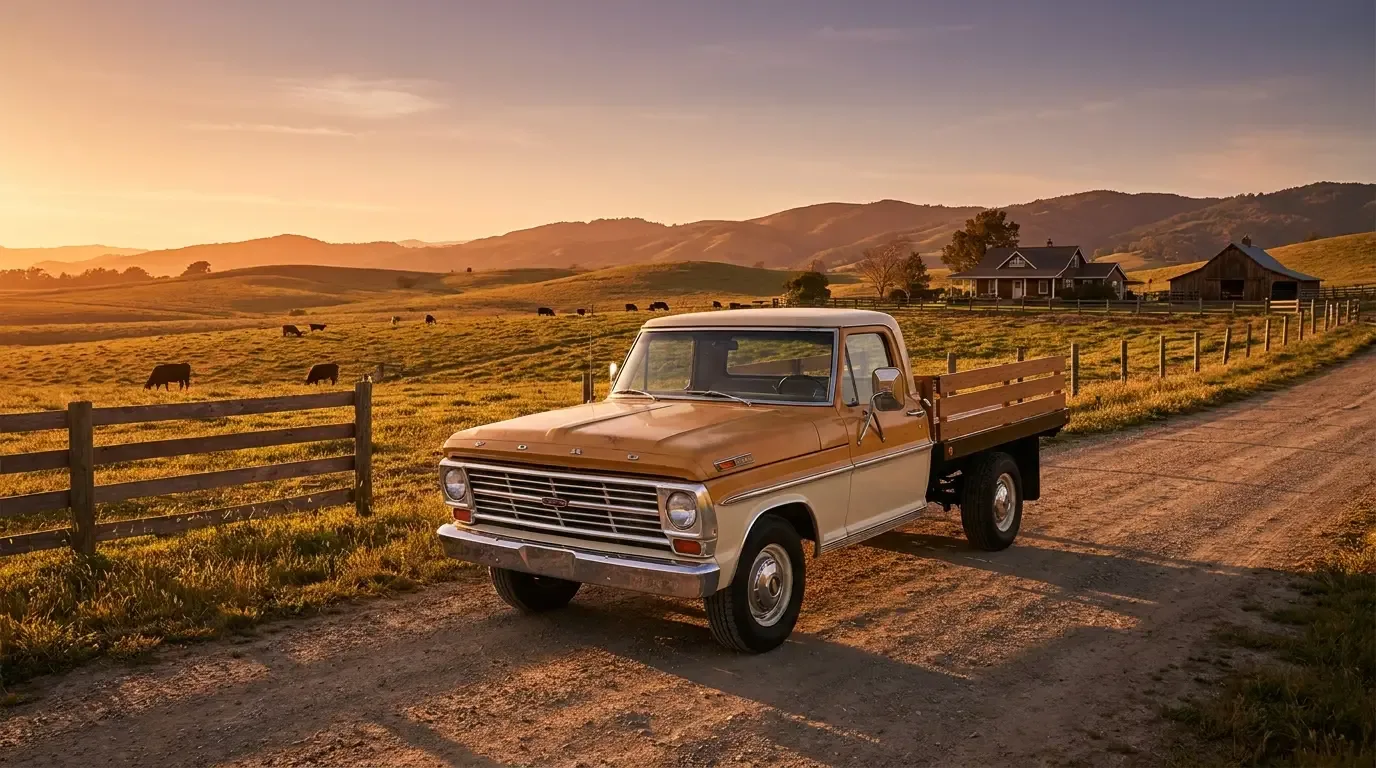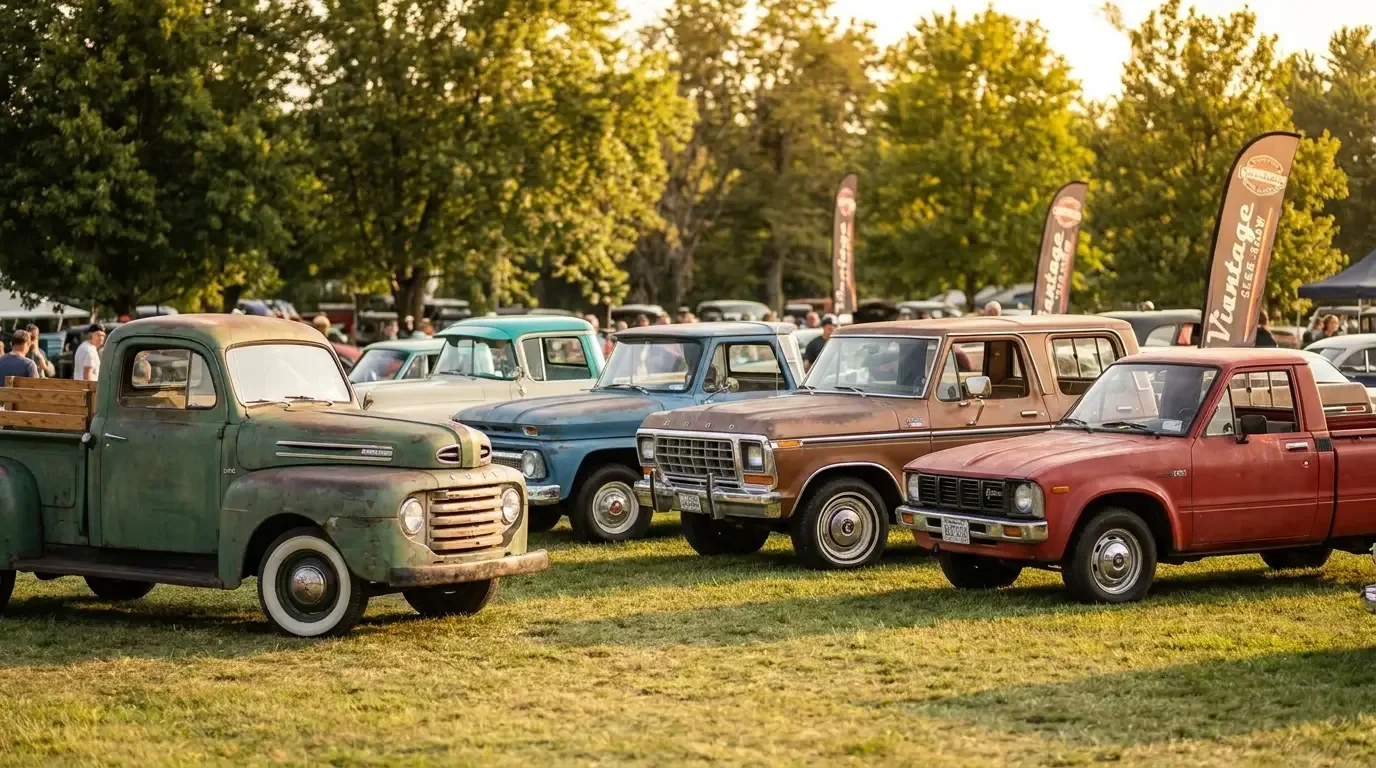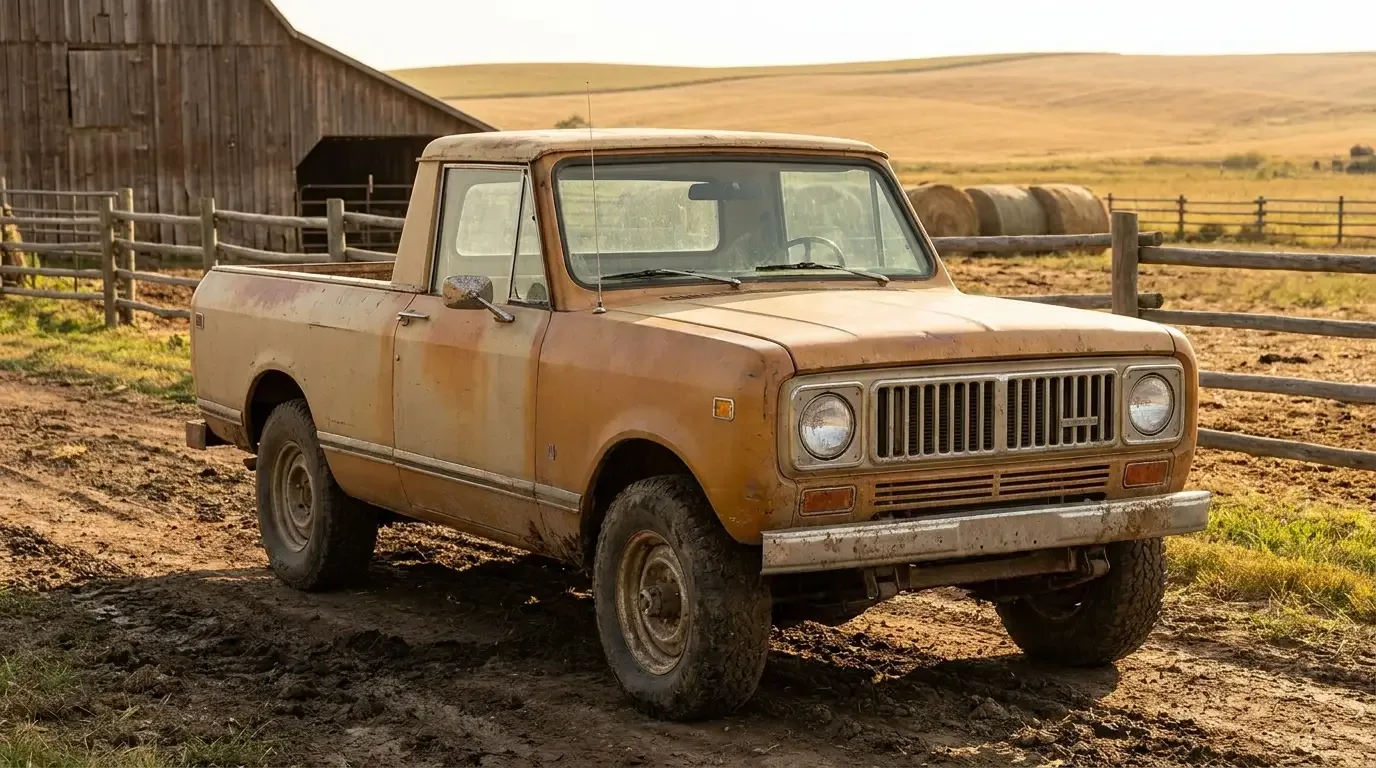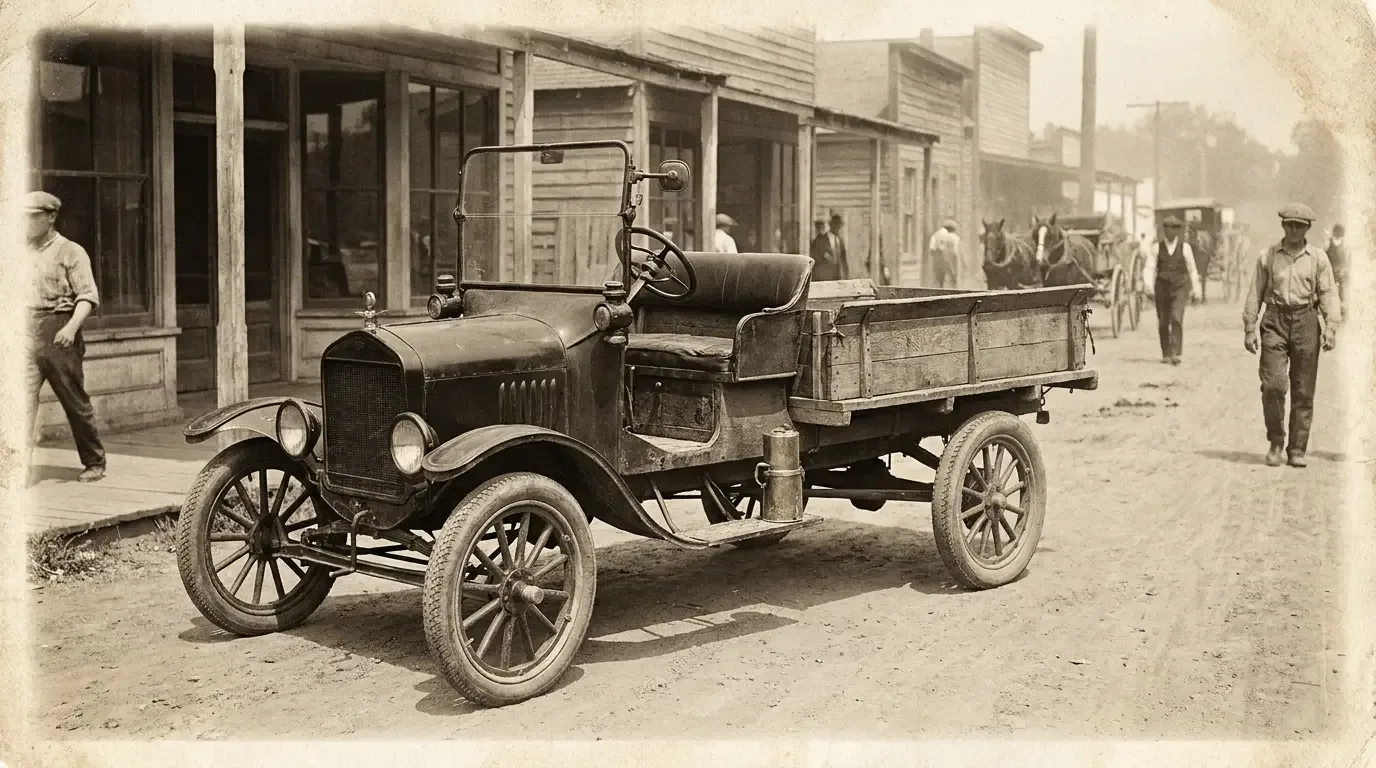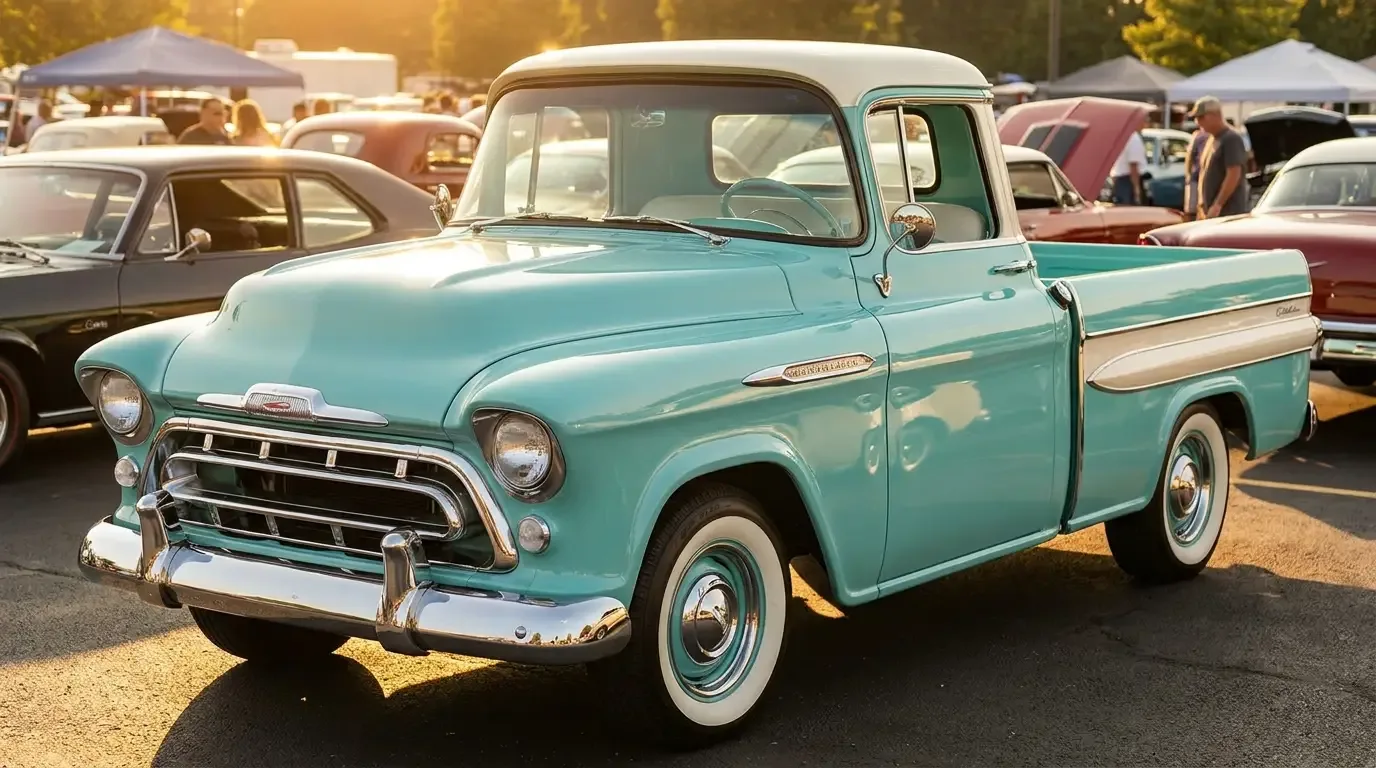

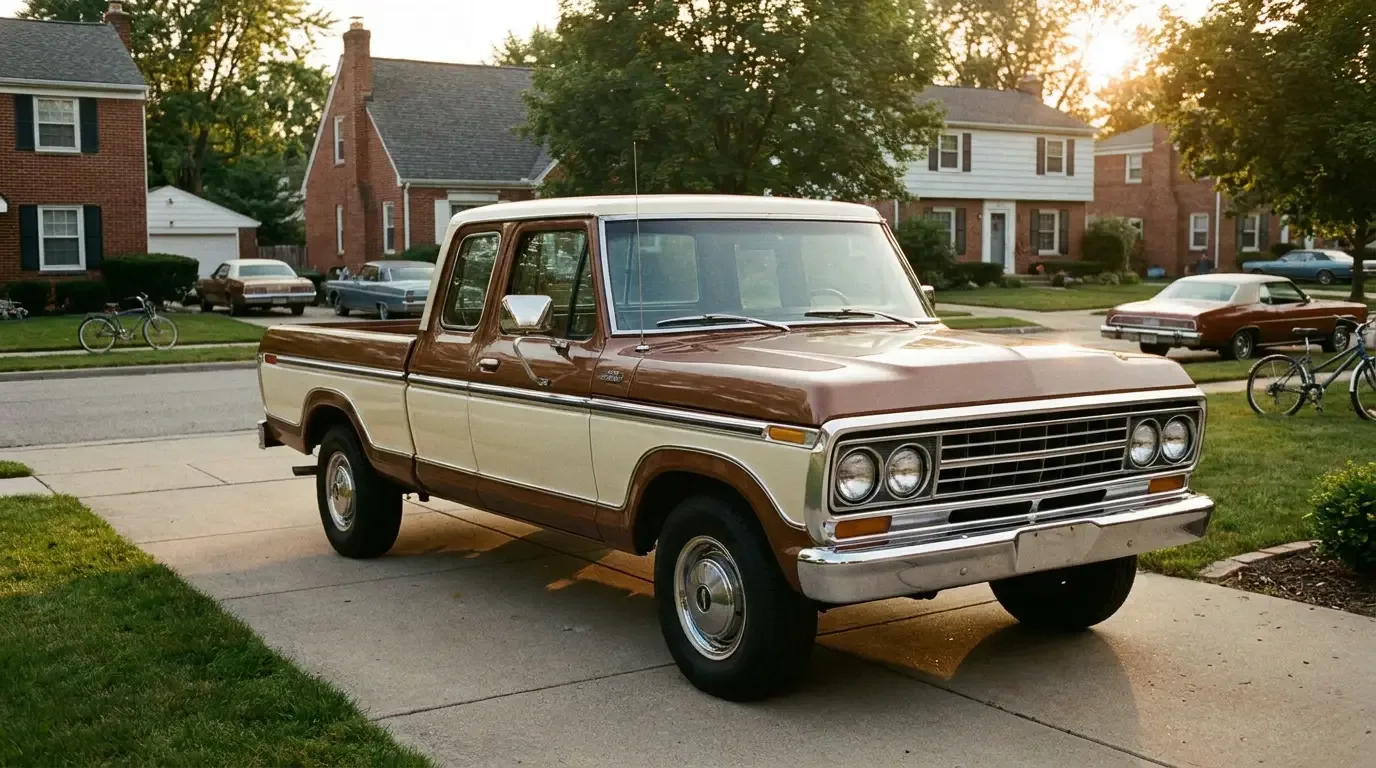
Walk down a line of American pickups parked by decade and the 1970s trucks give themselves away at a glance. They sit taller. The lines run straight and flat where the 1960s trucks still curved. The cabs are wider, the glass is bigger, and more than a few of them have carpet on the floor and a radio in the dash. Something changed in that decade, and it changed how these trucks look to this day. If you want the wider story of where the pickup came from, we cover the complete history of the American pickup separately. This piece is about the ten years that turned a work tool into something people drove because they wanted to.
1970s truck styling was not one single idea. It was several pressures hitting at once, and the trucks that came out the far end looked and drove differently because of it.
Bigger and squarer, on purpose
The clearest change is the shape. Trucks of the late 1960s still carried rounded shoulders and softer fender lines. By the middle of the 1970s the language had gone square. Flat body sides, straight beltlines, big flat glass, and a taller greenhouse that gave you more room over your head and more window to see out of.
Part of that was fashion, and part of it was practical. A flatter, squarer cab is easier to stamp, easier to fit a wider bench seat into, and gives a bigger door opening. It also gives the eye a longer, heavier look, and buyers in that decade wanted their truck to look substantial. The half-ton pickups of the 1970s were physically larger than the ones that came before, with longer wheelbases offered and more cab and bed combinations on the order sheet.
Comfort and trim went from option to expectation
Here is where the decade really turned. A 1955 pickup was a rubber-mat, painted-metal, one-speed-wiper machine, and nobody apologized for it. It was a tool. By the late 1970s you could order a pickup with cloth or vinyl bucket seats, carpet, air conditioning, an AM/FM radio, tinted glass, power steering, power brakes, and chrome or woodgrain trim inside and out.
Manufacturers built whole trim ladders to sell this. A base work truck sat at the bottom, plain and cheap, and above it climbed a series of named packages that added brightwork, better seats, sound insulation, and dressier door panels. The names became part of truck culture, and a loaded top-trim truck of the era cost real money compared to the stripped work version.
- Base work trucks: rubber floor, bench seat, minimal chrome, meant to earn a living.
- Mid trims: added carpet, better seat material, exterior brightwork, more insulation.
- Top trims: woodgrain, chrome, comfort options, and badging that told the neighbors.
"People forget that a loaded '70s pickup was a luxury purchase for a working family. You didn't stumble into air conditioning and carpet on a truck. You paid for it, and you were proud of it. That's why the nice trim trucks are worth chasing today. Somebody cared."
— Robert Halloran
Regulations reshaped the metal
The 1970s were also when the federal government started rewriting what a vehicle had to do, and trucks did not escape it. Two forces mattered most: emissions and safety.
On emissions, tightening rules pushed manufacturers toward lower compression, added emissions hardware, and eventually catalytic converters as the decade went on. The result on a 1970s truck engine is usually less power on paper than an equivalent engine from the late 1960s, plus a tangle of vacuum lines and emissions plumbing under the hood that a restorer today has to decide whether to keep, correct, or quietly remove. The oil shocks of the decade added fuel economy pressure on top of that, which is part of why smaller and six-cylinder options stayed relevant.
On safety, side marker lights, revised bumpers, steering column and interior changes, and other requirements arrived across the decade and left visible marks on the trucks. Bumpers in particular got heavier and more prominent to meet impact standards, which fed right back into that big, squared-off front-end look.
| Pressure | What changed on the truck | What a buyer sees today |
|---|---|---|
| Emissions rules | Lower compression, added emissions gear, catalytic converters later in the decade | Modest power ratings, extra plumbing under the hood |
| Safety rules | Side markers, heavier bumpers, interior and column changes | Big bumpers, marker lights, safer cabin details |
| Fuel prices | Renewed interest in economy and six-cylinder engines | More engine choices, some surprisingly frugal trucks |
| Buyer demand | Wider trim ladders, comfort options | Huge spread between plain and loaded examples |
Crew cabs and the family truck
The other big shape story of the decade is the cab itself getting longer. Crew cabs, four full doors and a real back seat, had existed before, but they spread and became a more normal thing to order during the 1970s. That matters because it signals what trucks were becoming. A four-door pickup is not just a job-site hauler. It carries a crew during the week and a family on the weekend.
Extended and club cab ideas, a stretched cab with a small jump seat or storage behind the front bench, also gained ground as buyers asked for a place to put people or gear inside the locked cab instead of the open bed. Every one of these choices pointed the same direction: more interior room, more versatility, less of a single-purpose tool.
The personal-use pickup arrives
Put all of it together and you get the single most important shift of the decade. The pickup stopped being only a work truck and became something a person bought to drive for its own sake. Squarer, roomier bodies gave it presence. Comfort and trim made it livable every day. Crew and extended cabs made it practical for a family. And a growing customizing scene, two-tone paint, striping, wheels, and dress-up packages straight from the factory, told buyers it was fine to want a truck that looked good sitting still.
This is the decade where the modern idea of the pickup as a personal vehicle really takes root, and it is a big reason 1970s trucks are so collectible now. They are old enough to have character and simple enough to fix, but new enough to actually live with. If you want to see what survives and what they trade for, browse the 1970s classic trucks for sale and compare a plain work truck against a loaded trim example. The gap tells the whole story of the decade.
A 1970s pickup is honest about what it is. It shows its bumpers, its marker lights, and its emissions plumbing right out in the open, and it still manages to look good doing it. That combination of workhorse bones and growing comfort is exactly why the decade matters.
Sources and notes
- Factory sales brochures and order guides for period trim ladders and cab and bed configurations.
- Factory service manuals for emissions hardware and engine specification changes across the decade.
- Period road tests and truck magazine coverage for contemporary reactions to size, comfort, and power.
- Federal motor vehicle safety and emissions standards summaries for the regulatory timeline.
- Marque and model histories and enthusiast club references for headlight, grille, and cab identification.
- Auction results and classified listings for current condition-based value spreads.