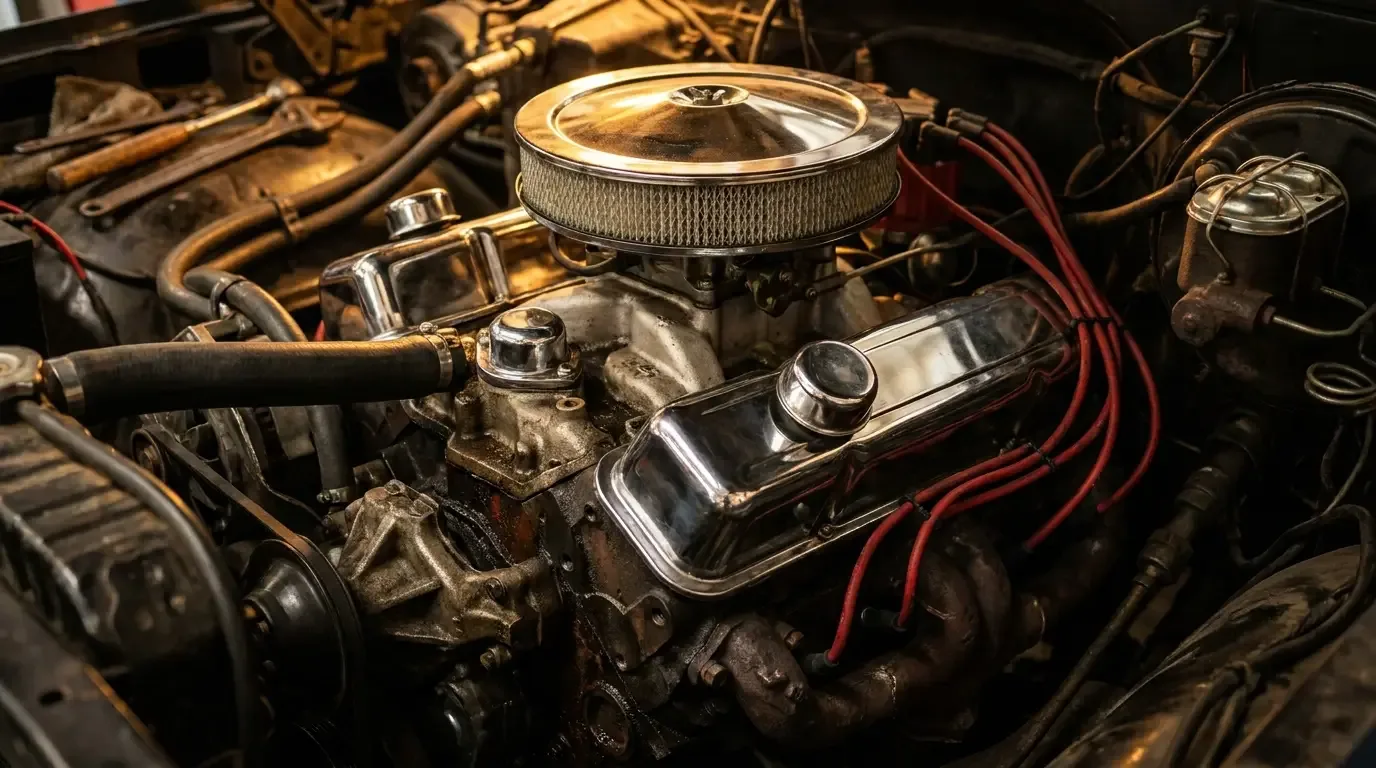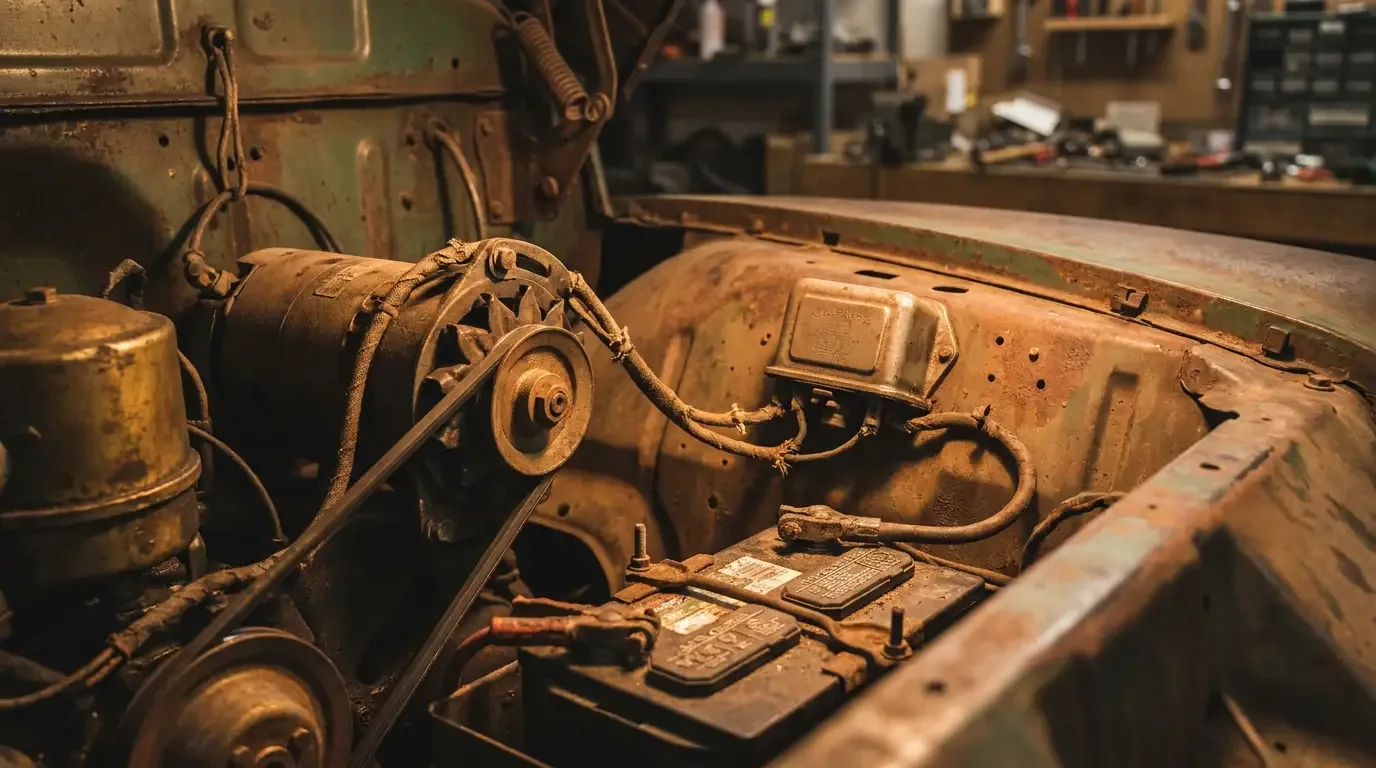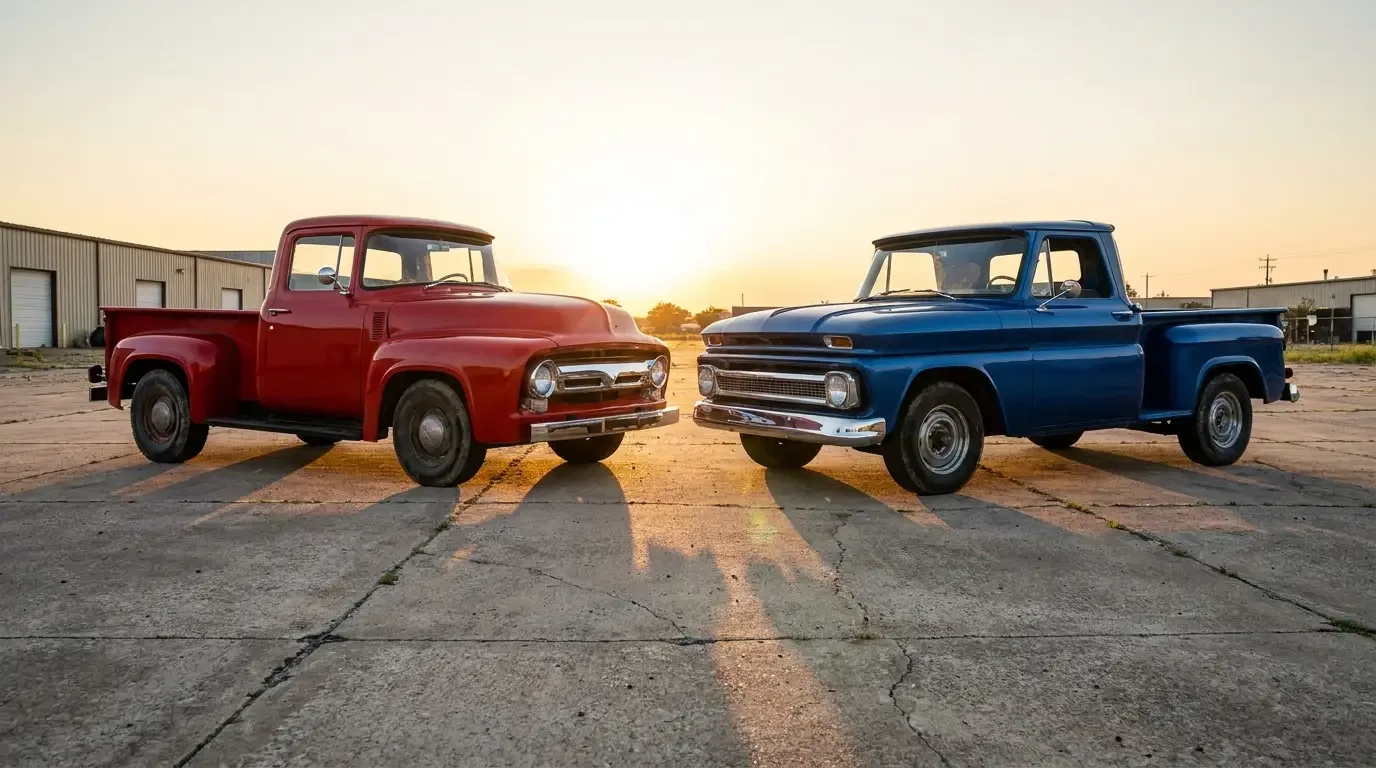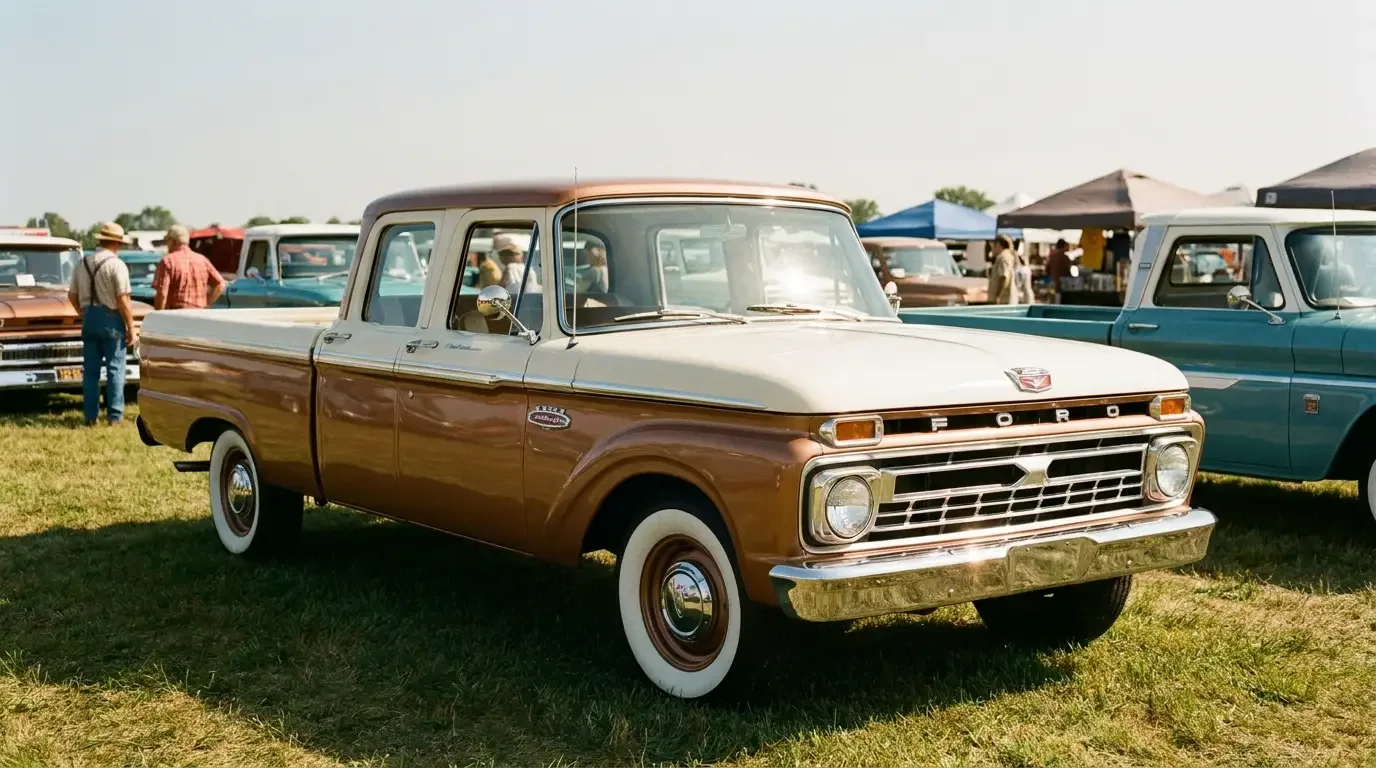

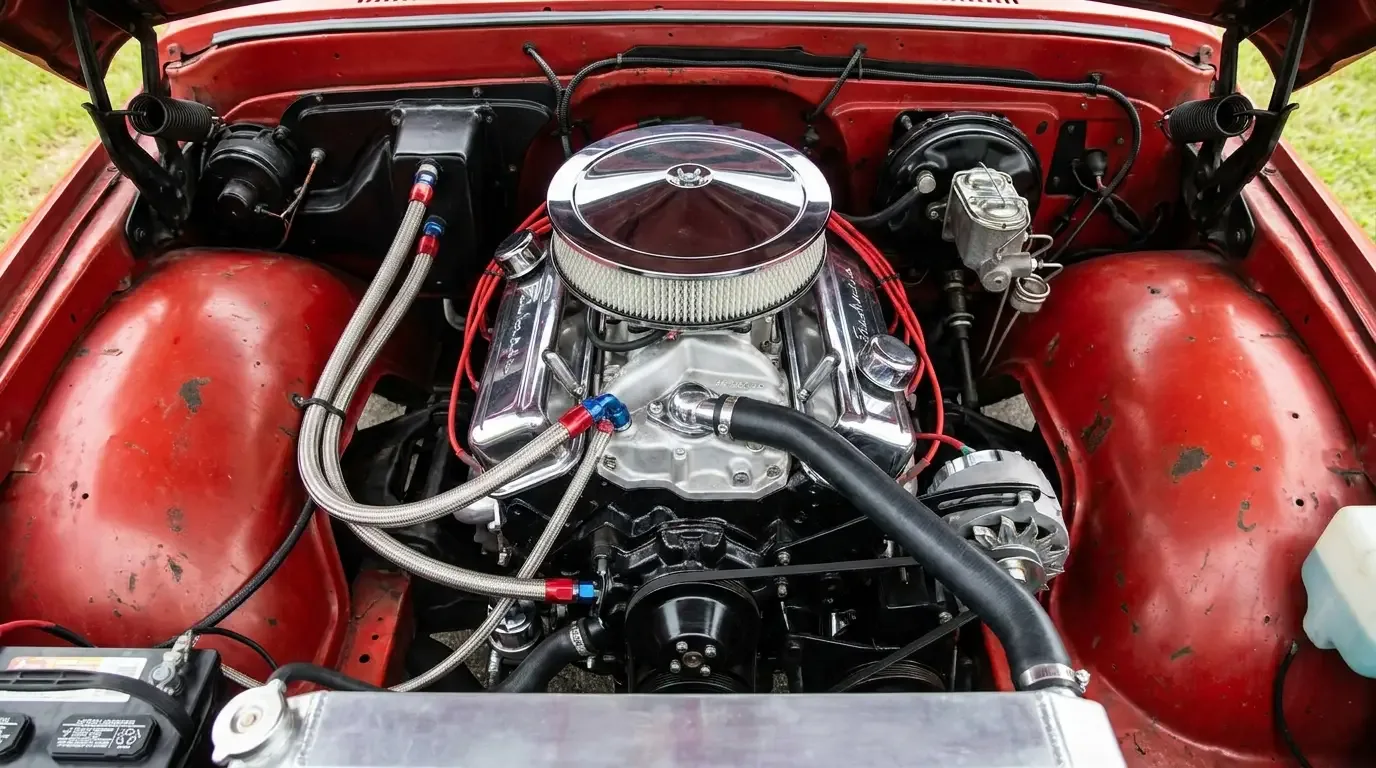
I've had my hands inside more classic truck engines than I can count, and here's the thing most people miss: the engine under the hood of an old pickup tells you almost everything about who built it, what year it left the line, and how hard it worked to earn its keep. Cars got the glory motors. Trucks got the engines that had to start cold, pull a loaded trailer up a grade, and do it again tomorrow. Different job, different design priorities.
This is a model-agnostic walk through the powerplants that moved classic American trucks, from the old flatheads to the small-blocks and big-blocks that took over. If you want the broader context of how these rigs fit into the bigger picture, read the classic American truck story first. Here we're staying under the hood.
The flathead era
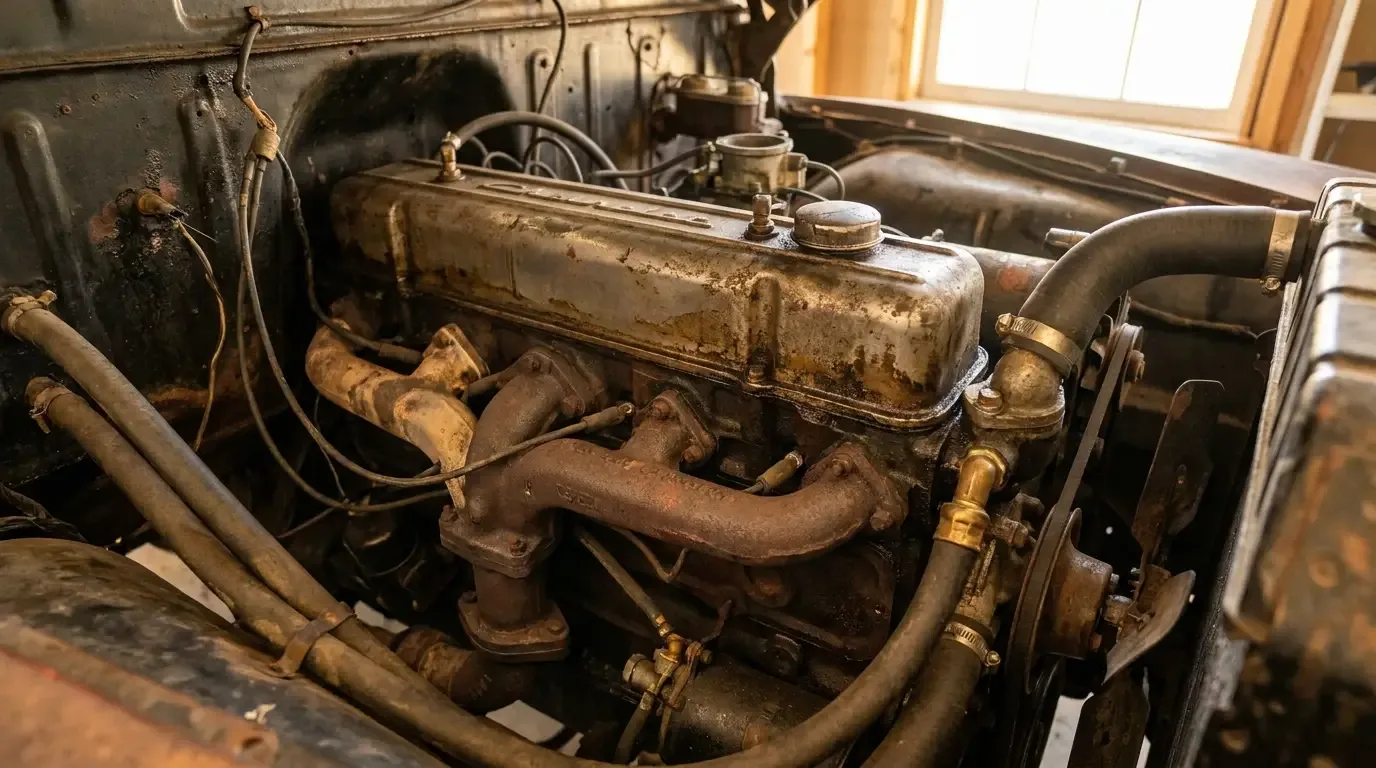
The flathead, or side-valve, engine ran the early truck world because it was cheap to build and dead simple to fix. The valves sat in the block beside the cylinders instead of up in the head, which meant a flat cylinder head with not much going on inside it. You could pull that head with hand tools in a barn and lap the valves yourself. For a working truck in the 1930s and 1940s, that mattered more than horsepower.
Ford ran its flathead V8 in pickups for years, and it earned a real following. The trade-off was heat. Flatheads route exhaust through the block, and they run hot, especially the V8s when you lean on them. They also don't breathe well at higher rpm because of the valve layout, so power tapered off early. For a truck that spent its life in a low gear hauling weight, that was an acceptable compromise. For anybody who wanted to rev, it wasn't.
Inline flathead sixes and fours from various makers filled out the rest of the field. They made modest power but pulled hard down low, which is exactly what a truck wants. If you're looking at a flathead-powered truck today, understand you're buying a piece of history that will move under its own power, not a highway cruiser.
The shift to overhead-valve inline sixes
The real workhorse of the classic truck era wasn't a V8 at all. It was the overhead-valve inline six. Once makers moved the valves up into the head, engines breathed better, made more usable power, and ran cooler than the old flatheads. The inline six became the base engine in pickups across every brand, and for good reason.
An inline six is inherently smooth because of the way the cylinders balance each other out. It's also long and narrow, which fit fine in a truck's tall engine bay. Chevrolet's stovebolt six and the later 250 and 292 sixes, Ford's inline sixes, and the Chrysler slant-six all did the same basic job: reliable, torquey, easy to work on. The slant-six earned a reputation for running forever, and I've seen plenty that backed it up.
These engines make their case on torque, not top-end. They pull a loaded bed off idle without complaint and sip fuel compared to a V8. If you're restoring a base-model work truck and want it correct, the six is the honest choice. It won't win a stoplight race, but it was never trying to. For a deeper look at how the six stacks up against eight cylinders, I dug into inline-six vs V8 separately.
When V8s arrived in trucks
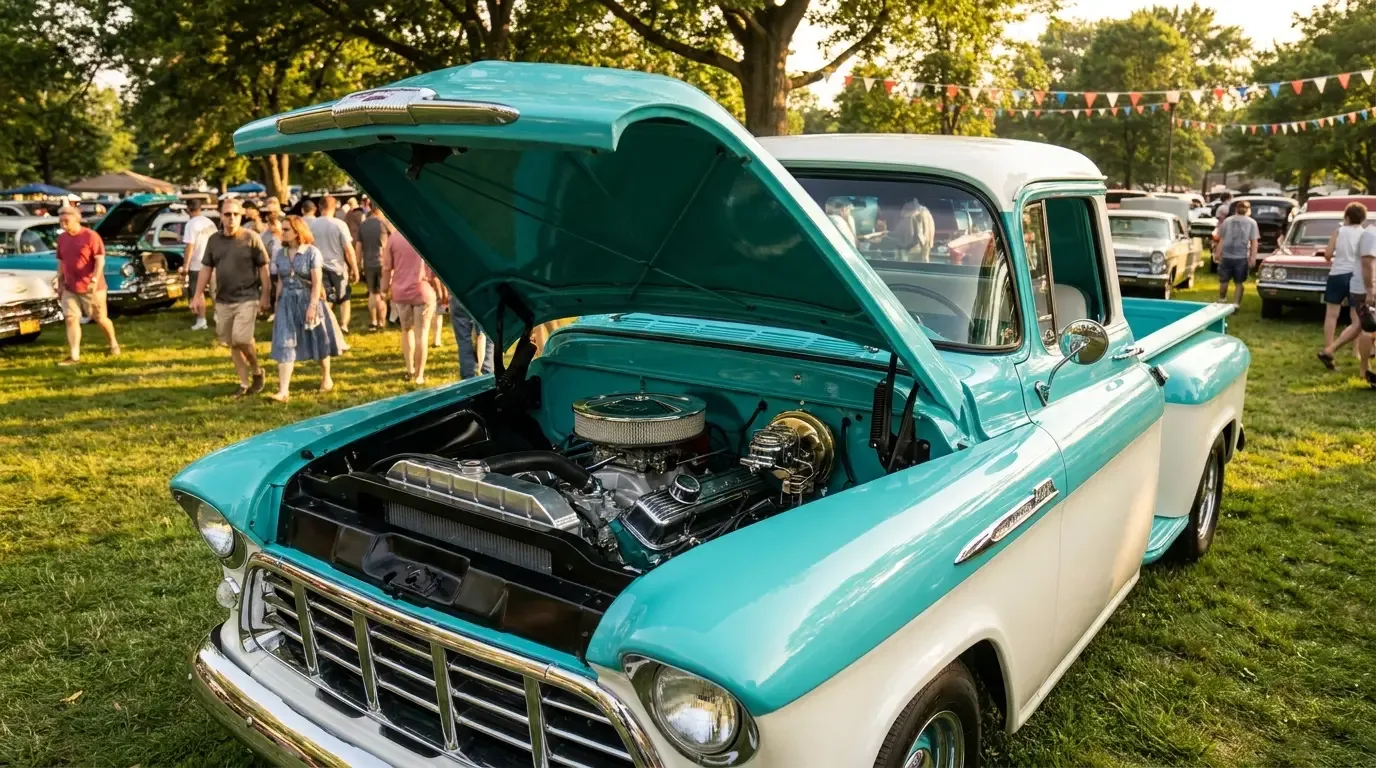
Overhead-valve V8s started showing up in American trucks through the 1950s, and by the 1960s a V8 option was standard across the lineup. The V8 gave a truck what the six couldn't: strong torque higher up the range, the muscle to haul heavier loads at highway speed, and headroom for towing. As trucks moved from pure work tools toward daily drivers and family haulers, buyers wanted that extra grunt.
The move to V8 power changed the truck. A V8 pickup could run a two-lane at speed with a camper on the back and not feel like it was dying. The trade was fuel economy and a heavier front end, but for a lot of buyers the capability was worth it. By the late 1960s and into the 1970s, the V8 was the engine most people wanted, and the six had become the price-leader base motor.
The workhorse truck engines across the brands
Every American maker had a family of engines that did the heavy lifting in their trucks. These are the names you'll run into over and over when you're shopping, and knowing them helps you understand what you're really buying.
On the Ford side, the FE-series big-block V8 showed up in trucks and moved serious weight. Ford's small-block V8 family, the Windsor engines, handled lighter-duty work and became the bread-and-butter V8 in half-tons. Chevrolet ran its famous small-block V8, one of the most produced engines in American history, across cars and trucks alike, and it's still the easiest classic V8 to find parts for by a wide margin. Chevy's big-block, the Mark IV, powered the heavier haulers and the hot ones. On the Mopar side, the LA small-block V8 and the RB-series big-block covered light and heavy duty respectively in Dodge trucks.
Here's what makes those engines matter to a buyer: they were built in enormous numbers, they share parts across model years, and the aftermarket supports them completely. A worn Chevy small-block or Ford Windsor isn't a problem, it's a Tuesday. That's a very different situation from an orphan engine nobody makes gaskets for anymore.
| Engine family | Config | Rough displacement range | Typical truck era |
|---|---|---|---|
| Ford flathead V8 | Side-valve V8 | ~239–255 cu in | 1930s–mid 1950s |
| Chevrolet inline six (stovebolt / 250 / 292) | OHV inline 6 | ~235–292 cu in | 1950s–1980s |
| Chrysler slant-six | OHV inline 6 | ~170–225 cu in | 1960s–1980s |
| Chevrolet small-block V8 | OHV V8 | ~283–350 cu in | 1950s–1990s |
| Ford small-block (Windsor) | OHV V8 | ~289–351 cu in | 1960s–1990s |
| Ford FE big-block | OHV V8 | ~332–390 cu in | 1950s–1970s |
| Chevrolet big-block (Mark IV) | OHV V8 | ~396–454 cu in | 1960s–1990s |
| Chrysler RB big-block | OHV V8 | ~383–440 cu in | 1960s–1970s |
Those displacement ranges are ballpark figures across the truck applications and full production runs. Confirm the exact size against the casting numbers and the year before you spend money on parts, because these families were offered in several sizes and the specifics move year to year.
Big-block versus small-block in a truck
People hear big-block and think fast. In a truck, that's not really the point. The reason a big-block earns its place in a pickup is low-end torque and the ability to haul or tow heavy without straining. A big-block turns weight into forward motion at low rpm, which is the whole job. It also drinks more fuel, weighs more over the front axle, and costs more to rebuild.
A small-block does most of what a normal owner needs. For a half-ton that hauls the occasional load and gets driven for fun, a small-block is lighter, cheaper to run, and plenty capable. Save the big-block for the three-quarter-ton and one-ton rigs that actually tow, or for the buyer who specifically wants that big-displacement character. I go through this in detail in the piece on big block vs small block, but the short version is: match the engine to how you'll actually use the truck, not to bragging rights.
"I've watched guys pay a premium for a big-block truck they'll never load past a couple bags of mulch. A good small-block would've cost them less, run cooler, and left more money for the stuff that actually needs fixing. Buy the engine your right foot and your trailer hitch actually call for."
— Mike Sullivan
Torque versus horsepower, the truck way
This is where truck engines part ways with muscle car engines. Horsepower is what sells at the top of the tach. Torque is what moves a loaded truck off the line and up a hill. A good classic truck engine is built to make its torque low in the rpm range, where you actually use it when you're working. That's why a torquey inline six or a mild big-block can feel stronger pulling a trailer than a peaky high-horsepower motor that only wakes up at 5,000 rpm.
When you're evaluating an engine for a truck, ask where it makes its power. An engine tuned for low-end torque, with a mild camshaft and sensible gearing, will be a better working partner than something built to chase peak numbers. The factory understood this. The stock cam and intake on most of these truck engines were chosen for pulling power down low, not for a dyno sheet. Keep that in mind before somebody sells you on a hopped-up motor that's actually worse at the job.
What makes a good classic-truck engine to buy or rebuild
After decades of pulling these apart, my advice comes down to a few things that matter more than raw specs. Parts availability is first. A Chevy small-block or Ford Windsor has an infinite parts supply and a rebuild is routine. An oddball engine can turn a simple job into a scavenger hunt. Second is what's actually in the truck versus what the seller claims, because engine swaps were common and a truck's badge doesn't guarantee the motor matches.
Condition beats displacement every time. A tired big-block with worn bearings is a bigger check than a healthy small-block. Whatever you land on, when you're ready to go shopping there are plenty of classic trucks for sale to compare, and knowing the engine families lets you read those listings like someone who's done this before.
Sources and notes
- Factory service manuals and shop manuals for the relevant makes and model years (engine specifications, displacement, and duty ratings).
- Period road tests and truck reviews from the era for real-world power and hauling impressions.
- Engine casting number references and block identification guides for verifying what engine is actually installed.
- Manufacturer parts catalogs and interchange manuals for confirming displacement ranges and cross-year parts compatibility.
- Displacement figures should be confirmed against factory documentation and casting numbers for the specific application before publication or purchase.