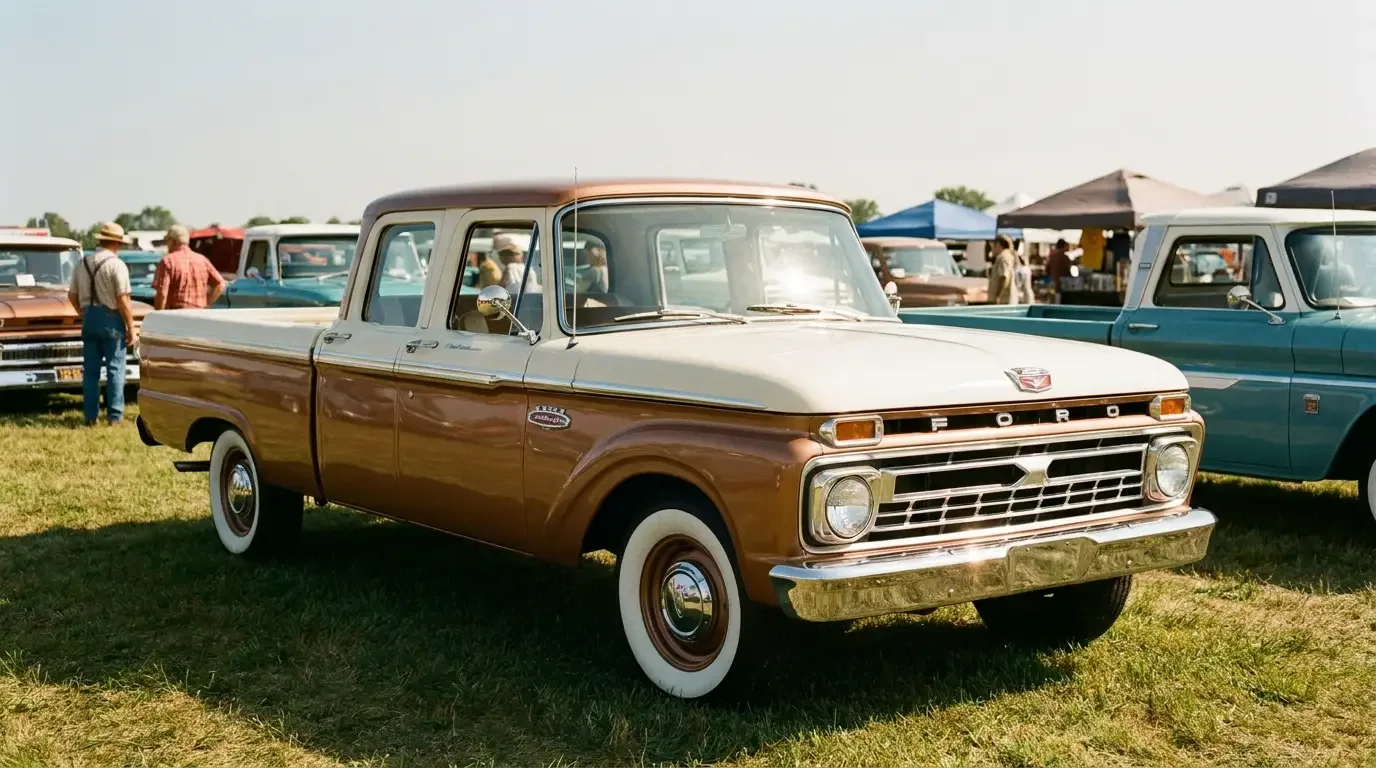

Ask ten guys at a truck show what they'd run and half will tell you "big block, no question." The other half have actually driven their trucks to the show and paid for the gas. Both answers are right, and both are wrong, because the real question isn't which engine is bigger. It's what you're going to do with the truck. A big block vs small block truck decision lives or dies on the work you ask it to do, not on bragging rights in a parking lot.
Before you commit either way, it helps to understand the families you're choosing between and how they landed in classic trucks in the first place. I go into the broader picture in the classic truck engines guide, but here we're settling the block-size argument specifically.
What big block and small block actually mean
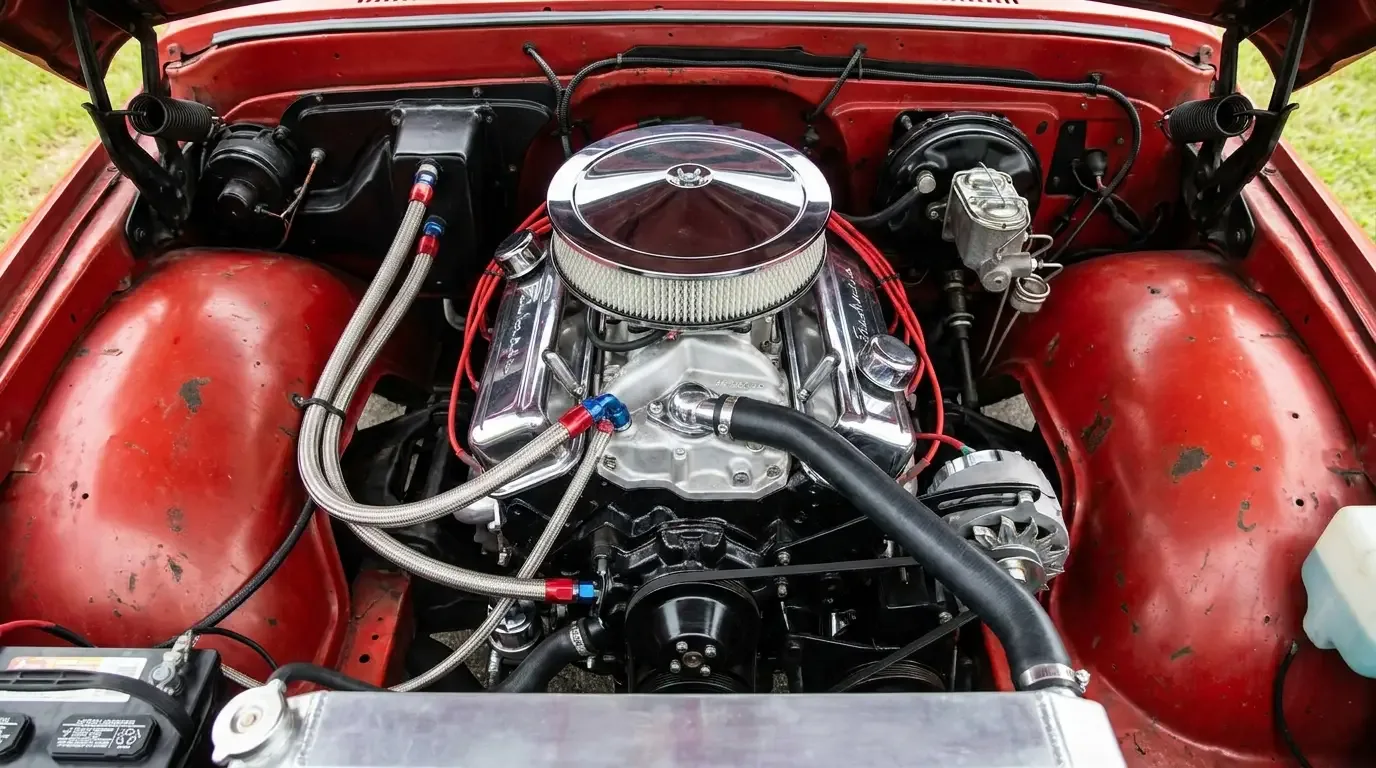
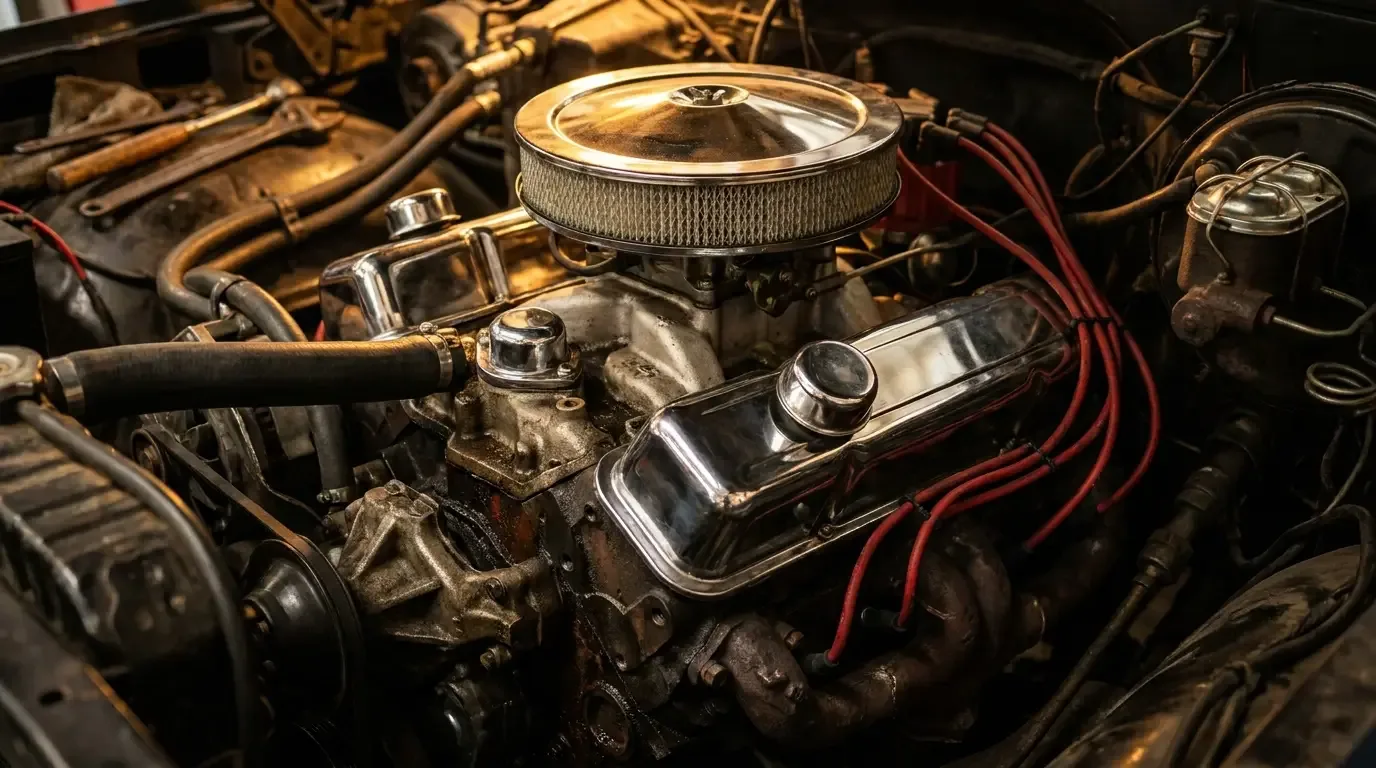
The terms are casual shorthand for the physical size of the engine's block casting, not a precise displacement cutoff. A small block is the lighter, more compact V8 family. A big block is the taller, heavier, physically larger casting built to make torque with more displacement. Same manufacturer, two different architectures.
Every major American maker ran both. Chevrolet had its small-block family and the big-block family enthusiasts call the rat motor. Ford ran the Windsor and FE small-to-mid families against the 385-series and its earlier big blocks. Dodge had the LA small block and the RB/B big blocks. You'll hear the nicknames thrown around at swap meets. Learn the family names for whatever brand you're chasing, because parts, motor mounts, and headers are all family-specific.
The displacement overlap is where people get confused. A big small block and a small big block can land in the same neighborhood on paper. Roughly, small blocks in these trucks ran from around 260 to 400 cubic inches, and big blocks from around 383 up past 460. The number on the valve cover matters less than the casting it's bolted to, because the casting is what you're lifting, cooling, and feeding fuel to.
Torque, weight, and where each one wins
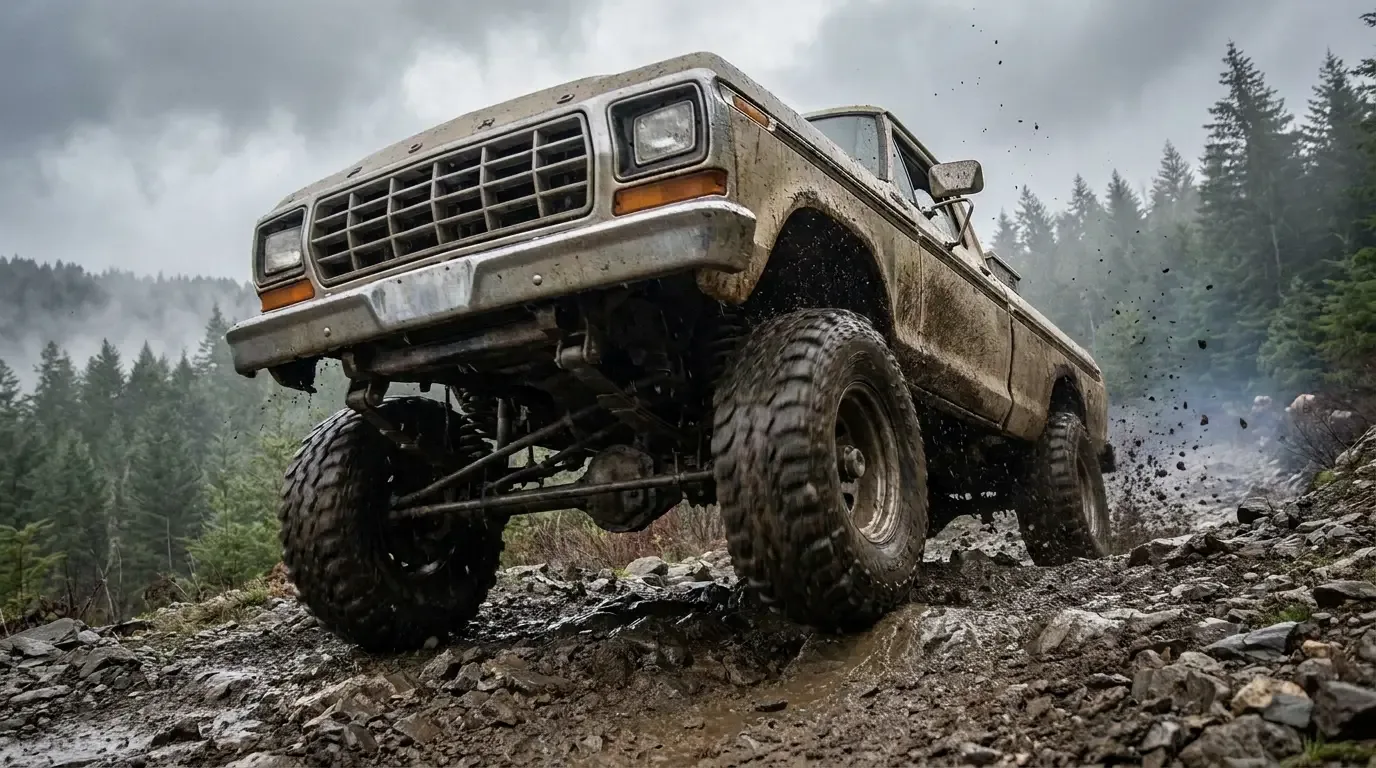
Here's the part that matters for a truck. Big blocks make their power low in the rev range. Big bore, long stroke, lots of low-end torque right off idle. That's exactly what you want when you're pulling a loaded trailer up a grade and you don't want to wind the engine out or drop three gears to keep moving. The truck just leans into it.
A small block makes good power too, but it usually makes it a little higher up and it makes it while weighing less. That weight difference is real. A big block can run well over a hundred pounds heavier than a small block from the same maker, and all of that weight sits over the front axle. On an empty truck that means a nose-heavy feel, more front-end wear, and steering that fights you in the twisties.
Think about it in terms of duty:
- Big block wins: heavy towing, hauling loaded beds, big campers, steep grades, and anything where you're moving serious weight regularly.
- Small block wins: daily driving, cruising, light-to-moderate loads, and any build where fuel bills and front-end wear actually matter to you.
- It's a wash: occasional light towing. A healthy small block with the right gearing pulls a small trailer just fine.
Gearing changes this conversation more than people admit. A small block behind a numerically higher rear axle ratio will out-pull a lazy big block behind tall highway gears. If you're buying a truck to tow, look at what's in the rear end before you assume the engine is the whole story.
"Everybody wants the big block until they're the one buying the fuel and rebuilding the front end. Match the engine to the job, not to the guy next to you at the show."
— Mike Sullivan
The cost side nobody brags about
Big blocks cost more to live with, front to back. More fuel, always. A big block hauls its displacement around whether the bed is loaded or empty, and it drinks accordingly. On a truck you drive for fun a couple weekends a month, maybe you don't care. On a daily driver, you'll feel it every fill-up.
Rebuild and parts costs run higher too. Bigger bores, bigger bearings, more machine work, heavier rotating assembly. A big block rebuild is more money and more of the machinist's time than a small block from the same family. Small blocks are also the most common engines on the planet in this hobby, so the aftermarket is deep and cheap. Gaskets, rebuild kits, cam kits, carbs, they're all sitting on a shelf somewhere for short money.
Then there's what the big block does to everything around it. The extra weight and heat mean you're more likely to need a bigger radiator, a better cooling setup, and stiffer front springs to carry the nose. None of that is a dealbreaker. It's just money and time that a small block doesn't ask for.
How to pick for your build
Start with the honest answer to one question: what does this truck do most of the time? Not what it might do once a year. What it does on a normal week.
If the honest answer is haul heavy or tow heavy, most weeks, a big block earns its keep. The low-end grunt and the ability to pull without straining is worth the fuel and the weight. You bought a truck to work, so let it work.
If the honest answer is drive it, cruise it, run to the lumber yard now and then, a small block is the smarter build almost every time. Lighter nose, better manners, cheaper to feed, cheaper to fix, and plenty of power for what you're actually doing. You can always build a strong small block if you want more, and a worked small block will surprise a lot of stock big blocks.
Here's a quick way to line the two up when you're staring at a truck and trying to decide.
| Factor | Small block | Big block |
|---|---|---|
| Displacement range | ~260 to 400 cu in | ~383 to 460+ cu in |
| Engine weight | Lighter | Heavier, often 100+ lb more |
| Torque character | Good, higher in the range | Strong low-end grunt |
| Best duty | Daily, cruising, light loads | Heavy towing and hauling |
| Fuel cost | Lower | Higher |
| Rebuild cost | Lower, huge aftermarket | Higher, more machine work |
| Front-end impact | Minimal | Nose-heavy, more wear |
| Swap complexity | Usually a bolt-in | May need clearance and cooling work |
One more thing on originality. If the truck came from the factory with a particular engine and you care about keeping it correct, that matters more than any of this. A numbers-matching drivetrain is worth protecting. Swapping a small block truck to a big block, or the other way, is a choice you make with your eyes open, knowing what it does to value and character.
The bottom line for a working classic
Big block or small block isn't about which is better. It's about which is right for the load, the miles, and the wallet. Big block for the truck that pulls heavy and pulls often. Small block for the truck that lives its life driving and cruising and doing light work without punishing you at the pump or the machine shop.
Be honest about the job. The truck doesn't care what the guy next to you runs. It cares whether you gave it the engine that fits the work, and whether you can afford to keep it running. Get that right and either block will serve you for a long time.
Sources and notes
- Factory service manuals and engine family specifications for period American trucks.
- Period road tests and towing capacity charts.
- Engine casting-number and family identification guides.
- Rebuild parts catalogs and machine-shop cost references.