
Ask ten guys who own a classic pickup which transmission they'd pick, and you'll get an argument. That's the honest truth. The manual versus automatic question in old trucks isn't settled, and it shouldn't be, because these two setups drive different, wear different, and cost different to fix. I've had both apart on the bench. Here's what actually matters when you're standing next to a truck with a checkbook in your pocket.
What a column shift really is
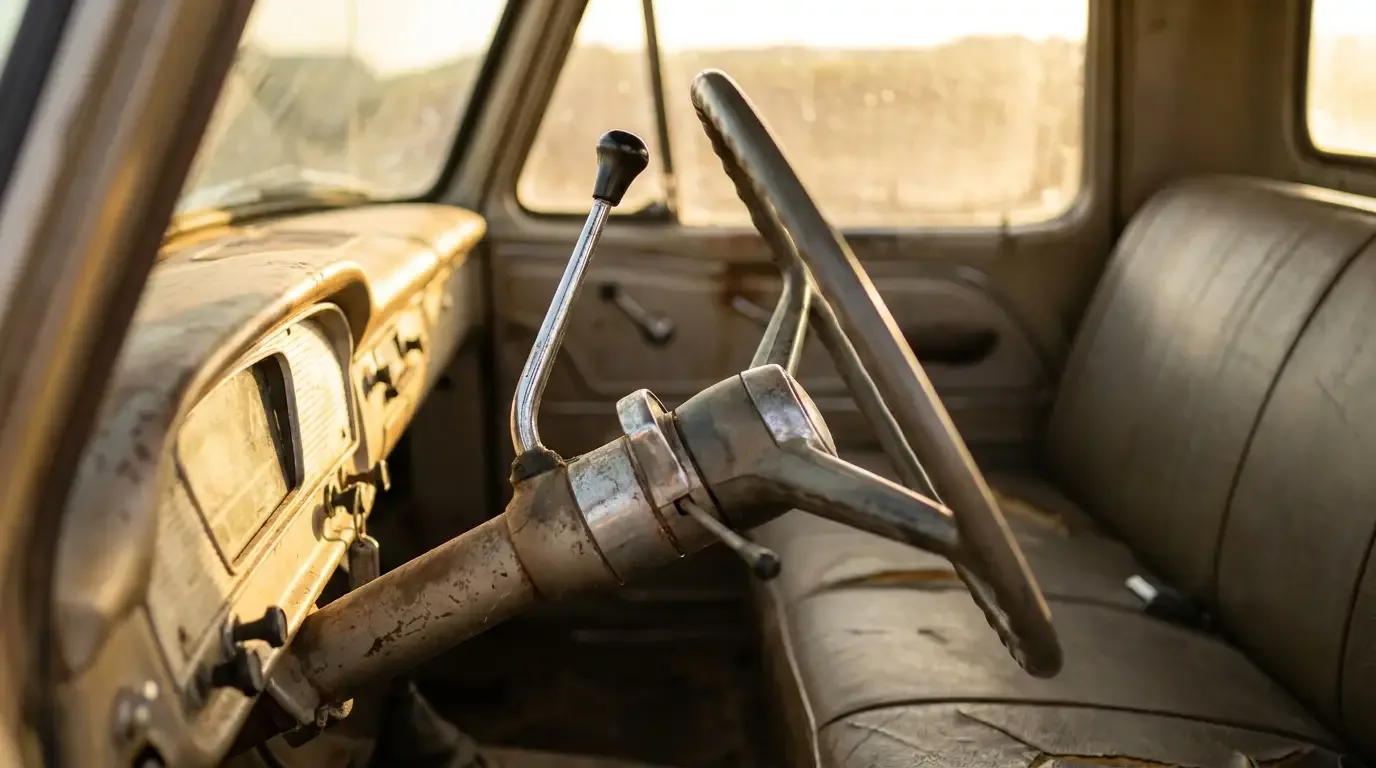
Say "three on the tree" to anyone who learned to drive before the seventies and watch them smile. It means a three-speed manual with the shifter mounted on the steering column, not the floor. You've got first down and toward you, second up, third down and away, with reverse tucked up against the column. The whole point back then was cab space. No floor shifter meant you could seat three across the bench, and a work truck needed that third seat for the crew.
The linkage is where these live or die. A column shift runs a set of rods and levers down the steering column to the transmission. Bushings wear, rods bend, and the whole thing gets sloppy. When somebody tells you a three-on-the-tree "hangs up between gears," that's almost always worn linkage, not a bad transmission. Good news is it's cheap to sort. A bushing kit and an afternoon under the dash fixes most of it. Bad news is a lot of owners never bother, so you inherit the slop.
These three-speeds are stout for what they are, but they're low on gears. No overdrive, no synchro on first in a lot of the early ones. You double-clutch into first from a roll or you grind it. That's not a defect. That's a Tuesday for anything built in that era.
Floor manuals and the four-speed jump
When you move to a floor-shifted manual, usually a four-speed, you're looking at a heavier-duty setup meant for hauling and granny-gear crawling. The classic four-speed in an old truck often has a deep, unsynchronized first gear, a "granny low," meant for pulling a loaded trailer off the line or creeping through a field. You don't drive off in that gear on the street. You start in second.
Floor manuals feel more direct because the linkage is short and simple. Shifter goes straight down into the top of the transmission. Less to wear out, less to go vague. If you want the mechanical, connected feeling that makes people love old trucks, a good floor four-speed delivers it. You feel every gate.
The trade is drivability at speed. Many of these boxes top out with a 1:1 top gear and no overdrive, so the engine screams on the highway. Guys swap in later overdrive units to make them livable at 65. That's the single most common transmission mod I see, and it's a smart one if you actually drive the truck.
"A three-on-the-tree with fresh bushings shifts sweet. The same truck with worn linkage feels like stirring a bucket of bolts. Fix the linkage before you condemn the gearbox."
— Mike Sullivan
Early automatics and how they drive
Automatics showed up in trucks later than in cars, and the early ones were simple two-speed or three-speed units. Two-speed automatics are the ones people complain about. With only two ratios, the truck lugs at low speed and revs high on the highway, and there's a big gap in between. They're smooth and they're durable, but they're lazy. A three-speed automatic is a lot more usable and is what most buyers want if they're going automatic.
The driving feel is exactly what you'd expect. Automatics are easier in traffic, easier for a passenger to jump in and drive, and easier on a bad knee. What you give up is engine braking and that direct connection. An old automatic will freewheel down a grade where a manual would hold you back. On a heavy truck, that matters. You use the brakes more.
Reliability on the early automatics is generally good if the fluid's been changed and the truck wasn't worked to death towing over its rating. The failure I see most is a slipping or harsh shift from old, burnt fluid and a clogged filter. A lot of owners never touched the transmission fluid in decades. Drop the pan, look at the fluid, smell it. Burnt fluid smells like an overheated clutch. If it's brown and stinks, budget for a rebuild.
What buyers actually prefer and why
Here's where it gets interesting. The market splits by what people plan to do with the truck.
Purists and show-truck buyers lean toward the correct original transmission, and for a lot of these trucks that means the column-shift or floor manual it left the factory with. Originality holds value. A numbers-matching drivetrain, transmission included, is worth more to that crowd. The three-on-the-tree has become a genuine selling point, a piece of the era that people want to experience.
Drivers, the folks who actually want to take the truck to cars and coffee every weekend, often prefer an automatic or a manual with overdrive. They want to sit in traffic without cooking their left leg. An automatic swap is common and it's not a sin, but it does move the truck out of the purist category. Be honest about that when you buy or sell.
- Manual, original: best resale to collectors, most engaging to drive, cheapest failures to fix.
- Automatic, original: easiest daily driving, broadest buyer pool, watch the fluid history.
- Swapped overdrive or modern auto: best real-world usability, smaller purist buyer pool, verify the quality of the work.
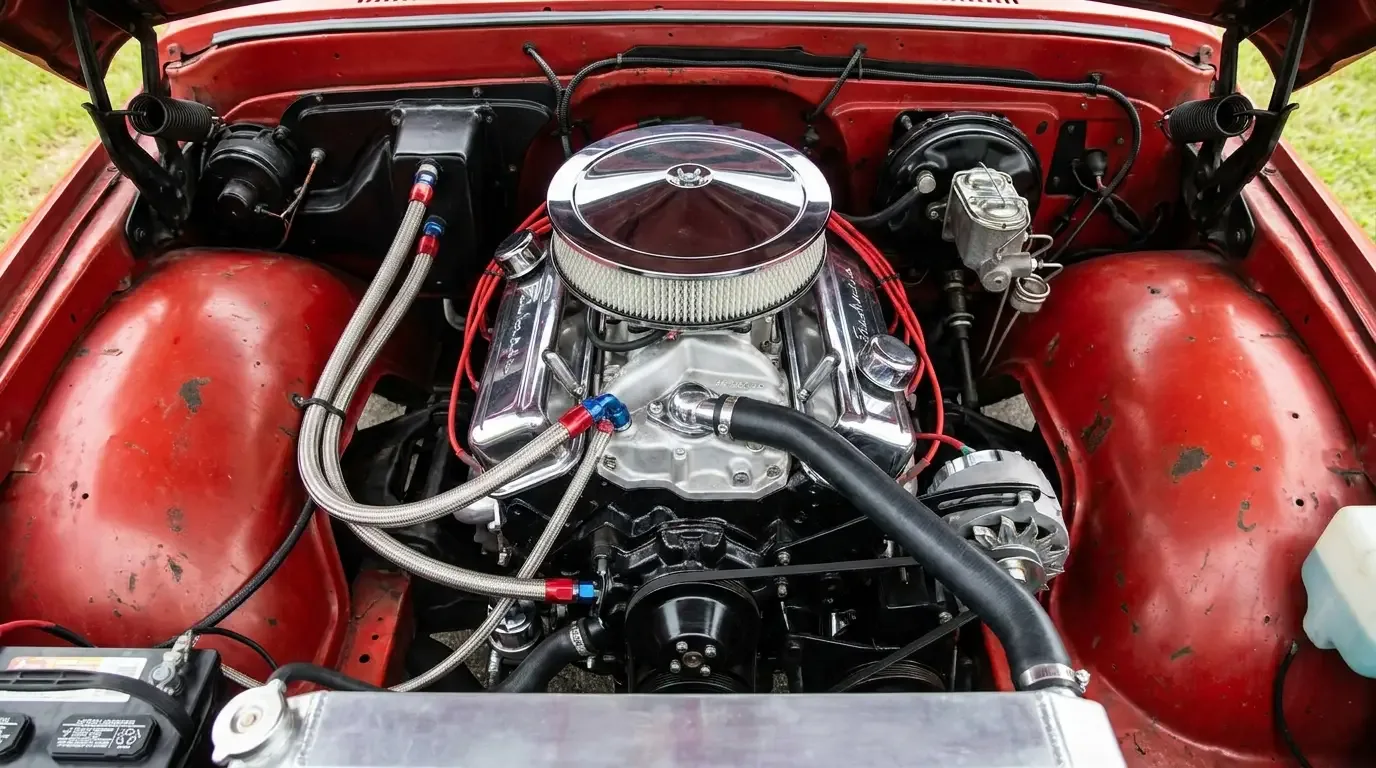
None of this replaces knowing the engine that's bolted to it. Read up on the classic truck engines before you get hung up on the gearbox, because a tired engine will cost you more than any transmission.
Picking the right one for you
| Transmission type | Pros | Cons |
|---|---|---|
| Column-shift 3-speed (three on the tree) | Correct and original on many classics; frees up bench seat space; cheap linkage repairs; engaging period feel | Only three gears, no overdrive; worn linkage feels vague; unsynchronized low on early units; screams on the highway |
| Floor manual 4-speed | Direct, mechanical feel; simple short linkage; granny-low great for hauling; heavy-duty reputation | Deep first gear unusable on the street; usually no overdrive; higher effort; noisy at speed without a swap |
| Early 2-speed automatic | Smooth; durable; very easy in traffic | Big ratio gaps; lugs low and revs high; poor engine braking; feels lazy |
| 3-speed automatic | Easy daily driving; broad buyer appeal; usable ratio spread; good reliability with clean fluid | Less engine braking than a manual; freewheels on grades; burnt fluid means a rebuild |
| Manual or auto with overdrive (factory or swap) | Best highway usability; lower RPM and better economy; livable at 65+ | Swaps reduce purist value; quality of the work varies; verify it was done right |
My honest advice: buy the truck for how you'll use it, not for how the argument goes at the show. If you're chasing a trophy and resale, keep it original and learn to love the three-on-the-tree. If you're driving it, an automatic or an overdrive manual will keep you happy for years. Either way, check the linkage, check the fluid, and drive it in every gear before you hand over a dime.
Sources and notes
- Factory service manuals and owner's manuals for transmission specifications, gear ratios, and shift patterns.
- Period road tests and truck reviews for original driving impressions and drivability notes.
- Marque and model histories for the adoption timeline of column shifts, floor manuals, and early automatics.
- Transmission rebuilder guides and shop references for common failure modes and inspection procedures.
- Enthusiast club and forum consensus on overdrive swaps and originality value.