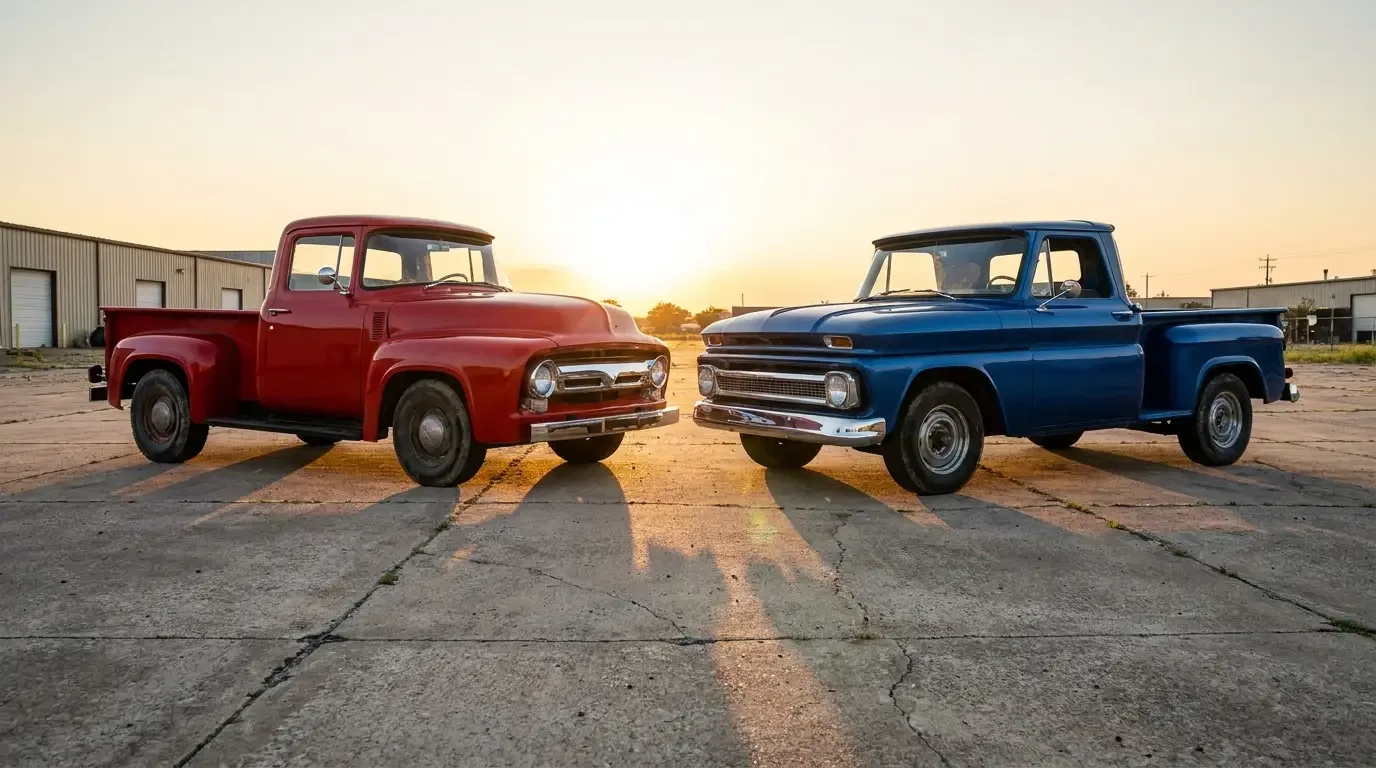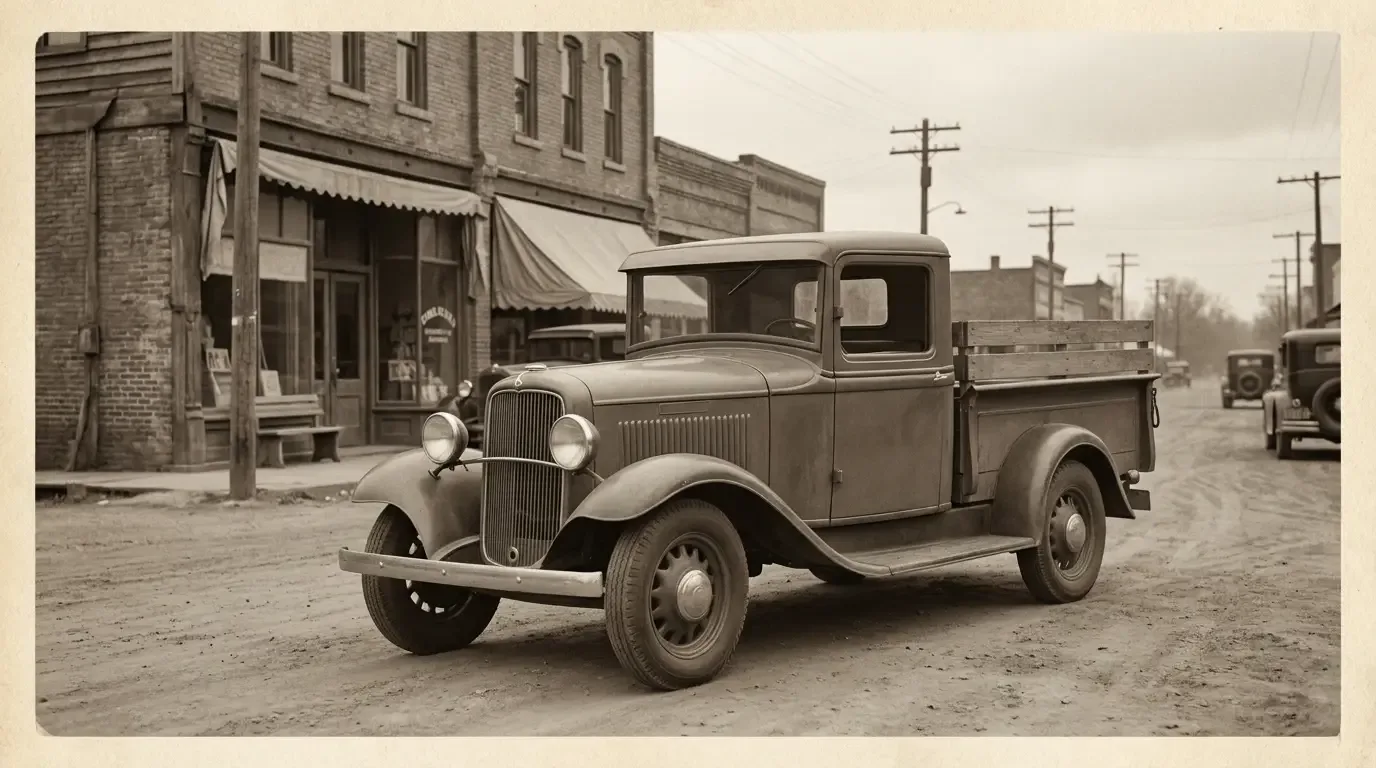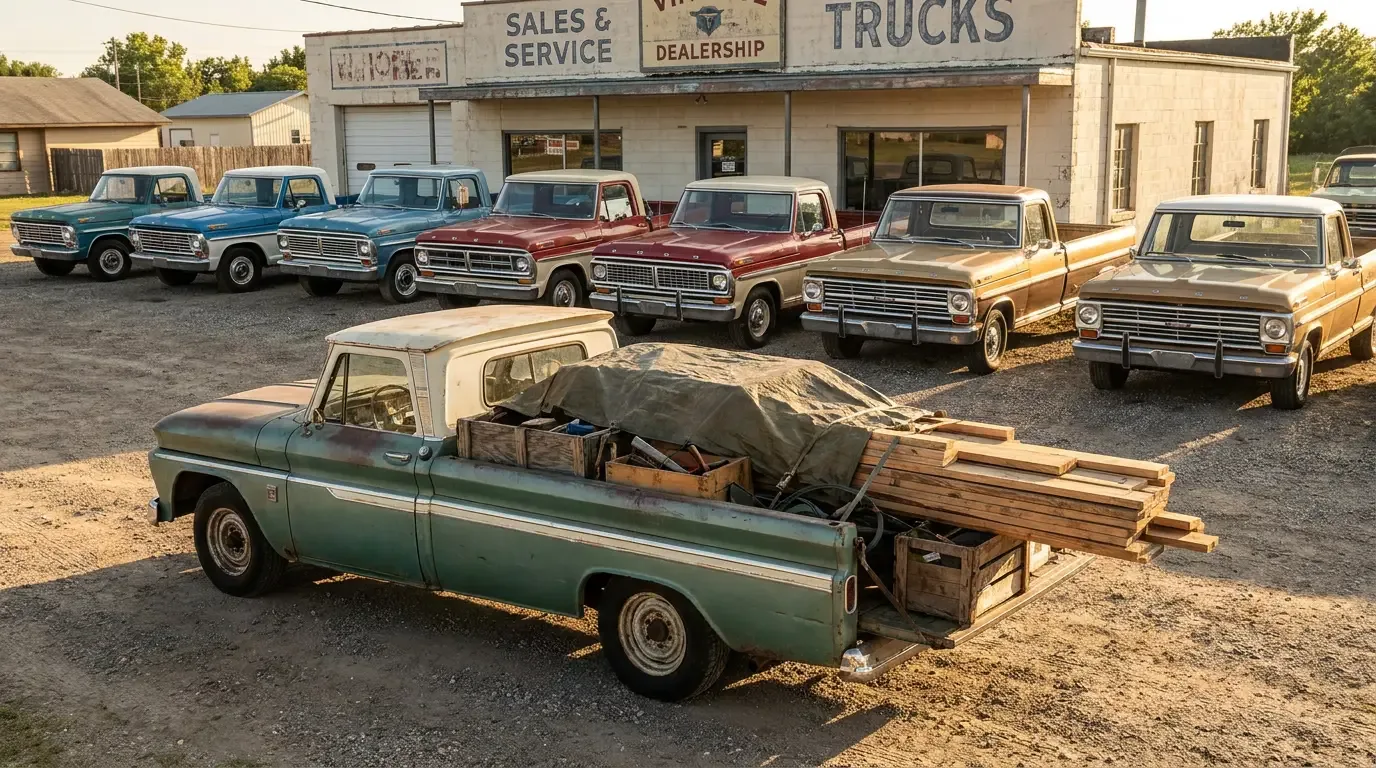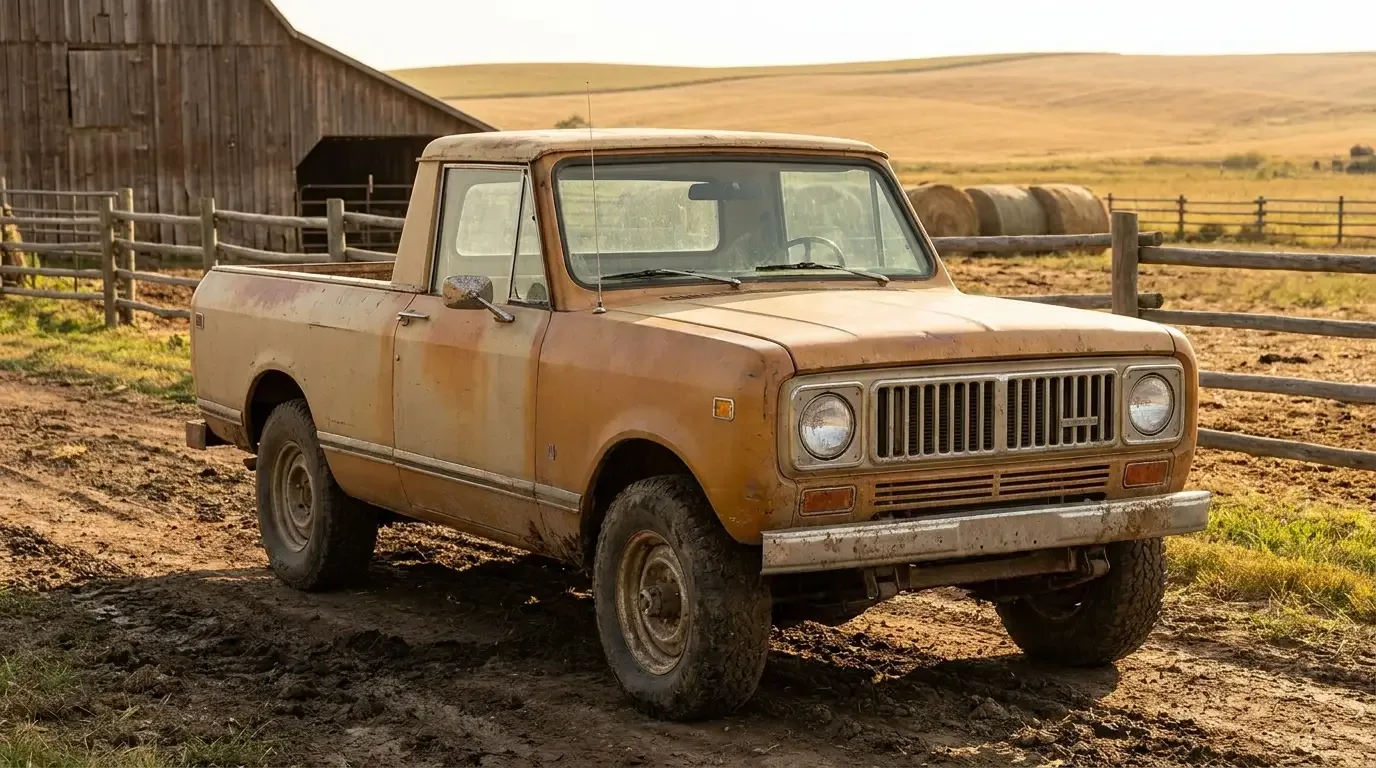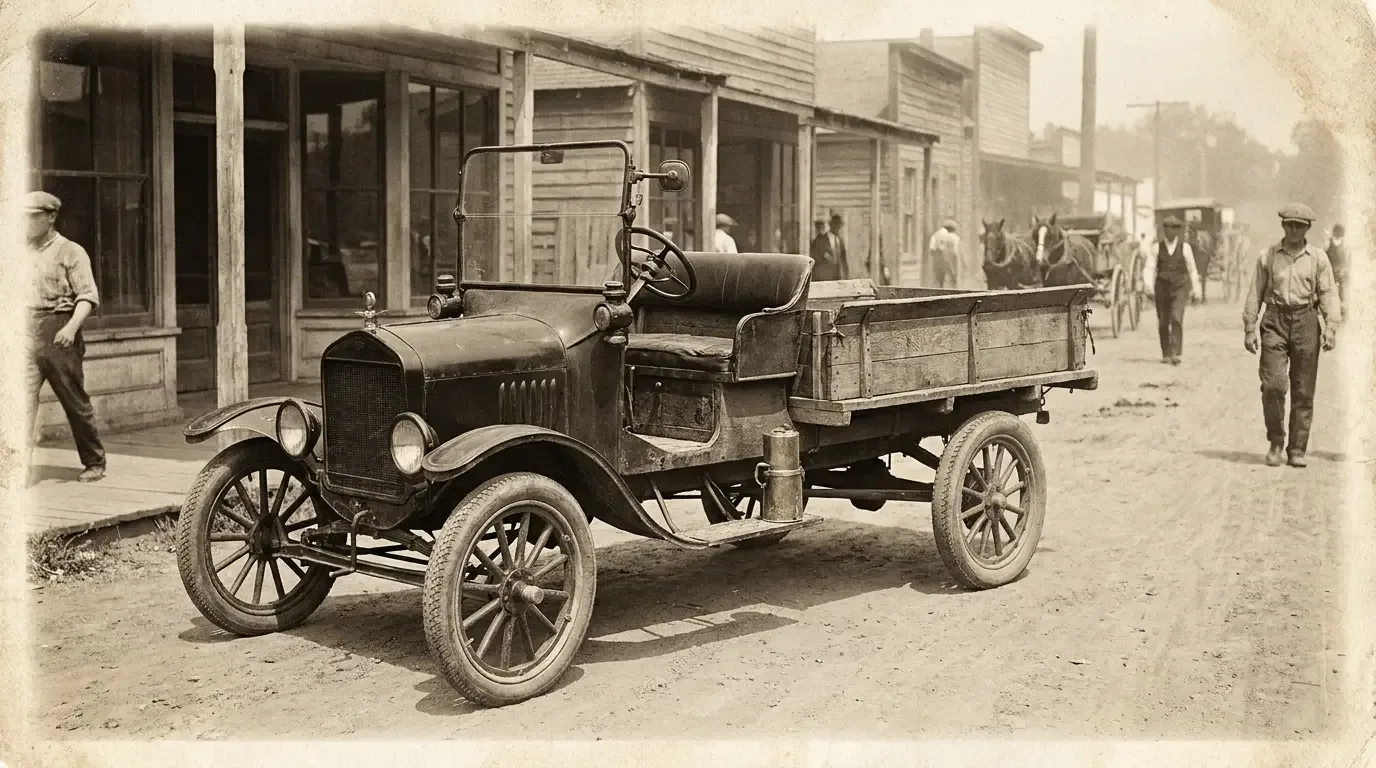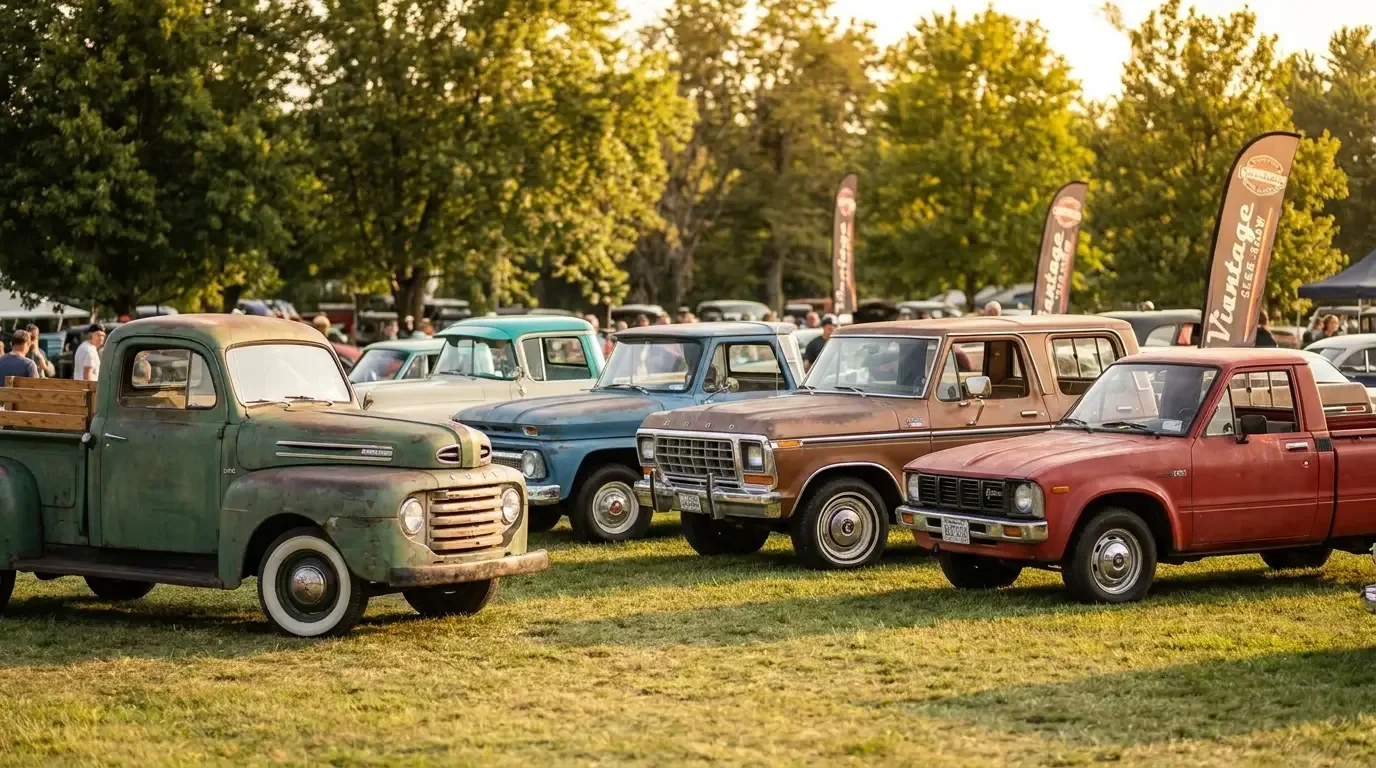

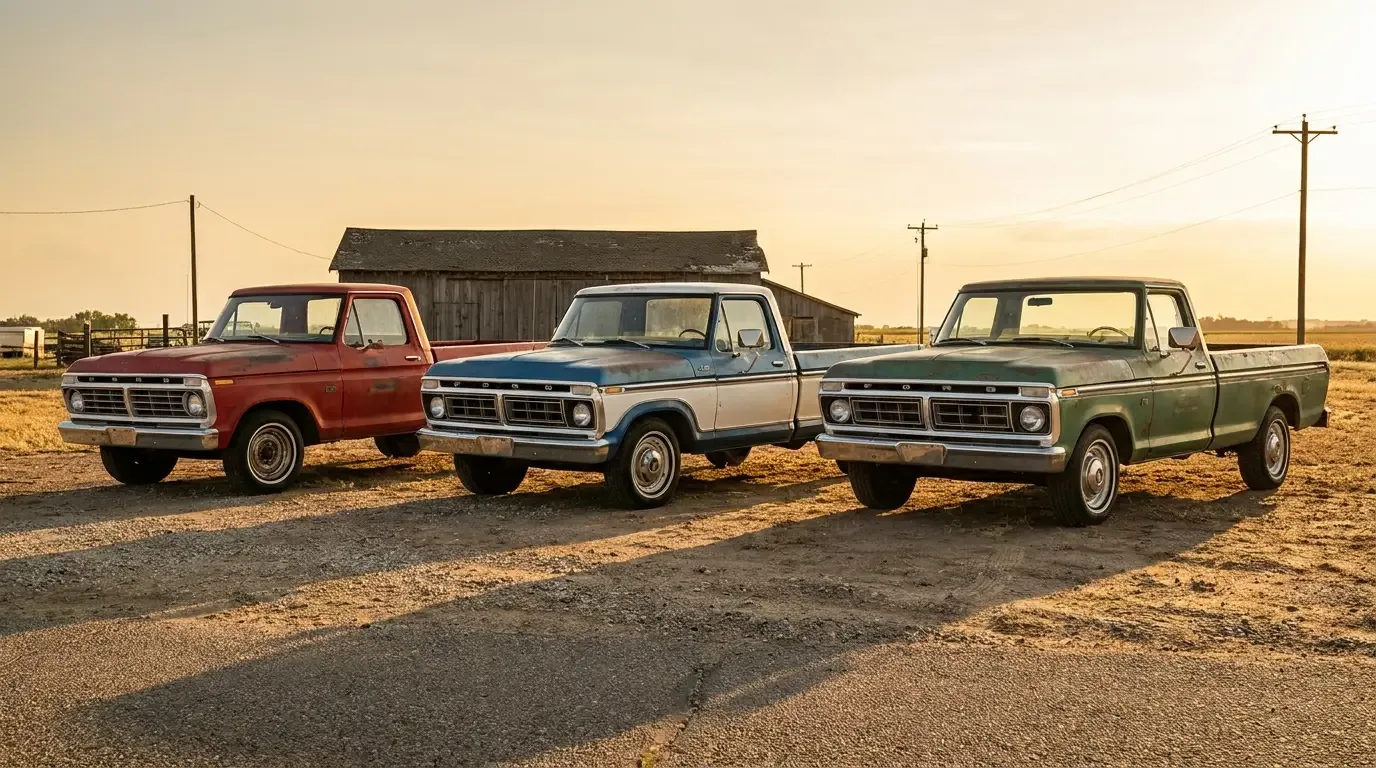
People talk about the pickup fight like it started yesterday, with tailgate steps and turbo V6s. It didn't. The trucks have been trading punches since before most of us were born, and every decade one brand landed a blow that forced the others to answer. Sometimes the win was styling. Sometimes it was a stouter axle or a smoother ride. Sometimes it was just building more of them than anybody else and grinding the competition down on the dealer lot. If you want to understand the trucks you're looking at buying, it helps to know who was winning when yours rolled out, and why.
This is the long view, brand against brand, from the postwar years through the muscle era and into the time when a pickup stopped being strictly a work tool. For the specific back-and-forth between the two giants, read the Chevy vs Ford rivalry. Here we widen it out to all four that mattered: Chevrolet and GMC, Ford, Dodge, and International Harvester.
The postwar 1940s and 1950s: styling wakes up
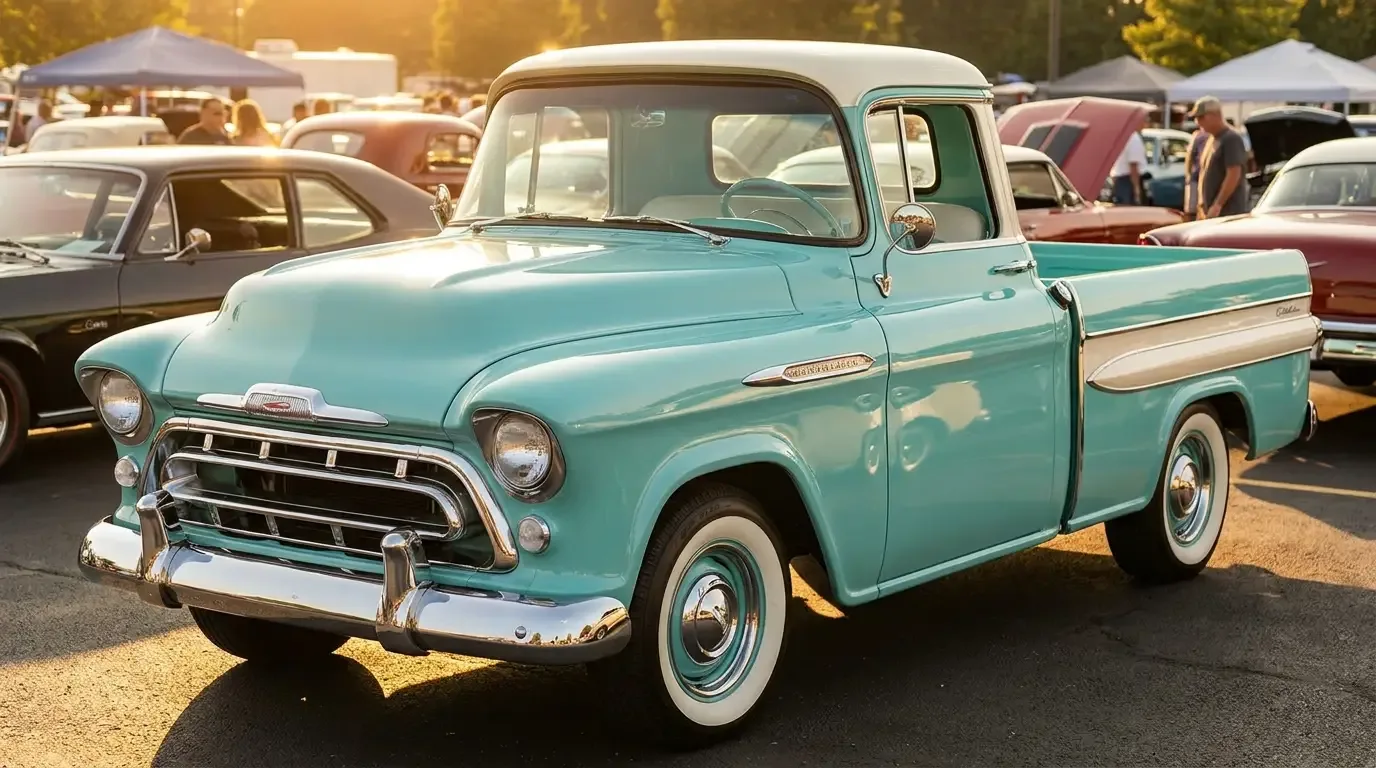
Right after the war the trucks were honest and plain. Ford ran its bonus-built line, Chevrolet had the Advance Design cab, and both sold on the strength of a country that needed to haul things and didn't much care how the fenders looked. That changed in the mid-fifties. Ford dropped the F-100 in 1953 and made the cab wider and the styling cleaner, and it stung Chevrolet enough that GM answered in 1955 with the Task Force trucks, wraparound windshield and all. Suddenly a pickup could look like something, and buyers noticed.
Dodge was in the fight with its Power Wagon, a genuinely rugged civilian version of its wartime hauler, and it owned the reputation for going anywhere. But on the styling and volume front Dodge trailed. International Harvester was the quiet heavyweight here. IH built serious trucks for farms and fleets, and through much of this stretch it was consistently the number-three truck maker in the country behind Ford and Chevrolet, living on durability rather than showroom flash.
The 1960s: independent suspension, big blocks, and the ride war
The sixties are where comfort entered the argument. Ford put independent front suspension on the 1965 F-Series with its Twin I-Beam setup and leaned hard on ride quality in its advertising. Chevrolet had already gone to coil springs at the rear on its 1960 trucks, chasing the same softer ride, then settled into the clean 1967 to 1972 body that a lot of people still think is the best-looking Chevy pickup ever built. GMC rode along as the badge-engineered sibling, usually with a slightly different grille and, at times, its own engine choices.
Power crept up across the board as big-block V8s filtered down into the trucks. Dodge kept plugging away and had the engines to compete, but it stayed the smaller-volume player of the domestic three. International, meanwhile, made a move that mattered more in hindsight than it did on the sales chart: it built the Scout starting in 1961, a compact four-wheel-drive that helped define a whole category before Ford's Bronco and the Chevy Blazer showed up to take it over.
"Folks forget the sixties were fought on the seat, not the spec sheet. A truck that beat your kidneys less on a gravel road sold, plain as that. Get in one and drive it before you fall for the paint."
— Robert Halloran
The 1970s: comfort, crew cabs, and the sales grind
By the seventies the pickup was turning into something you'd drive even when you weren't working. Ford leaned into that with plush trim packages and its long-running F-Series body, and it started stacking up sales in a way that would define the next fifty years. Chevrolet answered with the square-body generation that arrived for 1973, roomier and better trimmed than what came before, and GMC shared in it. Crew cabs and camper specials spread because families and weekend haulers wanted them.
Dodge finally landed a real punch with the Lil' Red Express in 1978, a factory hot rod pickup with stacks and graphics that outran a lot of cars of the moment thanks to how emissions rules were written for trucks, which exempted vehicles over 6,000 pounds GVWR from the catalytic converters that were choking cars at the time. It was a flash of personality from the brand that usually got overlooked. International, though, was running out of road in the light-truck business. It ended pickup production in 1975 and the Scout hung on only to 1980, and after that IH walked away from consumer trucks for good to concentrate on the heavy stuff.
| Decade | Who led | Why |
|---|---|---|
| Late 1940s–1950s | Ford, then Chevrolet | Ford's 1953 F-100 modernized the cab; GM's 1955 Task Force answered with styling and a V8. |
| 1960s | Ford and Chevrolet (tie) | Ride quality war: Ford Twin I-Beam vs Chevy coil-sprung rear; the clean 1967–72 GM body. |
| 1970s | Ford | Comfort trim, crew cabs, and sheer volume; IH exits light trucks (1975/1980). |
| 1980s | Ford | F-Series becomes the best-selling vehicle line in America (since 1981); Chevy holds on volume and value. |
The 1980s: down to three, and the volume crown settles
With International gone from the driveway, the fight narrowed to Ford, Chevrolet and GMC, and Dodge. Ford's F-Series pulled ahead and, in 1981, became the best-selling vehicle line in the United States, a title it has guarded ever since. Chevrolet stayed close on total truck volume when you counted its C/K trucks alongside GMC, and it competed hard on price and on the strength of its small-block V8s.
Dodge spent the eighties as the underdog. Its trucks soldiered on with an aging body, and it wouldn't get the styling and diesel-powered comeback that reset the whole segment until the next decade, when the 1994 Ram changed how everybody thought about what a pickup could look like. The eighties, in other words, set the board we still play on: Ford out front on sales, GM close behind and fighting on value, Dodge waiting in the weeds for its swing.
What the decades add up to for a buyer
Every one of these trucks is the product of a specific round in a long fight. A 1955 Chevy exists because Ford scared GM into caring about looks. A 1965 Ford rides the way it does because both brands decided comfort would sell trucks. A square-body Chevy is roomy because the seventies pushed pickups toward family duty. And any International you find is a survivor from a company that built them tough and then quietly left the room. Knowing which round your truck came from tells you what it was built to be good at, and that's worth more than knowing who topped the sales chart that year.
None of it changes the basic job when you go to buy. Figure out what the truck was meant to do, check whether this particular one still does it, and price it honestly against what a proper one is worth. The badges have been trading blows for seventy-odd years. Your wallet only cares about the one truck sitting in front of you.
Sources and notes
- Period road tests and truck buyer guides from the postwar through the 1980s.
- Marque histories for Chevrolet, GMC, Ford, Dodge, and International Harvester light trucks.
- Factory brochures and model-year specification sheets for cab, suspension, and engine changes.
- Manufacturer and industry sales summaries, confirmed against period registration and production data.