
Somewhere between the end of the 1950s and the start of the 1970s, the American pickup stopped being a stripped-down farm implement and started becoming a machine that dealerships bragged about. The change did not happen all at once. It came in payload ratings that crept upward on the spec sheets, in bigger engines that used to be reserved for cars, and in advertising that talked about trucks the way it used to talk about family sedans. If you owned a work truck in that decade, you watched the makers race each other on paper, and you paid for it either way.
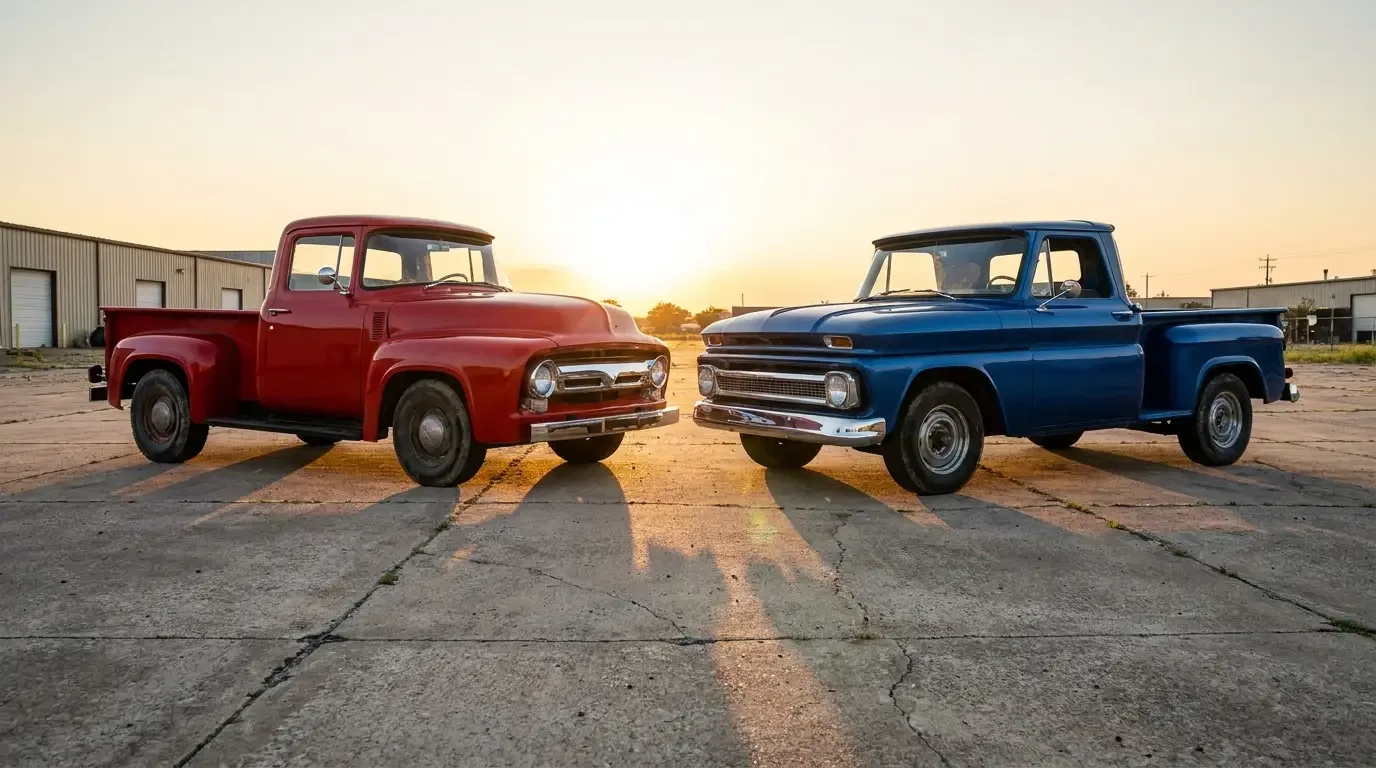
That competition sits underneath a lot of what people fight about today. Long before the modern towing arguments, there was the Chevy vs Ford rivalry, and by the 1960s it had pulled in Dodge and International too. This is the story of how the numbers grew, why they grew, and what a buyer should actually make of a spec sheet from that era.
Where the payload numbers came from
A payload rating is not a law of physics. It is a number the manufacturer assigns, based on the frame, the springs, the axles, the brakes, and the tires. In the 1960s the makers figured out that you could raise that number by changing components, and you could raise it a lot by offering heavier options. So the half-ton, three-quarter-ton, and one-ton labels stopped meaning what they literally said. A "half-ton" truck by the mid-1960s could often carry well past a thousand pounds, because the springs and axles under it were rated higher than the old naming convention implied.
What drove this was competition for the fleet buyer. A contractor or a utility company bought trucks by the dozen, and they read the payload column first. If Ford quoted a higher gross vehicle weight rating than Chevrolet on a comparable truck, that number went into a purchasing decision. So the ratings climbed, sometimes because the trucks genuinely got stronger, and sometimes because the marketing department wanted a bigger number in the brochure.
The engines got bigger, and then bigger again
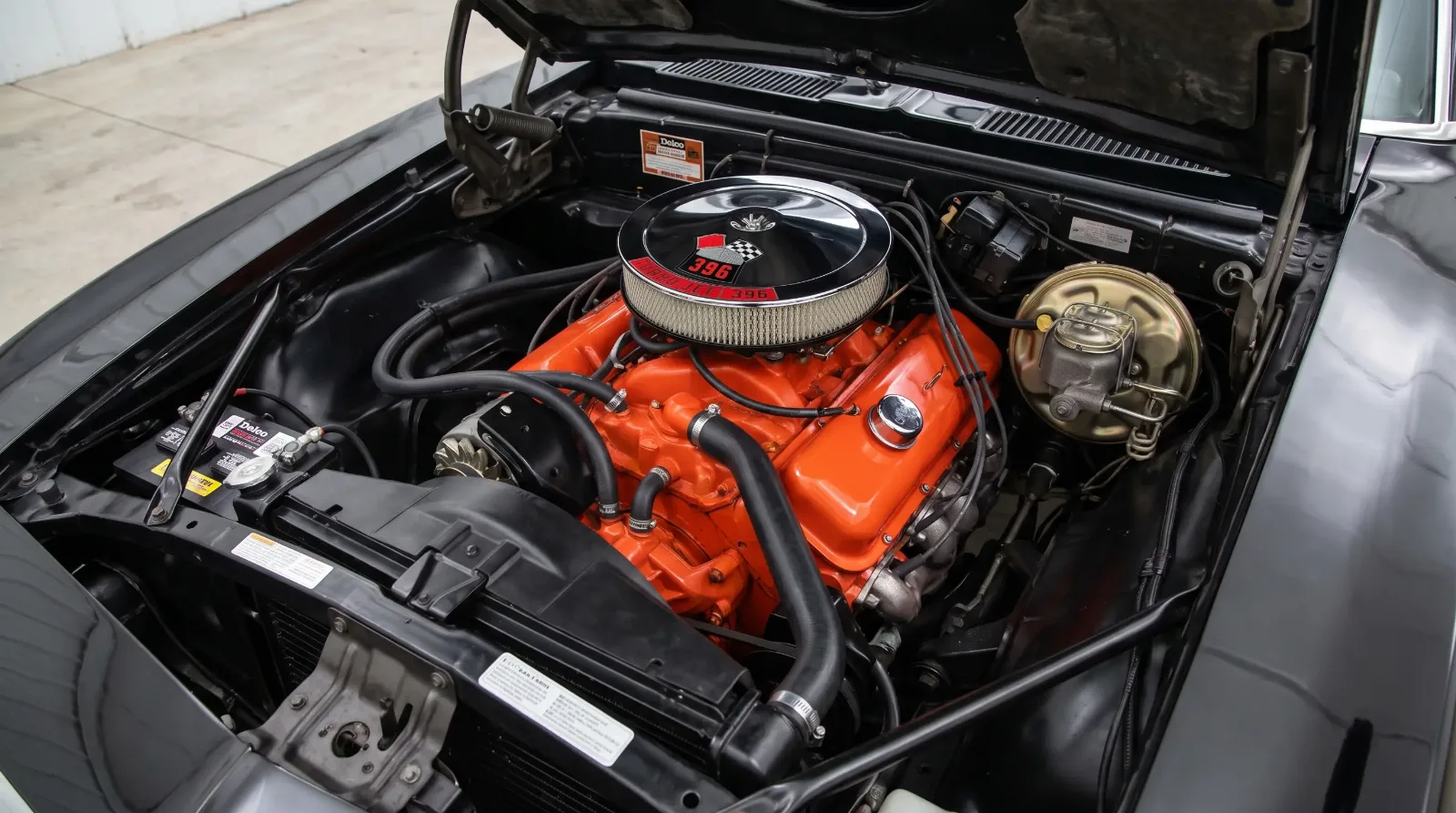
The horsepower side of the war is where things got loud. Through the 1950s most pickups ran modest inline sixes, and a six was still the standard, cheap, dependable choice for a working truck all through the 1960s. What changed is that the makers started dropping large V8 engines, the same big-block families they were putting in cars, into the truck lineup as options.
This is where the buyer needs to be careful with old numbers. Horsepower figures from before roughly 1972 were quoted as gross ratings, measured on an engine stand without the accessories, the full exhaust, or the emissions plumbing a real truck carried. When the industry switched to net ratings, the same engine suddenly "lost" a chunk of its advertised power on paper without any mechanical change. So a gross figure of, say, 200-plus horsepower from a 1960s brochure is not comparable to a modern net number, and it is not comparable to a post-1972 rating from the same manufacturer either.
"Folks get starry-eyed over a big horsepower figure on a yellowed brochure. Get under it with a light and count the leaf springs first. The engine is the easy part to brag about and the expensive part to fix."
— Robert Halloran
What mattered for a work truck was not the peak number anyway. It was torque low in the rev range, the kind that pulls a loaded trailer away from a stop sign without slipping the clutch to death. The big V8 options sold on that promise. Whether a given buyer needed them is another question. A lot of farm trucks lived their whole lives on the base six and never wanted for more.
Reading a 1960s spec sheet without getting fooled
Here is the practical problem. The spec sheets from that decade were sales tools, and the numbers on them do not translate cleanly to how we rate trucks now. Below is the rough shape of the era. Every figure here is a placeholder to be confirmed against a factory source, because the exact numbers moved year to year and by engine and axle option.
| Spec sheet item | What it meant in the 1960s | Buyer's caution today |
|---|---|---|
| Advertised horsepower | Gross rating, engine on a stand, no accessories | Not comparable to net or modern figures |
| Payload / GVWR | Set by frame, springs, axles, brakes, tires | Depends heavily on which options were ordered |
| Weight-class name | Series label, not a literal cargo limit | Check the actual rating plate, not the badge |
| Torque | Also a gross figure; the number that did the work | More relevant to towing than peak hp |
| Engine displacement | Often shared with the car line | Verify the block casting, not the brochure |
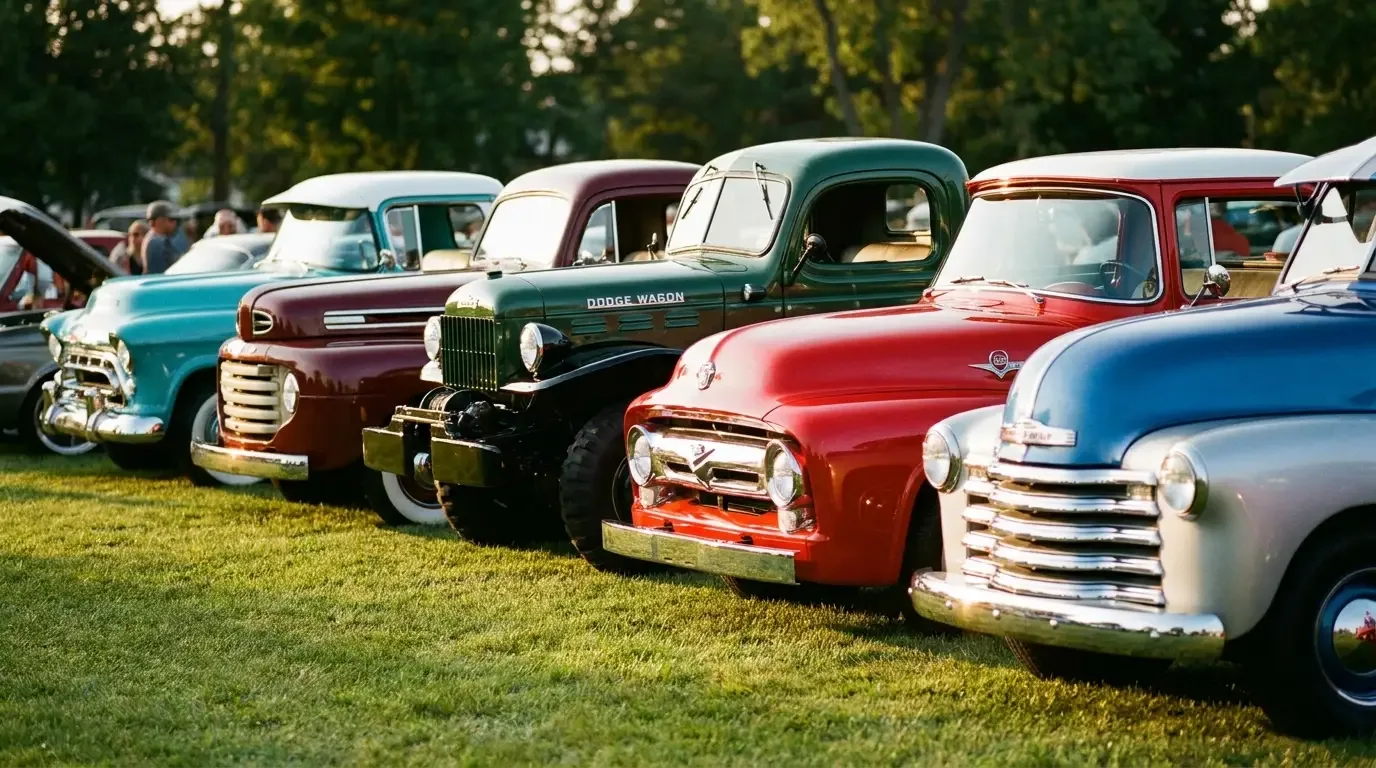
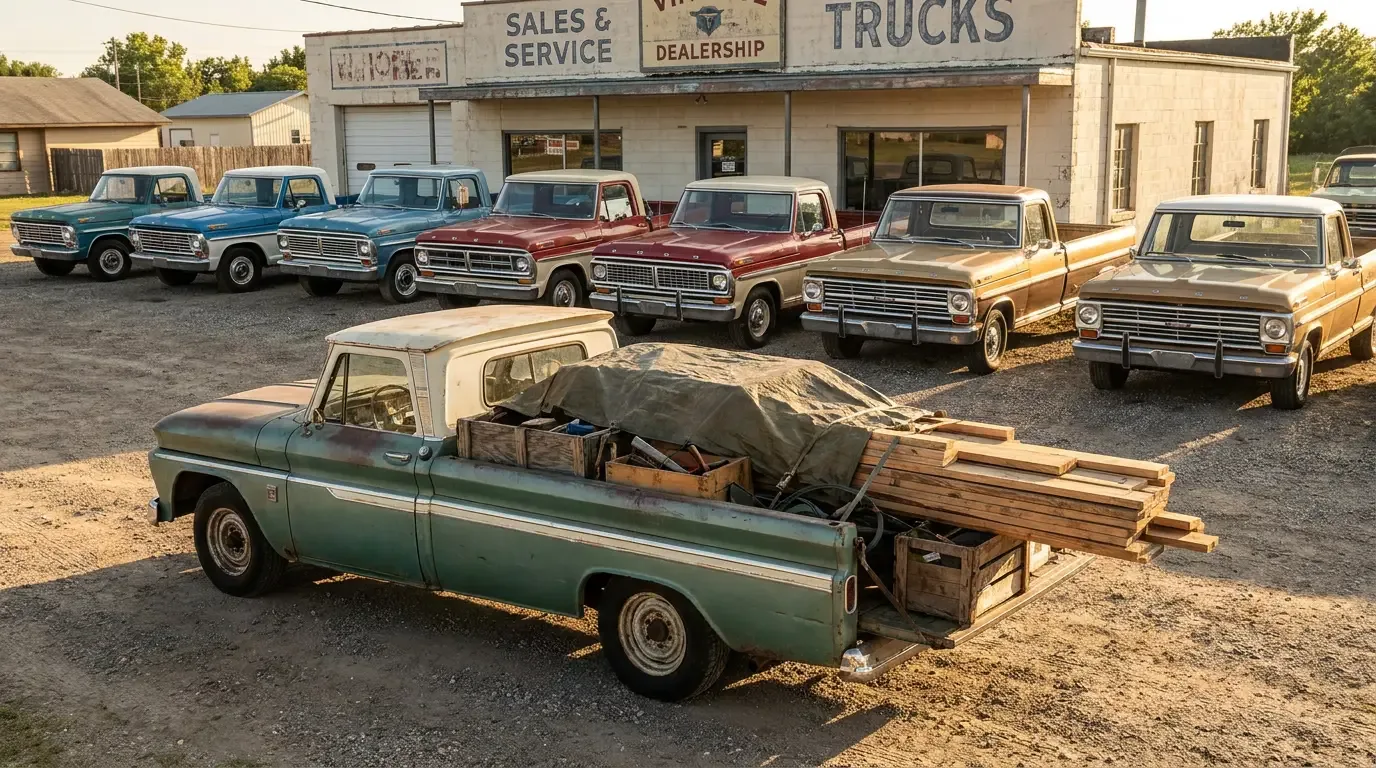
If you are looking at a specific truck for sale, the rating plate or door tag on the vehicle tells you more than any brochure. It records how that truck was actually built and rated. Browsing what survived from the decade is easier than it used to be, and a scroll through 1960s classic trucks for sale shows how much variation there was even within a single model year, depending on how each truck was originally optioned.
The marketing muscle behind the numbers
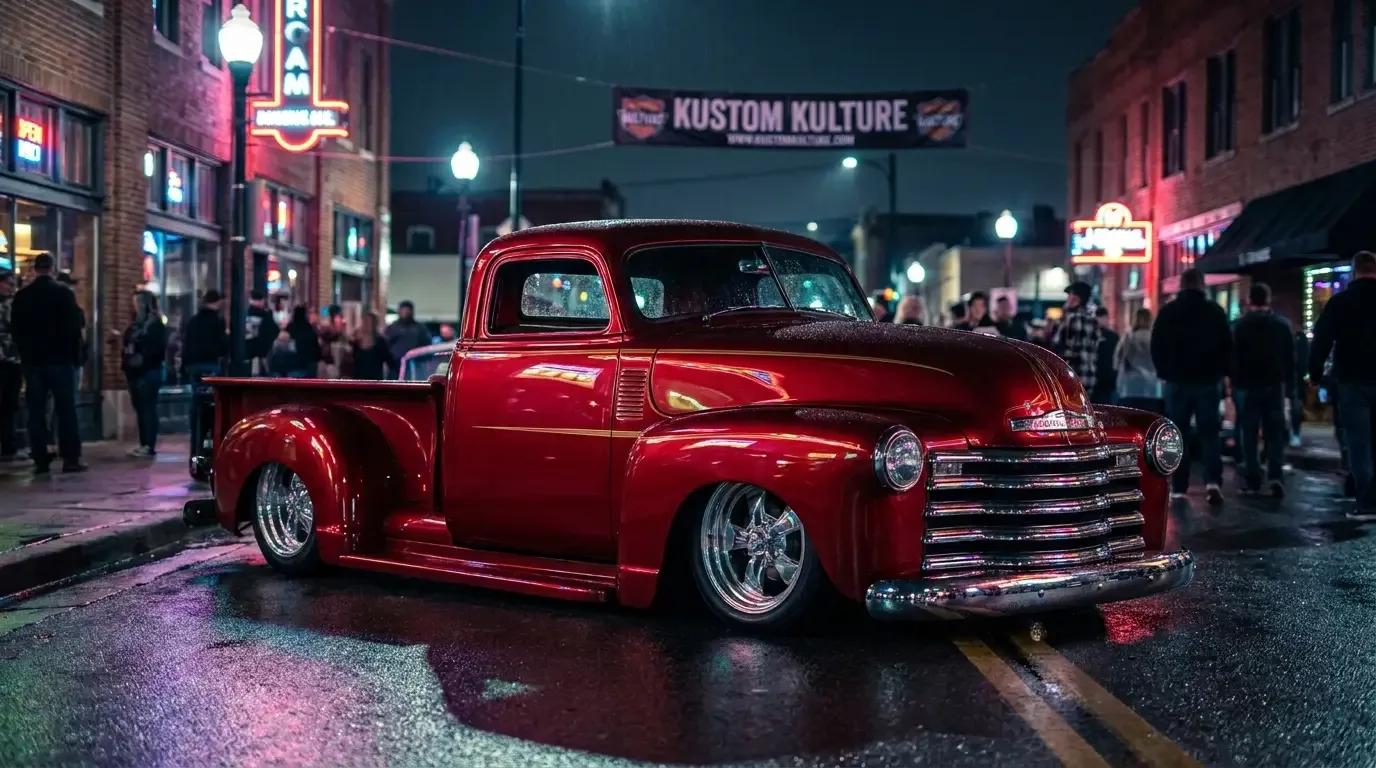
The third front in this war was advertising, and it may have mattered as much as the metal. In the 1960s the makers started selling trucks on comfort, styling, and image, not just capability. Cabs got roomier and quieter. Two-tone paint and brightwork showed up on trucks that a decade earlier came in one color and a coat of primer. The pitch shifted toward the idea that a man could work his truck all week and drive it to church on Sunday without apology.
That shift is why payload and horsepower got so much brochure space. The numbers were proof points in a story about a truck being more than a tool. A higher rating was not just an engineering fact, it was a selling point that could be printed in bold. The makers understood that a lot of buyers would never load the truck to its limit, but they wanted to know the capability was there.
What the war left behind
By the end of the decade the pickup had become a genuinely capable, reasonably comfortable machine with engine options that would have looked absurd on a 1950 farm truck. The payload and horsepower race pushed every maker forward, and the buyer got better trucks out of it. It also left us a pile of spec sheets that read impressively and mean less than they seem to, which is exactly why the numbers need checking rather than quoting.
The honest takeaway is simple. The 1960s trucks earned their reputation, but the brochures earned a reputation too, for optimism. Buy the truck in front of you on its condition and its actual build, not on a horsepower figure someone remembers from an old advertisement. The good ones from that decade are still worth owning. They just do not need the marketing anymore.
Sources and notes
- Factory service manuals and original owner's manuals for period weight ratings and engine specifications.
- Period road tests and manufacturer sales brochures for advertised horsepower and payload claims.
- Marque and model histories covering the 1960s light-truck lineups.
- Casting-number and engine-identification guides for verifying original drivetrains.
- Vehicle rating plates and door tags as the primary record of an individual truck's build and ratings.