Why enthusiasts love to hate the Mustang II
Few cars carry a heavier burden of scorn within the Ford community than the Mustang II. Mention it at any cruise night and you will hear the same shorthand: Pinto-based, underpowered, built to comply rather than to thrill. The phrase "Mustang II" has become shorthand for everything that went wrong with American performance in the mid-1970s, and in certain corners of the hobby it remains what enthusiasts refer to as the most hated Mustang the factory ever produced. That reputation deserves a harder look.
The criticisms are real. The Mustang II did share its floorpan architecture with the Ford Pinto. The 1974 launch models offered only a 2.3-liter four-cylinder and an optional 2.8-liter V6, with no V8 on the order sheet at all. The emissions-era engines that followed were strangled compared with what came before. And the car was dramatically smaller than the 1973 Mustang it replaced. On paper, the indictment sticks. In context, the story is considerably more complicated.
Born into the worst possible timing
Ford's product planners had committed to the Mustang II concept well before October 1973, when OPEC embargoed oil exports to the United States and sent fuel prices and fuel lines spiraling simultaneously. The car that launched for the 1974 model year arrived into an American market that was, almost overnight, desperate for smaller, more economical vehicles. The Mustang II was not a cynical response to the crisis; it happened to be exactly what the market needed at the moment it needed it.
That timing produced a genuine commercial success. Ford sold 385,993 Mustang IIs in the 1974 model year, a total the nameplate had not approached since the original 1965 launch frenzy. Buyers who might otherwise have abandoned the Mustang for a Toyota Celica or a Datsun 240Z found a car that fit the new reality of four-dollar fill-ups. Without that sales momentum, Ford's executives faced mounting pressure to kill the Mustang outright, a fate that would have been difficult to reverse.
The V8 returned faster than most people remember
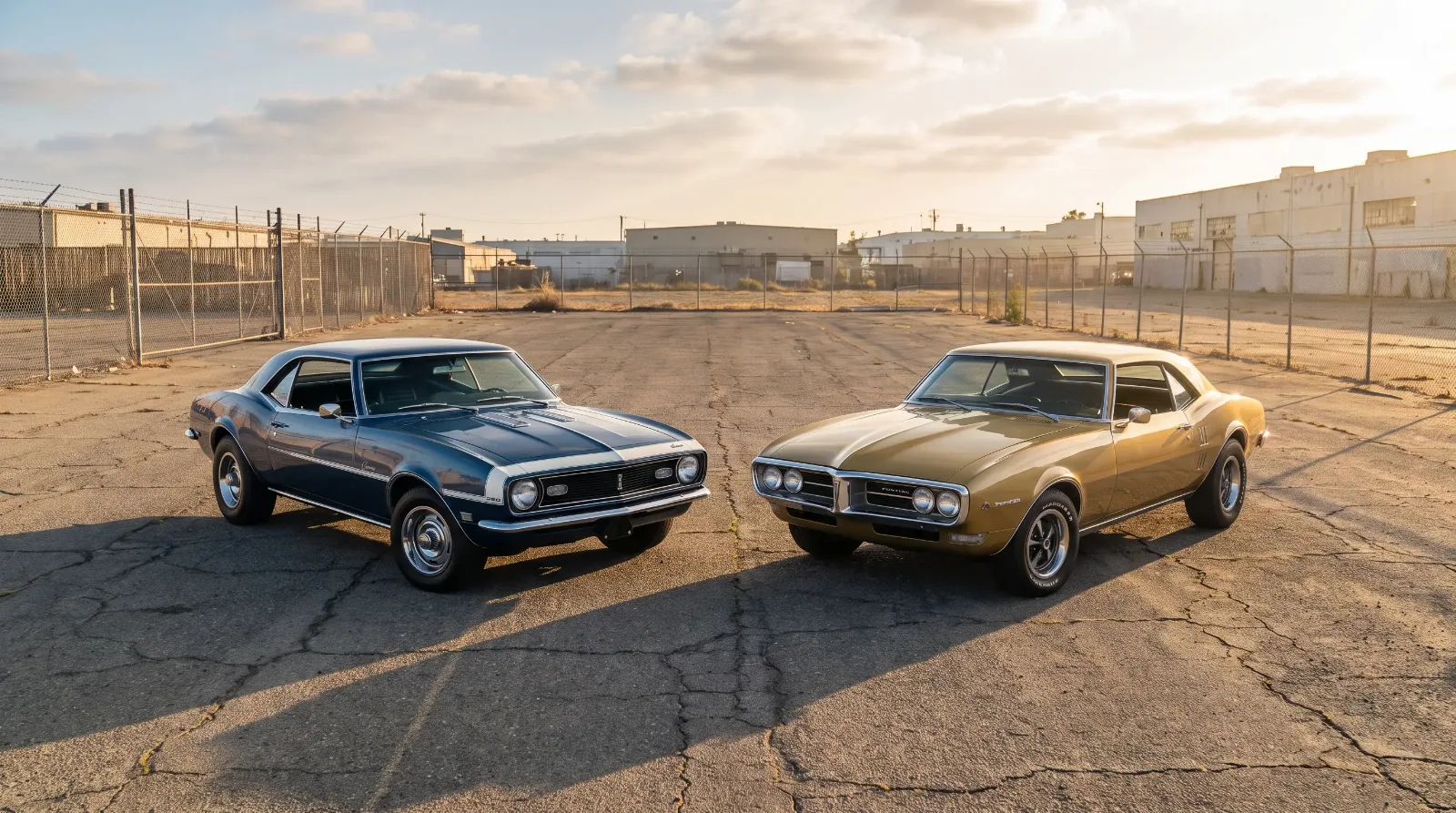
The "no V8" criticism applies only to the 1974 model year. For 1975, Ford reintroduced a 302 cubic-inch (5.0-liter) V8 as an option, rated at 140 horsepower under the new SAE net measurement standard. That figure sounds modest against the 271-horsepower 289 of 1965 or the 335-horsepower 428 Cobra Jet of 1969, but direct comparisons ignore the regulatory landscape. Every American manufacturer was absorbing the same smog equipment penalties. The Mustang II V8 was no weaker, relative to its competition, than a Camaro Z28 or a Pontiac Firebird of the same vintage.
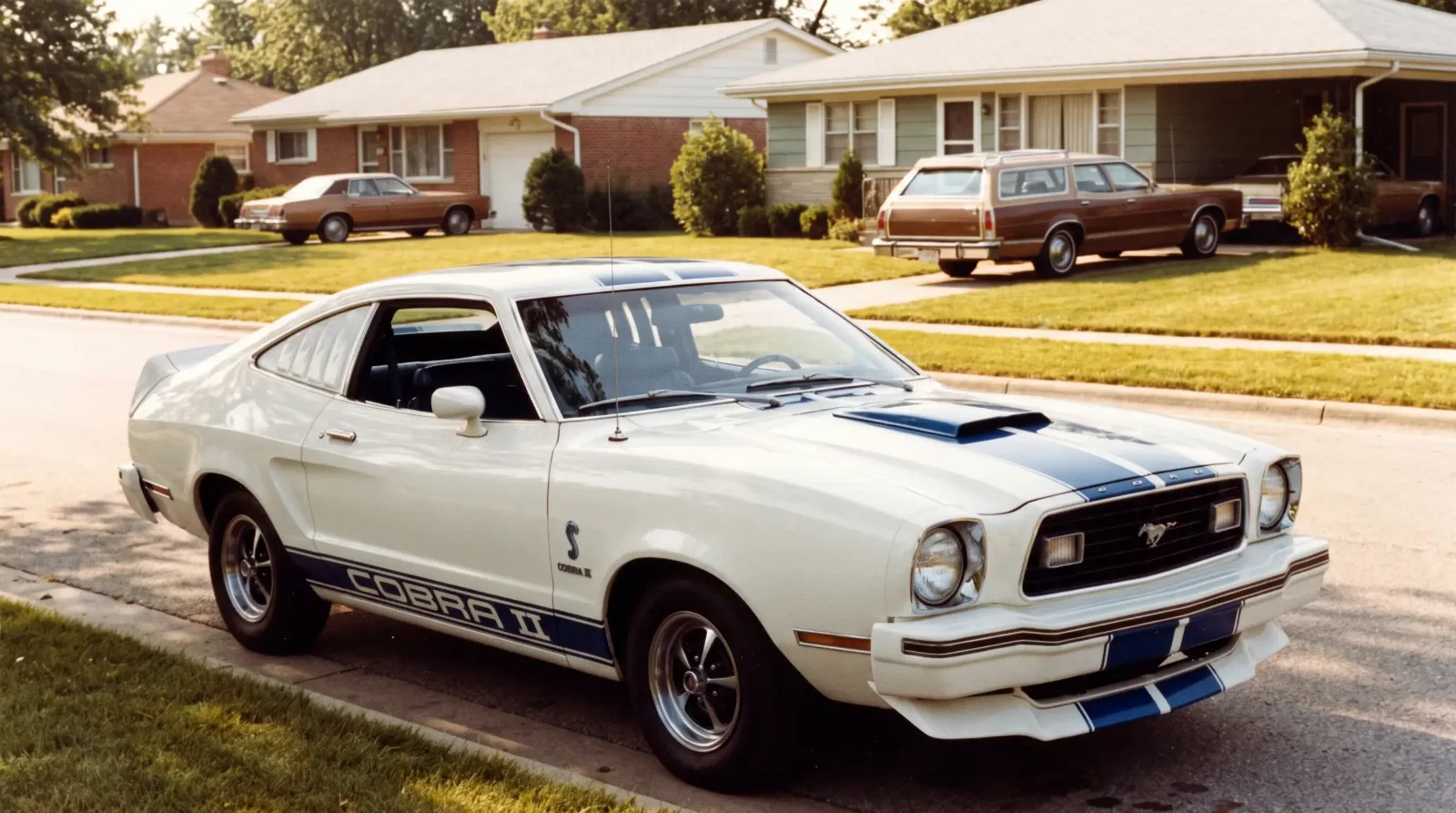
More to the point, Ford did not simply drop a V8 into a stock Mustang II and call it done. The Cobra II package, introduced for 1976, paired visual aggression with the available V8 in a combination that sold strongly and photographed better than the car's critics typically acknowledge. Stripes, spoilers, and a functional hood scoop gave buyers a performance aesthetic when actual performance was constrained everywhere in the industry.
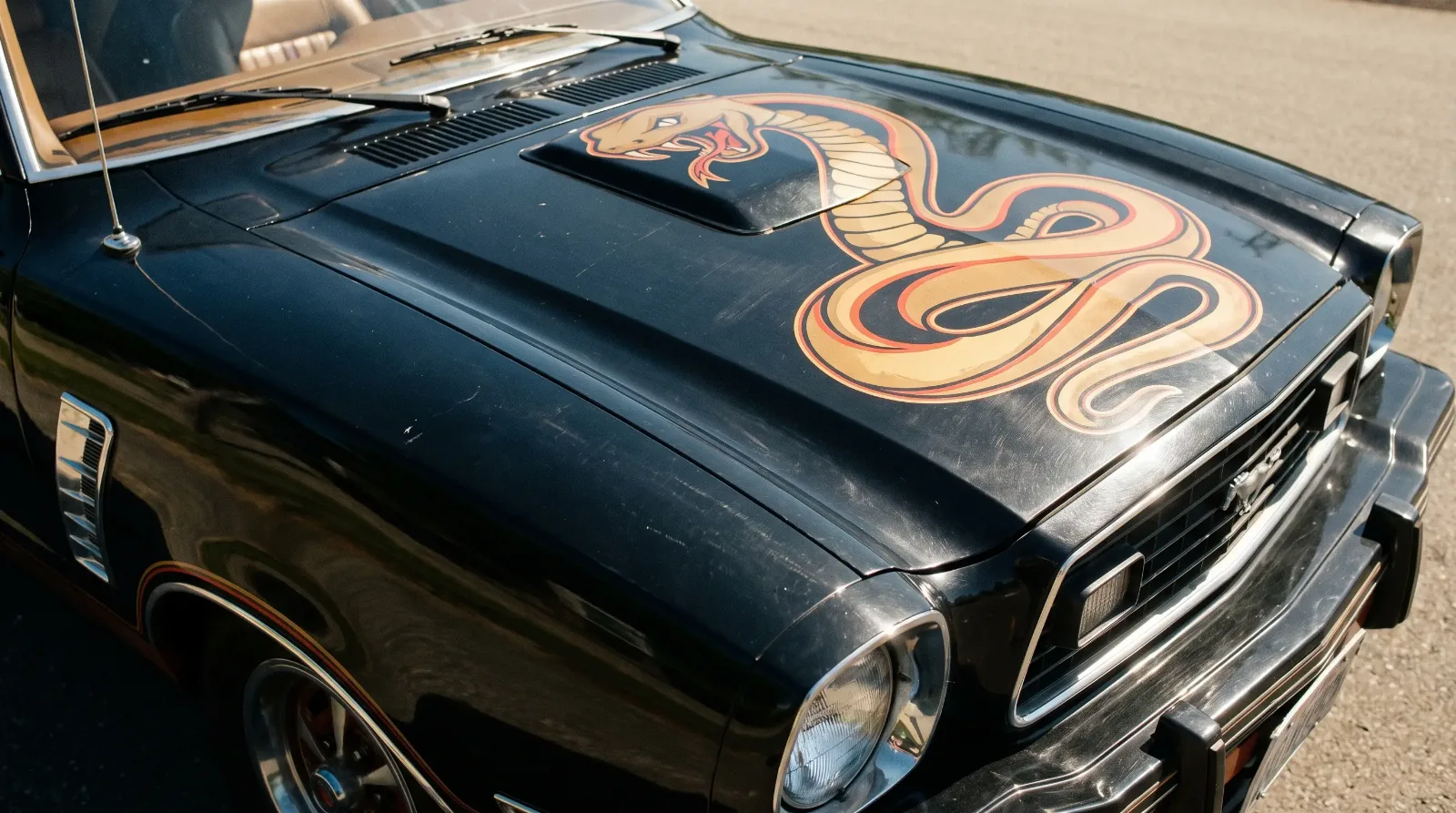
The King Cobra of 1978 pushed further still. Available only in that final year, it added a cobra graphic spanning the hood, a rear spoiler, and a front air dam to the 302 V8 specification. Production was limited enough that approximately 4,313 King Cobras were built, and surviving examples now attract genuine collector attention. For enthusiasts who discover the King Cobra fresh, the reaction is rarely the dismissal the Mustang II name usually generates.
The Ghia trim and what it tells us about the market
Not every Mustang II buyer wanted a performance car in 1974, and Ford was not pretending otherwise. The Ghia trim, named for the Italian design house Ford had acquired in 1970, positioned the Mustang II as a small luxury coupe. Vinyl roof, opera windows, a quieter interior, and an emphasis on refinement over straight-line speed. It was, in other words, a direct answer to what American consumers were actually buying in the mid-1970s.
The Ghia approach revealed something important about the Mustang's place in the market. Lee Iacocca had built the original 1965 Mustang on the same premise: make a car that could be many things to many buyers, and let the options sheet do the segmentation. The Mustang II followed that logic faithfully. A four-cylinder Ghia coupe and a 302-powered Cobra II with a four-speed are very different machines wearing the same badge, exactly as a base notchback and a 428 Cobra Jet were different machines in 1969. The platform's flexibility was its design brief, not an accident.
"The Mustang II gets judged against the cars that came before and after it, never against what it was actually competing with in 1974 and 1975. That is not historical analysis, it is nostalgia."
— Tom Ramirez
Collectibility, affordability, and a slow reassessment
The Mustang II's rehabilitation is already underway in the hobby, driven partly by economics. While first-generation Mustangs and 1969 to 1970 fastbacks have climbed to prices that put them beyond most enthusiasts, the Mustang II remains genuinely affordable. A clean, unmodified 1976 Cobra II in presentable condition can still be purchased for a fraction of what a comparable 1970 Mach 1 commands. The King Cobra has moved faster in valuation, but even there the ceiling is far below its 1960s counterparts.
That affordability has attracted a cohort of younger buyers who see a 1970s aesthetic, a platform that accommodates modern V8 swaps with well-documented parts support, and a car that stands apart at shows dominated by early Mustangs. The Mustang II's bolt-on front suspension, borrowed from the Pinto but widely available, has become a popular upgrade path for hot rod builders who want rack-and-pinion steering geometry under a classic body, a fact that generates its own irony: the Pinto platform that enthusiasts mocked is now sought after for its engineering characteristics.
For those interested in exploring the broader lineage, the history of classic Mustangs makes clear that every generation carried its era's constraints. The Mustang II carried them more visibly than most, which made it an easy target. That visibility does not make the criticism fair.
Ford built the Mustang II from 1974 through 1978, and across those five model years the car sold in numbers that justified every production decision. The nameplate survived intact into the Fox-body era, which produced the 5.0 renaissance of the 1980s and ultimately led to the current generation. A plausible alternate history in which Ford killed the Mustang after 1973, unable to reinvent it for the fuel-crisis era, is not a history in which the Mustang returns triumphant in 1979. The Mustang II bought that continuity at the cost of its own reputation. Evaluate it as a product of its specific moment, built to specific constraints, and the Mustang II looks considerably more defensible than fifty years of cruise-night ridicule suggests. It kept the name alive. In 1974, that was the job.
Sources and notes
This article reflects the personal perspective and opinions of the author. Production figures, horsepower ratings, and historical dates have been verified against the published sources listed below; where period records differ slightly between sources, the most widely cited figure has been used. Readers researching specific cars should confirm details independently.
- Ford Mustang (second generation) — Wikipedia: 1974 model-year sales of 385,993; 2.3-liter four and 2.8-liter (171 cu in) V6 at launch; 302 V8 reintroduced for 1975 at 140 hp net; Cobra II for 1976; 1978 King Cobra production of 4,313; Pinto-derived platform.
- MustangSpecs — 1975 Mustang II 302 V8: two-barrel 302 V8 rated at 140 horsepower net.
- MustangSpecs — 1978 Ford Mustang King Cobra: limited edition with 4,313 units produced.
- MustangSpecs — 1974 Mustang Production Numbers: first-year totals and the near-record 385,993 figure versus the original's 12-month record.
- Carrozzeria Ghia — Wikipedia: Alejandro de Tomaso sold his shares to Ford Motor Company in 1970, confirming the Ghia acquisition date.