Why the Mustang attracts so many myths
Few American cars carry as much accumulated folklore as the first-generation Ford Mustang. Part of that is simple volume. Ford sold more than 1.6 million of them in the first three model years alone, so the car was everywhere, and a car that is everywhere generates opinions from everyone. Part of it is the way the Mustang was marketed, as a blank canvas that could be optioned into an economy commuter or a serious performance machine, which left two very different cars wearing the same badge and the same set of generalizations. And part of it is the long shadow of motorsport, magazine road tests, and decades of nostalgia, each of which deposited a layer of received wisdom that hardened into "everybody knows."
The trouble with "everybody knows" is that most of the durable Mustang myths contain a kernel of truth wrapped in an exaggeration. The car really was marketed heavily to women, but the "secretary's car" sneer ignores how Ford positioned it. The early cars really did handle imperfectly by modern standards, but the blanket claim that Mustangs "handle badly" collapses the moment you separate a base six-cylinder coupe from a Shelby GT350. This article is a survey of the big reputation themes and the smaller persistent myths, with the factual correction set beside each one. It is a map, not a deep dive. Several of these themes have their own dedicated articles, and the survey here is meant to point you toward them.
The "secretary's car" image
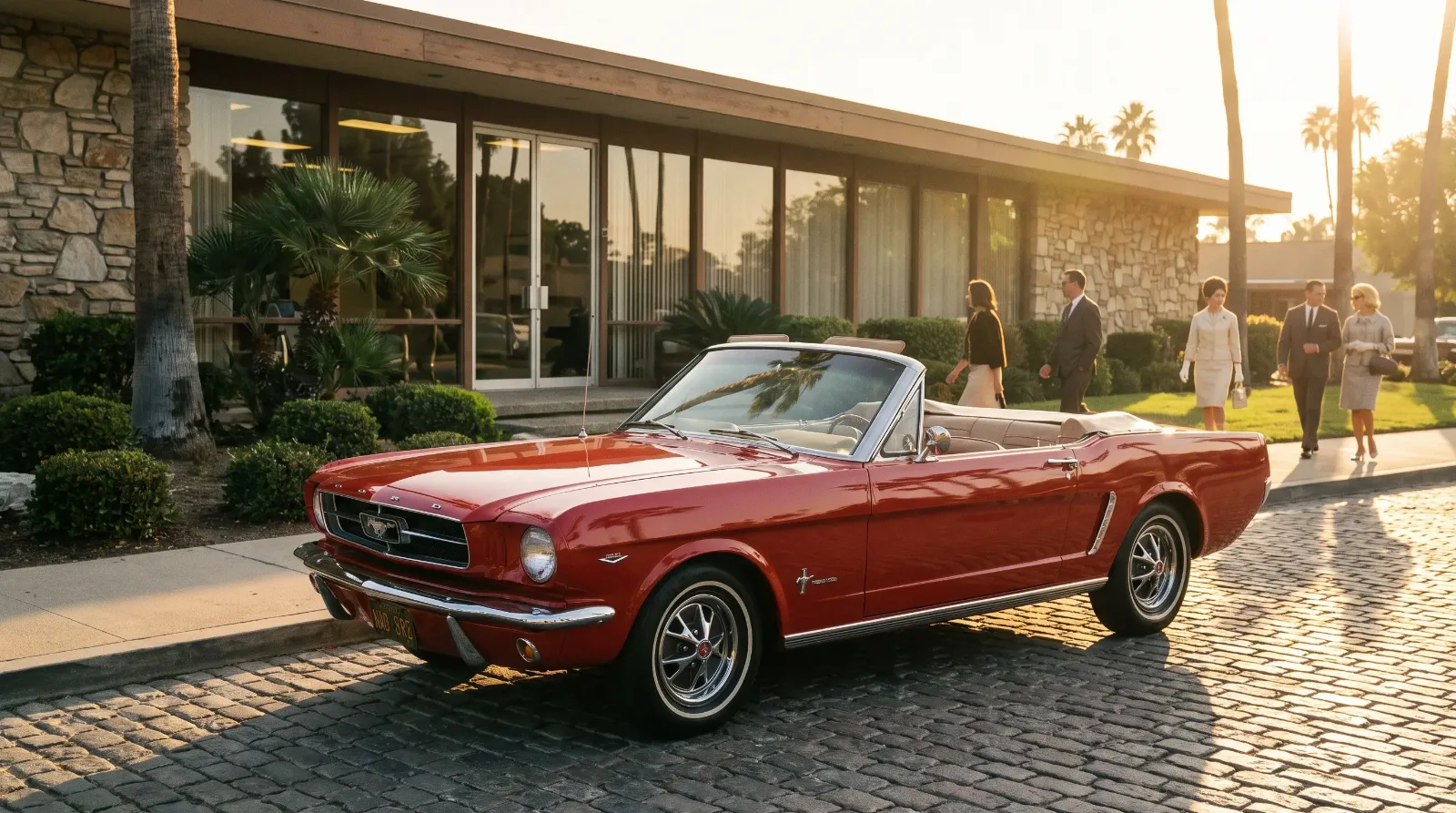
The most persistent reputation knock on the Mustang is that it was a "secretary's car," a styling exercise aimed at women who wanted something cute rather than fast. The kernel of truth is real: Ford and its agency, J. Walter Thompson, deliberately marketed the Mustang to a broad audience that explicitly included women, young buyers, and first-time new-car customers, at a time when most performance cars were pitched almost exclusively at men. The Mustang's low introductory price, its long options list, and its approachable styling were all designed to widen the buyer pool well beyond the traditional muscle-car demographic.
The correction is that "marketed to women" and "not a real performance car" are two completely different claims, and the dismissive version conflates them. The same Mustang showroom that sold a six-cylinder coupe with a three-speed manual to a commuter also sold a 271-horsepower High Performance 289 K-code car to an enthusiast, and later sold the 428 Cobra Jet, the Boss 302, and the Boss 429 to people who took them straight to a drag strip or a road course. The breadth of the lineup was the entire commercial point. Treating the existence of an entry-level model as proof that the whole car was unserious is a category error. The Mustang was designed to be all things to all buyers, and it largely succeeded.
The "they handle badly" criticism
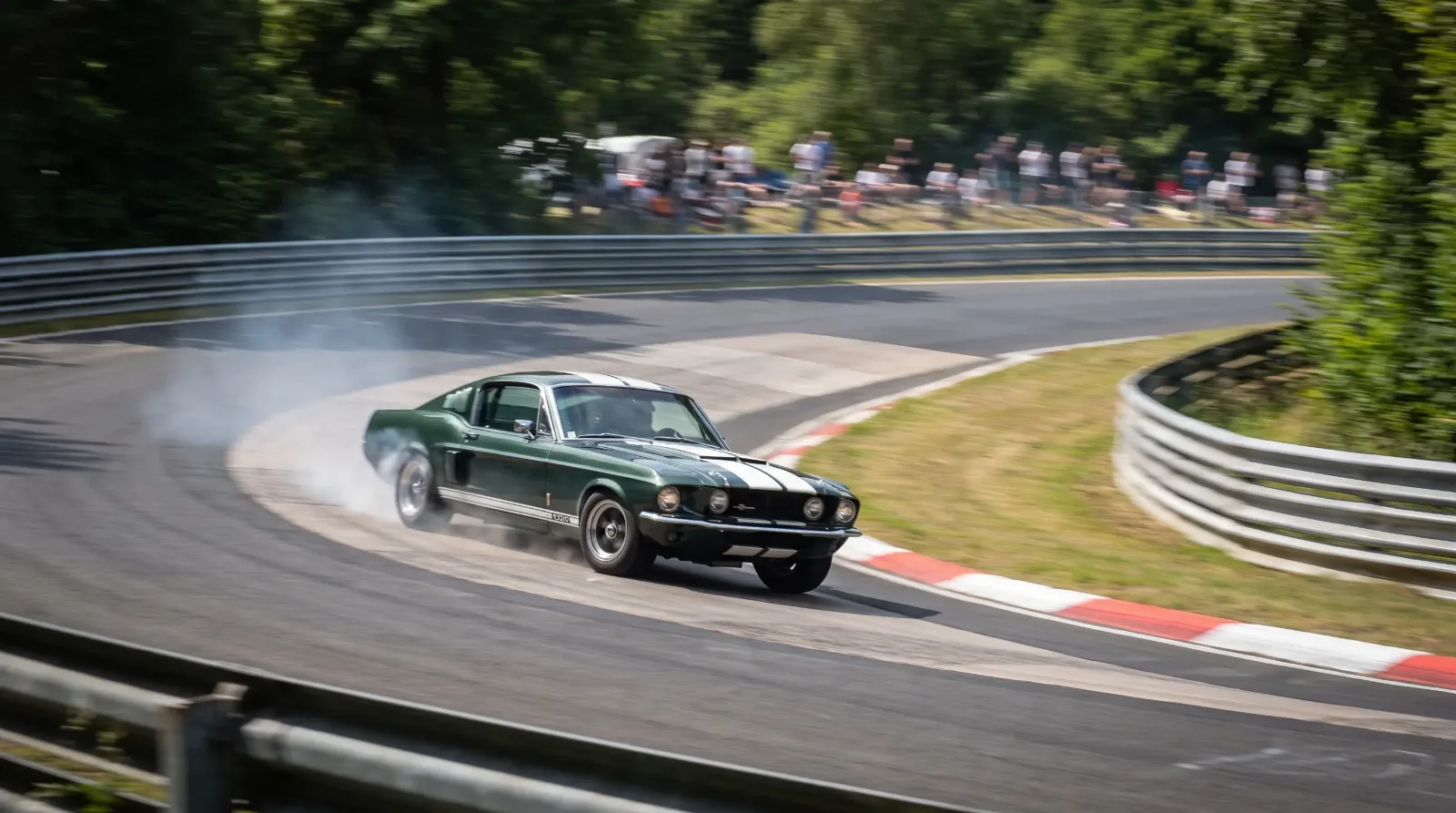
The second major theme is that classic Mustangs handle poorly. Period road testers and later enthusiasts both noted that an early Mustang with a big-block engine and a base suspension was nose-heavy, prone to understeer, and not the equal of a purpose-built sports car through a series of corners. That criticism has a real basis. The Mustang was built on the compact Falcon platform with a relatively simple front suspension and a live rear axle on leaf springs, and the heavier-engined cars put a lot of weight over the front wheels.
The correction is twofold. First, handling on these cars varies enormously with specification. A small-block car with the heavy-duty handling package, front disc brakes, and the export brace and Monte Carlo bar is a meaningfully different machine from a base big-block coupe, and the Shelby GT350 was reworked specifically to address the platform's limitations with revised geometry, stiffer springs, and relocated suspension pickup points. Second, the standard being applied is often anachronistic. Judged against a modern car, any 1960s live-axle chassis feels crude. Judged against its actual contemporaries, a well-specified Mustang was competitive, which is precisely why Mustangs won in Trans-Am racing rather than finishing as also-rans. The myth takes the worst-case base car and presents it as the whole story.
"When someone tells me a classic Mustang handles badly, my first question is always which Mustang. A base six on standard springs and a GT350 share a badge and almost nothing else that matters on a corner."
— Tom Ramirez
The hated Mustang II
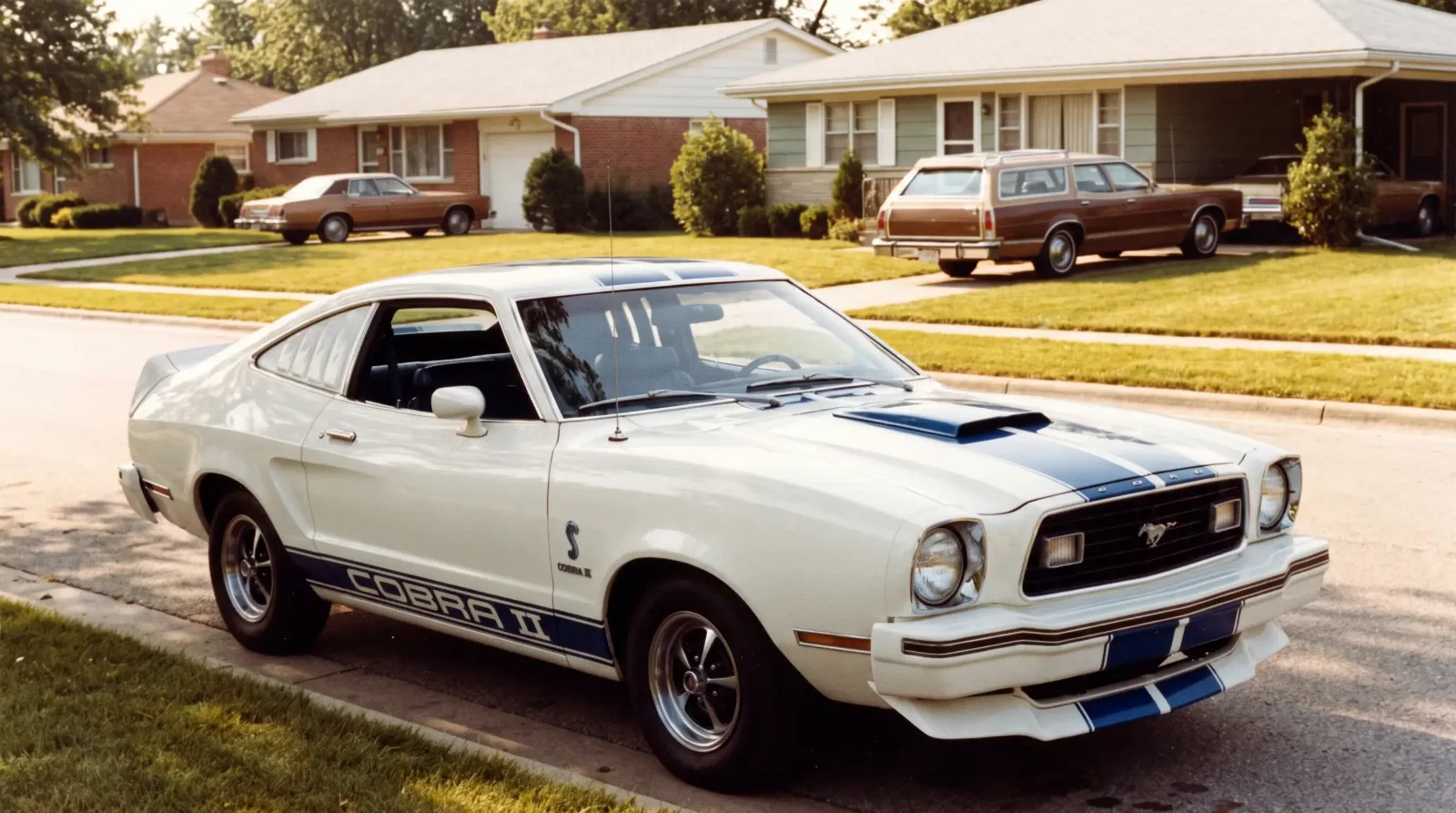
No part of the Mustang's history attracts more scorn than the Mustang II, the smaller, lighter, Pinto-derived car that replaced the bloated 1971 to 1973 models for the 1974 model year. The standard enthusiast verdict is that it was an underpowered embarrassment that betrayed everything the original stood for, and that verdict has a kernel of truth. The 1974 Mustang II launched with no V-8 option at all, offering only a four-cylinder and a V-6, and even when a small 302 V-8 returned for 1975 it was strangled by early emissions equipment to modest output. By the standards of the 1968 428 Cobra Jet, the Mustang II looked like a capitulation.
The correction requires putting the car in its moment. The Mustang II arrived almost simultaneously with the 1973 oil crisis, and a smaller, more economical Mustang was exactly what the market suddenly wanted. It sold extremely well in its first year, far better than the 1973 model it replaced, which is why Ford built it in the first place. The decision to downsize was not a failure of nerve, it was a correct reading of a market that had turned hard against thirsty, insurance-surcharged performance cars. The Mustang II also, less famously, kept the nameplate alive through the worst years of the malaise era, and its front suspension design went on to become one of the most widely used components in American street-rod building. Hating it for not being a 1969 Boss 302 misses what it was actually built to do.
The modern "crowd killer" meme
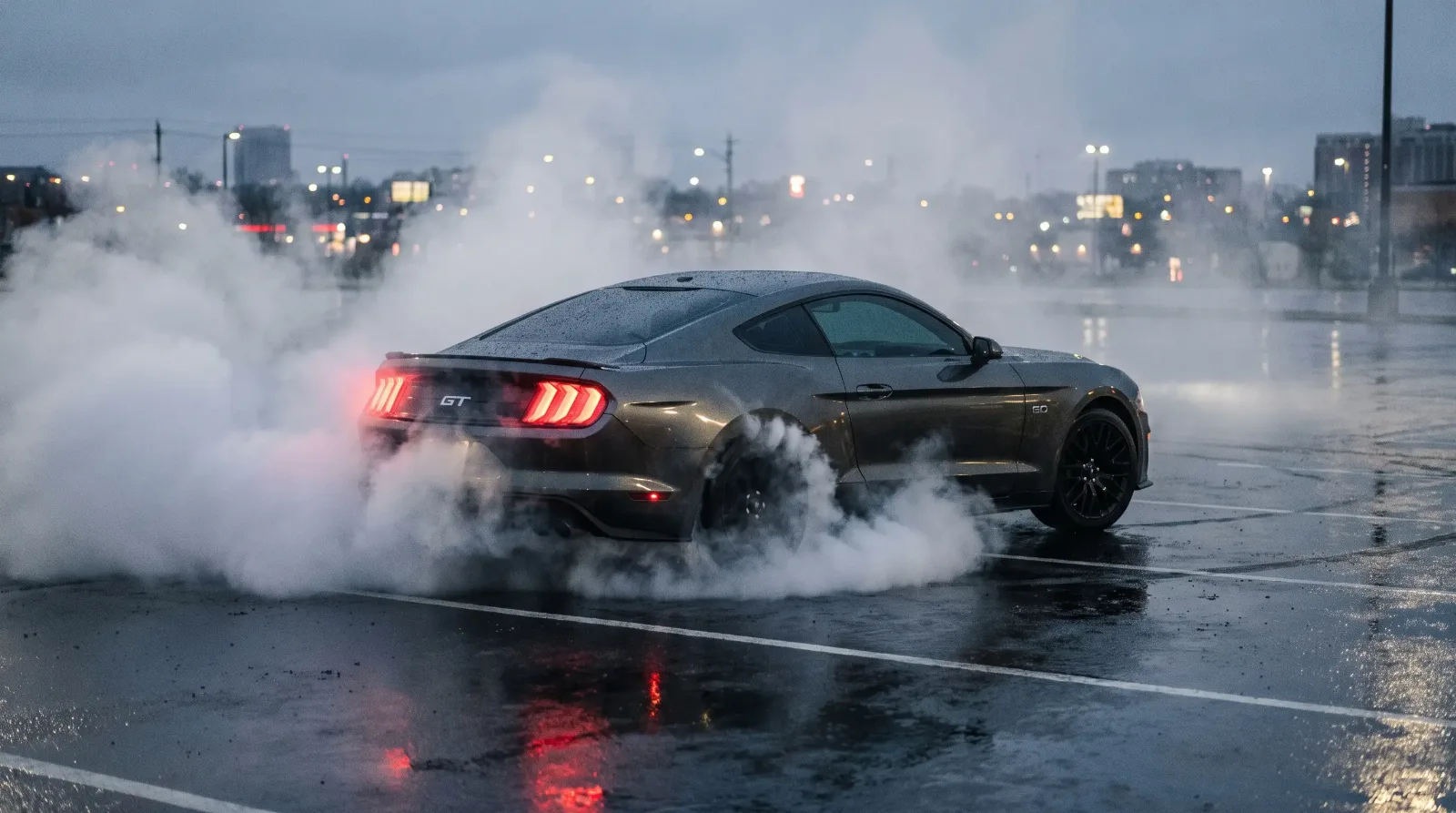
The newest entry in Mustang folklore has nothing to do with classic cars at all, yet it colors how the public talks about the whole nameplate. The "crowd killer" meme refers to a wave of viral videos showing modern Mustangs losing control while leaving cars-and-coffee meets and car shows, often spinning out near spectators. The kernel of truth is that several such incidents genuinely happened and were widely filmed, and modern Mustangs do pair high power outputs with rear-wheel drive in a setting, a slow exit from a crowded lot, where an inexperienced driver applying too much throttle can easily lose grip.
The correction, for anyone interested in the classic cars, is that this is a phenomenon of recent high-powered models and inexperienced drivers in a specific situation, not a property of "the Mustang" as a design across sixty years. A 1965 coupe with a six-cylinder engine and bias-ply tires has essentially nothing in common with a 700-plus-horsepower modern Shelby leaving a show in first gear. The meme is funny, and it travels far, but importing it backward onto a vintage Mustang is the same category error as the "secretary's car" line working in the opposite direction. It judges an entire lineage by its most extreme and most recent outlier.
Smaller persistent myths, and the reality
Beyond the big themes, a cluster of smaller claims circulates constantly in forums, at shows, and in casual conversation. Most are half-remembered facts that have drifted from their original context. The table below collects the most common ones with a brief correction. Where a specific figure is genuinely contested, it is flagged so a closer reading can settle it.
| The Myth | The Reality |
|---|---|
| The "1964½" Mustang is a separate, official model year. | Ford never used the "1964½" designation. The early cars built from April 1964 were counted as 1965 models. The half-year label is collector shorthand, not factory nomenclature. |
| The Mustang was named after the P-51 Mustang fighter plane. | Contested, and Ford has never settled on one canonical story. Stylist John Najjar is credited by Ford with suggesting the name after the P-51 fighter plane. A competing account credits market-research manager Robert J. Eggert, a quarter-horse breeder, who added "Mustang" to the names tested in focus groups after reading J. Frank Dobie's book The Mustangs; it won by a wide margin. Both origins circulate within Ford's own history, and the running-pony emblem reflects the wild-horse reading. |
| The Mustang invented the pony car. | Mostly true, with caveats. The Mustang defined and named the segment and triggered the wave of imitators, though the Plymouth Barracuda reached showrooms a couple of weeks earlier. The Mustang created the category in every commercial and cultural sense that matters. |
| Every fastback is a Shelby, or a Mach 1, or a Boss. | False. The fastback, called the 2+2 and later the SportsRoof, was a standard body style available with ordinary engines. Shelby, Mach 1, and Boss were specific high-performance packages, a small fraction of fastback production. |
| The Boss 429 was built to dominate the drag strip. | Misframed. The Boss 429 existed to homologate the 429 engine for NASCAR stock-car racing. The street cars were a means to that end, and the engine was actually somewhat detuned and undercarbureted for the road. |
| Gross horsepower figures from the 1960s reflect real output. | Misleading. Pre-1972 gross ratings were measured without accessories, exhaust, or emissions equipment and ran optimistically high. The switch to SAE net ratings in 1972 made numbers fall sharply even when engines barely changed. |
The thread running through all of these is that the correction is rarely "the myth is completely wrong." It is almost always "the myth took a real fact and stripped away the context that made it accurate." That is why the most useful approach to Mustang lore is not blanket skepticism but source-checking, returning to factory documentation, build sheets, and contemporary records rather than repeating what everybody knows.
Separating the legend from the record
The Mustang's reputation is a layered thing, built up over six decades of advertising, racing, road tests, films, and now viral video. Each layer left behind a generalization, and the generalizations tend to survive long after the specifics that produced them have been forgotten. The "secretary's car" sneer and the "crowd killer" meme are mirror images, one denying the car's performance credentials and the other defining it entirely by performance, and both are wrong for the same reason. They treat a lineage that spans a six-cylinder commuter coupe and a homologation-special Boss 429 as if it were a single, uniform object.
For readers who want to go deeper than this survey, the individual themes each reward closer study. The handling debate makes more sense once you know how the car evolved across the 1965 to 1973 run, which is the subject of the first-generation Mustang story. The broader arc, from the 1964 introduction through the cultural phenomenon and the production milestones, sits in the Mustang story. And for anyone whose myth-checking eventually turns into a search for an actual car, the surviving first-generation models are out there among the listings of classic Mustangs for sale. The legend is worth enjoying. It is just worth knowing which parts of it are true.
Sources and notes
This article is provided for general informational and entertainment purposes. Production figures, horsepower ratings, and historical details are drawn from the sources below and from contemporary records; specifications varied by model year, option, and market, and original factory documentation should be consulted before relying on any figure for a purchase, restoration, or valuation decision.
- Ford Mustang — naming origin (Najjar and Eggert accounts), model history
- Ford Mustang (first generation) — 1965–1967 production figures
- Plymouth Barracuda — April 1964 debut, two weeks ahead of the Mustang
- Boss 429 Mustang — NASCAR homologation and detuned street engine
- Ford Mustang (second generation) — Mustang II engines and sales
- Ate Up With Motor — gross versus SAE net horsepower and the 1972 switch