A car that arrived half a year early
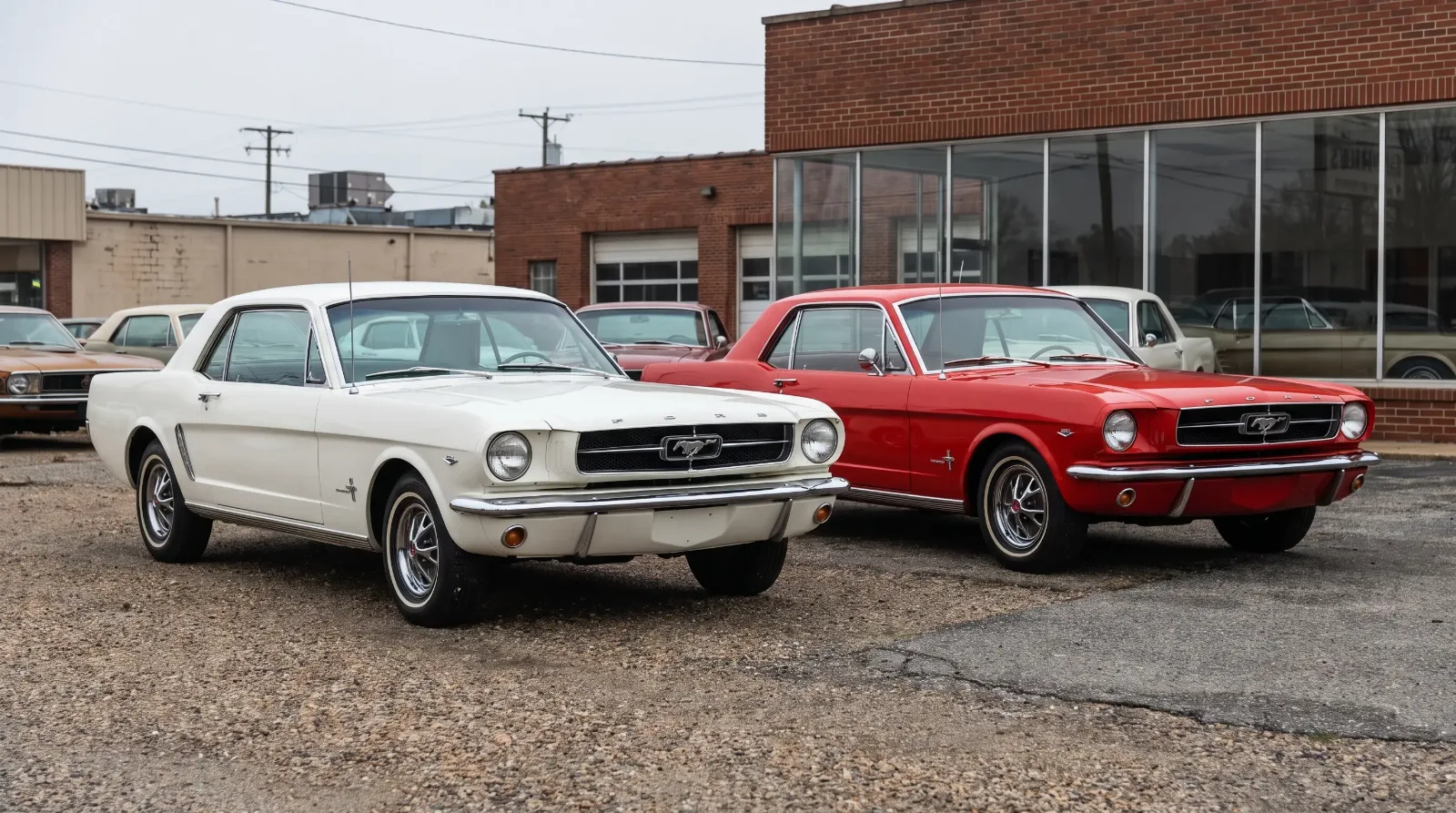
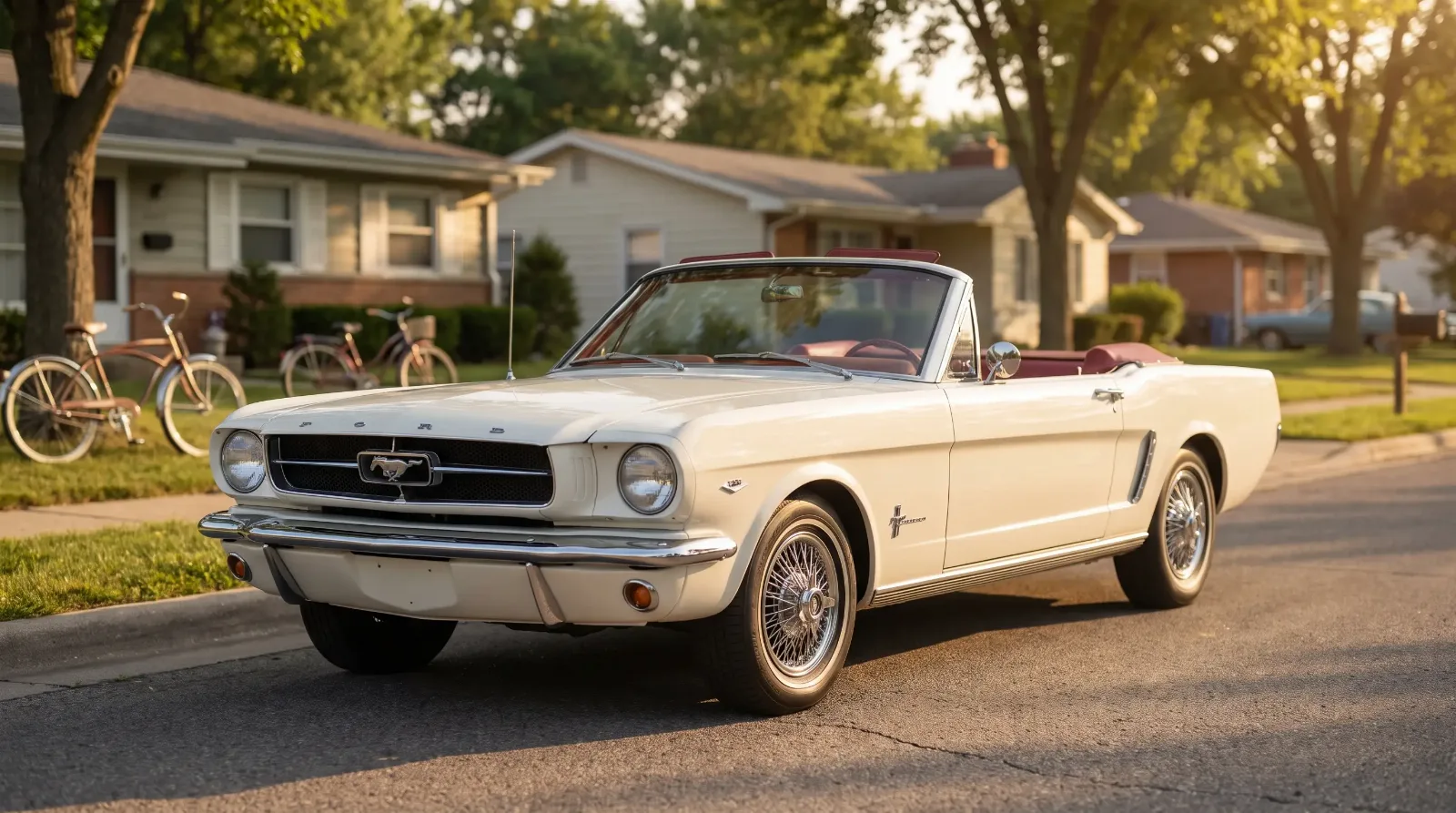
The first generation Mustang did not begin on a normal model-year schedule. Ford put the car on sale on April 17, 1964, roughly five months ahead of the autumn launch that governed most new American models of the period. The factory titled every one of those early cars as a 1965 model, so on paper there is no such thing as a 1964 Mustang. Collectors and the hobby press settled on a workaround instead. The cars built before the official 1965 production changeover in August 1964 became known, informally, as 1964½ cars.
That half-year designation is more than a nickname. The earliest cars carried details that the later 1965 cars dropped, including a generator rather than an alternator, a different horn and a smaller standard six. Telling an early car from a later one is one of the first skills a serious first-generation owner learns, and it is the reason the 1964½ shorthand has survived for sixty years. The launch itself was a commercial event on a scale the industry rarely saw. Ford had read the post-war demographic correctly, built an affordable sporty coupe on humble Falcon underpinnings, and priced it for a young buyer. The result reshaped the market and gave a whole class of car a name: the pony car. For the longer arc of the model across every decade, see the broader Mustang story.
Three body styles, one platform
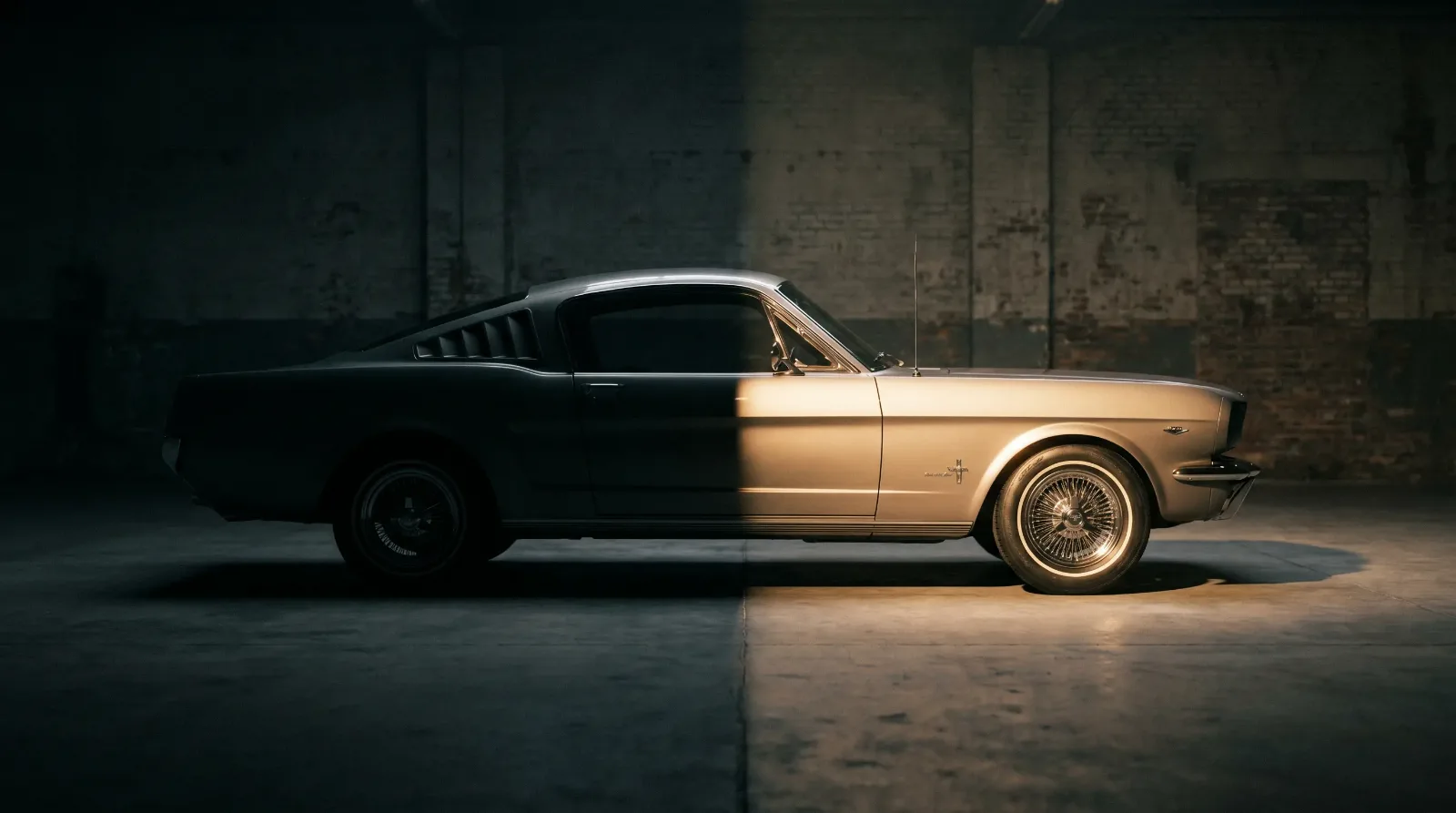
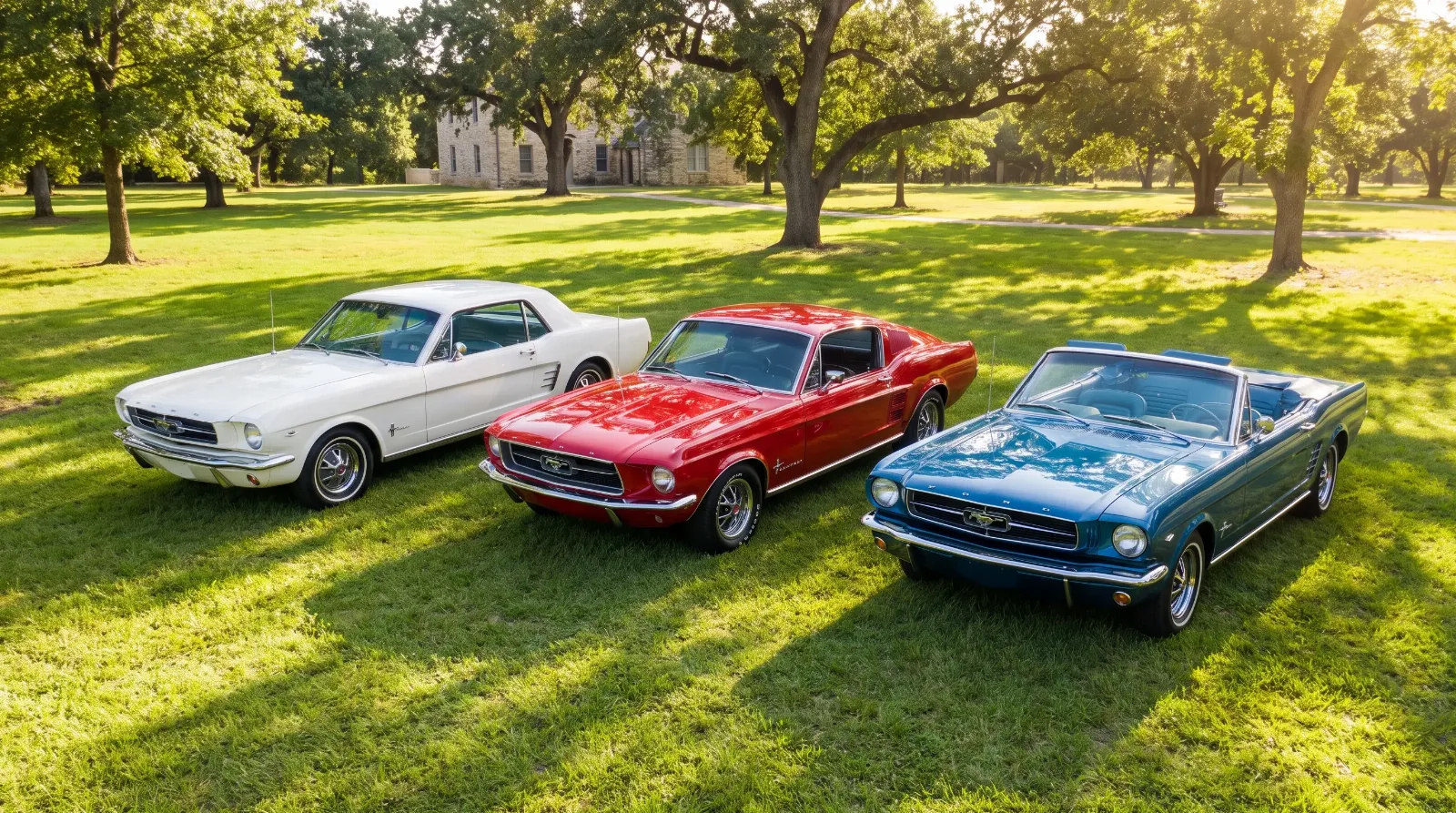
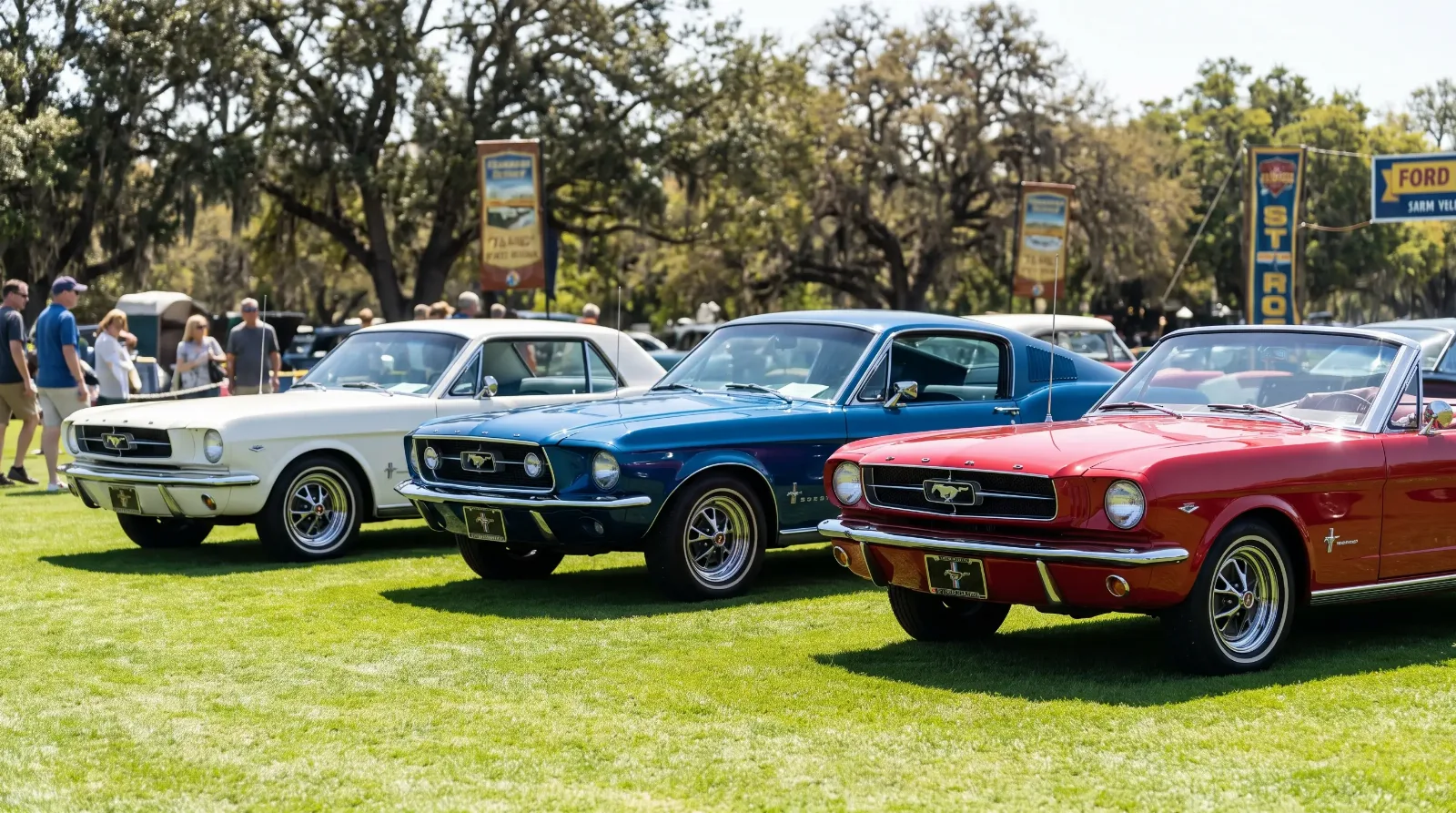
The Mustang launched with two body styles and added a third within months, and that trio defined the shape of the line for the whole generation. The hardtop coupe was the volume seller, the practical notchback that most buyers actually drove home. The convertible arrived alongside it at launch, giving the range its open-top halo. The fastback, marketed as the 2+2, joined in the late summer of 1964 for the 1965 model year and brought the sloping roofline that would later become the canvas for the car's most aggressive performance versions.
All three shared the same basic platform, wheelbase and front structure, which kept tooling costs down and let Ford offer an enormous options list instead. A buyer could order a mild six-cylinder hardtop as basic transport or specify a V8 fastback with a four-speed and a handling package, and both left the same assembly lines. That flexibility, more than any single model, is what made the first generation such a broad commercial success.
The body-style mix also shaped how the cars are valued and understood today. Hardtops were built in the largest numbers and remain the most attainable entry into first-generation ownership. Convertibles generally carried a price premium when new and tend to be valued accordingly today. Fastbacks, by contrast, were the least common of the three at launch but have become widely sought-after over the years, partly because the performance variants were almost always built on the fastback shell. Reading a Mustang correctly starts with identifying which of these three forms is in front of you, because everything from value to originality questions follows from it.
The early cars, 1965 to 1966
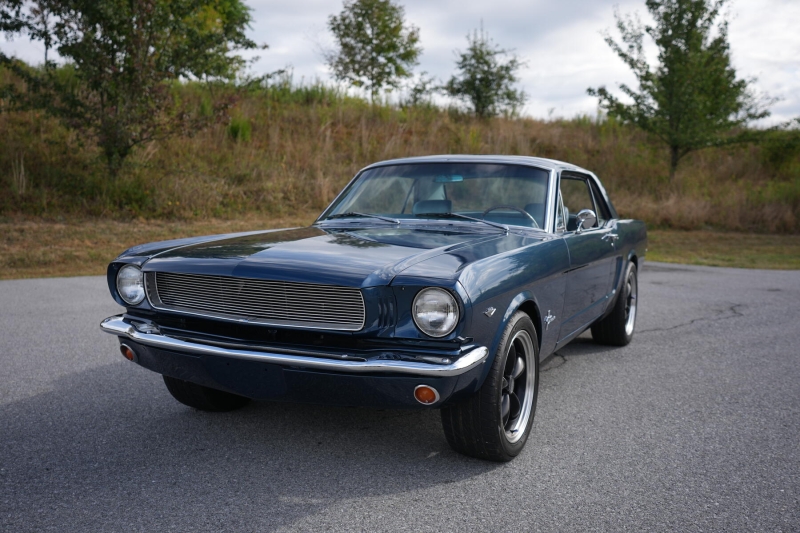
The 1965 and 1966 cars are the purest expression of the original concept and the body style most people picture when they hear the word Mustang. Styling stayed close to the launch car across both years. The 1966 update was deliberately light: a revised grille with the running horse floating more freely in its corral, new side trim, fresh wheel covers and minor instrument changes. Mechanically the two years are very close, which is why the 1965 and 1966 cars are usually discussed together as the early first generation.
This is also the period in which the Mustang's reputation as an options car solidified. The GT Equipment Group, the Interior Decor Group with its galloping-horse seat inserts and a long list of axle ratios and transmissions let buyers build very different cars from the same starting point. These early cars are compact by later first-generation standards, light, and tidy to drive, and they remain the most numerous survivors of the whole generation.
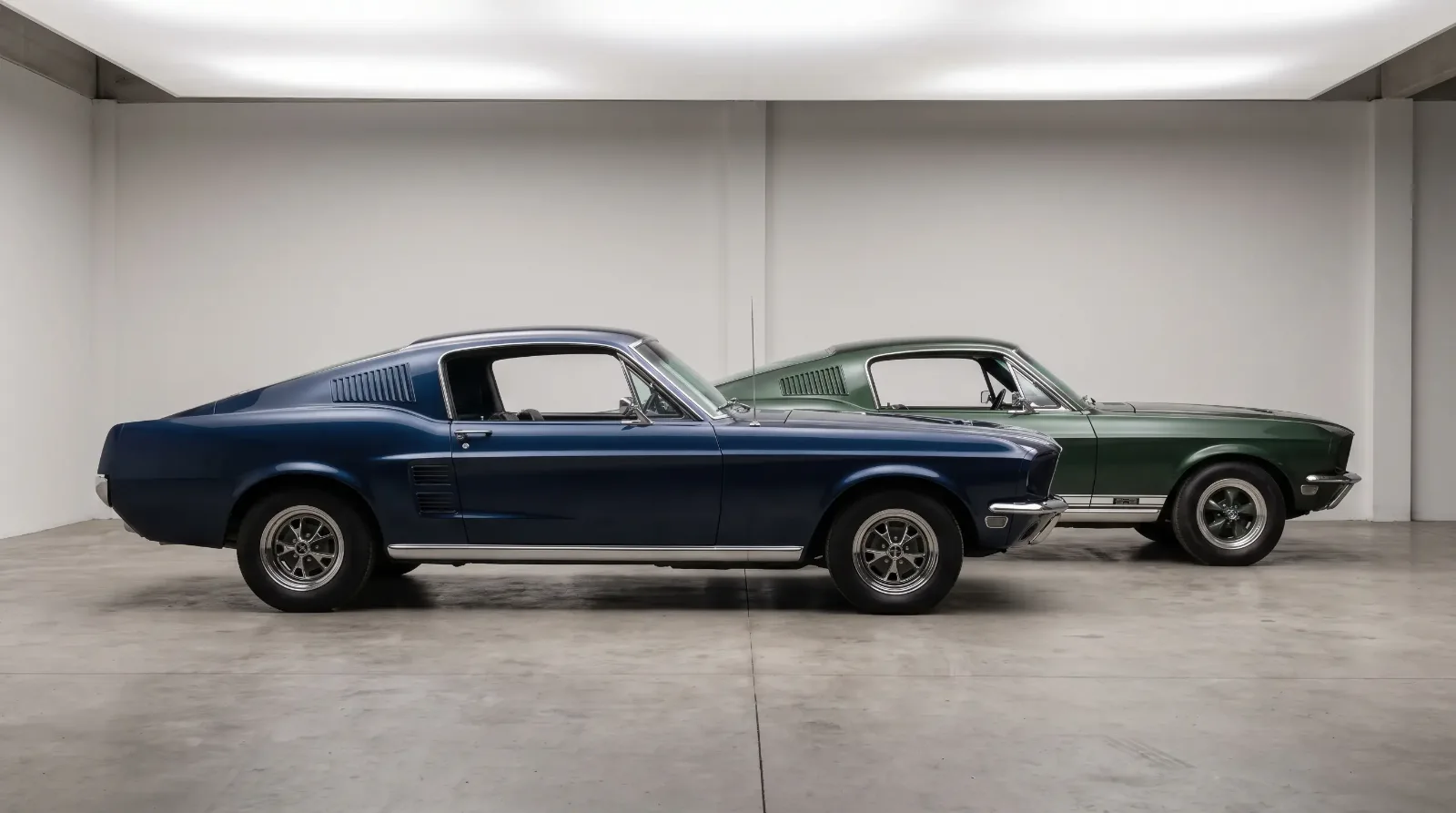
1967 to 1968: a bigger body for bigger engines
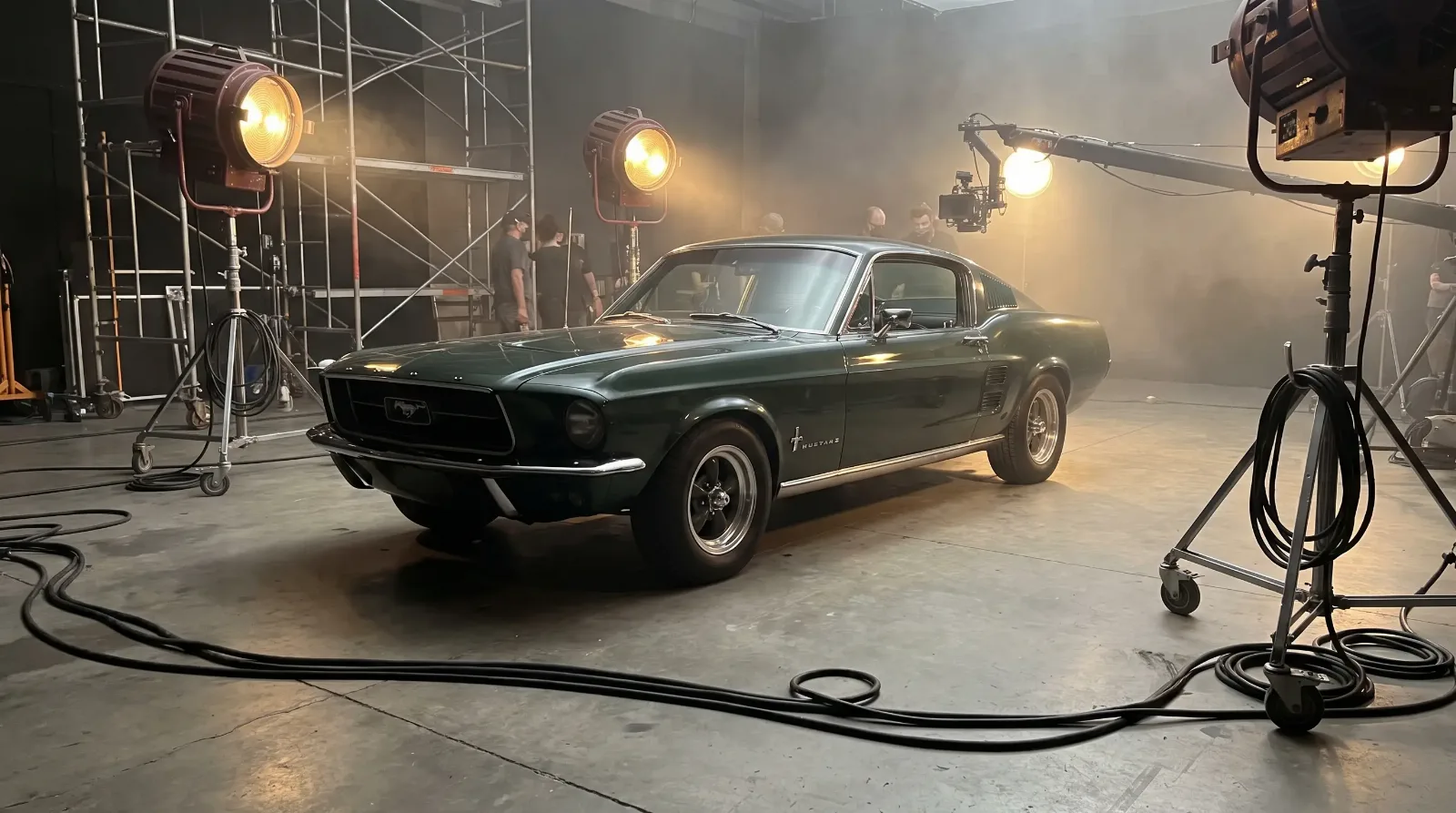
For 1967 Ford gave the Mustang its first major restyle. The car grew in nearly every dimension, with a wider track and more sculpted bodywork, while keeping the same wheelbase. The reason was not styling fashion alone. The enlarged engine bay was designed to accept Ford's big-block FE engines, something the original 1965 structure could not comfortably do. The 390 cubic inch big-block became available, and the car moved decisively from sporty compact toward genuine muscle.
The 1968 cars carried the same body with detail changes and tightening federal safety and emissions rules in the mix. It was during this window that the Mustang's performance ceiling rose sharply, and the most famous big-block of the era, the 428 Cobra Jet, entered the picture late in the 1968 run. The 1967 to 1968 cars sit at an interesting hinge point, still recognizably the original Mustang in profile but now able to swallow the largest engines Ford was willing to install.
1969 to 1970: the performance peak and a fresh face
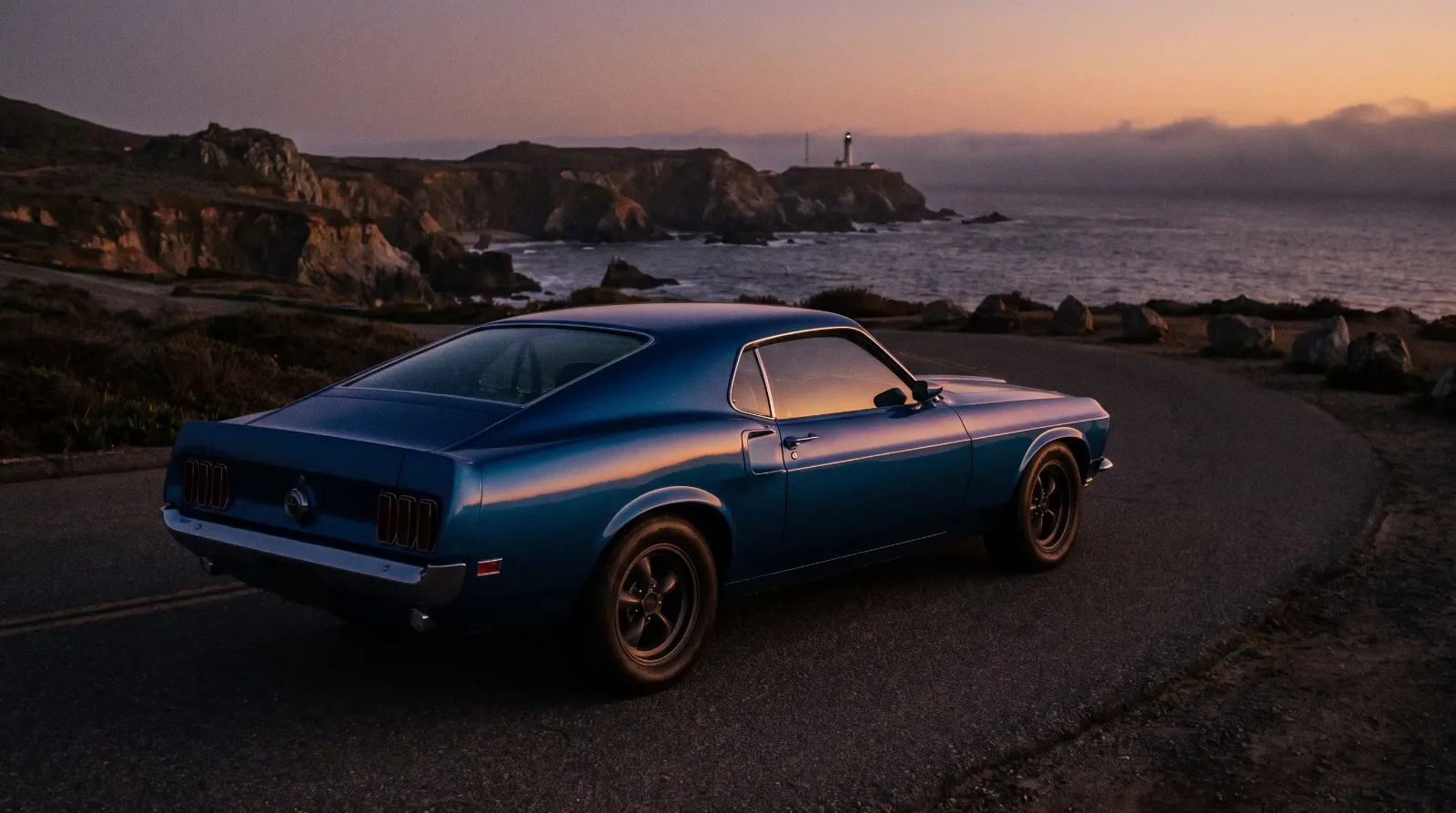
The 1969 model year is, for many enthusiasts, the high-water mark of the first generation. Ford restyled the car again, stretching the front, adding quad headlights for 1969 and offering the widest performance lineup the Mustang would ever have in this generation. The SportsRoof fastback gave the body a long, low and unbroken roofline that suited the era's drag-strip aspirations.
The engine range at the top end was formidable, anchored by the high-revving small-block and the 428 Cobra Jet and Super Cobra Jet big-blocks. This is the generation that gave rise to the named performance variants, and the Shelby, Boss and Mach 1 cars all belong to this first generation. Those cars are stories in their own right and are covered separately. For 1970 Ford simplified the front again, returning to dual headlights and revising the tail, closing out the most performance-focused chapter of the original Mustang.
"If you want to understand the first generation, read it as four distinct cars wearing one badge. The 1969 to 1970 cars are where the engineering ambition finally caught up with the marketing."
— Tom Ramirez
1971 to 1973: the biggest body and the close of an era
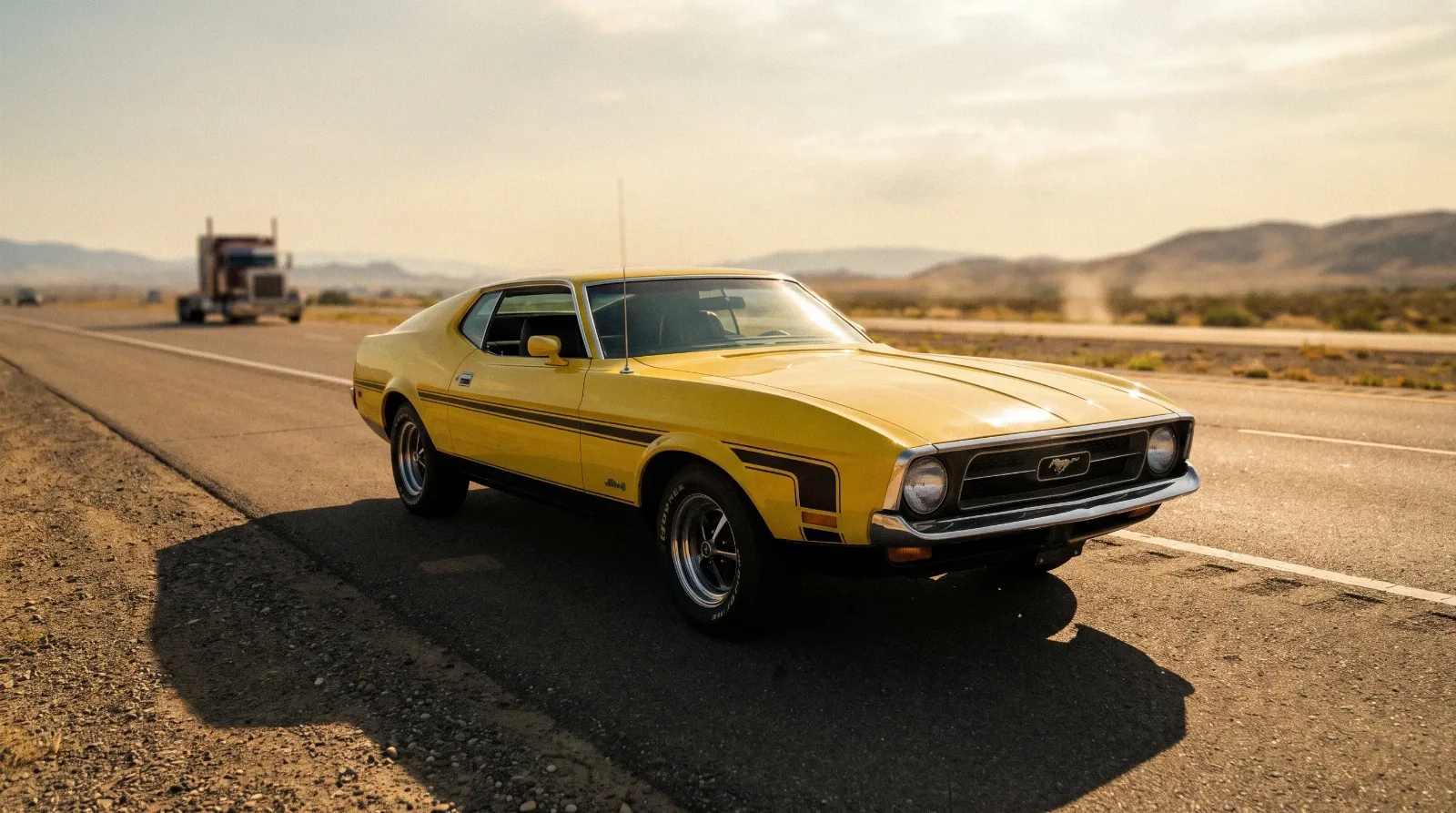
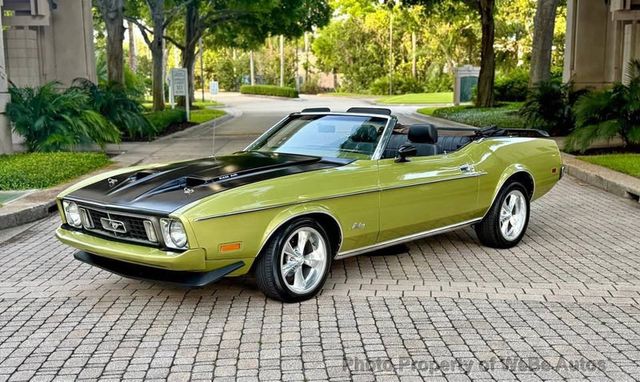
The final restyle, for 1971, produced the largest first-generation Mustang. The car grew wider and heavier, the wheelbase stretched for the first time to 109 inches, and the fastback roofline became so shallow it was nearly flat, a dramatic look that divided opinion then and still does. This body was engineered to accommodate the 351 Cleveland and the largest engines in the range, but it arrived just as the market was turning against big, heavy performance cars.
Tightening emissions standards, rising insurance costs and the looming fuel crisis all worked against the formula. Compression ratios fell, advertised power figures dropped as the industry shifted to net ratings, and the muscle era wound down across the board, not only at Ford. The 1971 to 1973 cars were the last of the original concept.
For years these big-bodied cars were the least loved of the generation, dismissed as bloated next to the trim 1965s. That reading has softened. Collectors now recognize the 1971 to 1973 cars as honest products of their moment and as the cleanest way to own a first-generation Mustang that still carries the larger engines. After 1973 the Mustang was reinvented as the much smaller, more economical Mustang II for 1974, a deliberate reset that ended the first generation cleanly and pointed the nameplate toward a very different future.
Engine progression at a glance
Across the generation the engine catalog grew from modest sixes to full big-blocks and then contracted again under emissions pressure. The standard sixes ranged from the early 170 cubic inch unit up to the 200. The V8 family expanded from the early 260 and the celebrated 289 small-block to the 302 and the 351 in both Windsor and Cleveland forms, while the big-block FE engines, the 390 and ultimately the 428, supplied the top-tier muscle from 1967 onward. The individual engines, their codes and their outputs are deep-dive topics on their own, so this is a map rather than a full accounting.
| Years | Body character | Headline engines available | Key change |
|---|---|---|---|
| 1964½–1966 | Original compact body | 170/200 six; 260/289 V8 | Launch and the early restrained restyle |
| 1967–1968 | Wider body, same wheelbase | 289/302; 390 and 428 big-block | Engine bay enlarged for FE big-blocks |
| 1969–1970 | Longer, lower SportsRoof era | 302/351; 428 Cobra Jet | Performance peak, quad then dual lights |
| 1971–1973 | Largest, heaviest body | 302/351 Cleveland | Muscle era winds down, generation ends |
By 1973 the first-generation story was complete, having moved from an affordable Falcon-based coupe to a big-block muscle car and back toward restraint in under a decade. Owners who want to see how surviving cars from each of these phases are presented today can browse first-generation Mustangs for sale, where the differences between an early hardtop and a 1971 fastback become obvious at a glance.
Sources and notes
Specifications here reflect period factory figures and contemporary references. Horsepower ratings are as advertised at the time, mixing gross figures (through roughly 1971) and net figures thereafter, and should not be compared directly across years. Where engines or features were phased in mid-year, dates are given as ranges. Any commentary on relative desirability or value is general and reflects long-run collector-market patterns, not a guide to current prices, which vary by car, condition, and options.
- Ford Mustang (first generation) — Wikipedia (body styles, engine families, model-year changes)
- 1967 Ford Mustang specifications and dimensions — Conceptcarz (108-inch wheelbase)
- 1971 Ford Mustang specifications and dimensions — Conceptcarz (109-inch wheelbase)
- 1968 Ford Mustang 428 Cobra Jet — HowStuffWorks (April 1968 mid-year introduction)
- Sorting out the Mustang's 351 Cleveland engines — Hagerty (1971–1973 351 Cleveland options)
- 1964–1973 Mustang engine codes — CJ Pony Parts (six-cylinder and V8 engine progression)